

Key takeaways
• A video SDK is the fastest way to ship, not the cheapest way to scale. Below roughly 100k participant-minutes a month, a managed video SDK (LiveKit Cloud, Daily, Vonage) wins on total cost because engineering effort dominates the bill.
• The all-in cross-over is near 1–4M participant-minutes/month. That is where a self-hosted stack, priced with a fractional DevOps engineer, starts to beat per-minute fees. If you already run SRE, the infra-only cross-over comes earlier, around 300k min/mo.
• Twilio Programmable Video is back. Twilio announced an end-of-life in 2024, then reversed it in October 2024. It is a supported product in 2026, so “migrate or die” advice from older posts is wrong.
• Hybrid is the smart default at scale. Self-hosted LiveKit OSS for steady load plus a managed cloud fallback for spikes caps worst-case cost without over-provisioning, and both run the same SDK shape.
• Five axes decide the path: volume, customization depth, compliance, team capability, time-to-market. Pick wrong on any one and the math flips.
Why Fora Soft wrote this playbook
Choosing a video SDK is a bet you place before you have the traffic data to justify it, and the wrong bet gets expensive quietly. We wrote this because we keep meeting founders at the exact moment the SDK invoice stops being a rounding error, and they want to know whether to renegotiate, re-architect, or ride it out.
Fora Soft has shipped 250+ projects since 2005 with 50 in-house engineers, and a large share of them are real-time video. We have integrated the managed SDKs (LiveKit, Daily, Vonage, Agora, Amazon Chime SDK, and Twilio) and we have built and run self-hosted stacks on LiveKit OSS, mediasoup, Janus, and custom WebRTC. That two-sided experience is the whole point: we get paid either way, so the advice below is not a pitch for one path.
Reference deployments back the numbers. Worldcast Live is a custom WebRTC + Kurento stack that hits 0.4–0.5s latency for 10,000 concurrent viewers. TradeCaster auto-scales live trading streams to 46,000+ users. Mangomolo (OTT, 30M+ daily viewers), StreamLayer (event streaming for NBC, CBS, Red Bull), and iMind (conferencing for PwC and a European ministry) round out the range from managed integrations to fully owned media. If you want that experience pointed at your stack, our video and audio streaming development team does this build-vs-buy audit as a first step.
Not sure if your SDK bill justifies a rebuild?
Send us your current SDK, monthly minutes, and engineering headcount. We’ll map it onto Buy / SDK / OSS / Custom and hand you a one-page cost read.
Build vs buy a video SDK: the fast answer
Buy a video SDK when time-to-market and standard features matter more than per-minute cost, and build (or self-host) when video is your core product, your volume clears roughly 1–4M participant-minutes a month, or compliance forces data control that managed vendors charge a premium for. Most teams should ship on a managed SDK first and revisit the decision once real usage data exists.
The reason the answer is not “always build” is that a video SDK sells you a solved problem: NAT traversal, TURN relays, simulcast, adaptive bitrate, cross-browser quirks, and a decade of edge cases. Rebuilding that is only worth it when you either outgrow the pricing or need behavior the SDK will not give you. The four paths below trade time-to-market against ownership, and the figure shows how the engineering you carry climbs as you move right.
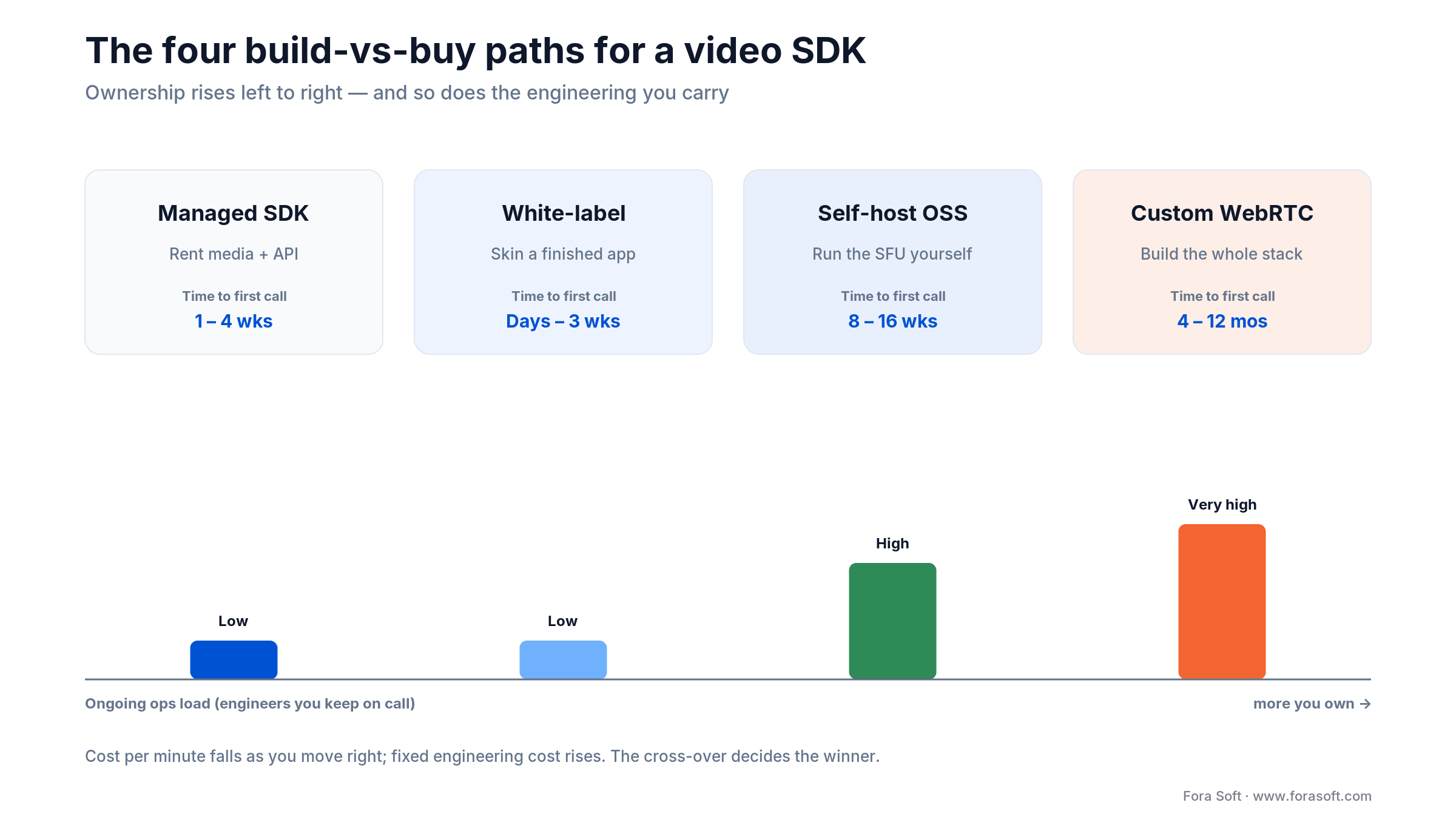
Figure 1. The four build-vs-buy paths. Cost per minute falls as you move right; fixed engineering cost rises.
If your product is a video chat app specifically, our companion four-path guide to building a video chat app walks the same decision with UX-specific detail.
What a video SDK actually includes
A video SDK is a packaged set of client libraries plus a hosted media backend that lets you add real-time audio and video to an app without operating WebRTC infrastructure yourself. You call an API to create a room and publish a track; the vendor handles the Selective Forwarding Unit (SFU), TURN relays for firewall traversal, recording, and the client SDKs for web, iOS, and Android.
Under the hood, an SFU is a server that receives each participant’s video and forwards it to everyone else without decoding and re-encoding it. That is why a video SDK scales past the three-or-four-person ceiling of peer-to-peer WebRTC. If the SFU/TURN/simulcast vocabulary is new, the topology choices are covered in our P2P vs MCU vs SFU explainer.
The distinction that trips up buyers: a video API and a video SDK usually ship together from the same vendor. The API is the server-side control surface (create rooms, mint tokens, start recordings); the SDK is the client code that connects to it. When people say “buy a video SDK,” they mean renting the whole managed stack behind both.
The four build-vs-buy paths
1. Managed SDK. Rent the media backend and call the API. Fastest to a working call (1–4 weeks). You pay per participant-minute and accept the vendor’s feature set. Best for teams where video is one feature among many.
2. White-label. Skin a finished video app or widget and embed it. Even faster (days to three weeks), least control. Good when you need a working room now and the vendor’s UI is close enough. Our white-label video SDK guide covers vendor picks and the 12-week build plan.
3. Self-host open source. Run LiveKit OSS or mediasoup on your own servers. Weeks to a few months of setup, and an ongoing ops commitment. You own the media plane and the bill drops to infrastructure plus engineering time.
4. Custom WebRTC. Build the whole stack, including your own signaling, SFU tuning, and recording pipeline. Months of senior work. Only worth it when custom rendering or behavior is the moat, as with Worldcast Live’s sub-second multichannel audio. For a deeper cost split of these paths, see our WebRTC development vs SDK cost breakdown and the OTT-focused build vs buy an OTT platform lesson.
Reach for a managed SDK when: you are below ~100k participant-min/mo, have no SRE on the team, need first call inside 8 weeks, ship a standard UX, and carry no compliance burden beyond SOC 2.
The cross-over math
The cross-over is the volume at which self-hosting gets cheaper than a managed SDK once you count engineering. It is not 10k minutes, despite what some cost calculators claim. Here is the arithmetic in the open.
A managed SDK at $0.004 per participant-minute (Daily, Agora HD, and Vonage all sit near there in 2026) costs $4 per 1,000 minutes. So 100k min/mo is $400, 1M min/mo is $4,000, and 10M min/mo is $40,000. The bill rises linearly with every user.
A self-hosted stack is mostly fixed. Three regional SFUs plus TURN relays and a control node land around $1,200–$1,500/mo on Hetzner-class hardware, and one senior engineer at ~30% allocation is another $4,000–$5,000/mo fully loaded. Call the floor ~$6,000/mo. Managed reaches $6,000/mo at about 1.5M participant-minutes. Add build amortization and the honest all-in cross-over lands near 1–4M participant-minutes a month, which is the same ballpark as ~50M minutes a year.

Figure 2. All-in monthly cost vs volume. Below ~100k min/mo managed wins; the lines cross near 1–4M min/mo once a DevOps FTE is priced in.
Two honest caveats. If you already run SRE with spare capacity, the marginal ops cost is near zero and the infra-only cross-over comes earlier, around 300k min/mo. And at very high volume the gap is dramatic: at 10M participant-minutes a month, self-hosting can run 60–80% below the managed bill once the team is in place. Below the cross-over, don’t build to save money; you won’t.
The 5-axis decision framework
1. Volume curve. Where will you be in 12 months? Below 100k min/mo, buy. 100k–1M, it depends on the other axes. Above a few million, custom or hybrid pays for itself.
2. Customization depth. Standard grid calls or 1:1 video? A managed SDK wins. Custom rendering, spatial layouts, broadcast overlays, or surveillance UIs? The vendor’s opinionated UI fights you, and building is the moat.
3. Compliance. SOC 2 alone is fine on either path (LiveKit Cloud and Daily both offer enterprise BAAs). HIPAA, FedRAMP, EU-only data residency, or customer-managed keys push you toward self-hosting inside your own VPC.
4. Team capability. Do you have someone who can run TURN clusters, watch SFU CPU, and debug SRTP desync at 2am? If yes, custom is feasible. If no and you have no plan to hire, stay managed until you grow that muscle.
5. Time-to-market pressure. Need a working call in two weeks? Managed. Have 8–16 weeks to do it right? Custom is a real option. The clock, more than the money, kills most build decisions.
True cost of a managed video SDK at scale
Sticker price per minute is only half the story. LiveKit Cloud in 2026 moved to a metered model: WebRTC connection minutes at roughly $0.0004–$0.0005 each plus data transfer at $0.10–$0.12/GB, so a bandwidth-heavy HD call costs more than the headline suggests. Cloudflare Realtime bills purely on egress ($0.05/GB after 1,000 free GB). The others bill per participant-minute. Here are the published 2026 rates.
| Vendor | 2026 pricing | Where it wins | Where it breaks |
|---|---|---|---|
| LiveKit Cloud | ~$0.0004–0.0005/conn-min + $0.10–0.12/GB | Same SDK as OSS; strong AI-agent support | Bandwidth billing surprises the unprepared |
| Daily.co | 10k free min, then $0.004/participant-min | Clean API, telehealth focus, BAA on Scale | Opinionated UI; recording billed on top |
| Vonage Video API | ~$0.0041/participant-min | Mature BAA, ex-TokBox support depth | Priced slightly above LiveKit/Daily |
| Agora | $0.99/1k audio, $3.99/1k video HD; 10k free | APAC reach, broad SDK surface | Weaker BAA story; HD tiers add up |
| Amazon Chime SDK | $0.0017/attendee-min (all modalities) | Cheap; native if you are AWS-deep | Minimal SDK; you build more yourself |
| Cloudflare Realtime | $0.05/GB egress, 1,000 GB free | Aggressive cost; global edge | Thinner features; you assemble more |
| Twilio Programmable Video | Active; contact-based pricing | Best-in-class PSTN when you need phone-in | Reversed its 2024 EOL — check roadmap fit |
Worked example: 100k participant-minutes/month, mixed audio + HD video. Daily is ~$400 (after the free tier), Agora HD is ~$399, Vonage is ~$410, Amazon Chime is ~$170, Cloudflare is a few dollars of egress. At this volume every option is cheap and engineering effort dominates, which is exactly why you buy here. For a head-to-head on the two most-compared vendors, see our LiveKit vs Agora cost analysis.
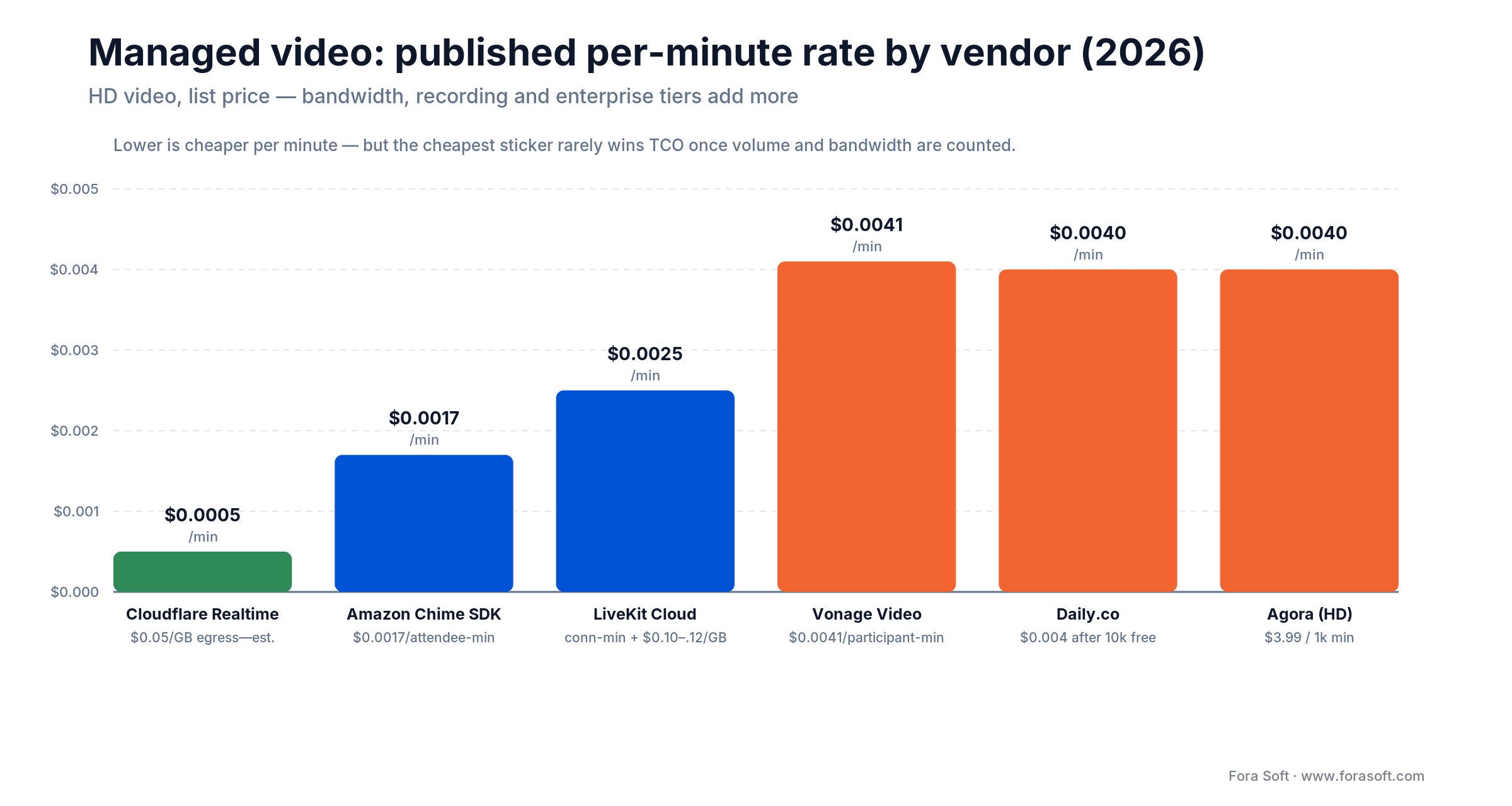
Figure 3. Published per-minute HD-video rates, 2026. The cheapest sticker rarely wins once bandwidth and features are counted.
True cost of building custom
Initial build. Architecture, an SFU deployment (LiveKit OSS or mediasoup), a TURN cluster, monitoring, client SDKs on two or three platforms, and basic recording is an 8–16 week effort with a senior team. Industry ranges for an SDK-assisted build run $50k–$300k; a from-scratch WebRTC platform runs higher and longer. We reuse patterns from 250+ shipped projects, so we usually land at the lower end of a given scope.
Hosting. A Hetzner AX102 (Ryzen 9 7950X3D, 128GB ECC) is around €110–150/mo. Three regional SFUs, two TURN relays, and a control node land near $1,200–$1,500/mo, with included egress covering a lot of traffic before you spill to a cloud provider at $0.05–$0.09/GB.
Maintenance. One senior engineer at ~30% allocation, ~$4,000–$5,000/mo fully loaded, covers monitoring, incident response, SDK upgrades, and security patches. This is the line founders forget, and it is the reason the cross-over sits where it does.
Cost shape. Custom is nearly all fixed cost. Once the SFU mesh is up, the marginal cost of another minute is close to zero until you hit the next capacity tier. That is the opposite of a managed SDK, where every minute is a fresh charge. Our Agora.io alternatives guide compares the self-host options in more depth.
Vendor matrix: pick by constraint
LiveKit (Cloud + OSS). Our default recommendation for new builds. The open-source SFU and the cloud run the same server SDK, so you can start managed and self-host later without a rewrite. Strong AI-agent story. The one gotcha is the bandwidth-metered bill.
Daily.co. Clean developer experience and a telehealth-friendly BAA. Pick it when its defaults match your UX and you value the fastest clean integration. See our Daily.co alternatives comparison for the flip points.
Vonage Video API. Mature support and an established BAA from its TokBox lineage. Worth the small premium when procurement wants a big, indemnifying vendor.
Agora. The strongest reach in China and Southeast Asia, and a broad SDK surface. Weigh the weaker BAA story if you are in a regulated vertical.
Amazon Chime SDK and Cloudflare Realtime. The cheapest tiers, best when your stack is already AWS-deep or Cloudflare-native and you are comfortable assembling more of the app yourself.
Self-hosted mediasoup. A battle-tested C++ SFU with a Node.js control plane that handles 500–1,000 participants per worker. Pick it over LiveKit OSS when you want a minimal, video-only footprint and don’t need the AI-agent tooling.
Reach for a white-label vendor when: compliance is the driver and you want the vendor to sign a multi-year BAA and indemnify you. The premium buys you a legal shield, not just software.
Want a second opinion on your SDK shortlist?
We’ve integrated every SDK in the matrix and run self-hosted stacks in production. Send your scenario and we’ll tell you the honest pick, including when it is not us.
The hybrid pattern: best of both
A pure managed-or-custom binary misses the smartest pattern. Run self-hosted SFUs for your predictable baseline load and fall over to a managed cloud for spikes, so you never over-provision for a peak you hit twice a year.
Why hybrid wins. Self-hosted SFUs are cheap at steady state but force you to provision for peak. If your peak is five times baseline, you either over-provision (and lose the savings) or fall over. Hybrid caps the worst case: baseline runs on your metal, the flash-sale spike rents cloud capacity for the hour it lasts.
How it works. The LiveKit Server SDK runs against both your self-hosted instance and LiveKit Cloud, unchanged. When you exceed your own capacity, room creation points at the cloud instead. Users see no difference; your bill flexes with demand. This same-SDK property is the main reason we default to LiveKit OSS over mediasoup when future flexibility matters.
Reach for hybrid when: your peak is 3× or more above baseline, you want self-hosted economics with a managed safety net, or you are migrating gradually and want a rollback path.
When to build custom
You are in a regulated vertical. HIPAA, defense, or legal work often demands data control that managed SDKs only sell at enterprise-BAA prices. Self-hosting inside your own VPC is frequently the simpler and cheaper path.
Your UX is the moat. Interactive broadcast overlays, spatial rooms, multichannel low-latency audio, or a surveillance grid cannot be done well on top of an opinionated managed UI. Worldcast Live’s 0.4–0.5s full-duplex streaming exists because it was built, not bought.
You have crossed the volume line. A few million participant-minutes a month and climbing means the trajectory is clear. Build while the engineering effort still fits your roadmap, before the invoice forces a rushed migration.
You compete with the SDK vendor. If you sell video conferencing or streaming as your product, paying a per-minute fee to a company that sells the same thing is funding your competitor. Own the stack.
Reach for custom when: you are past the cross-over, you have SRE muscle, custom rendering is your differentiator, or compliance requires self-hosting without paying enterprise-BAA fees.
When NOT to build
You have no senior video engineer. WebRTC, SFU operations, codec tuning, and NAT traversal punish teams learning on the job. Hire the expertise first or stay managed; a half-built media plane is worse than a rented one.
You need PSTN dial-in. Telephony is its own discipline. Even when you self-host video, route phone calls through Twilio or Telnyx and bridge them into your SFU as a SIP participant.
You launch in under 8 weeks. Building it right takes time you don’t have. Ship on a managed SDK, prove the product, and migrate later from a position of data.
Video is incidental to your core product. If video is one feature among many, the attention it takes to keep healthy steals focus from the thing that actually differentiates you. Rent it and move on.
Migration playbook: managed to custom
Moving off a managed SDK is a 12-week project, not a re-platform, and it should never be a big-bang cutover. Three phases, always with a rollback path. Our dedicated switching-from-a-video-SDK-to-a-custom-platform guide goes deeper on each step.
| Phase | Weeks | What happens | Exit gate |
|---|---|---|---|
| 1. Shadow | 1–2 | Deploy self-hosted SFU in parallel; mirror 1–5% of traffic (not live) | Quality (VMAF), latency, error rate match the managed baseline |
| 2. Parallel run | 3–6 | Live traffic 5% → 25% → 50% via feature flags; tune SFU mesh and TURN | Connection success, freeze rate, p95 latency hold at 50% |
| 3. Cutover | 7–12 | Ramp to 100%; keep the managed contract 30 days as rollback insurance | Two clean weeks at full traffic, then decommission |
The non-negotiable is the rollback. A feature flag that flips traffic back to the managed vendor in five minutes turns a scary migration into a boring one. Issues that hide at 50% traffic show up at 100%, and you want an escape hatch when they do.
Mini case: cutting a broadcast SDK bill
Here is a representative migration from our 2024–2025 work (client under NDA, numbers rounded). A broadcast platform running about 1.4M participant-minutes a month on a managed SDK was paying roughly $15,000/month by mid-2024, up from 200k min/mo at the start of the year. Custom looked attractive on paper; the engineering team was nervous about quality regressions.
The 12-week plan. Weeks 1–2 instrumented the current managed deployment with VMAF and freeze-rate logging so we had a real quality baseline. Weeks 3–5 deployed self-hosted LiveKit OSS across three regions with a cloud TURN cluster for symmetric-NAT fallback. Weeks 6–9 ran traffic shadow, then 5% → 25% → 60%. Weeks 10–12 rolled to 100% and kept the managed contract for 30 days as insurance.
Outcome. Self-hosted infrastructure landed near $1,500/month and the engineering allocation was about $2,500/month (0.3 of a senior), for roughly $4,000/month all-in against the $15,000/month managed bill. That is around $11,000/month saved, and p95 freeze rate actually dropped because regional SFU placement put media closer to viewers. Want the same audit on your traffic profile? Book a 30-minute call and bring your last invoice.
A decision framework: pick your path in five questions
Q1. Volume in 12 months? Under 100k min/mo, buy. 100k–1M, let the other axes decide. Past a few million, self-host with a managed fallback.
Q2. UX customization depth? Standard grid, buy. Custom overlays, spatial layouts, or surveillance UI, build.
Q3. Compliance posture? SOC 2 only, either path. HIPAA, self-host unless an enterprise BAA fits the budget. FedRAMP or EU-only residency, self-host required.
Q4. Engineering capability? SRE on the team or a funded hire, custom is feasible. No SRE and no plan, stay managed.
Q5. Time-to-market pressure? Under 8 weeks, buy. 8–16 weeks, custom is viable. More runway, build it right.
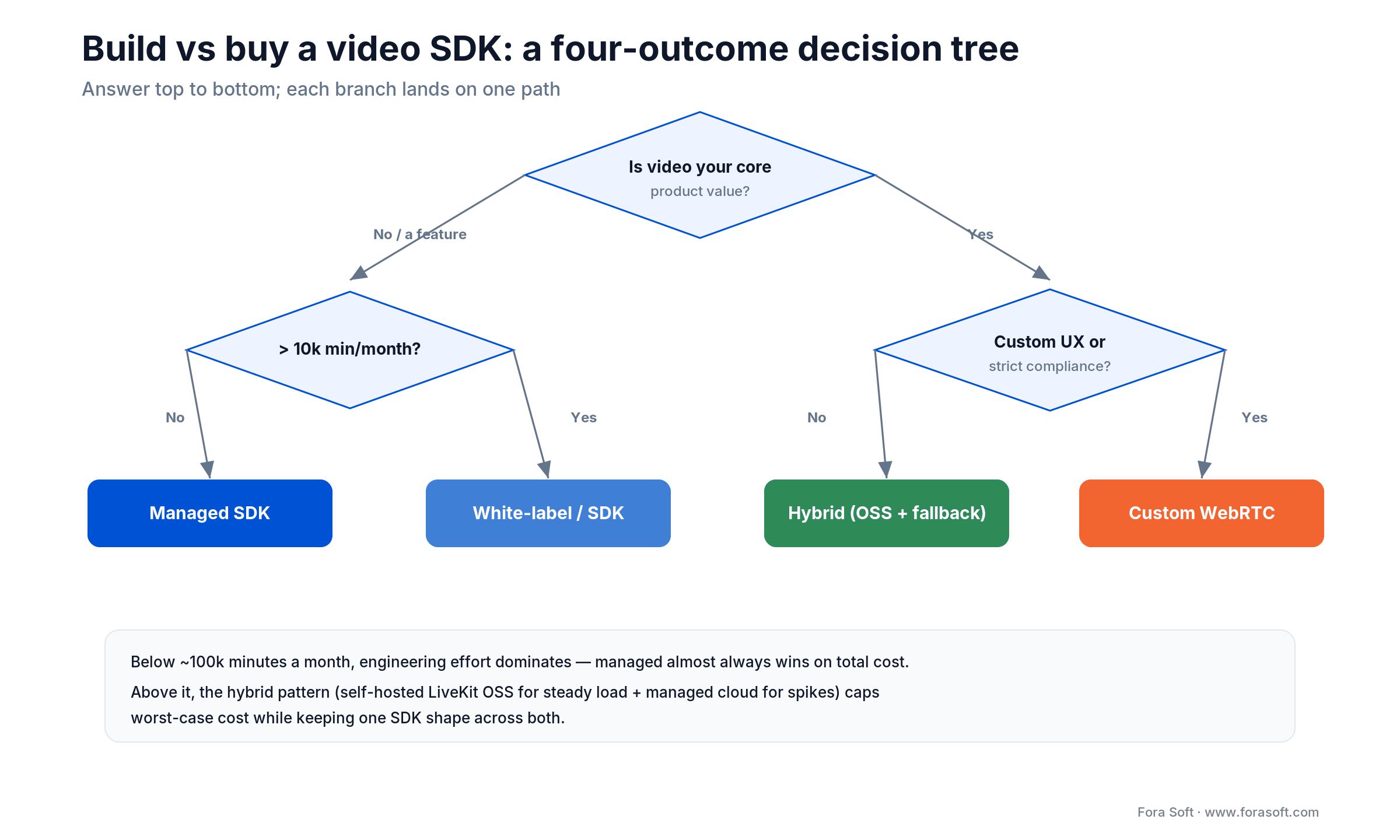
Figure 4. A four-outcome decision tree. Answer top to bottom; each branch lands on one path.
Pitfalls to avoid
1. Building because it sounds cheaper. Custom only wins past the cross-over, and only if the engineering effort is real. Build the spreadsheet before you fall for Hetzner pricing.
2. Under-provisioning TURN. Symmetric NAT on mobile carriers means a real slice of users can never establish peer connectivity. Run TURN in at least three regions and budget bandwidth at 30–40% of your delivery total.
3. Forgetting recording costs. The SFU is the cheap part. Compositing, transcoding, and storing recordings add real infrastructure; budget 30–50% of SFU cost if you need them.
4. Ignoring engineering rotation. Custom needs ongoing care: codec upgrades, security patches, monitoring tuning. If your one video engineer leaves, you inherit a problem a managed customer never has.
5. Migrating without a rollback plan. Keep the old contract for 30 days after cutover. A five-minute feature-flag rollback is the difference between a controlled migration and a weekend outage.
KPIs to measure
Quality KPIs. Connection success rate (target 99%+), p95 freeze rate (target under 1.5%), and a call-quality mean opinion score from user surveys (target 4.2+/5).
Business KPIs. Cost per delivered minute (target 50%+ below managed at your volume), engineering hours per month on the SDK layer (target under 50), and customer-reported quality issues (target 30%+ lower post-migration).
Reliability KPIs. SFU peak-hour CPU (target under 70%), TURN relay load (target under 60% at peak), and mean time to recovery on node failure (target under 60 seconds via auto-failover).
FAQ
What is a video SDK?
A video SDK is a set of client libraries plus a hosted media backend that adds real-time audio and video to an app without you operating WebRTC infrastructure. The vendor runs the SFU, TURN, and recording; you call an API to create rooms and publish tracks. LiveKit, Daily, Vonage, Agora, and Amazon Chime SDK are the main managed options in 2026.
Should I build or buy a video SDK?
Buy when time-to-market and standard features matter more than per-minute cost, which covers most teams under ~100k participant-minutes a month. Build or self-host when video is your core product, you clear roughly 1–4M minutes a month, or compliance forces data control. Shipping managed first and migrating later is a valid and common path.
Is Twilio Video still being discontinued in 2026?
No. Twilio announced an end-of-life for Programmable Video in 2024, then reversed the decision in October 2024, stating the product will remain and receive continued investment. It is supported in 2026, so advice telling you to migrate off Twilio Video “before it dies” is out of date.
How much does a managed video SDK cost per minute?
In 2026, Daily is $0.004/participant-minute after a 10k free tier, Vonage is ~$0.0041, Agora HD is $3.99/1k minutes ($0.00399), and Amazon Chime SDK is $0.0017/attendee-minute. LiveKit Cloud uses connection minutes (~$0.0004–0.0005) plus bandwidth ($0.10–0.12/GB), and Cloudflare Realtime bills egress at $0.05/GB.
At what volume does building custom pay off?
The all-in cross-over, counting a fractional DevOps engineer, sits near 1–4M participant-minutes a month (about 50M a year). If you already run SRE with spare capacity, the infra-only cross-over comes earlier, around 300k minutes a month. Below ~100k minutes a month, managed almost always wins on total cost.
LiveKit OSS or mediasoup for self-hosting?
LiveKit OSS for new builds where future flexibility matters, because the same server SDK works against your self-hosted instance and LiveKit Cloud, which makes hybrid and cloud fallback nearly free. mediasoup for a minimal, video-only footprint where you want a lean C++ SFU (500–1,000 participants per worker) and don’t need AI-agent tooling. Both are battle-tested.
How do I handle phone dial-in (PSTN)?
Self-hosting video does not mean self-hosting telephony. Terminate PSTN calls through Twilio or Telnyx and bridge them into your SFU room as a SIP participant. It is a standard pattern; we have shipped it for telehealth clients where phone-in is a fallback for patients without a good connection.
Can I migrate from a managed SDK mid-product?
Yes, and it is common. Use feature flags to route users between managed and self-hosted, keep the same SDK shape (the LiveKit Server SDK works against both), and plan a 12-week shadow-then-parallel-then-cutover sequence. Keep the managed contract for 30 days after cutover as rollback insurance.
What to Read Next
Cost
WebRTC Development vs SDK Cost
The full cost split under the build-vs-buy choice.
Migration
Switching From a Video SDK to Custom
The step-by-step migration playbook in full.
Comparison
LiveKit vs Agora Cost Analysis
Head-to-head on the two most-compared SDKs.
Alternatives
Daily.co vs Building Your Own
Cost, flip points, and architecture in 2026.
Guide
How to Build a Video Chat App
The four-path decision for chat specifically.
Ready to make the right call?
Below ~100k participant-minutes a month, a managed video SDK wins on total cost because engineering effort dominates. The all-in cross-over sits near 1–4M minutes a month, and above it a self-hosted or hybrid stack pulls ahead, reaching 60–80% savings at very high volume. Twilio Video is supported again, so ignore the “migrate or die” posts and choose on your own numbers.
The five axes (volume, customization, compliance, team, time-to-market) decide the path, and the cheapest moment to decide is before you cross a few hundred thousand minutes a month. After that, you are usually choosing between a rushed migration and a growing bill. Bring us your traffic profile and we will show you the honest read, including the cases where buying beats building.
Want a build-vs-buy read on your video stack?
Send your current SDK, monthly minutes, and constraints. We’ll return a one-page recommendation with the cross-over math for your traffic.