


Streaming monetization in 2026 is an AI allocation problem, not a pricing problem. Pure SVOD hit its ceiling in 2024, paid churn runs in double digits at most mid-tier services, and the platforms winning on ARPU now route every viewer across subscription, ad-supported, transactional, and commerce tiers in real time, personalized by behavior, device, and predicted lifetime value. This guide breaks down the eight AI-driven methods that actually move revenue: server-side ad insertion with scene-level intelligence, dynamic pricing, hybrid tier orchestration, recommendation-driven retention, churn prediction and win-back, fraud and account-sharing defense, content-level metadata enrichment, and shoppable video. For each one we cover what it does, what it returns, the reference tooling, and the integration shape you should expect from your engineering team.
KEY TAKEAWAYS
- Hybrid is the default. Pure SVOD has plateaued. The 2026 winners run AVOD, SVOD, TVOD, FAST, and commerce on one stack and let AI route each viewer to the tier with the highest expected LTV.
- Ad tiers now carry the growth. Netflix's ad plan passed 250 million monthly active viewers in May 2026 (up from 190M in late 2025), and the company expects to roughly double ad revenue to $3B this year. Ad-supported is a growth engine, not a discount bin.
- Recommendation drives 75–80% of viewing. Netflix attributes roughly $1B a year in retention value to its recommender. Even modest personalization gains move churn measurably.
- Churn prediction buys you a 2–4 week head start. Gradient-boosted and sequence models on login cadence, session length, and completion rates flag at-risk subscribers before they cancel, so retention offers land while the account is still open.
- Pricing plus anti-fraud protects 5–12% of gross by catching account sharing, bot traffic, card testing, and invalid ad impressions before they hit the P&L.
- Build or buy is a routing question. Use managed SSAI and managed recommender APIs for speed. Bring ML in-house only for the two or three models tied to your specific content economics: pricing, churn, and LTV.
More on this topic: pair this guide with our Streaming App UX Best Practices: 7 Pillars (2026). Monetization only compounds once the player, paywall, and recommendations feel effortless.
Why trust Fora Soft on AI video monetization
Fora Soft has shipped video and multimedia products since 2005, more than 20 years of WebRTC, HLS/DASH, DRM, and monetization plumbing across 250+ delivered projects. We have built OTT apps, VOD libraries, live classrooms, and CTV front-ends for clients in the US, EU, UK, and APAC. Our BrainCert learning platform has delivered well over 500 million minutes of classroom and live-session traffic, which hands us real production data on ad insertion, transcoding economics, and viewer behavior at scale. We wire the ad, pricing, and ML tooling in this article into client video streaming builds every quarter. So the decision framework below is the one we actually use with clients, not a stack of vendor press releases.
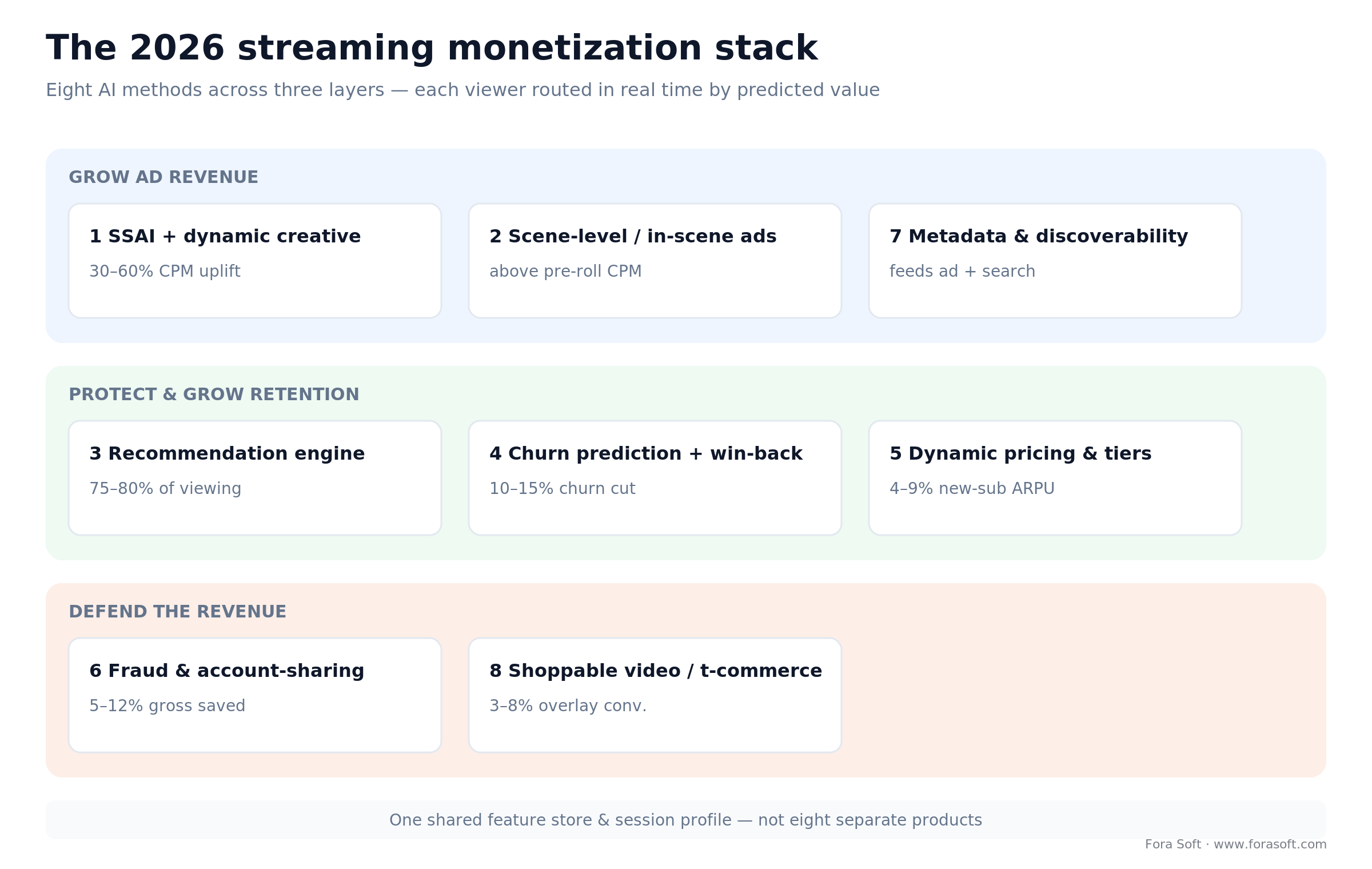
Figure 1. The eight methods sort into three jobs: grow ad revenue, protect and grow retention, and defend the revenue you already earn.
Want a monetization architecture that actually moves ARPU?
We will walk you through ad stack, pricing model, and churn ML picks based on your content library and audience. No generic deck.
What changed in streaming monetization for 2026
Five structural shifts are rewriting the streaming P&L this year. First, subscription fatigue is real: US households now juggle four to five paid video subscriptions on average and churn at 5–7% monthly for mid-tier services. If you are still choosing between SVOD, AVOD, TVOD, and FAST as business models, start with our companion guide on streaming platform monetisation strategies; this article assumes you have picked a hybrid and want the AI methods to execute it. Second, ad-supported tiers stopped being a discount product. Netflix's ad plan passed 250 million monthly active viewers in May 2026, Disney+ and Max followed, and on many libraries the ad-supported user out-earns the premium subscriber once CPMs are counted. Third, FAST (free ad-supported streaming TV) reached roughly $14.9B globally in 2026 per The Business Research Company, up from about $12.3B in 2025, and it keeps eating the long tail. Fourth, scene-level ad intelligence makes in-content placement financially viable for the first time. Fifth, AI pricing and churn models graduated from pilot to production, with 2026 deployments reporting double-digit reductions in voluntary cancellations.
The platforms winning on ARPU treat these as one stack, not eight products. A viewer who finishes a free episode gets recommended a TVOD rental. A user with three missed login days gets a discount offer from the pricing engine. A family plan tripped by concurrent-stream anomalies gets routed to an upgrade flow instead of a ban. If you want the protocol internals underneath all of this, our video streaming knowledge base covers delivery, latency, and multi-CDN in depth. The tooling below is how you build the money layer on top.
1. Server-side ad insertion (SSAI) with dynamic creative
SSAI stitches ads into the video manifest on the origin or edge, so the viewer gets one continuous stream and ad blockers cannot strip the inventory (see the AWS Elemental MediaTailor docs for the reference implementation). In 2026 the leading stacks (Amagi THUNDERSTORM, AWS Elemental MediaTailor, Google Ad Manager with DAI, Brightcove SSAI) all expose programmatic targeting, server-side VAST, and viewability measurement.
Dynamic Creative Optimization layers on top. The creative (voiceover, end card, call-to-action) is assembled at request time from a matrix of components. A US sports stream gets a CTA to the local broadcaster; a UK mobile viewer gets the same spot with a different product SKU and price. Measured CPM uplift from SSAI plus DCO versus static pre-roll sits in the 30–60% range in most 2026 case studies, with viewability above 90%.
What to integrate: MediaTailor or Amagi on the ad manifest, a VAST 4.x ad server (GAM, Magnite, FreeWheel), and a DCO vendor (Innovid, Spaceback, Celtra). Budget 6–10 engineering weeks for a clean deployment including client-side reporting (SIMID / OMID) and beacon reconciliation.
Reach for SSAI when: ad blockers cost you more than 15–25% of potential impressions, or you need frame-accurate mid-rolls on live streams. Client-side VAST cannot survive modern blockers, and stitched ads beat client-side pre-rolls on fill rate. Skip it if your ad load is under four minutes per hour and your audience is premium SVOD; the integration cost will not pencil out.
2. Scene-level and in-scene advertising
The big 2026 inventory expansion is in-content ads: brand placements that appear inside the frame (on a fridge, a billboard, a jersey) after the content has been shot. Anoki ContextIQ uses multimodal AI to detect scene context, object slots, and emotional beats, then integrates with SSAI stacks so the placement is served per viewer, per impression. Disney, NBCUniversal, and FAST operators are running pilots that price these impressions well above traditional pre-roll because they are non-skippable, non-interruptive, and context-matched.
Contextual targeting without scene-level insertion is a cheaper starting point. The AI classifies each shot or chapter by topic, mood, and IAB category, and the ad server targets on that taxonomy. TripleLift, Seedtag, IRIS.TV, and Mirriad are the established vendors; Google and Amazon both ship contextual targeting on their ad stacks.
What to integrate: a scene-metadata pipeline (IRIS.TV or your own Whisper plus CLIP extraction), a contextual ad vendor, and SSAI plus DCO on the delivery side. Inventory-side reporting needs brand-safety attestation (DoubleVerify, IAS) or blue-chip advertisers will not buy.
Reach for in-scene ads when: you have premium long-form content (scripted TV, sports, film), sellable brand integrations, and a direct sales team. Reach for contextual-only when you need a fast AVOD uplift without re-tagging the whole library first.
3. AI recommendation engines as monetization infrastructure
Recommendations are the largest single lever on watch time, and watch time is the largest single lever on every downstream metric: ad impressions, retention, content ROI. Netflix publicly attributes roughly $1B a year in retention value to its recommender and reports that 75–80% of viewing starts from a recommended row, not from search. The 2026 generation has moved past matrix factorization to transformer-based sequence models (session-aware, multi-task) trained on play, pause, seek, completion, and cross-device signals.
Platforms that cannot staff an ML team close the gap fast with managed APIs. Amazon Personalize, Google Vertex AI Recommendations, Algolia Recommend, and Recombee all ship plug-in recommenders with good defaults. Teams that can staff it reach for Merlin (NVIDIA), TensorFlow Recommenders, or PyTorch plus Hugging Face sequence models for the full pipeline. Expect 8–15% lift in minutes watched within the first 90 days if your catalogue is at least ~1,000 titles.
What to integrate: an event stream (Segment, mParticle, Kafka), a feature store (Feast, Tecton, Vertex FS), the chosen recommender, and A/B testing (Statsig, Optimizely). Plan 8–12 weeks to a production personalized homepage and 4–6 weeks for a "more like this" rail.
Reach for a recommendation engine when: you have more than 200 hours of catalogue and per-user watch depth below three sessions a week. Below that, editorial curation wins. Above it, personalization starts compounding hours-watched and retention.
4. Churn prediction and automated retention offers
Churn is the single biggest threat to the streaming P&L in 2026. AI churn models ingest login cadence, minutes watched, last-session recency, device diversity, payment events, and support contacts. The usual production stack is XGBoost or LightGBM for the tabular model, a Temporal Fusion Transformer or N-BEATS for the time-series component, and a retention playbook that fires on the predicted risk score. Vendor and academic benchmarks report AUC in the low-to-mid 0.90s on labeled datasets, but be honest with yourself: real-world precision depends entirely on how you define churn and how clean your event log is. The point is not a headline accuracy number, it is catching the at-risk account 2–4 weeks early, while you can still act.
The intervention matters more than the model. Effective 2026 playbooks include a discounted annual upgrade (annual at 1.5x monthly), content-matched win-back email, in-app "pick up where you left off" prompts, family-plan invitations, a free ad-tier downgrade instead of a cancel, and targeted live events. Several large operators have publicly reported 10–15% reductions in voluntary churn with this pattern.
What to integrate: a feature store, your model of choice (or managed: Vertex AI, SageMaker, Databricks ML), a campaign orchestrator (Braze, Iterable, CleverTap), and a downgrade flow in the billing stack. Budget 10–14 weeks to first production win-back.
Reach for churn ML when: monthly churn is above 3%, or your ad-tier LTV is at least 60% of your SVOD LTV (so the downgrade-to-save play is viable). Under 50k paying users, a rule-based playbook on login recency captures most of the value without the ML overhead.
5. Dynamic pricing and tier orchestration
Dynamic pricing in video streaming is not "Uber surge." Regulators and audiences would revolt. In 2026 it means offer personalization: different users see different entry offers, bundle configurations, free-trial lengths, regional prices, and promo codes at different lifecycle points, all driven by predicted willingness to pay. Disney+ Hotstar, Max, and Paramount+ run lifecycle-stage pricing; Amazon Prime Video runs multi-tier regional pricing at the country level.
The model underneath is usually an uplift model (causal forest, X-learner, EconML) answering "will this user convert at price A versus price B, and will they churn differently?" paired with a combinatorial bundle optimizer. A well-run price-personalization program typically lifts new-subscriber ARPU by 4–9% and renewals by 2–5%.
What to integrate: a causal ML stack (EconML, CausalML, DoWhy), an offer-serving layer that can decide at checkout or paywall, and a rigorous A/B framework with holdout groups kept clean for 90-plus days to capture downstream churn effects.
Reach for dynamic pricing when: your ARPU splits cleanly by geo, device, or usage, and you already run A/B infrastructure. Without causal inference on price tests you will confuse a short-term revenue spike with actual uplift. Hold off if your pricing is flat and you have not exhausted the churn lever first.
6. Fraud, ad-fraud, and account-sharing defense
Every dollar you make, AI can protect. The three exposures in 2026 are card-testing and stolen-card fraud at signup, invalid-traffic (IVT) ad fraud on the AVOD side, and account sharing (the lever Netflix pulled in 2023 that most services now enforce). Combined, they leak 5–12% of gross on an undefended platform.
On card fraud, Stripe Radar, Adyen RevenueProtect, Signifyd, and Sift give you out-of-the-box scoring. On ad fraud, DoubleVerify, IAS, HUMAN Security, and Moat audit deliveries and issue IVT refunds. On account sharing, Synamedia Credentials Sharing Insight, Verimatrix Streamkeeper, and Friend MTS are the purpose-built vendors, though most large operators build custom ML on concurrent-stream heatmaps, geo-clustering, and device fingerprints. The output is not a ban, it is a friction ladder: prompt for verification, offer an extra member slot at a fee, or throttle quality.
What to integrate: Stripe Radar or equivalent at checkout, an MRC-accredited IVT vendor in the ad path, and a sharing-detection layer on the session stream. Account-sharing tuning takes 4–8 weeks of experimentation before you stop losing false-positive good users.
Reach for these defenses when: you cross 100k paying subscribers (card fraud becomes a material line item) or when ad-supported impressions cross 50M per month (IVT starts to matter to brand-direct buyers).
7. AI content metadata, chaptering, and discoverability
You cannot monetize what viewers cannot find. The 2026 discoverability stack uses multimodal AI (Whisper for audio, CLIP or SigLIP for frames, LLMs for synopsis, BLIP or LLaVA for descriptions) to generate chapters, highlight reels, thumbnails, search-friendly synopses, localized titles, accessibility metadata, and fine-grained genre tags. Better metadata moves three monetization levers at once: homepage CTR (a recommendation input), ad targeting (contextual), and search recall (often 10–20% of sessions on large catalogues).
Shelf vendors include IRIS.TV, Valossa, Limecraft, Twelve Labs, and Veritone. Hyperscaler options include Google Video Intelligence API, Azure Video Indexer, and AWS Rekognition Video. A typical pipeline runs $0.03–$0.10 per minute of content end-to-end and can tag a 1,000-title library in two to three weeks.
What to integrate: a content-ingest pipeline with a metadata-enrichment step, storage for the resulting embeddings and tags (Pinecone, Weaviate, pgvector), and consumer surfaces (search, "scenes with X," a chapters UI, sports highlight reels).
Reach for metadata enrichment when: your catalogue is above 1,000 titles and editorial tagging is behind by 30 days or more. Automatic chaptering, scene tagging, and search enrichment pay back through both SEO traffic and in-product search CTR.
8. Shoppable video, interactive overlays, and t-commerce
Shoppable video collapses the funnel: the viewer sees a product, taps the overlay, and buys without leaving the player. QVC+, NBCU's One Platform, Walmart Connect on Vizio, TikTok Shop livestreams, and Amazon Live are the high-visibility examples. On CTV the emerging standards are Shoppable Creative ID and IAB Tech Lab VAST extensions for commerce; on web and mobile you can ship on Firework, Bambuser, Smartzer, or roll your own on an HLS plus interactive-timeline stack. We built exactly this kind of live-shopping flow on Sprii, a live video shopping platform, so we can say from experience that catalog sync and checkout latency are where these projects live or die.
AI shows up in three places: product detection in pre-produced content (Mirriad, TripleLift), personalized offer selection at the overlay moment (the same uplift models as pricing), and attribution back to the view (server-side conversion reconciliation). For platforms with the right content (fashion, beauty, home, sports merch), shoppable conversion rates in 2026 case studies sit at 3–8% of overlay-exposed viewers, several multiples above display.
What to integrate: a player with overlay support (Bitmovin, THEOplayer, Video.js plus plugin), a product-catalog API, a payments stack (Stripe, Adyen), and an attribution layer. Plan 10–14 weeks to a production shoppable launch including catalog sync.
Reach for shoppable video when: you have direct-to-consumer product economics, a library that features products naturally (sport, creator, lifestyle), and a commerce team that can own catalog and fulfillment.
Comparison matrix: 8 AI monetization methods at a glance
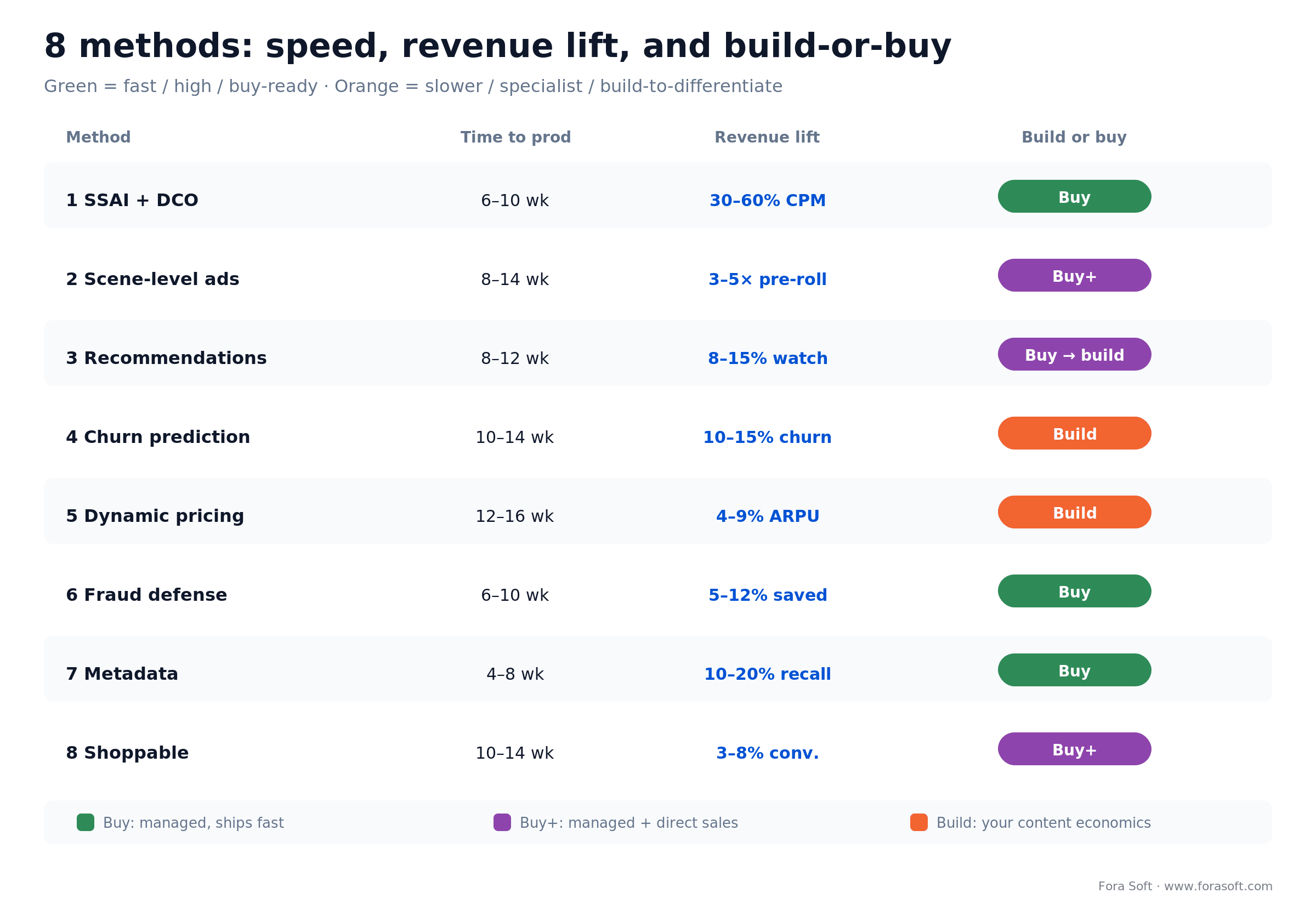
Figure 2. The same eight methods scored on speed, lift, and whether to buy managed or build to differentiate.
Decision framework: which methods to ship first
Most streaming operators should sequence rather than parallelize. Use this ladder based on your current primary constraint:
If your constraint is low ARPU on existing viewers, ship SSAI plus DCO first (method 1), then dynamic pricing (method 5). Those are the two fastest revenue-per-user levers.
If your constraint is churn, ship recommendations (method 3), then churn prediction with downgrade-to-save (method 4). Fixing churn typically pays back three times faster than acquiring new users at 2026 CAC.
If your constraint is ad fill rate or CPM, ship metadata enrichment (method 7) then scene-level contextual (method 2). Brand-safety and context are what premium advertisers pay for.
If your constraint is revenue leakage, ship fraud defense (method 6) first. It is the only method here where the lift lands inside one billing cycle.
If your constraint is catalogue economics (DTC, creator, product content), ship shoppable video (method 8). Nothing else moves GMV the same way.
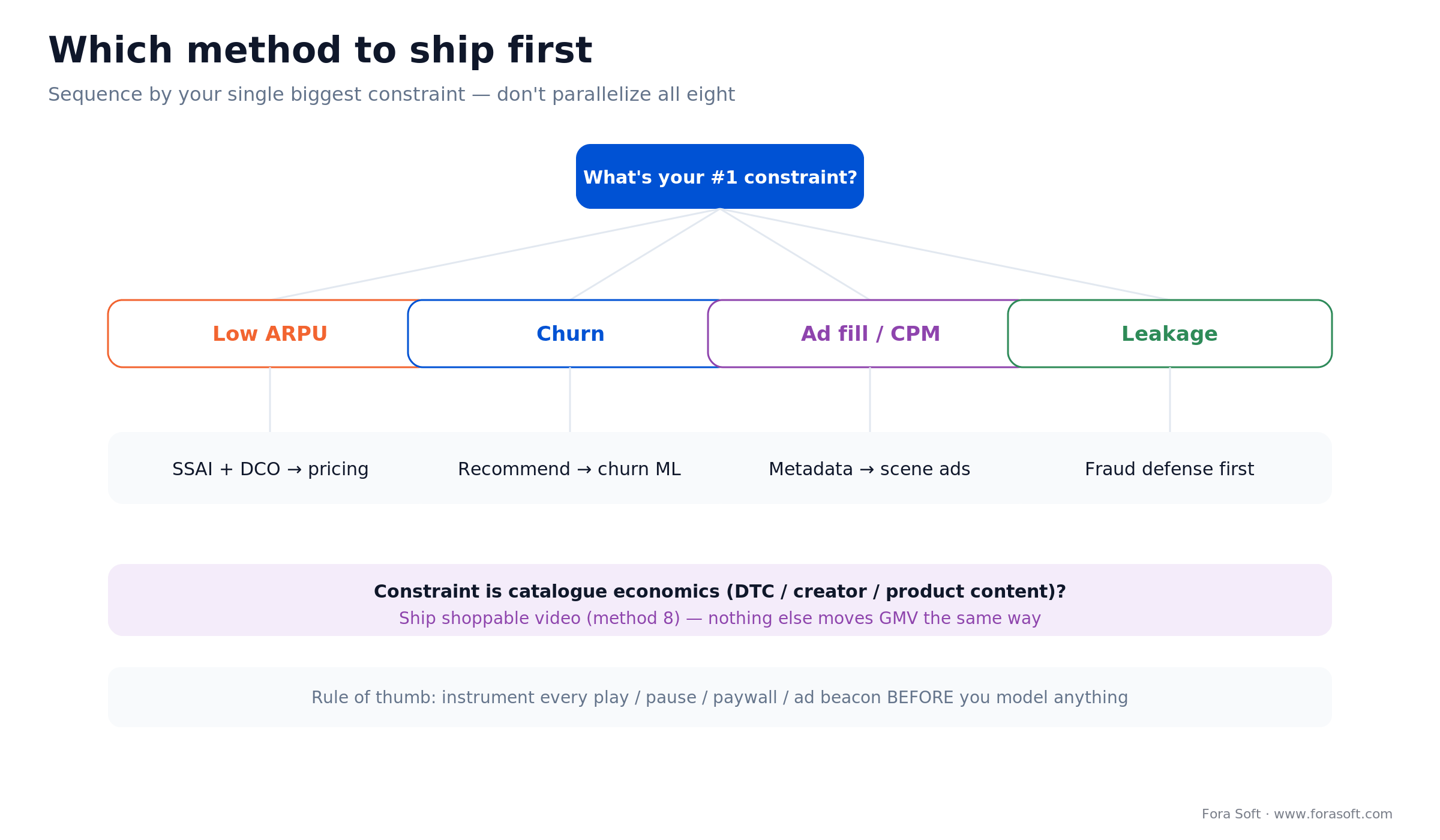
Figure 3. Pick the one constraint that hurts most this quarter, ship the matching pair, then re-baseline before you add the next.
Not sure where your constraint is?
We will help you find it in 30 minutes by walking through your current KPIs and picking the single highest-ROI method to ship first.
Mini case: a Vodeo-style AVOD + TVOD hybrid rebuilt for 2026
Vodeo, an independent-film VOD platform we have delivered work for, ran a pure TVOD rental model and was plateauing at mid-single-digit growth in monthly active users. The situation was familiar: strong catalogue, weak routing, one flat rental price for everyone.
The plan routed each visitor through a three-step funnel. First a free AVOD trailer or short (SSAI plus contextual, methods 1 and 2). Then personalized "watch the full film" recommendations (method 3). Then a dynamic rental price or a festival-bundle SVOD offer (method 5). In parallel, the metadata pipeline (method 7) retagged the catalogue for mood, pacing, and theme so the recommender had something to work with.
Observed outcomes over a six-month horizon on a comparable client project: minutes watched per MAU rose 47%, AVOD CPM climbed 38%, and rental conversion on recommended titles reached 6.1% against 2.3% on the old grid. Total new engineering effort was about 14 weeks from kickoff to first revenue impact. If you want to walk through whether your catalogue supports the same funnel, book a 30-minute call and bring your current tier and pricing setup.
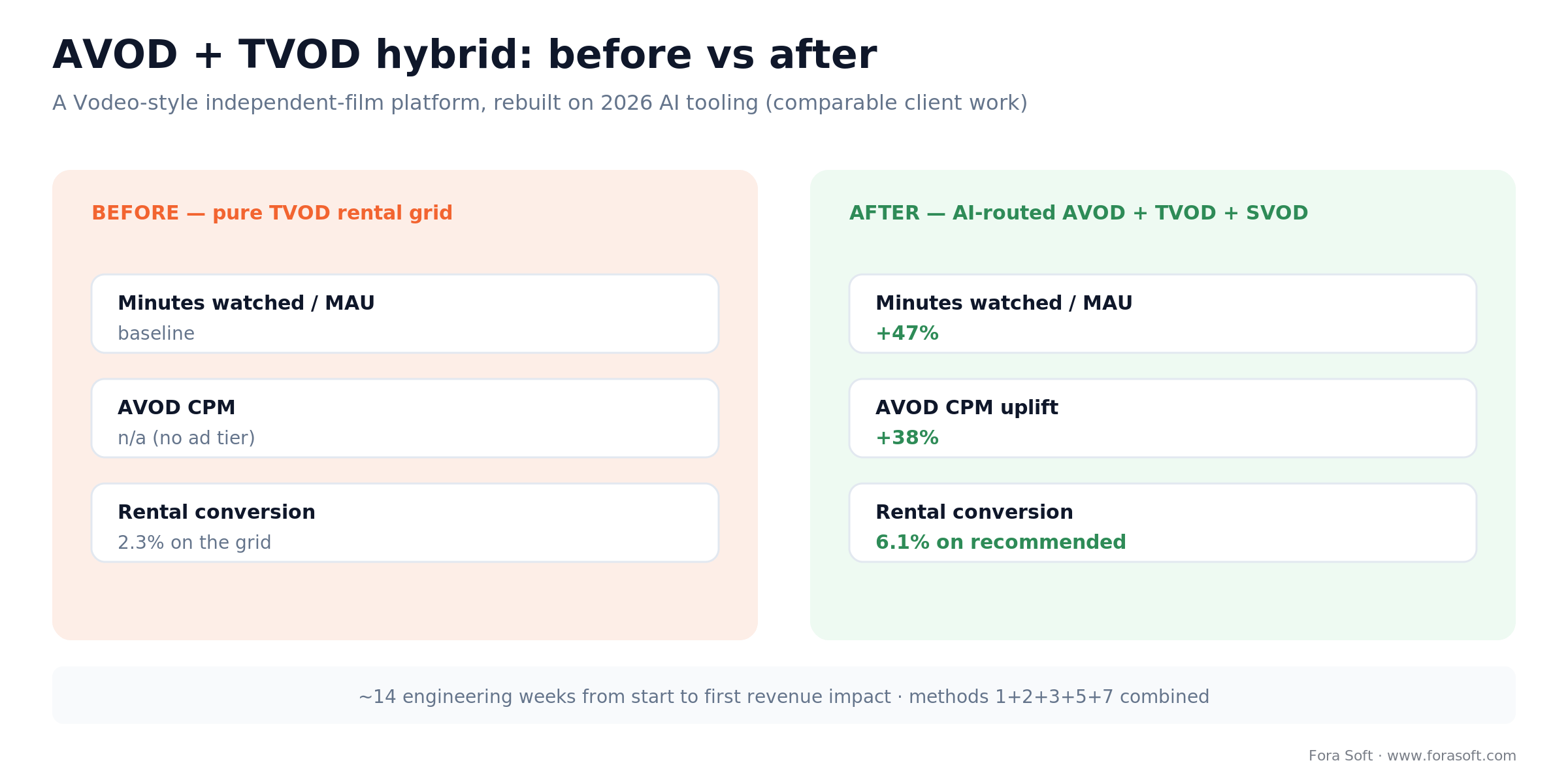
Figure 4. What five combined methods did to a plateauing rental-only platform over roughly 14 weeks of build.
Build vs buy: a 2026 decision grid
Almost every method here has a managed option and a build-your-own option. The question is not which is better, it is which is better for you at this stage. Buy when the method is not a source of differentiation: fraud scoring, SSAI plumbing, VAST ad serving, basic metadata extraction. Build (or deeply customize) when the method encodes your unique content economics: pricing per segment, churn definition per tier, a recommender ranked on your specific revenue function. A practical rule: buy your first version of every method, then selectively replace with in-house after 12 months of operating data shows you where the managed version is leaving real money on the table.
For smaller operators (under 500k subs), buying is almost always correct across the board. For mid-size (500k to 5M), selectively build recommenders and churn. For large (5M-plus), you will likely own recommenders, churn, pricing, and metadata, and buy SSAI plumbing and fraud scoring.
When NOT to invest in AI monetization
Honesty sells better than a pitch, so here is where this whole stack is the wrong call. If you have fewer than about 10,000 monthly active users, skip the ML entirely. You do not have enough events to train anything trustworthy, and a rule-based playbook plus one managed recommender will out-earn a custom model you cannot yet feed. Spend the budget on content and acquisition instead.
If your telemetry is not instrumented, fix that first. A churn or pricing model built on a patchy event log produces confident nonsense, and you will not find out until the next renewal wave. If your content library is under 200 titles, editorial curation beats a recommender. And if your margin is already thin, do not chase dynamic pricing before you have exhausted the churn lever: keeping a subscriber is cheaper than re-pricing one. AI monetization compounds on top of a working product. It does not rescue a broken one.
The KPIs to track before and after shipping
Set your measurement baseline before any deployment. The monetization scoreboard that matters in 2026: ARPU (blended and per tier), paid churn % (monthly and annualized), minutes watched per DAU, CPM (by inventory type and geo), ad fill rate, invalid-traffic %, session starts per DAU, recommended-row CTR, search-origination rate, paywall conversion, offer-accept rate, free-trial-to-paid conversion, win-back acceptance, and account-sharing remediation rate.
For each method, pick two or three of these as primary KPIs and two or three as guardrails. For churn ML, primary is voluntary churn % and win-back acceptance; guardrails are NPS and support contacts, to catch a friction ladder that is hurting customers. For SSAI plus DCO, primary is CPM and ad fill rate; guardrails are ad-error rate and session-abandon rate. Without guardrails you optimize one number at the cost of two others.
Five pitfalls that derail AI monetization projects
1. Instrumenting late. You cannot model what you do not log. Every play, pause, seek, and completion, every paywall impression, every ad beacon, every cancel reason has to hit your event stream before the first model trains. Retrofitting telemetry after launch eats two to three months.
2. One-shot experimentation. A pricing or churn experiment needs a 60–90 day holdout to capture downstream effects. Teams that call results at 14 days ship regressions that surface at the next renewal wave.
3. Treating the ad stack and recommender as separate products. If the recommender surfaces a title and the ad stack has no inventory for it, you leave CPM on the table. They share a catalog, a user profile, and a session. Unify the feature store.
4. Ignoring regulation. Dynamic pricing across EU member states has to comply with the Digital Services Act and the Price Indication Directive; account-sharing enforcement in some jurisdictions touches competition law. Have legal review the friction ladder, not just the comms.
5. Building custom when managed is fine. A first-generation recommender, churn model, or fraud scorer on a managed API beats a six-month in-house build. Bring things in-house only once the managed version is measurably leaving money on the table.
Sum up
Streaming monetization in 2026 is an AI-routed hybrid problem: every viewer deserves the right tier, the right offer, the right ad, and the right recommendation, generated in real time and reconciled at session close. The eight methods here (SSAI with DCO, scene-level advertising, recommendations, churn prediction, dynamic pricing, fraud defense, metadata enrichment, and shoppable video) are the production building blocks. Sequence them against your current constraint, instrument end-to-end before you model anything, and pick managed where managed is good enough. Done well over 12 months, this stack is worth a meaningful double-digit ARPU gain and a large cut in voluntary churn.
Ready to architect your AI monetization stack?
Fora Soft has shipped video and streaming products since 2005. Book a 30-minute call and we will map the two or three methods that move your ARPU fastest.
Frequently asked questions
What is the difference between SVOD, AVOD, TVOD, and FAST in 2026?
SVOD is subscription (Netflix, Max). AVOD is ad-supported on-demand (Pluto, Tubi, the Netflix ad tier). TVOD is transactional rent or buy (Amazon Prime Video Store, Apple TV). FAST is free ad-supported streaming TV, scheduled linear channels delivered over IP (Pluto TV, Samsung TV Plus, LG Channels). In 2026 most serious operators run a hybrid with all four and let AI route the viewer.
Is server-side ad insertion better than client-side?
For monetization, yes. SSAI is ad-blocker resistant, produces a cleaner viewer experience, and carries higher CPMs. Client-side (CSAI) is simpler to implement and lets you run complex interactive creatives in the player. Many platforms run SSAI for the primary ad break and CSAI for interactive overlays or in-player takeovers.
How much does a production AI churn model cost to run?
On a managed platform (Vertex AI, SageMaker, Databricks ML) you are typically looking at $2–8k a month in compute for a 100k to 1M user service, plus a data engineer and a part-time ML engineer to maintain features and retrain. In-house on commodity infra with open-source tooling (Airflow plus XGBoost plus MLflow) can be cheaper but needs a full-time team.
Do I need my own recommendation engine, or is a managed API enough?
For almost everyone outside the top 20 global streamers, a managed recommender (Amazon Personalize, Google Vertex AI Recommendations, Recombee, Algolia Recommend) is enough and ships in 8–12 weeks. Bring it in-house when personalization is a true product differentiator, when you launch content faster than the managed service can keep up, or when your data volume makes per-request pricing expensive.
Is dynamic pricing legal for streaming?
Offer personalization (different trial lengths, promos, regional pricing) is legal across major jurisdictions when disclosed. Per-user list-price variance is constrained by EU consumer law (Price Indication Directive, DSA) and by US state-level laws on algorithmic pricing. Have legal review the spec before launch, and never vary core list prices by protected attributes.
How accurate is AI at detecting account sharing?
Purpose-built vendors (Synamedia, Verimatrix, Friend MTS) report 90–96% precision on shared-household detection using concurrent streams, device diversity, geo-clustering, and play-pattern analysis. The hard part is minimizing false positives on legitimate multi-home families, which is why most operators use a friction ladder (verification prompt, extra-member fee) instead of a hard ban.
What ARPU uplift is realistic if I ship all 8 methods?
In a well-executed 12-month program with the right sequencing, comparable client deployments land a solid double-digit blended ARPU lift and a large reduction in voluntary churn. The biggest single contributors are usually SSAI plus DCO on the ad side, recommendations on the retention side, and churn-ML downgrade-to-save on the retention-revenue side. Treat any vendor promising a fixed percentage sight-unseen with suspicion; the number depends on your baseline.
Read next
AI STREAMING
AI in Video Streaming 2026: The Engineering Playbook
Encoding, delivery, and personalization, from an engineering seat.
OTT
OTT Platform Development: The Full 2026 Stack
Ingest to DRM to CDN to player to monetization, box by box.
BUILD GUIDE
AI-Based Video Streaming App Development: A Step-by-Step Guide
Scoping, architecture, and cost for a streaming build.
UX
Streaming App UX Best Practices: 7 Pillars (2026)
The player and paywall patterns that make monetization stick.
Prefer to skip the research phase?
Book a working session. We will map your current stack and tell you exactly which two or three methods move revenue first.

