

Key takeaways
• Match the archetype to your stage first. Freelancer under $30k, boutique shop for MVP-to-Series-A, mid-tier for complex-domain scale-ups, enterprise integrator for $5M+, staff augmentation for ongoing capacity. Wrong archetype, wrong outcome, well before you compare a single quote.
• The brief drives the estimate. A 12-section brief pulls quote spread from 5× down to under 1.5× across vendors. Unclear requirements is the single biggest reason software projects fail (39% of cases, per Standish).
• Discovery is not optional. $5–15k on a 2–4 week discovery saves $50–150k in mid-build re-architecture. Any vendor who says “let’s start coding next week” is quoting you a fantasy.
• AI tools changed the floor, not the ceiling. 84% of developers now use AI coding tools, but only 33% trust their output (Stack Overflow, 2025). Prototype with Lovable or Cursor; hire engineers to make it survive real users.
• We’ll tell you when we’re the wrong fit. Section 13 lists exactly when Fora Soft is the wrong choice. Honest beats slick on a six-month engagement.
Why Fora Soft wrote this playbook
Here’s how to hire a software development company in one breath: match the partner archetype to your stage, write a brief tight enough to get comparable quotes, pay for a short discovery before you commit to a build, evaluate proposals on evidence instead of price, and lock named engineers, IP transfer and exit terms into the contract. The rest of this guide is that sentence, unpacked, with the numbers.
Fora Soft has shipped 250+ projects since 2005. We’ve walked a lot of non-technical founders from “here’s my idea” to “here’s my Series A deck”: BrainCert bootstrapped a WebRTC virtual-classroom LMS to $3M revenue and 100K+ customers; TransLinguist went from concept to the NHS UK national interpreting framework; Sprii grew into a live-shopping platform that has moved €365M+ in sales. We also built the original StreamLayer, now used by NBC, CBS, Red Bull and Chelsea FC.
We’ve also watched founders burn their first six months and a third of their seed round on the wrong partner. The failure patterns are boring and repeatable, which is good news: boring problems have checklists. This is the checklist we wish every founder had before signing their first development contract.
If you’re a non-technical founder, a domain expert (a doctor, a teacher, a broadcaster) with an idea and no technical co-founder, or a BizDev lead launching an innovation project inside a bigger company, this guide tells you which archetype fits your stage, how to write a brief, what separates a real proposal from a sales pitch, and where these engagements usually break.
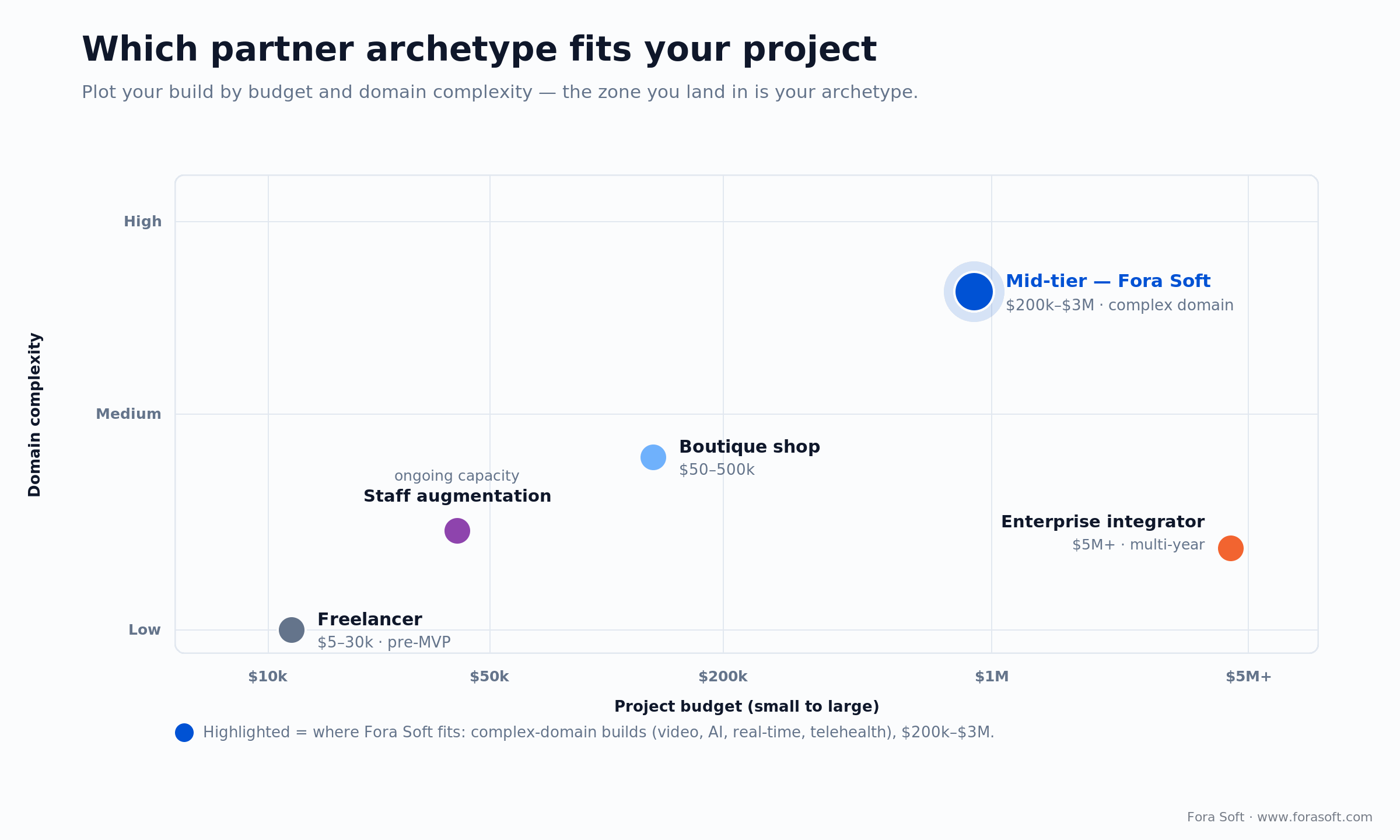
Figure 1. Match the archetype to your budget and domain complexity before you compare a single quote.
First time hiring a dev partner?
Send us your idea or early spec. We’ll tell you honestly whether we’re a fit, and if we’re not, point you at who is. 30 minutes, free, no follow-up sales pressure.
The four mistakes founders make
Four mistakes account for most of the failed engagements we get called in to rescue. We see all four every quarter.
1. Hiring on price alone. The cheapest quote almost always drops the non-functional requirements, skips discovery, or buries the real cost in change orders. A vendor 50% under the median is either eating margin (and will claw it back through change requests) or cutting corners (and will ship the wrong thing). The cheapest quote for the same scope is fine. The cheapest quote that “said yes to everything” is a trap.
2. Skipping discovery. Vendors who agree to start coding next week and skip the architecture phase spend 30–60% of the budget mid-build re-architecting. We audited four such projects in 2025. All four needed major rework that a $10k discovery would have caught in a meeting.
3. Vague briefs. “Build us an Uber for X” is not a brief. It hides 50 decisions, and the lowest-quote vendor resolves each one the cheapest way, not the right way. Spend one to two weeks tightening the brief before you send it out. Unclear requirements is the top cause of software project failure: 39% of failed projects, per the Standish Group’s CHAOS data.
4. No exit or IP clauses. Some shops keep the IP on shared frameworks they used inside your product, which quietly locks you in. Some make leaving expensive: no source-code escrow, no documentation, a custom proprietary framework only they understand. Negotiate the exit in the first contract (code ownership, escrow, knowledge-transfer obligations) while you still have the upper hand.
Should you even hire a dev shop in 2026?
Short answer: for a clickable prototype, no. Use AI tools. For a product that takes payments, protects health data, or has to survive its first 10,000 users, yes. AI coding tools moved the starting line, not the finish line.
The numbers back up the nuance. In Stack Overflow’s 2025 Developer Survey, 84% of developers now use or plan to use AI tools and 51% use them daily, but only 33% trust the accuracy of what those tools produce, and more developers now actively distrust AI output than trust it. 45% say debugging AI-generated code takes longer than writing it themselves, and two-thirds are worn down by answers that are “almost right, but not quite.” That gap between “looks done” and “is done” is exactly where non-technical founders get hurt.
So use the tools for what they’re good at. Build a v0 in Lovable, Bolt or Cursor to show investors and test the core loop. Then hire engineers to do the part AI can’t: architecture that scales, security that passes an audit, integrations with payment, video and health systems, and the boring reliability work that keeps you off the front page for the wrong reasons. The founders who win in 2026 treat AI as a faster whiteboard, not a shipping department. If you’re weighing this call, our take on building it yourself versus hiring goes deeper.
Ship with AI tools alone when: you need a demo or an internal tool, the data isn’t sensitive, and nobody’s job depends on it staying up. The moment real users, money or compliance enter the picture, hire people.
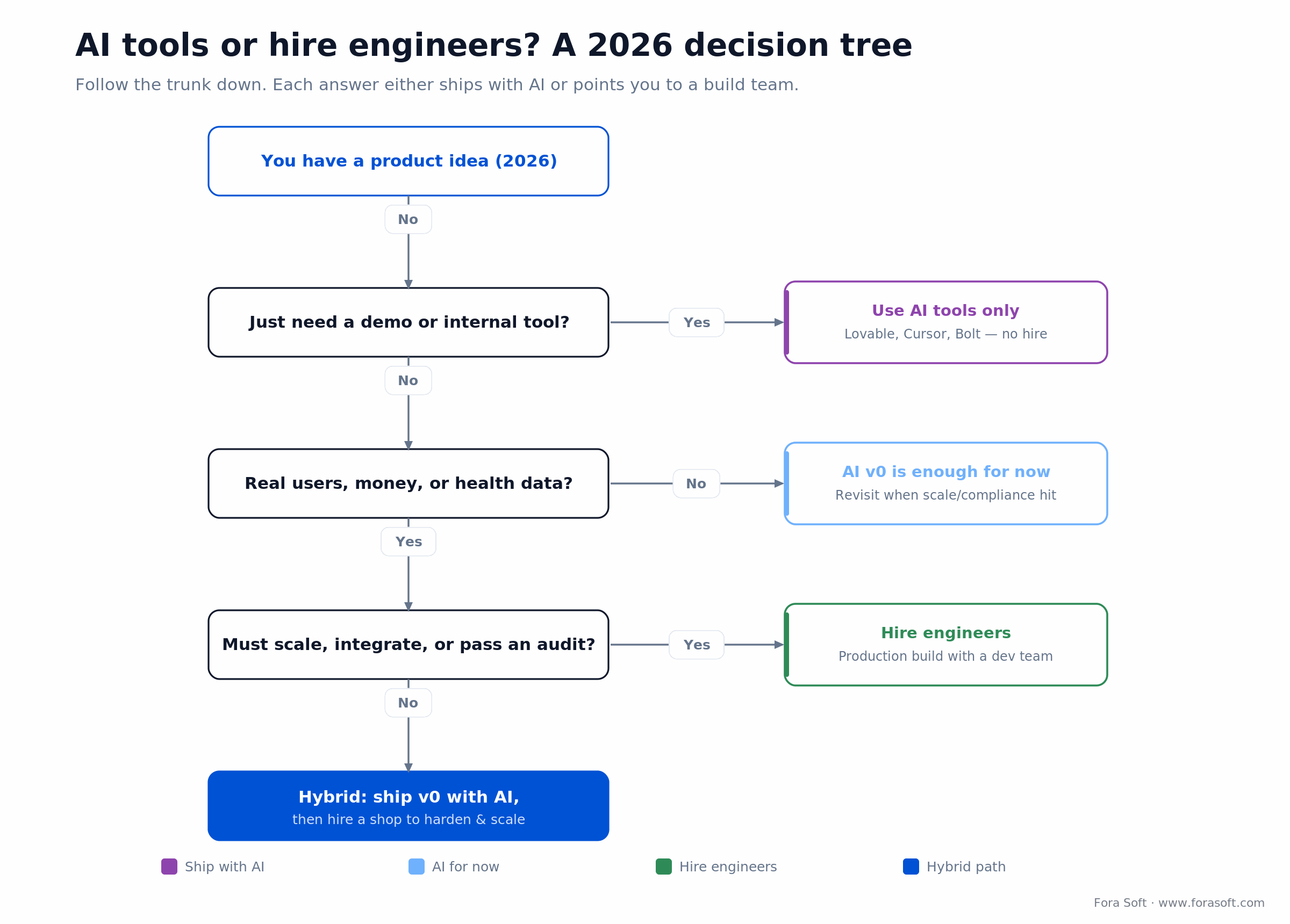
Figure 2. In 2026, AI tools ship demos; engineers ship products that must scale, integrate, or pass an audit.
Five partner archetypes
There is no “best” software development company, only the right archetype for your stage, budget and domain. Five archetypes cover almost every founder’s situation. Get this match right and everything downstream is easier.
| Archetype | Stage | Project size | Best for |
|---|---|---|---|
| Freelancer | Pre-MVP | $5–30k | 1–3 features, prototypes, validation |
| Boutique dev shop | MVP → Series A | $50–500k | First production product, vertical-specific |
| Mid-tier (Fora Soft) | Series A → Series C | $200k–$3M | Scaled platforms, complex domain (video, AI, telehealth) |
| Enterprise integrator | Series C+ / corporate | $5M+ | Multi-year transformations |
| Staff augmentation | Ongoing engineering | Per-engineer monthly | Long-term capacity, augment internal team |
Freelancer. A single developer via Toptal, Upwork or a referral. Cheap and flexible, but no PM, no QA, no architectural review. Right for prototypes and adding one to three features to a system that already exists. Wrong for a production product from scratch, since one person can’t be architect, backend, mobile, QA and DevOps at once.
Boutique dev shop. Teams of 5–25, often specialised in one vertical. Right for MVPs and Series-A-scale products. Strengths: a senior team, a dedicated PM, real quality processes. Weaknesses: thin capacity for parallel work, and they may be learning your domain if it’s unusual.
Mid-tier dev firm (where Fora Soft sits). Teams of 50–200 with a technology or vertical focus. Right for scaled platforms with real domain complexity — video, AI, real-time, telehealth. Strengths: a track record of shipping, several domains under one roof, the ability to put 20+ engineers on one product. Weaknesses: pricier than a boutique, and more process than a solo freelancer.
Enterprise integrator (Accenture, EPAM, Capgemini). $5M+ engagements, multi-year, usually big transformations. Strengths: governance, scale, a brand your board recognises. Weaknesses: expensive, slow, and often staffed with juniors under a thin layer of partners. Wrong for startup-stage work.
Staff augmentation. Toptal, AWS-style staffing, contractors through your own funnel. Right once the product ships and you have an engineering manager to direct the work. Wrong for “build me a product”. Renting hands only works when someone on your side owns the architecture.
Reach for a freelancer when: the project is small enough to manage yourself, you (or an advisor) can review code, and the work is incremental on an existing system.
Reach for a boutique shop when: you’re pre-Series-A, you need MVP-to-product, and your domain is mainstream (e-commerce, B2B SaaS, a marketplace).
Reach for mid-tier (us) when: your domain is complex — video, real-time, AI, telehealth, surveillance — you’re Series A+ or strategically backed, and you need 5–20 engineers shipping in parallel.
Reach for an enterprise integrator when: you’re a Fortune 500 running a multi-year transformation. Skip them at startup or scale-up stage.
How to write a brief that gets accurate quotes
A tight brief is the highest-payoff hour you’ll spend. The same idea, described vaguely, comes back as quotes that range 5× apart. Described precisely, that spread collapses under 1.5×, because every vendor is now pricing the same thing. Below is the flow from brief to signed contract; the 12 sections that make up the brief itself follow. We use the same structure in our discovery template, and it’s the backbone of our CTO estimation guide.
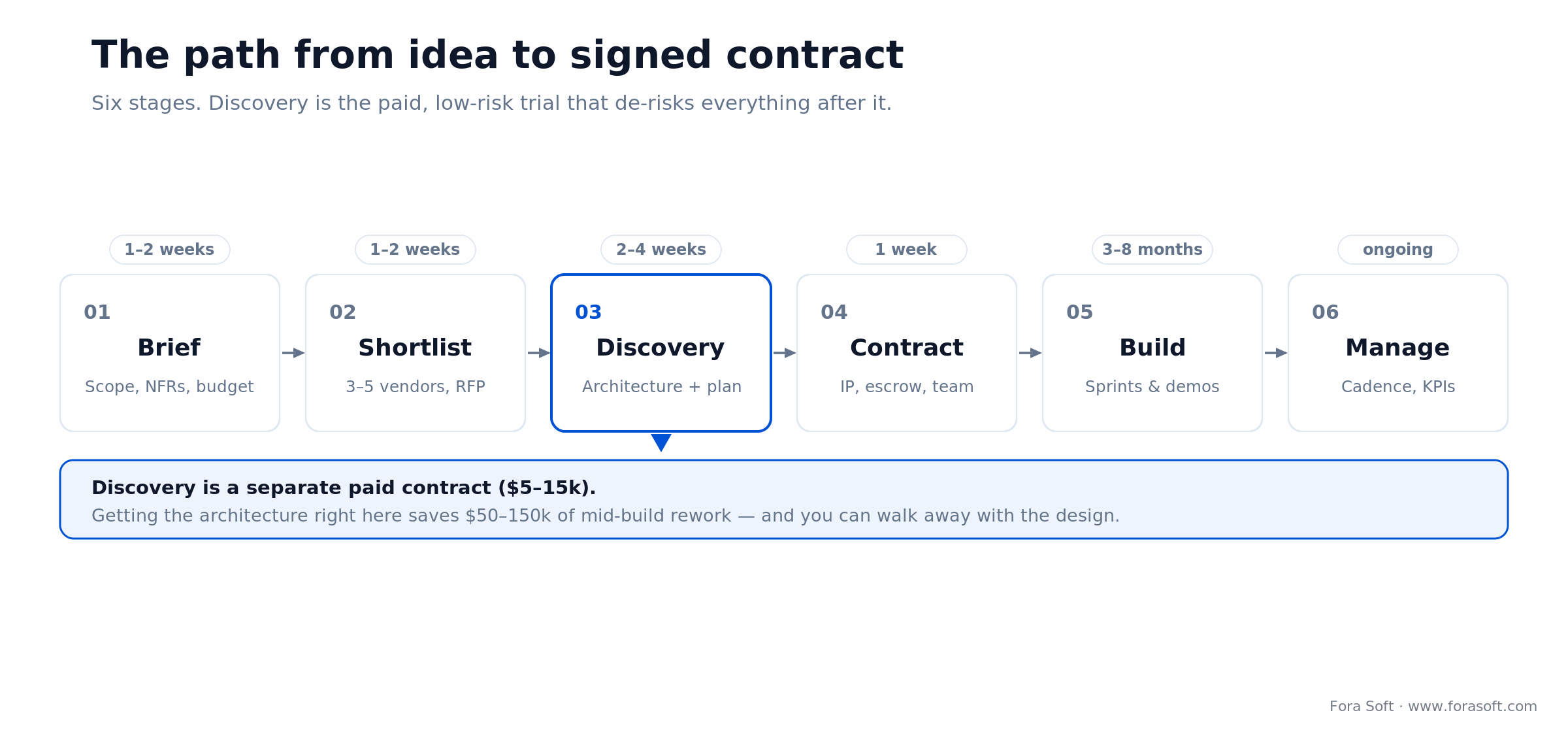
Figure 3. The six stages from brief to managing a partner — discovery is the paid step that de-risks the build.
RFP template — 12 sections
This is the software development RFP we’d hand a founder today. Twelve sections, in order. Skip none of them; each one closes a gap a vendor would otherwise price as a guess or a change order.
1. Company background. Who you are, what you do, current size, funding stage.
2. Problem & users. The pain you’re solving, who the users are, what they do today, why it matters now.
3. Functional scope. User stories or epics with acceptance criteria. Outcomes, not features: “a patient can book an appointment with an available clinician,” not “build a calendar.”
4. Non-functional requirements. Performance (target latency, throughput), security (auth, encryption, compliance), scale (DAU, peak concurrent), availability (SLA target), accessibility (WCAG level), platforms (web, iOS, Android, connected TV). This is the section cheap quotes quietly delete.
5. Tech preferences. Or an explicit “vendor recommends.” “Node + React + Postgres” is fine if you have an opinion; “recommend the best fit” is fine if you don’t. Be honest about constraints like existing infrastructure or your hiring market.
6. Timeline & milestones. Hard dates (a launch event, a contract renewal, a fundraise) versus nice-to-haves. Vendors plan very differently when a date is real.
7. Budget framework. A range, a fixed cap, or time-and-materials. Say it out loud. Vendors guessing at your budget waste everyone’s time.
8. Evaluation criteria. What actually weights your decision: price, portfolio fit, technical depth, communication, location. Tell vendors how you’ll score them.
9. IP & data clauses. Code ownership, data residency, sub-contracting policy, source-code escrow expectations. If EU or health data is involved, name it here.
10. Submission requirements. Format, deadline, who reviews, decision timeline. Set expectations both ways.
11. Risk register. The known unknowns a vendor should price: third-party API stability, a pending regulation, an unproven performance target. Including it marks you as a sophisticated buyer and gets you honest numbers.
12. References / portfolio expectations. What past work you want to see. “Show me three video products you shipped that scaled past 100k DAU” beats “send your portfolio.”
Want our 12-section RFP template + scorecard?
Email us and we’ll send the latest RFP template plus our dev-shop evaluation scorecard. Use it with us, use it with someone else — no strings.
How to evaluate proposals — 7 signals
Once the quotes land, score them on evidence, not vibes. Seven signals separate a real engineering partner from a good salesperson.
1. Did they push back on your scope? Good sign. A senior team challenges ambiguity, asks “why this feature, what does success look like?” and proposes alternatives. The vendor who said “yes, we’ll build exactly what you wrote” either didn’t read it or doesn’t care.
2. Did they ask about NFRs? Real teams care about scale, security, performance and compliance. If the proposal never mentions them, those requirements will resurface as “out of scope” around month four.
3. Did they show portfolio in your vertical? A generic SaaS portfolio doesn’t transfer to video, telehealth, fintech or gaming. Ask for three case studies in your domain. If they can’t produce them, they’re learning on your budget.
4. Is the pricing structure transparent? Fixed-bid or T&M? What’s included: PM, QA, code review, DevOps? What triggers a change order? “$200k for the project” with no breakdown is a red flag waving at you.
5. Who’s actually on the team? Senior architects on the sales call and mid-level engineers on the delivery is the oldest trick in the trade. Insist on named team members and write them into the contract.
6. What’s the communication cadence? Daily standups? Weekly demos? A monthly steering call? A vendor who proposes no cadence will go dark for two weeks at a stretch, and you’ll learn the project slipped at the next demo.
7. References at your stage. “Talk to our $500M Fortune 500 client” is useless when you’re a $1M ARR startup. Ask for references at your stage and in your domain. Real vendors connect you to two or three founders they shipped for.
The first 30 days — discovery phase
Discovery is the paid, low-risk trial that de-risks the whole build. It’s where a vendor earns your commitment, or shows you they haven’t thought it through.
What good discovery looks like. Two to four weeks. A senior architect, a lead designer and a PM actually engaged. Outputs: a system architecture diagram, a prototype (clickable Figma or coded), a sprint plan with milestones, a risk register, and a refined estimate. It costs $5–15k for a ~$200k build and routinely saves $50–150k.
What discovery is not. Reading your brief and saying “sounds good, let’s start.” Discovery with no architecture work, no prototype and no sprint plan isn’t discovery. It’s a sales call with a nicer name.
Why it saves money. Mid-build re-architecting costs three to five times the original work, because finished code gets thrown away. Discovery surfaces the expensive decisions while they still cost a meeting instead of a sprint. The vendor who invests in discovery lands closer to the original estimate, and that’s the whole point.
How to scope it. Make discovery its own small contract: $5–15k, two to four weeks, deliverables defined upfront. When it ends you have the right to walk away with the architecture in hand. You commit to the build only after you’ve seen how they think.
What you’ll actually pay in 2026
Ranges are easy to hide behind, so here’s the arithmetic on a real shape: a complex-domain MVP — say a telehealth or live-video product — that a mid-tier team builds over about six months.
Start with discovery: $10k for three weeks. Then the build. A four-person pod — one senior full-stack lead, two engineers, a part-time PM and shared QA — over 24 weeks is roughly $180k–$260k depending on platform count. Add a 30–90 day warranty and a small DevOps setup, call it $15k. Total: about $205k–$285k for a production-grade MVP that can pass investor due diligence.
Now watch what skipping the $10k discovery does. If the architecture is wrong and you find out at month four, you rebuild roughly a third of the work. A third of a $220k build is ~$73k of engineering, and re-architecture runs three to five times the original because code is discarded and re-integrated — so the real bill is $50k–150k on top, plus two to three lost months. The $10k discovery is the cheapest insurance you’ll ever buy. That’s the same logic behind our guide to cutting software costs without killing the project.
One honest note on our own numbers: Fora Soft builds with Agent Engineering, so our estimates come in faster and leaner than the classic day-rate math above. We’d rather quote you a real number after a short discovery than a hopeful one over email.
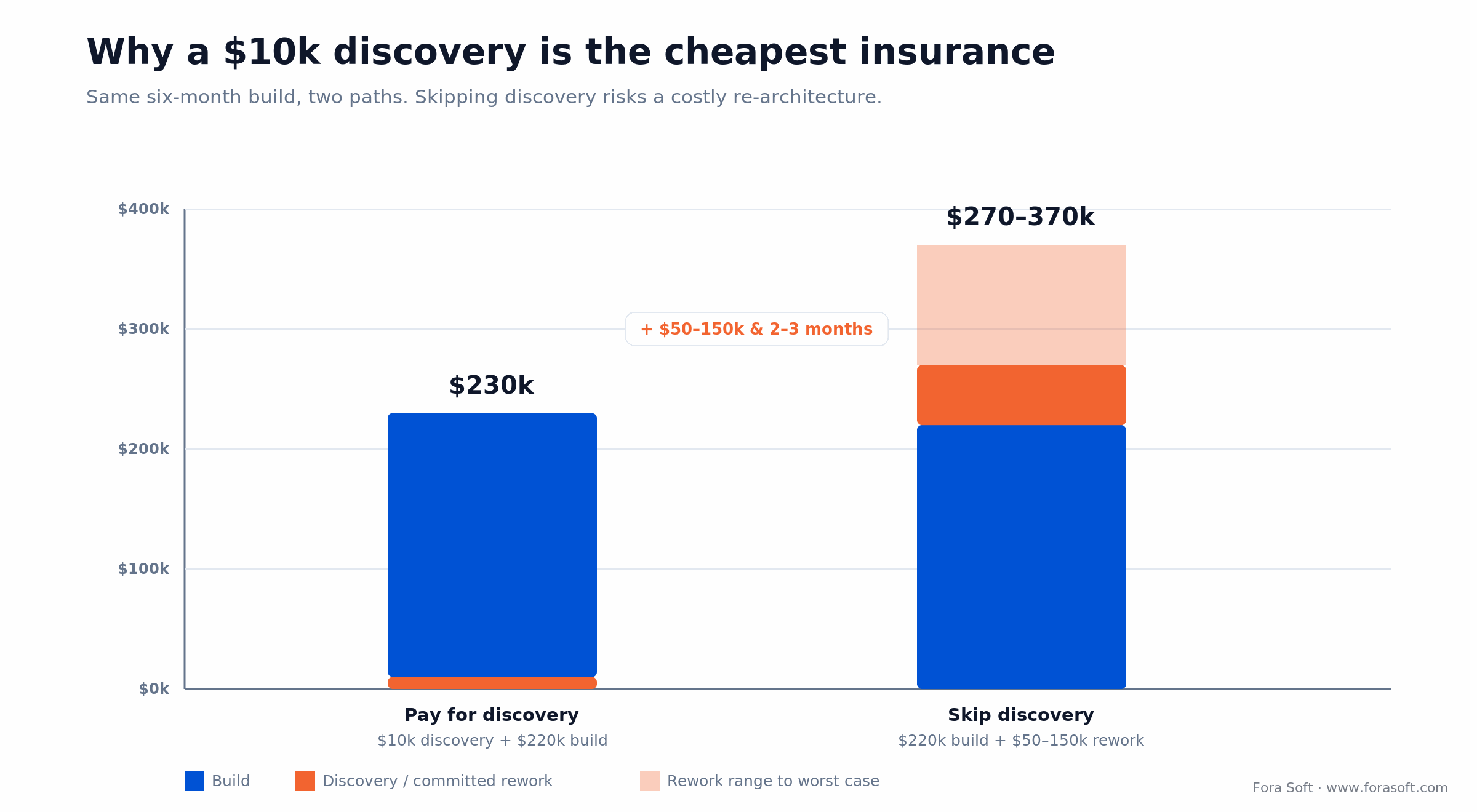
Figure 4. A $10k discovery is the cheapest insurance against a $50–150k mid-build re-architecture.
Want a real number instead of a range?
Send us your spec. We’ll scope a short discovery and give you an estimate you can actually plan around — not a placeholder.
Contract essentials
Six clauses decide whether the contract protects you or the vendor. Get them right before anyone writes code.
1. IP transfer. All code, designs and data created during the engagement transfer to you on payment. The vendor keeps rights only to genuinely generic shared frameworks, and lists them upfront, so there are no surprises at handover.
2. Warranty period. For 30–90 days after delivery, the vendor fixes bugs in their own work at no charge. Without it, every post-launch bug is a fresh invoice.
3. Source-code escrow. Important for HIPAA or SOC 2 audits and for acquisition due diligence. The code sits with a third-party escrow service, and you can retrieve it if the vendor goes under or refuses delivery.
4. GDPR / DPA addendum. If your platform touches any EU personal data, the vendor must sign a Data Processing Agreement — a written processor contract is a hard requirement under GDPR Article 28, and the UK regulator’s processor guidance spells out what it must contain. For US health data, the equivalent is a HIPAA Business Associate Agreement.
5. Termination clauses. Either side can terminate: 30 days’ notice, payment for work in flight, a knowledge-transfer obligation, a source-code handover. No perpetual lock-in.
6. Change-order process. Written and structured. New scope is priced item by item and signed by both sides before work starts. Without it, a vendor absorbs your changes for free until they can’t, then hands you a six-figure surprise.
How to manage your dev partner
You don’t need to read code to run a great engagement. You need a rhythm and a short list of things to watch. A good project manager carries most of this for you.
Sprint cadence. Two-week sprints: planning at the start, a demo at the end, a retro after the demo. Skip none. The retro is where you catch process problems before they turn into engagement-enders.
Demo days. Real working software, not slides. If a vendor demos with mock data “because the API isn’t ready,” that’s a yellow flag. Twice in a row is a red one.
Async versus sync. Daily Slack is fine; one weekly sync call is required. Don’t drown the engineers in real-time chat. Protect their focus time and you’ll get more shipped.
Watch for the drift. Two demos on mock data, a sprint that lands 50% of its committed stories, a vendor proposing scope cuts “to stay on schedule,” a lead developer swapped without notice. Any one is a yellow flag. Two together means it’s time to call vendor leadership.
Don’t micromanage. You hired a senior team to make engineering calls. Trust the technical lead on architecture and intervene on outcomes (does this feature do X?), not on implementation (why Postgres and not Mongo?). Culture matters here too — here’s what a healthy engineering culture looks like from the outside.
When to fire a partner
The three-strikes pattern. First strike: a sprint misses 30% of committed work. Second: the same next sprint, plus a delayed demo. Third: the same again, plus a lead developer change with no warning. After three, escalate to vendor leadership with a formal “cure or terminate” deadline — usually 14 days.
How to terminate cleanly. Use the 30-day notice in your contract. Pay for work in flight. Demand the source-code handover, the documentation and a knowledge-transfer session. Don’t let it drag. Once trust is gone, the next sprint won’t bring it back.
Line up the replacement first. Have the next vendor ready before you terminate. A mid-project handoff is painful; going vendor-less is worse. Run your selection in parallel with the cure period so you lose weeks, not months.
When Fora Soft is NOT the right fit
Honesty matters more than the sale. We’re the wrong choice in these five situations, and we’ll say so on the first call.
1. Sub-$30k tactical work. A one-week feature or a two-week prototype isn’t our zone. Use Toptal, Upwork or a senior contractor. We keep a short list of people we trust — ask and we’ll hand you names.
2. Generic e-commerce or marketplace. If it’s a Shopify-style store or an Airbnb-style marketplace with no video, AI, real-time or surveillance complexity, a dozen boutique shops will build it cheaper than we will. We’re worth it when complexity is the point — our custom software development work lives in the hard-domain half of the market.
3. Fortune 500 multi-year transformation. Accenture, EPAM and Cognizant are built for that scale. We can run a 25-engineer engagement well; we can’t staff 250 engineers across eight workstreams for five years, and we won’t pretend otherwise.
4. Pure offshoring with no architecture involvement. If you want hands by the hour to execute a spec your in-house architect already wrote, staff augmentation is cheaper. We add value when senior architecture is part of the job.
5. Weekly pivots before product-market fit. If your scope changes every week because user research keeps reshaping the product, time-and-materials with a smaller shop fits better. Our process expects more scope stability than a week-to-week pivot allows.
Read that list and recognise yourself? Say so on the call. We’ll point you at a partner who fits. A good referral is worth more to us than a bad engagement.
Mini cases — from idea to funded outcome
BrainCert — founder-led, MVP to $3M revenue, bootstrapped. A solo founder with a teaching background and no technical co-founder came to us with an idea for an integrated e-learning platform. We ran discovery, scoped a focused MVP, and built a WebRTC + HTML5 virtual classroom. It grew into a business doing $3M in revenue in 2024 with 100K+ customers and 500M+ classroom minutes delivered — all bootstrapped, no outside funding. See the case.
TransLinguist — concept to NHS UK framework. A founder with deep interpreting-domain expertise and no software background. We architected a real-time interpretation platform pairing WebRTC video with human-translator routing, AI speech-to-speech in 16+ languages, and captioning in 22. It now serves 30,000+ certified interpreters across 75+ languages and won the NHS national interpreting framework across the UK, with clients reporting up to 80% lower interpreting costs. See the case.
Sprii — pre-seed idea to €365M+ in sales. A founder pitched a live-shopping concept. We built the iOS-first MVP — video-commerce overlays, sponsor branding, real-time chat — and the platform grew into one trusted by 3,000+ brands that has moved over €365M in sales and hosted 72K+ live events. See the case.
StreamLayer — idea to $14.1M raised. Founders with sports-broadcast experience brought us an interactive-streaming concept. We built the original platform; the company went on to raise $14.1M across seven rounds and now powers live engagement for NBC, CBS, Red Bull, Live Nation and Chelsea FC, including Lollapalooza and the Made In America festival.
Every one of these started the same way: a non-technical or domain-expert founder, a clear brief, a real discovery phase, a senior architecture team. The pattern is repeatable — that’s the whole reason we wrote this down. Want a similar assessment of your idea? Grab 30 minutes with us.
A decision framework — choose your archetype in five questions
Q1. Project size? Under $30k: freelancer. $30–500k: boutique. $200k–$3M with a complex domain: mid-tier. $5M+: enterprise integrator.
Q2. Domain complexity? Generic SaaS: any tier. Video, AI, real-time, surveillance, telehealth or fintech: prefer a mid-tier with real vertical experience.
Q3. Time to market? Under eight weeks: a managed SDK plus a freelancer or boutique. A six-month MVP: boutique or mid-tier. A multi-year transformation: enterprise integrator.
Q4. Compliance posture? HIPAA, SOC 2 or FedRAMP: a vendor with prior compliant deliveries (mid-tier or a specialised boutique). Generic data handling: any tier.
Q5. Internal engineering capacity? Zero engineers: a full-stack vendor (boutique or mid-tier). A team but no domain expertise: a vendor with vertical knowledge. A team and the domain expertise: staff augmentation. Still torn between hiring and building alone? Our guide to choosing a software development partner works through it.
Pitfalls to avoid
1. Saying yes to the cheapest quote without comparing scopes. Cheap quotes win the sale and lose the project. Always normalise every quote against the same scope before you compare a single dollar.
2. Skipping discovery to save $10k. That $10k comes back as $50k+ of mid-build re-architecture. Always fund discovery as its own paid contract.
3. Letting the vendor pick the team mid-project. Lock named team members into the contract. The senior-to-sales, junior-to-delivery swap is the most common failure mode we see.
4. No exit strategy. Negotiate IP transfer, escrow and termination upfront. A vendor who fights these terms is a vendor planning to use their absence against you.
5. Hiding your budget. A vendor guessing at your budget either over-quotes (you walk) or under-quotes (they eat reserves, then surprise you). Give the range; they’ll scope to it.
KPIs to measure
Quality KPIs. Sprint-velocity stability (within 20% of the running average). Bug rate (under five critical bugs in production per sprint). Demo-pass rate (90%+ of stories accepted on the first demo).
Business KPIs. Project lands within 15% of the original cost estimate. On-time delivery to milestone dates. Time from contract signature to first usable demo (target: two to four weeks).
Reliability KPIs. Communication SLA (under four business hours for non-critical, under 30 minutes for critical). Team continuity (fewer than one lead-developer change per project).
FAQ
How do I hire a software development company as a non-technical founder?
Five steps: match the partner archetype to your stage and budget, write a 12-section brief so quotes are comparable, pay for a 2–4 week discovery before committing to a build, score proposals on evidence (portfolio in your vertical, named team, transparent pricing) instead of price, and lock IP transfer, named engineers and exit terms into the contract. Bring in a technical advisor to sanity-check the shortlist if you can.
How much does an MVP cost in 2026?
Boutique shop: $50–200k. Mid-tier for a complex-domain MVP (video, AI, telehealth): about $150–400k. Hyper-cheap offshore: $20–80k, but expect quality and timeline risk. The realistic floor for a production MVP that survives investor due diligence is $50–200k.
Should I hire a CTO instead of a dev shop?
If you can find and afford one, yes — a senior engineering co-founder is gold. Most non-technical founders can’t, and a senior dev shop with fractional architectural oversight is the next best thing. We sometimes provide that fractional oversight for clients without an in-house CTO.
Can I just use AI tools like Cursor or Lovable instead of hiring anyone?
For prototypes and v0 demos, yes — they’re excellent. For a production product that must scale, comply with regulations, and integrate with payment, video or health systems, you still need engineers. 84% of developers use AI tools, but only 33% trust their output (Stack Overflow, 2025). The common play: build v0 with AI, then hire a shop to harden and scale it.
What about offshoring to India, Eastern Europe or Latin America?
Excellent vendors exist in all three regions, and from a brochure, excellent and bad vendors look identical. Always check portfolios in your domain, references at your stage, and insist on a discovery phase. Time-zone overlap matters more than founders expect for daily standups.
Fixed-bid or time-and-materials?
Fixed-bid for clearly scoped work (an MVP build, a compliance migration, a well-defined feature). Time-and-materials for ambiguous scope (early discovery, R&D). The hybrid — T&M for discovery, fixed-bid for the build — is common and usually the safest.
What if my budget is well below the estimate?
Cut scope, not quality. A vendor who drops the price 30% without dropping scope is either eating margin (and will claw it back through change orders) or cutting corners. A vendor who says “ship iOS first, Android in v2” to fit your budget is being honest with you.
How do I check a vendor’s portfolio is real?
Ask for live URLs, app-store links and named clients you can talk to. Then ask those clients direct questions: “Did they ship feature X? What was the timeline? What broke?” Real vendors connect you happily. Padded portfolios fall apart at exactly this step.
What to Read Next
Buyer guide
How to Choose a Software Development Partner (2026)
The companion piece on shortlisting and comparing partners.
Estimation
The CTO Estimation Guide
The technical side of estimating a software project.
Decision
DIY vs Hiring App Development
Build it yourself or hire — the binary, worked through.
MVP
Cut Features, Launch Early
MVP scope discipline for first-time founders.
PM
Why You Need a Project Manager
Why PM overhead pays for itself on a build.
Ready to hire the right partner?
Learning how to hire a software development company comes down to process, not luck. Match the archetype to your stage. Write a 12-section brief so quotes are comparable. Pay for a discovery before you commit. Score proposals on the seven signals, not the bottom line. Lock named engineers, IP transfer and exit terms into the contract. Do those five things and you’ve dodged the mistakes that sink most first engagements.
If we’re the right fit — mid-tier, complex-domain, $200k–$3M, video, AI, real-time, telehealth or surveillance — we’ll tell you. If we’re not, we’ll say so on the call and point you at someone who is. Honest beats slick when you’re signing up for six months together.
Want our RFP template + dev-shop scorecard?
Email us and we’ll send the 12-section template plus the scorecard, free, no follow-up obligation. Use it with us, use it with anyone. The goal is that you hire well.