


Key takeaways
• A machine learning intercom is now a default, not a differentiator. AI face recognition, package alerts and visitor analytics are 2026 table stakes — the video intercom market sits near USD 44B and is growing ~16% a year (The Business Research Company, 2026).
• Four ML stacks do the real work: audio (noise-resistant ASR — Whisper + RNNoise + Silero VAD), vision (face recognition and package detection — YOLO11/YOLO26 + ArcFace + liveness, FOMO on-edge), NLP (small-LLM intent routing), and anomaly detection (telemetry + tailgating).
• Edge beats cloud on latency and TCO for most intercom use cases. On-device inference lands at 10–100ms and cuts bandwidth by ˜80%; cloud-only pipelines add 200–2000ms and keep egress costs growing with traffic.
• Biometrics trigger regulation early. The EU AI Act treats remote biometric identification as high-risk (compliance deadline pushed to Dec 2, 2027 by the 2026 Omnibus); GDPR Article 9 applies, and Illinois BIPA exposes vendors to $1,000–5,000 per violation.
• The cheapest mistake is skipping the pilot. A 6–10 week ML pilot on one building or SKU tells you more than a 12-month feature roadmap — start with one model, one metric, one deployment site.
Why Fora Soft wrote this playbook
We have been shipping multimedia software since 2005 — 250+ projects across two decades. Over two decades we have built video streaming platforms, WebRTC conferencing tools, AI-powered recognition systems, and — most relevant here — connected-intercom and video-surveillance products that have to work reliably in hallways, lobbies, clinics, and courtrooms where the network is mediocre and the users are impatient.
Our Netcam Studio project replaced WebcamXP, one of the first video surveillance applications (2003), with a re-engineered interface that added motion detection, object recognition, and multi-camera monitoring — the same ML building blocks you now need for a smart intercom. We also handle deployments at camera-farm scale: our video surveillance service manages 2,000+ IP cameras in real-world deployments, with on-edge classification for humans, vehicles, and animals to cut false alerts.
This playbook is the version we wish we had read in 2020, written for product owners who are deciding which ML features to put into an intercom (residential, multi-tenant, commercial, or healthcare), how to build them, and how much to budget. It is opinionated, technical where it needs to be, and built around trade-offs our team has actually faced on client projects.
Thinking about adding ML to your intercom roadmap?
We will audit your product in 30 minutes and point out the two or three ML features that will move your numbers the most — no slide deck theatre.
Market snapshot — where machine learning in intercoms actually stands
The market is big and moving fast. The video intercom devices market sits near USD 44B in 2026 and is growing about 16% a year (The Business Research Company, 2026); the wider intercoms systems and equipment category is put at USD 26.6B in 2026, heading to USD 35.8B by 2030 at 7.7% CAGR (Research and Markets, 2026). A machine learning intercom is now judged on face recognition, visitor analytics and on-NPU inference, not on whether it has “AI on the roadmap.”
What this means for a product owner: you are no longer selling "an intercom with AI on the roadmap." Buyers expect face entry, package alerts, mobile app control, and voice commands as table stakes. Machine learning keeps an intercom competitive: vendors who skip it now lose deals on feature-comparison tables before the sales call even happens.
Asia-Pacific is driving the fastest growth (11–12% CAGR) thanks to high-rise residential density; North America and Europe grow more slowly but with heavier regulatory load (see the EU AI Act and BIPA sections below). Pick your launch geography before you pick your stack.
ML features that actually move the needle
From dozens of intercom-adjacent features we could ship, only a handful move buyer behaviour. The rest are marketing lint. Here is the short list, in priority order.
1. Noise-resistant two-way voice
Why it matters. A doorman hears through traffic noise; your intercom needs to do the same. RNNoise (a 22-band GRU that runs in under 1ms on commodity CPUs) paired with Silero VAD (1.8MB, real-time factor 0.004) removes stationary noise and isolates speech. Pass clean audio to Whisper or a smaller ASR head, and transcription quality jumps from unusable to near-human even in a busy lobby.
2. Face recognition with liveness
Why it matters. Tap-to-enter flows fail when residents forget fobs. Face entry has to be both fast (sub-500ms) and spoof-proof. The modern stack is YOLO11 (or the NMS-free YOLO26, shipped Jan 2026) for face localization, ArcFace or FaceNet for 128–512D embeddings, and a CNN liveness check that combines depth, rPPG (pulse from skin tone micro-changes), and iris response to light. Skimp on liveness and a printed photo opens your door.
3. Package and person detection
Why it matters. Ring ships this because it is the single feature residents demand after entry. FOMO (Faster Objects, More Objects) runs in under 200KB of RAM and is 30× faster than MobileNet SSD — perfect for cheap edge accelerators. Get the training set right (cardboard boxes, envelopes, pet toys, legs-only framing) or you will ship false positives all day.
4. Intent classification for visitor triage
Why it matters. When a visitor speaks into an intercom, you want to route delivery vs. service worker vs. guest vs. vendor without bothering the resident. Small transformer-based intent classifiers (DistilBERT, MiniLM, or a 1B-parameter open LLM) handle this locally in 200–400ms. The business result: residents answer 30–40% fewer unnecessary calls.
5. Predictive maintenance and anomaly alerts
Why it matters. Building managers pay monthly for "the intercom tells us something is wrong before residents call". A lightweight time-series model (ARIMA or a tiny LSTM) flags mic drift, dying solenoids, and dropped uplinks. This is where B2B intercoms earn recurring revenue instead of being a capex sale.
Reach for face recognition first when: your buyer is multi-family residential with 50+ units per building and the top support ticket is "I forgot my fob." Everything else (package detection, noise cancellation) is secondary until entry is painless.
Reach for package detection first when: your loudest complaint is missed or stolen deliveries and residents already tolerate the entry flow you ship today — it is the fastest ML win to justify on a spreadsheet.
The four ML stacks running inside modern intercoms
Pick the stack by the job, not the other way around. Here is what ships today and what it actually does on-device.
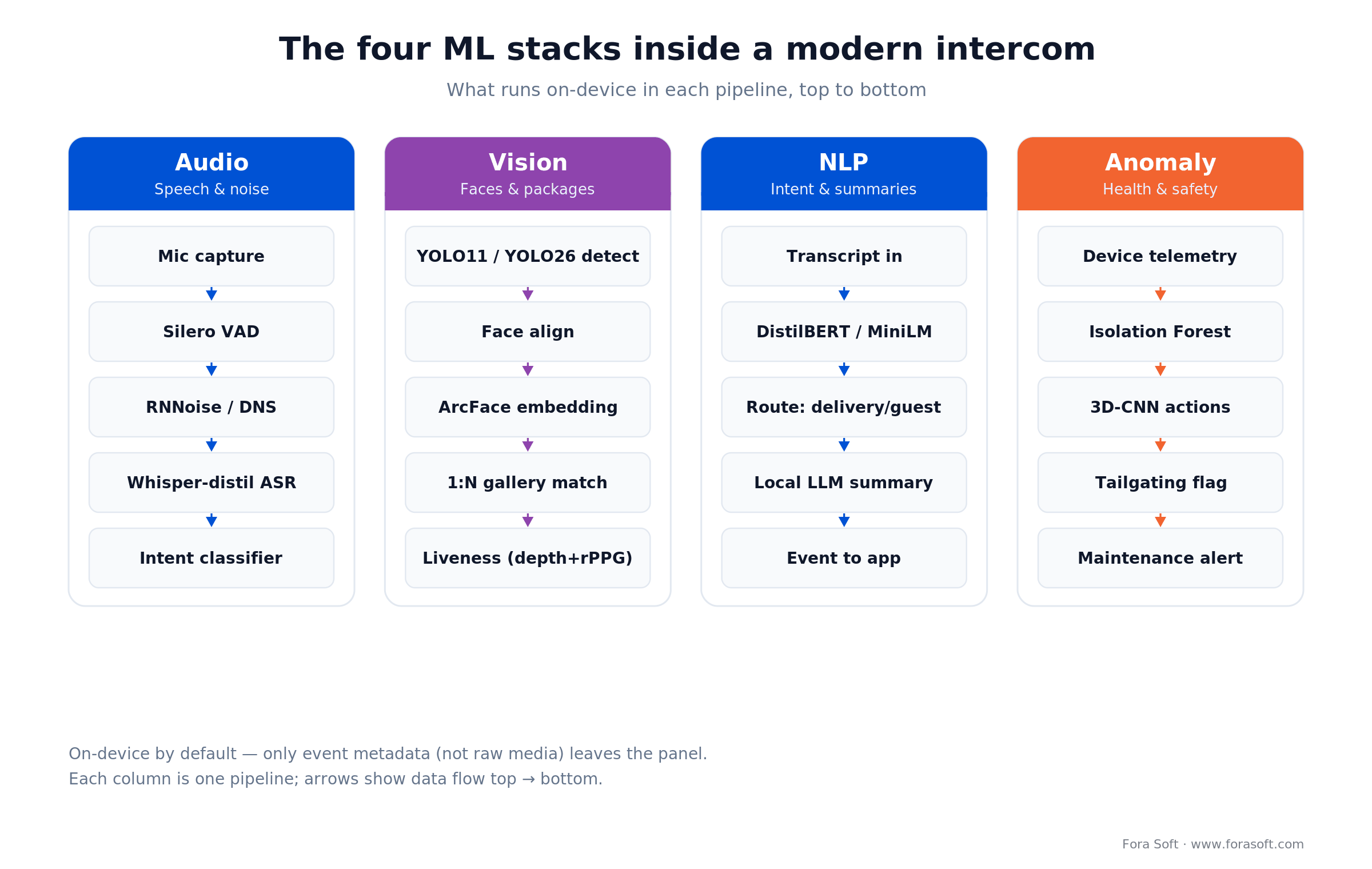
Figure 1. The four on-device ML pipelines in a modern intercom, top to bottom.
Audio stack — speech and noise
The pipeline is almost always: microphone capture → Silero VAD (voice activity) → RNNoise or Deep Noise Suppression (stationary and non-stationary noise) → Whisper distil-small or similar (transcription) → intent classifier. Whisper was trained on 680k hours of multilingual speech; its small quantized build runs in 80–150ms per utterance on an ARM Cortex-A76. For pure wake-word or command routing, a 10MB classifier beats a general ASR every time. For the deeper audio-engineering background — codecs, echo and noise — see our audio for video learn track.
Vision stack — faces and packages
For access, the pattern is YOLO11n (face + body detection) → alignment → ArcFace/FaceNet embedding → 1:N match against an enrolled gallery → liveness classifier. For ambient scene analysis (package delivery, loitering), it is YOLO11 or FOMO running at 2–10 frames per second on edge silicon, streaming only event crops to the cloud.
NLP stack — intent and summarization
For visitor triage, DistilBERT or MiniLM on a few hundred labelled examples gives 90%+ intent accuracy with 50–80ms inference. For richer summaries ("five Uber Eats drivers came between 6 and 8 pm"), a small open LLM (Llama 3.2 3B, Mistral 7B) on the gateway works; sending audio to a cloud LLM adds latency and lights up privacy concerns.
Anomaly stack — health and fraud
Time-series anomaly detection (Isolation Forest, one-class SVM, or small LSTMs) on device telemetry catches failing hardware. For tailgating, piggybacking, and door-held-open events, a 3D-CNN action recognizer on the video feed flags patterns that rule-based systems miss.
Not sure which ML stack fits your hardware?
Send us your current BOM and we will tell you which models will fit on the SoC you already shipped — and which need a hardware refresh.
Edge vs cloud inference — where to run the models
This is the single most expensive architectural decision in a connected intercom. Edge wins on latency, privacy, and long-term cost; cloud wins on model freshness, analytics, and low upfront hardware spend. Most shipped systems are hybrid.
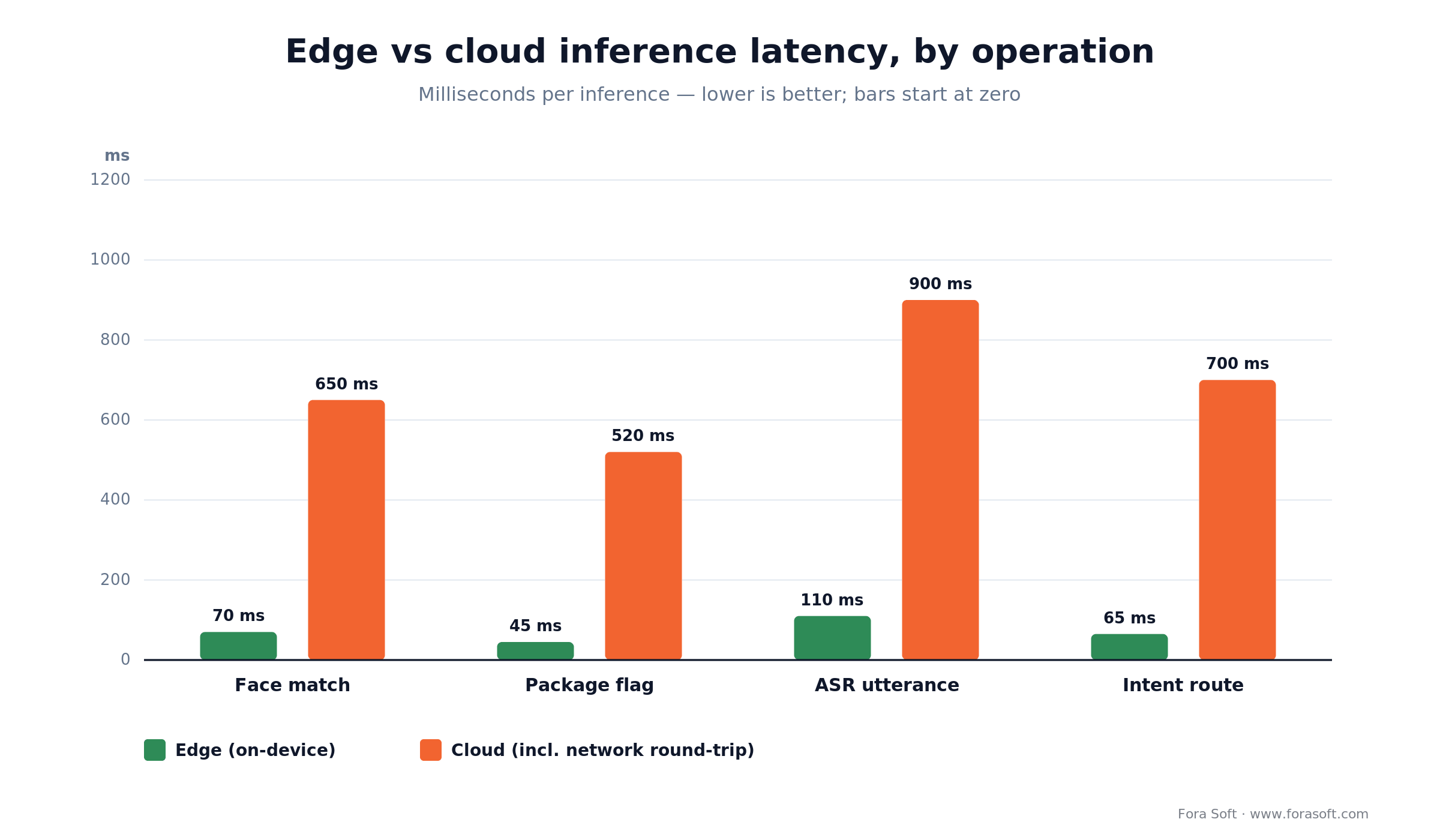
Figure 2. Edge inference finishes in tens of milliseconds; the cloud path adds a network round-trip.
| Criterion | Edge | Cloud | Hybrid (recommended default) |
|---|---|---|---|
| Latency per inference | 10–100ms | 200–2000ms (incl. RTT) | Fast path on-device, slow path in cloud |
| Bandwidth footprint | −80% vs full stream | Continuous upload | Event-only clips |
| Privacy posture | Strong — raw media stays local | Weaker — all media transits | Strong — metadata only |
| Hardware BOM | Higher (NPU or GPU) | Lower | Mid-range NPU |
| 5-year TCO (100 doors) | Lower by 30–60% at scale | Scales with traffic | Typically cheapest overall |
| Model refresh cadence | OTA, slower | Continuous | Hot-swap via CDN |
Most production intercoms run two-tier inference: wake-word, face crop, and package flag happen on-device; identification, transcription, and summarization go to a regional cloud with metadata only. That is how Ring keeps its "delivery person with white package" alerts fast while still improving the model centrally. For a deeper treatment of this trade-off see our write-up on AI video analytics for security.
Reach for pure cloud inference only when: your intercom is an app-first product with no dedicated hardware (think Intercom-the-SaaS-tool, not a door panel), or when you explicitly do not need sub-500ms responses.
Reference architecture — how the two-tier pipeline fits together
The architecture that ships in production is two-tier: the panel runs the latency-critical models on-device, and a regional cloud handles the heavy, non-urgent work. The door-release decision never waits on a network round-trip, and the cloud only ever sees event metadata — not raw faces or audio.
On the panel you keep wake-word, face crop, liveness, the 1:1 or small 1:N match, and package/person detection — everything a resident feels in real time. In the cloud you put large-gallery identification, model training with over-the-air weight swaps, cross-event analytics, and the audit log. That split is also the cleanest privacy story you can tell a regulator, and it is the backbone of every custom ML build we ship for connected-hardware clients.
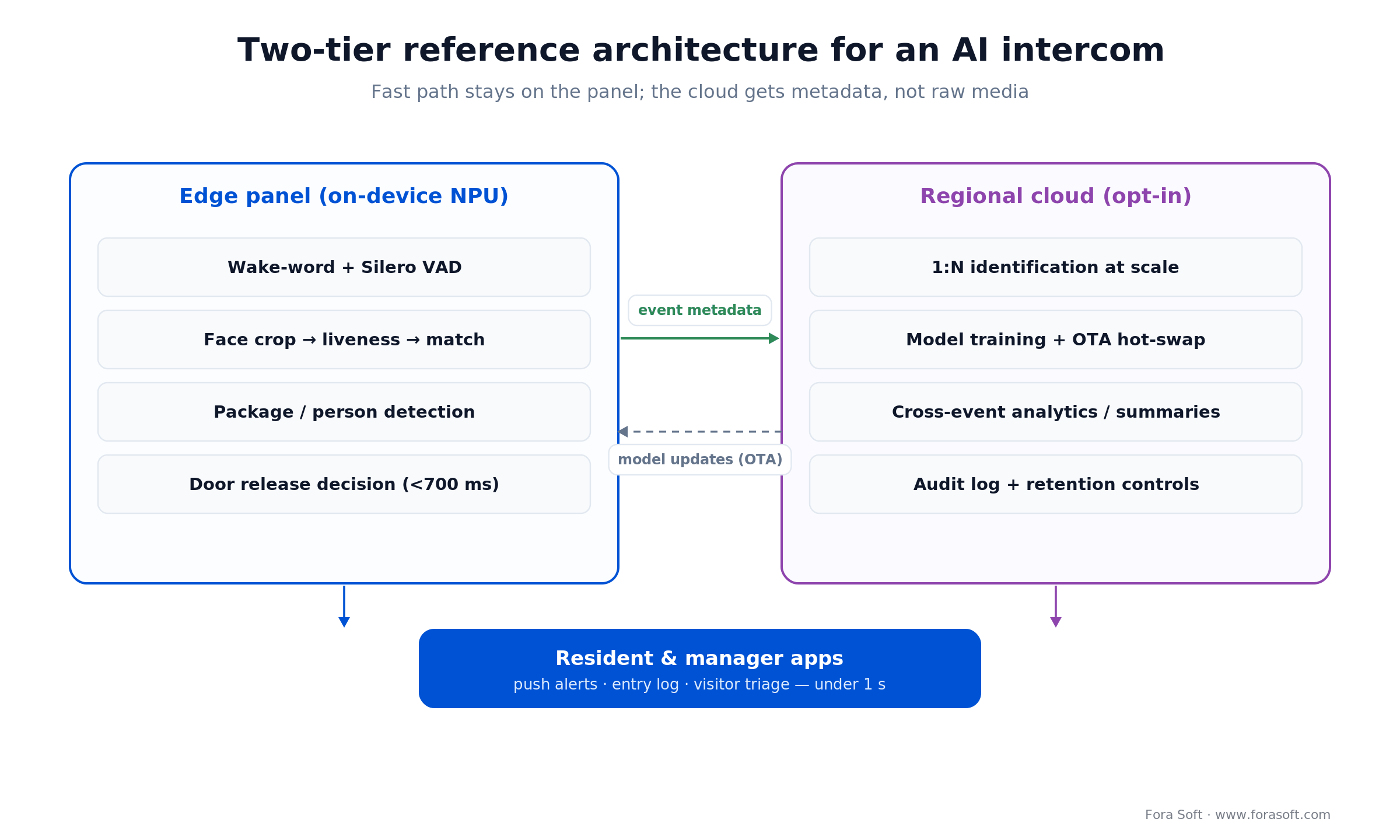
Figure 3. A two-tier reference architecture: fast path on the panel, metadata (not media) to the cloud.
Reach for a two-tier (hybrid) build when: you need sub-500ms door response and you also want the model to keep improving centrally — the right default for any multi-building deployment.
Vendor comparison — what the big names actually ship
Before you build, know what you compete with. Buyers already compare Akuvox, 2N, DoorBird, ButterflyMX, Ring, Dahua, and Hikvision on ML features. Here is what their current public specs claim.
| Vendor | AI feature headline | Inference location | Typical price tier |
|---|---|---|---|
| Akuvox R29 | Face recognition + anti-spoof liveness, SIP/ONVIF | On-device | ~$1,795 hardware |
| 2N IP Verso | Modular biometrics, up to 1,999 contacts | On-device (optional cloud) | ~$1,000–1,500 |
| DoorBird D21x | 180° lens, motion detection, cloud recording | Cloud (light on-device) | $384–5,000 |
| ButterflyMX | Mobile-first delivery verification, HD video | Cloud | SaaS (per unit/mo) |
| Ring Video Doorbell | Package detection, AI scene descriptions | Hybrid (edge + AWS) | Consumer ($100–350) |
| Dahua WizMind | Face recognition, people counting, heatmap | On-device | B2B, varies |
| Hikvision | Deep-learning object detection, See Clearer night vision | On-device | B2B, enterprise |
The pattern is clear: serious hardware vendors run inference on-device; app-first and consumer vendors lean on the cloud. If you are building a platform that layers on top of third-party hardware (a software intercom product), assume mixed silicon and plan a model-serving runtime that can target both.
Cost model — what a ML-first intercom actually costs to build
Ranges vary wildly, so here are ballpark figures for a mid-scope product: one intercom app (iOS + Android), one admin dashboard, a gateway/edge service with three ML features (face entry + liveness, package detection, noise-suppressed ASR), and a small cloud backend. Numbers assume Fora Soft’s Agent Engineering pipeline, which typically shaves 20–35% off traditional agency timelines.
| Work package | Typical duration | What you get |
|---|---|---|
| Discovery + ML feasibility | 2–3 weeks | Architecture, model shortlist, data plan, target-hardware profiling |
| Pilot on 1 feature | 6–10 weeks | Working model on target silicon + app integration + one building deployed |
| MVP (3 ML features) | 4–6 months | Face entry + liveness, package detection, voice/ASR, apps, admin, backend |
| Full platform | 9–14 months | Multi-tenant SaaS, role-based access, compliance, analytics, integrations |
| Run costs (cloud side) | Ongoing | AWS Rekognition-equivalent inference runs $0.0001–0.01 per prediction; GPU-hour pricing $0.30–3.00 depending on class |
We deliberately avoid flat dollar quotes in public materials — the same feature can differ 3× depending on hardware target, compliance scope (HIPAA vs standard SaaS), and whether you reuse an existing model family. If you want a bounded estimate for your specific roadmap, we give one in a 30-minute scoping call.
Worked example — the ROI math behind package detection
The easiest ML feature to justify on a spreadsheet is package and person detection, because it removes a support cost you can count. Here is the arithmetic for a machine learning intercom in a 100-door building, with every step shown.
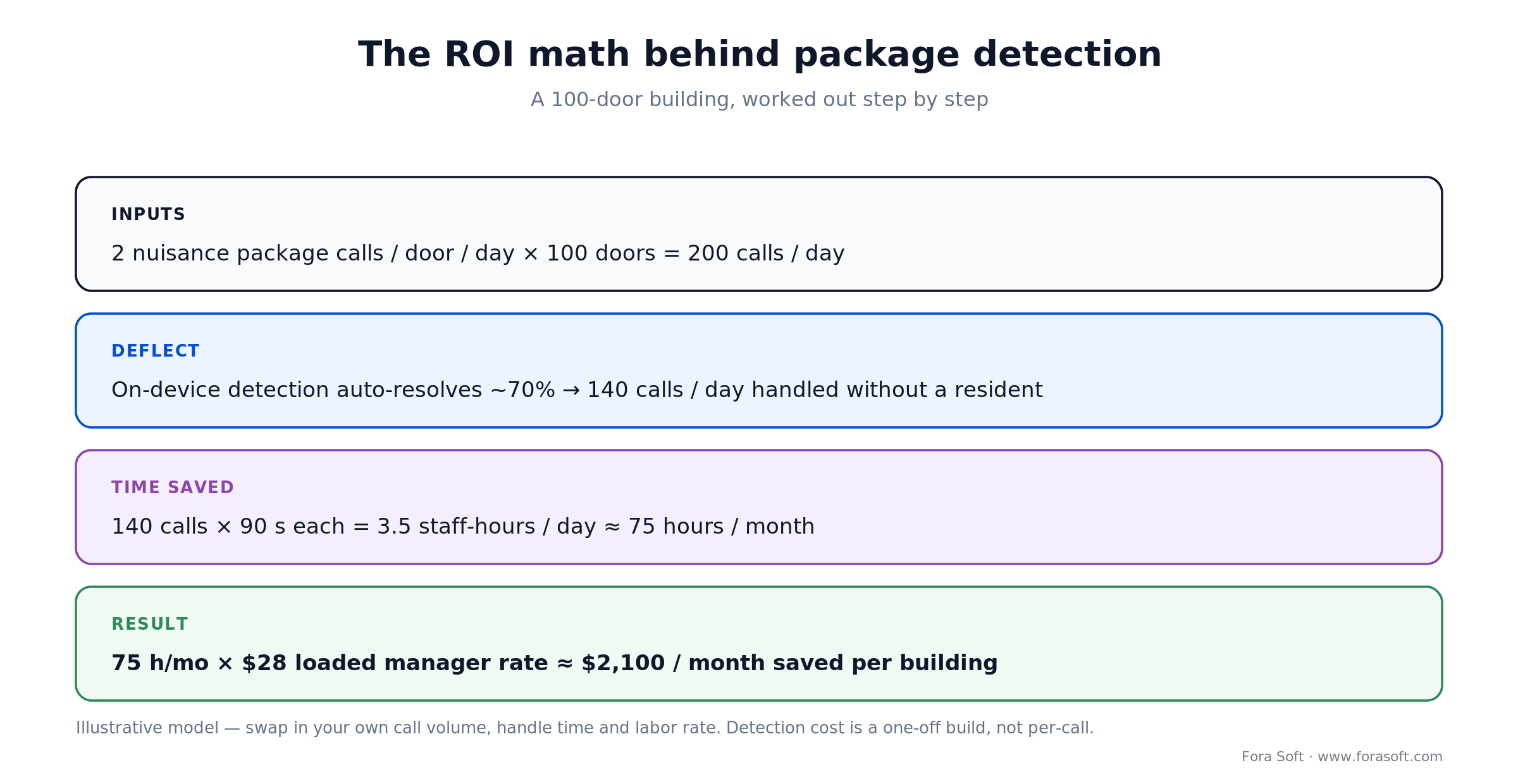
Figure 4. The package-detection payback, worked out for a 100-door building.
Start with the nuisance calls. Say each door generates two “is my package here?” intercom calls a day; across 100 doors that is 200 calls a day landing on a resident or a front desk. On-device detection with a two-frame persistence rule auto-resolves roughly 70% of them — the app just says “a parcel was left at 2:14 pm” — so 140 calls a day never interrupt anyone. At 90 seconds of handling each, that is 3.5 staff-hours a day, about 75 hours a month (roughly 21 working days). Put a loaded front-desk rate of $28 an hour on it and you save roughly $2,100 per building per month.
The model is deliberately conservative, and the detector is a one-off build rather than a per-call fee, so a single mid-size building often pays the feature back inside a quarter. Because we build with Agent Engineering, that build lands faster and cheaper than a traditional agency estimate — drop your own call volume and labour rate into the same three lines to size it for your portfolio. Want us to run these numbers on your real ticket data? Book a 30-minute scoping call.
Mini case — what we learned shipping Netcam Studio
Situation. Netcam Studio inherited the user base of WebcamXP, one of the earliest video-surveillance applications (2003). The legacy UI was built for experts, the motion-detection pipeline was rule-based, and multi-camera monitoring was painful. The product needed a modern interface and ML features that non-technical users could configure in a lobby or small office.
12-week plan. We ran a discovery phase mapping the most common motion-detection false positives (shadows, pets, outdoor foliage), then rebuilt the web interface around three things: a visual rule editor that sits on top of the ML output, object recognition that classifies people/vehicles/animals at the edge, and a camera-pair view that lets a building manager watch entry and lobby at once. All the ML inference runs on the host machine; the UI only receives event deltas.
Outcome. The pattern carries straight into smart intercoms: edge inference, event-based UI, ML tuned to cut false positives rather than add new labels. The engineering team now uses the same stack for intercom-adjacent projects handling up to 2,000 IP cameras per deployment. Want a similar assessment for your product? Book a 30-minute scoping call.
Security, privacy, and compliance — biometrics trigger regulation early
The moment your intercom processes faces, voices, or iris patterns, you step into regulated territory. Build compliance into the architecture, not as a bolt-on.
1. EU AI Act. Remote biometric identification (post-hoc or real-time) is listed in Annex III as high-risk. The original August 2026 deadline for high-risk obligations was pushed to December 2, 2027 by the 2026 Omnibus, so you have more runway — but the classification stands. Biometric verification (a resident opens their own door with their own face, confirming they are who they claim) sits outside the high-risk category — that distinction should drive your product copy and your consent flow.
2. GDPR Article 9. Biometric data used for identification is a special category. You need lawful basis (explicit consent is the usual one for intercoms), a Data Protection Impact Assessment, retention limits, and a clear deletion flow for residents who move out.
3. Illinois BIPA. In the US there is no federal biometric law, but BIPA has a private right of action: $1,000 per negligent violation, $5,000 per intentional one. It applies to Illinois residents’ data regardless of where your company sits. Several US states are drafting similar laws; build as if BIPA is nationwide.
4. HIPAA (healthcare settings). If your intercom sits inside a clinic or hospital and can capture PHI (names on badges, voice mentioning conditions), Business Associate Agreements and encryption of data at rest and in transit are required. Our healthcare intercom guide covers the specific BAA patterns.
5. On-device inference as a privacy shortcut. Regulators are far more comfortable with "biometric data never leaves the device" than with "we encrypt it in transit to our cloud". If your silicon can run the model, make on-device the default and the cloud the opt-in.
A decision framework — pick your ML scope in five questions
Answer these top to bottom. The first “yes” is the feature to build now; ship it, measure it, then come back for the next one. Do not build all five at once.
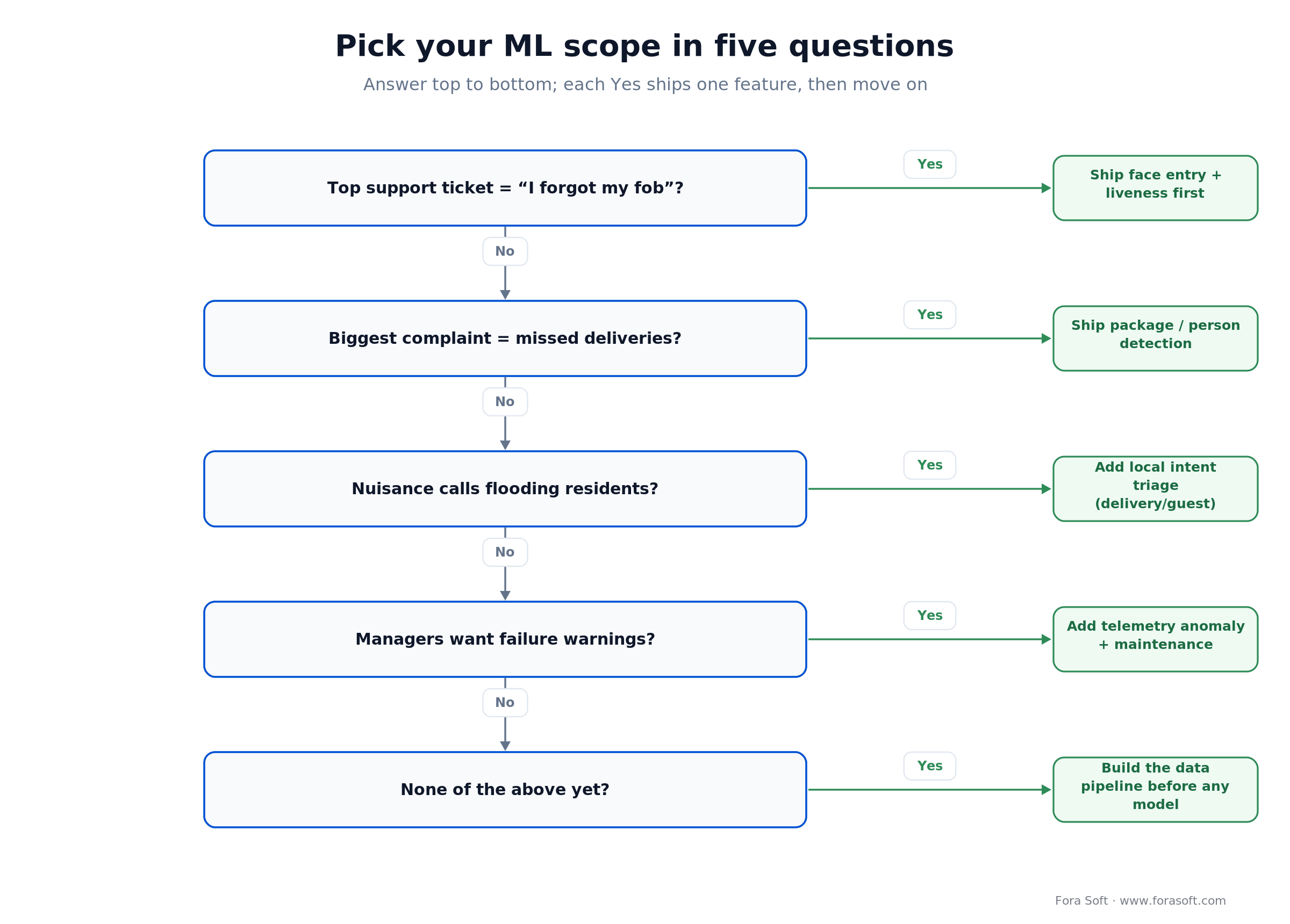
Figure 5. Pick the first ML feature to build from your single worst support ticket.
Q1. What is the single hardest support ticket today? If it is "I forgot my fob", ship face entry first. If it is "I missed my delivery", ship package detection. Ship one feature that removes the top ticket. Everything else is roadmap.
Q2. What silicon do you already have in market? An ARM Cortex-A53 handles Silero VAD, RNNoise, and quantized face embeddings comfortably but will struggle with full Whisper and a large YOLO model. Profile before you promise.
Q3. Which geographies are you selling into? EU-first means biometric conformity burden and local data residency. US-first means BIPA exposure. APAC-first means price sensitivity and fast OTA cadence. Pick the architecture that matches the geography you will launch in, not all three at once.
Q4. How will you collect labelled data? Pretrained models get you to 85%; the last 10 points come from your deployment. Plan for human-in-the-loop labelling from week one, not week fifty.
Q5. What is the minimum acceptable precision/recall? Set two numbers: false-accept rate (a stranger opens the door) and false-reject rate (the resident gets denied). Face entry usually wants FAR below 0.001% and FRR below 2%. Package detection can tolerate higher FAR as long as FRR stays under 5%.
Five pitfalls we keep seeing in ML-enabled intercoms
1. Shipping face recognition without proper liveness. A team ships a face-entry pilot, hits 99% accuracy on their test set, and gets bypassed by a printed photo in week two. Add depth, rPPG, or texture analysis from day one. Accept the 150–300ms extra latency — it is cheaper than the incident.
2. Using the phone-dataset model on hallway hardware. Models trained on smartphone selfies fail on wide-angle intercom cameras with IR illumination. Fine-tune on actual deployment footage, even if you only have 2,000 samples to start with. Transfer learning closes the gap fast.
3. Not budgeting for noise. A street-facing intercom sees 75–85 dB ambient sound peaks. If you skip RNNoise or equivalent, ASR accuracy drops below 60% — unacceptable for voice commands. Spend the engineering week to do noise suppression right.
4. Cloud-only inference for latency-sensitive flows. Every 300ms added to door release is a resident hammering the panel again and flooding support. Keep the fast path local and only use the cloud for audit, analytics, and model training.
5. Treating biometric storage like any other user data. Faceprints are irrevocable. A leak ruins residents for life, not for a password-reset cycle. Encrypt at rest with per-device keys, keep templates (not raw images), and provide a clear deletion flow that works even when someone moves out without notice.
Stuck on false positives or compliance gaps?
We have untangled face-recognition false-accept bugs, liveness regressions, and BIPA-exposure audits on live products. Bring us yours.
KPIs to track from day one
Quality KPIs. Face-entry false-accept rate below 0.001%, false-reject rate below 2%; ASR word-error rate below 15% at 70 dB ambient noise; package-detection precision above 90% with recall above 85%. These are the thresholds that keep support tickets flat.
Business KPIs. Reduction in resident-answered calls per unit per month (target: −30% after package detection ships), growth in monthly recurring revenue per building manager (+15–20% when you add predictive maintenance), churn reduction among multi-tenant buyers (ML features usually cut churn by 4–7 points in year one).
Reliability KPIs. End-to-end door-release latency p95 below 700ms; mean time between false events per camera below once per week; uptime of edge inference above 99.5%. If any of these slip, users notice within 48 hours.
When not to add machine learning to your intercom
Not every intercom benefits from ML. If you ship a single-tenant analog product with a 10-year replacement cycle and buyers who pay once, ML features rarely pay back the development cost. If your installed base runs on silicon older than a Raspberry Pi Zero 2, you will struggle to fit any modern model without a hardware refresh.
Also skip ML if you do not have a data pipeline. Pretrained models take you some of the way, but without deployment data you cannot tune false-reject thresholds or add new intent classes. No data, no improvement, no defensible product moat. Build the data flywheel first, then the ML.
Integrations that make ML in intercoms pay off
An ML-enabled intercom is only as useful as the systems it can talk to. Three integrations earn their keep every time: access control (Mercury, HID, LenelS2) so that face entry actually opens the door, building management systems (Niagara, Johnson Controls) so that ML events drive real workflows, and resident apps (iOS/Android SDKs, push notifications, Slack/Teams for commercial buildings) so that alerts reach humans in under a second.
Keep the integration layer protocol-first (ONVIF for video, SIP for audio, MQTT and Webhooks for events) rather than vendor-first. That future-proofs the product against vendor churn — which is common in PropTech — and speeds up the deal cycle, because integrators can wire you in without custom work.
Data strategy — your flywheel is worth more than your model
Open-source models close the gap on model architecture. What nobody can download is your deployment data. From day one, set up an event pipeline that captures anonymised inference outcomes (prediction, confidence, user action, outcome) with consent. A small but real labelling team (even two people, 10 hours a week) produces enough feedback to retrain monthly, and that is how you keep the model ahead of the competition a year in.
For the specifics of combining ML outputs with live video, our video analytics integration guide walks through the event schema and the backend pattern we reuse across intercom and surveillance projects.
FAQ
What is machine learning in an intercom, in plain terms?
It is software that watches and listens at your door and makes decisions you used to make yourself: who to let in, when to alert you, which packages matter, when voice commands mean what. It relies on audio and video models trained on millions of examples, plus a thin business-rules layer you configure.
Should ML inference run on the intercom itself or in the cloud?
For anything latency-sensitive (door release, live alerts) run it on the device. Use the cloud for training, analytics, and summaries. This hybrid pattern is what Ring, Akuvox, and our own video-surveillance deployments use in production.
How accurate is face recognition in real intercom conditions?
Pretrained ArcFace or FaceNet models typically hit 99%+ accuracy on clean benchmarks but drop to 93–96% at deployment until you fine-tune on your actual hardware (wide-angle lens, IR, varied lighting). Plan for a 4–8 week tuning pass after launch.
Do biometric intercoms need GDPR consent?
Yes, if you process data of EU residents. Biometric identification falls under GDPR Article 9 (special category) and requires explicit consent, a Data Protection Impact Assessment, retention limits, and a deletion flow. Verification (the user opens their own door) is a lighter regime than identification (matching against a gallery).
Do open-source models let you skip the cloud bill?
For most intercom features, yes. Silero VAD, RNNoise, FOMO, YOLO11, and Whisper-distil all run on-device under permissive licenses. Closed-source cloud APIs make sense only for features you cannot run on your silicon (e.g., large-context LLM summaries across a month of events).
What is the fastest way to pilot ML in an existing intercom?
Pick one building, one feature, one KPI. Ship a 6–10 week pilot with one ML model on one site and measure the single metric that matters. You learn more from one real deployment than from six months of lab work.
How do I stop false-positive package alerts?
Collect at least 5,000 examples of real packages plus 2,000 examples of common false triggers (pet toys, flattened boxes, shopping bags) from your own camera network. Fine-tune the detector with that data and add a two-frame persistence rule: an object must be present in 2 consecutive frames before an alert fires.
How does ML in intercoms integrate with building management or smart-home platforms?
Through standard protocols: ONVIF or SIP for video/audio, MQTT or Webhooks for ML-generated events, OAuth for tenant authentication. Most modern intercoms expose REST APIs; our practical integration notes are in the IoT intercom software guide.
What to Read Next
Smart Intercoms
The Future of Smart Intercom Systems: AI and Software Integration
Where intercom hardware meets app-first design and what that means for your roadmap.
Voice
AI Intercom Software: Voice Recognition Deep Dive
How noise-resistant ASR is built inside real intercom products, with model choices explained.
Features
Must-Have Video Intercom Features for 2025
The feature bar buyers compare you against before they ever talk to sales.
IoT
How IoT Intercom Software Enhances Communication Capabilities
Protocols, edge devices, and the integration patterns that matter in real deployments.
Video Analytics
AI Video Analytics for Security Products
Object detection, behavior analytics, and how to wire them into intercom event flows.
Ready to ship ML that residents actually notice?
A machine learning intercom earns its keep in ways residents and building managers notice within weeks: fewer forgotten fobs, fewer missed deliveries, fewer nuisance calls. The winning recipe is unglamorous — pick one feature, run inference on-device, ship a six-week pilot, measure a single KPI, then expand. Skip the 20-feature roadmap deck and the ML haze. Hardware choices, data pipelines, and compliance posture are what separate an intercom you ship from one you keep supporting.
If you want a second set of eyes on your ML scope, we have been doing this since 2005 on video-surveillance and intercom products. The conversation is short and the advice is free; the work we take on is the kind you still want to ship two years later.
Planning ML features for your intercom?
Bring us your product and target hardware — we will come back with a prioritised ML shortlist and a pilot plan you can run in eight weeks.

