Competitor analysis, core feature definition, monetization modeling, and a full launch blueprint — delivered within a week. Written by engineers who'll build what they plan.
Not from bad code. From a bad map. The team built what was spec'd, not what the market needed — and nobody found out until six months and a few hundred thousand dollars later.
Three-quarter of the sprint was spent on an onboarding flow users skipped entirely.
Three direct competitors already owned it. Could've known in week one.
The product worked. Nobody knew how to charge for it. Six-month pivot followed.
Scope crept until launch felt impossible. No one had defined what done looked like.
Overbuilt for zero users. Underbuilt for growth. Architecture rework at month four.
Six named deliverables you can hand to a dev team and start building from — not slides with good intentions.
5–10 direct competitors with core features, pricing, positioning, and the gaps they're not covering. Tells you exactly where there's room.
The 20% of features covering 80% of user jobs. Ranked by impact and effort. What's in v1, what's v2, what's a distraction.
3–5 pricing models that fit your market — subscription, usage-based, marketplace, freemium, licensing — with trade-offs and a fit score.
Recommended stack, structural approach, and infrastructure model for your use case. Not over-engineered, not under-built for year one.
Platform requirements, compliance, analytics setup, performance baselines, and the go-live checklist. Nothing left to improvise on launch day.
The iteration sequence for after launch — prioritized by signal-gathering logic. What to ship in month one to get real answers, not assumptions.
One call. No obligation. A full plan in your hands by next week.
No commitment required. The blueprint is yours regardless of what you decide next.
That changes everything about what goes into the blueprint — because the people writing it are the ones who'll execute it.
Our architects write blueprints they'd actually execute. No strategy-to-dev handoff gap. No spec that looks good on paper but falls apart in sprint one.
We look at pricing strategy, go-to-market positioning, user complaints on review sites, and technical choices that create switching costs. The gaps others miss.
Your monetization model affects your database schema. Your pricing tiers affect your access control design. We work through these as a system, not separate documents.
If your product involves streaming, WebRTC, AI pipelines, or real-time collaboration, we've built it before. You're not paying for us to learn your stack.
We spend time with you covering your idea, the market you're entering, your constraints, and the goal. By the end, we both know exactly what we're building the blueprint for.
30 minutesWe conduct the competitor analysis, feature audit, monetization research, and architecture design. You don't need to do anything — we'll flag you if we hit a question only you can answer.
Same or next business dayYou get all six deliverables and a walkthrough session. The full blueprint is yours at no cost. If you want to build with us next, we scope that separately — no obligation either way.
30–60 minute session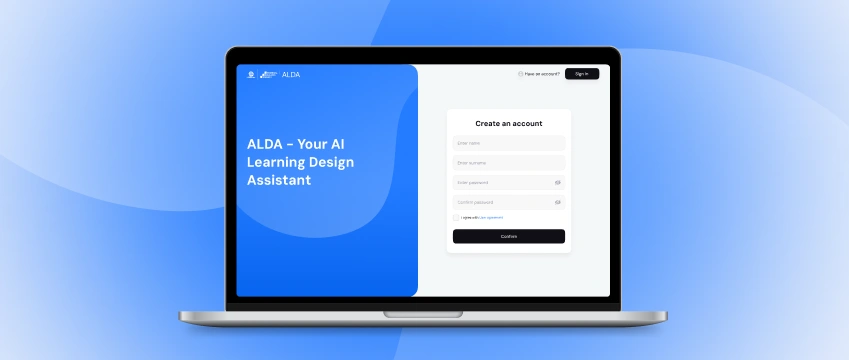
Came in as a concept, shipped as a platform. We planned the product — competitor landscape, feature scope, AI architecture, and monetization model — then built it. Now used by 70+ educators at Bethune-Cookman, Florida Memorial, and Shaw University. Backed by D2L, VitalSource, and Engageli.
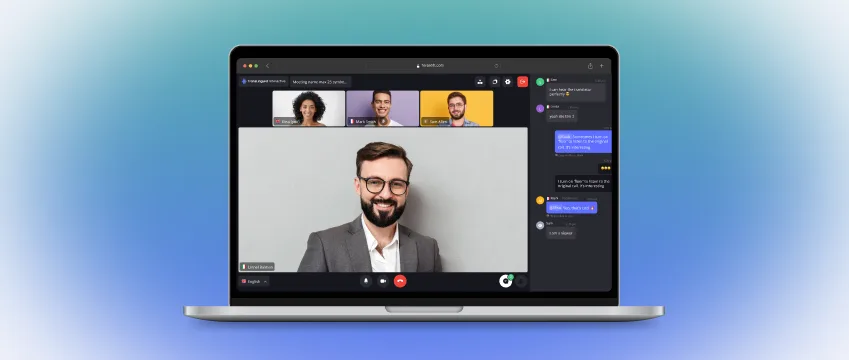
A platform for 75+ languages with a marketplace of 30,000+ certified interpreters. Won the NHS National Framework for Language Services across the entire UK — covering NHS orgs, councils, schools, and police. Featured twice in Slator as a disruptive AI-driven player in remote interpreting.
Six deliverables: a competitor landscape map, an essential feature matrix, a monetization model analysis, an app architecture recommendation, a launch readiness checklist, and a post-launch roadmap. Everything is specific to your product and market — not templated output.
Product discovery focuses on user research and problem validation. MVP planning starts where that ends — with a defined problem — and produces a specific, buildable plan: what to build, how to charge for it, how it should be structured technically, and how to launch it.
Yes, that's an option. Fora Soft is a full development studio. If you want to move to development after the blueprint, we can start immediately. There's no obligation, but the transition is seamless because the planning team and the dev team are the same.
The full blueprint is delivered within one week — same or next business day after the discovery call in most cases. One call is enough to scope the work; we take it from there.
We do this for qualified projects because the best way to show how we think is to actually think through your problem. If the blueprint is useful and you want to build with us, we talk about development. If you take the blueprint elsewhere, that's fine too.
We take on projects where we can genuinely add value — typically products with real technical complexity or market uncertainty where planning actually changes the outcome. After the discovery call, we'll tell you honestly whether we think it's a fit.

Within 24 hours you get a realistic estimate, technical recommendations and next steps. Free, no obligations.


%20(1).webp)