

Key takeaways
• A credible streaming app development time estimation starts at 12–16 weeks for a single-platform MVP and climbs to 10–14 months for a Netflix-class product with DRM, AI recommendations, and live.
• Three variables drive most of the schedule: live vs VOD (live adds 3–6 weeks), the number of client platforms (each Smart TV, Roku, or tvOS app adds 4–8 weeks), and DRM plus payments (2–6 weeks combined).
• Estimate bottom-up, then add three-point PERT. T-shirt sizing is fine for a pitch deck, but it hides risk. You need PERT to expose that risk before a fixed bid is signed.
• Managed services (AWS IVS, Cloudflare Stream) can cut 1–3 weeks versus self-hosting Wowza or nginx-rtmp, plus the ongoing ops. The trade is per-minute fees that dominate once you cross a few million watch-minutes a month.
• Fora Soft’s Agent-Engineering delivery trims 20–35% off typical vendor estimates because generative tooling absorbs the boilerplate (auth, CRUD, admin panels, CI, infra-as-code) that used to eat 3–5 weeks.
Why Fora Soft wrote this playbook
We have built video and audio streaming software since 2005, across 250+ delivered projects. Those range from a Netflix-like iOS VOD rental app (Vodeo, 100k+ users) to sub-second HD concert broadcasting for 10,000+ concurrent viewers (Worldcast Live). Twenty years of shipping taught us which estimate lines hold and which ones blow up the moment a DRM license, an App Store review, or a peak-load WebRTC test hits the team.
This guide is the reference we wish every founder had before their first vendor call: realistic benchmarks by scope, per-feature hour ranges, five estimation methods with a rule for picking each, tech-stack choices that move the schedule by weeks, a 32-week phased plan, and the pitfalls that quietly eat a quarter of a streaming budget. Planning Twitch-like live, Netflix-like VOD, a WebRTC classroom, or telemedicine video? You should walk away with a defensible schedule and a sharper conversation to have with any vendor, including us.
Want a firm streaming estimate, not a range?
Book a 30-minute scoping call. We’ll return a bottom-up breakdown with PERT ranges, tech-stack choices, and a phased plan within three business days.
The short answer: benchmarks by scope
Three numbers cover most streaming projects. Use the tier that matches your scope as your starting anchor for streaming app development time estimation, then calibrate with the variables in the next section.
| Scope tier | What’s in | Typical timeline | Industry cost band | Best for |
|---|---|---|---|---|
| MVP | One platform (iOS or Android or Web), VOD or basic live, one monetization tier, no DRM | 12–16 weeks | $25k–$80k | Pilot, investor demo, niche audience |
| Mid-market | Two client platforms, VOD + live, SVOD/AVOD/TVOD, Widevine/FairPlay DRM, basic recommendations | 24–36 weeks | $90k–$250k | Regional OTT, creator platform, edtech |
| Full platform | iOS + Android + Web + Smart TV + Roku + FireTV, live + VOD, multi-DRM, ML recommendations, analytics, ad server, CDN tuning, 100k+ concurrent | 10–14 months | $300k–$600k | Netflix-class product, national broadcaster |
| Enterprise | Above + watermarking, multi-CDN, custom codecs, localization, complex compliance (HIPAA, COPPA, GDPR-K) | 14–22 months | $500k–$1M+ | Telehealth, health-data streaming, top-10 OTT |
These are typical US-market price bands. Nearshore delivery, or our Agent-Engineering approach, lands lower on the same scope (the Agent-Engineering section quantifies how much), but never on a shorter calendar if the vendor is honest, because app-store reviews, DRM licensing, and scale testing do not compress.
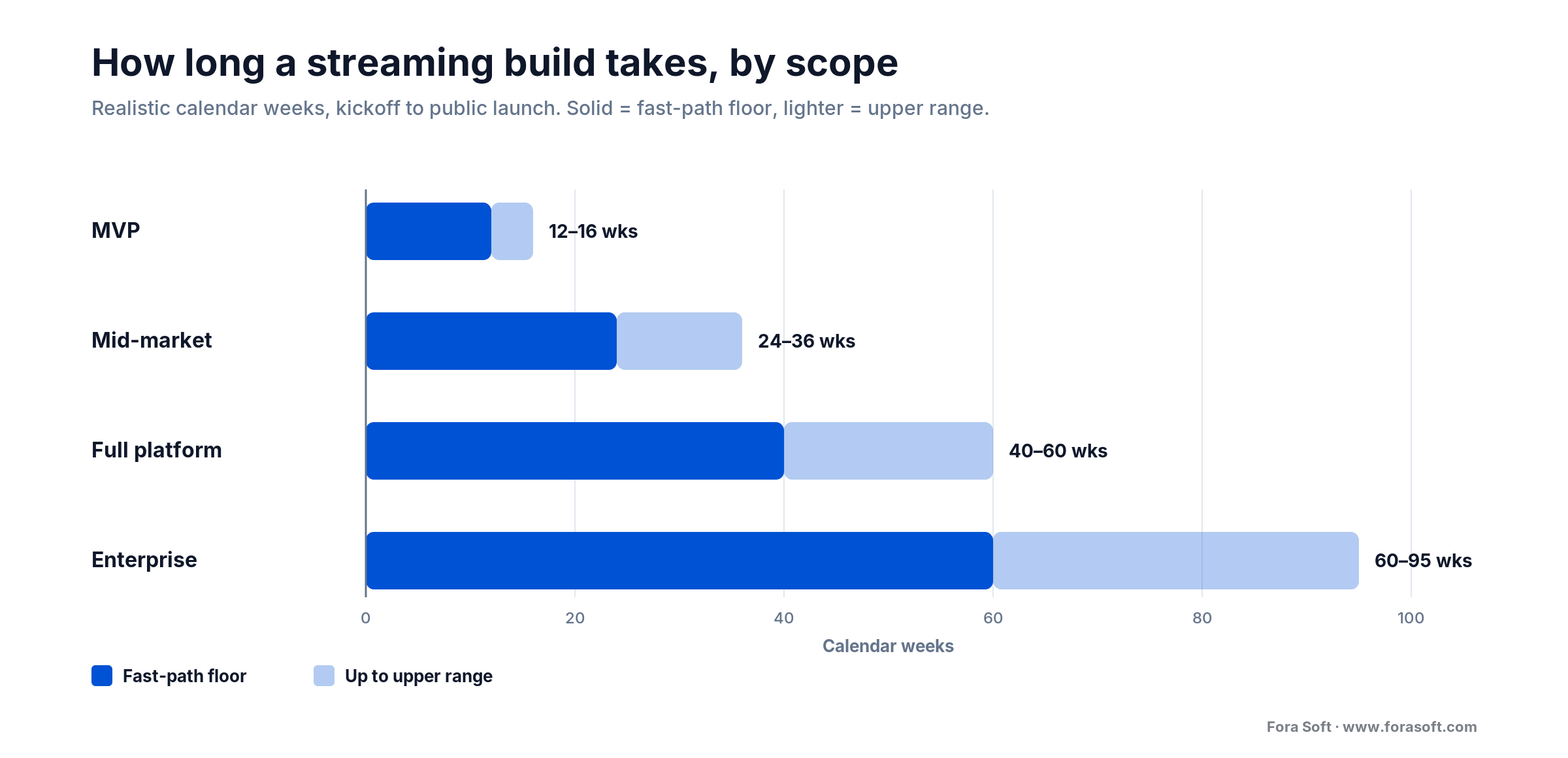
Figure 1. Anchor your plan to a scope tier first, then adjust with the swing factors below.
Eleven factors that move the timeline
Rank these before any vendor conversation. The bigger the swing, the earlier you decide.
1. Live vs on-demand. A pure VOD product skips live ingest, real-time transcoding, and WebRTC/LL-HLS tuning, which takes 3–6 weeks off the schedule. Live adds signalling, chat scale-testing, and ingest failover. If you need both, ship VOD first and add live in a second release.
2. Client platforms. Each target (iOS, Android, Web, tvOS, Android TV, Roku, Fire TV, webOS, Tizen) is a separate app. React Native or Flutter saves 30–40% on iOS plus Android, but Smart TV platforms each add 4–8 weeks of dedicated work. Decide which ones you truly need at launch.
3. DRM. Widevine (Android/Web), FairPlay (Apple), PlayReady (Windows/Xbox). Budget 2–6 weeks for license-server integration, key rotation, and device-matrix testing on 10+ models. Skip it only if your content is not premium.
4. Monetization model. SVOD (subscription) adds 2–3 weeks for billing, churn, and receipt validation. AVOD (ads) adds 3–4 weeks for VAST/SSAI. TVOD (pay-per-title) needs a payment gateway plus per-title entitlements. Hybrid models multiply rather than add.
5. Recommendations and personalization. Rule-based editorial shelves take a week. Collaborative-filtering ML runs 4–8 weeks (data pipeline, training, inference service). Managed services like AWS Personalize split the difference at 2–3 weeks.
6. Concurrency target. 1k viewers is a completely different architecture from 100k. WebRTC publishers cap at 20–50 per node; HLS scales to millions but needs a properly tuned CDN. Make your peak-concurrency target explicit on day one.
7. Transcoding pipeline. Five bitrate renditions for adaptive playback, two codec variants (H.264 plus H.265 or AV1), optional watermarking: each doubles compute and adds roughly a week of pipeline engineering and QA.
8. Content ingestion path. A self-serve creator flow (Twitch-style) adds 3–4 weeks of dashboard, RTMP credential management, go-live checks, and moderation tooling. Editorial-only (Netflix-style) is simpler: an admin panel plus batch upload.
9. Chat and interactivity. Text chat alone is 2 weeks with a managed SDK (Ably, PubNub). Moderation, reactions, polls, tipping, and super-chat push it to 4–6 weeks with custom services.
10. Compliance. COPPA (US kids), GDPR-K (EU kids), HIPAA (health), SOC 2 (enterprise), age verification. Discover these early. Each adds 2–4 weeks of engineering plus legal review. The amended COPPA Rule took effect June 23, 2025, with full compliance required by April 22, 2026, tightening parental-consent rules even for general-audience apps with child users.
11. App-store reviews. The iOS review queue is typically 24–48 hours now; Roku and Fire TV certification can stretch to 2–3 weeks. Build at least 3 weeks of parallel submission runway into the launch plan, or accept schedule slips.
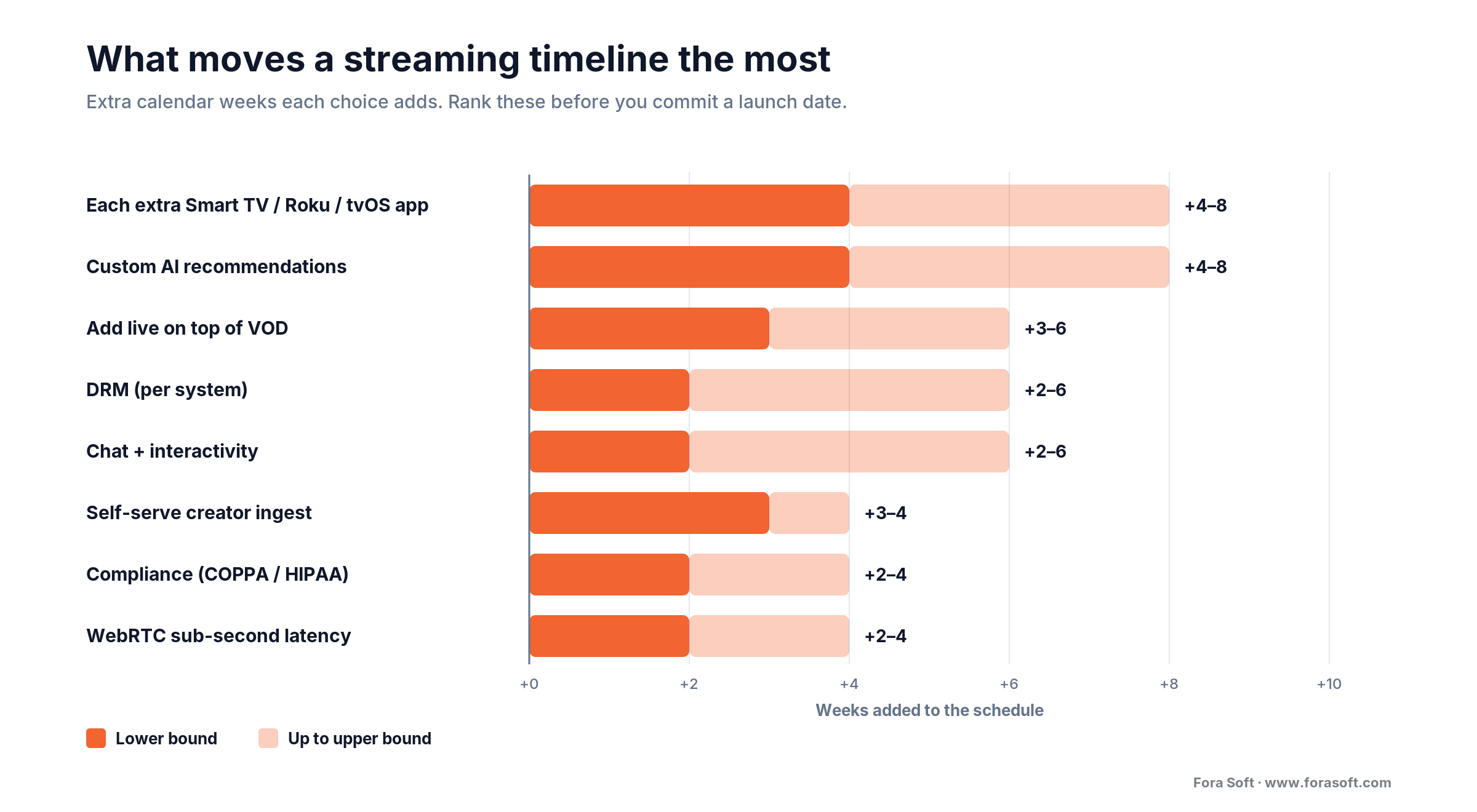
Figure 2. Rank these swing factors before you commit a launch date to a board.
Reach for a conservative estimate when: you are committing to a fixed-price contract, an investor timeline, or a broadcast event date. Use the 85th-percentile (pessimistic) PERT figure, not the likely one.
Feature-level estimates: hours and dependencies
Use this as a bottom-up starter checklist. Numbers are per-feature senior-engineer hours, assuming a mature codebase and Agent-Engineering tooling. Multiply by 1.3–1.5 for greenfield projects.
| Feature | Optimistic | Likely | Pessimistic | Hidden dependency |
|---|---|---|---|---|
| Auth & profile (OAuth + social) | 32h | 56h | 80h | Apple Sign-In is mandatory if Google or Facebook is offered on iOS |
| Video player (native, adaptive) | 80h | 140h | 200h | Bitrate ladder must match your real-world audience bandwidth mix |
| VOD ingestion + metadata | 60h | 90h | 130h | Editorial admin panel is usually under-scoped by 40% |
| Live ingest (RTMP/WHIP) + encoding | 150h | 220h | 320h | Peak-load simulation and failover between origins |
| Adaptive bitrate + transcoding | 120h | 180h | 260h | Per-title encoding tuning (not one-size-fits-all ladder) |
| DRM (one system) | 80h | 120h | 200h | License server SLAs, offline playback, key rotation |
| Subscription billing (SVOD) | 60h | 110h | 160h | Receipt validation + cross-store entitlements |
| Ad server (AVOD, SSAI) | 90h | 140h | 210h | VAST ad-pod scheduling, tracking pixels, frequency capping |
| Recommendations (collab filtering) | 120h | 200h | 320h | Cold-start content, event pipeline, A/B testing |
| Live chat (managed SDK) | 60h | 90h | 140h | Moderation rules + slow-mode + banned-word list |
| Analytics & telemetry | 50h | 80h | 130h | QoE metrics (rebuffer, join-time) vs business (MAU, ARPU) |
| Smart TV app (tvOS or AndroidTV) | 90h | 140h | 220h | 10-foot UI, remote-focus model, certification round-trips |
To produce a total, apply the PERT formula (O + 4M + P) / 6 per feature, then sum. That is your most-likely effort. Add 15–25% contingency for integration glue, scale testing, and third-party waits. The example below shows the math on one high-risk line.
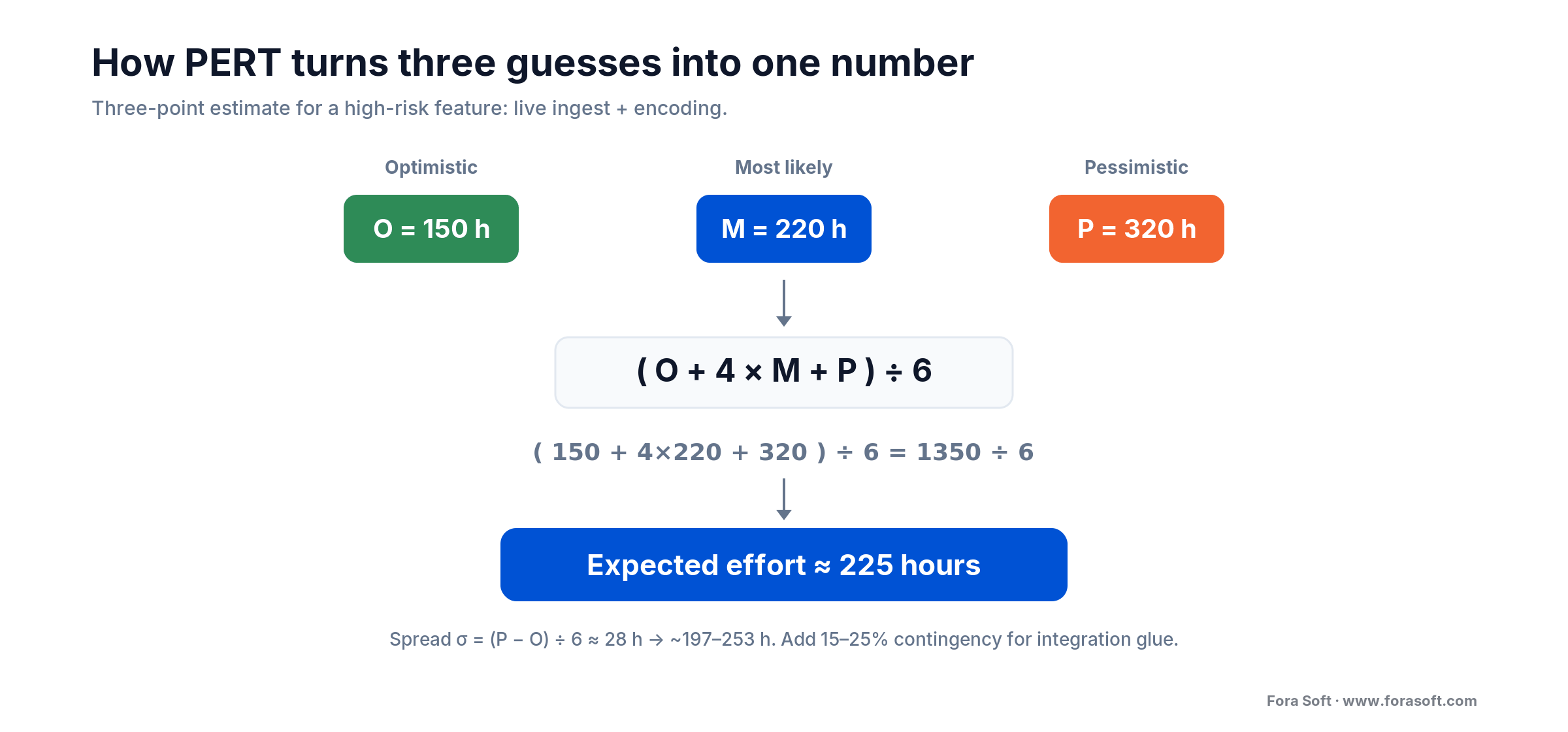
Figure 3. PERT weights the likely case four times, then exposes the spread you carry as contingency.
Five estimation methods, and when to use each
Picking the right method is the single easiest way to make your streaming app development time estimation defensible. Most vendor disputes trace back to one side using t-shirt sizing while the other signed a bottom-up fixed bid.
| Method | Use when | Accuracy | Prep needed | Failure mode |
|---|---|---|---|---|
| T-shirt sizing | Pitch decks, roadmap alignment | ±50% | Low | Interpreted as a commitment |
| Analogous | Similar project already shipped | ±30% | Low | Novel features hidden |
| Story points + velocity | Existing Scrum team, iterative release | ±20% | 3+ sprints of history | Velocity drift after staffing changes |
| Bottom-up (WBS) | Fixed bids, RFP responses | ±15% | High (full WBS) | Over-precision masks risk |
| Three-point (PERT) | High-uncertainty features (DRM, WebRTC scale, AI) | ±10–15% | Bottom-up + risk model | Requires honest pessimistic estimates |
Our default for streaming work is bottom-up WBS plus PERT on every uncertain feature. The WBS handles the 70% of work that is repetitive (auth, CRUD, player shell, payments, admin). PERT handles the 30% that bites (WebRTC scale testing, DRM device matrix, transcoder tuning, AI recommendations) and surfaces those risks before they become overruns.
Reach for story-points plus velocity when: you are extending an existing production streaming app with a stable team that has at least three sprints of recent history.
Unsure which estimation method fits your build?
We’ll match the method to your commitment level (fixed bid, T&M, or milestone) and send a worked example from a comparable Fora Soft project.
Tech-stack choices that shift the schedule by weeks
Three architectural decisions dominate the calendar: streaming protocol, live infrastructure, and player. Settle them before you commit a date to a board or investor.
Streaming protocol
HLS is the default for VOD and mass-audience live. It hits 6–30-second latency, plays on every browser and device with no extra work, and scales over any CDN. Baseline, no extra weeks.
LL-HLS (low-latency HLS) drops latency to 2–4s. Tuning adds 1–2 weeks. Player support is now solid across iOS, Android, and major Web players.
DASH and LL-DASH are the MPEG equivalents, with similar schedule impact. Reach for them when you need multi-codec flexibility or specific DRM combinations.
WebRTC is the right call for sub-second interactive video: virtual classrooms, telemedicine, live auctions, 1:1 coaching. Latency drops to 200–500ms, but you add 2–4 weeks for NAT traversal, TURN, ICE restarts, and jitter-buffer tuning, and you cap at 20–50 publishers per SFU node. On BrainCert and InstaClass we built firewall-bypassing WebRTC precisely because the interactivity was non-negotiable; an HLS-only version would have saved two weeks but failed the core experience.
Reach for WebRTC when: latency under one second is the product (teaching, telehealth, auctions) and your live rooms stay under ~50 simultaneous publishers per node. Otherwise LL-HLS is cheaper to build and scales further.
Live infrastructure
AWS IVS or Cloudflare Stream are managed and low-ops, taking ingest to playback in a couple of API calls. Typical integration is 1–2 weeks. Cloudflare Stream bills about $1 per 1,000 minutes delivered with no egress fees; AWS IVS input runs $2.00/hour ($0.50 with Multitrack Video) plus delivery. The trade is per-minute fees that scale with watch time.
Wowza Streaming Engine is mature and supports every protocol (RTMP, WebRTC, HLS, DASH, SRT), self-hosted or cloud. It takes 2–3 weeks to integrate, but you own the ops and the bitrate tuning. A good choice once you outgrow managed or need protocol flexibility.
Ant Media Server is WebRTC-first, ultra-low-latency, and API-driven, at 1–2 weeks to integrate. Our go-to when interactive latency is the requirement.
Self-hosted nginx-rtmp plus FFmpeg is the cheapest per minute and the most fragile at peak. Plan 2–4 weeks plus ongoing DevOps to keep it stable. Reach for it only when you have a clear path to six-figure monthly infrastructure savings.
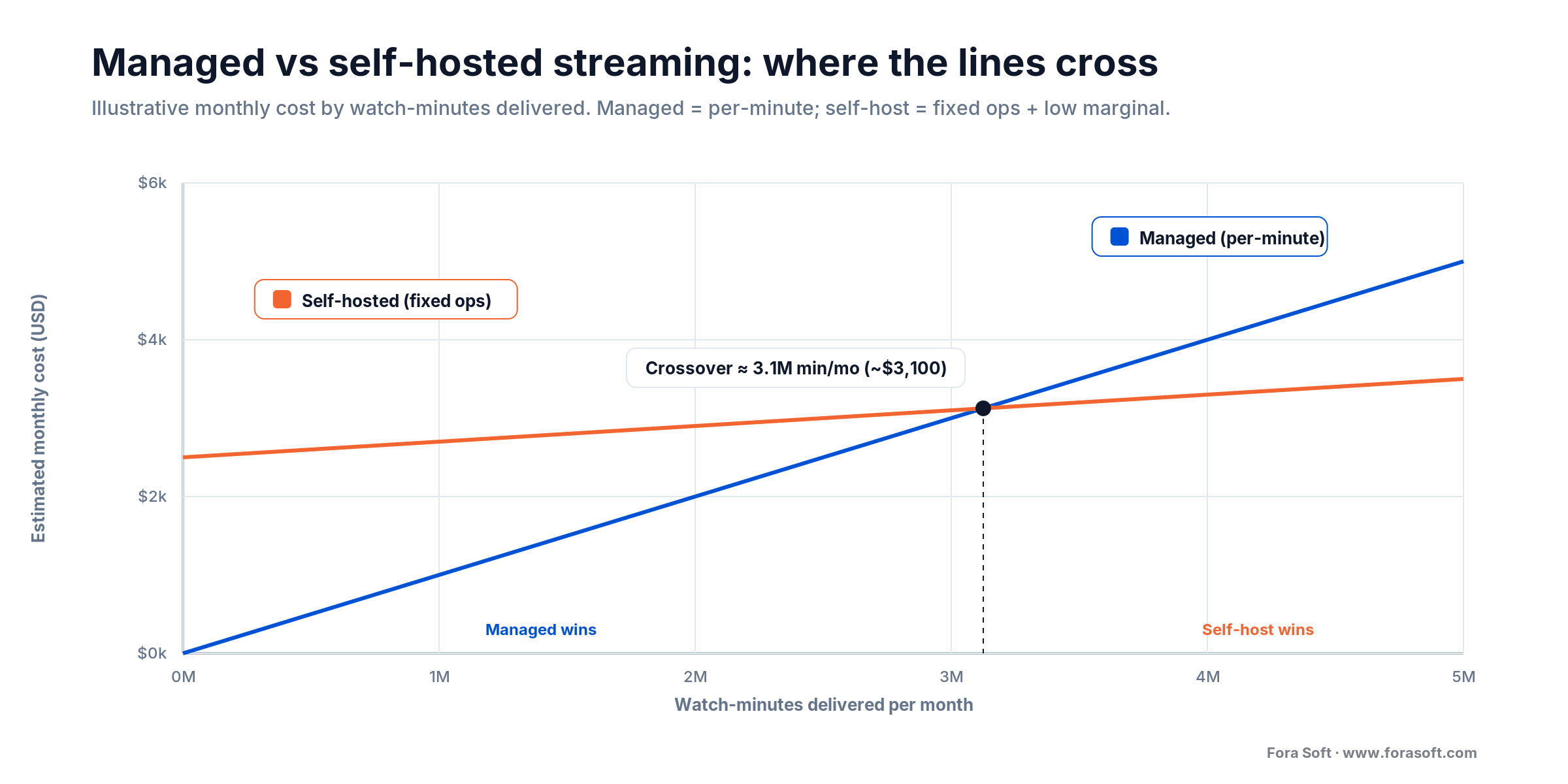
Figure 4. Managed is cheaper to start; self-hosting wins once you cross a few million watch-minutes a month.
Player choice
Video.js (Web), AVPlayer (iOS), ExoPlayer (Android), and Shaka (Web) are free, flexible, and DRM-ready. Integration runs 1–2 weeks per platform.
Commercial players (THEOplayer, Bitmovin, JW Player) bundle DRM, analytics, and QoE reporting. Integration is 3–5 days per platform, at license fees of $10k–$100k/year. Worth it when your team does not want to own the player roadmap and needs enterprise SLAs.
A realistic 32-week phased delivery plan
This is the calendar we give mid-market clients committing to VOD plus basic live on two platforms. It is the realistic path, not the optimistic one.
| Phase | Weeks | Deliverables | Team | Exit gate |
|---|---|---|---|---|
| Discovery & strategy | 1–4 | Market & competitor map, personas, prioritized backlog, tech RFP, compliance audit | PM, architect, legal | Signed scope + risk register |
| Design & architecture | 3–8 | Wireframes, clickable prototype, API spec, data model, CDN/DRM strategy, infra-as-code | UX, 2 architects, DevOps | Approved prototype + infra plan |
| MVP build | 8–20 | Auth, player, VOD ingestion, one monetization tier, two platforms, basic analytics | 4 BE, 3 FE, 1 QA | Internal beta with real content |
| Beta & scale test | 20–26 | 1k–10k concurrent load test, QoE audit, DRM device matrix, payment end-to-end | SRE, full QA, PM | 99.9% playback success at target concurrency |
| Hardening & launch | 26–32 | Bug fixes, ops runbooks, App Store and Google Play submission, marketing-ready build, 24/7 on-call | Full team + ops | Public launch |
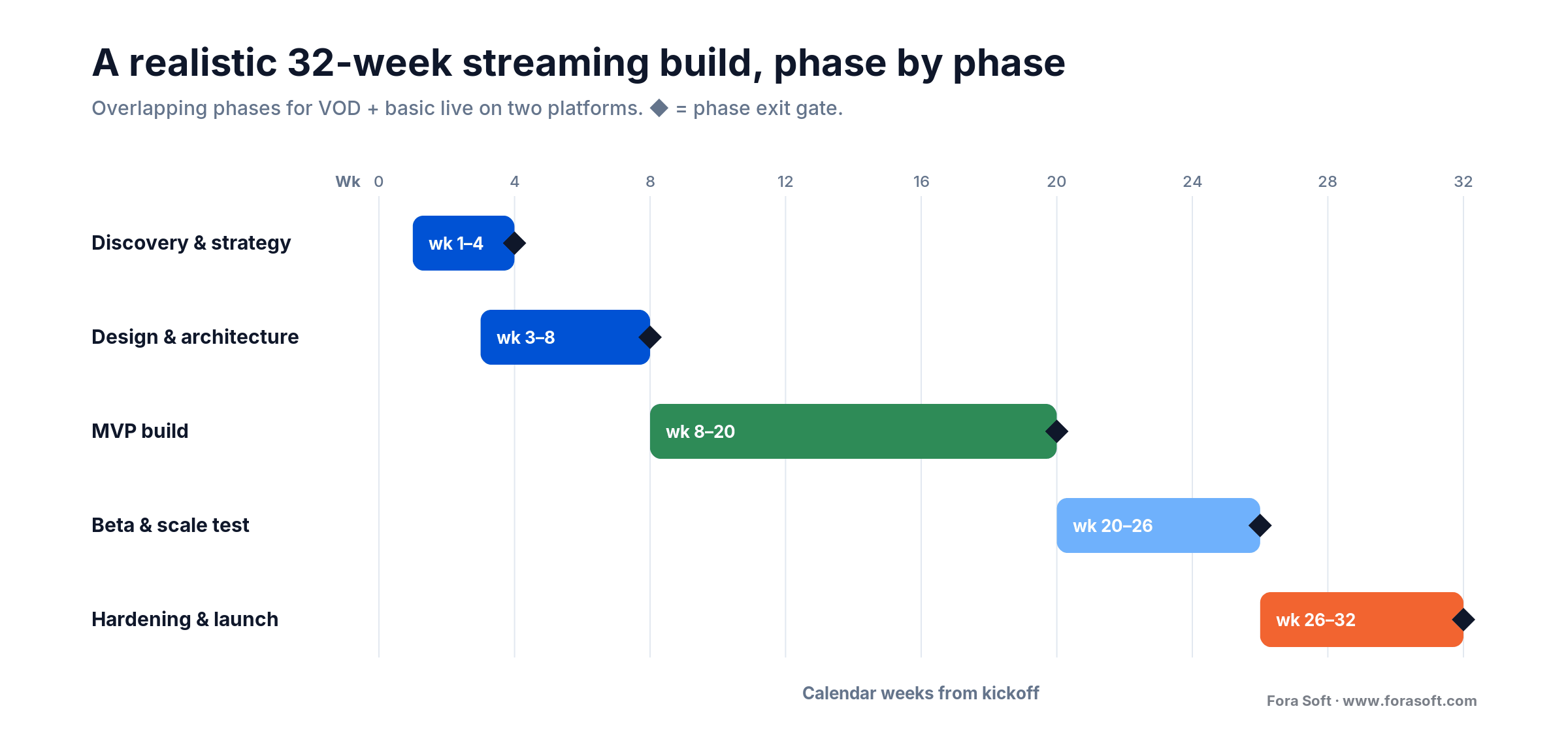
Figure 5. Phases overlap on purpose. Each diamond is a gate that must close before the next phase ramps.
For full-platform scope, append 4–8 weeks per additional client platform (Smart TV, Roku, Fire TV), 4–6 weeks for ML recommendations, and 3–5 weeks for localisation and payments across multiple geographies.
Mini case: Worldcast Live, from RFP to 10,000-viewer concerts
Situation. Worldcast Live needed a premium live-concert platform to broadcast HD video from multiple venues to a global paying audience at sub-second latency. The estimate problem: a prior vendor had pitched nine months at a rough number, and the client needed a defensible plan to take to investors.
Twelve-week MVP plan. We used bottom-up WBS for ingest, player, payments, and admin, and PERT on the three risk areas: HD live ingest from venue, sub-second latency at 10k concurrent, and multi-venue synchronization. Optimistic came out at 9 weeks, likely at 12, pessimistic at 17. We committed to the 12-week likely number with a 17-week fixed-price ceiling.
Outcome. The platform shipped in week 12 for the first event. At the second live event it sustained 10,000+ concurrent HD viewers at sub-second latency. The PERT exercise had already flagged ingest-failover as the highest-risk line, so we baked in two-origin redundancy from sprint 3, which is why the first broadcast night did not end in a rebuffer storm. Want a similar assessment for your streaming product? We can turn one around in three business days.
A worked cost model: MVP to full platform
The numbers below are illustrative, grounded in Fora Soft Agent-Engineering rates and the hosting we run in production (Hetzner AX-series for compute, Cloudflare and AWS CloudFront for delivery, DigitalOcean for smaller builds). We stay deliberately conservative. If a vendor quotes materially less, assume scope, risk, or both are hidden.
| Tier | Dev effort | Dev budget (Fora Soft) | Year-1 infra | Total year 1 |
|---|---|---|---|---|
| MVP | 1,500–2,200h | from $25k | $6k–$18k | from $31k |
| Mid-market | 4,500–7,000h | from $75k | $25k–$55k | from $100k |
| Full platform | 10,000–15,000h | from $180k | $90k–$240k | from $270k |
Infrastructure is the line that surprises founders. CDN egress alone can reach 60–80% of the infra bill once you cross a few thousand concurrent viewers, which is why we negotiate volume pricing with Cloudflare and AWS from day one on bigger projects.
Reach for managed streaming (AWS IVS, Cloudflare Stream) when: you are under a few million watch-minutes a month and want zero ops. Above that, model self-hosting: the per-minute fees usually cross your own infrastructure cost, as the crossover chart above shows.
A decision framework: scope your app in five questions
Answer these five in order before any estimate conversation. They resolve the decisions that drive the schedule.
Q1. Live, VOD, or both? If both, which goes first? Shipping one at launch and the other in release 2 saves 3–6 weeks on day-one schedule and lowers infrastructure risk.
Q2. What is your peak concurrent-viewer target for month 6? Under 1k and any stack works. Over 10k and you must plan multi-origin live ingest, CDN tuning, and scale tests from sprint 1.
Q3. Premium content with DRM, or user-generated? DRM adds 2–6 weeks. UGC adds moderation, copyright detection (Audible Magic or similar), and a creator dashboard, roughly 4–8 weeks.
Q4. Which client platforms at launch vs release 2? Fewer at launch means a faster ship. iOS plus Android cover 80% of audience in most geographies; Web is essential for discovery; Smart TV can wait unless your strategy is living-room-first.
Q5. Which monetization model, and can we start with one? Launching with SVOD only and adding TVOD rentals later saves 2–4 weeks. Hybrid at launch multiplies integration and QA effort.
A one-page checklist for your vendor estimate call
Walk into every scoping call with answers to this short list. Every unanswered item is a week of hidden risk in the estimate.
Product decisions. Live, VOD, or both. Peak concurrency at month 6 and month 18. Premium (DRM) or UGC. Catalog size at launch. Languages and regions.
Platform decisions. Launch platforms (iOS / Android / Web). Release-2 platforms (Smart TV / Roku / Fire TV / tvOS). Native vs React Native / Flutter. Offline playback requirement.
Monetization. SVOD, AVOD, TVOD, or hybrid. Payment geographies. Trial or freemium policy. Ad-server partner or SSAI.
Governance. Compliance surface (COPPA, GDPR-K, HIPAA, SOC 2). Brand-guidelines status. Who signs off on change requests. Accepted deviation envelope on the PERT likely date.
2025–2026 trends that change the estimate
Four shifts in the streaming market materially change the scope conversation. Weigh each against your launch window.
AI-driven personalization. Recommendation engines are moving past classical collaborative filtering into context-aware and emotion-aware models. Budget 4–8 weeks for a custom pipeline, 2–3 weeks for managed (AWS Personalize). Ship managed at launch, then migrate to custom once you have enough watch data to train meaningfully. We cover the state of play in the future of AI in video streaming guide, and the broader corpus lives in our video streaming knowledge base.
Whisper-class ASR and live translation. Real-time captions on live streams, multi-language translation for global audiences, and speaker diarization for meetings. Budget 1–2 weeks to wire up Whisper or an equivalent, and 2–4 weeks for diarization plus translation pipelines. Accessibility regulation in the US and EU is nudging this from optional to mandatory for public broadcast.
AV1 codec adoption. Hardware support is now broad (Apple A17 Pro and newer, Qualcomm Snapdragon 8 Gen 3, most recent Smart TVs). AV1 saves 25–30% bitrate versus H.264/H.265, which is meaningful at scale. Budget 1–2 weeks for encoder tuning and triple-codec storage. VVC (H.266) stays a 2027 conversation.
Tightening compliance. The amended COPPA Rule is in force (full compliance by April 22, 2026), GDPR-K interpretations vary by EU member state, and HIPAA enforcement around telehealth video has teeth post-2024. The net effect: 2–4 weeks of compliance engineering minimum, plus 1–2 weeks of legal review baked into the plan.
Build vs buy: how a framework changes the estimate
Starting from a well-chosen framework is the biggest estimate accelerator outside of Agent-Engineering itself. The trade-off is a narrower envelope of customization.
White-label OTT platforms (Muvi, Uscreen, Vimeo OTT, Brightcove) ship in 2–4 weeks. They cover VOD, basic live, SVOD, and branded apps. They fail the moment you need custom recommendations, WebRTC interactivity, TV-app certification on a specific device, or deep integration into your own billing.
Open-source frameworks (Jellyfin, PeerTube, Nuxt-OTT starters) trim 4–6 weeks off a greenfield MVP but need engineering to harden for production. Good when your team will own the codebase long-term.
Fora Soft’s pre-built streaming modules. Our scalable video streaming modules with AI (player, chat, recommendations, VOD ingestion, live infrastructure) drop another 2–4 weeks off a custom build, because the hard work (scale tuning, DRM device matrix, codec pipelines) is already done and battle-tested on projects like Worldcast Live, Vodeo, and BrainCert.
Reach for a white-label OTT platform when: your catalog is under 50 titles, your audience is under ~5,000 concurrent, and you have no need for custom ingest, DRM, or bespoke recommendations. Validate the audience first, then invest in custom.
Pitfalls that blow up streaming timelines
These five are, in our experience, behind nearly every streaming overrun. Name them in the risk register on day one.
1. Underestimating DRM and the device matrix. DRM does not end at encoding; it extends to player-side decryption on every target device. We usually see 10+ device combos (iPhone SE/14/16, Pixel 4a/8, Chromecast, several Smart TV year-classes) and each finds a new edge case. Plan 2–6 weeks and own the device lab.
2. Scope creep mid-sprint. Every sprint a stakeholder asks for “just one small thing.” Over a 20-sprint project those small things add 30–60% to the schedule. Run lightweight change control: anything not in the sprint backlog gets a ticket, an estimate, and a go/no-go from one named approver.
3. Scale tests left to the final phase. If your first 1k-concurrent load test is in week 26, you will ship late. On Worldcast Live we ran a synthetic 2k-viewer test in sprint 6, 5k in sprint 10, and 10k in sprint 14, which is why the first real concert did not discover a bottleneck live.
4. App-store review-queue underestimation. iOS review is typically 24–48 hours, but Roku and Fire TV can stretch to 2–3 weeks. Queue submissions in parallel with QA, not after, and budget at least 3 weeks of runway for certification round-trips.
5. Compliance discovered in month 4. COPPA (in force as of 2025), GDPR-K, HIPAA for healthcare, SOC 2 for enterprise buyers. Each adds 2–4 weeks of engineering plus legal review. Audit compliance in Discovery, not in beta.
KPIs: did your estimate actually hold up?
Track three buckets of KPIs from sprint 1, not from launch. Early numbers let you replan while it is still cheap.
Quality KPIs. Video start-up under 2s, rebuffer ratio under 0.5%, playback failure under 1%, bitrate-switch latency under 2s. These are industry QoE benchmarks; miss them and churn erodes every business KPI underneath.
Business KPIs. Day-30 retention above 40% for premium content, MAU/DAU above 0.25, ARPU consistent with your licensing model, free-to-paid conversion above 5%. Track from beta, not launch, because a feature mix that hits scale but not retention is a known-fail pattern.
Reliability KPIs. 99.9% playback availability at peak, mean-time-to-detect under 60s, mean-time-to-recover under 10 minutes, CDN cache-hit ratio above 95% for VOD. These decide whether your ops budget is realistic.
When you should not custom-build a streaming app
Honest counter-position: not every streaming product deserves a custom platform. Reach for an off-the-shelf OTT platform (Vimeo OTT, Muvi, Brightcove, Uscreen, Kaltura) when your catalog is under 50 titles, your audience is under 5,000 concurrent, you need no custom ingest or DRM, and you are primarily monetizing SVOD at standard price points.
Off-the-shelf wins on speed (2–4 weeks live) and on ops (zero). It loses on economics above ~5k paying subscribers, where per-viewer fees scale worse than your own infrastructure, and on flexibility: no custom recommendations, no custom billing, no bespoke player.
Rule of thumb. Start off-the-shelf to validate audience and pricing. Invest in a custom build once you have 5k+ paying users, a differentiated catalog, or feature requirements (interactive, telemedicine-grade, classroom-grade) the turnkey platforms cannot deliver.
Ready to move from range to a fixed plan?
Share your concurrency target, content type, platforms, and monetization model. We’ll reply with a phased plan and a PERT estimate within three business days.
How Agent-Engineering changes the estimate
Our production tooling layers generative code assistants (Claude Code, the Agent SDK, internal orchestration) on top of a senior engineer, not in place of one. The practical effect on streaming projects:
Boilerplate eaten, not written. Auth flows, CRUD admin panels, Stripe billing scaffolding, CI/CD pipelines, infra-as-code, and unit tests for known patterns used to consume 3–5 weeks and now ship in 1–2. That is why our MVP band starts at 12 weeks while industry averages sit at 16–24.
Hard engineering does not shrink. WebRTC signalling, DRM device-matrix debugging, transcoding-ladder tuning, CDN failover, and live scale testing are senior-engineer hours that Agent-Engineering accelerates by maybe 10–15%, not the 40–60% we get on boilerplate. Any vendor promising a three-month Netflix clone is redefining either “Netflix” or “clone.”
Net effect on your estimate. For a mid-market streaming app, expect 20–35% off the industry-typical timeline and budget. For a full-platform Netflix-class product, expect 15–25% off. We quote the savings honestly: if the line item is WebRTC scale-testing, we quote the real week-count, not the aspirational one.
FAQ
How long does it actually take to build an MVP streaming app?
12–16 weeks for a single-platform MVP (iOS or Android or Web), one monetization tier, one content mode (VOD or basic live), no DRM. Add 3–6 weeks for live on top of VOD, 2–6 weeks for DRM, and 4–8 weeks per extra client platform.
What is the best method for streaming app development time estimation?
Bottom-up WBS for the predictable 70% of the build, plus three-point (PERT) estimation for the uncertain 30%: WebRTC scale, DRM device matrix, transcoding tuning, ML recommendations. The combination yields a defensible schedule with visible risk.
How much should you budget for a Netflix-like platform in 2026?
A conservative US range is $300k–$600k for development plus $90k–$240k year-1 infrastructure, delivered in 10–14 months. Agent-Engineering delivery lands meaningfully lower on the dev line; infrastructure scales with audience regardless of vendor.
Does WebRTC or HLS give a shorter timeline?
HLS is shorter; it is the baseline. WebRTC adds 2–4 weeks for NAT traversal, TURN, and jitter tuning, and caps at roughly 50 concurrent publishers per SFU node. Choose WebRTC only when sub-second latency is core (classroom, telemedicine, auctions, 1:1 coaching).
How much does DRM add to a streaming app timeline?
Budget 2–6 weeks per DRM system (Widevine, FairPlay, PlayReady) for license-server integration, key rotation, offline playback, and device-matrix testing on 10+ models. Multi-DRM across iOS, Android, and Web is the pessimistic end of the range.
Managed streaming service or self-host?
Managed (AWS IVS, Cloudflare Stream) saves 1–3 weeks and the ongoing ops, but per-minute fees dominate above a few million watch-minutes a month. Self-hosted Wowza or Ant Media costs 2–3 weeks extra plus ongoing DevOps and wins on unit economics at scale. Start managed, migrate when the economics flip.
What single decision has the biggest schedule impact?
The number of client platforms at launch. Cutting from four (iOS, Android, Web, Smart TV) to two saves 8–16 weeks on a full-platform project without meaningfully reducing day-one reach in most geographies.
How much contingency should a streaming estimate carry?
15–25% on top of the PERT most-likely figure. Streaming apps carry more external dependencies than typical SaaS (DRM license servers, app-store reviews, CDN onboarding, transcoder vendors, payment-gateway certifications), and any one can add a week of waiting.
What to Read Next
Architecture
Building Your Streaming App: VOD, Live, and Video Conferencing
Which stack fits your product — HLS, WebRTC, or hybrid — and how the architecture decisions map to the estimate above.
Scalability
Building a Scalable Video Streaming App: Challenges and Solutions
How CDN tuning, bitrate ladders, and concurrent-viewer targets translate into engineering weeks.
Low Latency
Real-Time Video Streaming: Low-Latency Solutions
WebRTC, LL-HLS, and when sub-second latency is worth the two extra weeks of engineering.
AI Features
Essential Features of AI-Powered Video Streaming Platforms
Personalization, content discovery, captions — what AI adds to scope and where it pays back.
Playbook
How to Build a Custom Video Streaming App: Step-by-Step Guide
The counterpart guide to this estimate — target audience, tech stack, feature-by-feature build plan.
Ready to turn this estimate into a plan?
A defensible streaming app development time estimation comes down to three numbers: scope tier, platform count, and the five risk areas (DRM, WebRTC scale, transcoder tuning, recommendations, compliance). Anchor to the benchmarks, apply bottom-up WBS plus PERT, pick a stack that matches your concurrency and latency, and phase delivery into 32 weeks of Discovery, Design, MVP, Beta, and Hardening.
To skip the spreadsheet and get a PERT-grade estimate for your specific product (live or VOD, iOS or Roku, 1k or 100k concurrent), we turn one around in three business days, grounded in the same delivery patterns that shipped Worldcast Live, Vodeo, BrainCert, and CirrusMED. If cost is your first question, start with our streaming app development cost guide.
Get your PERT estimate in three business days
Share your concurrency target, content type, platforms, and monetization. We’ll send a phased plan, tech-stack choices, and a bottom-up plus PERT estimate tailored to your product.

