

Key takeaways
• LL-HLS won the main stage. Low-Latency HLS at 2–8 s is the 2026 default for plenaries up to 100k concurrent; WebRTC stays reserved for interactive breakouts where sub-1-second latency earns its CPU cost.
• AI features are table-stakes, not differentiators. Live captions in 50+ languages, AI matchmaking and auto-highlights appear in every serious platform; the differentiator is how well they’re wired into your data and brand.
• Engagement beats attendance. AI-personalised agendas lift session attendance from a 30–50% baseline to 45–65%; AI matchmaking doubles networking meetings; highlight reels pull 3–5× the views of full replays.
• Buy SaaS under 100k concurrent, build above. $5k–$150k per event for SaaS covers most B2B programmes; custom builds pay back when you run repeat flagship events, need proprietary UX, or must white-label for partners.
• Architecture follows protocol. Pick your streaming protocol first (LL-HLS vs WebRTC vs hybrid), derive CDN, failover and breakout-room layout from it. Getting that order wrong wastes months.
Why Fora Soft wrote this playbook
Fora Soft has been shipping real-time video products since 2005. A virtual event platform sits right where our two heaviest specialisations meet: scalable video & audio streaming and production-grade WebRTC development. We built BrainCert, the WebRTC+HTML5 virtual classroom and LMS that has delivered 500M+ classroom minutes at 99.995% uptime across 100k+ customers, with SOC 2, ISO 27001, HIPAA and GDPR certifications. We built the interactive layer behind live event streaming at brand scale, too — StreamLayer, used by NBC, CBS, Red Bull, Live Nation and Chelsea FC, where interactive viewers watch 33% longer than passive ones. We built TradeCaster, a 22k-trader live-video community, and ProVideoMeeting, the business video conferencing platform with legal digital signatures and dial-in.
This playbook is the checklist we hand to event-tech buyers before they choose a virtual event platform — whether they sign a SaaS contract or kick off a custom build with our Agent-Engineering streaming team. It covers the nine multimedia features that actually move engagement and revenue, the architecture that makes them scale, and the cost math that decides buy vs build.
Planning a flagship virtual or hybrid event?
30 minutes with Vadim to map concurrent-attendee targets, protocol mix and buy-vs-build budget — before you sign the SaaS contract.
How to read this in 60 seconds
Three questions collapse every virtual event platform decision: how many concurrent attendees on a peak session, how much latency the experience can tolerate, and whether you need to own the IP. From those three, the protocol, platform tier and build-vs-buy call fall out.
If you have to skim, read: the nine features (section 04), the protocol matrix (section 08), the cost model (section 14) and the decision framework (section 15).
Reach for this guide when: you’re scoping a virtual or hybrid programme that will run more than once, need to justify protocol and platform choice in a stakeholder memo, and want a second opinion from a team that has shipped event platforms at 99.995% uptime.
The state of virtual events in 2026
Virtual and hybrid have stopped being pandemic workarounds and become their own revenue line. When the event also fills a physical room, the engineering shifts to the venue—see our guide to hybrid event platform development. Enterprise flagships now routinely register six figures and peak in the tens of thousands of concurrent viewers: programmes on the scale of Salesforce Dreamforce, HubSpot INBOUND and SXSW Online run hundreds of sessions across several simultaneous streams.
Three structural shifts define the 2026 market. First, streaming protocols converged: LL-HLS owns the main stage, WebRTC owns interactive breakouts, HLS owns the long tail of replays and compatibility fallback. Second, AI moved from demo to default — live captions in 50+ languages, AI matchmaking and auto-highlight reels are table-stakes across Cvent, ON24, Bizzabo, Airmeet and 6Connex. Third, revenue expectations changed: free sponsor-funded events now need $5–$20 per attendee in sponsorship yield to be viable; paid B2B events run $200–$2,000+ per attendee. The bar for production quality is the bar set by broadcast TV.
The nine multimedia features that actually move the needle
Every vendor ships 40 bullet points. Nine of them drive measurable engagement and revenue; everything else is a UI wrapper. New to the plumbing underneath, start with our video streaming fundamentals track.
1. Sub-second interactive breakouts (WebRTC). The only multimedia feature a panellist actually feels. Under 800 ms glass-to-glass keeps conversation natural; past 1.2 s breaks turn-taking.
2. Low-latency main-stage streaming (LL-HLS, 2–8 s). Sized for hundreds of thousands of concurrent viewers, CDN-cheap, works inside corporate firewalls.
3. Adaptive bitrate (ABR) and multi-CDN failover. 250–5,000 kbps ladder per track; primary CDN + one secondary cuts outages by ~95%.
4. Live captions and multilingual transcription. 95%+ accuracy on clean audio, $0.006–$0.024 per minute wholesale, WCAG 2.1 AA-required.
5. AI matchmaking and networking. Lifts average meetings per attendee from 1–3 to 3–6, and deal conversion tracks it.
6. Interactive layer — polls, Q&A, chat moderation. 90% of events run live polls; engagement lifts 20–30% when moderated well.
7. Expo booths and lead capture. Average booth visit 2–5 minutes; 30–60% of visitors leave contact info when the booth loads fast.
8. Post-event content monetisation. AI highlight reels, multilingual dubs, searchable transcripts — 3–5× the views of raw replays, $2–$15 LTV per attendee.
9. Engagement analytics and attribution. A single engagement score (chat + Q&A + poll + dwell + booth) correlates ~0.7 with post-event conversion. If you can’t compute it, you can’t sell it to sponsors.
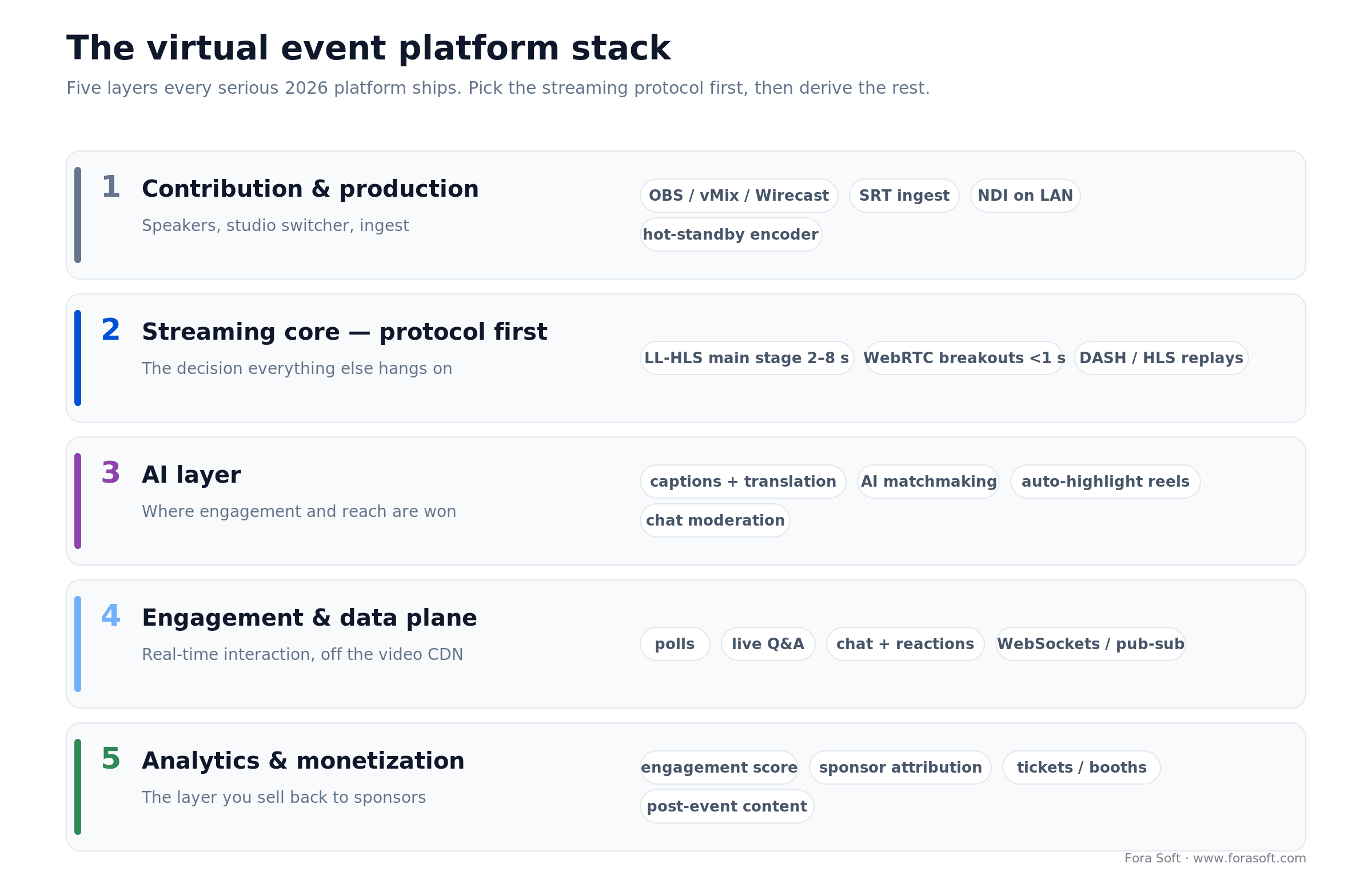
Figure 1. The virtual event platform stack — five layers, streaming protocol chosen first.
The reference live-streaming architecture
Under every event platform is the same pipeline. Knowing the shape saves weeks of RFP.
Contribution. Speakers use OBS, vMix, Wirecast, or a studio-grade switcher. Upstream contribution goes over SRT (sub-second, resilient) or NDI on LAN. RTMPS is legacy but still acceptable. For flagship events, a hot-standby encoder mirrors the primary at +50% bandwidth.
Cloud production and encoding. AWS Elemental MediaLive dominates; Cloudflare Stream and Azure Media Services are credible alternatives. Encoding cost lands $0.30–$1.00 per GB of output. Package outputs simultaneously as LL-HLS, DASH and (optionally) WebRTC for the main room.
Distribution. Multi-CDN is non-negotiable at enterprise scale. Primary CloudFront + secondary Cloudflare or Akamai, with DNS-weighted or origin-failover switching inside a 2-minute window. Geo-distributed edges matter as much as peak bandwidth.
Interactive plane. WebRTC islands (MediaSoup, LiveKit, Janus) host breakouts, 1:many fireside chats and backstage. SFU scales to ~500 participants per room; MCU for tightly integrated audio mixes.
Data plane. WebSockets or Pub/Sub carry chat, poll, Q&A, reactions, stage-control events. Keep them out of the video CDN — fan-out profile is different.
Reach for this architecture when: peak concurrency crosses 10k, sessions span multiple time zones, and the brand cost of a 30-second outage outweighs the cost of dual contribution gear.
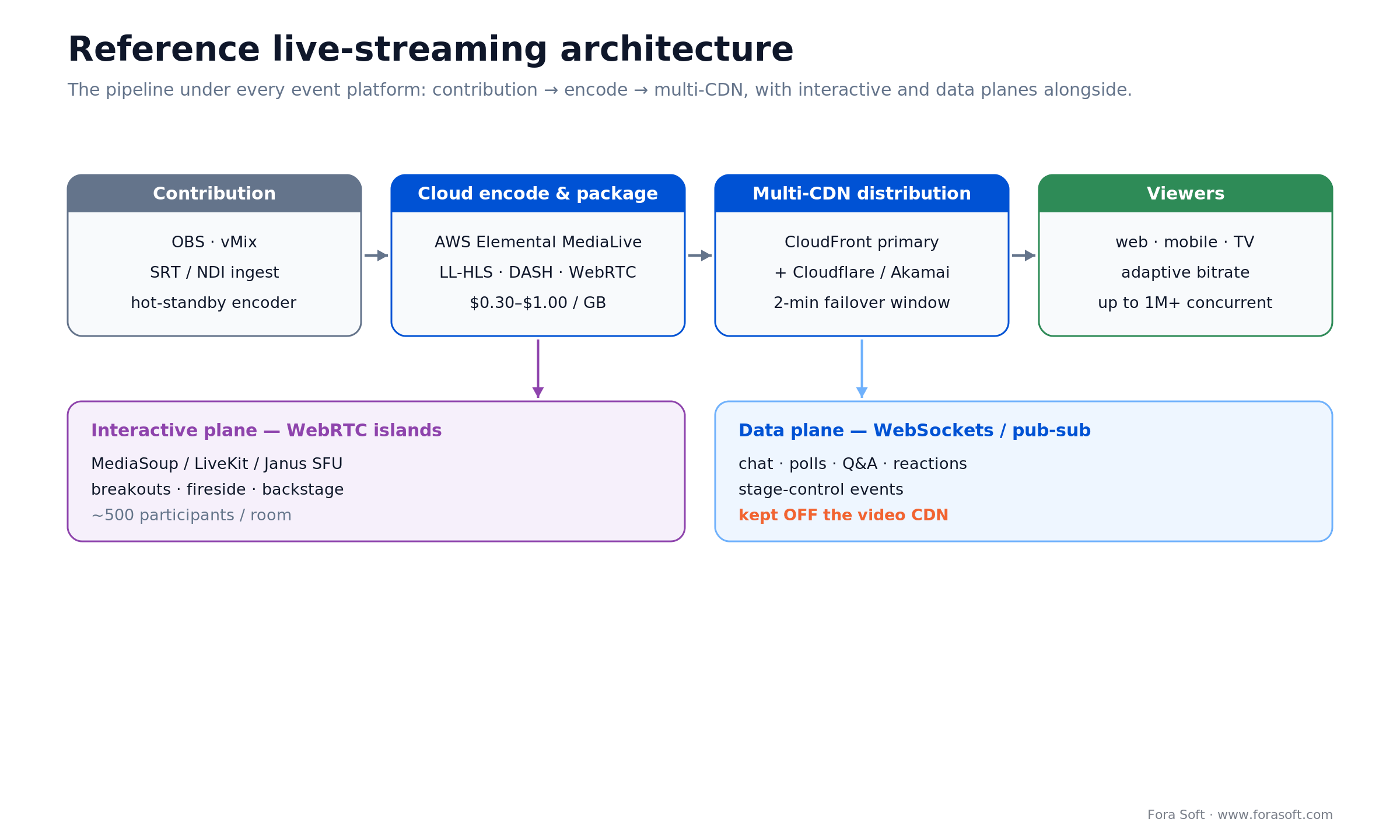
Figure 2. Reference live-streaming architecture: contribution to multi-CDN, with interactive and data planes alongside.
Latency and protocol choice
Picking the protocol picks most of the cost, scale and experience trade-offs. Pick it first.
| Protocol | Latency | Max concurrent | Best for |
|---|---|---|---|
| WebRTC | <1 s | ~5k (SFU islands) | Panels, breakouts, backstage |
| LL-HLS | 2–8 s | 100k+ | Main stage, keynote, plenaries |
| DASH | 2–10 s | 100k+ | VOD, replays, device variety |
| HLS | 10–30 s | 1M+ | Mass fallback, replays, social |
| SRT | <1 s | Contribution-only | Ingest, speaker-to-studio |
| WHEP / WHIP | <2 s | ~50k | Modern HTTP-friendly WebRTC ingest/egress |
Default rule we use on every engagement: main stage on LL-HLS, breakouts on WebRTC, VOD on DASH, social-media syndication on HLS. Anything else should earn its complexity. See our edge-computing guide for when CDN edges aren’t enough.
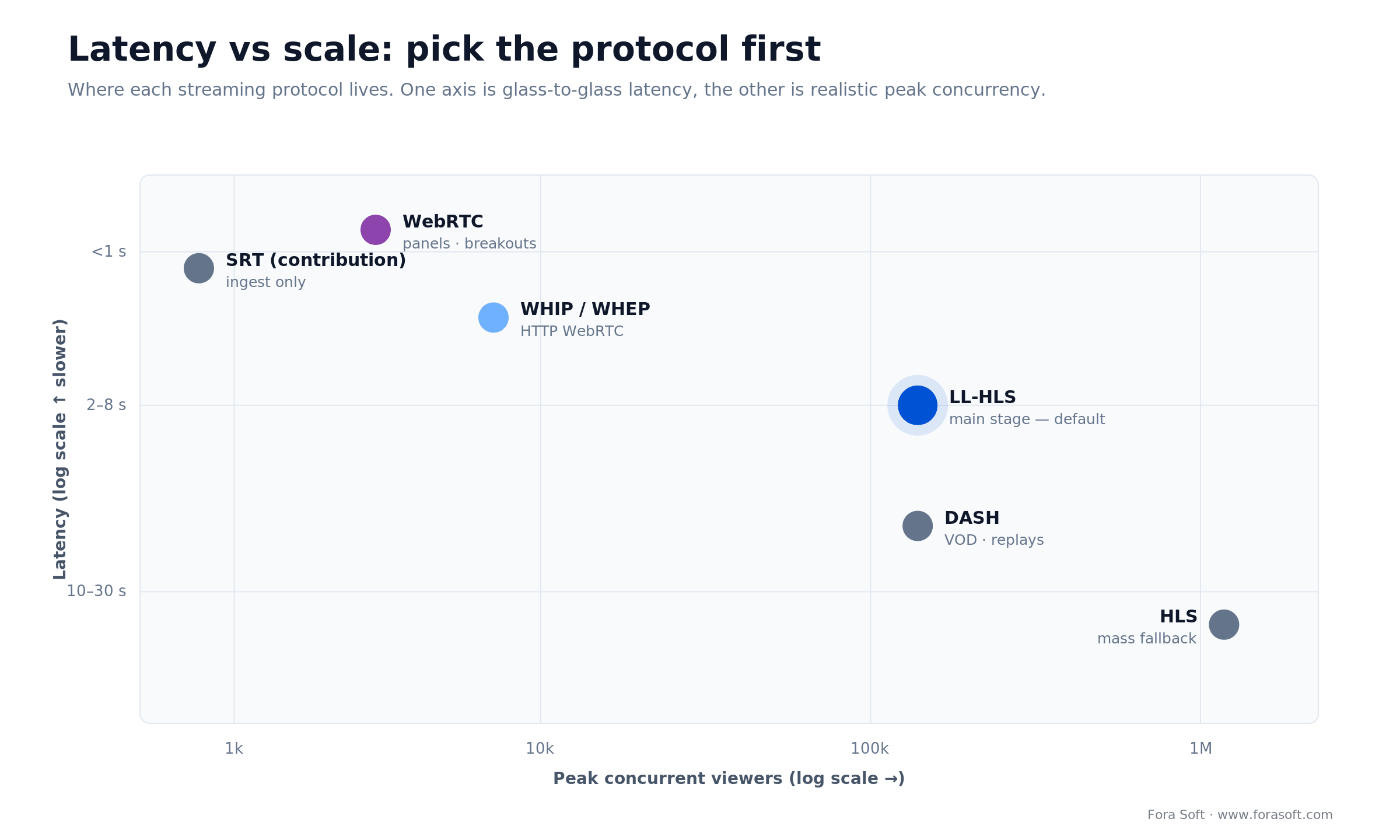
Figure 3. Where each streaming protocol lives on the latency-versus-scale plane.
The AI feature layer — what actually moves numbers
Live captions and real-time translation. Google Cloud Speech and Amazon Transcribe ship 95%+ WER on clean audio at $0.006–$0.024 per minute. Pair with DeepL or Azure Translator for 40+ target languages. Accessibility compliance (WCAG 2.1 AA) now expects captions by default.
AI matchmaking. Profile-embedding + session context yields 65–80% match acceptance. Attendees who engage with matchmaking average 3–6 meetings vs 1–3 for the rest; sponsor pipelines track that delta almost one-for-one.
AI chat moderation. Real-time classifiers for harassment, spam and off-topic at 5–15% false-positive rates. Production-grade deployments augment with human overrides for nuance.
Auto-highlight reels. Extract peak-reaction moments (audio energy, chat velocity, sentiment) and stitch into 1–3 minute promo clips within 24 hours of session end. Typical view multiplier 3–5× raw replay; sponsor deliverable of choice.
Personalised agendas. Collaborative filtering on profile + past-event behaviour + session metadata. Lifts session attendance from 30–50% to 45–65%. The feature buyers actually notice post-event.
For the deeper monetisation playbook see our 8 AI monetisation methods for streaming platforms.
Want us to audit your event tech stack?
We’ll benchmark your protocol mix, CDN topology and AI layer against the 2026 standard in one call.
Engagement and networking — interactive beats passive
Polls and live Q&A. 90% of enterprise events run these and get a 20–30% engagement lift. Use moderator queues with “approve/reject/merge” workflows — unfiltered Q&A loses trust fast.
Breakout rooms. 8–50 attendees per room is the sweet spot. Platforms support 50–500 simultaneous breakouts. Auto-rotation (speed-networking mode) creates 6–8 meetings per attendee per 30-minute session.
Expo booths. 2–5 min average visit, 30–60% lead-capture rate when the booth loads under 2 seconds and the content is video, not PDF. 3D immersive rooms cost 2–5× more and earn it only for premium or tech-forward audiences.
Live whiteboards and co-editing. Niche (20–30% of events) but decisive for creative and technical sessions. Our engagement tools write-up covers the build patterns.
Accessibility and global reach
Accessibility stopped being a nice-to-have. In the EU the European Accessibility Act has been enforceable since 28 June 2025, and its technical standard EN 301 549 v3.2.1 maps to WCAG 2.1 AA; the UK, Canada and most US public sectors point at the same 2.1 AA bar. EN 301 549 v4.1.1, expected in 2026, moves the reference to WCAG 2.2. Meeting it in 2026 means: live captions on every session, keyboard navigation, colour contrast 4.5:1 minimum, alt text on graphics, and screen-reader support for the agenda, chat and poll surfaces.
Global reach adds multi-language. Mid-range is 6–12 live caption languages at $0.01–$0.03 per minute. Premium is human simultaneous interpretation booths at $2k–$5k per language for a full-day event. Plan 10–15% of production budget for accessibility if the event is public-facing.
Security, compliance and content protection
1. GDPR and consent. Recording consent is required; retention default should be 30–60 days post-event unless you have explicit attendee opt-in. Every SaaS vendor must sign a DPA; a missing one is an audit finding.
2. SOC 2 Type 2. Non-negotiable for any enterprise-grade platform. Ask for the current bridge letter, not the certification PDF.
3. HIPAA for health events. BAAs required with every processor in the pipeline. Cisco Webex Events and ON24 certify; most SaaS event platforms do not. See our HIPAA video platform guide.
4. DRM and watermarking. Optional but common on paid content: DRM adds $500–$5k to event cost; per-viewer session watermarking adds $1k–$5k in implementation and helps trace leaks.
5. Data residency. EU attendees → EU region. UK post-Brexit → UK region. Pin regions explicitly in your orchestration, or the platform default sends data to us-east-1 and surprises your DPO.
Platforms compared — the 2026 matrix
Prices and features quoted from vendor docs April 2026. Re-verify before procurement sign-off.
| Platform | Max concurrent | Per-event cost | Best fit |
|---|---|---|---|
| Cvent Events | 50k | $25k–$100k+ | Enterprise event management, deep agenda ops |
| ON24 | 50k | $15k–$50k | Webinars, analytics-heavy demand-gen |
| Bizzabo | 10k | $20k–$80k | Community, AI matchmaking |
| RingCentral Events (Hopin) | 20k | $10k–$60k | Hybrid events, UC tenants |
| Airmeet | 10k | $5k–$40k | Global accessibility, APAC, 40+ caption languages |
| 6Connex | 100k | $30k–$150k+ | 3D immersive, premium brand events |
| Brella | 15k | $15k–$75k | Networking-first, major tech conferences |
| Custom build | >100k | $150k–$800k build + ops | Recurring flagship, white-label, IP-sensitive |
Reach for a custom build when: you run the same flagship every month, need to own the IP or white-label it for partners, or peak concurrency on one session clears 100k — the point where SaaS per-event pricing stops paying off.
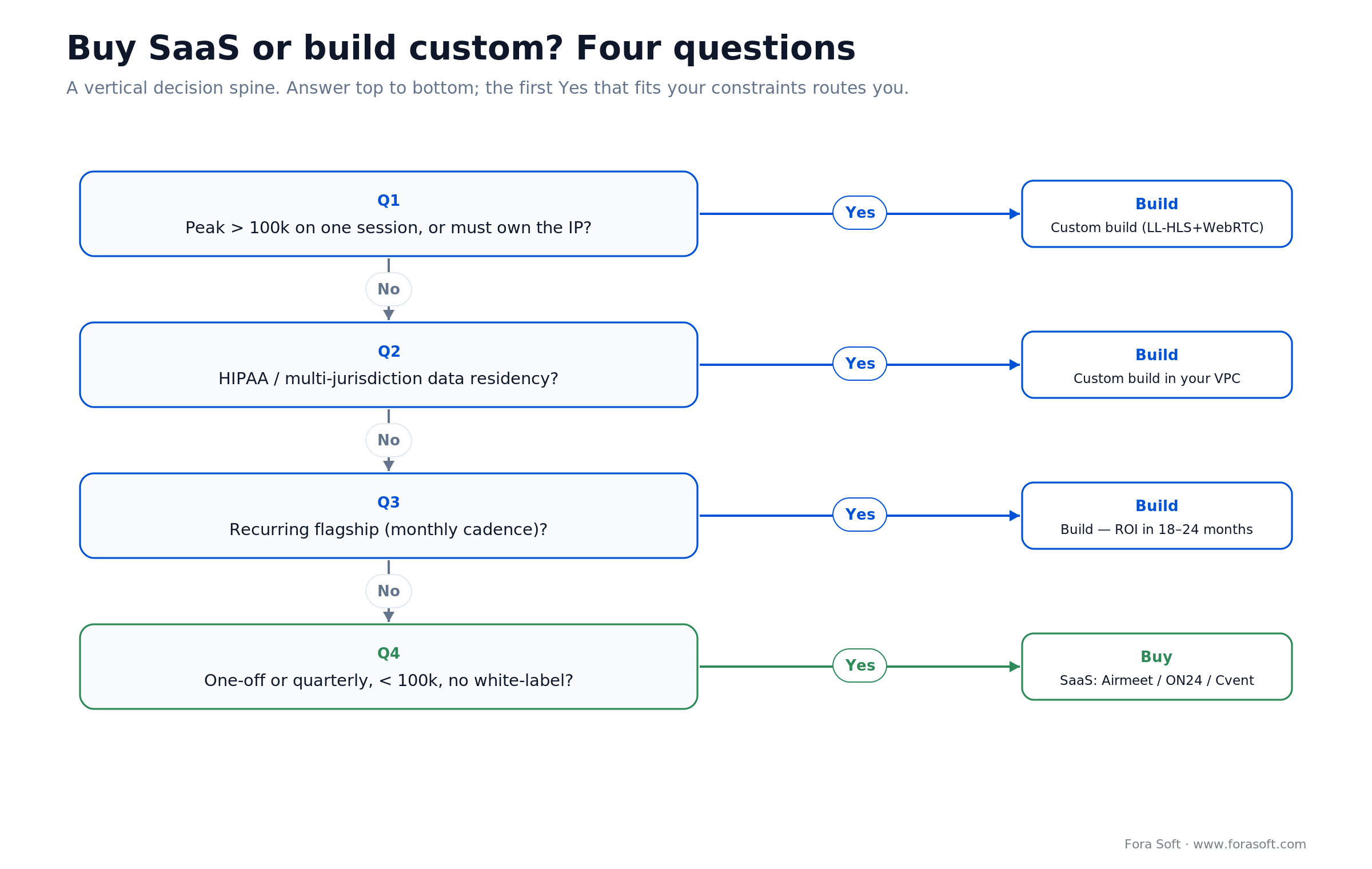
Figure 4. Buy SaaS or build custom, routed by four questions: scale, IP, compliance, cadence.
Scalability and CDN math
Run the numbers before you run the event. The arithmetic is boring but it’s where most first-time buyers get surprised.
Worked example. Take 50k concurrent viewers on a 15 Mbps top ABR rung: 50,000 × 15 Mbps = 750 Gbps aggregate. Convert to bytes — 750 Gbps ÷ 8 = 93.75 GB every second, which is 337,500 GB (about 338 TB) per hour at that ceiling. A three-hour keynote held at peak is roughly 1 PB of egress. On CloudFront’s US tiers (starting $0.085/GB and sliding toward $0.03–$0.04/GB at petabyte volume) that one keynote lands near $40,000 — not the sub-$5,000 a napkin sketch suggests. That is before multi-CDN failover, packaging or WebRTC breakouts.
Two levers pull the real invoice back down: adaptive bitrate keeps most viewers on 3–6 Mbps rungs rather than 15, and true peak concurrency usually lasts minutes, not hours. Model the blended bitrate and the concurrency curve, or the CDN bill writes its own surprise. The monthly bands below assume that realistic average load, not sustained peak.
Typical infrastructure spend. Sub-10k concurrent, $1k–$5k per month steady-state. 10k–100k concurrent, $5k–$20k per month. Over 100k concurrent with three CDNs and regional hot-swap, $20k–$100k per month. That’s separate from platform licences.
Our streaming cost breakdown walks the full build model; our scalability patterns piece covers the failover engineering.
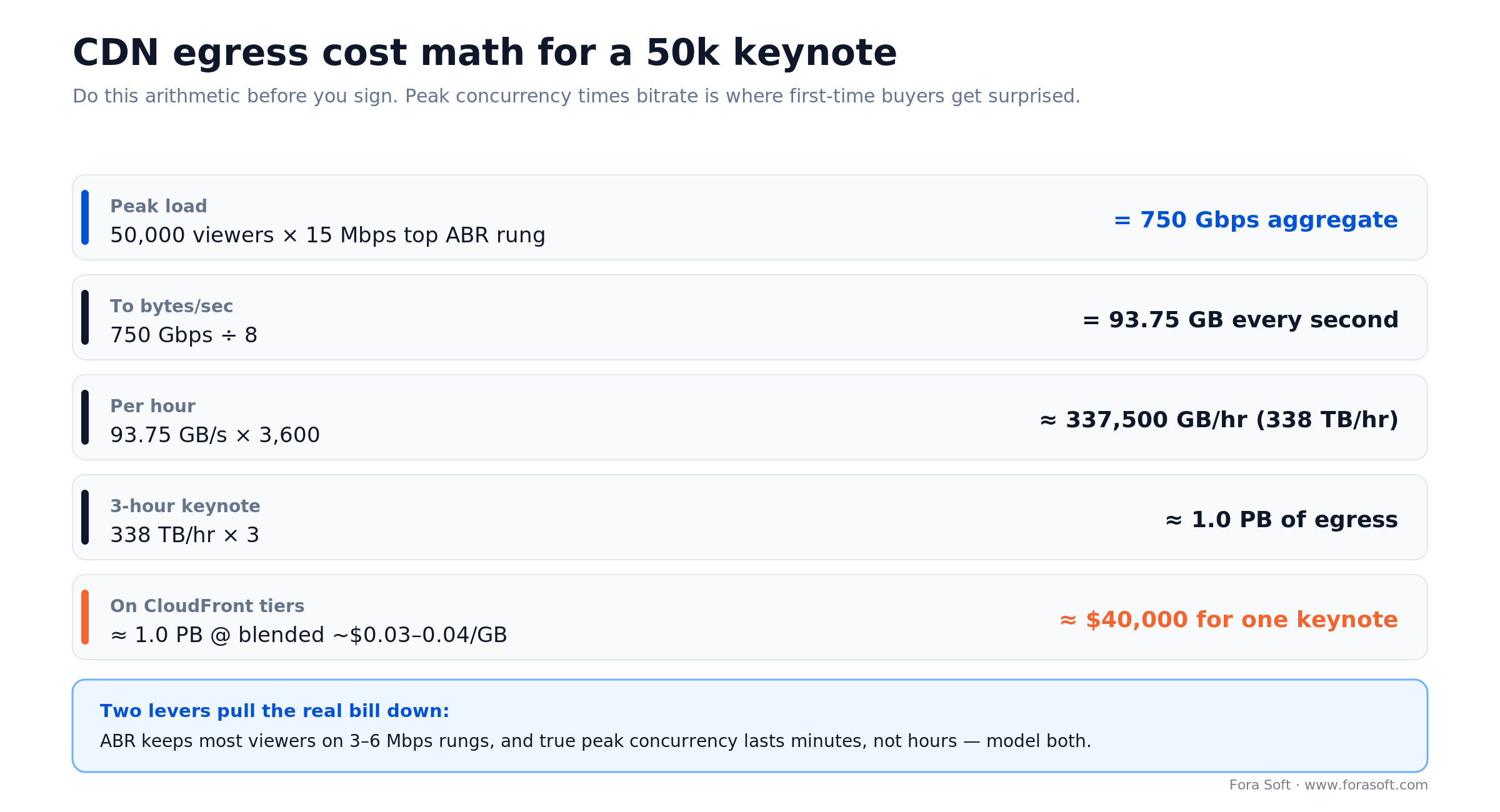
Figure 5. CDN egress cost math for a 50k keynote — run it before you sign.
Monetisation — where event revenue actually comes from
Tickets (60–70% of revenue). General admission $0–$50; premium/VIP $100–$500+; paid specialist tracks $25–$200 per session.
Sponsorships (20–30%). Title sponsor $50k–$250k+; booth sponsorships $5k–$50k; branded breakout rooms $10k–$75k.
Booth revenue (5–10%). Lead-capture booths $2k–$15k each; premium homepage placement +50%; interactive video-demo booths +100%.
Post-event content (2–5%). Recording access $10–$50 per attendee; highlight reel packages $50–$500; licensed sponsor videos $500–$5k per clip.
Anonymised data (1–3%). Aggregated attendee analytics $5k–$25k per dataset — only when the privacy story is airtight.
Mini case — BrainCert at virtual-classroom scale
Situation. A global L&D player needed a virtual classroom that could host live training sessions, workshops and summits with compliance coverage for enterprise and healthcare buyers. Off-the-shelf webinar tools capped at a few thousand concurrent and couldn’t certify SOC 2, ISO 27001, HIPAA and GDPR in one place.
Plan. Fora Soft built BrainCert from scratch as the first WebRTC+HTML5 virtual-classroom LMS. The stack: MediaSoup SFU for interactive sessions, LL-HLS for large plenaries, DRM-protected content, proctored exams, AI course creation, full accessibility, and a compliance posture engineered for regulated buyers.
Outcome. 100k+ customers, 500M+ classroom minutes delivered, $3M annual revenue, 99.995% uptime, 4× Brandon Hall Award winner. The same architecture principles underpin every event platform we’ve shipped since. Want a similar assessment? Book 30 minutes with Vadim.
Need 99.995% uptime on your event platform?
That’s what we shipped for BrainCert across 500M+ classroom minutes. Bring your concurrency targets; we’ll scope the architecture.
Cost model — three realistic 2026 scenarios
We estimate conservatively. Agent-Engineering shortens our builds by about 30–40% versus 2024 benchmarks but multimedia events are not a weekend job.
| Scenario | Path | Total cost | Time-to-live |
|---|---|---|---|
| Quarterly webinar series, <5k concurrent | ON24 or Airmeet SaaS | $5k–$15k per event | 1–2 weeks onboarding |
| Annual flagship, 20k–80k concurrent | Cvent / Bizzabo + multi-CDN production | $60k–$250k per event | 6–10 weeks planning |
| Recurring programme, 100k+ concurrent, white-label | Custom build on LL-HLS + WebRTC breakouts | $200k–$600k build + $50k–$200k/yr ops | 14–24 weeks to first live event |
| Regulated vertical (health, gov) | Custom build in VPC + HIPAA/GDPR certifications | $300k–$800k + ongoing audit | 20–32 weeks |
Build estimates with Agent-Engineering come in meaningfully under 2024 market rates. Ask for the line-item breakdown — most variance sits in compliance scope and the number of platforms you need to integrate with (Salesforce, HubSpot, Marketo, Eventbrite, single-sign-on).
Reach for SaaS when: you run one-off or quarterly events under ~100k concurrent, don’t need to own the platform, and want to be live in weeks — a $5k–$40k per-event contract beats a six-figure build you’d use twice a year.
A decision framework — pick your path in five questions
Q1. Peak concurrent on a single session? Under 10k → any SaaS works. 10k–100k → Cvent, 6Connex, ON24 or custom. Over 100k → custom build with multi-CDN.
Q2. Latency tolerance on the experience? Interactive panel → WebRTC breakouts. Keynote broadcast → LL-HLS, 3–5 s is fine. Replays and social → HLS.
Q3. Do you need to own the IP or white-label? No → buy SaaS. Yes → custom build or SaaS with heavy branding services.
Q4. Compliance regime? SOC 2 only → most enterprise SaaS. GDPR + EU residency → vendor with EU hosting. HIPAA → shortlist drops to Cisco Webex, ON24 enterprise, or custom in-VPC.
Q5. Cadence? One-off → SaaS. Quarterly → annual SaaS contract. Monthly flagship → custom build pays back within 18–24 months.
Pitfalls to avoid
1. Single-CDN at flagship scale. One provider outage nukes the event. Multi-CDN cuts outages by ~95%; the incremental cost is single-digit percent.
2. WebRTC on the main stage. Amazing for panels, ruinous for a 50k keynote. Viewer-side CPU and SFU concurrency collapse past a few thousand receivers. Keep WebRTC in breakout islands.
3. No hot-standby contribution. Speaker’s home ISP dies 3 minutes in, event dies with it. Dual encoder, dual uplink is the price of a flagship.
4. Ignoring accessibility until launch week. Captions, alt text and keyboard nav take weeks to retrofit; days if scoped up front. And WCAG 2.2 AA is legally enforceable.
5. Under-investing in post-event content. Raw replays attract a fraction of live viewers; AI highlight reels, multilingual dubs and searchable transcripts generate the follow-on revenue that justifies the production budget.
KPIs: what to measure
Quality KPIs. P95 video rebuffering ratio <0.5%; stream startup time <2.5 s; LL-HLS p95 glass-to-glass <6 s; WebRTC breakout p95 <800 ms. Measured per-region, not global.
Business KPIs. Session attendance rate 45–65% (AI-personalised) vs 30–50% baseline; AI-matchmaked meetings per attendee 3–6 vs 1–3 baseline; lead-capture rate 30–60% at booths that load fast; CSAT 7.5–8.5/10 post-event.
Reliability KPIs. Platform uptime ≥99.9% during event; zero PII leak events; 2-minute CDN failover window; contribution redundancy verified in the last rehearsal.
When not to go virtual-first
Not every event deserves a multimedia platform. Board meetings, legal proceedings and executive offsites underperform virtual-first; the cost of a misread room or a mistranslated phrase outweighs the savings.
Equally, if you run a one-off with <500 attendees and no premium sponsors, Zoom Webinar or Google Meet with a YouTube livestream fallback is the responsible answer. A $30k platform contract for a single event that returns $40k in tickets is bad math. And if the format is truly one presenter to a passive audience, that’s webcasting — a simpler, cheaper build than a full virtual event platform.
FAQ
What streaming protocol should we use for a 50k-attendee keynote?
LL-HLS as primary (2–8 s latency, CDN-cheap, firewall-friendly), with HLS as a compatibility fallback for older browsers and mass social syndication. WebRTC is the wrong tool at 50k concurrent — save it for the interactive breakouts with 50–500 people.
How much does a custom virtual event platform cost to build in 2026?
Realistically $150k–$800k for the initial build, with $50k–$200k per year in ops and compliance. Agent-Engineering shortens our builds by 30–40% against 2024 benchmarks. Timelines: 14–24 weeks to first live event for standard scope, 20–32 weeks for regulated verticals. Our cost breakdown walks the line items.
Is WebRTC really needed if we already have LL-HLS?
Yes, for any session where the audience expects to be heard in real time. LL-HLS at 2–8 s is fine for broadcast but kills turn-taking in a panel or breakout. The standard 2026 pattern is LL-HLS for main stage plus WebRTC islands for 50–500-person interactive rooms.
Which platform is best for AI-led networking?
Brella, Bizzabo and Hubilo all ship solid AI matchmaking out of the box; Airmeet is strong if you need global language coverage at lower per-event cost. For enterprise-grade analytics paired with matchmaking, ON24’s engagement score is the deepest. If networking is your product’s differentiator, consider a custom build — we’ve shipped several in 14–20 weeks.
Do we need DRM and watermarking?
Depends on content value. For public keynotes, usually no. For paid training, premium industry summits, or content that sponsors value as a durable asset, per-viewer session watermarking ($1k–$5k implementation) and DRM ($500–$5k) are worth the cost. They also disproportionately raise the bar for unauthorised redistribution.
How do we handle 12-language live captions at scale?
Use streaming ASR with language identification, fan out to MT per target language and deliver captions over WebSockets or WebRTC data channels. Budget $0.01–$0.03 per minute per language wholesale. For named high-stakes sessions, add professional simultaneous interpreters at $2k–$5k per language booth. See our multilingual conferencing playbook.
Can we run HIPAA-compliant health events on standard SaaS?
Only with Cisco Webex Events and ON24 among mainstream platforms, and only under enterprise tiers with signed BAAs with every processor. For deeper regulatory coverage (multi-jurisdiction, PHI in transcripts and chat), custom builds in your VPC are safer. Our HIPAA video platform guide covers the audit surface.
What’s the fastest way to boost engagement scores?
Three levers, in order: personalised agendas (session attendance +15–20%), AI matchmaking (meetings per attendee roughly doubled) and moderated Q&A (engagement +20–30%). All three are standard in enterprise platforms; the lift comes from wiring them to your real CRM data, not from the feature existing.
What to Read Next
AI features
Essential AI Features for Streaming Platforms in 2026
The AI layer every modern event and streaming platform ships.
Scalability
Scalable Video Streaming: Challenges and Solutions
Multi-CDN, failover and the math behind 100k+ concurrent.
Cost model
How Much Does a Video Streaming App Cost?
Line-item cost breakdown for SaaS vs custom build.
Multilingual
Multilingual Video Conferencing Enterprise Playbook
Real-time translation architecture for global audiences.
Ready to ship an event platform your audience actually enjoys?
The virtual-event market rewards teams who pick the protocol first, bolt the right AI layer on top, and instrument engagement tightly enough to sell it back to sponsors. Buy SaaS when you’re under 100k concurrent and don’t need white-label. Build when the event is a recurring flagship or a regulated product. Either way, the architecture we’ve described here is the same one we ship at 99.995% uptime.
When you’re ready to scope a platform or audit an existing one, we’re one call away.
Let’s scope your virtual event platform
30 minutes with Vadim. Bring your concurrency targets, compliance regime and sponsor commitments; walk away with a concrete buy-vs-build recommendation.

