

Key takeaways
- Video streaming app development cost, 2026 bands. MVP VOD $25–60K. Mid-market VOD with monetization $80–180K. Live streaming with a WebRTC SFU $150–400K. Full OTT platform with DRM, multi-CDN and TV apps $300K–1M+.
- Egress, not engineering, usually wins the budget fight. A 10K-concurrent 2-hour 720p event burns roughly $1.8–4K in CDN alone, depending on the provider. Plan for 70–85% of your run-rate cost to be delivery, not code.
- Build vs buy break-even sits near 20M viewer-hours per year. Under that, Mux / Cloudflare Stream / JW Player beat custom on total cost. Above that, custom wins on margin and control.
- Agent Engineering cuts typical scaffolding work 30–40%. Player wiring, ABR ladder tuning, encoding pipelines and analytics instrumentation are where the savings are biggest.
Short answer: a video streaming app in 2026 costs anywhere from $25K for a usable VOD MVP to $1M+ for a full OTT platform. The number you actually land on is driven by five choices: live or VOD, peak concurrency, DRM requirements, how many platforms you ship to, and whether you own delivery or rent it. Everything else is rounding.
This guide is written for CTOs, product leads and founders who need to commit a number to a board deck without pretending the problem is simple. We’ll walk the cost drivers in order of impact, give you real 2026 pricing, show where the break-evens sit, and tell you where to stop building and just pay a vendor. At the end there’s a 16-week rollout plan and a KPI list you can hand to your engineering lead.
Need a defensible number before your next board review?
Fora Soft has built real-time video and streaming platforms since 2005: 250+ projects, including live systems at 50,000+ users. In 30 minutes we’ll tell you whether your concept is a $60K MVP or a $400K live platform, and why.
Why “how much does a video app cost?” is the wrong question
“A video streaming app” is not one thing. A VOD app that shows pre-recorded fitness classes to 500 concurrent users has almost nothing in common, technically or financially, with a live auction platform that has to sustain 50,000 concurrent sub-second-latency streams on a bid night.
The cost questions that actually matter are:
- Live or VOD — or both?
- What’s your P95 concurrent viewer count on day 1, month 12 and year 3?
- Which DRMs do you need? (Widevine for Android / Chrome, FairPlay for Apple, PlayReady for TV — you almost always need at least two.)
- Do you need sub-second latency (WebRTC) or is 6–10s HLS fine?
- How many platforms do you ship? (iOS and Android is the floor. Web, Apple TV, Android TV, Roku, Fire TV each add 15–25% scope.)
- Is monetization SVOD, AVOD, TVOD, or a hybrid? SSAI vs CSAI changes the bill by 30%.
Skip the answers and the “cost to build” number you’re quoted is a fiction. We’ve re-scoped more than a dozen projects this year where the original $40K quote landed, on paper, at $220K once those questions were pressed.
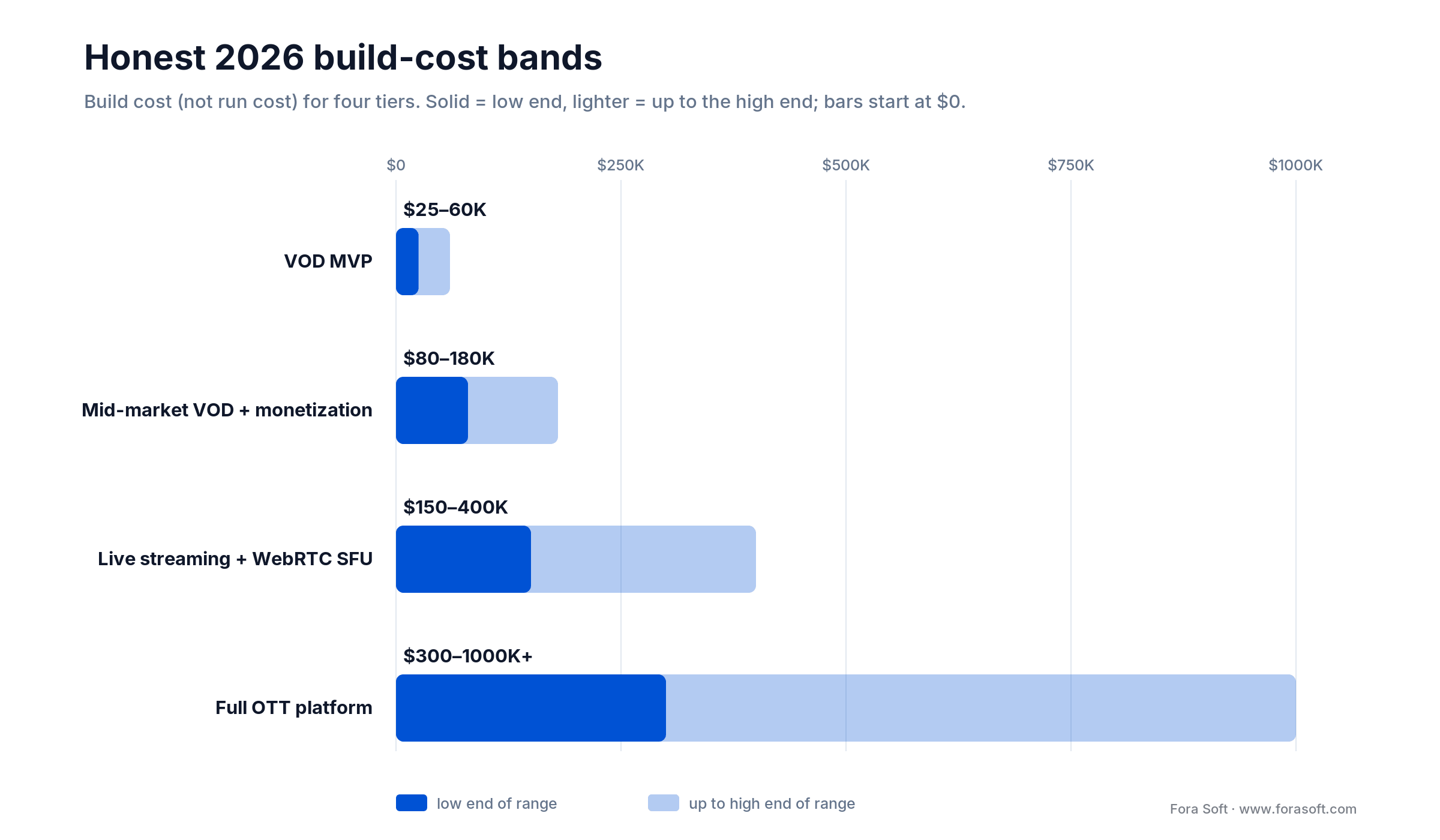
Figure 1. Build-cost bands for a 2026 video streaming app, anchored at $0. Live and OTT tiers carry the widest ranges.
The seven cost drivers, ranked by how much they actually move the total
From our own engagements and corroborated by Bitmovin’s 2025 Video Developer Report and Mux’s annual cost benchmarks, this is the honest order:
- Live vs VOD. Live typically adds 2–3× to build and 4–6× to run. Concurrency, latency targets and ingest redundancy dominate.
- Peak concurrency. 1K viewers is a design decision. 100K viewers is an architecture. The step functions sit near 5K, 50K and 500K.
- DRM. Studio-grade content requires multi-DRM and L1 Widevine. Expect $30–50K/year in license fees plus 4–8 weeks of integration work.
- Platforms. Each extra client (Roku, Apple TV, Fire TV, Samsung/LG smart TV) is roughly 15–25% of your app-tier budget, not 100%, if you pick the SDK wisely (Shaka, ExoPlayer, AVPlayer).
- Monetization model. SVOD paywall: simplest. AVOD with server-side ad insertion (SSAI): nontrivial; add $25–60K. Hybrid with entitlement server and receipt validation: another $15–40K.
- Codec strategy. H.264 only is cheap but expensive to deliver. HEVC saves 25–35% egress. AV1 saves 30–40% but adds encoding cost and device-capability branching.
- Analytics and moderation. Mux Data, Bitmovin Analytics or Conviva: $1.5–4K/month at scale. Content moderation (brand-safety taxonomy, the one the industry inherited from GARM): $500–2K/month plus human review cost.
If you internalize nothing else, internalize this: once you’re live, delivery cost swamps engineering cost. Egress is 70–85% of the monthly bill at scale.
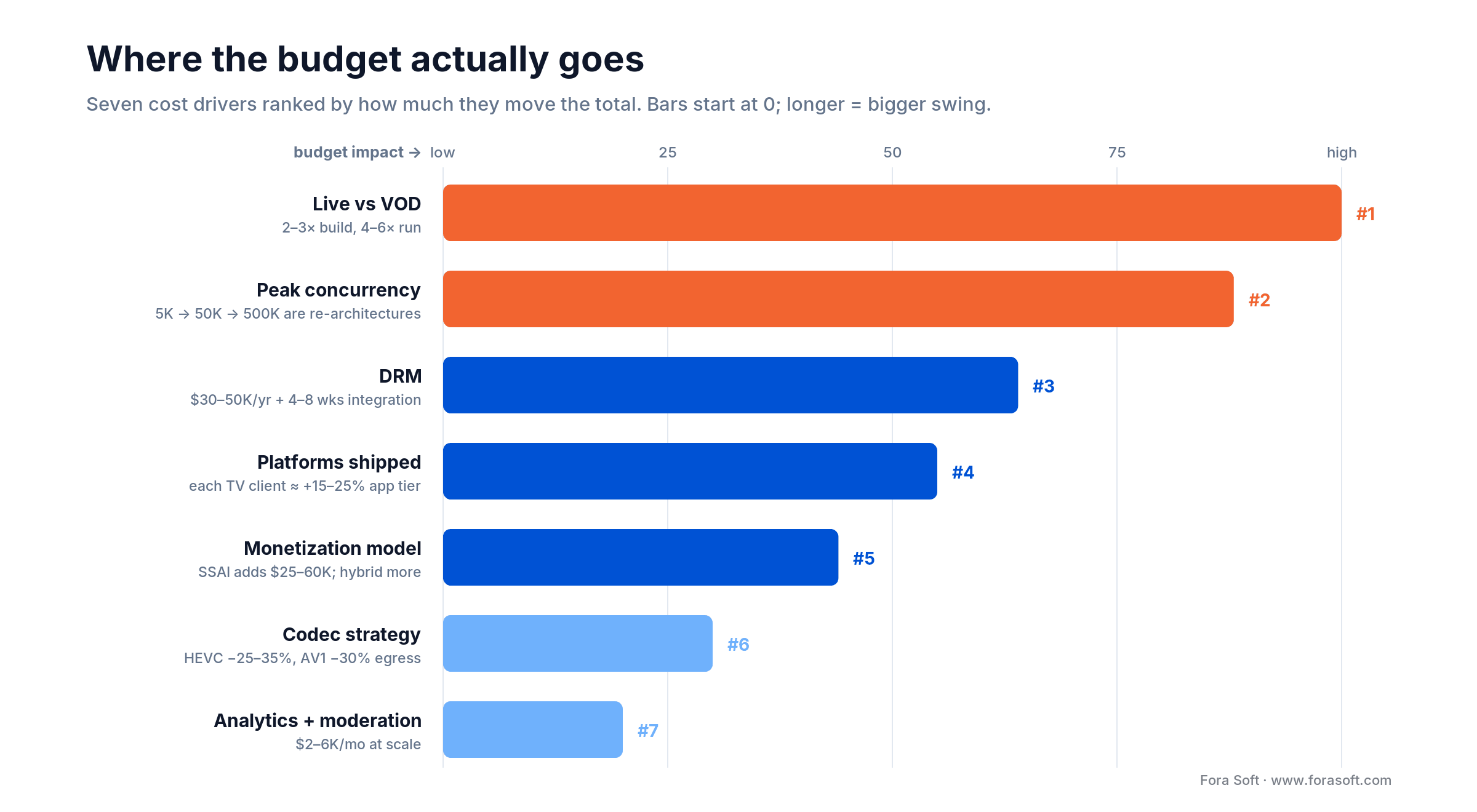
Figure 2. The seven cost drivers ranked by how much they move the total. The top two are architecture decisions, not features.
Honest 2026 cost bands, with what moves the number inside each
These video streaming app development cost bands are build cost, not run-cost. Run-cost is a separate section below because it dwarfs build-cost for any serious product after month 3.
| Build tier | Typical 2026 cost | What you get | What pushes it up |
|---|---|---|---|
| VOD MVP | $25–60K | iOS + Android + web, HLS playback, pre-recorded library, basic paywall, Stripe, 2 codecs, SaaS encoding (Mux / Cloudflare Stream). | Custom CMS, SSO, offline playback, smart-TV apps. |
| Mid-market VOD + monetization | $80–180K | Multi-DRM (Widevine + FairPlay), SSAI, receipt validation, entitlement server, recommendation engine, analytics pipeline, 3–4 platforms. | Full OTT smart-TV coverage, ML recommendations, offline DRM. |
| Live streaming with WebRTC SFU | $150–400K | Sub-second latency, SFU (LiveKit / Ant Media / mediasoup), live transcoding, chat, moderation, DVR window, cloud recording. | Multi-region redundancy, interactive overlays, live ads, high concurrency (>50K). |
| Full OTT platform | $300K–1M+ | Live + VOD, multi-CDN, multi-DRM, all major TV platforms, SSAI, content pipeline, CMS, moderation, multi-region, SLA-grade reliability. | Studio content, global rollout, custom codec work, broadcast integrations. |
Negotiating tip. If a vendor quotes the top of a band without asking about concurrency, DRM and platform list, the number is not defensible. Ask them to show the assumption table behind the quote. The good ones will.
The tech-stack choices that move your budget the most
Most of the line items on a streaming spec are commodity picks. A few genuinely change the total.
- Packaging. Shaka Packager (free, Google) or Bento4 (free, open source). Skip proprietary packaging unless you have a very specific DRM constraint.
- Encoding. FFmpeg for control. AWS MediaConvert, Mux, Bitmovin or Coconut for a managed stack. Managed is 4–6 weeks faster to launch and saves 150–300 engineering hours.
- CDN. CloudFront (~$0.085/GB on the first 10 TB/month, cheaper at volume), Fastly (~$0.12/GB list but negotiable), Bunny (~$0.005–0.03/GB, floor $0.005), Cloudflare Stream (bundled delivery). At >50 TB/month, always run a Bunny + CloudFront dual-CDN to cut 30–50%.
- Low-latency path. LL-HLS gets you to 2–4s over plain HTTP, cheap to run. WebRTC SFU (LiveKit, Ant Media, Janus, mediasoup) gets sub-500ms but adds infrastructure. Pick WebRTC only if the product actually depends on it — auctions, betting, telehealth, live tutoring.
- DRM. EZDRM, Axinom or BuyDRM resell Widevine / FairPlay / PlayReady. Self-hosting the key servers is possible but costs more than it saves until you’re at 10M+ viewer-hours/year.
- Players. Shaka Player (web, free), Video.js (web, free), ExoPlayer (Android, free), AVPlayer (iOS, free). JW Player is $5–20K/year — worth it only for TV platforms where support is a pain.
- Analytics. Mux Data, Bitmovin Analytics or Conviva. Price scales with views; budget $1.5–4K/month once you’re past 1M views/month.
Do the CDN math before you pick a business model
Use these bitrates as your planning defaults:
- 480p: 1.0 Mbps → 0.45 GB/hour per viewer.
- 720p: 2.5 Mbps → 1.1 GB/hour per viewer.
- 1080p: 5 Mbps → 2.25 GB/hour per viewer.
- 4K: 15 Mbps → 6.75 GB/hour per viewer.
Worked example — 10,000 concurrent viewers, 720p, 2 hours.
Total egress: 10,000 × 1.1 GB/hour × 2 hours = 22,000 GB. On CloudFront at $0.085/GB that’s $1,870. On Bunny at ~$0.01/GB (its floor is $0.005) that’s about $220. Over a year at three events a week (156 events), CloudFront runs ~$292K versus Bunny ~$34K. That’s the margin on a mid-size streaming product. Dual-CDN with origin shielding is almost always the right answer.
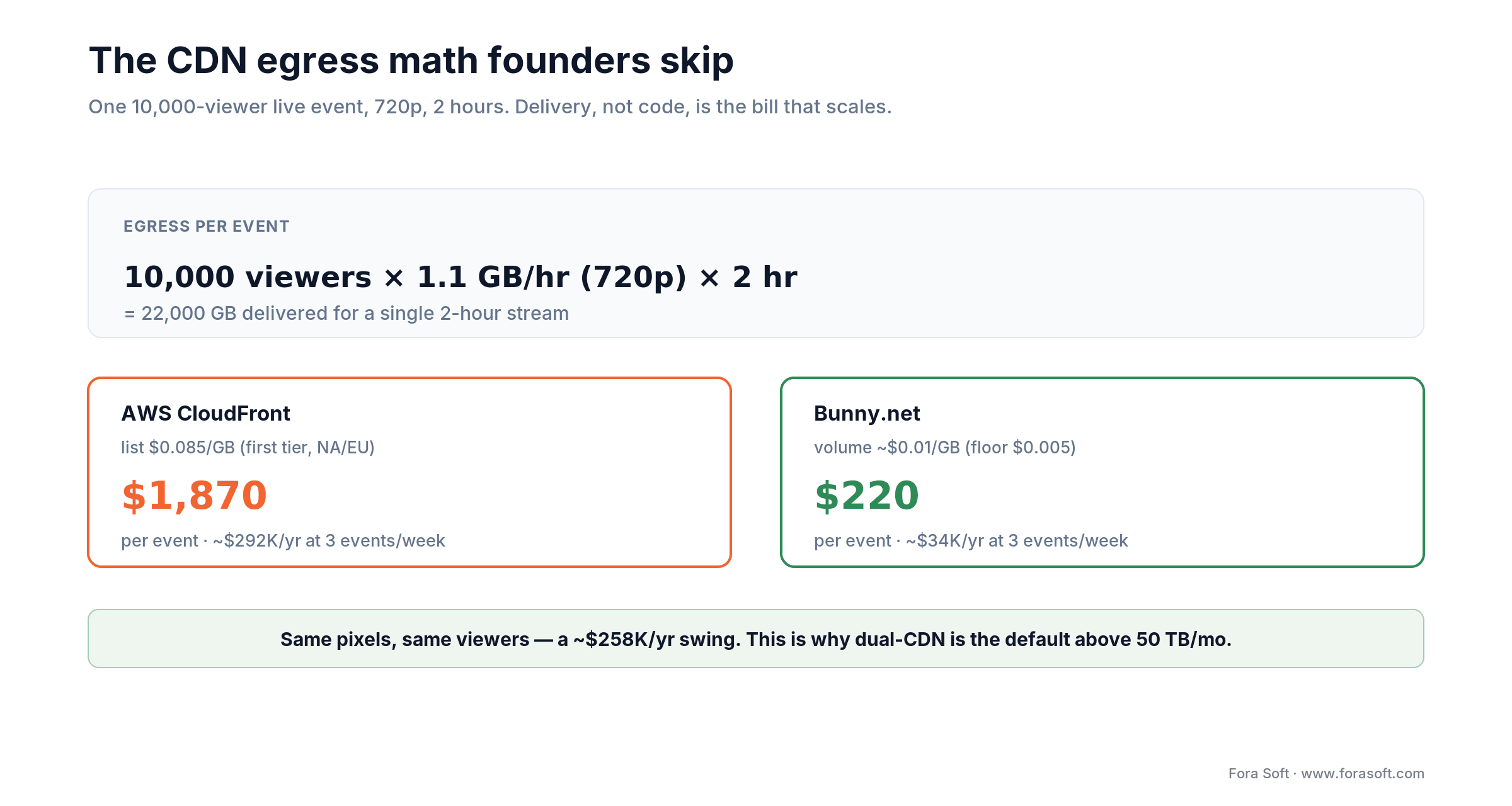
Figure 3. The delivery bill for one 10,000-viewer event. The provider you pick is a six-figure annual decision.
Also budget for transcoding: AWS MediaConvert is roughly $0.008–0.015 per minute per output rendition. A 90-minute movie with five renditions is ~$6. Manageable for VOD, punishing for live unless you engineer the ladder.
Build vs buy: where the break-even actually sits
Mux, Cloudflare Stream, JW Player, Wowza and Bitmovin are priced to win up to about 20 million viewer-hours per year. Think of that as a service that peaks around 5–6K concurrent viewers, not one that holds that number around the clock (a 20M-hour year averages only ~2,300 concurrent). Below that, custom infrastructure rarely pays back inside 24 months.
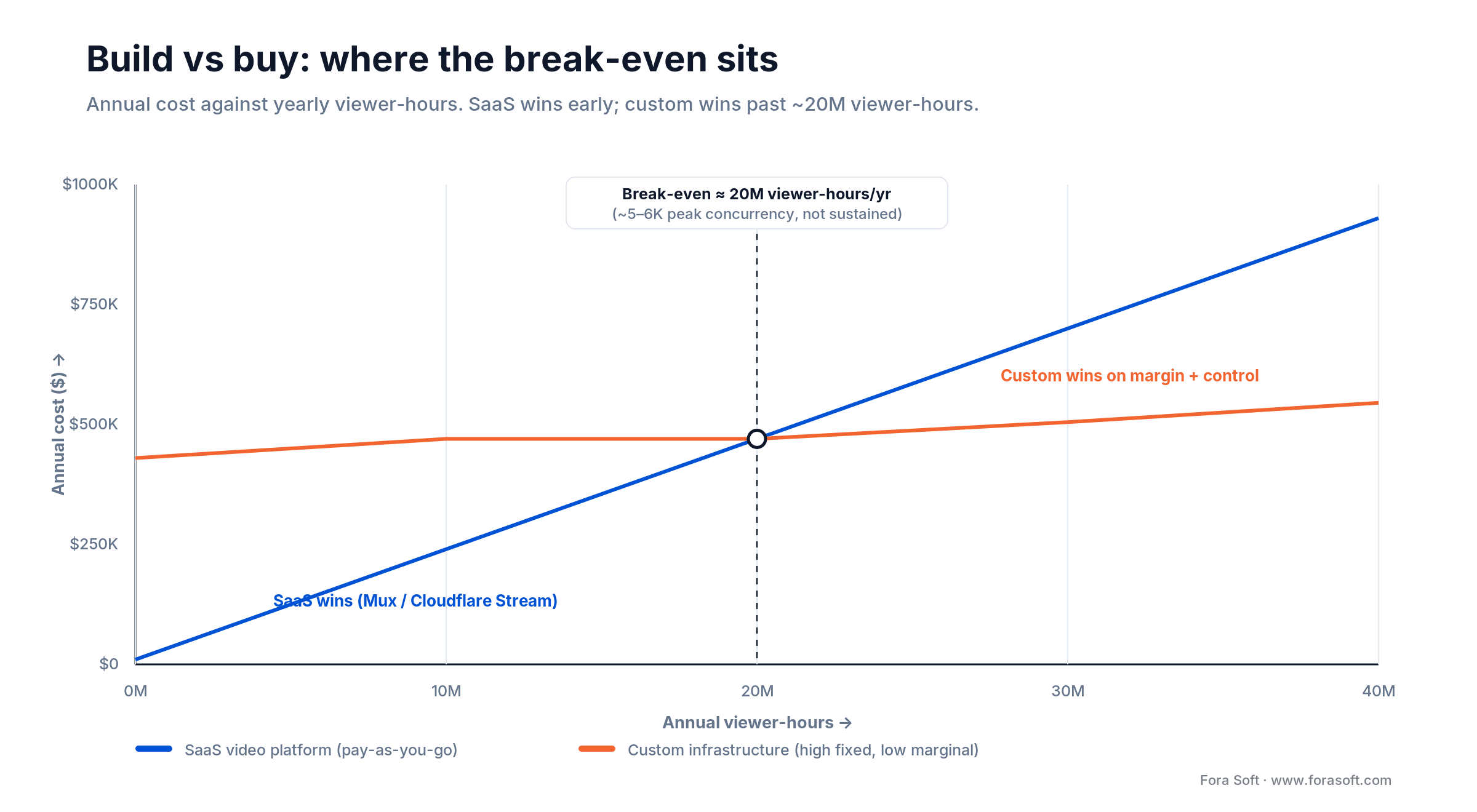
Figure 4. Where SaaS stops being cheaper than custom infrastructure: roughly 20M viewer-hours a year, where a bursty service peaks in the mid-thousands of concurrent viewers.
- Mux. All-in live + VOD with analytics; simplest API. As of 2026, Mux’s list pricing is $0.0075/min encoding, $0.15/GB delivery (dropping to $0.10/GB past 500 GB), and $0.015/GB per month storage. Great until you hit 5M+ minutes/month.
- Cloudflare Stream. $5 per 1,000 minutes stored + $1 per 1,000 minutes delivered. No egress. Friendly at small scale, less flexible for DRM-heavy use cases.
- JW Player. $5–20K/year. Excellent for smart-TV compatibility.
- Wowza / Bitmovin. Enterprise-grade, ~$2–15K/month at mid-scale.
Custom pays off when at least two of these are true:
- You have >20M viewer-hours/year, or regular peaks above ~5K concurrent viewers.
- Your DRM / compliance constraints aren’t in a vendor’s wheelhouse (HIPAA, CJIS, evidentiary retention).
- Your product economics require sub-$0.02/GB effective delivery cost.
- You need a feature that’s on no vendor’s roadmap (multi-camera live switching in-app, synchronized interactive overlays at sub-500ms).
If you’re below the break-even, the honest recommendation is: pay the vendor, ship the product, revisit the question in 18 months.
Our bias, stated upfront. We build custom infrastructure for a living. We still tell small-scale clients to start on Mux or Cloudflare Stream. The worst outcome is a custom platform that costs more than the product earns. We’d rather win your OTT rebuild in year 3 than your failed MVP in year 1.
Hidden costs that show up on month four
- DRM licensing. Budget $30–50K/year for enterprise multi-DRM through EZDRM / Axinom / BuyDRM.
- Content moderation. For any UGC or live product: Hive, Azure, AWS Rekognition or Sightengine at $500–2K/month + human reviewers. Brand-safety alignment — the taxonomy advertisers kept after GARM wound down in 2024 — matters if you monetize with ads.
- Analytics. $1.5–4K/month once past 1M views/month.
- App store rework. Apple’s guideline 3.1.1 and Google’s payment policy cost teams $5–15K per rejection cycle. Build Apple IAP and Google Billing validation correctly the first time.
- Localization. Subtitles, dubbing, RTL layouts, right-of-use in different markets. 10–20% of a serious global rollout.
- Monitoring and on-call. A live platform without 24/7 SRE coverage is a reputation risk. $15–60K/year depending on model.
Live vs VOD: the honest delta
The delta isn’t just “live costs more.” Live forces architectural choices that you don’t have to make for VOD:
- Ingest redundancy. Two ingest paths with automatic failover. RTMP today, SRT or WebRTC Whip increasingly.
- Real-time transcoding. Multi-bitrate ladder built on the fly. Cost scales linearly with streams and renditions.
- Latency budget. 6–10s HLS is easy. 2–4s LL-HLS is moderate. <500ms WebRTC is expensive.
- DVR window. Even “live” needs a rewind buffer. 30–60 minutes of rolling storage per stream.
- Live moderation. You cannot moderate 5,000 live streams with humans. You need ML-first pipelines with human review queues.
Practical rule: if your product can survive 6–10s latency, stay on HLS. Going WebRTC-first for aesthetic reasons is the most expensive mistake we see.
When to choose WebRTC, when to stay on HLS, when to run both
Stay on HLS / DASH when latency isn’t a product feature. Most OTT, sports highlights, fitness, education on-demand, podcasting-with-video.
Pick WebRTC when your product literally does not function at 3-second latency. Auctions, sports betting, interactive tutoring, telehealth, gaming, live shopping with call-to-action overlays.
Run both when you have a small interactive audience and a large passive one. Broadcaster and key panelists on WebRTC; everyone else on LL-HLS via the WebRTC-to-HLS bridge. We’ve shipped this pattern with LiveKit + MediaMTX three times this year.
Monetization adds more cost than founders expect
- SVOD (subscription). Stripe + Apple IAP + Google Billing + entitlement server. $15–40K added.
- AVOD (ads). Client-side ad insertion is quick but easy to block. Server-side ad insertion (Google IMA DAI, AWS Elemental MediaTailor) is the grown-up answer: $25–60K added.
- TVOD (pay-per-view). Entitlement + receipt validation + refund flows. Add $10–25K.
- Hybrid. Multiply the pain; don’t ship hybrid until the business truly needs it.
And remember the platform tax: Apple takes 15–30% of IAP (15% under its Small Business Program), and Google now runs 10–20% after its 2026 fee cuts, plus a 5% billing charge. That spread versus web billing can swing unit economics more than any engineering call. There are legitimate ways to trim the Apple cut.
Codec strategy: when AV1 starts paying back
H.264 is universal and cheap. HEVC (H.265) saves 25–35% egress at the cost of encoding time and a Windows licensing headache. AV1 saves 30–40% egress but encoding is 3–5× more compute-heavy. Roughly:
- Under 5 TB/month egress — H.264 is fine. Don’t overthink it.
- 5–50 TB/month — add HEVC for iOS / Apple TV / smart TVs.
- >50 TB/month — start AV1 for Chrome / Android 11+ clients; leave HEVC as fallback.
That decision is easier than it was a year ago: as of 2026, AV1 already carries roughly 30% of Netflix streaming and device support has cleared about 88%, with ~40% of streaming teams planning to deploy it this year (NETINT’s 2026 survey of 286 engineers). We keep a running teardown in our AV1 state-of-2026 guide. Starting AV1 now is clearly defensible; betting the whole architecture on it still isn’t.
Mini case: what V.A.L.T. taught us about live streaming economics
Situation. V.A.L.T. is our flagship video management platform — 770+ US organizations, 50,000+ users, evidentiary-grade retention, multi-tenant access control. We’ve been its sole engineering team for over a decade.
What transfers to a consumer streaming app. (1) Pay attention to the storage-to-egress ratio; evidentiary retention looks different from OTT retention but the cost pattern is similar. (2) Multi-tenant isolation belongs in sprint one; retrofitting it costs 3×. (3) Bandwidth is a first-class design constraint — design for site-goes-LTE-only days.
What doesn’t transfer. VMS doesn’t need public CDN; a consumer streaming app lives and dies on it. If you’re doing closed-network streaming (telehealth, enterprise communications, law-enforcement review) you can slash delivery cost 50–70% by skipping public CDN entirely. If you’re public-internet, you can’t. If you’d like us to sanity-check which side of that line your product is on, grab a 30-min call.
Rule of thumb. If your product is public-internet streaming, CDN egress is always the #1 unit cost. Every engineering decision — codec, ladder, DVR window, ABR logic — should be evaluated in terms of “does this lower cost-per-viewer-hour?” before “does this feel cool?”
Planning a live-streaming launch inside a budget?
We’ll model your first 12 months of build + run in 30 minutes, including CDN scenarios and the SaaS-vs-custom break-even.
A realistic 16-week plan for a mid-market live streaming app
- Weeks 1–2. Discovery, codec/latency decisions, concurrency targets, DRM scope, monetization model.
- Weeks 3–5. VOD encoding pipeline (Mux / AWS MediaConvert), packaging, origin storage, HLS delivery.
- Weeks 6–8. Live ingest (RTMP/SRT/WHIP), transcoder, LL-HLS or WebRTC SFU, DVR window.
- Weeks 9–10. DRM integration (Widevine + FairPlay), player hardening on iOS / Android / Web / Apple TV.
- Weeks 11–12. Monetization — SVOD paywall or SSAI. Apple IAP / Google Billing. Entitlement service.
- Weeks 13–14. Analytics (Mux Data or Bitmovin), moderation pipeline, observability, on-call runbooks.
- Weeks 15–16. Load testing at target concurrency, multi-CDN validation, launch rehearsal.
Team: 1 tech lead, 2 backend, 2 mobile, 1 web, 0.5 DevOps, 0.5 QA. You’ll want a product owner who owns the scope line and says no to 80% of feature asks during weeks 6–12.
KPIs that tell you the streaming platform is actually working
- Video start-up time. P95 < 3 seconds. P50 < 1.5 seconds.
- Rebuffering ratio. < 2% of playback time.
- Average bitrate delivered. Track vs target ladder; regressions mean ABR is broken or CDN is hot-spotting.
- Playback failures per 1K starts. < 5 is good; >20 means DRM or CDN has a problem.
- DRM success rate. > 99.8%.
- Egress per viewer-hour. < 2 GB at 720p. If it’s higher, your ladder is wrong.
- Peak concurrency sustained. Plan, measure, load-test.
- Concurrency headroom. Target 3× over planned peak.
- CDN cost per 1K viewer-hours. Track monthly; 30% YoY reduction should be a goal, not a miracle.
Five pitfalls we clean up for new clients every quarter
- Underestimating CDN egress. The single biggest forecasting error. Always model P95 concurrency × session length × bitrate.
- Rolling your own DRM. You will spend 6 months and still not have studio-approved L1 Widevine. Use EZDRM / Axinom / BuyDRM.
- WebRTC by default. Chosen for latency nobody actually needs, then runs 4× infra cost.
- No ABR ladder testing. Ladders tuned on an engineer’s laptop are tuned for an engineer’s laptop. Use real-device testing, not just emulators.
- Skipping content moderation. App stores will remove you, advertisers will leave, regulators will ask questions. Bake brand-safety-aligned moderation (the ex-GARM taxonomy) in from day one.
The one check we do on every first-call: multiply your expected monthly viewer-hours by your average bitrate in GB/hour by your CDN’s list price. If that number is more than 10% of expected monthly revenue, the product needs re-pricing, a cheaper CDN, or a dual-CDN strategy. Full stop.
How Agent Engineering changes the streaming build economics
We’ve rebuilt our video streaming development delivery model around Agent Engineering: senior engineers lead the architecture and quality bar; LLM-driven agents handle scaffolding, test generation, ABR ladder experimentation, player wiring, encoding configs and instrumentation.
On streaming builds specifically, we see 30–40% reduction in time and cost on the parts that eat budget: player SDK integration across platforms, encoding pipeline wiring, analytics event instrumentation, DRM integration plumbing. The reductions are smallest on novel live-streaming architecture work — the senior-judgment parts — and largest on boilerplate, which is exactly where they should be.
When NOT to hire a custom development shop
- Your product fits inside Mux, Cloudflare Stream, or Vimeo OTT with minor branding work.
- You need a two-week creator-monetization launch, not a three-month build.
- Your content rights require a specific vendor integration already in market (e.g., Brightcove for a legacy enterprise).
- You have fewer than 1,000 paid users and no LOI volume to justify custom.
We’ll tell you this on the first call. Our best clients come back to us in year 2 or 3 when they’ve outgrown the SaaS and want custom infrastructure with a serious partner.
2026–2027 trends worth budgeting around
- AV1 keeps taking share as hardware decode clears ~88% of devices. Chrome, Android and Apple silicon all decode it now.
- LL-HLS eats WebRTC’s lunch for use cases that can tolerate 2–4s latency. Simpler stack, cheaper infra.
- Live shopping forces hybrid WebRTC-HLS architectures into the mid-market.
- AI captioning and dubbing moves from nice-to-have to regulatory (EU Accessibility Act, in force 28 June 2025).
- Server-side ad insertion becomes the default for AVOD; client-side ad blocking wins too consistently.
- Edge compute for personalized manifests and ABR decisions. Fastly Compute, Cloudflare Workers, Akamai EdgeWorkers.
FAQ
Can you really build a video streaming app for under $30K?
Yes — if the scope is honest. One platform (usually mobile), pre-recorded VOD, a third-party encoder (Mux or Cloudflare Stream), a simple Stripe paywall, no DRM, minimal analytics. That’s a real $20–30K build. Add smart-TV apps, live streaming or DRM and you’re past $60K almost instantly.
Is live streaming actually 2–3× the cost of VOD?
On build: yes, typically 2–3×. On run: 4–6× due to real-time transcoding, ingest redundancy, DVR storage and multi-region failover. If latency is not a product feature, stay on VOD or LL-HLS.
Which should you use: Mux, Cloudflare Stream or AWS MediaConvert?
Mux is the fastest to launch and the simplest API. Cloudflare Stream is cheapest at small scale and bundles delivery. AWS MediaConvert is best if you already live in AWS and want granular control. Under 5M minutes/month, Mux or Cloudflare Stream wins on total cost. Over that, a tuned MediaConvert + CloudFront + Bunny dual-CDN stack usually wins.
How much does DRM actually cost?
Enterprise multi-DRM through EZDRM, Axinom or BuyDRM: $30–50K/year at mid-scale, plus 4–8 weeks of integration time. Self-hosting the key servers saves only at 10M+ viewer-hours/year. Below that, the license fee is the cheapest line item on the spec.
What’s the break-even on building vs using Mux or Cloudflare Stream?
Roughly 20 million viewer-hours per year, which usually means a service peaking in the mid-thousands of concurrent viewers (it averages only ~2,300). Below that, SaaS wins on total cost inside 24 months. Above that, custom starts paying back — especially if you run a dual-CDN with Bunny for cost and CloudFront for reliability.
Do you need WebRTC, or is HLS enough?
Default to HLS. Pick WebRTC only if the product depends on sub-500ms latency — auctions, betting, telehealth, interactive education, live shopping with real-time overlays. LL-HLS hits 2–4s and covers most use cases at a fraction of the infrastructure cost.
How long does a real build actually take?
A tight MVP VOD app: 8–12 weeks. Mid-market VOD with monetization: 16–20 weeks. Live streaming with WebRTC SFU and multi-DRM: 20–28 weeks. Full OTT with smart-TV apps: 32–48 weeks. If someone promises a full OTT in 16 weeks, they’re either cutting scope without telling you or they’re going to run over.
What to read next
Cloud video
Cloud Video Platform Development
The cloud-native architecture your streaming app leans on, and what each layer costs to run.
Estimating
A Senior Guide to Software Estimating
How we estimate work we’ve never done before — and why “about $50K” is rarely the right answer.
Codecs
AV1 in Production: When It Saves Money
The royalty-free codec that cuts 30% of egress — and the device branching it forces on you.
Case study
V.A.L.T. — 770+ organizations, 50,000+ users
The multi-tenant live-video platform that taught us how streaming economics behave at scale.
Ready to commit a defensible number?
If you remember one thing: video streaming app development cost is set by five decisions — live vs VOD, concurrency, DRM, platform count, build vs buy. Everything else rounds.
We’ll help you make those five decisions in 30 minutes and hand you a cost model you can show your board.
Get a defensible 12-month cost model.
Build + run, with CDN scenarios and a SaaS-vs-custom break-even. 30 minutes. No deck required.

