
Key takeaways
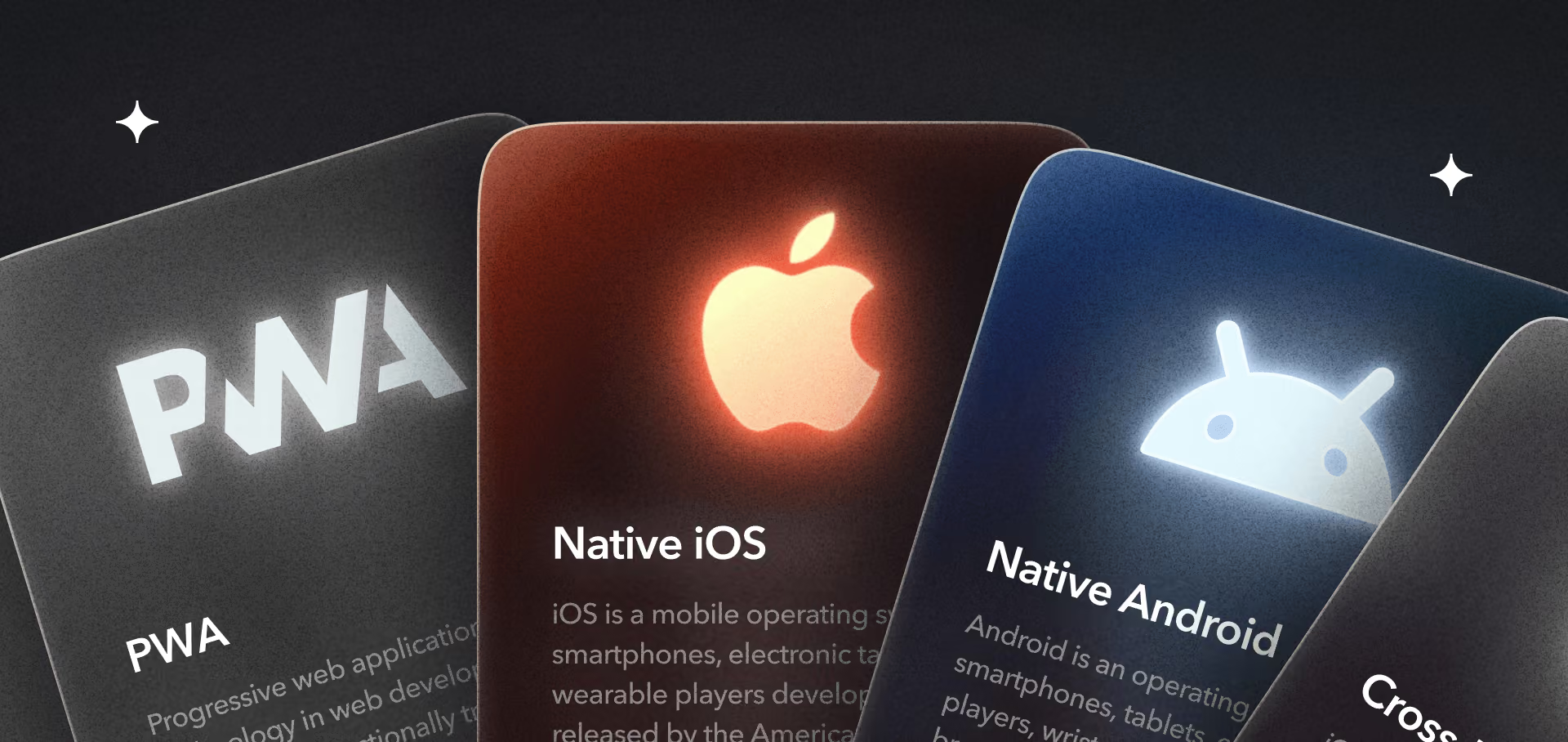
• Mobile app development services come down to three real choices, not five. Native (Swift 6 / Kotlin 2), cross-platform (Flutter or React Native), and PWA. Kotlin Multiplatform is interesting but still niche. Pick once, with eyes open — switching mid-build costs months.
• The 2026 gap between native and cross-platform is real but smaller. Native still wins on cold start (0.5–0.8s vs 1.2–2.5s) and animation-heavy UX. For a CRUD-style product Flutter and React Native ship 30–40% faster and 25–35% cheaper than dual-native — without the user noticing.
• Cost is determined by scope, not language. A typical mid-market MVP (5–7 screens, auth, push, payments, an API, basic offline) lands in the low six figures regardless of approach. The variance is ×3 between a focused team and a sprawling agency — pick the team carefully.
• 2026 raised the stakes on platform compliance. Swift 6 strict concurrency, Google Play’s 16KB page alignment, EU DMA sideloading, ATT follow-ups, on-device AI (Apple Intelligence, Gemini Nano) — ignore any of these and your app will fail review or break with the next OS release.
• Vendor selection is the decision that moves the needle most. A senior team with a real discovery process, transparent IP terms, and a defensible estimate beats a cheap quote every time. We give you the questions to ask, the red flags to watch for, and a five-question framework to make the call.
Why Fora Soft wrote this playbook
Fora Soft has been shipping mobile and multimedia products since 2005 — 21 years and 250+ projects. We build native iOS and Android, cross-platform, and web apps, including video-first products that handle real-time streaming, on-device AI, and millions of sessions a month. One of ours, Super Power FX, is a real-time video-effects app with 500K+ downloads and a 4.6-star App Store rating that we’ve kept shipping through eight years of OS releases. We see the same buyer questions every week: native or cross-platform? iOS first or both at launch? what does it actually cost? This is the same answer we’d give you in a discovery call, just longer, cited, and printable.
That range isn’t theory. We built BrainCert, an e-learning platform now past $3M ARR with 100K+ customers and 500M+ classroom minutes delivered, and AirDoctor, a travel-telemedicine app that connects 80K+ patients with 20K+ doctors worldwide. Two decades of that work holds a 5.0 rating across 30 reviews on Clutch. So when we say native here and cross-platform there, it’s from shipping and maintaining both at scale, not from a spec sheet.
If you want the headline: for most product founders the right answer in 2026 is “build a focused native or Flutter MVP, prove product-market fit with 500–1,000 real users, then scale.” Where it gets nuanced — choosing between Swift, Kotlin, Flutter, RN, KMP, and PWA — depends on five very specific things we’ll unpack below. Read on if you want a defensible decision; book a 30-minute scoping call if you’d rather have us walk you through it on your specific product.
Choosing between native, Flutter, and React Native?
Tell us your audience, your top three features, and your launch deadline. Inside 48 hours we’ll come back with a stack recommendation, a budget range, and the trade-offs we’d push back on — free, no obligation.
What mobile app development services actually cover
When buyers ask for a “mobile app dev team”, they’re really asking for a small product company-in-a-box, the same span of custom software development work we run in any vertical. A real engagement covers eleven things, and a serious vendor will price each one out instead of bundling them into a vague “total project cost.”
| Service | Typical duration | What you should get |
|---|---|---|
| Discovery & scoping | 2–4 weeks | User flows, feature list, tech-stack call, risk register, defensible estimate |
| UX/UI design | 4–8 weeks | Figma flows, design system, HIG/Material compliance, accessibility audit |
| Native iOS | 3–6 months MVP | Swift 6, SwiftUI, MVVM-C, TestFlight, App Store submission |
| Native Android | 3–6 months MVP | Kotlin 2, Jetpack Compose, Material 3, Play Console submission |
| Cross-platform (Flutter / RN) | 2.5–5 months MVP | Single codebase, platform overrides, shared design system |
| Backend & APIs | Parallel | REST/GraphQL, auth, payments, notifications, observability |
| QA & test automation | 10–15% of dev budget | Manual + automated, device farm, regression suite |
| DevOps & CI/CD | 5–10% of dev budget | GitHub Actions / Bitrise, Crashlytics, analytics, SLO dashboards |
| App store submission & ASO | 2–6 weeks | Listings, screenshots, A/B testing, rejection handling |
| Post-launch maintenance | Year-round | Bug fixes, OS updates, small features, SLA |
| Optional add-ons | As needed | AR/VR, on-device AI, real-time video, biometrics, in-app purchases |
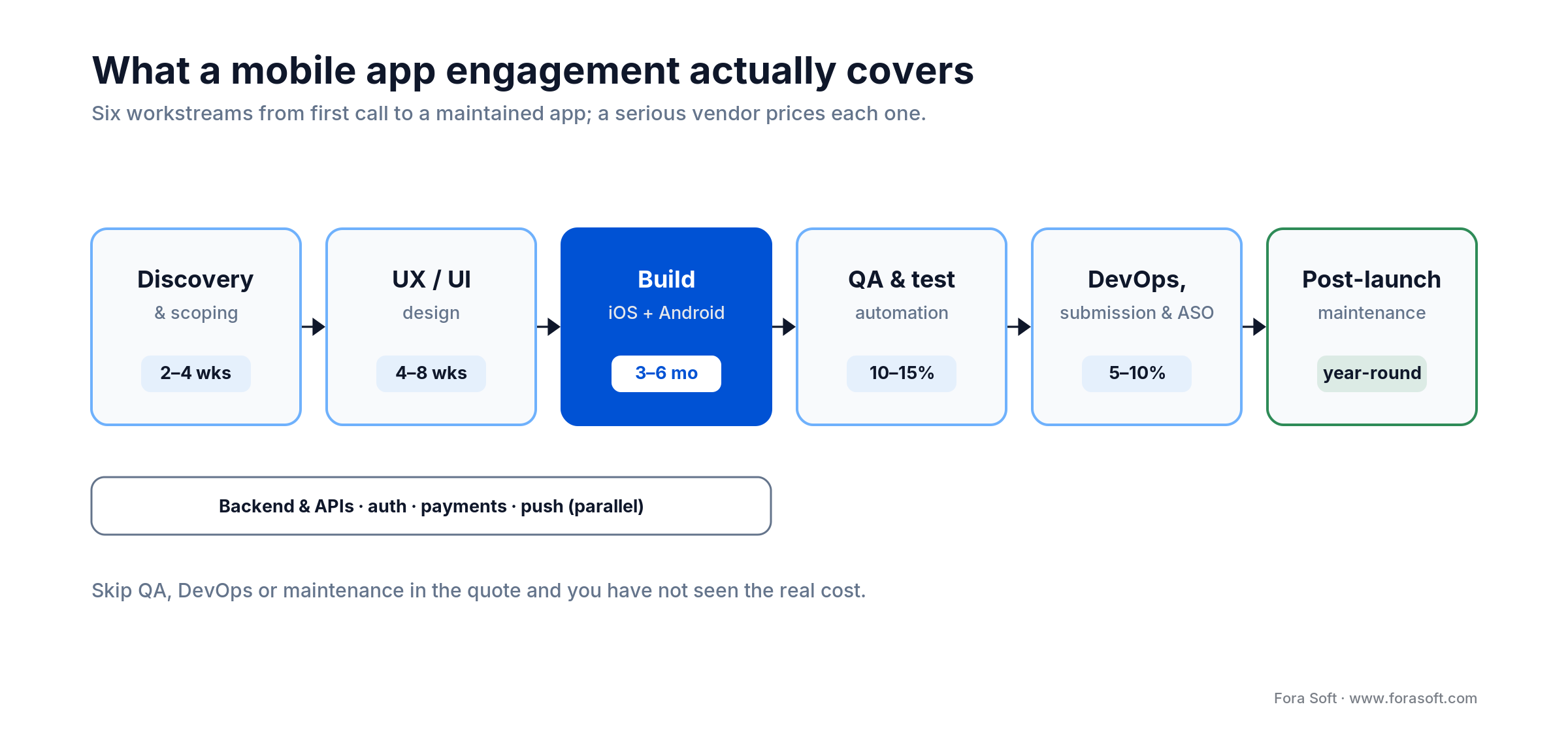
Figure 1. What a mobile app development engagement actually covers, and where the cost hides.
If a quote arrives without QA, DevOps, or post-launch support priced separately, push back — those are the lines that hide the real cost.
The 2026 market signal — why mobile is still the wedge
Mobile is no longer optional, but the shape of the market shifted. In 2025 consumers spent more than $150B in the App Store and Google Play (Sensor Tower, State of Mobile 2026), even as download growth stalled near 107B a year. The market isn’t adding users so much as making the ones it has more valuable. The App Store still out-earns Google Play on a smaller install base, which is why iOS rules premium subscriptions. Users in mature markets spend roughly 5 hours a day in apps. If your product touches consumers, partners, or your own field workforce in 2026, “web-only” is a defensible position only if you’ve consciously chosen it.
Reach for a mobile app build when: you need session frequency > 3/week, push notifications, offline use, hardware sensors (camera, GPS, biometrics, BLE), or in-app payments. If none of those apply, a fast PWA may be all you need.
Native iOS — the 2026 Swift 6 reality
Native iOS in 2026 means Swift 6 with strict concurrency on by default, SwiftUI with the @Observable macro, MVVM-C with coordinators, Swift Package Manager, Xcode 26 (Swift 6.3, on Apple’s 2025 year-based versioning), and Swift Testing. The big shift since 2024 is that data races are now compile-time errors instead of runtime crashes — great for new code, painful for legacy projects that need a refactor before they upgrade.
Strengths
Cold start 0.5–0.8s, the smoothest possible 60/120Hz scroll on Apple silicon, deepest hardware access (HealthKit, HomeKit, ARKit, Core ML, Metal, Apple Intelligence on-device), and the App Store revenue still 2–5× higher per user than Android in Western markets. For premium consumer apps and animation-heavy UX, native iOS is the obvious choice.
Weaknesses
Specialised Swift talent is the most expensive line on a mobile budget. App Store review adds 1–3 days to every release. Backwards compatibility is shorter than Android (most teams support 3–4 iOS versions, not 5+).
If you want the deeper architecture story we wrote a separate piece on the 2026 iOS MVVM-C playbook, plus a guide to Swift 6’s must-have features and iOS performance optimisation.
Reach for native iOS when: your audience is > 60% iOS, your UX is animation-heavy, you need ARKit/HealthKit/HomeKit/on-device AI, or your monetisation depends on premium subscribers (where iOS ARPU rules).
Native Android — Kotlin 2, Compose, and the 16KB rule
Native Android in 2026 means Kotlin 2.x, Jetpack Compose, Material Design 3, Coroutines + Flow, Hilt for DI, and Android Studio 2025.3 (Panda) or newer. Google Play’s 16KB page-size requirement is now mandatory for new apps; older Gradle chains will fail to upload. Build-on-demand cuts incremental builds 40–50% versus 2023 baselines.
Strengths
Largest user base globally, fastest review cycle (Play Console approves in hours, not days), wider hardware reach (BLE, NFC, foldables, Wear OS, Auto), and a richer set of cheap test devices. Talent pool is bigger and slightly cheaper than iOS.
Weaknesses
Device fragmentation is real — 10,000+ models in the field. Google Play policy updates land 4–6 times a year and break apps that aren’t maintained. ARPU lags iOS in Western markets, so monetisation models often have to differ between platforms.
Reach for native Android when: your audience is global (especially Asia-Pacific, India, LATAM), you need foldable/Wear/Auto support, or your distribution model is sideloading and alternative app stores in markets like the EU and India.
Flutter — the cross-platform default in 2026
Flutter 3.4x (3.44 as of mid-2026, on Dart 3.12) with the Impeller renderer is what most teams reach for first when they want one team and one codebase. Cold start is around 1.2–1.8s, scroll holds 59–60 FPS on mid-range Android and 120 FPS on flagship iOS, and hot reload is the fastest cycle in mobile (typically under 2 seconds). The package ecosystem now sits well past 45K packages on pub.dev.
Strengths
One team, one codebase, one design system across iOS and Android — usually 30–40% faster to ship and 25–35% cheaper than two native teams. Sound null safety. Impeller eliminates the Skia rendering bugs that plagued Flutter 2–3.0. Flutter for Web (WASM-backed since 3.24) opens a desktop/web companion at minimal extra cost.
Weaknesses
App size penalty of 15–25 MB over a minimal native build. Memory overhead 15–20%. On-device ML inference is 15–20% slower than native through TensorFlow Lite + Dart, which hurts AR and AI-heavy use cases. Tablet/iPad layouts still need extra work.
For a deeper Flutter buyer’s view we wrote a Flutter pros-and-cons playbook with cost models and a hybrid/replatform strategy.
Reach for Flutter when: your UX is CRUD/list/feed-heavy, you need the same product on iOS and Android (and probably web later), and you want to ship 4–8 weeks faster on roughly two-thirds the budget of dual-native.
React Native — for web-first teams and brownfield integration
React Native 0.8x (0.86 as of mid-2026) has closed most of the gap with Flutter on developer experience. The New Architecture (Fabric + TurboModules, Hermes) is now the default rather than an opt-in, and recent releases ship on React 19. The community is huge: 120K+ GitHub stars, 45K+ npm packages, and it’s battle-tested at Meta, Shopify, Microsoft, Airbnb, and Discord.
Strengths
If your team is JavaScript/TypeScript first, RN is the cheapest hire-and-scale path. Brownfield integration into existing native apps is mature: you can ship a single RN screen inside a 10-year-old Swift codebase. EAS Build (Expo) makes CI/CD feel like Vercel.
Weaknesses
Cold start (1.8–2.5s) lags Flutter and native. App size penalty larger than Flutter on iOS. Memory overhead 20–30%. The New Architecture is now the default and the legacy bridge is being retired, so a handful of older third-party libraries still need New-Architecture-ready replacements before you adopt them.
We wrote a focused piece on React Native video chat development if your product is real-time communication.
Kotlin Multiplatform — the dark-horse option
Kotlin Multiplatform Mobile has been stable since 2023 and is now in production at Yandex, Philips, McDonald’s, and VMware. The premise: share business logic (networking, auth, persistence, models, validation) in Kotlin, write the UI natively in SwiftUI on iOS and Compose on Android. JetBrains’ Compose Multiplatform aims to share UI too, with a 1.0 stability target in 2025–2026.
KMP is the right call if your team is already Kotlin-deep and you want one source of truth for non-UI code without giving up native UI quality. It’s the wrong call if your team has no Kotlin experience — the iOS-side tooling and debugging are still rougher than Swift natively, and the package ecosystem is much smaller than Flutter or RN.
PWAs — what they can and still can’t do
A Progressive Web App is a web app with service workers, an installable manifest, push notifications, and offline-first caching. Twitter Lite, Pinterest, Starbucks, and Spotify ship PWAs at scale; Twitter Lite famously came in at 1 MB versus a 100MB+ native bundle and retained 60% of users.
What works in 2026
Service workers, push notifications (iOS 16.4+, Android 5+), “Add to Home Screen” install prompts, the Payment Request API (Apple Pay, Google Pay), File System Access, and offline cache strategies. SEO and shareability still beat native by a wide margin.
What still doesn’t work on iOS
Background sync is limited, push payloads are capped tighter than Android, install UI is half-hearted, Bluetooth/NFC are off-limits, in-app purchases are not allowed. If any of those is a hard requirement, you need native or cross-platform with a native shell.
Reach for a PWA when: your audience is web-first, your conversion path benefits from shareable URLs and SEO, your product is content/forms/dashboards, and the iOS limitations are tolerable. PWAs cost 30–50% less than native for feature parity.
Performance benchmarks — the numbers buyers actually need
If you’re comparing approaches by feel, you’ll get talked into the wrong stack. Comparing them by the numbers below is the conversation we have on every kickoff call.
| Metric | Native iOS | Native Android | Flutter | React Native | PWA |
|---|---|---|---|---|---|
| Cold start | 0.5–0.8s | 0.6–1.0s | 1.2–1.8s | 1.8–2.5s | 1.5–3.0s |
| Warm start | 100–150ms | 150–250ms | 300–400ms | 500–800ms | 500–1000ms |
| App size | 8–15 MB | 15–25 MB | 25–40 MB | 30–50 MB | 0.5–2 MB |
| Scroll FPS | 59–60 | 58–60 | 59–60 | 55–58 | 50–55 |
| Memory baseline | 40–60 MB | 50–80 MB | 60–80 MB | 80–120 MB | 100–150 MB |
| Edit–reload cycle | 60–90s | 45–120s | < 2s (hot reload) | < 3s (Fast Refresh) | < 5s |
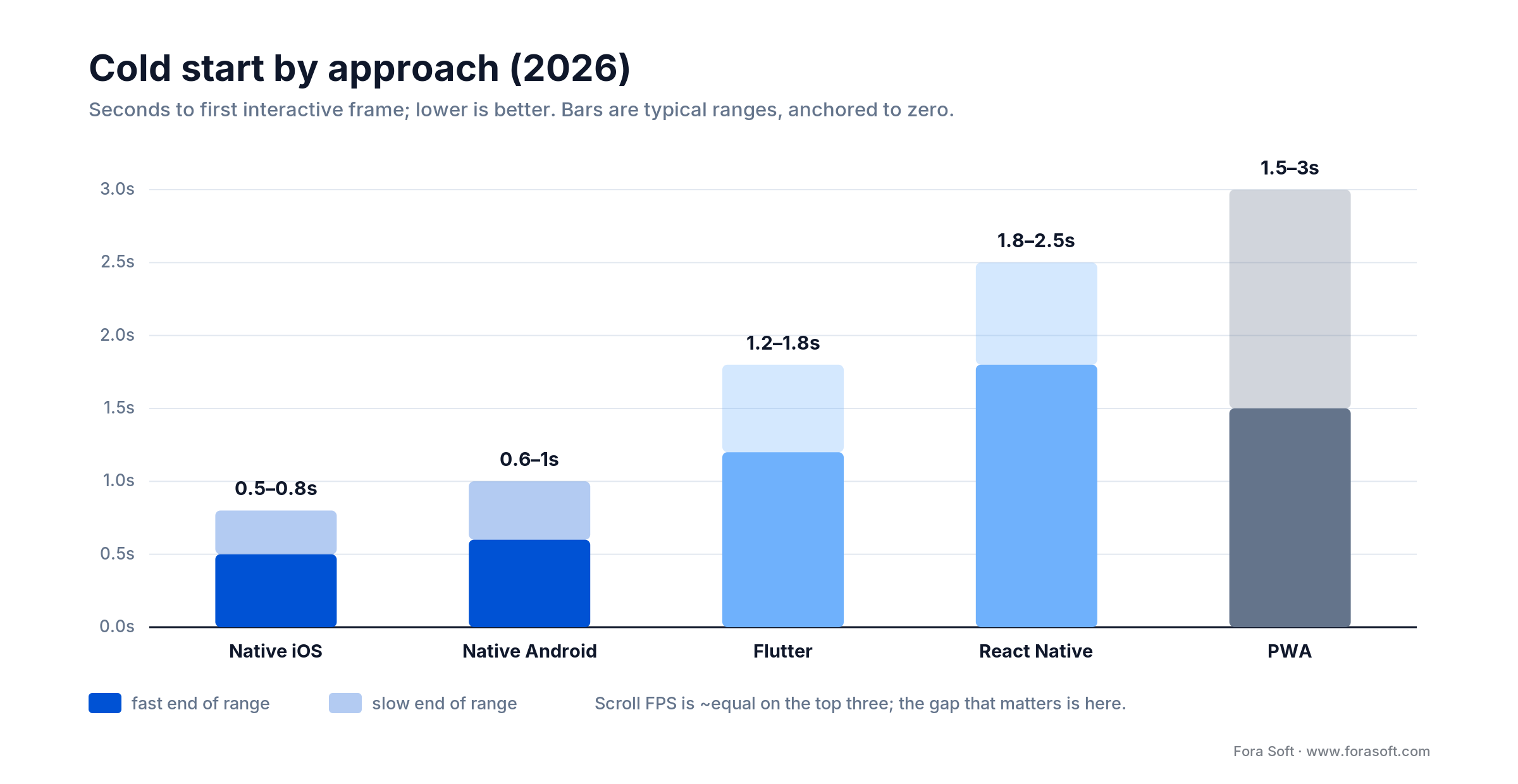
Figure 2. Cold-start ranges by approach in 2026, lower is better and anchored to zero.
Two non-obvious takeaways. First, scroll FPS is essentially equivalent on the top three options — users won’t notice. Second, the developer feedback loop (“edit-reload”) is the metric that decides whether you ship in 12 weeks or 18, and Flutter and RN crush native by 30×.
Cost and timeline ranges in 2026
These are conservative industry baselines for a focused MVP — auth, 5–7 screens, an API, push, payments, basic offline. We come in faster than the baselines below because we use spec-driven agentic engineering internally; we’d rather show you a defensible plan after a discovery call than throw a single number into a blog post.
| Approach | MVP timeline (industry) | MVP cost (industry baseline) | Best for |
|---|---|---|---|
| Native iOS only | 3–6 months | $150K–280K | iOS-heavy audience, premium UX |
| Native Android only | 3–6 months | $140K–260K | Asia/India/LATAM, foldables |
| Dual-native (iOS + Android) | 4–6 months parallel | $320K–600K | Enterprise, premium consumer |
| Flutter (iOS + Android) | 2.5–4 months | $180K–340K | Most product startups |
| React Native | 2.5–4 months | $190K–360K | JS/web teams, brownfield |
| PWA | 1.5–3 months | $80K–160K | Web-first audiences, content products |
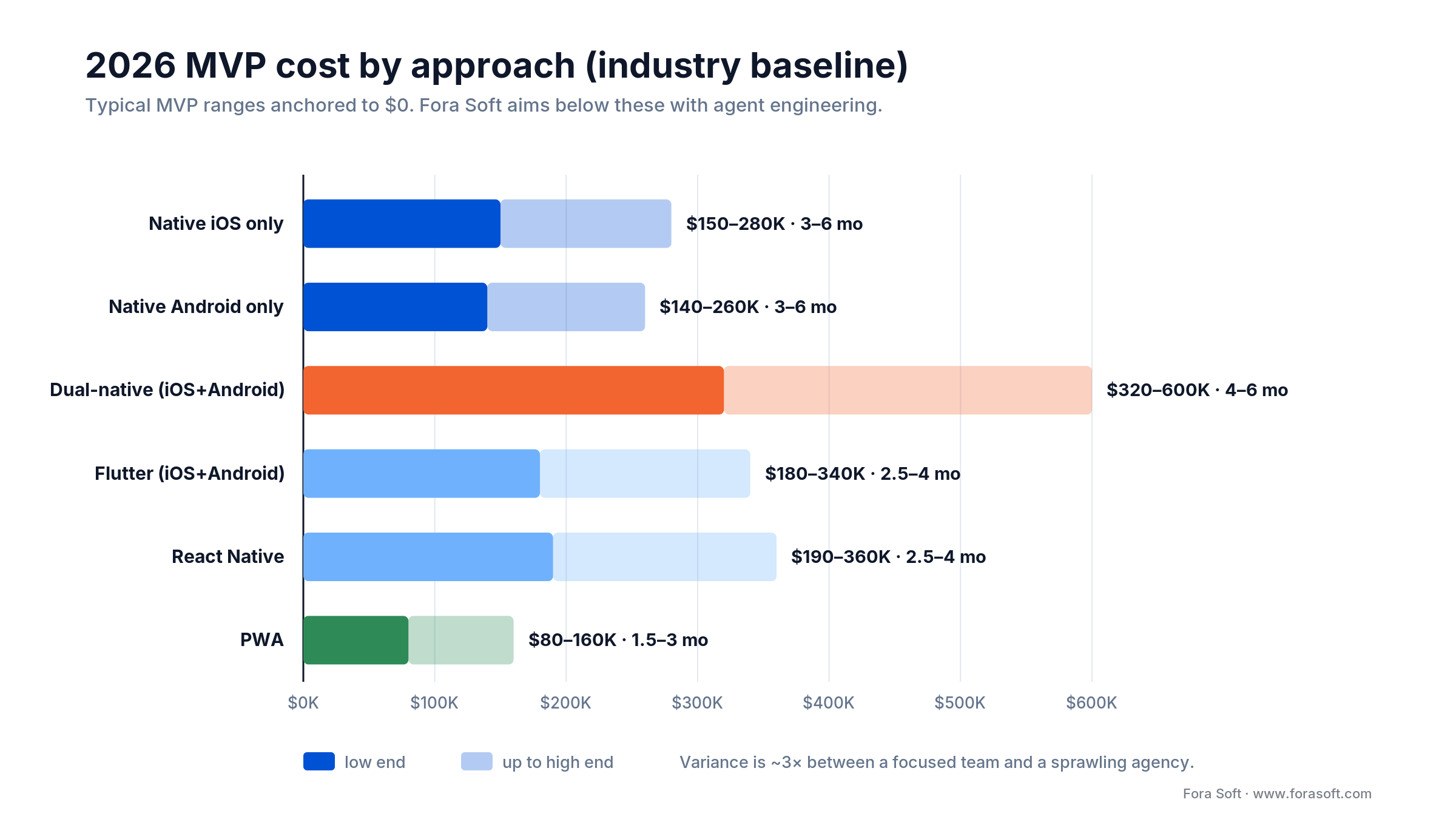
Figure 3. Typical 2026 MVP cost ranges by approach, anchored to zero. Dual-native is the outlier.
For a deeper, more granular cost breakdown across team composition, scope levels, and add-ons, see our 2026 mobile app development cost guide and the software estimation playbook.
Want a defensible estimate, not a guess?
A 2–4-week discovery sprint gets you a clickable prototype, a feature list, a stack call, and a risk register. We’ll tell you what to keep, what to cut, and what your real timeline looks like — before you sign anything.
Engagement models — T&M, fixed-bid, retainer
The contract shape changes the project shape. Three models dominate, plus a hybrid we tend to recommend.
1. Time & materials. Hourly rate, weekly invoices. Maximum flexibility for unknown scope; you bear the risk of scope creep. Best when discovery has been thin and you need to learn-by-shipping.
2. Fixed-bid. Locked scope, locked price, the vendor bears the overrun risk. Premium pricing (15–25% above T&M) and slow change requests. Good only when scope is genuinely fixed.
3. Retainer. Monthly capacity, mostly used post-launch. $3K–15K/month buys you bug fixes, OS-update remediation, and small feature work.
4. Hybrid (our default). Fixed-bid for discovery + design, T&M for build with sprint-level burn caps and a written change-request process. You get budget predictability and the ability to react to learning.
A decision framework — pick your stack in five questions
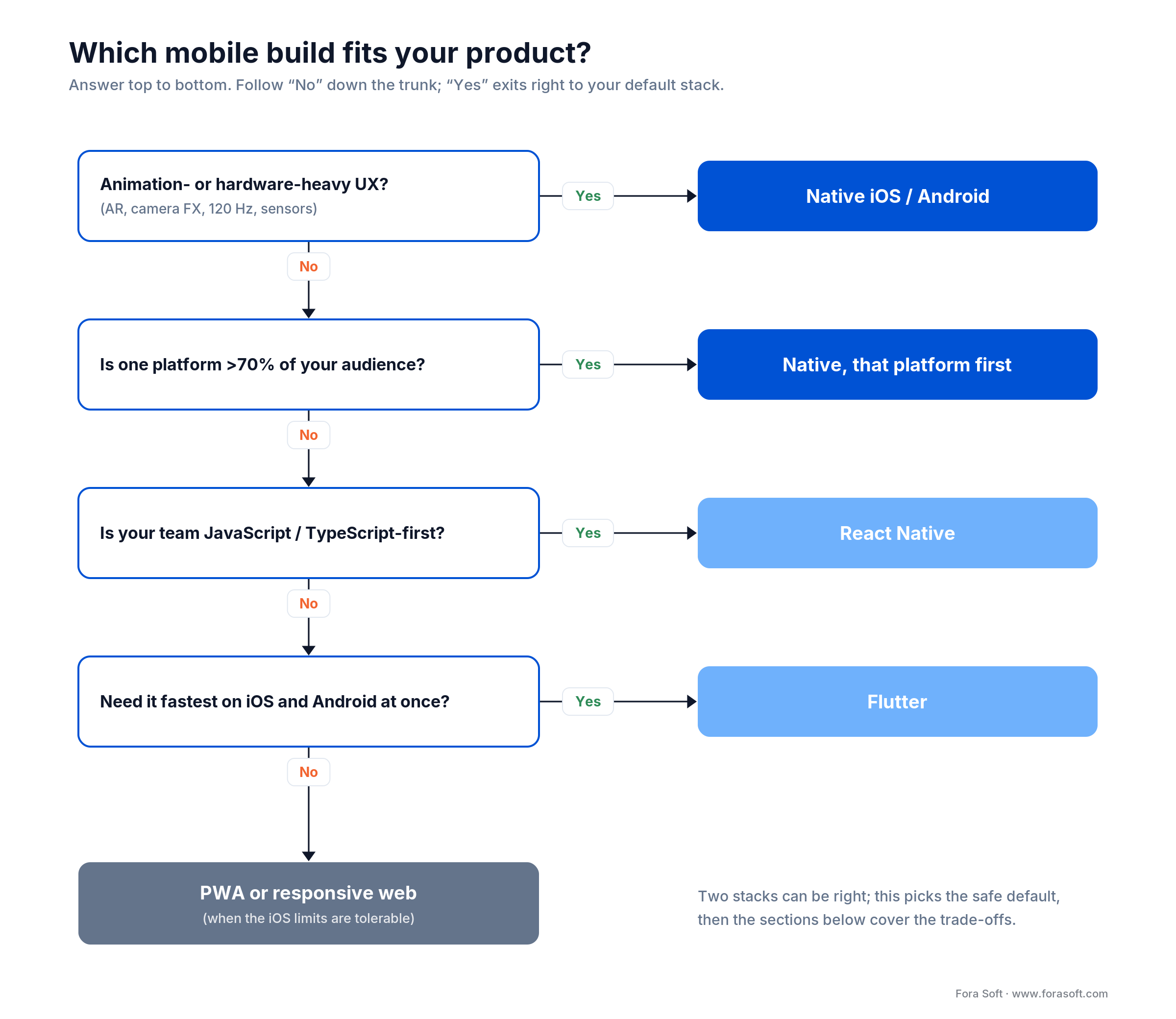
Figure 4. The same five questions as a single map. Follow “No” down the trunk; the exit is your default stack.
Q1. What’s the iOS/Android split in your audience? > 70% one platform — native that platform first, follow up later. 50/50 — cross-platform almost always wins on TCO.
Q2. How animation- or hardware-heavy is your UX? AR/VR, real-time camera filters, complex physics, 120Hz scroll, custom shaders → native. CRUD, lists, feeds, dashboards → cross-platform is fine.
Q3. What does your team already know? Strong web/JS team: React Native. Strong Kotlin team: Android-native or KMP. No team yet: hire to the stack you’ll keep.
Q4. How fast does this need to ship? < 12 weeks: Flutter or React Native. 12–20 weeks: any of native single-platform, Flutter, or RN. > 20 weeks: dual-native is now in the running.
Q5. What’s the long-term plan? If a desktop or web companion is on the roadmap inside two years, Flutter (with Web/Desktop targets) gets a real bonus. Same logic for KMP if you already run Kotlin server-side.
What’s different in 2026 vs 2022
1. Swift 6 strict concurrency. Default-on. Old codebases need a refactor before they can compile, often 10–20% effort.
2. Google Play 16KB page alignment. Mandatory since November 2025 for new apps and updates targeting Android 15+ (the Play Console granted a grace window into mid-2026). Older Gradle chains fail upload, so budget a CI/CD upgrade.
3. EU DMA sideloading. Apple and Google both forced to allow third-party stores in the EU. AltStore, Epic Games Store, and others now distribute iOS apps in the region. Multi-store ASO and review-cycle discipline now matter.
4. App Tracking Transparency follow-ups. SKAdNetwork attribution windows tightened, first-party data strategies are now table stakes, and ad revenue depends on it.
5. On-device AI. Apple Intelligence (iOS 18+) and Gemini Nano (Android 14+) put real LLM inference on the device. Privacy-forward features that used to require a backend (smart replies, on-device transcription, generative UI) are now achievable client-side.
6. Real-time becomes mobile-default. Live video, spatial audio, and real-time collaboration all expect first-class mobile support, not a stripped-down view. Codec and CPU work that used to be optional is now baseline; our engineers break down those tradeoffs in the Video Encoding learn track.
Five pitfalls we see kill mobile builds
1. Over-scoped MVP. “We need 27 features for launch” turns a 16-week build into a 14-month death march. Cut to 3–5 features that prove the core hypothesis. Validate, then expand.
2. Cross-platform on an animation-heavy product. Flutter and RN are great until you hit ARKit overlays, custom Metal shaders, or real-time physics. Then 30–50% jank shows up in App Store reviews. Match the stack to the product, not the budget.
3. Ignoring annual OS upgrades. iOS and Android both ship a major release every September. Allow 1–3 weeks per platform per year for compatibility work or you’ll wake up to a broken app. See our top mistakes guide for the full list.
4. No clear ASO strategy. A great app with a bad listing converts at 1–3% of organic search; a great app with a tested listing converts at 10–15%. Budget $3–10K per platform pre-launch. Our iOS ASO playbook covers what to test.
5. Brittle CI/CD. If only one developer can ship a build, your release process is the bottleneck. Insist on automated tests, automated builds, and a rollback plan from week one.
KPIs — what to measure once you launch
Quality KPIs. Crash-free sessions ≥ 99.5%. Cold start < 1.5s on a mid-range device. Scroll FPS ≥ 58 on a P95 device. App size < 50 MB.
Business KPIs. D1 retention ≥ 35%, D7 ≥ 15%, D30 ≥ 8% for consumer apps. Activation event in < 60 seconds from first open. Push-opt-in ≥ 50%. App Store / Play conversion ≥ 25%.
Reliability KPIs. Backend P95 latency < 300ms. Push delivery ≥ 95%. Release cadence: at least monthly to stay relevant in store algorithms.
Choosing a vendor — what to ask, what to verify
A short, high-signal vendor checklist:
- Portfolio fit. Three case studies in your category, with named clients and outcome numbers (not just logos).
- Senior leads, not just sellers. Ask for the lead developer’s GitHub. The person you meet on the kickoff should be the person you meet on sprint reviews.
- IP ownership. “Work made for hire; all IP assigned to client” in the contract. Source code, design files, CI/CD pipelines, documentation. Our take on this is in sharing source code with developers.
- Discovery as a real product. A 2–4 week paid discovery is a healthy sign; “here’s a quote in 24 hours” is a red flag. Read the project discovery process.
- Estimate transparency. Lines for QA, DevOps, ASO, post-launch. The software estimating guide walks through what a defensible quote looks like.
- Communication cadence. Weekly demos, Slack/async updates, monthly stakeholder review. If you can’t test the cadence in the sales cycle, you won’t get it after.
- Post-launch SLA. Critical bug response ≤ 4–8 hours, major bug fix ≤ 1–2 days, monthly minor release. In writing.
Mini case — from MVP to production in a typical engagement
Situation. Super Power FX is a consumer video app that layers Hollywood-style effects (fireballs, lasers, teleportation) onto footage in real time, then exports to social. It needed real-time camera compositing, a 720p HD recording pipeline, a paid effects catalog, and two app stores kept in sync. The kind of animation-heavy product where cross-platform shortcuts surface as jank in the reviews.
What we shipped. Native on both platforms, with iOS capture and compositing built on AVFoundation and UIKit and purchases on StoreKit — frame-accurate effects work is exactly where native earns its premium. A shared effects catalog, sharing to Instagram, YouTube and the camera roll, and a release process built to survive the annual September OS bump on each platform.
Outcome. 500K+ downloads across the App Store and Google Play, 20,000+ positive reviews, and a steady 4.6-star iOS rating — on an app we’ve kept shipping for 8+ years, including an Oreo brand collaboration. Want a similar plan for your idea? Book a scoping call.
When NOT to build a mobile app
Custom mobile is not always the right answer and we’ll say so on the first call. If your audience opens the product fewer than three times a week, doesn’t need offline, hardware sensors, or push, a great responsive web app or PWA can carry you through the first 12 months while you focus on retention — with 30–50% less spend. If you’re a B2B tool used at a desk, a desktop / web combination beats mobile most of the time. And if you have neither product-market fit nor the budget to learn it, a no-code prototype to validate willingness-to-pay can get you to a real conversation faster than a custom app can.
Ready to scope your mobile app build?
Tell us about your audience, top three features, and target launch date. Inside 48 hours we’ll come back with a stack recommendation, a 12–16-week MVP plan, and a defensible budget — free, no obligation.
FAQ
How long does a custom mobile app take to ship in 2026?
A focused MVP (5–7 screens, auth, push, payments, basic offline) lands in 3–4 months on Flutter or React Native, 4–6 months on a single native platform, and 4–6 months in parallel for dual-native. Add 2–6 weeks for app store submission, ASO, and beta cycles. We typically come in faster because we use spec-driven agentic engineering.
Native vs Flutter vs React Native — when do I pick which?
Native if your UX is animation-heavy, AR/VR, or hardware-deep, or your audience is > 70% one platform. Flutter is the safe default for cross-platform CRUD/list/feed products. React Native if your team is JavaScript-first or you need to integrate into an existing native app. PWA if you can tolerate iOS limitations and want maximum install-friction-free reach.
Do I really need both iOS and Android at launch?
Not always. If your audience is > 70% one platform, ship that one first and follow up 6–10 weeks later with the other. If the split is 50/50 and budget allows, simultaneous launch on Flutter or React Native is the cleanest path — same codebase, same release cycle.
How much should a real estimate cost?
A defensible estimate comes out of a 2–4-week paid discovery (typically $10K–30K, often credited against the build). A “quote in 24 hours” without discovery is a guess and almost always overruns. Read our guide to software estimating for the breakdown.
Who owns the source code, design files, and pipelines?
You should. The contract should say “work made for hire; all IP assigned to client” explicitly. The GitHub org should be yours from week one and the vendor invited as collaborators, not the other way around. If the vendor pushes back, walk.
What does post-launch maintenance cost?
Plan for 15–25% of the original dev budget per year as a retainer ($3K–15K/month for most consumer apps). Roughly 1–3 weeks per platform per year just for iOS/Android annual OS compatibility, plus bug fixes, small features, and store policy work.
What about a PWA — will it work on iOS in 2026?
Yes for content, dashboards, forms, and most web-first products. Push notifications work on iOS 16.4+, “Add to Home Screen” works since iOS 15.4. The hard limits are background sync (limited), Bluetooth/NFC (no), in-app purchases (no), and rich push payloads (capped). If those matter, you need cross-platform or native.
Should I worry about EU sideloading and alternative app stores?
If you sell into the EU, yes — you can now distribute outside the App Store and Play Store, which changes ASO, fees, and update cadence. Most consumer apps still default to the official stores; alternative stores are mostly worth it for gaming, niche distribution, or apps Apple/Google have rejected on policy grounds.
What to Read Next
Deep dive
Is Cross-Platform App Development With Flutter Worth It?
Performance benchmarks vs native, RN and KMM, $35K–60K MVP cost model, 5-question decision framework.
Comparison
Native vs Cross-Platform Development
A buyer-friendly head-to-head when you’re still on the fence between native and a cross-platform stack.
Cost
2026 Mobile App Development Costs
What a real estimate looks like — team composition, scope tiers, and the lines that hide blowouts.
Buy vs build
Low-Code/No-Code vs Hiring Pros
36-month TCO math comparing no-code platforms to a custom-built mobile app.
Process
Spec-Driven Agentic Engineering
How we use AI agents to compress discovery, scaffolding, and review loops on mobile builds.
Ready to commission your mobile app?
Mobile app development services in 2026 boil down to four real choices — native iOS, native Android, cross-platform (Flutter or React Native), and PWA — and a fifth question that matters more than any of them: who’s on the team? The framework above will get you to the right approach, the cost table will get you to a defensible budget, and the vendor checklist will get you to a partner who won’t leave you with code you can’t maintain. The rest is execution.
If your audience needs a real mobile experience and you’d like the same answer in person — with the trade-offs walked through against your specific scope — that’s exactly what our 30-minute scoping call is for.
Want a senior team that ships in 12–16 weeks?
Tell us about your product and audience. Inside 48 hours we’ll send back a stack recommendation, a budget range, and the trade-offs we’d push back on — free, no obligation.

