

Key takeaways
Protocol picks latency, not the other way around. Interactive under 500 ms needs WebRTC or Media over QUIC. Event-style live at 2–5 s needs LL-HLS with CMAF chunked transfer. VOD stays on HLS + DASH with a proper ABR ladder.
Codec stack in 2026 is AV1-first for premium, HEVC for hardware-decode reach, H.264 as fallback. Netflix now streams ~30% of hours in AV1 and YouTube ships 90%+ of 4K in AV1 on desktop Chrome.
SFU is the default real-time topology. LiveKit for speed-to-market, mediasoup for control, Jitsi for simplicity. WHIP (RFC 9725) is the new standard for WebRTC ingest.
DRM is Widevine + FairPlay, no exceptions. Anything else leaves you locked out of Apple devices or half the Android fleet.
Agent-accelerated delivery compresses the MVP. With senior engineers plus AI coding agents, a production-grade live + VOD MVP now ships in 10–14 weeks instead of the 2023 baseline of 6–8 months.
More on this topic: read our complete guide — Streaming App UX Best Practices: 7 Pillars (2026).
Choosing the right video streaming technology stack in 2026 is mostly a decision tree about latency, device reach, and cost per viewer-hour — and then a second decision tree about which of those you buy versus build. We’ve made those decisions across 250+ projects since 2005 — 20 years of shipping real-time video, most recently for enterprise OTT, telehealth, online learning, and secure video surveillance. This guide walks through every layer — protocols, codecs, SFUs, transcoding pipelines, CDNs, DRM, analytics, AI features, and monetization — with current prices, current benchmarks, and the five-or-six failure modes that cost teams months.
If you already know your product shape and you’d rather skip to an expert review of your stack, book a 30-minute architecture call with our team and we’ll pressure-test your choices against what’s shipping in 2026. For examples of our work, see Fora Soft Projects or our 20-year portfolio recap.
Why the 2026 stack is meaningfully different from 2024
Three big things moved between 2024 and today. First, WHIP (RFC 9725) became an IETF standard in March 2025, so WebRTC ingest is finally portable between encoders and media servers without glue code. Second, AV1 adoption crossed the threshold where it’s no longer a research codec — Netflix reports roughly 30 % of streaming hours are now AV1, and YouTube serves 90%+ of desktop 4K in AV1. Third, Media over QUIC (MoQ) and LL-HLS with CMAF chunked-transfer are now production-ready, which means the old “pick WebRTC or pick HLS and live with the latency” dichotomy is gone — the 2–5 s slice is now well served.
What that means for anyone starting a streaming product today: the stack choices that felt safe two years ago may already be the expensive ones. If you’re still on H.264-only with a 15 s live window, your bandwidth bill is ~35 % higher than it needs to be and your product feels dated compared to TikTok Live and Twitch.
The protocol decision tree, starting from latency
Latency is the first question because it hard-gates everything else: topology, codec, CDN choice, even how you do ads. If you want the millisecond-by-millisecond version of this, our low latency live streaming playbook builds the whole budget line by line. Here’s the decision tree we use:

Figure 1. Latency is the first fork. It decides topology, codec and CDN downstream.
Reach for WebRTC + an SFU when latency has to beat half a second.
Two-way conversation, auction bidding, cloud gaming, or “clap along with the artist” all break above ~500 ms. Nothing in the HLS family survives that; WebRTC or Media over QUIC is the only honest answer.
Under 500 ms (interactive): WebRTC + an SFU (LiveKit, mediasoup, Jitsi), or Media over QUIC if you’re ahead of the curve. This is the only protocol family that survives two-way conversation, auction bidding, cloud gaming, or “clap along with the artist” experiences. See our P2P, SFU, MCU, hybrid architecture guide for how to pick a topology.
2–5 s (event-style live): LL-HLS or LL-DASH with CMAF chunked-transfer. Good for sports, news, concerts, live commerce where a couple of seconds behind real time is fine. Works with any CDN, scales to millions, and iOS Safari supports it natively.
10–30 s (broadcast live): Classic HLS with 6 s segments. Cheaper, more tolerant of network variance, and still the right answer if no one cares that viewers are 15 s behind a chat bar.
VOD: HLS + MPEG-DASH (packaged together as CMAF so you only encode once). If you serve iOS at all, you cannot skip HLS.
Ingest: WHIP for WebRTC sources, RTMP for legacy OBS and mobile encoders. Move new work to WHIP — it’s the IETF standard as of 2025 and it’s no longer vendor-specific.
We have a much deeper dive in WebRTC vs HLS and in how to implement low-latency real-time video if you want the protocol mechanics.
Codecs in 2026: AV1, HEVC, VP9, H.264
You will ship at least two codecs in production. Usually three. The ladder looks like this in 2026:
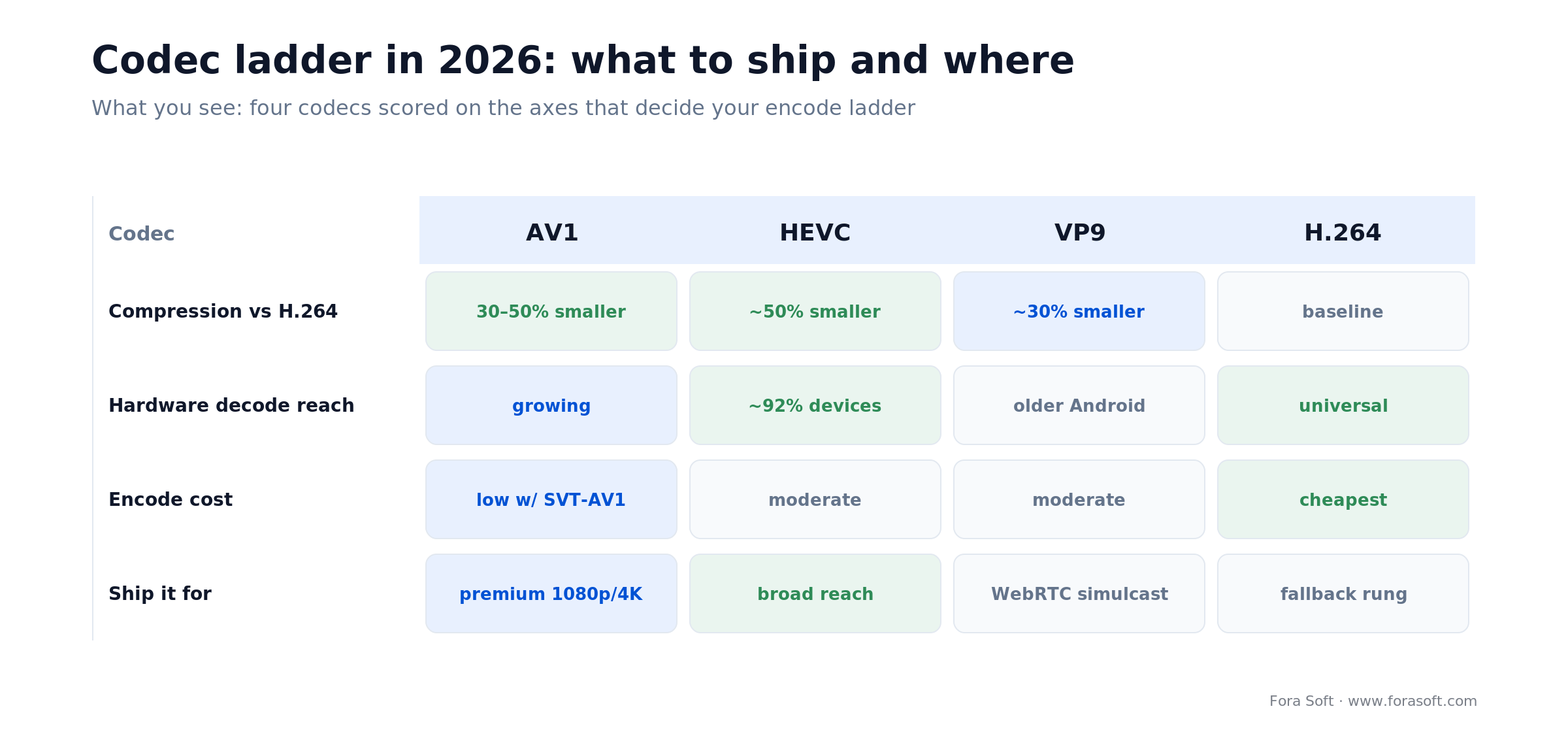
Figure 2. Ship AV1 for premium tiers, HEVC for reach, H.264 as the fallback rung.
Reach for AV1 when bandwidth is a real line item.
AV1 is 30–50% smaller than H.264 at the same perceived quality. Netflix reported AV1 at ~30% of its streaming hours (Netflix Technology Blog, December 2025) and YouTube now encodes the majority of its catalogue in AV1. See where the codec stands today in our AV1 in 2026 explainer.
AV1. Best compression per bit by a clear margin — roughly 30–50 % smaller than H.264 at the same perceived quality. Netflix and YouTube have productionized it for 4K and premium HDR. Encoder cost has come way down since 2023 with SVT-AV1, and hardware decode is now standard on iPhone 15 Pro and up, newer Android flagships, Intel 11th-gen+, and Apple Silicon M3+. Pick AV1 for your 1080p/4K tiers of premium content where hardware supports it.
HEVC (H.265). The realistic hardware-decode ceiling. ~92 % of the installed device base has HEVC decode in hardware, Safari 17+ supports it in MSE, and every modern smart TV handles it. Best compromise when AV1 isn’t universally supported but you want better-than-H.264 efficiency.
VP9. Useful specifically in WebRTC simulcast and older Android. Dying in VOD; we don’t recommend new VP9 work outside that.
H.264 (AVC). Still your fallback rung. Any device more than six years old probably needs it. Include a 480p or 720p H.264 rendition in every ladder.
A practical rule: encode to CMAF with HEVC + H.264 for your baseline product, then layer AV1 on top for your premium tiers once hardware decode is confirmed. Our video encoding primer explains how the bit-rate ladder relates to perceived quality.
SFU, MCU, and which one fits your product
For anything above two participants, the choice is SFU versus MCU. The short version: use an SFU unless you have a very specific reason to use an MCU.
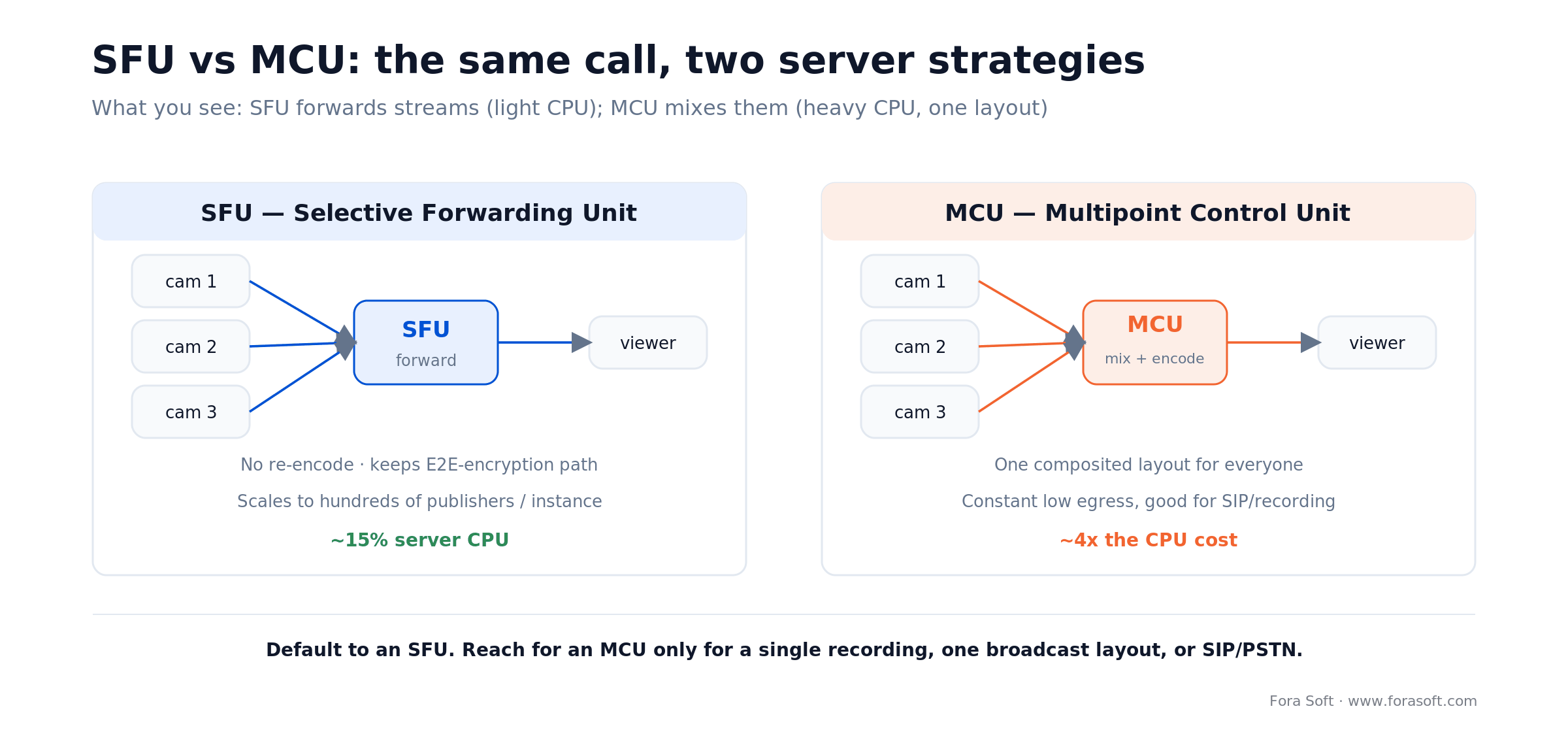
Figure 3. Default to an SFU; an MCU only earns its CPU for one recording or one broadcast layout.
Reach for an MCU only when one of three things is true.
You need a single recorded file, one composited broadcast layout for everyone, or integration with legacy SIP/PSTN endpoints. Outside those, the ~4x CPU cost buys you nothing.
SFU (Selective Forwarding Unit) receives each participant’s streams and forwards them without transcoding. Lean on the server CPU side, scales to hundreds of publishers per instance, and because the server doesn’t re-encode it preserves end-to-end encryption potential. Combine with simulcast (publish multiple bitrates) or SVC (scalable video coding — one layered stream the server can thin) and you get per-subscriber adaptation without transcoding.
MCU (Multipoint Control Unit) composites all input streams into one output. Egress bandwidth is constant and low, which is nice, but CPU cost is brutal and every viewer sees the same layout. Worth it only when you need a single recorded file, a single broadcast layout, or integration with legacy SIP/PSTN endpoints. We cover tradeoffs in depth in P2P vs MCU vs SFU.
Which SFU?
LiveKit. Cloud-native, Go + Rust, great SDKs for web/iOS/Android/Flutter/Unity, solid simulcast + SVC, strong WHIP/WHEP support, built-in recording and ingress. Default pick for most new projects. We’ve shipped several LiveKit-backed apps; cost analysis in LiveKit vs Agora.
mediasoup. Node.js + C++ worker processes, fine-grained RTP control, the most flexible of the three. Higher development cost, but if you need to do something unusual (custom transforms, per-track policy, non-standard codecs) this is what you want.
Jitsi. Most mature open-source option. Works out of the box for meetings; less flexible than LiveKit or mediasoup for embedded scenarios.
Managed APIs (Agora, 100ms, Amazon IVS, Vonage). Pay 3–8x more per minute but get to production 2–3x faster. Good for early-stage startups and teams without WebRTC DNA. Migration paths when you outgrow them are real — see our Agora.io alternatives and Twilio Video alternatives playbooks.
The VOD pipeline: upload → transcode → package → deliver
For on-demand content, the pipeline is more predictable than live. Five stages: ingest, transcode, package, protect, deliver.

Figure 4. Package to CMAF once and the same fragments serve both HLS and DASH.
Ingest. Direct-to-S3 (or R2 or B2) with signed URLs is the cheap default. Use tus.io if you need resumable uploads from mobile. Multipart upload is mandatory for anything larger than 100 MB.
Transcode. Three honest paths. FFmpeg on your own compute (cheap at scale, painful operationally), AWS MediaConvert at roughly $0.015/min, or a managed platform like Mux, api.video, or Bitmovin that bundles transcoding + delivery + analytics. For anything below ~50,000 minutes/month of throughput, managed almost always wins on total cost of ownership.
Package. Shaka Packager (Google, open-source) or Bento4 output CMAF fragments that serve both HLS and DASH manifests. Do this once per title; don’t re-transcode per protocol.
Protect. Multi-DRM at the packager, not at delivery. Inject Widevine, FairPlay, and PlayReady keys at package time so the same files serve every device. Adding forensic watermarking (unique session ID baked into the stream) is worth the complexity only for premium content like first-run film or paid live sports.
Deliver. CDN in front, origin shield in the middle, object storage at the bottom. Cache hit ratio >95 % on the edge is the number to track.
Free stack audit
Not sure your protocol and codec picks hold up?
We’ll map your latency targets, device fleet and budget to a concrete stack — and tell you honestly where a managed SDK beats a custom build.
CDN choice: six providers and when each wins
CloudFront. Default for AWS-heavy stacks. Tight integration with MediaConvert, MediaPackage, MediaTailor, and S3 signed URLs. Pricing is fine at medium scale; you can negotiate commitment discounts above ~10 PB/month.
Cloudflare Stream. Cheapest on paper — $1 per 1,000 minutes delivered for HLS, plus newly-added WebRTC live ingest via WHIP and AI captions. If you want one-vendor simplicity for an early product, this is very hard to beat.
Akamai. The incumbent for global broadcasters. Deep ISP integrations, best tail-latency, premium pricing. Worth it at Tier-1 scale; overkill for most startups.
Fastly. Best-in-class edge programmability (VCL / Compute@Edge). Good for teams that want to run logic at the edge — auth checks, A/B manifests, dynamic ad insertion.
BunnyCDN and Gcore. Budget tier. BunnyCDN is often 40–60 % cheaper than CloudFront for straightforward VOD delivery, and the video-stack features (Stream + Optimizer) have become credible. Gcore bundles transcoding + CDN on one bill.
Multi-CDN. Once you’re above a few million monthly viewer-hours, run two CDNs with a client-side switcher or a server-side load balancer (NPAW, CDNvideo). Resiliency, negotiating room, and sometimes a 10–15 % cost improvement.
Reach for multi-CDN once you clear a few million monthly viewer-hours.
Below that, a second CDN is ops overhead you don’t need. Above it, the resiliency and pricing power pay for themselves. We run multi-CDN in production for OTT clients like Mangomolo, which streams to 30M+ viewers across Discovery MENA and Dubai Media.
DRM and content security without over-engineering
If you have any premium content, you need multi-DRM. The combination that covers ≥99 % of consumer devices is Widevine (Google) + FairPlay (Apple). Add PlayReady if you ship to smart TVs, game consoles, or enterprise Windows.
Security levels. Widevine L1 requires a secure TEE on the client and is the only acceptable level for early-window premium content. L3 is software-only and fine for back catalog or non-exclusive content. FairPlay is always hardware-backed on Apple.
Token auth in front of DRM. Short-lived JWTs tied to user + device + IP + session, validated by your license server before issuing the decryption key. This is also where you enforce concurrent-stream limits and geoblocking.
Forensic watermarking. Worth the integration cost only for live sports, first-window film, or paid PPV. Vendors: NAGRA NexGuard, Friend MTS, Irdeto TraceMark. Expect 4–6 weeks of integration work and ~$0.001–$0.005 per viewer-hour in licensing.
For more on threat modeling, see our video streaming app security features article.
Backend stack: signaling, APIs, storage, queues
Signaling (WebRTC). Node.js with NestJS is the fastest to ship; Go with Gorilla WebSocket is what you move to at scale; Elixir with Phoenix Channels is what you pick if you know you’ll have millions of concurrent connections and a small team. Avoid Python for signaling — GIL plus sockets under load is not where you want to be.
Business APIs. Whatever your team knows best. NestJS, Django Rest Framework, Rails, Spring Boot all work. The video stack doesn’t care.
Media workers. Go for orchestration, Rust for CPU-heavy custom processing, C++ if you’re integrating with GStreamer or FFmpeg internals. We use Rust more each year because it’s eating the “needs to be fast but we’d like to sleep at night” slot.
Storage. S3 for the primary, R2 if you’re on Cloudflare and hate egress fees, B2 if you’re cost-sensitive. Always signed URLs, always short TTL, always bucket-level SSE-KMS.
Databases. Postgres for transactional, Redis for session and pub/sub, ClickHouse for video analytics (rebuffer ratios, startup times, per-country QoE). We cover this and more in scaling real-time streaming to 1M viewers.
Queues. NATS or Redis Streams for intra-service events, Kafka only when you’re actually doing event-sourcing or cross-team integrations. Kafka has real operational cost; don’t adopt it because it sounds impressive.
Client SDKs, players, and cross-platform strategy
Players. hls.js and dash.js for web, AVPlayer on iOS, ExoPlayer (now Media3) on Android. If you want one playback engine across all surfaces, Shaka Player covers web + CAF + some embedded. Commercial options (Theo, Bitmovin, JW) bundle DRM, ads, analytics, and UI components; you pay roughly $20–60K/year minimum.
Real-time SDKs. LiveKit, mediasoup-client, and Pion/aiortc where you need server-driven clients. Native SDKs are usually noticeably better than Capacitor/Cordova wrappers for sustained video.
Cross-platform. React Native is fine for UI and signaling but you’ll want native video modules on iOS and Android for anything serious — see our tips in optimize Android apps for video streaming. Flutter’s video story is better than it was two years ago but still behind React Native + native bridges. SwiftUI + Jetpack Compose is our default for greenfield when the product needs real video performance.
Architecture review
Want a second pair of eyes on your streaming stack?
Our senior video engineers have shipped video across 250+ projects since 2005. Bring your architecture doc and we’ll pressure-test the protocol, codec, SFU, CDN and DRM choices in 30 minutes.
Analytics and QoE: the metrics that actually predict retention
Video analytics is a separate product category from generic product analytics. Tools: Mux Data, Conviva, Bitmovin Analytics, Datazoom. OpenTelemetry integration is emerging but not standard yet.
Startup time (VST). Time from play intent to first frame. Target under 2 s; drop above 4 s and abandonment spikes.
Rebuffer ratio. Percentage of watch time spent buffering. Target under 1 %. Conviva’s industry benchmarks put the best OTT operators at 0.3–0.5 %.
Exit before video start (EBVS) and video start failure (VSF). Two leading indicators of technical debt — if either is above 2 %, you have player, CORS, DRM, or manifest problems.
Bitrate selected by ABR. If the ABR algorithm never selects your top rung, either your bitrate ladder is wrong or your users don’t have the bandwidth. Either way, encoding the top rung is waste.
AI features that actually ship in production in 2026
Real-time captions. Deepgram, AssemblyAI, and Speechmatics now hit ~300 ms latency for <$0.01/minute. Closed captions went from “nice to have” to a WCAG 2.2 AA compliance requirement for most regulated verticals.
Real-time translation. Meta’s and Google’s streaming speech-translation models handle speech-to-speech across ~40 language pairs at usable quality. See our real-time video translation guide for integration patterns.
Moderation. Hive, Amazon Rekognition, Google Safe Search — image and video moderation is accurate enough that you can run it on every upload and most live streams automatically. Build human review queues for the edge cases.
Recommendations. A vector-embedding pipeline plus a collaborative filter is now a 3–6 week project instead of the 3–6 month project it was in 2022. See our AI content recommendation systems guide.
AI highlights and auto-chapters. VOD processing at roughly $0.10–$0.30 per hour of content using a combination of scene detection and an LLM for labeling. Increasingly table stakes for sports and long-form education.
Super-resolution and enhancement. NVIDIA Maxine and in-browser upscaling for low-bandwidth streams are production-ready on capable hardware. Use them to improve perceived quality at lower bitrates.
Monetization: SVOD, AVOD, TVOD, hybrid
SVOD. Recurring subscription, Stripe + RevenueCat on mobile. Churn below 3 % monthly is healthy for premium content, below 5 % for general OTT.
AVOD with SSAI. Server-side ad insertion via AWS MediaTailor, Mux, or Google Ad Manager. Ads are spliced into the manifest so ad-blockers can’t skip them, and completion rates are near 100 %. This is the dominant model for free-tier streaming in 2026. Our AI monetization guide goes deeper.
TVOD / PPV. Pay-per-title or pay-per-event. Stripe for fiat, Lightning or Solana for micropayments if your audience skews crypto. Concurrent-stream limits and device binding are essential.
Creator tipping and Superchat. A 2025–2026 growth model for live streaming. Integrations with Stripe Connect or platform-native tipping handle the compliance.
See our monetization strategies deep dive for the economics of each model.
Compliance: GDPR, COPPA, DMCA, accessibility
GDPR. Video analytics collects a lot by default. Anonymize IPs at the edge, hash user IDs in analytics, honor data-subject requests within 30 days, and keep a clear record of what’s logged where.
COPPA (US) and GDPR-K (EU). If kids under 13 (US) or under 13–16 depending on member state (EU) are in your audience, you need verifiable parental consent and stricter data minimization. The FTC updated COPPA in 2025 with an April 2026 compliance deadline. Don’t treat this as optional — fines are now per-incident.
DMCA. Register an agent with the US Copyright Office, publish a takedown address, respond within 48 hours, and keep records for safe harbor. Most UGC platforms spend more on DMCA operations than they expect.
Accessibility. WCAG 2.2 AA is the standard enforced by the EU Accessibility Act from mid-2025. At minimum: accurate closed captions, audio descriptions where dialogue is not self-explanatory, keyboard-navigable player controls, sufficient color contrast. Courts are increasingly willing to award damages for missing captions.
Cost benchmarks: managed vs self-hosted in 2026
Rough numbers from projects we’ve shipped or estimated in the last 12 months. Your mileage will vary by region, commitment discounts, and how clever your engineering is. These are honest ranges, not marketing numbers.
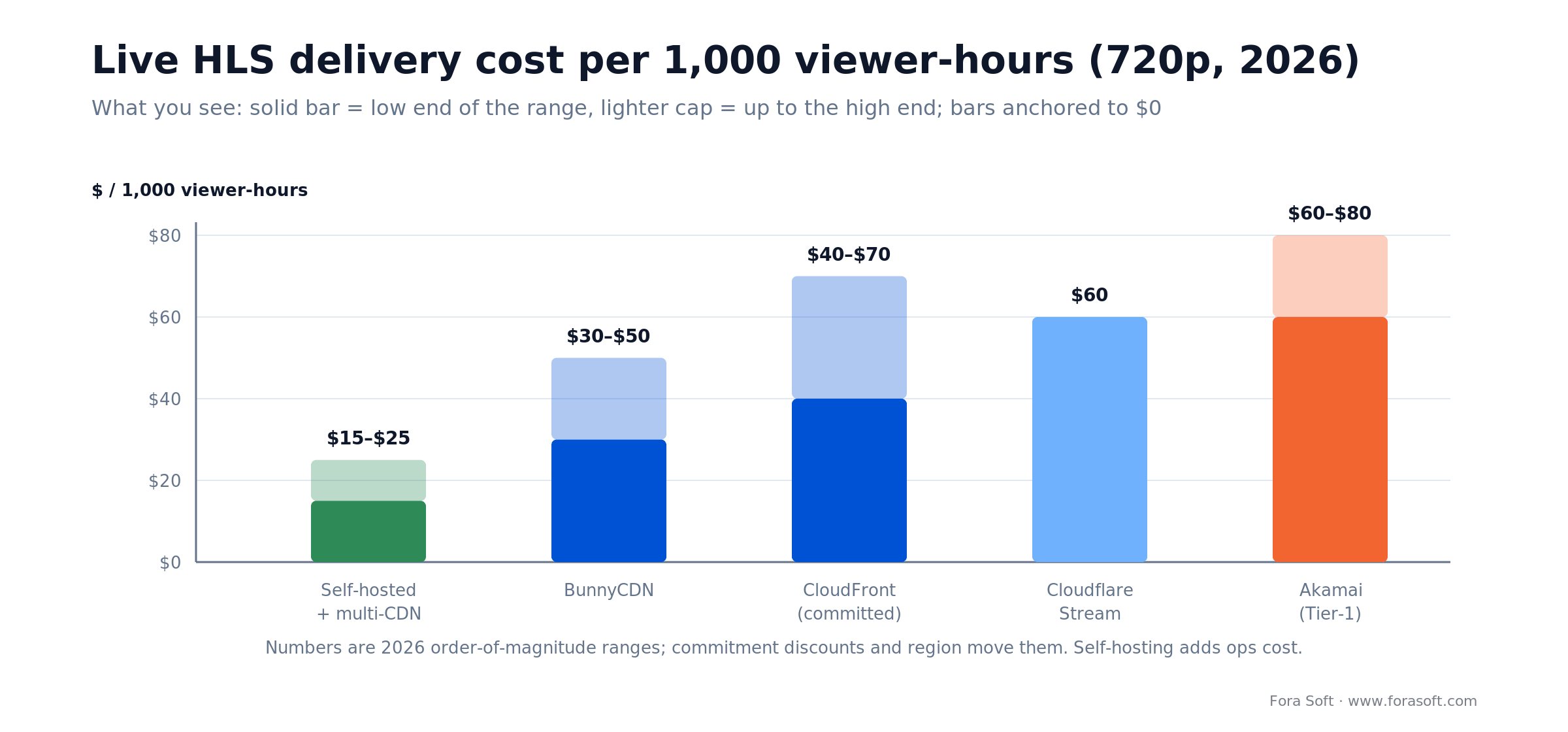
Figure 5. Order-of-magnitude 2026 ranges; commitment discounts and region shift them.
Real-time (720p, per participant-minute): Managed (Agora, 100ms, Vonage) $0.003–$0.008. Amazon IVS Real-Time $0.004–$0.006. Self-hosted LiveKit on Hetzner or dedicated AWS instances $0.0005–$0.0015 plus ops cost.
Live streaming delivery (720p HLS, per viewer-hour): Cloudflare Stream ~$0.06, BunnyCDN ~$0.03–$0.05, CloudFront at a commitment discount ~$0.04–$0.07, self-hosted origin + multi-CDN ~$0.015–$0.025.
VOD transcode: AWS MediaConvert $0.015–$0.03/min of output, per rung. Six-rung ABR ladder = $0.09–$0.18 per minute of source. Mux bundles everything at ~$0.05/min all-in. FFmpeg on reserved EC2 or Hetzner can hit $0.003–$0.008/min of output at scale.
Our server cost estimation guide and streaming platform development cost article go deeper into the spreadsheet version.
Mini case: a live + VOD MVP we shipped in 12 weeks
A health and wellness startup came to us with a validated concept: live-streamed classes (yoga, strength, meditation) with a VOD catalog, native iOS and Android apps, a web app for trainers, and Stripe-based subscription billing. Their original plan was a 6-month build with three engineers on an Agora + CloudFront + Mux stack.
We ran it in 12 weeks with a senior team of two engineers plus AI coding agents handling scaffolding and test generation. Stack decisions: LiveKit cloud for live (moved to self-hosted after month six), Mux for VOD pipeline, Cloudflare Stream for CDN, LiveKit SDK for web and mobile, NestJS for the business API, Postgres + Redis for data, ClickHouse for QoE analytics, and Stripe + RevenueCat for billing. AV1 was deliberately deferred to v2 because the target audience had mixed device fleets.
Outcomes at launch: startup time 1.4 s p50, rebuffer ratio 0.6 % p50, 99.7 % crash-free sessions, live-class latency 280 ms. Infrastructure cost at 10,000 MAU ran about $4,200/month — roughly 30 % lower than the original managed-stack plan, with room to fall another 40 % once we moved live to self-hosted. See our spec-driven agentic engineering write-up for how we structure these projects. Want the same team on your build? Grab a 30-minute slot.
Five pitfalls that cost video teams months
1. Picking HLS for interactive live. 15 s latency kills polls, Q&A, trivia, and auctions. Fix is a migration to LL-HLS or WebRTC — and the migration is never cheap once the product is in market.
2. Under-provisioning TURN. 10–20 % of real-world WebRTC sessions need TURN relay. A self-hosted coturn on one small instance dies at 200 concurrent sessions. Budget for managed TURN (Twilio, Xirsys) or a properly capacity-planned private fleet.
3. Encoding only the top rung. A 4K-only ladder means anyone on 4G or a budget Android gets 30-second buffers. Always encode down to 480p H.264.
4. CORS and manifest misconfig. The HLS primary manifest loads, but the sub-manifests or segments 403. CDN config change at 2am the night of launch. Test with CORS checkers on every environment.
5. No forensic watermarking on premium content. Pirates rip your stream day one, you have no idea which account leaked it, churn climbs. If your content is expensive to license, this is the cost of doing business.
The 2026 streaming stack audit checklist (15 items)
1. Latency target written down per use case — and the protocol matches.
2. Codec ladder includes AV1 for premium, HEVC for reach, H.264 for fallback.
3. SFU choice documented with reasoning (LiveKit, mediasoup, Jitsi, or managed).
4. WHIP for new ingest paths; RTMP only for legacy.
5. Multi-DRM Widevine + FairPlay in place, with L1 for premium.
6. Bitrate ladder down to 480p; measured top-rung selection rate.
7. TURN capacity modeled against peak concurrent WebRTC sessions.
8. Analytics in place: startup time, rebuffer ratio, EBVS, VSF tracked per country and device.
9. CDN cache-hit ratio over 95 % in production.
10. Closed captions enabled on all live and VOD; WCAG 2.2 AA checked.
11. GDPR data-flow diagram exists; IP anonymization on.
12. COPPA/GDPR-K consent flow if minors are in audience.
13. DMCA takedown workflow with <48 hr SLA.
14. Forensic watermarking on premium content (if applicable).
15. Disaster plan: secondary CDN, secondary SFU region, runbooks rehearsed.
Build vs buy: managed SDK or custom pipeline?
Use a managed SDK (Agora, 100ms, Vonage, Amazon IVS, Mux) when you’re under ~1,000 concurrent participants, the product is still finding fit, the team doesn’t have WebRTC or media experience, and you need to launch in 8–12 weeks. Expect $0.003–$0.008 per participant-minute. The tradeoff: vendor lock-in and a 4–8x higher cost-per-hour than self-hosted once you’re at scale.
Build custom (LiveKit self-hosted, mediasoup, Janus) when you have over ~5,000 concurrent participants, you need unusual features (custom transforms, edge recording, specific compliance), or you’ve hit the point where a 5x unit-economics improvement funds an engineering team. Expect 10–16 weeks to production-quality and ongoing ops load.
Our honest pattern: start managed, validate the product, watch the cost-per-minute curve. When it’s clear the product has legs and unit economics matter, migrate to custom. We’ve done that migration for clients repeatedly and it’s now a well-practiced playbook — see build vs buy video platform.
| Approach | Where it wins | Where it breaks | Cost / participant-min |
|---|---|---|---|
| Managed SDK Agora, 100ms, Vonage, IVS, Mux | Under ~1,000 concurrent, no in-house WebRTC DNA, launch in 8–12 weeks | Vendor lock-in; 4–8x higher unit cost once you scale | $0.003–$0.008 |
| Self-hosted SFU LiveKit, mediasoup, Janus | Above ~5,000 concurrent, unit economics matter, unusual features | 10–16 weeks to production; ongoing ops and on-call load | $0.0005–$0.0015 + ops |
| Fully custom pipeline | Compliance demands self-hosting; features no SDK supports | Highest build + maintenance cost; only worth it at real scale | lowest at scale, high fixed cost |
Reach for the managed-then-migrate path when you’re still validating.
Start on a managed SDK, watch the cost-per-minute curve, and migrate to self-hosted once the product clearly has legs. That migration is our bread and butter. See our video streaming development services.
What it costs to ship — honest timelines
The honest 2026 timeline for a production-quality live + VOD app assumes senior engineers plus AI coding agents handling scaffolding. We’re seeing our own delivery times compress roughly 35–45 % compared to 2023 baselines for comparable scope.
MVP (web + one mobile platform, managed SDK, no DRM): 8–10 weeks, 2–3 engineers.
Production MVP (web + iOS + Android, self-hosted LiveKit, Mux for VOD, basic analytics): 12–16 weeks, 3–4 engineers.
OTT-style VOD platform with multi-DRM, SSAI ads, offline download, ABR ladders across AV1/HEVC/H.264: 20–28 weeks, 4–6 engineers.
Custom enterprise video platform with forensic watermarking, white-label SDK, compliance packs, per-tenant analytics: 9–14 months, 5–8 engineers.
If any of those feel longer than what you’ve heard elsewhere, that’s because they include the things teams forget — DRM integration testing on real devices, TURN capacity planning, multi-region failover, QoE instrumentation, accessibility, and the regulatory work. See our cost guide for the full breakdown.
When not to build this yourself
Don’t build a streaming platform from first principles if: (a) your concurrent audience will stay under 500 for the next 12 months — Mux or Cloudflare Stream will be cheaper and better; (b) you’re shipping a single video feature inside an otherwise non-video product — bolt on an SDK; (c) your team doesn’t have at least one engineer with meaningful WebRTC or codec experience — you’ll learn the hard way that “WebRTC is just an API” is dangerously incomplete.
Do build custom if: you’ve validated product-market fit, managed costs are eating your margin, you need specific features no SDK supports, or your compliance posture demands self-hosting.
Decision framework: match your priority to a stack
One table to collapse the whole guide. Find the row that matches your single most important constraint, then read across.
| If your top priority is… | Pick this stack | Because |
|---|---|---|
| Lowest latency (interactive) | WebRTC + SFU (LiveKit), WHIP ingest | Only protocol family that survives two-way conversation under 500 ms |
| Reaching the most devices | HLS + HEVC/H.264, AV1 on top tiers | HLS is iOS-native; HEVC has ~92% hardware-decode reach |
| Lowest bandwidth bill | AV1 for premium tiers + multi-CDN | AV1 is 30–50% smaller than H.264 at the same quality |
| Fastest time to market | Managed SDK (Mux, Agora, IVS) | Production-quality in 8–12 weeks, no WebRTC team required |
| Lowest cost at scale | Self-hosted LiveKit + origin + multi-CDN | 4–8x cheaper per hour once you clear ~5,000 concurrent |
| Tightest content security | Multi-DRM (Widevine + FairPlay) + watermarking | Covers ≥99% of consumer devices; watermark traces leaks |
| Not sure which row is you | Send us your constraints — a senior engineer will map them to a stack on a free 30-minute call. | |
FAQ
What’s the best protocol for a live fitness app in 2026?
If instructor ↔ participant interaction matters (live cues, form correction, Q&A), WebRTC with an SFU and ~300 ms latency. If it’s broadcast-style with a leaderboard and chat, LL-HLS at 2–5 s is cheaper and easier. Most fitness apps we’ve shipped end up hybrid: WebRTC for the instructor’s studio and LL-HLS for everyone else.
Do I need AV1 now, or can I wait?
You can still ship a credible 2026 product on HEVC + H.264. AV1 pays off when you’re serving a lot of 1080p or 4K to users on metered connections, or when bandwidth cost is a material line item. Add AV1 as a top-rung experiment, measure the quality-per-bit improvement and the hardware-decode coverage of your user base, and expand from there.
Is LiveKit enough, or do I need Agora?
LiveKit Cloud is excellent and usually sufficient. Agora has a longer operational track record, better handling of lossy networks in some Asian markets, and a deeper SDK feature set (virtual backgrounds, noise suppression, beauty filters) out of the box. If latency under lossy cellular is your top risk, Agora is worth benchmarking. Otherwise LiveKit is our default. Full cost analysis in our LiveKit vs Agora piece.
How much does it cost to stream 1,000 concurrent 720p viewers for an hour?
HLS delivery at 720p runs about 2 GB per viewer-hour. At BunnyCDN pricing that’s ~$30 per thousand viewer-hours. At Cloudflare Stream (billed per minute) it’s closer to $60. CloudFront without a commitment discount is ~$50–$80. Self-hosted origin + multi-CDN at scale can hit $15–$25.
Do I need forensic watermarking?
Only if your content is expensive to license or produce. For first-window film, live sports, or high-value PPV events, yes — the watermark is what lets you identify which account leaked the stream. For UGC, fitness classes, corporate training, or education, DRM + concurrent-stream limits are enough.
Can I skip HLS and use only DASH?
Not if iOS is in your user base. Safari on iOS still only plays HLS natively. Package once to CMAF and serve both HLS and DASH manifests off the same fragments — it’s the one-line answer to this question.
What about Media over QUIC — is it ready?
Meta, Cisco, and others are running MoQ in production pilots in 2025–2026 and the IETF drafts are stabilizing. If you’re greenfielding a large-scale real-time product with a team that can tolerate early-standard work, it’s worth prototyping. For everyone else, WebRTC or LL-HLS is still the right default for at least another year.
How long to ship a live + VOD MVP?
With a senior team and AI coding agents, 10–14 weeks is realistic for a production-quality MVP on web plus one mobile platform. Adding the second mobile platform adds 4–6 weeks. Multi-DRM, ad insertion, and offline download add another 6–10 weeks.
What to read next
The short answer
In 2026 the best technology stack for a video streaming app looks like this: protocol — WebRTC for interactive, LL-HLS with CMAF for event-style live, HLS + DASH for VOD; codec — AV1 for premium, HEVC for reach, H.264 as fallback; real-time — SFU (LiveKit, mediasoup, Jitsi) over MCU, with WHIP for ingest; VOD — Mux or self-hosted FFmpeg + Shaka Packager with multi-DRM (Widevine + FairPlay); CDN — Cloudflare Stream or BunnyCDN for small scale, CloudFront or multi-CDN at scale; analytics — Mux Data or Conviva for QoE, ClickHouse if you want your own; AI features — real-time captions, moderation, and recommendations are all production-ready.
The bigger shift is how fast you can now ship this. Senior engineers paired with Agent-Engineering workflows are compressing what used to be a 6-month MVP into 10–14 weeks for comparable scope. If you’re planning a streaming product in 2026, the question isn’t whether the stack exists — it does, and it’s great — it’s whether your team can assemble it without the three or four expensive mistakes that burn a quarter.
Ready to ship?
We’ve built video across 250+ projects since 2005. Let’s build yours.
Bring us your spec, your constraints, or a rough idea. A senior engineer will walk the stack with you, flag the risks, and sketch a realistic path. Start with our video streaming development services.

