

Key takeaways
• React Native video chat is a credible, production-grade choice in 2026. The New Architecture (Fabric + JSI + TurboModules) closed the old bridging penalty, and mature SDKs (LiveKit, Agora, Stream, Daily, plus a revived Twilio Video) all ship first-class RN bindings.
• The architecture choice matters more than the framework. P2P, SFU, MCU, or hybrid — pick wrong and 3-person calls will work great while a 10-person classroom drops every connection.
• Build vs SDK is not a holy war. Most teams should start on a managed SDK (LiveKit Cloud, Stream, Daily, Agora) for time-to-market and migrate to self-hosted media servers (LiveKit, mediasoup, Janus, Jitsi) when usage justifies it.
• Cost surprises live in the minutes, not the codebase. A typical 1:1 video call burns 3–6 MB/min per participant of bandwidth and pricing per participant-minute on managed SDKs lands roughly $0.0004–0.004 — harmless at MVP scale, painful at 10M MMU.
• Fora Soft has shipped video chat in React Native, native iOS/Android, Flutter, and full custom WebRTC. The decision framework, cost model, and pitfalls below come straight from those engagements.
Why Fora Soft wrote this playbook
Real-time video has been one of our core practices since 2005, with two decades of shipping software behind us and 250+ products delivered. We’ve built React Native video chat apps, Flutter video chat apps, native Swift/Kotlin video chat apps, and full custom WebRTC stacks on top of LiveKit, mediasoup, Jitsi, and Janus — including platforms like ProVideoMeeting and BrainCert.
If you’re considering React Native for a video-chat product in 2026, this article walks through the decisions that actually move the needle — SDK selection, architecture (P2P/SFU/MCU), platform-specific gotchas, cost math at MVP and scale, and the pitfalls that quietly turn a smooth demo into a 3-star App Store rating. Book a scoping call if you’d rather have us walk through it on your specific product.
Need a React Native video chat app shipped in 12 weeks?
Tell us your audience, peak concurrent calls, and target geography. Inside 48 hours we’ll come back with a stack recommendation, a budget range, and the architecture trade-offs we’d push back on — free, no obligation.
Why React Native for video chat in 2026
React Native 0.85 (Expo SDK 55) ships the New Architecture (Fabric + JSI + TurboModules) and the Hermes engine by default. The New Architecture has been the default since 0.76 in late 2024, and the legacy bridge has since been removed entirely, so the old bridging penalty is a non-issue. JSI-backed native modules give you near-native call sites on the hot paths, and every major real-time-video SDK now ships a maintained RN binding. The community is huge: 50K+ GitHub stars, RN in production at Meta, Shopify, Microsoft, Discord, and Coinbase.
For a video-chat product specifically, three things matter. First, RN gives you a single TypeScript codebase for iOS and Android, halving the team size you need to ship two-platform parity. Second, the SDK ecosystem is mature — you don’t have to write WebRTC from scratch. Third, JS-team economics make hiring and scaling cheaper than dual-native. The trade-off is cold-start (1.8–2.5s vs native 0.5–0.8s) and a slightly larger app size, neither of which users blame on you for a video product.
The 2026 SDK options — who you’ll actually compare
Six SDKs cover 95% of real RN video-chat builds in 2026. Here’s the honest matrix.
| SDK | Model | Strength | Trade-off | Pricing shape |
|---|---|---|---|---|
| LiveKit Cloud | Open-core SaaS + self-host option | Modern SFU, AI agents, recording, simulcast, RN SDK is first-class | Smaller community than Agora | Build free / Ship $50 / Scale $500 per mo, then ~$0.0004/min; free on self-host |
| Agora | Closed-source SaaS | Battle-tested, edge POPs in 200+ countries, mature mobile SDK | Vendor lock-in, opaque pricing tiers | ~$0.99–3.99/1k min depending on volume |
| Stream Video | Closed SaaS | Best DX of the closed SaaS bunch, generous free tier, RN SDK polished | Lock-in, smaller global footprint than Agora | ~$0.0040/participant-min plus included MAU bands |
| Daily.co | SaaS | Easiest API to integrate, prebuilt UI, recording in seconds | Limited customisation past prebuilt | ~$0.004/participant-min after free tier |
| 100ms / Dyte | SaaS | Strong APAC presence, prebuilt SDK kits, RN bindings maintained | Smaller plug-in ecosystem | Per-participant-min, similar band |
| Twilio Programmable Video | Standalone product (2026 EOL reversed) | Familiar to many teams; Twilio reversed its 2026 EOL in Oct 2024, so it’s alive again | Two EOL U-turns in two years — shaky base for a brand-new build | Per-min; weighing a move? Our Twilio video alternatives guide |
| Self-host (LiveKit / mediasoup / Janus / Jitsi) | Open source | Zero per-minute fee, full control, IP/data ownership | You own SRE; 4–8 weeks to harden | Hetzner / DO / AWS bandwidth + ops |
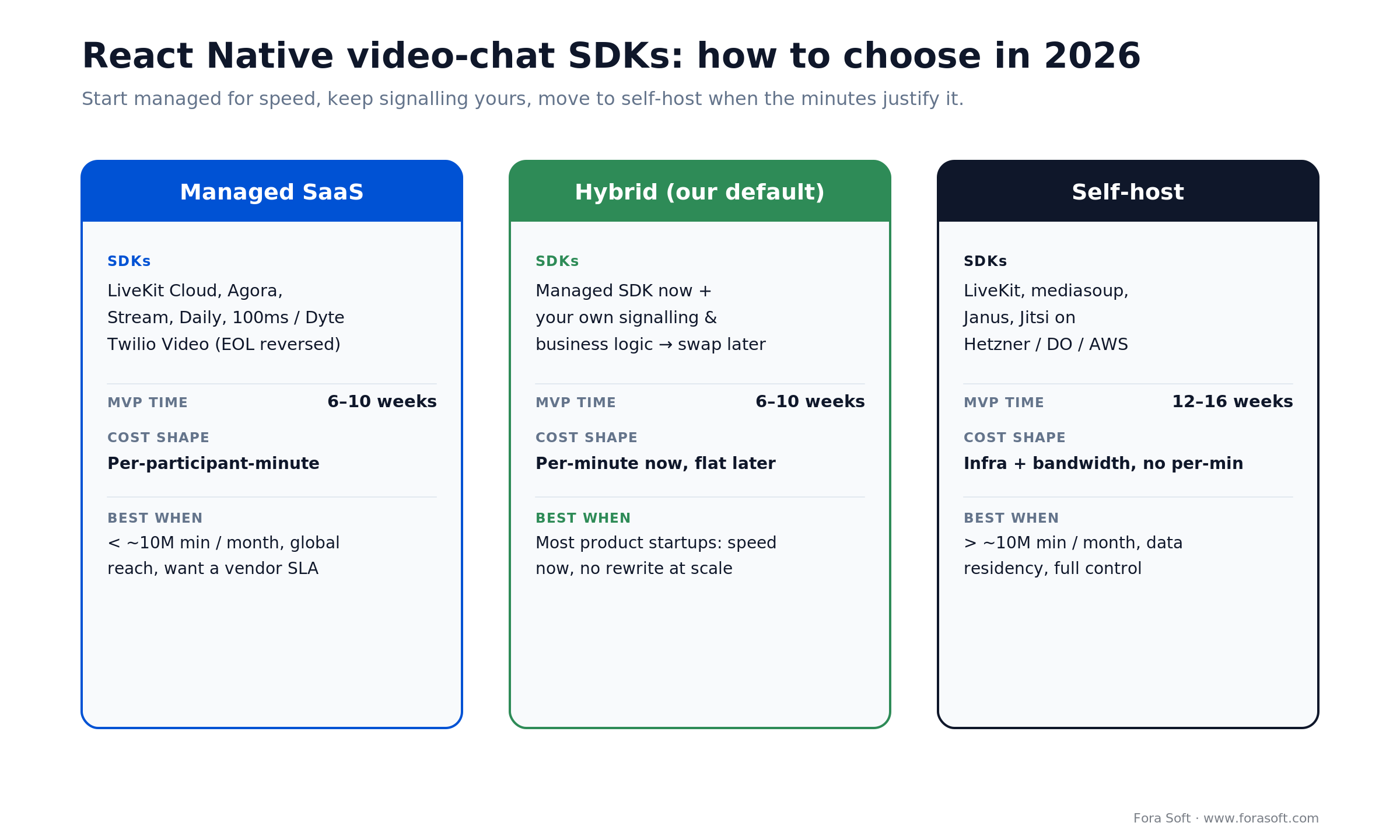
Figure 1. Start on a managed SDK for speed, keep signalling yours, and move to self-host only when the minutes justify it.
For a deeper LiveKit vs Agora cost split see our LiveKit vs Agora pricing analysis and the Agora alternatives playbook. If you’re currently on Twilio Video, the migration playbook is essential reading.
Reach for managed SaaS when: you have < 100K monthly minutes, want a 6–8 week MVP, and a per-minute bill at six figures per year is fine. Migrate to self-host once monthly minutes pass roughly 10–20M.
Architecture — P2P, SFU, MCU, or hybrid?
Every video-chat decision starts here, and React Native doesn’t change the answer — it just changes the SDK call. We have a separate full WebRTC architecture guide and P2P vs MCU vs SFU comparison. The summary: P2P is the simplest path for 1:1 calls, SFU (LiveKit, mediasoup, Janus) handles 2–50 participants per room with one upload per peer, MCU mixes streams server-side for very high participant counts or low-bandwidth clients (cheaper download per participant, higher CPU at the server), and hybrid lets you start with SFU and switch to MCU only when participant count justifies the CPU bill. For the deep engineering version, see our WebRTC architecture for production systems guide.
| Topology | Sweet spot | Strength | Where it fails |
|---|---|---|---|
| P2P | 1:1 calls, max 3 participants | Lowest latency, no server media cost | Symmetric NAT, > 3 participants, recording |
| SFU | 2–50 participants per room | Single upload per peer, simulcast, server-side recording | Mobile bandwidth limits at high participant counts |
| MCU | 100+ participants, broadcast | Single download per peer, low-bandwidth-friendly | Server CPU bill, latency, less flexibility |
| Hybrid (SFU + MCU) | Multi-mode product (calls + classes + webinars) | Right tool per call type | Two systems to operate |
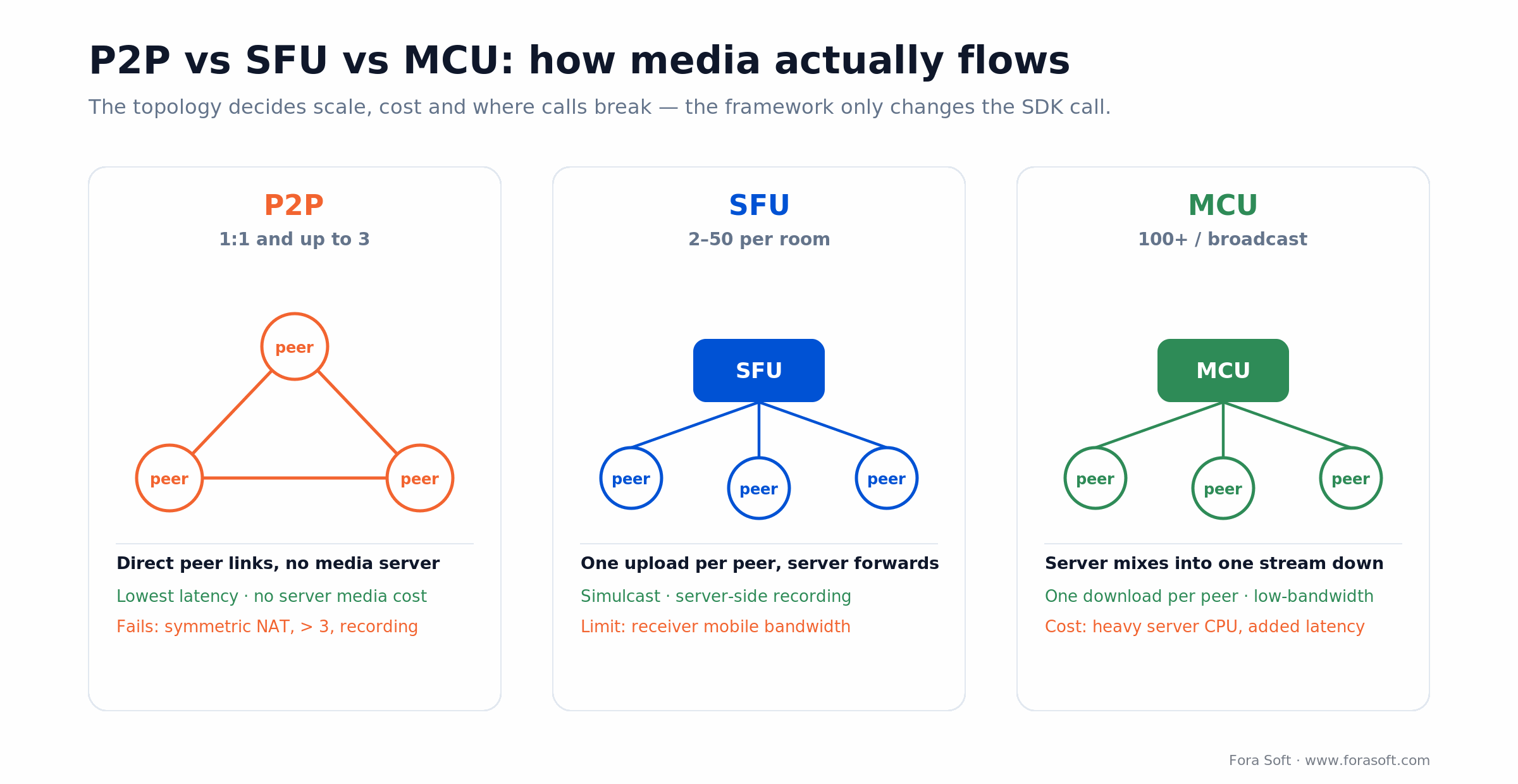
Figure 2. The topology — not the framework — decides scale, cost, and where calls break.
Rule of thumb: default to an SFU. Use P2P only for locked 1:1 calls, and MCU only when you genuinely have 100+ participants or very low-bandwidth clients. SFU-first keeps a 3-person call and a 30-person class on the same code path.
Build vs buy — the honest 2026 framing
Three credible paths and they have very different cost shapes.
1. Pure managed SaaS (LiveKit Cloud, Stream, Daily, Agora). 6–10 week MVP. You write the RN UI, the SDK does the rest. Pricing is per-participant-minute and predictable up to ~10M monthly minutes.
2. Hybrid — managed SDK now, self-host later. Same MVP shape, plus you keep all signalling and business logic in your own backend so the eventual migration to self-hosted media server is a 4–6 week swap, not a rewrite. This is what we recommend for most product startups, and the default we bring to most video conferencing development engagements.
3. Self-host from day one. Open-source LiveKit, mediasoup, Janus, or Jitsi on Hetzner / DO / AWS. 12–16 weeks to a hardened MVP, no per-minute fee, but you carry the SRE work. Justified when projected monthly minutes are very high or when data residency / privacy demands self-host.
Reference architecture for an RN video-chat MVP
A canonical 2026 stack for a hybrid-ready React Native video-chat product:
- Mobile: React Native 0.85+, TypeScript, Expo SDK 55 (or bare RN if you need custom native modules).
- Real-time media: LiveKit (Cloud now, self-host later), or Stream / Daily / Agora if their feature mix fits better. In practice that means the official
@livekit/react-nativeSDK plus itsreact-native-webrtcfork and the Expo config plugin, so you never hand-roll peer connections. - Signalling & auth: Your own Node.js / Python backend issuing room tokens (LiveKit JWT pattern), backed by Postgres + Redis.
- Push: Firebase Cloud Messaging, APNs, plus VoIP push (CallKit / ConnectionService) for incoming-call UI.
- Storage: S3-compatible blob for recordings, post-call summaries, transcripts.
- AI / transcription: Whisper / Deepgram / Speechmatics for live captions, OpenAI Realtime API or Anthropic Claude for in-call AI agents (see our Realtime API integration guide).
- Observability: Sentry, Datadog, plus WebRTC getStats() exported to Prometheus.
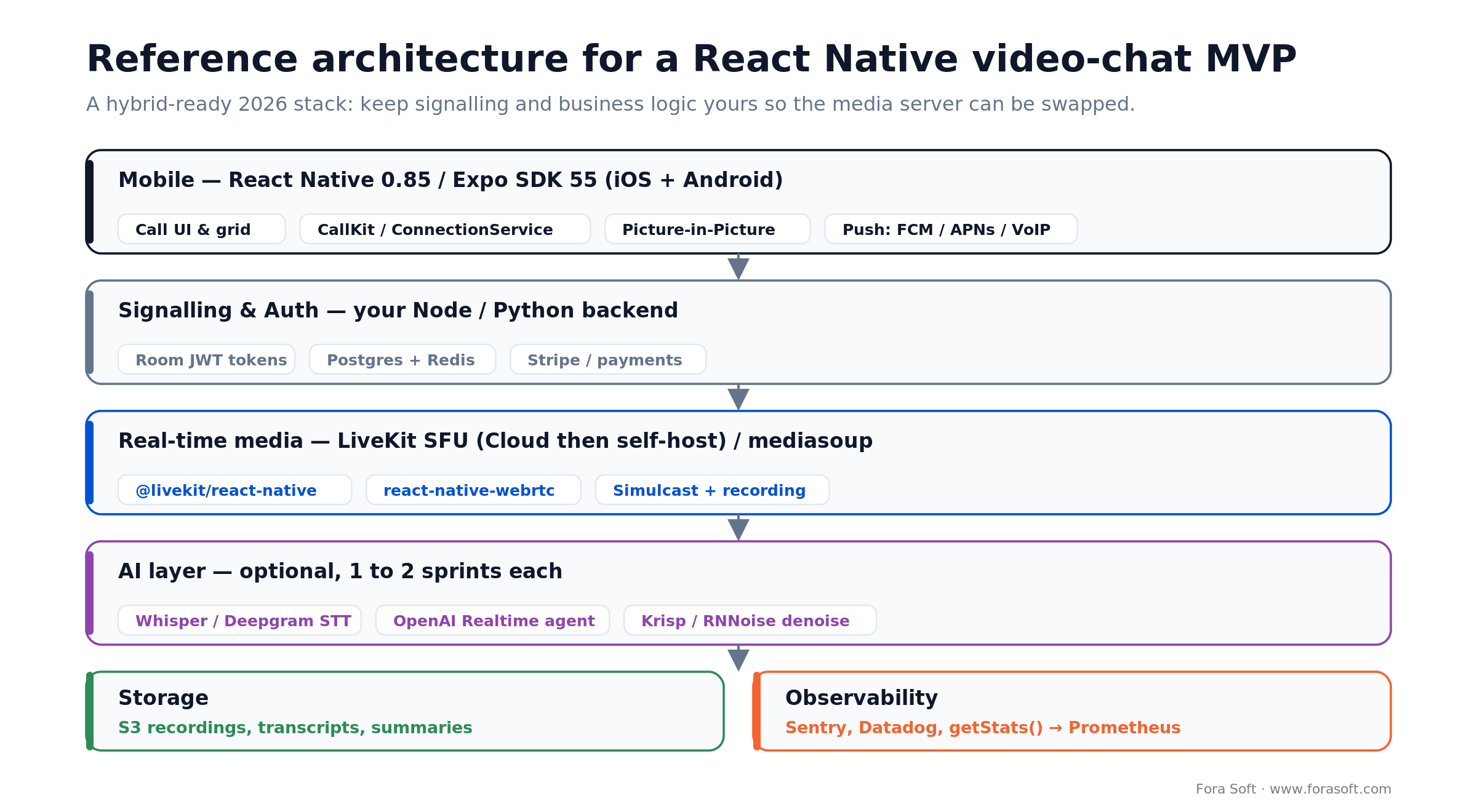
Figure 3. A hybrid-ready stack: your signalling and business logic stay yours, so the media server can be swapped later.
A minimal React Native video call, in real code
Here is the shortest honest path to a working 1:1 call on LiveKit — the managed default from the table above. Three steps: install the SDK and its WebRTC layer, register the Expo config plugin, then connect to a room and render the camera tracks. Tokens are minted by your own backend, never on the device.
1. Install the SDK, its react-native-webrtc fork, and the Expo config plugin.
npm install @livekit/react-native @livekit/react-native-webrtc livekit-client
npx expo install @livekit/react-native-expo-plugin @config-plugins/react-native-webrtc
2. Register the plugin in app.json so the native camera and microphone modules get wired in. They are not in Expo Go, so run a dev client (npx expo run:ios / run:android).
{
  "expo": {
    "plugins": [
      "@livekit/react-native-expo-plugin",
      ["@config-plugins/react-native-webrtc", {
        "cameraPermission": "$(PRODUCT_NAME) needs the camera for calls",
        "microphonePermission": "$(PRODUCT_NAME) needs the mic for calls"
      }]
    ]
  }
}
3. Connect and render. Start an audio session, wrap the call in LiveKitRoom, and render each camera track.
import { registerGlobals, AudioSession, LiveKitRoom,
         useTracks, VideoTrack, isTrackReference } from '@livekit/react-native';
import { Track } from 'livekit-client';
import { useEffect } from 'react';

registerGlobals();                       // wire WebRTC into RN's global scope

export default function CallScreen({ token }) {
  useEffect(() => {
    AudioSession.startAudioSession();
    return () => { AudioSession.stopAudioSession(); };
  }, []);

  return (
    <LiveKitRoom
      serverUrl="wss://your-project.livekit.cloud"
      token={token}                      // minted by YOUR backend, never on-device
      connect audio video>
      <Room />
    </LiveKitRoom>
  );
}

function Room() {
  const tracks = useTracks([Track.Source.Camera]);
  return tracks.map((t, i) =>
    isTrackReference(t) ? <VideoTrack key={i} trackRef={t} style={{ flex: 1 }} /> : null
  );
}
That is a working call. The parts we did not hand-roll — ICE, SRTP, simulcast, reconnection — are exactly why most teams start on an SDK instead of raw react-native-webrtc. Moving from LiveKit Cloud to self-hosted LiveKit later changes one thing: the serverUrl. Agora, Stream, and Daily follow the same shape — install, permissions, join, render — with their own component names.
Mobile considerations React Native developers underestimate
1. CallKit / ConnectionService. If your product expects calls to ring like real phone calls, you need CallKit on iOS and ConnectionService on Android. Both require platform-specific native modules; some RN SDKs (LiveKit, Stream) ship them, others don’t. Without them, a backgrounded app drops the call.
2. VoIP push. Standard FCM and APNs background pushes are not enough for incoming-call UX. iOS PushKit (VoIP) and Android high-priority FCM with foreground service are the right combo, and they have specific store-review rules.
3. Permissions and Bluetooth audio. Camera, microphone, Bluetooth, network state — all need clean prompts and graceful denials. Bluetooth audio (AirPods, headsets) routing is a swallowed source of pain on RN; verify on real devices, not the simulator.
4. Battery and thermal throttling. A 30-min 1080p call cooks a mid-range Android. Encode at 720p / 30fps by default, drop to 480p in poor conditions, and use simulcast aggressively.
5. Picture-in-picture. iOS PiP for video calls launched in iOS 14, Android PiP since 8. Worth the 1–2 sprints; users love it and it’s now table stakes.
6. Background modes & lifecycle. iOS audio background mode, Android foreground service for the duration of the call, plus a clear teardown when the user leaves. Skip this and you’ll see ghost calls, silent kills, and angry reviews.
A worked cost model
Mid-case product: a 1:1 telehealth-style RN video chat app with 50K MAU and an average user doing 4 minutes of video per month. That’s ~200K participant-minutes/month at peak.
| Line item | Managed SaaS path | Self-hosted LiveKit / mediasoup |
|---|---|---|
| RN MVP build | 8–10 week build, low-six-figure capex | 12–16 week build, mid-six-figure capex |
| Real-time media (200K min/mo) | $200–800/mo (per-min SaaS) | $300–800/mo (Hetzner AX SFU + bandwidth) |
| Recording / storage | Bundled or +$0.005/min | $50–200/mo S3 + egress |
| SRE / on-call | Vendor SLA | Small DevOps retainer or in-house |
| Break-even point vs SaaS | — | ~5–10M monthly minutes typically |
For a defensible quote on your specific product, see our software estimation playbook. We use spec-driven agentic engineering to compress the build into 8–12 weeks for the right scope.
Worked example: 50K MAU x 4 video-minutes/month = 200K participant-minutes. On a budget managed SDK at ~$0.0004/min that is about $80/month; at Agora HD ($3.99 per 1,000 min) it is roughly $800/month. A single self-hosted Hetzner SFU box runs $300–800/month at this scale regardless of minutes. Managed wins until you reach millions of minutes a month.
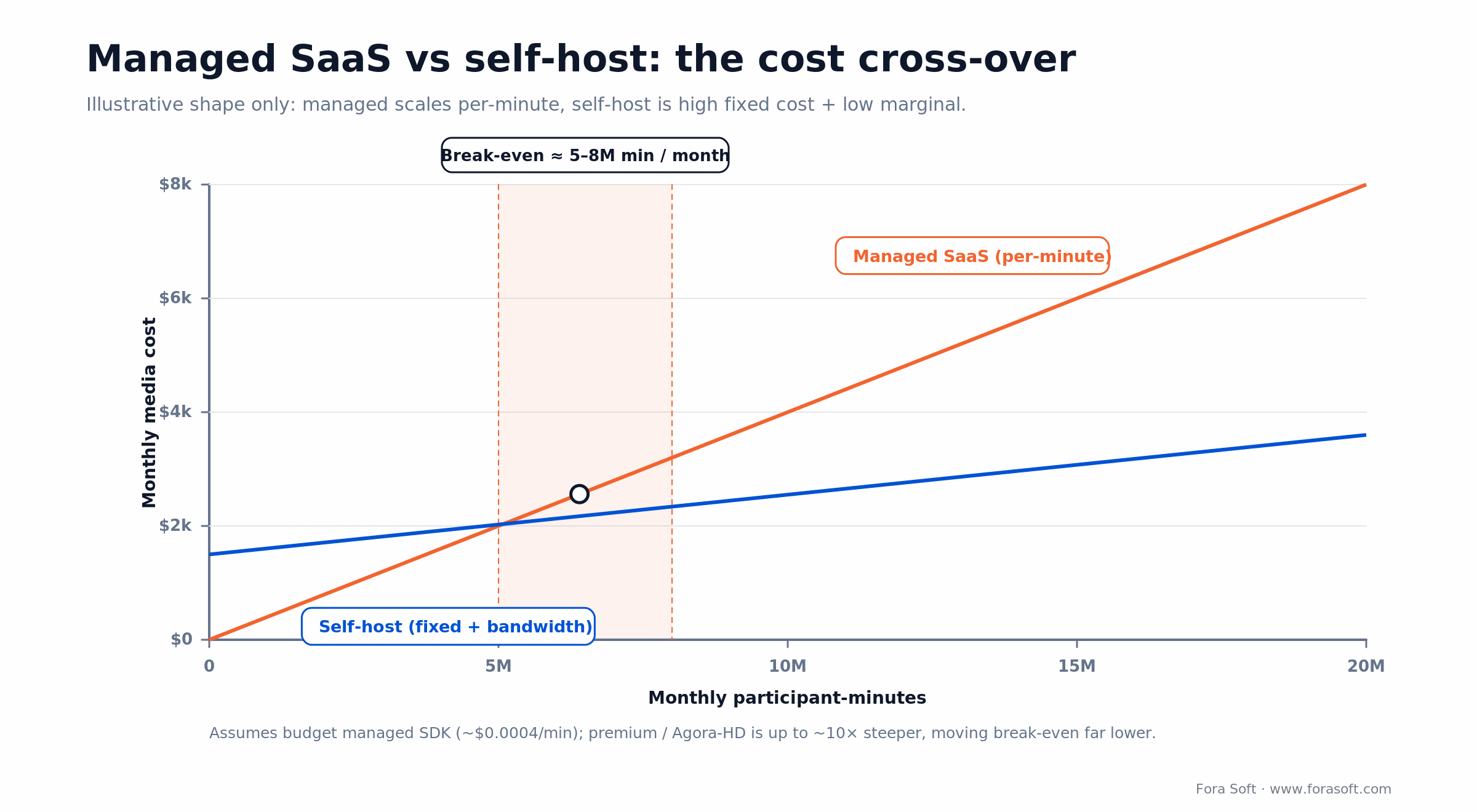
Figure 4. Managed cost scales per minute; self-host is high fixed cost plus low marginal. Break-even lands in the millions of minutes.
Worried about an Agora bill at scale?
We design hybrid-ready video chat: managed SDK now, swap to self-host LiveKit or mediasoup when usage justifies it. Tell us your numbers and we’ll model the inflection point.
2026 AI features your video chat is expected to ship
A bare 1:1 video chat is not enough in 2026. Buyers and reviewers expect at least a subset of: live captions, real-time translation, post-call summary, action-item extraction, sentiment / engagement signal, AI noise suppression, virtual backgrounds, and an AI agent that can join the call. The good news: most are 1–2 sprint additions on top of LiveKit / Stream / Daily, leaning on Whisper, Deepgram, OpenAI Realtime, Anthropic Claude, or Krisp / RNNoise.
If you’re thinking AI agents specifically — voice/vision agents that join calls and act — our LiveKit AI agent development guide walks through the architecture and SDK choices.
One-sprint wins in 2026: live captions, post-call summaries, and AI noise suppression each sit on top of LiveKit, Stream, or Daily via Whisper, Deepgram, or Krisp. Buyers now expect at least a couple of these out of the box.
Quality & testing — how we keep call drops near zero
Real-time video has the most unforgiving quality bar in mobile. Three lines of defence we ship on every build:
1. getStats() telemetry. Round-trip-time, jitter, packet loss, frame rate, resolution, freeze events — all exported to Prometheus or Datadog so an SRE can see a degradation before users complain. We wrote a separate piece on testing WebRTC stream quality.
2. Synthetic clients. Headless RN clients running scripted scenarios (KITE, Loadero) hammering staging 24/7 from multiple regions catch regressions long before App Store releases.
3. Real-device farms. AWS Device Farm, BrowserStack, plus a small in-house Android shelf for the 5 most common SoCs in your target market — not just “an iPhone 15 Pro.”
Security and compliance for video chat in 2026
Video chat lives at the intersection of GDPR, HIPAA, COPPA, and the EU AI Act. Concretely: SRTP everywhere (any modern WebRTC SDK), end-to-end encryption (E2EE) for premium tiers (LiveKit and others now ship a frame-level E2EE option), a lawful basis under GDPR Article 6 for processing biometric video, BAAs with your media vendor for HIPAA in the US, FERPA / COPPA flows for under-13 if your audience is education, and a data-deletion endpoint that actually works.
The mistake that gets builds rejected: shipping call recording without a platform-correct consent screen. iOS shows the orange recording dot, Android the green pill. Skip the consent UI and the cheapest outcome is an App Store rejection; the most expensive is a regulator letter.
If you ship audio recording, make sure your consent UI is platform-correct (iOS shows the orange dot; Android shows the green pill; both have notification expectations). The cheapest version of getting this wrong is a rejected App Store build; the most expensive is a regulator letter.
A decision framework — pick your RN video chat stack in five questions
Q1. What’s your peak room size? 1:1 / small group (≤ 10) → SaaS SFU is fine. Classroom / cohort (10–50) → SFU with simulcast + dynamic layer selection. Webinar (100+) → MCU or hybrid.
Q2. Where are your users? Concentrated in one region → self-host on Hetzner AX boxes is brilliantly cheap. Globally distributed → managed SaaS (Agora, LiveKit Cloud) wins on edge POPs.
Q3. Do you need recording / transcripts / AI features? Yes → pick an SDK that ships those (LiveKit, Stream, Daily) rather than rolling your own.
Q4. What’s your projected monthly minutes inside 18 months? < 1M → SaaS forever. 1–10M → SaaS, plan a self-host migration. > 10M → design hybrid-ready or self-host from day one.
Q5. Compliance regime? HIPAA → vendor with BAA. GDPR with EU residency → EU regions only or self-host EU. Education with under-13 → FERPA / COPPA + EU AI Act high-risk processes from day one.
Mini case — what RN video chat looks like in production
Situation. A typical brief: founders need a B2C consultation app on iOS and Android, with 1:1 video chat, scheduled bookings, payments, in-call chat, and call recording. Three-month launch window, 50K target MAU in year one.
What we’d ship. Two-week discovery, four weeks of UX/UI in parallel with backend scaffolding, then 8 weeks of build on React Native 0.85 with LiveKit Cloud as the media SDK, our own Node.js + Postgres signalling, Stripe for payments, FCM/APNs + VoIP push for incoming-call UI, and S3 + Daily Egress for recordings. CallKit/ConnectionService and PiP shipped from day one. Beta on TestFlight + Play internal track at week 12, public release at week 14.
Outcome. A live app on both stores in 12–14 weeks with a hybrid-ready architecture — the LiveKit migration to self-host is a 4-week swap if and when traffic justifies it. Want a similar plan? Book a scoping call.
Five pitfalls we see kill RN video-chat builds
1. Skipping CallKit / ConnectionService. A backgrounded app drops the call. Fix on day one.
2. Testing only on flagship devices. A Pixel 8 Pro will smile at 1080p; a $150 Android in Lagos won’t. Use a real-device farm and a degraded-network simulator.
3. Ignoring Bluetooth audio routing. AirPods, Pixel Buds, and car stereos cause weird routing bugs that the simulator never reveals. Manual QA on real headsets is non-negotiable.
4. Per-minute pricing surprise. Marketing campaign → 10× minutes → bill spike. Build cost dashboards, set quota alerts, model the inflection to self-host before you need it.
5. Vendor lock-in to a closed SDK. Closed SaaS feels great until pricing changes or features get deprecated. Keep your business logic and signalling in your own backend so swapping SDKs is a 4–6 week project, not a rewrite.
KPIs — what to measure once you launch
Quality KPIs. Connection success rate ≥ 98%. Time-to-first-frame < 2 seconds. P95 round-trip-time < 200ms. Freeze events < 0.5% of session time. MOS ≥ 4.0 audio-only.
Business KPIs. Push-opt-in ≥ 60%. D7 retention ≥ 25% on B2C. Activation (first call completed) < 90 seconds from signup. NPS ≥ 40 at month 3.
Reliability KPIs. Crash-free sessions ≥ 99.5%. Backend P95 latency < 300ms. Push delivery ≥ 95%. SDK SLA: vendor uptime ≥ 99.9% or self-host equivalent.
When NOT to use React Native for video chat
React Native is the right answer for most product startups. It’s the wrong answer when your UX is ARKit-heavy, when you need 120Hz scrolling video grids on flagship iOS, or when you have a deeply native team already shipping in Swift / Kotlin who’d need to learn JS. For animation-heavy video products (filters, AR overlays, custom Metal shaders), native iOS / Android beats RN by a comfortable margin. See our native vs cross-platform comparison and the Flutter pros and cons if you want a side-by-side.
Want a senior team that’s shipped video chat at scale?
Two decades of real-time video. ProVideoMeeting, BrainCert, and 250+ products since 2005. Tell us your scope and we’ll come back with a 12-week MVP plan, a stack, and a defensible budget.
Alternatives we’d also consider
We don’t pretend React Native is the universal answer. Flutter is now genuinely competitive for video products, especially when you also want a desktop or web companion. Native iOS + Android in parallel still wins on premium consumer apps with complex animations or AR. And for internal tools or enterprise dashboards where mobile is a nice-to-have, a responsive web app with embedded WebRTC may be the cheapest possible answer. The right call is usually clear after one discovery session.
FAQ
Is React Native fast enough for video chat in 2026?
Yes for almost every consumer and B2B product. The New Architecture closed most of the bridging penalty; the heavy lifting (encode, decode, SFU forwarding) happens in native SDK code regardless of which framework you use. Cold-start is the only place RN noticeably trails native, and users don’t blame the cold-start on you for a video product.
Should I pick LiveKit, Agora, or Stream?
If you want an open-core path with a clean migration to self-host: LiveKit. If you need 200-country edge POPs and you’ve negotiated pricing: Agora. If you want the best DX out of the closed-SaaS bunch: Stream or Daily. We can scope a head-to-head on your specific traffic shape in a 30-minute call.
How long does a React Native video chat MVP take?
8–12 weeks for a focused MVP on a managed SDK (auth, scheduled or instant 1:1 calls, push, payments, recording, basic chat). Self-host adds 4–6 weeks. AI features (live captions, summaries, agents) add 1–3 sprints each.
Can React Native handle group calls (10+ participants)?
Yes, on an SFU with simulcast + dynamic layer selection. The constraints are mobile bandwidth (typically the receiver, not the sender) and battery / thermals. We routinely ship 10–25-participant rooms on RN. For 50+ you want adaptive layouts that downsample non-active speakers, and for 100+ you’re probably picking MCU or hybrid.
What about recording, transcripts, and live translation?
All three are first-class on LiveKit, Stream, and Daily. Whisper or Deepgram for transcripts, OpenAI / Anthropic / DeepL for translation, an SDK-side egress worker or a custom recorder for video. Budget 1–2 sprints per feature.
Is Twilio Programmable Video still being shut down?
Less than the headlines suggest. Twilio announced an end-of-life for Programmable Video, then reversed it in October 2024 — Video is a standalone product again and existing apps need no action. The real cost is the whiplash: two EOL U-turns in two years. If you’re starting fresh in 2026 we’d still pick an SDK with a clearer roadmap, and if you keep your business logic clean of Twilio specifics, a later swap to LiveKit or Daily is a 4–6 week job. Our Twilio Video alternatives guide walks through the playbook.
Native iOS / Android, Flutter, or React Native — which is best for video chat?
Native if you have a Swift / Kotlin team already and you need maximum animation/AR fidelity. Flutter or React Native if you want one codebase, faster ship, and a smaller team. We’ve shipped excellent video chat on all three; pick the one your team can hire and grow.
Who owns the source code and the SDK contracts?
You should — we ship every project as work made for hire with all IP assigned to the client. Vendor SDK contracts (LiveKit, Agora, Stream) belong to you, not us. The GitHub org is yours from week one.
What to Read Next
Architecture
P2P, SFU, MCU, Hybrid — Which Fits Your 2026 Roadmap?
A buyer-friendly tour of WebRTC topologies and the trade-offs they each make.
Conferencing
Custom Video Conferencing Platform in 2026: Advanced Features, Architecture, Cost Model
Advanced features, architecture and cost model for a custom conferencing platform.
Pricing
LiveKit vs Agora — Cost Analysis
When LiveKit’s open-core economics actually beat Agora’s edge POPs.
AI agents
LiveKit AI Agent Development — Complete Guide
How to ship a voice/vision AI agent that joins your video chat as a first-class participant.
Testing
How to Test WebRTC Stream Quality
getStats, MOS, KITE, Loadero — metrics and thresholds we run on every build.
Ready to ship a React Native video chat product?
React Native is a credible, modern stack for video chat in 2026 because the SDK ecosystem is mature, the architecture choices are well-mapped, and the team economics make hiring and scaling easier than dual-native. The decisions that actually matter are P2P/SFU/MCU/hybrid, managed-vs-self-host, CallKit/ConnectionService, and a clean signalling layer that lets you swap the SDK without a rewrite. Get those right and your call drops will be near zero, your bills will be predictable, and your reviews will mention the product, not the framework.
If you’d like a senior team that has built video chat at scale — ProVideoMeeting, BrainCert, and many more — to walk through the decision against your specific scope, that’s exactly what our 30-minute scoping call is for.
Ready to scope your React Native video chat MVP?
Tell us your audience, peak concurrent calls, and target geography. Inside 48 hours we’ll send back a stack recommendation, a 12-week MVP plan, and a defensible budget — free, no obligation.

