

Key takeaways
• A secure video communication app is a real-time video product that encrypts media in motion and at rest, authenticates every participant, enforces role-based access at every API surface, and writes an immutable audit trail. In 2026 that means WebRTC + DTLS-SRTP transport, optional end-to-end encryption via the Encoded Transform API, OAuth 2.0 / OIDC identity, least-privilege RBAC, and hardened SDKs. It is a layered architecture problem, not a feature: miss any layer and you ship a documented vulnerability.
• HIPAA, GDPR, FERPA, BIPA and the EU AI Act each shape the data plane differently. A vendor who can’t map your jurisdiction list to a documented compliance posture will leak data, and your audit will catch it on day 60.
• The 2026 default stack is LiveKit OSS or Daily on the wire, Telnyx for SIP/PSTN, and OpenAI Realtime or LiveKit Agents for AI. Twilio reversed its 2024 shutdown, and Twilio Video stays a standalone product, but single-vendor risk is real, so keep yourself portable either way.
• Custom secure video apps run $60–100k for a single-platform MVP (Fora Soft 2026 ranges), plus $2–4k/month to run a non-regulated media plane and $4–6k/month once HIPAA controls, WORM audit storage and on-call are in scope. At 2026 list prices, SaaS conferencing is cheaper until roughly 1.1M participant-min/month on run-rate alone, so custom is a strategic purchase, not a savings one.
• Use this as a buyer’s checklist. Real architecture, real numbers, the CirrusMED HIPAA telehealth case, and a five-question framework for picking a partner who actually ships secure video.
If you’re building a secure video communication app in 2026 — for telehealth, financial services, defence, regulated SaaS, secure messaging, or legal proceedings such as remote depositions — security is the architecture, not a feature you bolt on at the end. The product either inherits a defensible posture from day one or fails an audit later. This is the briefing we hand new clients on day one of a secure video engagement.
We’re Fora Soft, a software development company that has shipped 250+ video and audio projects since 2005. Our production references include CirrusMED (HIPAA-grade telehealth), ProVideoMeeting (enterprise conferencing with in-call legally valid e-signatures, SMS and photo identity verification, and per-document audit logs), BrainCert (LMS classroom video with DRM-protected recordings and proctored exams), and VALT (recorded-video review for 770+ US organizations and 50,000+ users, with per-role access control and HIPAA-grade handling). The numbers and verdicts below come from shipped client invoices and audit-passed deployments, not a vendor brochure.
Why Fora Soft wrote this secure video app playbook
CirrusMED is a HIPAA-compliant telehealth platform we’ve run in production for years. ProVideoMeeting is a business-grade conferencing product built around legally valid in-call e-signatures, SMS and photo identity verification, and a per-document audit log. We’ve audited dozens of secure video deployments across iOS, Android, Web, and cross-platform stacks. The lessons below come from the regulatory paperwork that sharpens an architecture team and the breach near-misses that focus the mind.
Companion reads we maintain on this surface: the secure cloud video management playbook, our WebRTC architecture guide, the Twilio Video alternatives comparison, and the OpenAI Realtime + WebRTC + SIP integration guide. For the production-grade fundamentals, our WebRTC architecture for production systems course goes deeper on the media plane.
Need a secure video partner with HIPAA-grade pedigree?
Tell us your jurisdiction list, platform mix, and feature scope. We’ll quote a fixed range, document the compliance posture, and walk you through CirrusMED-class architecture in 30 minutes.
What “secure video communication” means in 2026
A secure video communication app does five things at once. It encrypts every byte in motion (DTLS-SRTP for media, TLS 1.3 for signaling). It encrypts media at rest (AES-256-GCM) when recordings are stored. It identifies users with strong identity (OAuth 2.0 / OIDC, MFA, SAML SSO for enterprise). It enforces role-based access control at every API surface. And it produces an immutable audit trail of every join, recording, export, and configuration change. Skip any one and the other four don’t save you.
The threat is not hypothetical. In July 2026, Zoom patched CVE-2026-53412, a 9.8-severity account-takeover flaw in Zoom Workplace for Windows, alongside three privilege-escalation bugs. Mature vendors ship CVEs; the question is whether your architecture contains the blast radius when one lands. Beyond the five fundamentals, the regulated regimes (HIPAA, GDPR, FERPA, BIPA, EU AI Act) layer on top, each with its own retention, consent, and data-residency rules. The architecture accommodates all of them from the start, or it doesn’t.
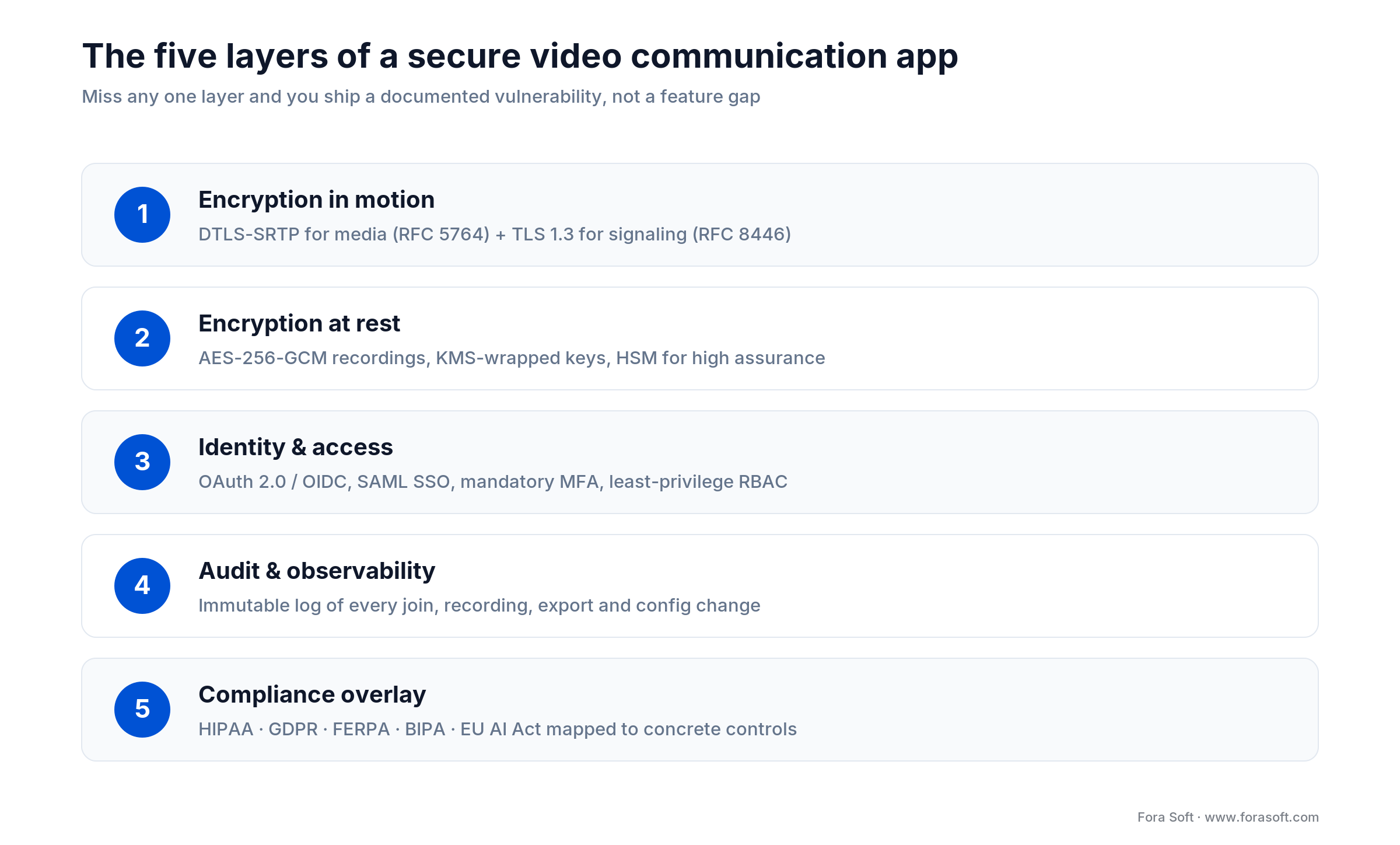
Figure 1. The five layers every secure video app has to implement — and audit for.
Reach for end-to-end encryption (E2EE) when: the threat model includes the cloud provider, the SaaS vendor, or any infrastructure intermediary. Standard DTLS-SRTP encrypts hop-by-hop, so the SFU sees decrypted frames; E2EE via the Encoded Transform API keeps the media encrypted client-to-client.
Secure video apps in 2026: what to use off the shelf
Before you build anything: if you need secure video for your own team rather than inside your own product, buy it. Signal and Wire are end-to-end encrypted by default but neither publishes a HIPAA BAA; Zoom, Teams and Google Meet are encrypted in transit by default and will sign a BAA on the right plan. The table compares the six that regulated buyers actually shortlist in 2026, and the last column is the one vendors leave out. The short answer if you only want one: for personal use the most secure video app in 2026 is Signal, and for a regulated organisation that needs an admin console there is no off-the-shelf app that is both end-to-end encrypted by default and BAA-backed — which is the gap this guide exists to close.
| App | Encryption model (2026) | HIPAA BAA | Cost | Where it breaks |
|---|---|---|---|---|
| Signal | E2EE by default, always on. PQXDH handshake (X25519 + Kyber-1024) since 2023, plus the Sparse Post Quantum Ratchet (ML-KEM-768) added in 2025 | No BAA, no admin console | Free, open source | No central admin, no retention policy, no audit export. Group calls cap at 75. Unusable anywhere compliance needs an administrator |
| E2EE by default on calls and messages | No BAA | Free | Consumer account model, no organisational control, no audit trail. Metadata sits with Meta. Not defensible in a regulated audit | |
| Wire | E2EE by default, built on MLS (RFC 9420) | No published BAA. ISO 27001 and ISO 27701, GDPR, EU data residency | Per-seat business pricing | Small ecosystem, limited integrations. E2EE by default means no server-side recording or transcription — retention runs through a legal-hold endpoint added to the conversation, which is a different compliance model from cloud recording and one your auditor will want explained |
| Google Meet (Workspace) | Encrypted in transit by default; client-side encryption only on Enterprise Plus, Frontline Plus, Education Standard and Education Plus | BAA available to any paid Workspace or Cloud Identity admin, with Meet on the Included Functionality list — never on consumer or legacy-free accounts | Bundled with Workspace seats | The BAA covers the service list, not your configuration. A consumer Gmail account already on the invite joins with no prompt at all, which is how a clinical call quietly leaves the posture |
| Microsoft Teams | Encrypted in transit by default. E2EE covers 1:1 VoIP calls only (admin-enabled, off by default, both parties must opt in) and scheduled meetings on Teams Premium | BAA via Microsoft | Bundled with M365 seats | Group meetings are not end-to-end encrypted on the standard path. If your threat model names the cloud provider, this does not clear it |
| Zoom Workplace | AES-256-GCM in transit by default; optional E2EE on paid plans and the free tier, up to 1,000 participants, and post-quantum E2EE negotiates automatically when every client is on 6.0.10+ | HIPAA-eligible plan with BAA | Per-host subscription | Turning E2EE on disables cloud recording, live transcription, polling, meeting chat before and after, live streaming, Zoom Apps, Notes, Whiteboard and every Zoom AI feature — and nobody can dial in by phone or SIP/H.323 on any tier, because a PSTN gateway cannot be an end-to-end endpoint. Breakout rooms do still work, each with its own key. Ships CVEs like any large target: see CVE-2026-53412 above |
Read the pattern in that last column. The consumer-grade options are strong on cryptography and useless on governance; the enterprise suites are strong on governance and weak on the cryptography exactly where it counts. Nothing on the list gives you both plus your own brand, your own key custody, and an AI layer you control. If one of these fits, stop here and buy it — we will tell you so on a call. The rest of this guide is for the case where none of them fits, which is the case whenever the video is the product, the compliance posture has to be yours rather than your vendor’s, or you need features nobody sells off the shelf.
Encryption layers: DTLS-SRTP, E2EE, AES-256
WebRTC ships DTLS-SRTP encryption by default for media transport, with the key exchange defined in RFC 5764. That protects each hop: client to SFU, SFU to recipient. The catch is that the SFU decrypts media to route and mix it, so for a multiparty call the server sees plaintext frames. If the SFU is inside your trust boundary, that’s fine. If it isn’t — banking, executive comms, anything where the cloud provider is part of the threat model, you layer end-to-end encryption on top.
True E2EE over an SFU is done with the WebRTC Encoded Transform API (the interface people still call Insertable Streams). It exposes a hook after the encoder and before the packetizer: the sender encrypts each frame, the receiver decrypts it, and the SFU forwards ciphertext it can’t read. The framing for this is SFrame, which started at Google for Duo and is now RFC 9605 (Standards Track, August 2024).
Now the honest trade-off, which is much bigger than the one usually quoted. Losing server-side mixing is the least of it. If the SFU only sees ciphertext, it cannot mix audio, compose MCU-style layouts, record in the cloud, transcribe, summarise, run a voice agent, or bridge to SIP/PSTN. Every one of those is a feature recommended elsewhere in this article. Switching on E2EE means moving recording and transcription to the client, or accepting that those features are off. Decide it in week one, not month six, because retrofitting the decision means rewriting the media path and the AI layer together.
Two more things nobody puts in the datasheet. First, RFC 9605 deliberately leaves key management out of scope, so the hard part is yours: distributing and rotating media keys without letting your own signaling server become the man in the middle. MLS (RFC 9420) is the sane base for group key agreement, and a client-verifiable safety number is what turns “E2EE” from a marketing line into a property you can defend in an audit. Second, the SFU still sees metadata: who joined, when, for how long, and frame sizes, which leak more about a call than people expect. Most regulated builds accept plain DTLS-SRTP; reach for SFrame when the customer’s threat model names the vendor and the feature list can survive it.
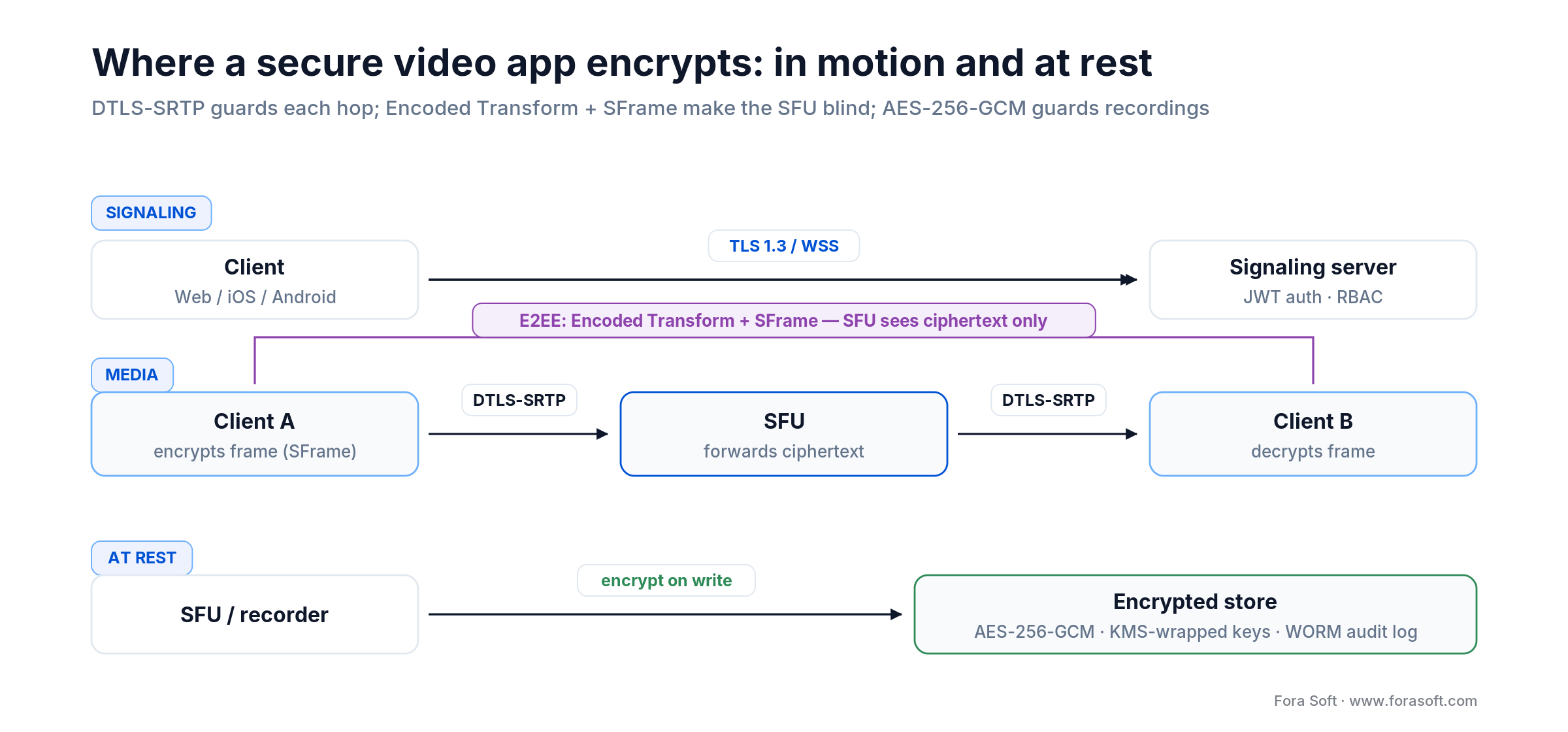
Figure 2. Where a secure video app encrypts: signaling, media hop-by-hop, media end-to-end, and at rest.
For stored recordings: AES-256-GCM, an AEAD cipher that authenticates as it encrypts and avoids the CBC padding-oracle class of bugs. Wrap data keys with a KMS master key (envelope encryption), and back the master key with an HSM for high-assurance scenarios. Document a key-rotation schedule per regulatory regime, watermark exports for chain-of-custody, and issue signed playback URLs that expire. One 2026 note for regulated buyers: FIPS 140-2 sunsets on September 21, 2026, when NIST moves those certificates to Historical, so if you need validated crypto, specify FIPS 140-3 modules.
For signaling: TLS 1.3 (RFC 8446) with strong cipher suites (AES-GCM, ChaCha20-Poly1305), HSTS, and certificate pinning on mobile clients. The signaling channel is not encrypted for free; you have to run it over WSS. For chat sidebars that need message E2EE, a Signal-style stack or MLS (RFC 9420) for group keys is the right base. Write PQXDH into the spec, not X3DH. Signal replaced the handshake with a hybrid X25519 + Kyber-1024 exchange in September 2023, and harvest-now-decrypt-later is the question a 2026 security review will ask about long-lived recordings.
Authentication, identity, and RBAC
OAuth 2.0 / OIDC is the default for consumer apps; SAML 2.0 SSO for enterprise. MFA is mandatory across both — TOTP, WebAuthn / passkeys, and hardware tokens (YubiKey) for high-assurance roles. Passwordless flows (magic-link, passkey-only) work where the threat model permits. The identity layer is where NIST’s Zero Trust (SP 800-207) earns its keep: no implicit trust by network location, every request authenticated and authorized.
RBAC must follow least privilege. Every API surface checks role plus resource ownership. Tokens are scoped narrowly, refresh tokens rotate, and session revocation is immediate on logout. Here’s the pattern we see fail most often: not a crypto flaw, but an over-permissive recording-export endpoint that skips the ownership check. Get that one endpoint wrong and the strongest encryption in the world doesn’t matter.
Compliance: HIPAA, GDPR, FERPA, BIPA, EU AI Act
HIPAA. Telehealth video is PHI. Actually required today: a signed BAA with every vendor that touches PHI, technical safeguards per 45 CFR §164.312, breach notification within 60 days, and six-year retention of your compliance documentation (§164.316(b)(2)(i)). That six-year figure is a paperwork rule, not an audit-log rule, and half the RFPs we read get it wrong. Encryption is the part nobody says out loud: under the Security Rule as it stands in 2026, encryption at rest and in transit are addressable (§164.312(a)(2)(iv) and (e)(2)(ii)), not required: you may substitute an equivalent safeguard if you document why. Encrypt anyway. The December 2024 NPRM, published January 6, 2025, deletes the addressable category and mandates encryption, MFA and asset inventory; it is still not final, OMB’s agenda now points past 2026, and when it lands you get 60 days to effective date plus 180 more to compliance. Build to the proposed rule now and that transition costs you nothing. Default to AWS HIPAA-eligible services and a written architecture review before code starts. Encryption alone is not compliance; without the BAA, you’re exposed no matter how good the crypto is.
Reach for a documented compliance posture review when: the deployment touches any of HIPAA, GDPR, FERPA, BIPA, or the EU AI Act. A vendor who treats compliance as a checkbox list produces a system that fails audit on day 60.
GDPR. Video of identifiable EU residents is personal data. Document a lawful basis, run a Data Protection Impact Assessment for high-risk processing, and cover cross-border transfers with Standard Contractual Clauses or adequacy. Breach notice to the supervisory authority is due within 72 hours (Art. 33). EU regulators push for EU-region cloud and short default retention.
FERPA. The first question is whether the recording is an “education record” at all. A graded lecture capture usually is, an ad-hoc advising call usually isn’t. If it is, rights sit with the parent until the student becomes an “eligible student,” which happens at 18 or on enrolment in a postsecondary institution at any age (34 CFR §99.3). Build to the age cutoff alone and you will get a dual-enrolled 16-year-old wrong. You owe a record of each disclosure (§99.32); encrypted access logs are good engineering but not a FERPA mandate, so don’t let a vendor sell them to you as one. COPPA adds verifiable parental consent for under-13s, and the amended COPPA Rule took effect June 23, 2025 with full compliance due April 22, 2026.
BIPA (Illinois). Any biometric feature (face ID, voiceprint, biometric verification) requires opt-in written consent and a published retention schedule before you collect. BIPA carries liquidated damages of $1,000 per negligent violation and $5,000 per reckless or intentional one, or actual damages if those are higher. The per-scan multiplier that made BIPA terrifying is gone: SB 2979 (P.A. 103-0769), signed August 2, 2024, makes repeated collection of the same identifier from the same person by the same method a single violation with a single recovery, overriding Cothron v. White Castle. The Seventh Circuit held in April 2026 (Clay v. Union Pacific) that the amendment applies retroactively to pending cases. So exposure is now per-plaintiff, not per-scan. If your compliance memo still quotes per-scan damages, it is two years out of date, and a class action at $1,000 a head is still enough to kill a casual “face-scan” feature.
EU AI Act. Read the prohibition before you panic. Article 5(1)(h) bans real-time remote biometric identification in publicly accessible spaces for law-enforcement purposes: five cumulative conditions, one of which is that the user is law enforcement. A commercial video product almost never falls under the ban; a face-recognition feature lands in Annex III high-risk instead, which means conformity assessment and logging rather than a red line. Getting this backwards is the single most common mistake we see in vendor compliance decks. On penalties: the Article 99 regime has been enforceable since August 2, 2025, and the top tier (up to €35M or 7% of worldwide turnover, whichever is higher) attaches to the Article 5 prohibitions that have applied since February 2, 2025. High-risk and transparency breaches sit one tier down at €15M or 3%; SMEs pay the lower of the two figures, not the higher. The Digital Omnibus signed on July 8, 2026 pushed the high-risk Annex III obligations (which cover most biometric and emotion-AI systems) back to December 2, 2027, but the Article 50 transparency duties (labeling AI-generated media, disclosing bots) still apply from August 2026, with a carve-out to December 2, 2026 for machine-readable marking on systems already placed on the market before August 2, 2026. Build the human-oversight and logging hooks now; the deadline moved, the direction didn’t.
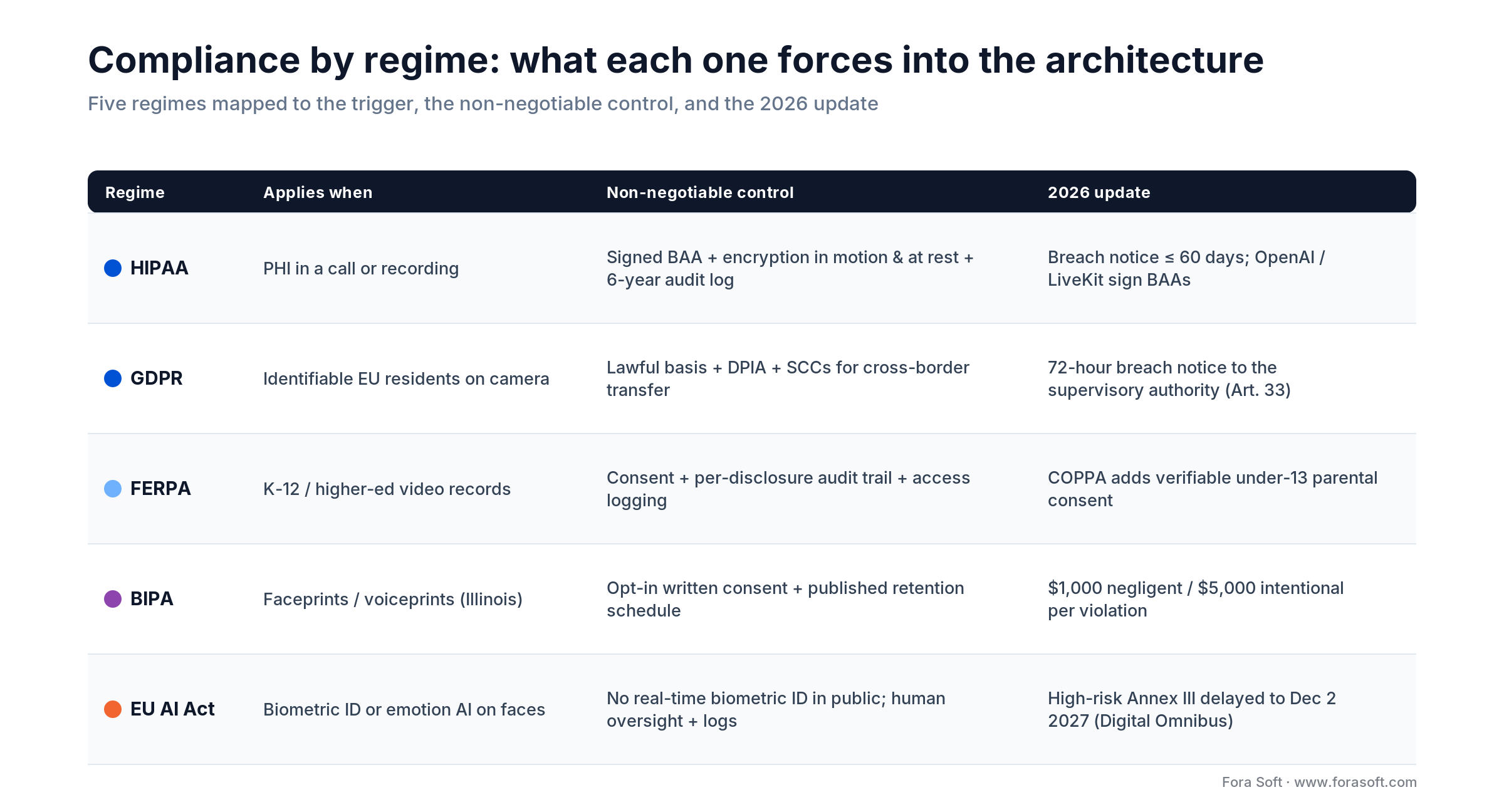
Figure 3. Each regime forces a specific control into the architecture — with its 2026 update.
Reference architecture for a secure video app
The architecture below is the same shape we run for CirrusMED telehealth and ProVideoMeeting conferencing. It scales from 50 concurrent calls to 5,000 with predictable cost, and every tier has a security job.
Client tier. Web (React) and mobile (Swift, Kotlin, Flutter, React Native) clients with hardened SDKs, certificate pinning, local secure storage for refresh tokens, biometric sign-in, and Encoded Transform E2EE where required.
Signaling and access. TLS 1.3 WSS signaling, HSTS, JWT-based auth, and RBAC enforcement on every call. LiveKit OSS or Daily handle the SFU plumbing so you don’t reinvent it.
Media plane. An SFU (LiveKit, Janus, Pion, mediasoup) on Hetzner AX-class hardware or HIPAA-eligible cloud (AWS, GCP). DTLS-SRTP by default; E2EE via Encoded Transform when the threat model demands it. TURN servers sit behind authentication. Security aside, this tier is where your latency number is actually won or lost: simulcast or SVC (AV1 or VP9) so a weak receiver downgrades instead of freezing the room, sane bandwidth estimation, a jitter buffer tuned for conversation rather than playback, and cascaded SFUs once participants span continents. Budget for TURN relay traffic too, because roughly 10–20% of sessions fall back to relay on corporate networks, and relayed minutes cost real egress money that per-minute SaaS pricing hides from you.
Data and integration. Encrypted recordings on S3-compatible object storage (MinIO, AWS S3) with KMS-managed keys and lifecycle policies for retention; an immutable audit log on dedicated WORM storage; a SIP/PSTN bridge via Telnyx for dial-in; AI features via OpenAI Realtime and LiveKit Agents on the live path and Whisper for batch post-processing; EHR integration over FHIR for telehealth.
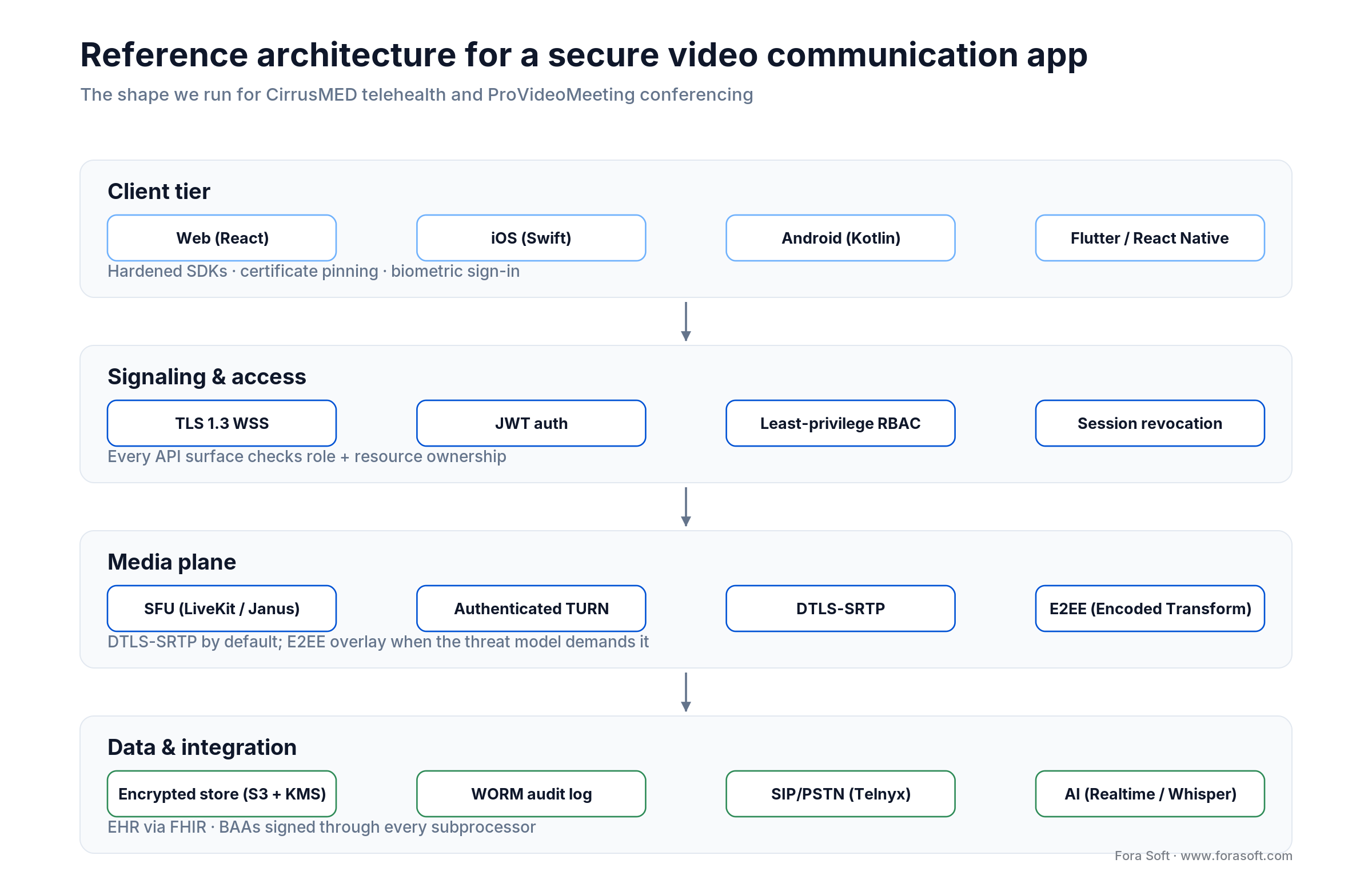
Figure 4. Reference architecture — the shape behind CirrusMED and ProVideoMeeting.
Want this architecture diagrammed against your scope?
Send us your platform list, jurisdictions, and integration requirements. We’ll walk through the security controls and compliance posture and quote a fixed-range estimate in 30 minutes.
Mobile: Android, iOS, and cross-platform
Android. Use the official WebRTC Android library or the LiveKit Kotlin SDK. Explicit permission flows for camera, microphone, and storage. Biometric sign-in via BiometricPrompt. Encrypted local storage with EncryptedSharedPreferences. Background calling via foreground services plus ConnectionService for system-call integration. Certificate pinning through OkHttp.
iOS. The native WebRTC framework or the LiveKit Swift SDK. CallKit for system call screens, PushKit for VoIP push, the iOS Keychain for credentials, Local Authentication for biometric sign-in, and Picture-in-Picture via AVPictureInPictureController. On iOS 26, on-device transcription is SpeechAnalyzer with the SpeechTranscriber module, the replacement for SFSpeechRecognizer; the Foundation Models framework is the on-device LLM you layer on top for summaries. Two different frameworks, constantly conflated, and naming the wrong one in a spec costs a sprint.
Cross-platform. Flutter (LiveKit Flutter SDK) for consumer UIs with Material/Cupertino parity; React Native (LiveKit RN SDK) for teams already on React; Kotlin Multiplatform for shared business logic with native UIs. The crypto layer usually shares cleanly; the system-integration layer (CallKit, ConnectionService, BiometricPrompt) rarely does, so budget for native work on both platforms.
Vendor matrix: secure video platforms in 2026
For a branded, regulated video product in 2026, Fora Soft’s default recommendation is LiveKit — OSS when you want key custody and IP ownership, Cloud (Scale tier, $500/month) when you want the BAA without the on-call rota. Daily is the faster path when time-to-market beats control, and the Zoom or Teams routes exist only to satisfy enterprise buyers who named them in the RFP. The table below gives each option a “where it breaks” column, because that is the column vendors leave out of their own comparisons.
| Vendor | Best for | Compliance | Where it breaks |
|---|---|---|---|
| LiveKit Cloud / OSS | Default for most builds | SOC 2; HIPAA BAA from the Scale tier | OSS path needs your own ops |
| Daily.co | Fast SaaS launches | HIPAA on enterprise plan | Less customisable |
| Vonage Video | Enterprise telehealth | HIPAA tier mature | Premium per-minute pricing |
| Custom on Pion / Janus / mediasoup | High-volume, regulated, branded | Tailored to any regime | Higher upfront; needs ops |
| Zoom Meeting SDK / ACS Teams interop | Products needing a brand name | Strong; mature legal | Branding limits, lock-in |
On Twilio: its Programmable Video was slated for a December 5, 2026 shutdown announced in 2024, then Twilio reversed that decision in October 2024 — Video remains a standalone product. So there’s no forced-migration deadline anymore, but the episode is the argument for portability: build on an OSS core (LiveKit, mediasoup) and a single vendor’s roadmap can’t strand you.
Cost model: what a secure video app costs in 2026
In 2026, Fora Soft builds a single-platform secure video MVP for $60–100k in 10–14 weeks; cross-platform runs $110–180k, and a HIPAA telehealth build lands at $90–180k depending on how much of the EHR integration is in scope. Running it costs $2–4k/month unregulated and $4–6k/month once HIPAA controls, WORM audit storage and on-call are included. These are our own shipped-project ranges, not industry averages.
| Build shape | MVP cost | Timeline | Notes |
|---|---|---|---|
| Single-platform secure video MVP | $60–100k | 10–14 weeks | Web or mobile, basic compliance |
| Cross-platform (Web + iOS + Android) | $110–180k | 14–20 weeks | Native SDKs, hardened clients |
| HIPAA telehealth video | $90–180k | 12–18 weeks | BAA, audit, HIPAA-eligible AWS |
| E2EE add-on (Encoded Transform) | +$25–50k | +3–5 weeks | Key management + UX |
| Enterprise multi-tenant | $140–240k | 16–24 weeks | SSO, branding, multi-org RBAC |
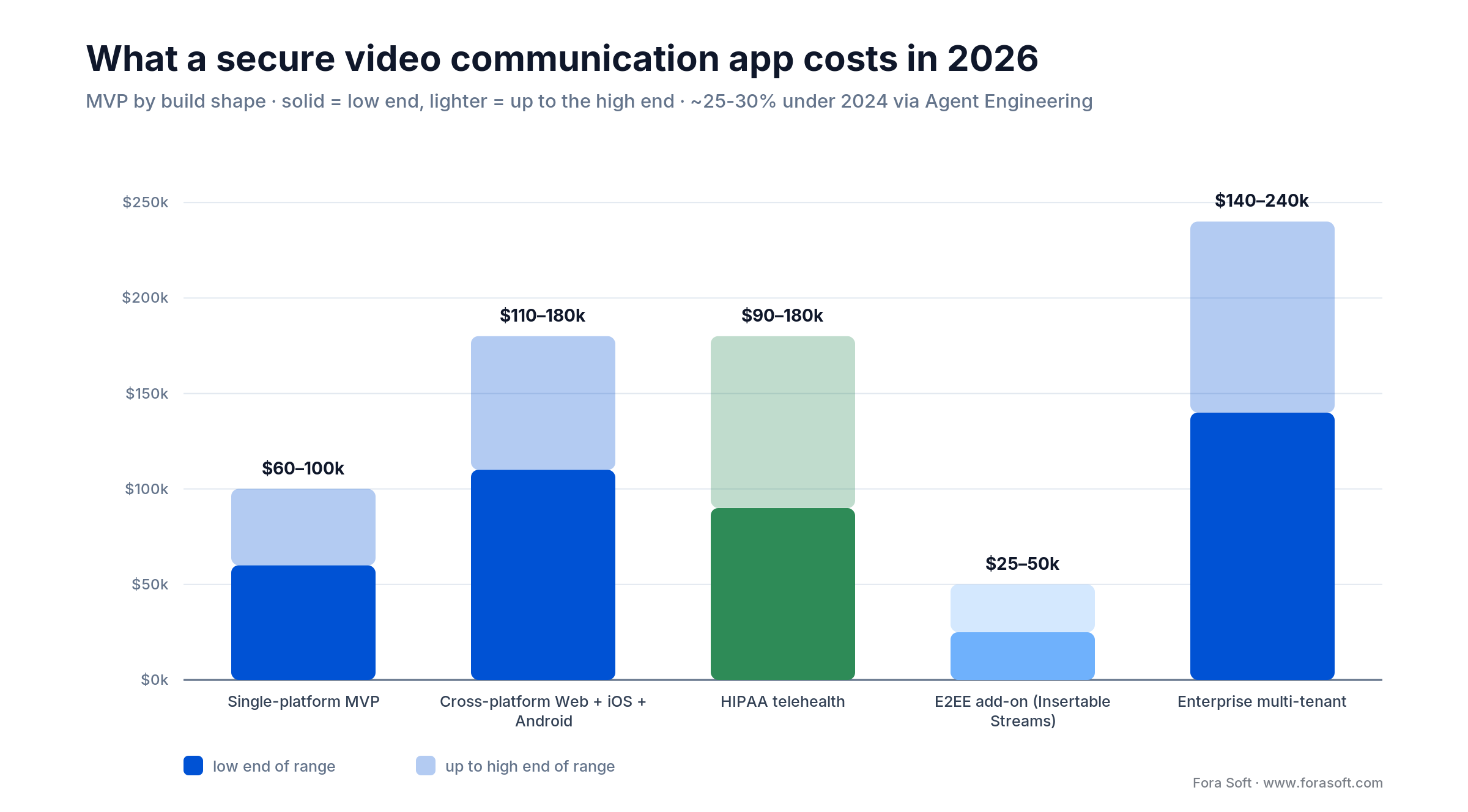
Figure 5. 2026 MVP cost ranges by build shape. Solid = low end, lighter = up to the high end.
These ranges run roughly 25–30% under 2024 baselines because Agent Engineering compresses the secure scaffolding — auth flows, RBAC, audit logging, encryption plumbing — without cutting the senior review that keeps it correct. Where a number would depend too much on your exact scope, we quote it after a scoping call rather than guess high here.
Build vs buy: when does custom pay back?
At 2026 list prices, SaaS conferencing with a HIPAA addendum beats a custom build until roughly 1.1M participant-min/month on run-rate alone against Daily list pricing, and until roughly 2.2M once you amortise the build over 24 months. (LiveKit Cloud is cheaper still, which pushes its own crossover past 12M — the numbers below show why you price your own profile.) That is two to four times higher than the “custom pays back past 500k minutes” number that circulates in vendor content — two on run-rate, four once you amortise the build — and that number appeared, until this update, in an earlier version of this article. Below the crossover, custom is a strategic purchase rather than a savings one: you buy IP ownership, brand-owned mobile apps, key custody, data residency, or an AI layer no vendor sells. Compliance can settle it outright regardless of price: HIPAA, EU AI Act high-risk classification, or jurisdiction-specific data residency can rule out cloud SaaS on their own.
Worked example, a HIPAA telehealth product at 200k participant-min/month, run against published 2026 list rates rather than round numbers. Daily bills $0.004 per participant-minute with the first 10,000 free, so 190,000 × $0.004 = $760, plus the $500/month Healthcare (HIPAA + BAA) add-on. That is $1,260/month, about $15.1k in year one — with one caveat worth pricing before you quote it internally: the HIPAA add-on is an enterprise-plan item, so ask Daily what platform fee rides along with it at your volume. LiveKit Cloud comes in lower: Scale at $500/month is the cheapest tier that signs a HIPAA BAA, and it bundles 1.5M WebRTC minutes, so 200k/month sits inside the base fee at $6k a year. A custom LiveKit OSS build on HIPAA-eligible AWS is a $90–120k MVP for this scope (the low half of the $90–180k HIPAA band above, since this example carries no deep EHR integration) plus $4–6k/month of ops with HIPAA controls, so $138–192k in year one, call it $165k. SaaS wins by roughly an order of magnitude, and it is not close.
So where does it actually flip? Same numbers, simple algebra. Custom ops at $5k/month equals Daily’s bill when (M − 10,000) × $0.004 + $500 = $5,000, which puts M at about 1.135M participant-minutes a month — run-rate only, build excluded. Amortise a $105k build over 24 months and you need roughly 2.2M participant-min/month before custom is cheaper end to end. Daily’s published volume discounts, which step down toward $0.0015/minute at the top of the schedule, push the crossover higher still. And that crossover is Daily-specific: run the same algebra against LiveKit Cloud Scale, where $500/month already includes 1.5M minutes and overage is $0.0004, and the break-even sits north of 12M participant-min/month. Two vendors, one order of magnitude apart, which is the real argument for pricing your own profile rather than trusting anyone’s rule of thumb. One caveat in the other direction: heavy cloud recording and egress are billed separately by every SaaS vendor, and a recording-heavy product can reach parity sooner than the minute math suggests, so price your own recording profile before trusting either number.
Which is why we tell clients the unprofitable thing: at realistic telehealth volumes you almost never buy custom to save money on minutes. You buy it for brand-owned mobile apps, audit logs and key custody you control, an AI layer nobody else ships, data residency a SaaS contract won’t give you, or an exit from single-vendor risk. Those reasons survive a board review. Minute arithmetic below a million minutes a month does not.
Reach for custom secure video when: compliance, branding, IP ownership, or a feature no vendor sells forces the move — or, on cost alone, when volume clears roughly 1.1M participant-min/month against Daily list pricing (about 2.2M if you amortise the build over 24 months). Below that, with no compliance or IP driver, buy.
Mini case: CirrusMED HIPAA telehealth
The situation. CirrusMED is a HIPAA telehealth product serving real medical practices doing real patient consultations every day. Video carries PHI, so the compliance bar is set before the first line of code: encryption in motion and at rest, a signed BAA chain, and an audit trail that survives inspection.
The build. Native iOS, native Android, and a web client; a LiveKit OSS-class SFU on HIPAA-eligible AWS; AES-256-GCM at rest with AWS KMS keys; an immutable audit log on dedicated WORM storage; encrypted EHR integration over FHIR; and signed BAAs through every subprocessor, including the AI vendors.
The result. Years in production serving a direct-primary-care practice in Nevada with roughly 1,500 patients, with no reportable breach and no adverse audit finding — and we keep adding features (voice agents via OpenAI Realtime, AI summaries) on the same secure spine rather than a bolted-on layer. That’s the whole point: HIPAA isn’t a feature, it’s the architecture. Want a similar architecture session for your scope?
Pick a secure video partner: five questions
- Have they shipped a HIPAA / GDPR / SOC 2 audited video product? Ask for a redacted SOC 2 Type II report, the one with an actual auditor and an actual opinion. HIPAA has no certification body and no pass/fail exam, so “HIPAA certified” on a vendor site is a marketing claim, not evidence; what you can verify is a signed BAA, a written risk analysis, and named subprocessors. And listen for how a studio talks about findings. The ones worth hiring describe specific exceptions they had to remediate; the ones to avoid say the audit went perfectly.
- Walk them through the encryption layers. DTLS-SRTP, optional E2EE via Encoded Transform, AES-256 at rest, KMS-managed keys, signing certs. The right answer is concrete, not “bank-grade encryption.”
- Ask to see the audit log schema. Every join, leave, recording, export, and configuration change must be logged immutably. No schema, no audit log.
- What’s the AI integration story? 2026 buyers expect transcription, summaries, and voice agents. The partner should describe a privacy-aware path with subprocessor BAAs, not a generic “we call the OpenAI API.”
- What’s the migration path off them? A senior partner writes “you own the IP” into the contract on day one. Anything less is a lock-in tax in disguise.
Want our scoring against those five questions?
CirrusMED, ProVideoMeeting — we’ll walk through shipped HIPAA and SOC 2 deployments and quote a fixed-range estimate in 30 minutes.
AI features: transcription, voice agents, summaries
2026 users expect AI in every call. The common patterns: real-time transcription via the OpenAI Realtime API, gpt-4o-transcribe, or Google Speech-to-Text, all of which stream natively. Whisper does not: it is a batch model, and windowing it for live use costs you latency and accuracy at every chunk boundary, so keep Whisper for post-call processing; post-call summaries via a hosted LLM; voice agents via LiveKit Agents or OpenAI Realtime; and on-device noise suppression via Krisp or LiveKit’s built-in model.
The compliance catch: any AI feature that processes voice or face data adds a compliance vector. A HIPAA AI subprocessor needs its own BAA (OpenAI offers one with Zero Data Retention). EU AI Act obligations attach to biometric ID and emotion inference. Treat AI as a compliance citizen from day one — document the data flow, add it to the DPIA, and require BAAs from AI vendors, same as any other subprocessor.
Reach for on-device AI when: regulatory scope makes cloud inference awkward. Apple’s SpeechAnalyzerSpeechTranscriber on iOS 26 for transcription plus Foundation Models for summaries, and Google AI Edge on Android, run locally with zero cloud data egress, the cleanest HIPAA path when the models are good enough.
Testing, pen-tests, and secure deployment
A secure video app needs more than functional QA. Required: an annual third-party penetration test, quarterly SAST/DAST scans, fuzz testing on the WebRTC signaling endpoints, a secure code review of the crypto paths, dependency scanning (Snyk, Dependabot), and runtime security monitoring. CI gates fail the build on critical CVEs so a bad dependency never reaches production.
Per regime: a HIPAA Security Risk Analysis annually; a SOC 2 Type II audit annually with quarterly evidence collection; a GDPR DPIA reviewed at every major release. A bug-bounty program (HackerOne, Bugcrowd) is worth it for consumer-facing apps — the researchers find the recording-export bug before an attacker does.
Five pitfalls in secure video app development
- Treating compliance as a feature. HIPAA, GDPR, and the EU AI Act shape the architecture. Bolt them on at the end and you fail the audit.
- Over-permissive RBAC. The recording-export endpoint without a role and ownership check is the most common breach vector we audit. Default-deny, least privilege, checked on every API.
- Skipping E2EE when the threat model demands it — or switching it on without costing the consequences. If the customer’s threat model includes the cloud provider, DTLS-SRTP isn’t enough; wire Encoded Transform from day one or pay to retrofit it. But note the tension with pitfall 4: once frames are end-to-end encrypted, server-side transcription and cloud recording stop working, so those features move to the client or come off the roadmap. Pick one, in writing, before the first sprint.
- Missing audit logs on AI features. Every transcription, summary, and voice-agent turn must be logged. The compliance regime cares about derived data, not just the raw recording.
- Forgetting mobile-specific surfaces. CallKit, ConnectionService, VoIP push, biometric sign-in, certificate pinning — each is its own attack surface. Web-only thinking misses them.
KPIs to track post-launch
- Quality. MOS audio (target ≥4.0), glass-to-glass latency p95 (<300 ms), join-success rate (≥99%), and the three WebRTC
getStats()numbers that actually predict complaints: freeze rate (<1% of video duration), concealment rate (<2% of audio samples), and round-trip time p95 (<200 ms). Skip buffer ratio: it is an HLS/DASH metric and means nothing in a real-time call, which is a quick way to tell whether a dashboard was designed by someone who has run a media plane. Track AI-feature adoption separately (target ≥40% of calls). - Business. Cost per participant-minute, retention through 30/60/90 days, AI-feature NPS lift, and support-ticket volume on auth/access errors (target <1% of sessions).
- Reliability and security. SOC 2 controls passed (target 100%), failed-auth attempts triaged (<5 min MTTD), data-egress anomalies detected (<5 min), and security-incident MTTR (<1 hour).
When NOT to build custom secure video
If you’re shipping a generic video feature inside a non-regulated SaaS under 100k participant-min/month, Daily.co or LiveKit Cloud wins on time-to-market, and it is not a close call. (To be clear about the two numbers in this article: 100k is where SaaS wins on speed, and roughly 1.1M is where it stops winning on cost. Between them, SaaS wins on both.) If your enterprise customers demand “Microsoft Teams or Zoom embedded,” the Zoom Meeting SDK or Azure Communication Services with Teams interoperability are the credible defaults despite the lock-in (Microsoft Graph’s cloud-communications calls API is for bots and policy-based recording, not for embedding Teams-grade calling in your own product). Don’t build what you can rent when there’s no compliance or IP reason to.
Custom earns its keep on regulated workloads (HIPAA, GDPR, FERPA, BIPA, EU AI Act), brand-owned mobile apps, AI features unique to your product, or sub-second latency. Our video conferencing services, custom video processing services, and AI integration services map the scope, and the video banking platform guide works a finance-grade case end to end.
FAQ
What does a secure video communication app cost in 2026?
Fora Soft prices a focused single-platform secure video MVP at $60–100k over 10–14 weeks in 2026. Cross-platform (Web + iOS + Android) runs $110–180k. HIPAA telehealth is $90–180k. An E2EE add-on via Encoded Transform adds $25–50k. These run roughly 25–30% under 2024 baselines because Agent Engineering compresses the secure scaffolding.
Is WebRTC end-to-end encrypted by default?
No — it’s encrypted hop-by-hop via DTLS-SRTP (client-to-SFU and SFU-to-recipient), and the SFU sees decrypted frames to route them. For true E2EE, where the SFU sees only ciphertext, use the WebRTC Encoded Transform API with SFrame to encrypt frames at the client. Most regulated workloads accept DTLS-SRTP; some (banking, executive comms) require the Encoded Transform overlay.
Can a secure video app be HIPAA compliant?
Yes. A secure video app is HIPAA-compliant when it runs on AWS HIPAA-eligible services under a signed BAA, encryption in motion (DTLS-SRTP) and at rest (AES-256-GCM), KMS-managed keys, immutable audit logs under the §164.312(b) audit-controls standard (the six-year clock in §164.316(b)(2)(i) applies to your compliance documentation, not to the logs), a breach-notification playbook, and a signed BAA chain through every subprocessor, including LiveKit, OpenAI, and any AI vendor. Fora Soft has run exactly this pattern in production on CirrusMED, a HIPAA telehealth platform, for years.
What encryption should a secure video app require?
DTLS-SRTP for media in motion (default for WebRTC), AES-256-GCM for media at rest, TLS 1.3 with strong ciphers for signaling, KMS-managed keys with a documented rotation schedule, and optional E2EE via the Encoded Transform API when the threat model demands it. Add HSM-backed keys for high assurance, and a Signal-style or MLS stack for chat sidebars that need message E2EE.
Should you build on Zoom or Microsoft Teams as the engine?
The Zoom Meeting SDK and Azure Communication Services with Teams interoperability are credible when enterprise customers demand “built on Zoom” or “built on Teams” (Graph’s calls API is for bots and compliance recording, not branded calling). The trade-off is branding limits, lock-in, and a customisation ceiling. Fora Soft recommends LiveKit OSS or Daily for branded products, and the Zoom or Teams routes only when explicit customer demand makes them the cheapest path.
How do you add AI to a HIPAA video app?
Treat the AI vendor as a HIPAA subprocessor: sign a BAA, document the data flow, and add the AI processing to your DPIA. On iOS 26, SpeechAnalyzerSpeechTranscriber does transcription and Foundation Models does summaries, both on-device; Google AI Edge is the Android equivalent. Zero cloud egress, which is the cleanest path when the on-device models are good enough. For cloud AI, OpenAI offers a HIPAA BAA with Zero Data Retention.
How do you prepare for a security audit?
Three things. Documentation: a written compliance posture, DPIA, risk analysis, BAA chain, retention schedule, and incident-response playbook. Evidence: audit logs, access logs, encryption configs, key-rotation history, and penetration-test reports. Operations: routine review of failed-auth attempts, data-egress anomalies, and dependency CVEs. On CirrusMED, Fora Soft runs all three as production discipline rather than paperwork. To be precise about what that does and doesn’t prove: HIPAA has no pass/fail certification, so the verifiable artefacts are the signed BAA chain, the written risk analysis, and the audit-log schema, not a certificate.
Did Twilio Video shut down?
No. Twilio announced a December 5, 2026 end-of-life for Programmable Video in 2024, then reversed it in October 2024 — Twilio Video remains a standalone product with no forced migration. The single-vendor risk is still a fair reason to build on a portable OSS core (LiveKit, mediasoup); the Twilio Video alternatives guide covers the options.
Which existing apps count as secure for end users?
For personal use, Signal and WhatsApp default to end-to-end encryption, and Google Meet, Wickr, and FaceTime are reasonable mainstream choices. Those are finished consumer apps, though. If you need your own branding, a documented compliance posture (HIPAA, GDPR), audit logs you control, or custom features, you’re building or buying a platform — and the off-the-shelf app table above is where to start.
What to read next
Sister playbook
Secure Cloud Video Management
VMS-side architecture, compliance, vendor matrix, cost.
Architecture
WebRTC Architecture Guide for 2026
P2P, SFU, MCU, hybrid — how they fit secure builds.
Migration
Twilio Video Alternatives
Portability options after the 2024 EOL reversal.
AI integration
OpenAI Realtime + WebRTC + SIP
Wiring AI agents into a secure video app.
Pricing analysis
LiveKit vs Agora Pricing
Per-minute math, OSS migration, break-even points.
Ready to ship secure video that survives audit?
Secure video communication in 2026 is mature on the technology side and exacting on the compliance side. WebRTC encryption, identity, RBAC, audit logs, and integration discipline are table stakes; the regulatory regimes — HIPAA, GDPR, FERPA, BIPA, EU AI Act — separate a credible build from a liability. The architecture is well understood. Partner selection decides whether you get an audit-grade system or a year of catch-up.
If you’re scoping a secure video communication app — telehealth, finance, defence, education, executive comms — we can show you CirrusMED and ProVideoMeeting as production reference points, walk the security architecture against your jurisdictions, and quote a fixed range in 30 minutes.
Ship a secure video app that survives audit — with a partner who’s done it
30 minutes, real engineering opinions, no slides, a fixed-range estimate at the end.

