

Key takeaways
• App store optimization for iOS in 2026 is a behavior game, not a keyword game. Download velocity, retention and review velocity now outweigh metadata. An app with D7 retention under 12% is fighting uphill no matter how clean its keyword field is.
• Five levers do most of the work. The 160 indexed characters, Custom Product Pages, Product Page Optimization A/B tests, localisation across 3–7 high-value markets, and a ratings engine. Everything else is a rounding error.
• Custom Product Pages are the 2026 edge. Apple doubled the CPP limit to 70 in October 2025 and opened them to organic search in July 2025. Paired with Apple Search Ads, they typically lift paid conversion 20–39% and cut CPI 30–50% (AppTweak/Adapty case studies).
• Cost is knowable. A specialist agency runs $2–4K/month plus tools; an in-house hire is $80–110K/year fully loaded. On an app with stable retention, a serious push pays back in 2–4 months.
• We ship iOS apps, then rank them. Fora Soft has built iOS products since 2005 — including Super Power FX (500K+ downloads, 4.6 stars across 8.4K iOS ratings). This is the playbook we run on our own and our clients’ apps.
Why Fora Soft wrote this iOS ASO playbook
App store optimization for iOS is the part of a launch we end up owning end-to-end on most engagements: keyword strategy, Custom Product Pages, on-device A/B tests, localisation, and the ratings flow. We’ve been shipping iOS apps since 2005: Super Power FX, ProVideoMeeting, BrainCert, TradeCaster and 250+ other projects. The one lesson that keeps repeating is that ASO detached from retention and revenue is theatre.
This is written for founders, mobile product managers and growth leads who want ASO run seriously in 2026, not another “five tips for app discovery” listicle. It covers the signals that actually rank apps now, the five levers that move installs, the 2026 cost ranges, the distribution shift the App Store just went through, the pitfalls that quietly bleed ratings and CAC, and the KPIs that prove the programme works. A lot of the iOS apps we ship are video products, and our engineers document that side of the craft in the Fora Soft Learn handbook; this is the growth-side companion to it.
Two companion reads if you want the engineering side: our must-have native iOS features playbook and the broader iOS performance guide. Speed and stability feed straight into the ranking algorithm, so they’re not separate problems.
Want a 30-minute ASO audit on your iOS app?
Send us your App Store listing and any rank data you have. We’ll return a topline diagnosis (metadata, conversion, retention) with no pitch attached.
How the iOS App Store algorithm ranks apps in 2026
Apple has never published its ranking model. But a decade of testing, cross-checked against Apple’s developer docs and 2026 measurements from AppFollow, MobileAction and AppTweak, converges on a clear hierarchy. The short version: what your users do now outweighs what your metadata says.
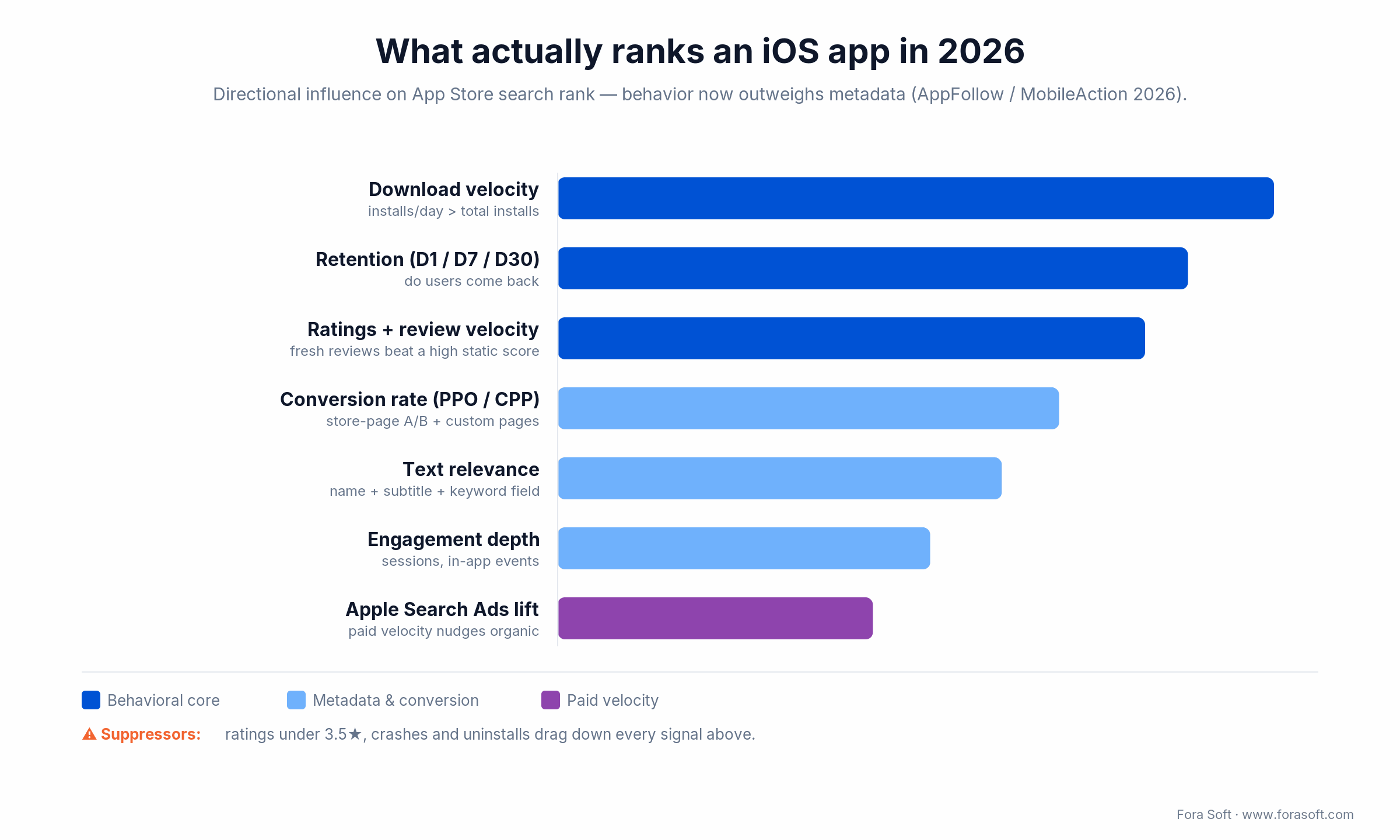
Figure 1. Directional weighting of iOS ranking signals in 2026. Behavioural signals now sit above text relevance.
Download velocity is the single strongest signal. Both stores care more about installs per day than installs to date. An app pulling 500 fresh installs a day outranks an older app with more total downloads but slowing momentum (MobileAction, 2026). Trending beats history.
Retention and engagement come next. D1, D7 and D30 cohorts, sessions per active user, and indexed in-app events all feed the model. Below roughly 12% D7, visibility gets suppressed regardless of metadata.
Ratings, weighted by recency. Review velocity often beats absolute score: a 4.2-star app with 100 fresh reviews a week typically outranks a 4.5-star app with 5 a week (AppFollow, 2026). Drop below 3.5 stars and search visibility falls off a cliff.
Then text relevance (app name 30 chars, subtitle 30, keyword field 100) and quality penalties for crashes, uninstalls, thermal and battery load. Two things follow. ASO is no longer a metadata exercise; product quality does the heavy lifting. And engineering choices — deep links, Core Spotlight, in-app event metadata — are now ASO levers, not just app features.
The five levers that move iOS ASO in 2026
Skip the fifty-item checklist. These five levers, in priority order, capture roughly 80% of the achievable lift. Plot them by impact and effort and the sequencing writes itself: metadata and a ratings engine are quick wins, localisation is the slow big bet you earn into.
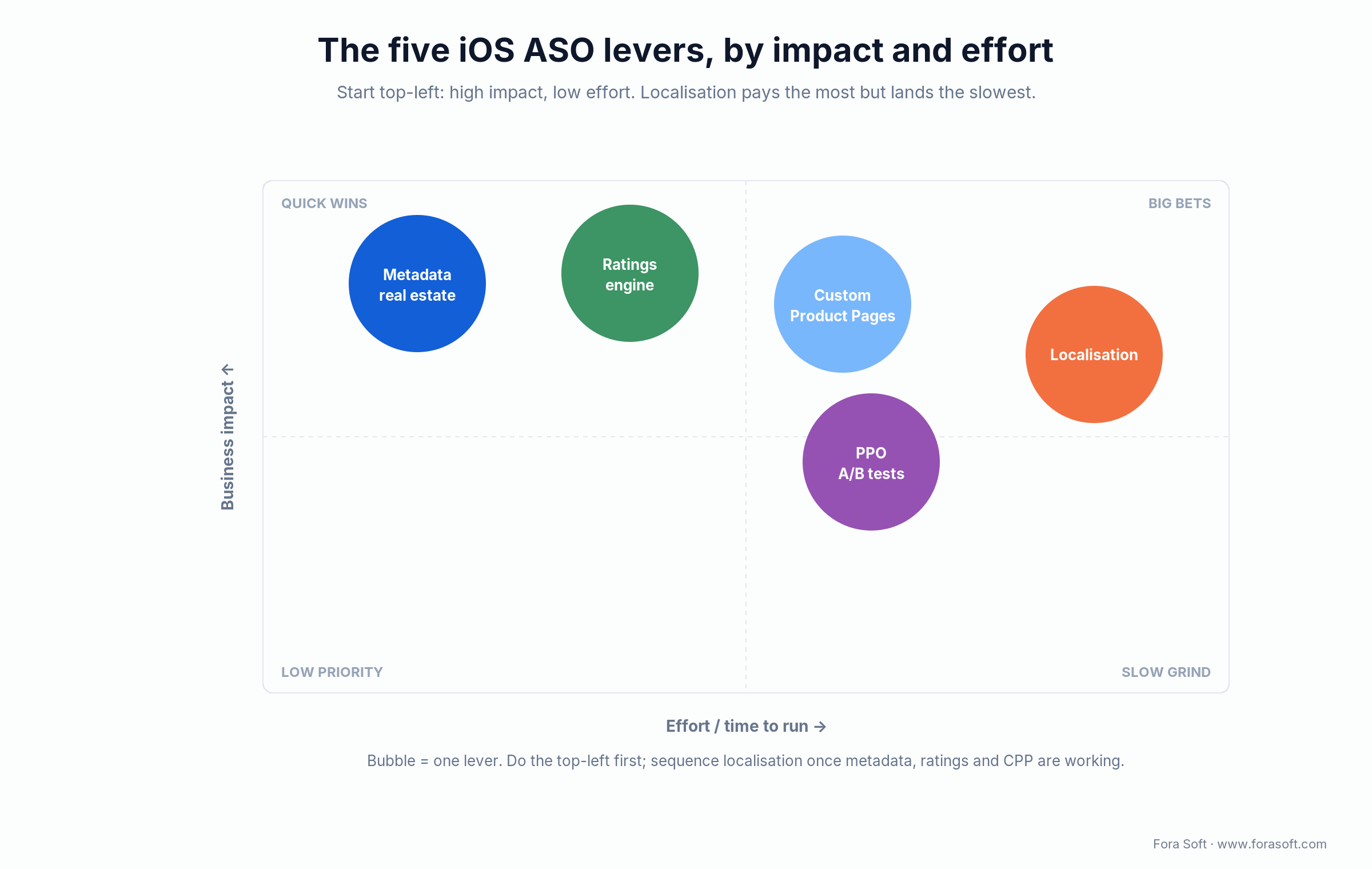
Figure 2. The five levers by business impact and effort. Do the top-left first.
1. Metadata real estate (160 indexed characters per locale)
Apple indexes the app name (30 chars), subtitle (30) and keyword field (100). The description is not indexed on iOS. Treat each surface as distinct keyword space and never repeat a word across them — a repeat wastes characters Apple already has. Keyword field: comma-separated, no spaces, unique terms only. Subtitle: your strongest secondary phrase plus a benefit.
2. Custom Product Pages (CPP) — now up to 70
A CPP is a variant listing, with its own screenshots, app preview and promo text, addressable by a unique URL. Apple doubled the limit to 70 pages in October 2025 and opened them to organic search in July 2025, so a “video editor for creators” query can now land on a creator-specific page instead of your generic listing.
3. Product Page Optimization (PPO) — native A/B testing
PPO is App Store Connect’s built-in A/B test for icon, screenshots and app preview. You run up to three treatments against your default page for a maximum of 90 days, then apply the winner. It doesn’t run on Custom Product Pages, Apple Watch or iMessage pages. Treat it as a continuous loop, not a launch-week ritual.
4. Localisation in 3–7 high-value markets
Apple supports 40+ locales; you don’t need them all. The 2026 high-value targets are Japan, South Korea, Germany, Australia and the Nordics — high CPI, mature ASO. Mexico and Brazil add Spanish and Portuguese reach cheaply. Localising name, subtitle, keywords and screenshots typically returns 50–150% organic lift in a new market over 3–6 months. Reuse US screenshots and you throw away 20–40% of that conversion.
5. A ratings-and-reviews engine
A 4.4+ average and a steady drip of recent ratings, not a one-time burst, is the bar. Prompt with SKStoreReviewController at high-engagement moments (post-purchase, a milestone, a power feature), respond to low ratings inside 48 hours, and localise the ask. Below 4.0 the penalty is real; above 4.5 conversion compounds.
Pull all five levers when: the app is past product-market fit, you have at least 1,000 monthly downloads to give A/B tests signal, and the team can run a 90-day cadence instead of a one-off optimisation week.
Metadata deep-dive — what is indexed, what isn’t
On iOS you have exactly 160 characters that Apple indexes for search per locale. Everything else on the page (description, promo text, screenshots) converts or feeds discovery, but doesn’t rank in search. Spend the 160 like a budget.
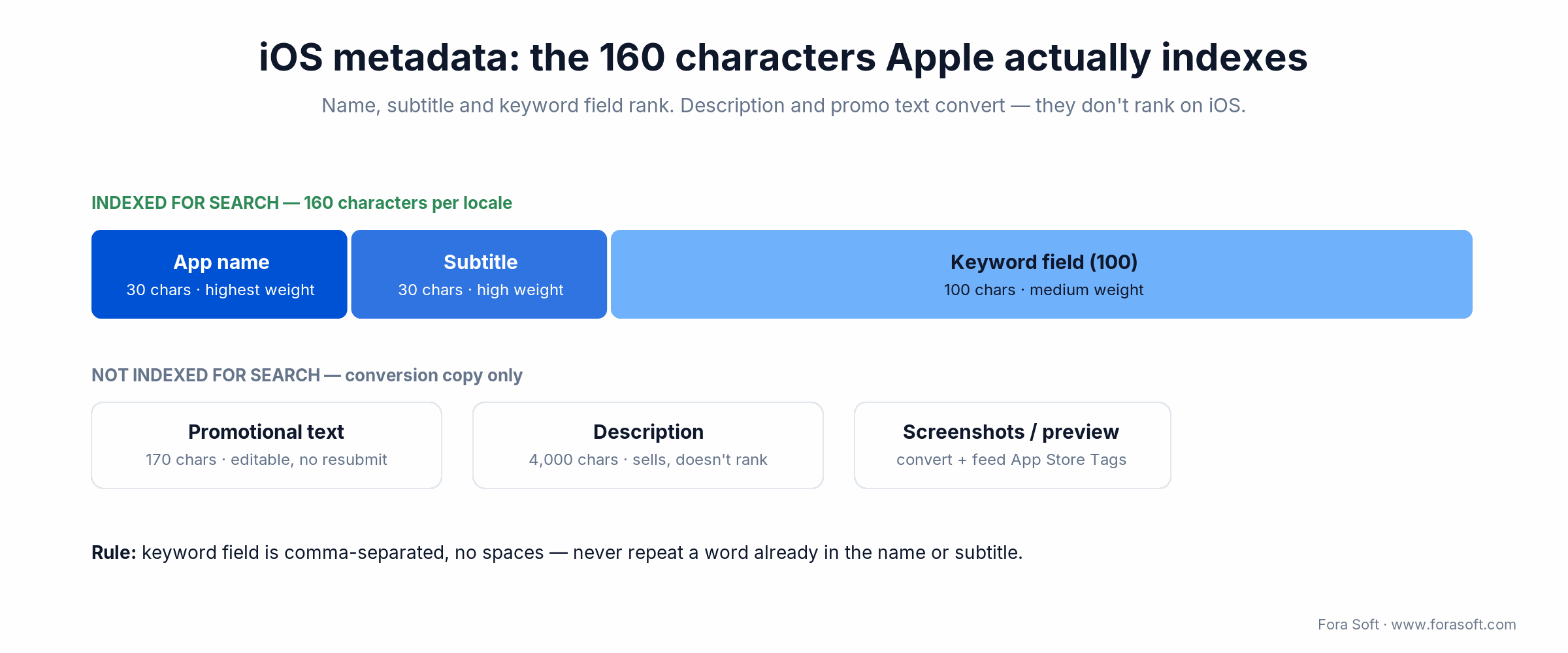
Figure 3. The 160 characters Apple indexes on iOS, and the fields that convert but don’t rank.
| Field | Limit | Indexed | Editable without resubmit | Strategy |
|---|---|---|---|---|
| App name | 30 | Yes (highest weight) | No | Brand + primary keyword |
| Subtitle | 30 | Yes (high) | No | Secondary keyword + benefit |
| Keyword field | 100 | Yes (medium) | No | Comma, no space; unique terms |
| Promotional text | 170 | No | Yes | Rotate weekly; offers, news |
| Description | 4,000 | No (iOS) | No | Conversion copy, not SEO |
| Screenshots / preview | 10 / 3 | Feed App Store Tags | Yes (new build) | First two convert; clarity wins |
| In-app purchase metadata | varies | Yes | Yes | Optimise IAP names + descriptions |
Custom Product Pages — the under-used 2026 lever
Two Apple changes made CPPs the most under-used lever in iOS ASO. In July 2025 Apple let CPPs surface in organic search: you assign keywords to a page in App Store Connect and it can appear for those queries, not just in paid campaigns. In October 2025 Apple doubled the limit from 35 to 70 pages. Apps that pair CPPs with Apple Search Ads typically see paid conversion lift 20–39% and CPI drop 30–50% (AppTweak and Adapty case studies — vendor-reported, so treat them as directional, not a promise).
Build at least three CPPs early: one for paid acquisition (campaign-aligned), one for your highest-volume organic intent, and one for a niche vertical (B2B, education, healthcare). Each gets its own screenshots and an app preview that opens on the feature that intent cares about. With 70 pages available, the constraint is now creative production, not Apple’s cap.
Reach for a Custom Product Page when: a high-intent keyword or ad campaign deserves its own screenshots and message, and your generic listing is leaking conversion on that traffic.
Product Page Optimization — running A/B tests that count
PPO lives inside App Store Connect: pick a treatment set (icon, screenshots or preview), choose a traffic split, run up to 90 days, declare a winner, apply it. Here’s the framework that actually produces signal:
- Hypothesis-led tests only. “Adding a face lifts conversion” is a hypothesis. “New screenshots” is not.
- At least 5,000 product-page visits per treatment before you declare, or noise wins.
- One variable per test — icon or screenshots or preview, never two at once.
- Localise the test if conversion patterns diverge; what wins in the US can lose in Japan.
- Keep your losers. You’ll need the counter-examples when someone questions a future winner.
Localisation strategy — pick the right five markets, not all 40
Tier-1 high-CPI English (US, UK, Australia) carries most of your indexing; don’t duplicate keywords across them. Tier-1 non-English: Japan, South Korea, Germany. Tier-2 volume: Mexico, Brazil, India, Indonesia. Each fully localised market typically lifts organic installs 50–150% over 3–6 months. One quiet trick: you can add localised keywords in a locale’s keyword field without translating the whole app, which is useful for testing demand before you commit to a full localisation.
Reach for localisation when: your core English markets are already optimised and a target locale shows real search volume, so translated screenshots and keywords pay back inside a quarter.
A ratings engine that actually compounds
Trigger at high-emotion moments. SKStoreReviewController caps you at three prompts per user per 365 days. Spend them where a 5-star is most likely: after a successful first call, after a milestone (10 lessons done, 100 messages sent), or right after a power feature lands.
Localise the prompt. A prompt translated word-for-word from English into Japanese converts at roughly half the rate of a culturally adapted one.
Reply within 48 hours. Answer every review under 3 stars with an action, not a platitude. Apple lets users edit ratings, and a real response often pulls them up.
Never buy reviews. Apple bans it, the penalty is severe, and recovery is measured in quarters. The savings are an illusion.
Need a CPP and PPO programme set up properly?
We’ll design CPPs aligned to your top intents, run a 90-day PPO cadence, and tie every result back to install CAC and retention.
The 2026 ASO tools, compared
The tool market consolidated. Sensor Tower acquired data.ai (formerly App Annie) in March 2024 and retired the standalone product, so if a vendor still pitches you “data.ai,” their deck is two years stale. SplitMetrics and App Radar merged in 2023 under one roof. Here’s the honest 2026 shortlist and what each is actually for.
| Tool | From (2026) | Where it wins | Best for |
|---|---|---|---|
| AppTweak | €69/mo | Keyword discovery, CPP intelligence | Mid-market default |
| App Radar | $83/mo | Daily ASO workflow, ASA insights | Bootstrapped / startup |
| Sensor Tower | Enterprise | Market intel + competitor spend (now incl. data.ai) | VC-backed / publishers |
| SplitMetrics | ~$13.6K/yr | A/B testing of store visuals (owns App Radar) | Conversion-led teams |
| MobileAction | Custom | Tight Apple Search Ads integration | Paid + organic teams |
Where each breaks: AppTweak and App Radar estimate keyword volumes — treat the numbers as directional, not exact. SplitMetrics is pricey and only earns its keep once you have real ad traffic to feed the tests. Sensor Tower is overkill for a single app. Most teams under five apps run AppTweak or App Radar plus PPO, and add SplitMetrics only when creative testing becomes the bottleneck.
Apple Search Ads — how paid and organic compound
Apple Search Ads (ASA) does more than buy installs. Paid spend on a keyword drives install velocity, and velocity is the strongest organic signal — so ASA tends to lift adjacent organic ranks for the same terms. The mature pattern: use ASA to seed CPPs aligned to high-intent keywords, measure incremental organic lift on those terms, then double down on the clusters where the lift holds. Budget conservatively at first ($50–$200/day per market), and scale only when CAC and D7 retention both survive the extra volume.
The 2026 distribution shift ASO teams can’t ignore
For the first time, the App Store isn’t the only door onto an iPhone. Under the EU’s Digital Markets Act, EU users can install apps from alternative marketplaces (Epic Games Store, AltStore) and directly from a developer’s website, and apps can link out to web checkout via Apple’s External Purchase Link Entitlement. Apple replaced the old €0.50 Core Technology Fee with a 5% Core Technology Commission across all EU distribution paths in 2026. Separately, after the April 2025 Epic v. Apple ruling US apps can add external payment links without Apple’s commission — though in April 2026 the “reasonable fee” question was sent back to the district court.
What this means for ASO: App Store search is still where the overwhelming majority of iOS discovery happens, so the five levers stand. But if you sell in the EU, model the fee math on each path before you route users, and treat web distribution as a margin lever rather than a discovery one. ASO gets you found; the distribution choice decides what you keep.
2026 cost ranges — in-house, agency, hybrid
Three ways to staff iOS ASO, three cost shapes. The worked numbers below assume one app and a serious 90-day push, not a set-and-forget metadata edit.
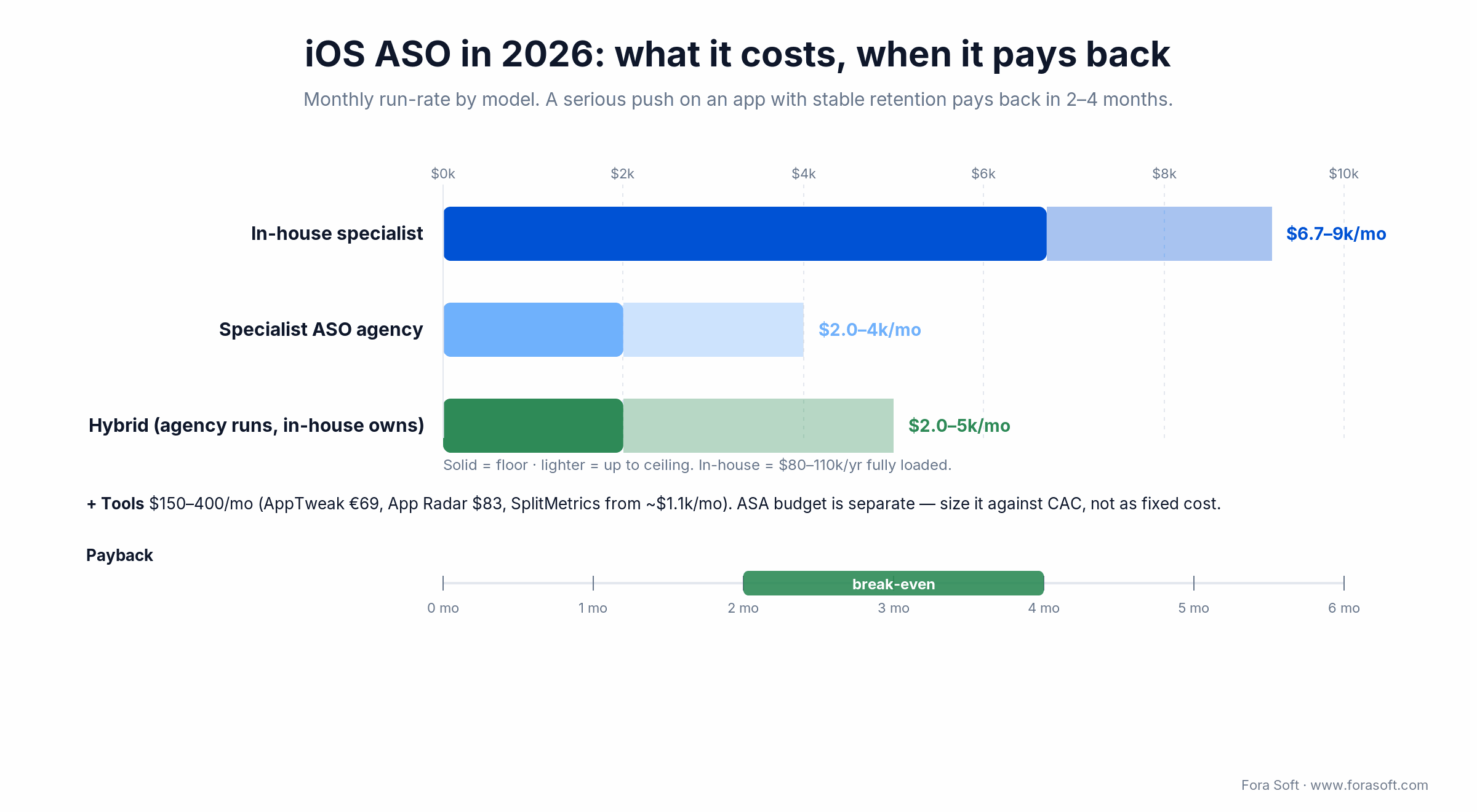
Figure 4. Monthly run-rate by staffing model, plus a typical 2–4 month payback band.
| Model | Setup | Run-rate | Best for |
|---|---|---|---|
| In-house team | Hire 2–3 weeks | $80–110K/yr fully loaded | Mature publishers, 5+ apps |
| Specialist ASO agency | $3–8K | $2–4K/mo | Single product, fast lift |
| Hybrid (Fora Soft pattern) | $5–10K | $2–5K/mo + tools | Agency runs, in-house owns |
Worked example. Say you run the hybrid model: $3,500/month for the engagement, $200/month in tools (AppTweak plus a creative-test seat), and $4,000/month in ASA. That’s $7,700/month, or $23,100 for the quarter. If the programme moves organic installs from 6,000 to 9,000 a month at a $12 blended LTV, that’s 3,000 extra installs × $12 = $36,000/month in incremental lifetime value. That LTV accrues over each cohort’s life, not in one month, so discount it for time and churn — but even halved, it clears the $7,700 monthly cost comfortably inside the 2–4 month payback window. This is why we treat ASA as a variable line item measured against CAC and LTV, never as a fixed cost.
Five pitfalls that quietly erode iOS ASO performance
1. Keyword stuffing across name, subtitle and keyword field. Apple indexes each surface once; repeating a word wastes characters and dilutes the signal.
2. Same screenshots in every locale. What converts in the US flops in Japan. Localise screenshots before you localise keywords.
3. Treating ASO as a metadata project. Without retention, ratings and engagement work, metadata gains evaporate inside 60 days.
4. Ignoring promotional text. 170 characters, editable without a resubmission. Refresh it weekly with offers, news and social proof — free real estate most teams leave stale.
5. Buying reviews or installs. Apple bans it, the algorithm punishes it, and recovery is measured in quarters. The “shortcut” costs more than the work it skips.
KPIs that prove iOS ASO works
Discovery KPIs. Impression-to-tap CTR 5–10%, top-10 keyword count, category share of voice, and App Store Tag coverage once tags roll out live.
Conversion KPIs. Product-page conversion 25–35% mass-market / 10–15% niche; CPP-vs-main-page uplift; PPO winner lift per test.
Quality KPIs. 4.4+ rolling 30-day rating, five or more fresh ratings a day, crash-free sessions above 99.5%. On retention, benchmark against your category, not the global average — it varies 5–10× by category. As a cross-vertical reference, the Adjust 2026 and AppsFlyer 2025 medians sit around D1 25–26%, D7 11–13%, D30 5–7%; the top quartile clears D1 30%, D7 15%, D30 8%.
Business KPIs. Organic install CAC, blended LTV/CAC, payback period, and organic-vs-paid mix — tracked monthly, not weekly. ASO moves on a monthly cadence; weekly noise will talk you into bad decisions.
When NOT to invest heavily in iOS ASO
Honesty sells better than a pitch. Defer the full programme when:
- D7 retention is below 10% — fix retention first; ranking follows the product, not the other way round.
- Crash-free sessions are under 99% — the algorithm punishes instability faster than ASO can recover it.
- Your average rating is below 3.5 stars off a fresh launch — fix the product, then push.
- You’re pre-product-market-fit and pivoting weekly — metadata churn just confuses the algorithm.
- Monthly downloads are under ~500 — A/B test signal is too noisy to act on.
Push ASO hard when: the app is past PMF, D7 retention holds at 13% or better, ratings are at or above 4.0, and you have at least 1,000 monthly downloads to give PPO statistical significance.
Mini case — keeping a consumer app at 4.6 stars for eight years
Situation. Super Power FX is a consumer video app that records clips with superhero VFX — fireballs, lasers, teleportation. Discovery is almost entirely App Store search and browse, and in the entertainment category ratings and screenshot conversion decide everything. A one-time install spike means nothing if the rating slips and the drip of fresh reviews dries up.
What we did. We built the store presence around the levers that matter for a consumer app: icon and screenshot testing so the first two shots sell the effect in under a second; SKStoreReviewController wired to the genuine success moment (right after a clip is saved or shared, not on cold launch); IAP metadata optimised for the effect packs; and localised screenshots for the biggest markets. The rating prompt timing did the heavy lifting — asking at the moment of delight, capped at Apple’s three-per-year, kept fresh reviews flowing without annoying anyone.
Outcome. Super Power FX has held a 4.6-star average across 8.4K iOS ratings, passed 500K+ downloads with 20,000+ positive reviews, stayed live for 8+ years, and earned an Oreo brand collaboration for a custom effect. That’s what a ratings engine plus disciplined conversion testing buys you: not a launch spike, but a rank that compounds. Want a similar teardown of your listing? Book a 30-minute call and we’ll walk your metadata, screenshots and ratings flow.
Want a 90-day iOS ASO sprint plan?
Send us your App Store Connect access and your retention numbers. We’ll hand back a sequenced 90-day plan across metadata, CPP, PPO, localisation, ratings, and the KPIs we’ll track.
App Store Tags, Spotlight and Apple Intelligence — the new surfaces
App Store Tags. At WWDC 2025 Apple introduced AI-generated tags for discovery: large language models read your description, category and screenshots and produce tags that help users find similar apps. Worth being precise here — Apple uses LLMs to understand your screenshots, not literal OCR keyword indexing, and a human reviewer verifies tags before they publish. They rolled out in the iOS 26 beta and weren’t influencing live rankings at announcement. The implication stands: write descriptions and design screenshots so the tags Apple infers are the ones you want, and review them in App Store Connect.
Spotlight and Apple Intelligence. On-device search increasingly answers natural-language queries. Index in-app content with Core Spotlight, tag activities with NSUserActivity, and donate App Shortcuts for repeat actions so the system can surface your app for intent it couldn’t match before.
In-app events. Limited-time offers and event metadata get indexed and surfaced. Use them for launches, sales and seasonal pushes — they’re a discovery surface most apps ignore.
What a strong ASO discovery phase produces
If you hire this out, a proper discovery phase should hand you tangible artifacts, not a slide deck:
- A keyword universe (200–500 terms) clustered by intent, with rank, volume and competition.
- A metadata rewrite for name, subtitle and keyword field per priority locale.
- A CPP plan: three to five pages aligned to top intents and ASA campaigns.
- A PPO backlog for icon, screenshots and preview, prioritised by hypothesis.
- A localisation plan for the top three to five markets, with cost and timeline.
- A ratings-engine spec: prompt triggers, copy, response SOPs, threshold alerts.
- A KPI dashboard tying ASO outputs to LTV, CAC and retention cohorts.
Red flags when picking an iOS ASO partner
- “Guaranteed top 10 in 30 days.” Either fraud or ASA-funded; neither holds once the spend stops.
- No mention of retention or ratings. A vendor optimises only what they understand.
- No localisation strategy. Leaves 50–100% organic on the table.
- No CPP or PPO experience. They’re running 2022 ASO in 2026.
- One playbook for every client. Mass-market mobile and niche B2B need different lever weights.
- Reluctant to share dashboards. They either can’t or won’t measure what they did.
FAQ
What is app store optimization for iOS?
App store optimization (ASO) for iOS is the practice of improving an app’s App Store listing and behavioural signals so it ranks higher and converts more organic installs. On iOS it spans the 160 indexed characters (name, subtitle, keyword field), Custom Product Pages, A/B testing, localisation, ratings, and the retention and velocity signals Apple weighs most in 2026.
How long does iOS ASO take to show results?
Metadata changes take 2–4 weeks to settle into new keyword positions. PPO and CPP tests need 14–90 days to reach significance. A full localisation rollout to a new market shows real organic lift over 3–6 months. Plan ASO as a quarterly programme, not a launch checklist.
How many Custom Product Pages can I create in 2026?
Up to 70, as of Apple’s October 2025 change (doubled from 35). Since July 2025 you can also assign keywords to a CPP so it surfaces in organic search, not only in Apple Search Ads campaigns. Build at least three early, aligned to your top intents.
Does Apple index my screenshots for keywords?
Not as literal OCR keyword text. What Apple confirmed at WWDC 2025 is that App Store Tags use large language models to read your screenshots, description and category and generate discovery tags. So screenshots feed discoverability through AI understanding, not a hidden keyword field. Design them for clarity and conversion first, and review the tags Apple infers in App Store Connect.
Should I keyword-stuff the description?
No. The iOS description isn’t indexed for search. Use it for conversion — benefits, social proof, a strong first two lines above the fold, and a clear CTA. Stuffing it costs you conversion without helping rank.
Does Apple Search Ads spend lift organic ranks?
In our measurements and the 2026 industry data, yes — ASA drives install velocity, and velocity is the strongest organic signal, so paid spend tends to lift adjacent organic ranks. Pair ASA with a CPP aligned to the same intent and you compound the paid and organic gains.
Which markets should I localise first?
Tier-1 high-CPI: Japan, South Korea, Germany, Australia, the Nordics. Tier-2 volume: Mexico, Brazil, India, Indonesia. Localise screenshots and metadata together — localising metadata only and reusing US screenshots typically wastes 20–40% of the conversion gain.
How much does the app rating matter?
A lot, and recency matters as much as the number. Below 3.5 stars, search visibility drops sharply; 4.0 is the threshold that matters, and review velocity often beats absolute score — 4.2 stars with 100 fresh reviews a week can outrank 4.5 with five. Use SKStoreReviewController at high-engagement moments and answer negative reviews inside 48 hours.
Agency or in-house for iOS ASO?
Hybrid usually wins. Use an agency for the initial keyword universe, CPP/PPO setup and localisation rollout; keep ratings response, retention coupling and ongoing iteration in-house. Pure in-house tends to under-staff the launch sprint; pure agency tends to under-invest in the retention loop.
What to Read Next
Performance
How to optimise iOS apps for speed and stability
Crash-free rate, MetricKit, Swift 6 — the inputs to ranking.
iOS
Must-have native iOS features
Native polish that drives ratings and retention.
Swift 6
Swift 6 explained — the must-have features
Concurrency and modern APIs that raise stability.
Growth
Selling a product — getting your first paid user
The pre-ASO playbook for early-stage products.
Mobile
Native vs cross-platform development
Why native iOS pays off in ratings and retention.
Ready to put a serious iOS ASO programme in place?
App store optimization for iOS in 2026 is a system, not a setting. The teams that win pull all five levers (the 160 indexed characters, Custom Product Pages, PPO, localisation and a ratings engine) and tie every output back to retention and revenue. The teams that lose buy reviews, copy keywords across surfaces, and call it done.
We’ve been shipping iOS products since 2005 as a custom software development partner, and the playbook above is the one we run on our own apps and our clients’. If you want a 30-minute audit on yours (metadata diagnosis, CPP gaps, an A/B-test backlog), the next step is the cheapest one you’ll take all quarter.
Need a no-pitch second opinion on your iOS ASO?
Tell us your app, your ranks and your retention. We’ll return a topline diagnosis and a 90-day plan — whether or not we end up working together.

