

Key takeaways
• Hugging Face is now infrastructure, not a model zoo. The 2026 Hub hosts 2.4M+ models, 730k datasets and ~1M Spaces, plus managed Inference Endpoints, no-code AutoTrain, and a unified Inference Providers API across Together, SambaNova, Cerebras, Groq, Fal and more.
• The build-vs-buy line in 2026 sits around 100–500 million tokens / month. Below it, closed APIs and Inference Providers usually beat self-hosting on total cost. Above it, vLLM on your own GPUs starts paying back inside a year.
• For most products, the win is fine-tuning, not building from scratch. LoRA / QLoRA cuts trainable parameters by 99 %, lets you fine-tune an 8B model on a single 24 GB GPU, and is the right starting point for chatbots, classifiers and domain-specific copilots.
• License, security and data residency kill more projects than model quality. Llama’s community licence, gated weights, pickled-tensor supply-chain risks and US-only HF Inference Endpoints all need to be on the architecture review board agenda before launch.
• Fora Soft has shipped Hugging Face in production for 5+ years. Real-time emotion AI, sales-call summarisation, generative learning content, on-device translation. Book a 30-min call and we will scope your AI roadmap.
Why Fora Soft wrote this Hugging Face for business guide
Fora Soft has been shipping AI-powered software products since before “AI” was the headline. We have integrated Hugging Face Transformers, Diffusers and Sentence Transformers into production stacks for AI sales meetings (Meetric), real-time multilingual interpretation (TransLinguist) and social discovery products (Sonar). We’re a software development company that has delivered 250+ projects since 2005.
This guide is the version we wish business owners and product managers received before their first call with us. It is opinionated, practical and grounded in the contracts we sign every month: how to choose a model, what to fine-tune versus rent, what production really costs, what license and security gotchas keep CIOs awake. We use Agent Engineering internally, which is why our build estimates and timelines are typically 30–50 % faster than agencies still doing AI integration by hand.
If you came here to figure out whether Hugging Face fits your product, you are in the right place. Read the next four sections, then jump to the cost-and-build matrix — that is the part most teams skip and then regret six months in. Curious about our hands-on AI work? Visit our AI integration services page.
Trying to scope an AI feature without burning months on the wrong stack?
We turn an AI idea into a working prototype in 2–4 weeks — with realistic costs, the right open or hosted model, and a clear path to production.
AI explained simply — the only ten minutes you need
Strip the buzzwords and AI is just three building blocks. Machine learning trains a system on examples until it can act on new ones — classifying emails, predicting churn, scoring leads. Neural networks stack many layers of pattern detection and are unreasonably effective on language, images and audio. Large language models (LLMs) are very large neural networks trained on most of the public internet, fluent in dozens of languages and able to follow instructions, summarise, translate and write code.
Hugging Face is the open hub where most of those models live. Instead of building from scratch, you take a pre-trained model and either prompt it (zero-shot), retrieve facts into it (RAG), or fine-tune it on your data. The vast majority of useful business AI is one of these three patterns.
For most products this changes the build conversation. You are no longer asking “how do we train an AI?” — you are asking “which open model fits, where do we host it, and what data do we wrap around it?”. That is a much more answerable question, and it is what the rest of this guide is about.
What Hugging Face actually is in 2026
Hugging Face started as a chatbot in 2016 and is now the GitHub of AI: a hub, a set of open-source libraries, and a managed cloud. The 2026 Hub serves more than 13 million AI builders, with verified accounts at over 30 % of the Fortune 500 — Intel, Qualcomm, Pfizer and Bloomberg among the named enterprise users. Knowing the pieces lets you decide which to use and which to skip.
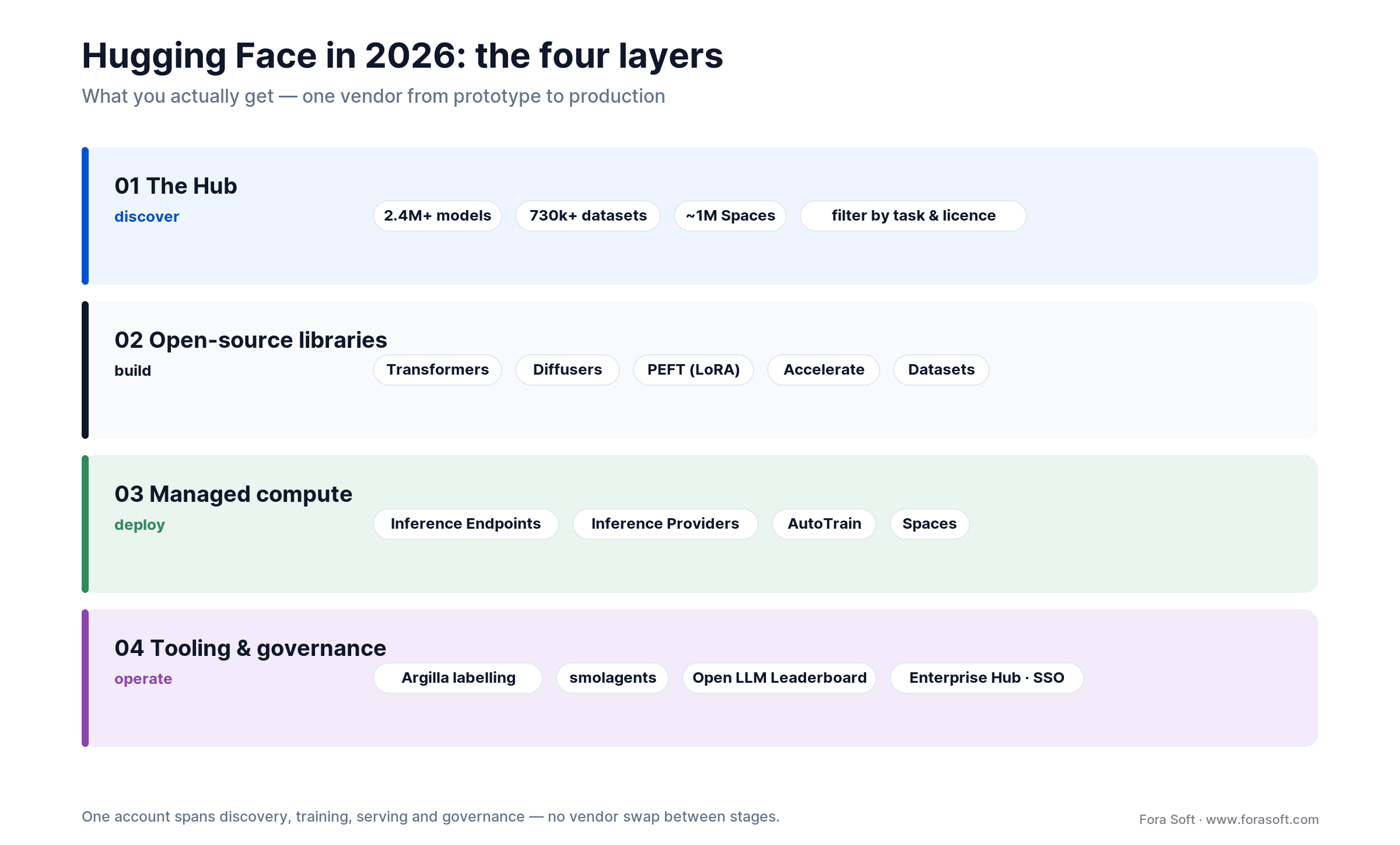
Figure 1. The four layers of Hugging Face in 2026 — one account from discovery to production.
The Hub
2.4 million+ open-source models, 730k+ datasets and ~1 million+ Spaces (interactive apps) — and it is accelerating: the second million models landed in roughly a third of the time the first took. You browse by task (text classification, translation, image generation), filter by licence and download or stream weights. Free for public assets, paid for private repos at scale.
Open-source libraries
Transformers is the canonical interface to LLMs — load any model with two lines of Python. Diffusers handles image, video and audio generation (Stable Diffusion, FLUX). PEFT ships LoRA / QLoRA for parameter-efficient fine-tuning. Accelerate spreads training and inference across GPUs, TPUs or Apple Silicon. Datasets streams huge corpora without filling your disk.
Managed compute
Inference Endpoints spin up a dedicated GPU API for any Hub model. Spaces host Gradio / Streamlit demos. AutoTrain is no-code fine-tuning behind a UI. Inference Providers route a single OpenAI-compatible API call to whichever partner (Together, SambaNova, Cerebras, Fal, Groq) is fastest or cheapest at the moment.
Tooling around the model
Argilla is the open-source data-labelling platform that ships as a Space. smolagents is HF’s lightweight code-first agent framework, popular in 2026 for autonomous research and dataset discovery. The Open LLM Leaderboard stays the closest thing to a neutral scoreboard for open-weight models.
Hugging Face in one sentence: the open-source AI cloud — a Hub of 2M+ models, the libraries to run them, and managed compute that lets you ship the same model from prototype to production without changing vendors.
Hugging Face pricing in 2026, in one table
Pricing is the question that derails most early Hugging Face projects, because there is no single bill. You pay for some combination of Hub seats, Spaces compute, Inference Endpoints GPU-hours, AutoTrain runs and per-token usage on Inference Providers. This table is the cheat sheet; list prices come from Hugging Face’s pricing pages.
| Product | 2026 list price | What it covers |
|---|---|---|
| Hub Free | $0 | Unlimited public repos; basic CPU Spaces |
| PRO | $9 / user / mo | 25 min/day H200 ZeroGPU, $2/mo Provider credits, 1 TB private storage |
| Team | $20 / user / mo | Everything in PRO org-wide, SSO, 12 TB + 1 TB/seat storage |
| Inference Endpoints — CPU | $0.033 / hr | Embeddings, NER, classifiers |
| Inference Endpoints — T4 / L4 GPU | $0.50–$0.80 / hr | 7–13B chat, small Whisper, embeddings at QPS |
| Inference Endpoints — A10G / L40S | $1.00–$1.80 / hr | 13–30B chat, FLUX, Stable Diffusion 3.5 |
| Inference Endpoints — A100 / H100 / H200 | $2.50–$10 / hr | 70B+ models, high-throughput RAG, video gen |
| Spaces hardware | $0–$23.50 / hr | Demo / dashboard / labelling apps |
| Inference Providers (per-token) | Provider rate | Llama 70B from ~$0.26 / 1M, FLUX from ~$0.01 / image |
| Enterprise Hub | $50 / user / mo • custom | SSO, audit logs, on-prem connectors, BYO cloud |
Two non-obvious facts. Endpoints are billed per minute and only when running — you can scale to zero overnight if your load is bursty. And there is no Hugging Face markup on Inference Providers; the per-token rates passed through are the partner’s own pricing, so HF is competitive even when you would otherwise go straight to Together AI or Cerebras.
Top business tasks where Hugging Face actually pays off
Generic “use AI in your business” advice is useless. The list below is filtered by the use cases we have shipped on Hugging Face for paying clients in the last 18 months.
1. Text classification and intent routing. Sentiment, spam, support-ticket routing, lead scoring. DistilBERT / RoBERTa fine-tuned with PEFT delivers >95 % accuracy on most use cases for <$200 in compute. Runs on CPU in production.
2. Named-entity recognition and extraction. Invoice parsing, contract clause extraction, resume screening, PII redaction. Fine-tune SpanMarker or GLiNER; pair with rules for high-stakes outputs.
3. Summarisation. Sales-call summaries, legal-document condensing, support-ticket triage. Meetric uses LLM summarisation to turn an hour of sales conversation into 30 seconds of action items.
4. Retrieval-augmented generation (RAG). Knowledge-base chatbots, internal search, policy assistants. The combo is BGE / E5 embeddings + Qdrant or Pinecone + Llama 4 or Qwen 3. See our chatbot integration guide.
5. Speech-to-text and translation. Whisper Large v3 quantised to GGUF runs at 100 % real-time on a single L4 GPU. Multilingual MMS handles 1,000+ languages.
6. Image and video generation. FLUX.2 (text-to-image) and HunyuanVideo (text-to-video) on Inference Endpoints; cost per image around $0.01 served from L4 / A10G.
7. Embeddings and semantic search. Recommendation engines, smart de-duplication, similar-product matching. Sentence Transformers + a vector DB is the cheapest production AI you can build.
8. Code and developer copilots. Internal coding assistants on Codestral or DeepSeek Coder, fine-tuned on your codebase, deployed via vLLM in your VPC.
Reach for HF over a closed API when: you process >10M tokens / month, you have data-residency or HIPAA constraints, you need to fine-tune on proprietary data, or your unit economics need an open weight you can self-host.
The model families worth knowing in 2026
There are millions of models on the Hub but only a handful belong on a 2026 shortlist. Use this as your default starting set.
| Family | Best for | Sizes | Licence |
|---|---|---|---|
| Llama 4 (Meta) — Scout / Maverick | General chat, RAG, agents | 109B–400B MoE | Llama Community |
| Qwen 3 / 3.5 (Alibaba) | Multilingual (200+ langs), code | 8B / 32B / 235B MoE | Apache 2.0 |
| Mistral Small / Large 3 | EU data residency, instruction following | 24B / 675B MoE | Apache 2.0 |
| DeepSeek R1 / V3 | Reasoning, math, code | 671B MoE | MIT |
| GLM-5 (Zhipu) | Coding, agents, tool use | ~744B MoE (44B active) | MIT |
| Phi-4 / Gemma 3 | On-device, edge, mobile | 4B / 14B | MIT / Gemma |
| FLUX.2 (Black Forest Labs) | Photorealistic image generation | dev 32B / klein 4B | Pro / Apache 2.0 |
| Whisper Large v3 (OpenAI) | Multilingual ASR, noisy audio | 1.5B | MIT |
| BGE / E5 / Sentence Transformers | Embeddings, semantic search, RAG | 23–567M | MIT / Apache |
Pick Apache 2.0 / MIT licences first. Llama’s community licence is permissive but adds restrictions that procurement and legal will flag. If your CTO wants “no restrictions ever,” default to Qwen, Mistral, DeepSeek or GLM-5.
Six deployment patterns and how to pick
Deciding how to ship the model is the architecture call that drives most of the bill. There are six clean patterns; the first one that fits your traffic is usually the right answer.
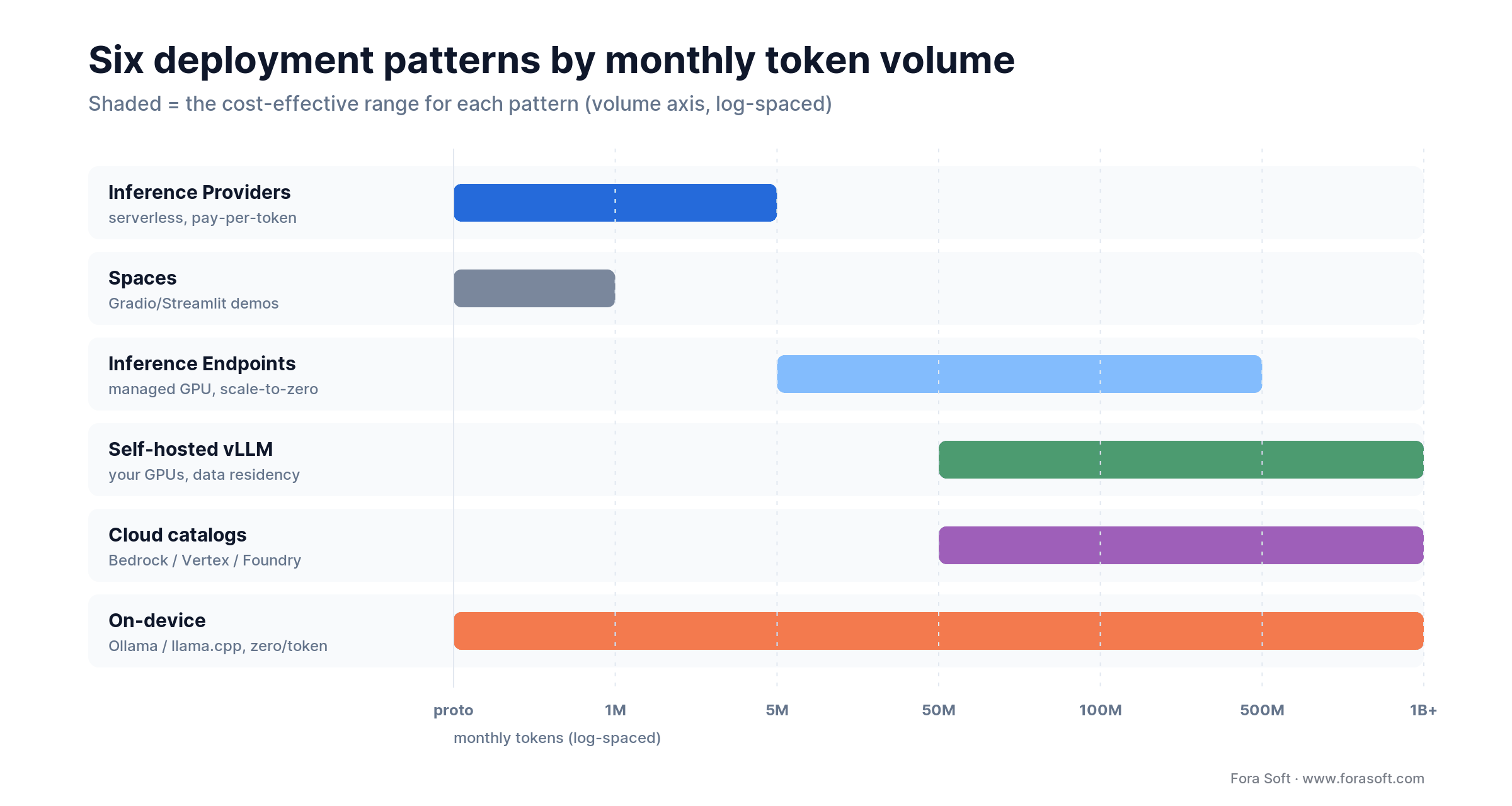
Figure 2. Where each deployment pattern is cost-effective, by monthly token volume.
1. Inference API and Inference Providers (serverless)
One OpenAI-compatible endpoint, pay-per-token, no infrastructure. Use this for prototypes, MVPs, internal tools and anything below ~5M tokens / month. The Inference Providers API in 2026 is genuinely the fastest way to get Llama 70B or Qwen 235B online — in production.
2. Inference Endpoints (dedicated GPU)
A managed always-on (or scale-to-zero) GPU API with autoscaling. Cost-effective from ~10M tokens / month up to a few hundred million. Best when traffic is steady, latency matters and you do not want to run Kubernetes.
3. Spaces (demos, dashboards, labelling)
A free-or-cheap way to host a Gradio or Streamlit app. Use this for stakeholder demos, internal tools, A/B comparison UIs and Argilla data-labelling projects.
4. Self-hosted on your cloud (vLLM, SGLang, llama.cpp)
vLLM is the production default in 2026; it serves Llama 70B at 100–200 tokens/sec on a single H100 and is OpenAI-API-compatible. Use this above 50M tokens / month or when you need data residency. SGLang is the rising challenger for RAG-heavy workloads with prompt caching. llama.cpp is the right pick when you have to run on CPU or consumer GPU. Note: HF’s own TGI is in maintenance mode — new deployments should default to vLLM or SGLang.
5. Cloud model catalogs (Bedrock, Vertex, Azure AI Foundry)
If you are already deep on AWS, GCP or Azure, the cloud’s curated catalog of Hugging Face models with one-click deploy is a real time-saver. Pricing is in line with HF Endpoints; the upside is enterprise contracts, audit logs and BAA / DPAs you already have in place.
6. On-device (Ollama, llama.cpp, mobile NPUs)
Running a 7B–14B model directly on a laptop or phone is real in 2026. Ollama crossed 50M monthly downloads. Use this for full-privacy experiences, offline use cases and pro-features that need zero per-token cost. Quality ceiling is lower than cloud, but rapidly closing.
Stuck choosing between an API and self-hosting?
Send us your projected token volume and we will model six deployment options against your real traffic profile in 48 hours.
Cost model: API vs Inference Endpoints vs self-hosted, four real scenarios
Most teams pick the wrong deployment because they extrapolate prototype prices to production. Here are four scenarios drawn from active 2026 client work, with rough monthly numbers.
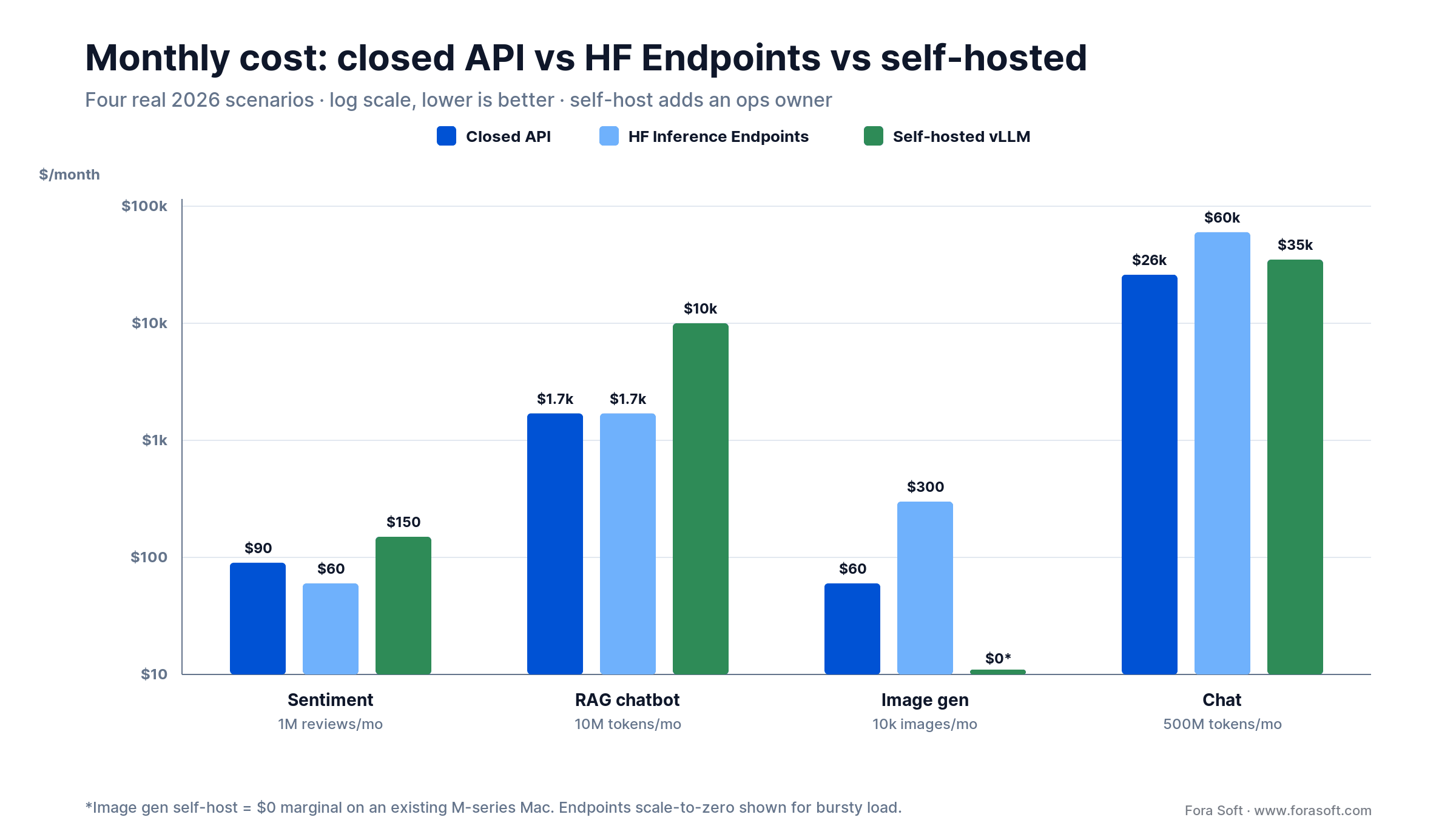
Figure 3. Monthly cost by deployment across four real workloads (log scale, lower is better).
| Scenario | Closed API | HF Inference Endpoints | Self-hosted vLLM |
|---|---|---|---|
| Sentiment, 1M reviews / mo (overnight batch) | ~$90 (GPT-4o mini batch) | ~$300 (T4 24/7) or ~$60 (T4 + scale-to-zero) | ~$50 spot + $100 ops |
| RAG chatbot, 10M tokens / mo, 99.9 % | ~$1,500 + $200 vector DB | ~$1,500 (A10G 24/7) + $200 vector DB | ~$8,000 (2× A100) + $2,000 ops |
| Image gen, 10k / mo on demand | ~$40–$80 (Replicate FLUX) | ~$300 (L4 24/7) | $0 marginal (existing M-series Mac) |
| Chatbot, 500M tokens / mo, 99.95 % | ~$22,500–$30,000 | ~$60,000 (2× H100 24/7) | ~$32,000 + $3,000 ops |
Three lessons fall out of this table. First, closed APIs win small workloads — do not start by self-hosting. Second, the right inflection point is around 100M–500M tokens / month: above that, self-hosted vLLM on dedicated GPUs is the cost-competitive option, but only if you have an ops owner. Third, scale-to-zero on Inference Endpoints kills bursty cost — if your traffic is non-uniform, a 24/7 endpoint is the wrong default.
For a more aggressive cost optimisation, our team typically lands a hybrid: a closed API for tail traffic, an Inference Endpoint for steady mid-volume requests, and a vLLM cluster for the bulk of cold paths and analytics. For the per-token math behind numbers like these, see our Learn note on the real cost of AI in production. Our voice AI agents guide goes deep on the LiveKit / vLLM combo we use for real-time products.
Fine-tuning paths: AutoTrain, LoRA, full SFT, distillation
Most business AI projects do not need a custom model from scratch. They need an open model with a thin layer of your data on top. Hugging Face supports four fine-tuning paths in 2026, and you should start at the cheapest one that solves the problem.
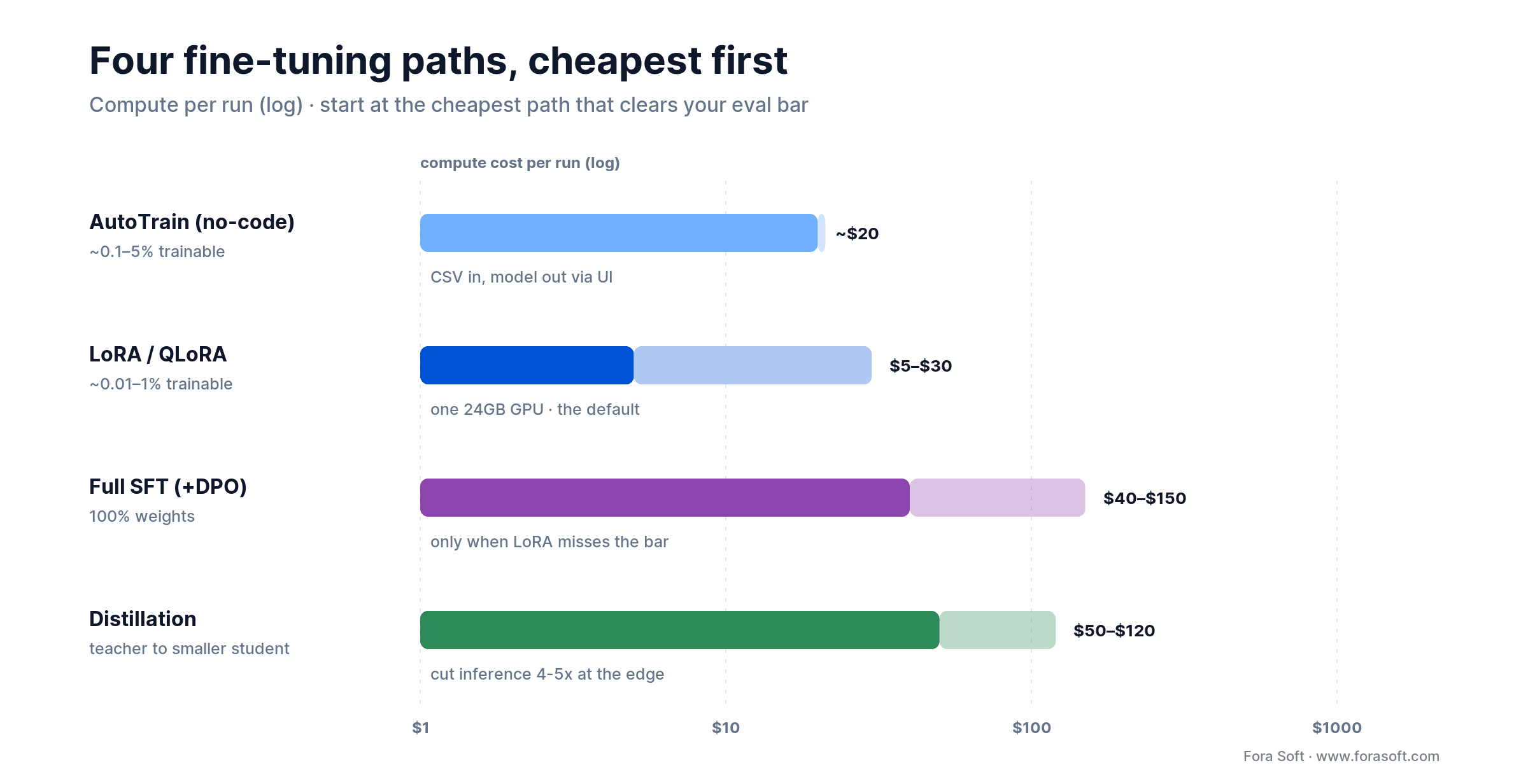
Figure 4. Four fine-tuning paths by compute cost — start at the cheapest that clears your eval bar.
1. AutoTrain (no-code). Upload a CSV, pick a base model, set hyperparameters in the UI. Pay only for compute minutes. Fits ML-curious product managers and small teams. Works for text classification, NER, semantic search, translation, image classification.
2. LoRA / QLoRA (PEFT). Train a tiny adapter (~0.01–1 % of base parameters) instead of touching the full model. QLoRA quantises base weights to 4-bit, so a Llama 3.1 8B fine-tune fits on a single 24 GB GPU. ~$5–$30 of compute for a meaningful run. This is the right default for chatbots and copilots.
3. Full supervised fine-tune (SFT). Update every weight. Needed only when LoRA proves insufficient on quality benchmarks. Llama 3 70B SFT lands around 20 GPU-hours on A100 = $40–$60. DPO or RLHF on top is 2–3× that.
4. Distillation. Compress a 70B model into a 14B that retains 85 %+ of the quality. The right pattern when you must run on edge or you want a 4–5× cheaper inference bill. ~5–10 GPU-hours of work.
In our practice, 80 % of business projects only need LoRA. The remaining 20 % are split between distillation (cost-driven) and full SFT (quality-driven). If you are scoping “train our own AI from scratch,” that is almost always the wrong starting point in 2026.
Risks, licences and the security checks no one mentions
More AI projects die in legal review than in technical review. Before you put a Hugging Face model into a product, walk through the five risks below.
1. Licence drift. Llama, Qwen and Mistral have meaningfully different commercial-use clauses. Llama’s community licence forbids using output to train competing models and adds attribution clauses. FLUX’s non-commercial weights and Pro tier confuse procurement. Always read the model card and the LICENSE file, and prefer Apache 2.0 / MIT when you have a choice.
2. Pickle / supply-chain attacks. Older `.bin` and `.pt` weights use Python pickle and can execute arbitrary code on load. Use safetensors-only models in production, scan with picklescan or HF’s built-in malware checks, and pin model SHA-256 hashes in CI.
3. Prompt injection and jailbreaks. Any LLM that touches user input is vulnerable. Combine Llama Guard 3 or NeMo Guardrails with input sanitisation, output filtering and structured outputs (JSON-mode, grammars). Never let user input directly compose a system prompt.
4. Hallucinations. Even a tuned model fabricates. RAG, tool use and confidence thresholds reduce it; for high-stakes outputs (medical, legal, financial), keep a human-in-the-loop and log everything to Langfuse or LangSmith for audit.
5. Data residency. Hugging Face Inference Endpoints run on AWS US / EU regions; there is no native MENA, APAC sovereign or HIPAA region. For regulated workloads, deploy vLLM in your own VPC, use cloud catalog endpoints in your existing account (AWS Bedrock, Azure AI Foundry, GCP Vertex), or run on-device.
A production checklist before you launch
Pre-launch reviews surface the same dozen issues across every Hugging Face project. Treat this as a yes/no list before going live.
Quantise where you can afford to
GGUF Q4_K_M for CPU/edge, AWQ for vLLM on NVIDIA, GPTQ for older inference servers. Most chat workloads survive 4-bit quantisation with <2 % quality loss, and the inference bill drops 30–60 %. Our Learn deep-dive on distillation and quantization for the edge covers the accuracy trade-offs.
Use the right inference server
vLLM is the 2026 production default. SGLang for RAG-heavy and prompt-cache-heavy workloads. TensorRT-LLM for the absolute peak NVIDIA throughput when you have the deployment budget. llama.cpp for CPU and edge.
Wire up observability before traffic
Trace every call: prompt, completion, tokens, latency, cost, user, model version. Langfuse and LangSmith are the two leading open and SaaS choices in 2026. Without traces, every regression is unfixable.
Build a real eval set
MMLU is fine for shortlisting open models; it is useless for your product. Build a 100–500-example hand-graded eval that mirrors your real workload, run it on every change, and gate releases on it.
Add guardrails
Llama Guard 3 catches harmful content before and after the LLM. NeMo Guardrails handles topical and dialog flow. Structured outputs (JSON-mode, regex grammars) prevent the model from producing free-text where you need machine-readable data.
Default to LoRA in 2026. Anything more invasive (full SFT, DPO, distillation) needs a quality bar your eval set can no longer hit with a $20 LoRA run.
Alternatives to the Hugging Face Hub worth comparing
Hugging Face is not the only place open models live. The right strategy is usually HF Hub for discovery and weights, plus one or two of the platforms below for inference. Use this matrix as your shortlist.
| Platform | Strength | Weakness | When to pick it |
|---|---|---|---|
| Together AI | Cheapest API on Llama 70B (~$0.26 / 1M) | No fine-tune UI | High-volume open-model inference |
| Replicate | Per-second billing, image / audio focus | Pricier than Together for text | Image / video gen on-demand |
| Modal | Serverless GPUs, fast cold start | DIY model deployment | Bursty batch jobs, custom code |
| Baseten | Production-grade managed serving | Custom contracts above starter tier | Demand-driven LLM serving |
| Fireworks / Cerebras / Groq | Ultra-low latency, custom silicon | Smaller model catalogues | Real-time voice and chat |
| Ollama / llama.cpp | Free, on-device, offline | No multi-tenant scaling | Privacy-first, edge, dev rigs |
In practice we use HF Hub for discovery and weights, Inference Providers for the OpenAI-compatible gateway, and Together AI or Modal under load. The mix is usually two providers behind a single feature flag.
Mini case — AI sales summaries on Meetric, end to end
Situation. Meetric is a video platform for sales teams. The team needed automatic call summaries (action items, objections, next steps) without sending every conversation to OpenAI for compliance reasons.
Plan. Whisper Large v3 (HF) for transcription, Llama 3.1 70B Instruct for summarisation, BGE embeddings + Qdrant for RAG over the customer knowledge base. Inference: vLLM on a single H100 in the customer’s EU AWS account. Eval: 200 graded summaries hand-built with a sales lead in three days.
Outcome. 92 % of summaries rated “publish-ready as is” on the eval set, ~$0.06 / summary (versus ~$0.40 on a closed API at the same quality), and zero customer call data leaves the buyer’s VPC. Want a similar buildout? Book a scoping call — we typically scope a comparable feature in 30 minutes.
A decision framework — pick your stack in five questions
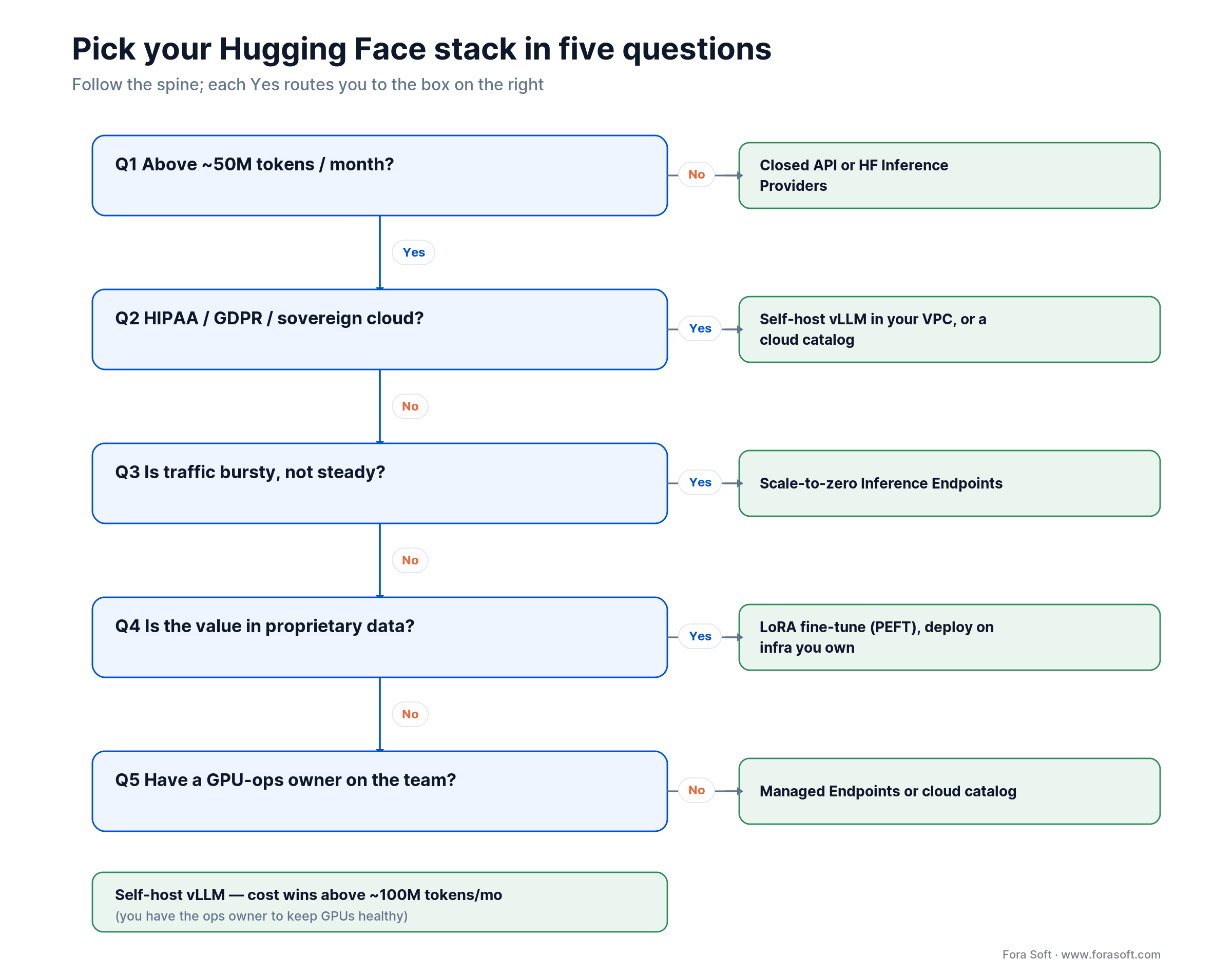
Figure 5. Pick your Hugging Face stack in five questions.
Q1. Are you above 50M tokens / month? No → closed API or HF Inference Providers. Yes → consider Endpoints or self-hosted.
Q2. Do you have HIPAA, GDPR-Schrems or sovereign-cloud requirements? Yes → self-host vLLM in your own VPC or use cloud catalog endpoints (Bedrock / Vertex / Foundry) on a region you already control.
Q3. Is your workload bursty or steady? Bursty → scale-to-zero Endpoints or Inference Providers. Steady → always-on Endpoints or self-hosted.
Q4. Is your value in proprietary data? Yes → LoRA fine-tune on Hugging Face PEFT, eval on a custom set, deploy on infra you control.
Q5. Do you have an ops owner who can keep a GPU cluster healthy? No → managed Endpoints or cloud catalogs. Yes → self-host with vLLM and reap the cost wins above 100M tokens / month.
Five pitfalls that kill Hugging Face projects
1. Picking a model on benchmarks alone. MMLU and Arena rankings do not predict your specific task. Build a real eval set first; pick the cheapest model that clears your bar.
2. Skipping quantisation. Default FP16 weights cost 2× the GPU memory and inference money of an AWQ-quantised version with negligible quality loss.
3. No guardrails or output schema. Free-text completions break downstream code. Use JSON-mode, regex grammars, Llama Guard. Save support tickets.
4. Forgetting licence audit. Llama community licence, FLUX non-commercial weights, gated Mistral checkpoints — legal review at week 11 of an 8-week project is the worst possible time.
5. Treating the prototype cost as the production cost. A two-week prototype that costs $40 in API calls extrapolates to thousands at production scale; model the economics before launch, not after.
KPIs to track once you are live
Quality KPIs. Eval-set pass rate, hallucination rate (sampled human review), grounded-answer rate (RAG), refusal rate, output-schema compliance.
Business KPIs. Cost per inference, cost per resolved ticket / answered question / generated asset, conversion lift versus non-AI baseline, retention impact among users who touch AI features.
Reliability KPIs. Latency P50 / P95 / P99 (TTFT and per-token), GPU utilisation, error rates, fallback-provider hit rate, cache hit rate (KV cache for RAG).
Already running an AI feature and the numbers do not add up?
We do AI cost and quality audits in 5 working days. Eval set, model swap, quantisation, deployment redesign — whatever moves the needle.
When you should not use Hugging Face
Hugging Face is not always the answer. Stay on a closed API when (a) your monthly token spend is below ~$300 and you are still searching for product-market fit, (b) frontier reasoning quality (GPT-5, Claude 4.5, Gemini 3 Pro) is the differentiator and no open weight matches, or (c) your team is fewer than three engineers and you simply cannot operate a model.
Stay on cloud catalogs (Bedrock, Vertex, Azure AI Foundry) when your enterprise contracts already cover them and the procurement / audit overhead of adding HF as a vendor outweighs the upside. Bring it back in once volume or compliance pressure shifts the math.
Frequently asked questions
Is Hugging Face free for businesses?
The Hub itself is free for public assets. Private repos, large storage and dedicated GPUs all have list prices. Most production projects pay for a combination of PRO seats ($9 / user / month), Inference Endpoints ($0.033–$10 / GPU-hour) and Inference Providers per-token rates. There is no Hugging Face markup on Inference Providers.
Is Hugging Face an alternative to OpenAI or Anthropic?
Yes and no. HF is the open-source counterpart: instead of one closed model behind a paid API, you get thousands of open-weight models you can host yourself or rent through partner providers. For most use cases below ~10M tokens / month, OpenAI / Anthropic still win on convenience. Above that, HF’s open ecosystem usually wins on cost and control.
Which Hugging Face model should I start with?
For general chat and RAG, Llama 4 Scout or Qwen 3 8B is the right starting point. For 70B-class quality, try Llama 4 Maverick or Qwen 3 235B MoE. For embeddings, BGE-M3 or E5-large. For ASR, Whisper Large v3. For images, FLUX.2.
Can I fine-tune a Hugging Face model on my own data without ML expertise?
Yes — AutoTrain ships a no-code UI that handles classification, NER, semantic search, translation and image classification end-to-end. For text generation, LoRA via the PEFT library is more flexible and only needs ~50 lines of Python. Fora Soft typically delivers a first fine-tune in 5–10 working days.
Is Hugging Face HIPAA / GDPR compliant?
Hugging Face Inference Endpoints offer EU regions and SOC 2; for HIPAA-grade workloads you typically self-host the model in your own AWS / GCP / Azure account or use those clouds’ native model catalogs that already cover HF assets under your existing BAA / DPA. Pure HF Endpoints are not a default HIPAA fit in 2026.
When is self-hosting cheaper than APIs?
Roughly above 50M–100M tokens / month for a steady chat workload. Below that, GPU-utilisation overhead and ops cost usually erase any per-token saving; above ~100–500M tokens / month self-hosting pulls clearly ahead. Always model both before committing.
What is the difference between Hugging Face and OpenAI?
OpenAI ships closed, frontier models behind a single hosted API. Hugging Face is the open-source ecosystem — the Hub for open models, the libraries that load them, and managed compute to run them. They are complementary: OpenAI for top quality on a credit card, HF for control, customisation and cost at scale.
Does Fora Soft build production AI on Hugging Face?
Yes. We have shipped HF-based features in Meetric, TransLinguist, Sonar and 30+ other live products. We typically deliver an MVP feature in 4–6 weeks and a fixed-scope production rollout in 8–14. Book a call.
What to read next
Voice AI
LiveKit voice AI agents in 2026: the engineer’s playbook
How we wire HF models into real-time voice products with LiveKit and vLLM.
AI APIs
AI call assistants — a practical guide to third-party APIs
Picking the right closed API or open model for your voice product.
Chatbots
AI chatbot × video integration: complete 2026 implementation guide
Building a chat layer on top of HF embeddings, RAG and live video.
Generative AI
AI-crafted personalised learning materials in 2026: the 3-layer stack
A worked example of HF generative models inside a real ed-tech product.
Ready to ship your first Hugging Face feature?
Hugging Face in 2026 is no longer just “the place open models live.” It is a full open-source AI cloud with a Hub, libraries, managed compute and a unified inference gateway. The right business question is not “HF or OpenAI?” but “which deployment pattern, which model family, and which fine-tune step actually fits this feature?”
Most projects start with a closed API or Inference Provider, ship within a sprint, and graduate to LoRA fine-tunes plus managed Endpoints once usage justifies it. A subset moves to vLLM self-hosting once volume crosses 50–100M tokens / month or compliance demands it. Our AI integration practice ships this loop end-to-end — from scoping to fine-tuning to production observability.
Get a Hugging Face roadmap tailored to your product
A 30-minute call, a written AI feature plan within 5 working days, and a fixed-scope quote. No commitment.

