

Diarization splits audio by speaker so a transcript reads as a conversation rather than a wall of text. It is essential for meeting notes and interviews, and it is hard when voices overlap or sound alike. Pyannote is a common engine.
The book · Volume 6 of 7
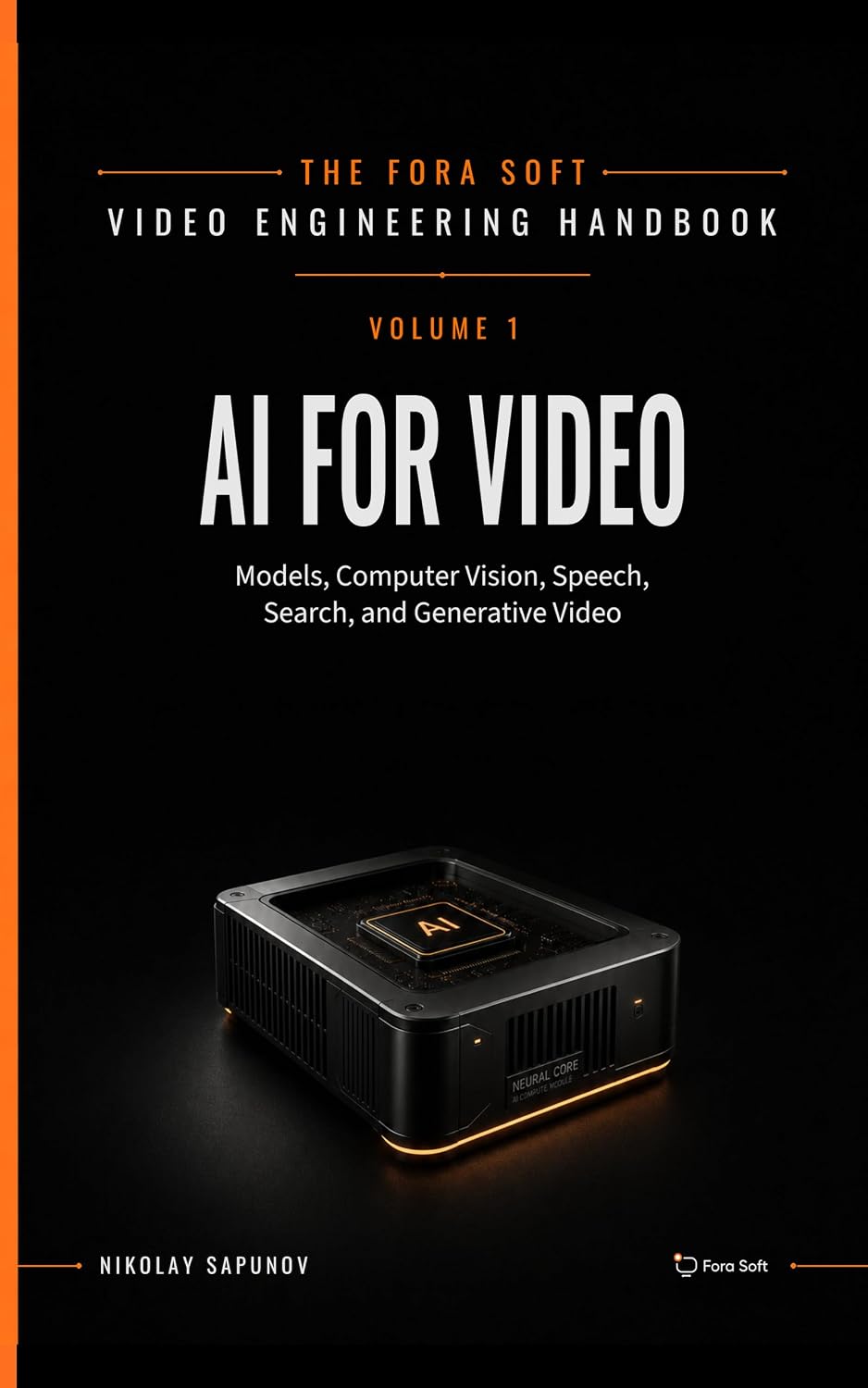
AI for Video: A Complete Guide to Intelligence in Video Products: From Models and Inference to Computer Vision, Speech, Search, and Generative Video
Speaker diarization is what turns a meeting transcript into a readable conversation, and overlapping speech is where it fails most often. Volume 6 covers speaker diarization in detail within speech AI: ASR, TTS, diarization engines such as pyannote, transcripts as searchable data and the deployment choices between batch and near-live processing. Written by Nikolay Sapunov, CEO at Fora Soft.
Getting accurate speaker diarization for meeting or interview transcripts?
Send us a few real recordings, and we will benchmark diarization engines on them and recommend a setup with accuracy and cost per hour. 250+ video products shipped since 2005.
