Medical imaging software development

Medical imaging software development company: real-time AI, DICOM and PACS

As a medical imaging software development company, we build custom AI imaging systems — from real-time surgical video analysis and CT/MRI/ultrasound anomaly detection to DICOM/PACS integration and telemedicine AI workflows. Powered by custom-trained deep learning models with sub-500ms latency via WebRTC/LiveKit streaming. Proven across 250+ projects since 2005.

CT · MRI · ultrasound
AI model
DICOM & PACS
MyOnCallDoc · HIPAA telemedicine video on iOS and Android
VALT
Video observation · Web, iOS
770+
U.S. organizations

Sole dev team for 10+ years: HIPAA video for police, medical schools, child advocacy.

RTMP, HLS, Wowza
CirrusMed
Telehealth · Web
48+
U.S. states licensed

HIPAA direct primary care platform with a full EMR; 20+ physicians.

WebRTC, React, Stripe
Related work

HIPAA telehealth and real-time vision AI we have shipped.

All projects
Med Clinic Solutions website page showing 'Call doctor' section with doctor options and filters.
Telemedicine
iOS, Android

MyOnCallDoc

A HIPAA-compliant telemedicine video chat for iOS and Android that we built.

Read the case study →
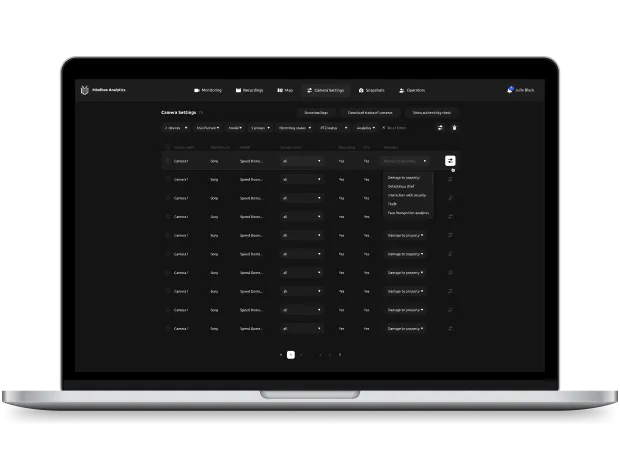
Laptop displaying a dark-themed camera settings dashboard with a list of cameras and configuration options.
Video AI
Web

MindBox

An AI video surveillance platform we built for Mindbox Analytics, with facial recognition and ANPR on live camera feeds.

99.5%
facial recognition accuracy
500K+
vehicles identified a day (ANPR)
Read the case study →
Client feedback

What clients say after the build ships.

“They focus on delivering practical, reliable solutions that create measurable impact.”
Prashant Sulakhe
Project Manager · Mindbox Analytics
See the project →

Read all 32 reviews on Clutch ↗

Who this is for

An AI tool off the shelf, or imaging AI built for your workflow

If your project involves real-time video, custom workflows, integration with hospital systems, or addressing clinician shortages through faster, more accurate diagnostics, we can help build the solution that fits.

Build custom imaging AI when

  • Off-the-shelf tools don't fit your protocols, edge-case data, or real-time requirements
  • The AI has to work on live surgical, ultrasound, or endoscopy video, not only on static scans
  • Findings have to land in your PACS worklists and EHR without manual steps
  • You work with rare pathologies, specialized imaging equipment, or proprietary clinical protocols

Buy an off-the-shelf AI tool when

  • A cleared commercial model already covers your modality and finding
  • Your PACS vendor already sells the AI you need as an add-on
  • You have no imaging data to train or validate a model on
Where custom imaging AI fits
Real-time surgical video analysis
Radiology workflow prioritization
Telemedicine AI video analysis
Ultrasound live guidance
Endoscopy & intraoperative assistance
Patient monitoring via video
Triage & risk scoring in imaging pipelines
Custom dataset fine-tuning for niche conditions
How we engage

How our custom AI medical imaging development works from data to deployment.

We follow a clear, transparent process designed for healthcare projects. Every step includes regular reviews so you stay in control and see progress toward a solution that actually works in your environment.

  1. 01.

    Discovery & data assessment

    We review your clinical workflows, imaging modalities, data samples, compliance requirements, and integration needs, and identify annotation needs. You receive a scope, architecture plan, and cost outline.

  2. 02.

    Development & real-time integration

    Our team builds the AI inference pipeline, adds sub-500ms video streaming via WebRTC/LiveKit, implements DICOM/PACS/HL7/FHIR integration, and connects to your clinical EHR/EMR systems.

  3. 03.

    Testing & validation

    We run clinical validation: accuracy benchmarking against your datasets, latency testing, HIPAA/SOC II security audits, penetration testing, and real-world scenario validation with your clinical team.

  4. 04.

    Deployment

    We deploy to your infrastructure — AWS/Azure/GCP cloud, on-premises GPU servers, or edge devices — with BAA-ready configuration and full integration testing in your production environment.

  5. 05.

    Optimization & ongoing support

    Post-launch AI performance monitoring, model retraining on new data, accuracy optimization, and long-term support.

Stack

Custom AI medical imaging architecture we design.

Our systems are built for security, scalability, and real-time performance from the ground up. We combine proven streaming technology with AI processing layers that handle high-volume medical video without compromising compliance or speed. Start with a focused MVP (e.g. real-time anomaly detection for one modality) and scale globally to enterprise-grade telemedicine, multi-hospital radiology networks, or AI-assisted surgical platforms.
Secure data ingestion
DICOM/HL7/FHIR import
Real-time WebRTC/LiveKit video streams
Protected edge ingestion
HL7/FHIR interoperability
AI processing layer
YOLO
EfficientNet
U-Net
ResNet
TensorRT optimization
GPU/edge infrastructure
Transfer learning
Integration & output layer
Direct PACS/EHR connections
AI-driven worklist prioritization
AI-driven case routing
Structured HL7/FHIR reporting
Real-time alerts
HIPAA-compliant security
End-to-end SRTP/DTLS encryption
HIPAA/SOC II audit logging
Role-based access controls
PHI de-identification
BAA-ready deployment
AWS/Azure/GCP
Pricing

Flexible pricing for every growth stage.

Imaging AI in production

from
$50,000
  • Models for CT, MRI or ultrasound, trained on your data
  • DICOM, PACS, HL7 and FHIR integration
  • Worklist prioritization
  • Real-time video over LiveKit or WebRTC
  • HIPAA-compliant deployment
  • …and more

Enterprise imaging platform

from
$200,000
  • Everything in Imaging AI in production, plus:
  • Multi-site, edge and cloud hybrid, 99.9% uptime target
  • Continuous retraining
  • EHR and EMR integration
  • Clinician review and an audit trail for every model result
  • FDA SaMD documentation support, billed separately
  • …and more
Get instant quote
Optional add-ons: automated PHI de-identification for HIPAA/GDPR, cloud-to-edge GPU inference optimization with TensorRT, 4K/8K real-time medical video streaming via WebRTC/LiveKit, FDA 510(k) validation support documentation, custom DICOM annotation and dataset labeling pipelines, AI-powered triage dashboards with predictive risk scoring, HL7/FHIR interoperability layers, and more. Pricing is always project-specific and based on your exact requirements. We provide a detailed estimate after a short call.
Time & materials

How most of our clients work

  • You pay for hours worked, billed weekly
  • A detailed timesheet shows where every hour went
  • Change direction any week, no renegotiation
  • Any change to the estimate is approved by you before the hours are spent
Fixed price

When you need one number signed off

  • Available after discovery, on a scope we document together
  • One price, agreed before development starts
  • Changes to that scope are quoted separately
  • Best when the scope is settled and unlikely to move

Four ways to hire us

Dedicated team
Engineers, lead, QA. Owns your imaging AI build end to end.
See details →
Product maintenance
Our engineers maintain your imaging platform and retrain models on new data.
See details →
Fixed-scope project
A defined build at one agreed price.
Get a price →
Rescue & optimize
Audit an underperforming clinical AI system, repair integrations, speed up inference.
Get an estimate →
Free offers

Before you commit, get a free review.

FAQ

AI medical imaging development FAQ

Ask your question
What kinds of solutions can you build?
Can you ensure HIPAA compliance and low latency?
How accurate can the AI models be?
Do you support DICOM, PACS, and hospital ecosystems?
What does it cost?
What post-launch support do you provide?
Get in touch

Have an idea or need advice?

Contact us, and we'll discuss your project, offer ideas and provide advice. It’s free.

  1. 1

    We read your message

    Then we come back with next steps.

  2. 2

    Intro call to scope it

    We ask the questions that change the budget.

  3. 3

    Your estimate

    Budget and architecture notes. Yours to keep.