

dBTP (decibels True Peak) measures the real peak of the analog signal a DAC will reconstruct, not just the highest stored sample. Between two samples the smooth reconstructed waveform can overshoot the sample values, sometimes by 1-3 dB, so a file that reads -0.1 dBFS can still clip a converter or a lossy encoder downstream. Meters estimate this by oversampling (4x is typical) before measuring. This is why loudness specs set a true-peak ceiling — -1 dBTP for EBU R128, often -2 dBTP for lossy-codec delivery — leaving margin so inter-sample peaks and encoding overshoot never distort on the listener's hardware.
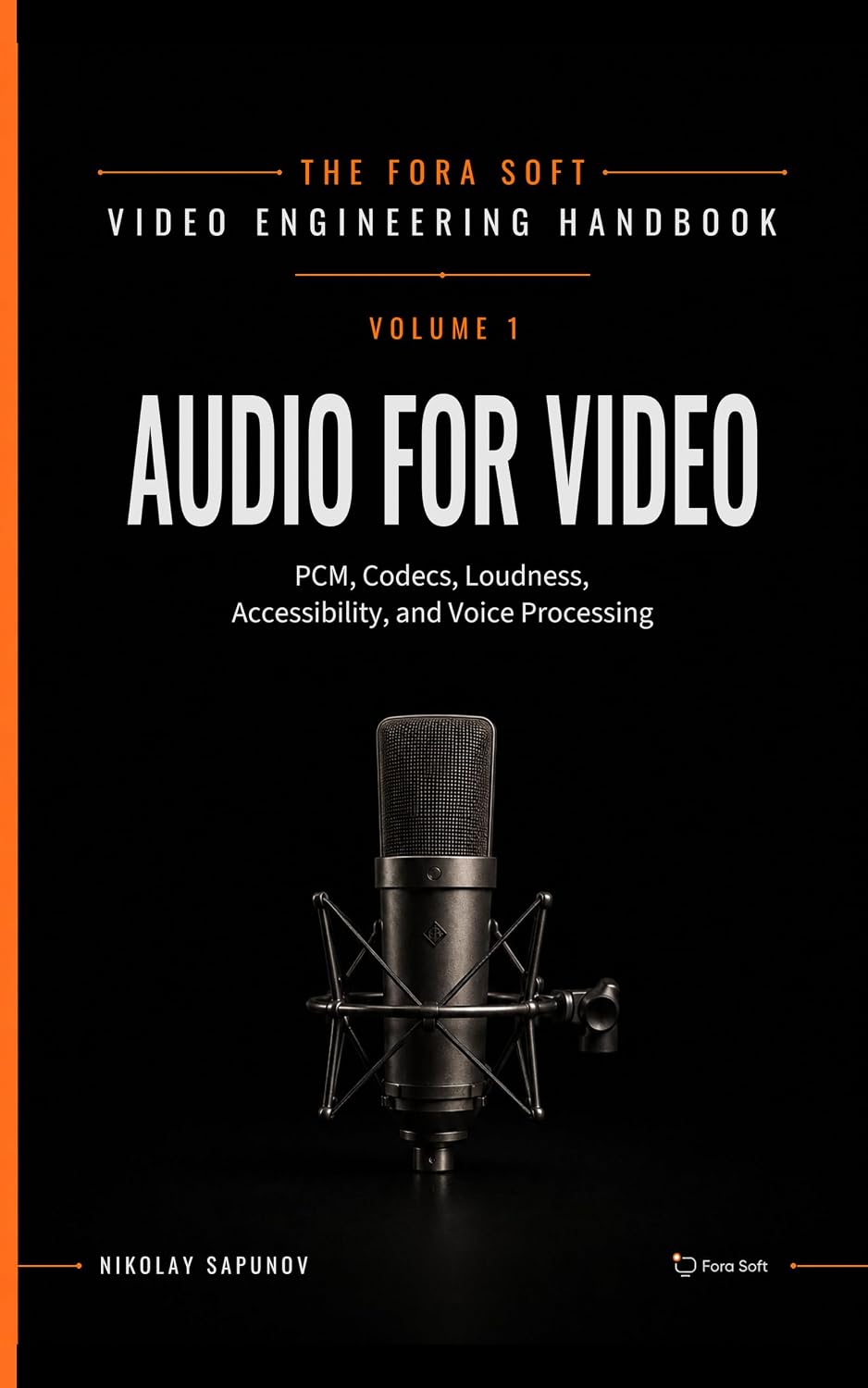
The book · Volume 4 of 7
Audio for Video: A Complete Guide to Sound in Video Products: From PCM and Codecs to Loudness, Accessibility, and Real-Time Voice Processing
dBTP catches the clipping that a sample-peak meter misses, which is why streaming specs cap true peak at around -1 dBTP. Volume 4 covers it in detail with loudness and LUFS, sampling, bit depth and dynamic range, and the AAC and Opus codecs your audio passes through afterwards. Written by Nikolay Sapunov, CEO at Fora Soft.
Audio passing your meters at -0.1 dBFS but still failing a dBTP check?
Share a few files and your delivery specs, and we will measure true peak and loudness and send a limiter and normalization setup that passes them. 250+ video products shipped since 2005.
