

RTP (Real-time Transport Protocol, RFC 3550) is the lightweight packet format that carries live media — every audio and video frame in WebRTC, SIP, and broadcast contribution. It runs over UDP because real-time media would rather lose a packet than wait for a retransmission, and its compact header adds just what the receiver needs: a payload type identifying the codec, a sequence number to detect loss and reordering, and a timestamp marking the media's sampling instant. RTP itself is deliberately minimal; the surrounding machinery — RTCP for control and statistics, SRTP for encryption, jitter buffers for timing — does the heavy lifting. It is the common substrate beneath essentially all interactive audio.
The book · Volume 5 of 7
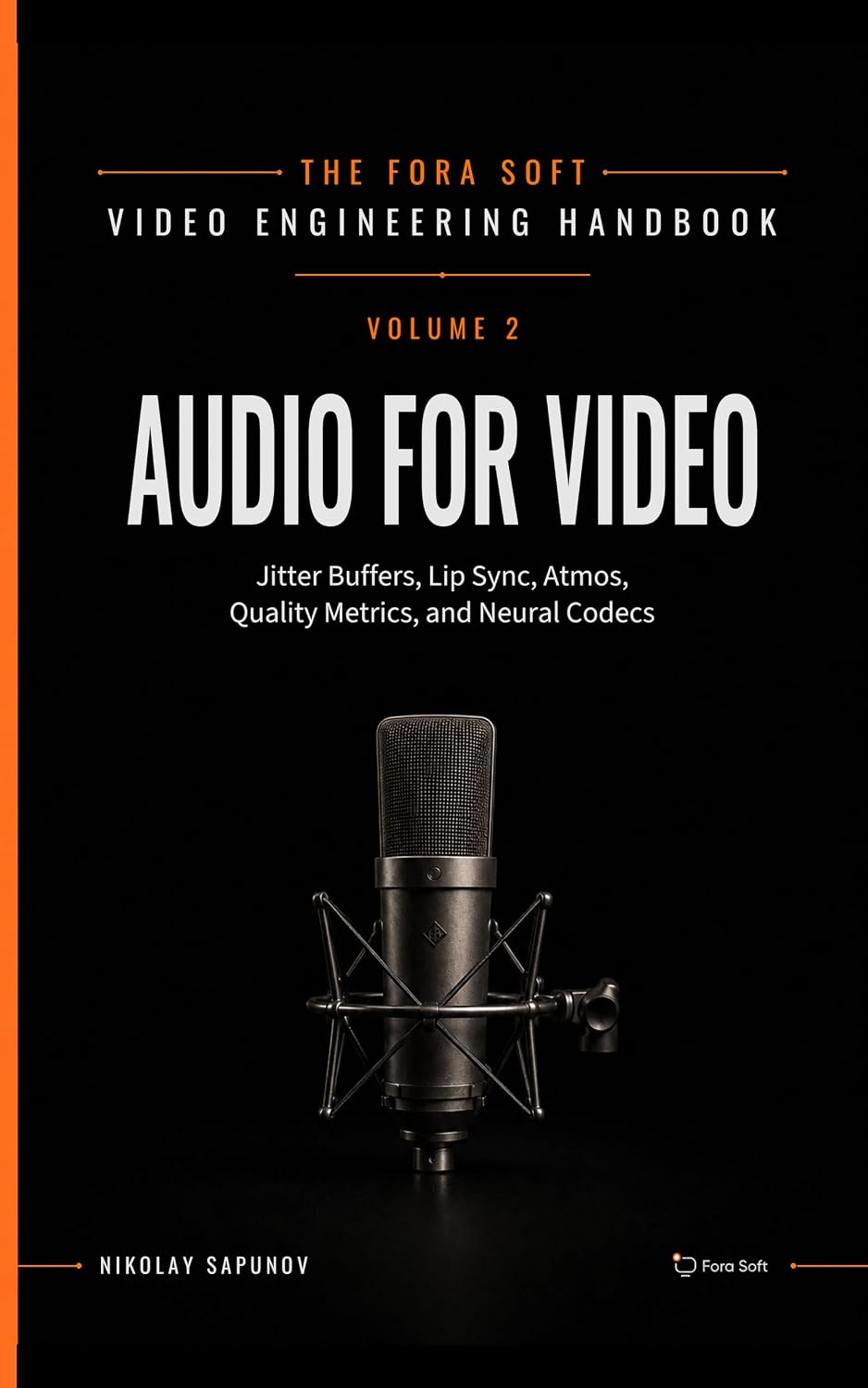
Audio for Video: A Complete Guide to Sound in Video Products: From Jitter Buffers and Lip Sync to Atmos, Quality Metrics, and Neural Codecs
RTP is the packet format every real-time audio frame travels in, and its sequence numbers and timestamps are where loss, jitter and sync problems first appear. This volume covers what happens to RTP audio in the network in depth, with jitter buffers, loss concealment, FEC and RED, and timestamps, so you can debug calls from the packets up. Written by Nikolay Sapunov, CEO at Fora Soft.
Debugging choppy or out-of-sync audio carried over RTP in your calls?
Send us packet captures from bad sessions and we will analyze the RTP stream, pinpoint loss and timing issues and list the fixes. 250+ video products shipped since 2005.
