

Distribution is where one stream becomes many. The origin or packager publishes a small number of canonical artifacts — segments, manifests, init segments — and the CDN replicates them out to edge POPs near every viewer. Distribution speaks HTTP because every cache, proxy, ISP and player understands HTTP; that universality is what made HLS and DASH possible at scale.
The economics of distribution are about cost per gigabyte and cache hit ratio. A CDN's price card is typically a few dollars per terabyte at scale, and a 1 % drop in hit ratio (more requests reaching origin) can move millions of dollars on a big OTT bill. Engineering effort therefore focuses on segment naming (one URL per segment, never two), TTL tuning (long for VOD, sliding window for live), prefetching at the edge, and origin shielding (a regional cache layer in front of the true origin).
Distribution is opposite-shaped to contribution. Where contribution sweats over one stream and its packet recovery, distribution sweats over millions of identical requests and their cacheability. The same media file passes through both, but the design choices on each side are nearly disjoint — which is why most operators have separate teams for "ingest/contribution" and "delivery/distribution".
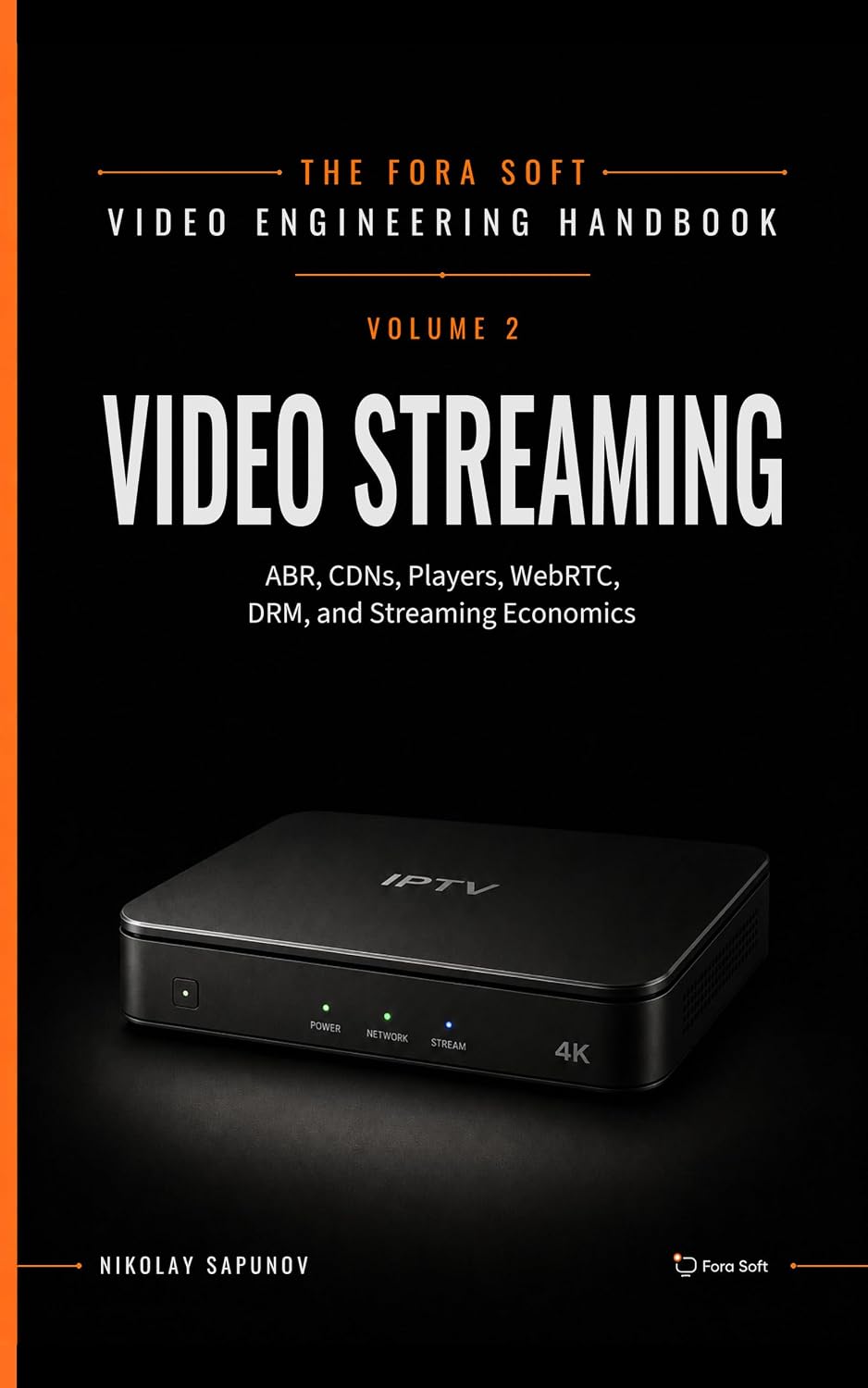
The book · Volume 3 of 7
Video Streaming: A Complete Guide to Video Delivery: From ABR and CDNs to Players, WebRTC, DRM, and the Economics of Streaming
Distribution is the leg where one stream becomes millions, and it is where most streaming cost is spent. Volume 3 covers distribution in detail: CDNs and caching, multi-CDN strategy, ABR, players and the economics of delivering each viewer-hour. Written by Nikolay Sapunov, CEO at Fora Soft.
Planning distribution for a large live event or growing VOD catalog?
We will design your distribution setup, from origin and CDN to players, and estimate the cost per viewer-hour. 250+ video products shipped since 2005.
