

Shaka Player is the JavaScript player half of Google's Shaka project. It plays DASH and HLS (added in 2018), handles fMP4 and CMAF, integrates with EME for Widevine/PlayReady/FairPlay, supports content steering, low-latency DASH and LL-HLS, and offers a configurable ABR algorithm. The codebase is large but well-engineered, with extensive test coverage and stable releases roughly quarterly.
Shaka's defining strengths versus hls.js and dash.js are: full DASH + HLS support in one library (you don't switch SDKs for different content), better fMP4 handling, more featureful ABR with hybrid throughput-and-buffer logic, and Google's institutional commitment (it ships in YouTube TV). Its weaknesses: bigger bundle size (~300 KB minified+gzipped vs hls.js's 80 KB), more API surface to learn, and a slightly less active community.
For operators choosing a web player in 2026, the typical pattern is: Shaka Player if you need DASH or want a single codebase across formats; hls.js if you only need HLS and want a smaller bundle. Video.js wraps both as engine plugins. Shaka is also the player most often integrated in custom enterprise streaming applications because of its DASH-first heritage — most enterprise OTT internally encodes DASH, and HLS is the secondary delivery format.
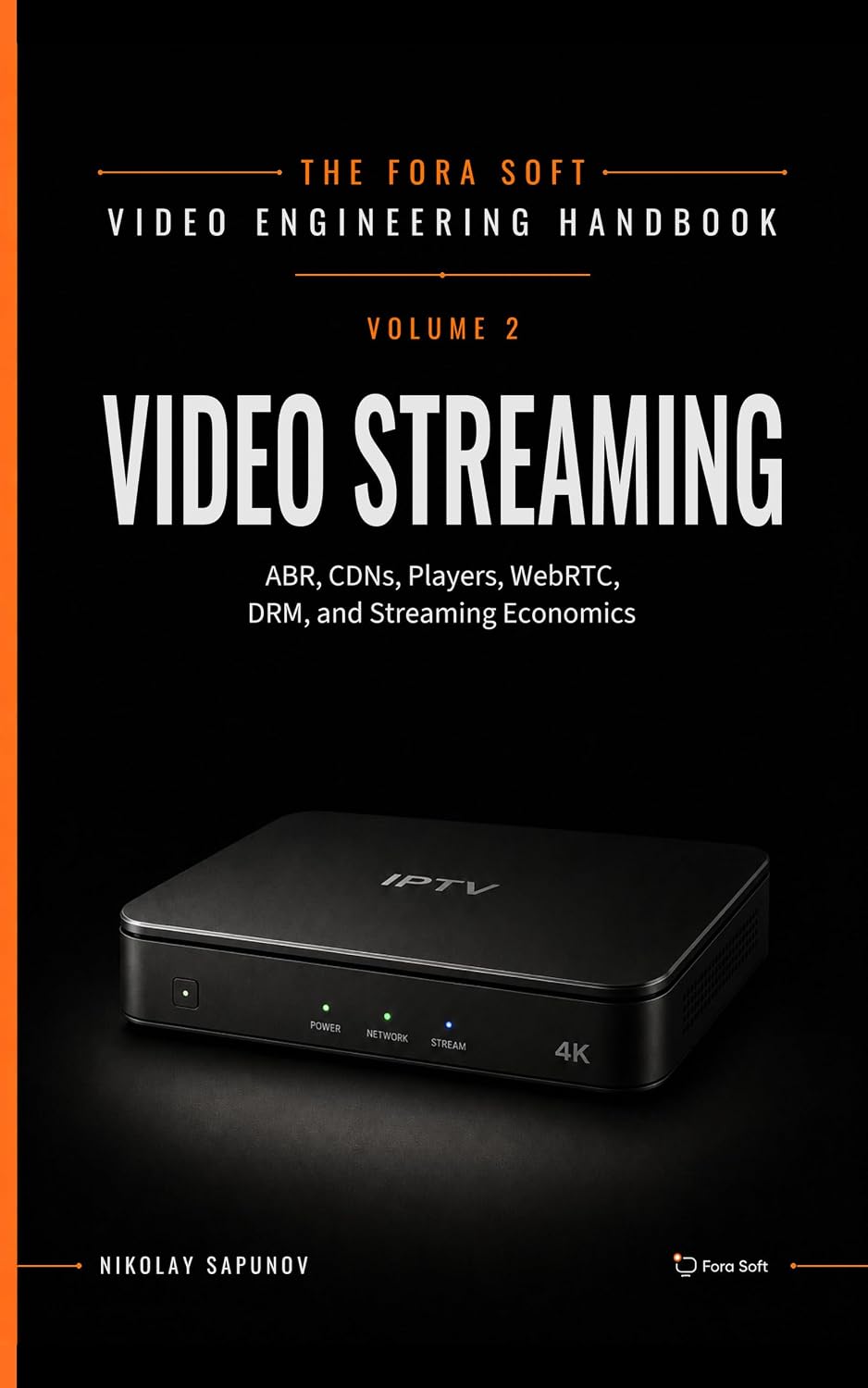
The book · Volume 3 of 7
Video Streaming: A Complete Guide to Video Delivery: From ABR and CDNs to Players, WebRTC, DRM, and the Economics of Streaming
Shaka Player handles DASH, HLS, DRM and low-latency modes in one JavaScript codebase, and most production issues come from ABR and buffer configuration. This volume covers web players like Shaka Player in detail, with ABR algorithms, buffer and stall recovery, DRM through EME, subtitles and QoE monitoring. Written by Nikolay Sapunov, CEO at Fora Soft.
Tuning Shaka Player for startup time, ABR and DRM on every browser?
We will review your Shaka Player configuration and deliver a tuning plan with ABR, buffer and DRM settings and the QoE changes you should see. 250+ video products shipped since 2005.
