

In SSAI, when a player requests a manifest, the ad-stitching server inserts ad segments at the points marked by SCTE-35 cues in the upstream feed. The result is one continuous HLS or DASH manifest mixing content and ad segments, with #EXT-X-DISCONTINUITY markers between them. The player downloads ads exactly like content segments, decodes them with the same decoder, and renders them through the same pipeline. From the player's perspective there are no ads — just a stream that occasionally crosses discontinuities.
SSAI's advantage over client-side ad insertion (CSAI) is robustness against ad blockers. Browser ad-blockers look for known ad-server URLs and block requests to them; in SSAI all segment URLs come from the same content domain, so the blocker has no signal to act on. SSAI also gives cleaner viewer experience — no separate ad player, no pre-roll loading spinner, no resolution mismatch between ad and content.
SSAI's complexity is in the ad decisioning and manifest stitching. Each viewer's manifest is personalised — different ads for different viewers based on geo, time of day, viewer attributes. The ad decisioning happens via VAST/VMAP calls from the SSAI server to ad networks. Major SSAI providers include AWS Elemental MediaTailor, Yospace, Mux Ads, Google Ad Manager DAI, and Wurl. Most large OTT platforms use SSAI for live and FAST channels; CSAI persists for some VOD use cases where ad refresh is needed.
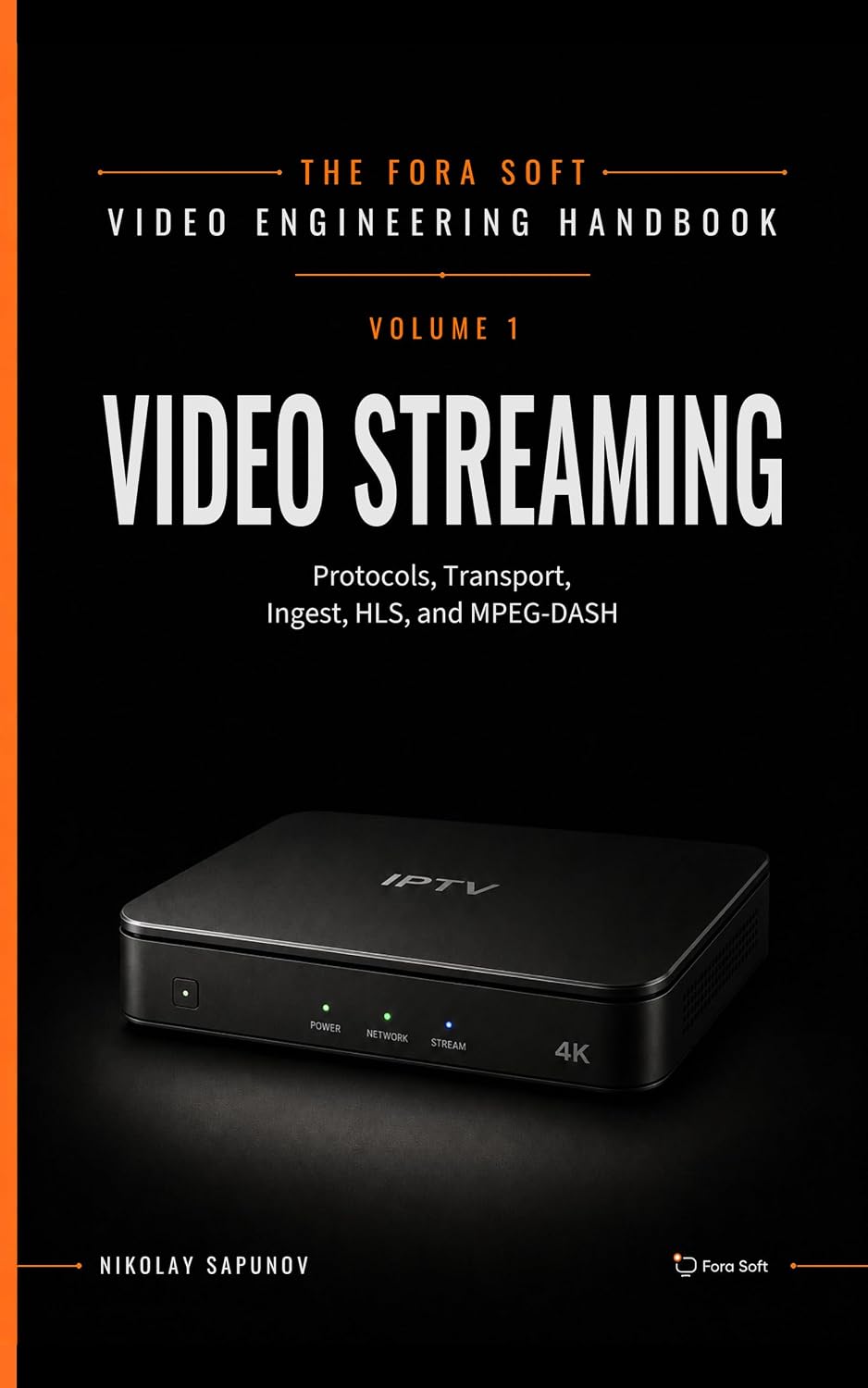
The book · Volume 2 of 7
Video Streaming: A Complete Guide to Video Delivery: From Network Protocols and Transport to Ingest, HLS, and MPEG-DASH
SSAI stitches ads into the manifest so ad blockers cannot skip them, but every discontinuity and timing mismatch between content and ad segments shows up as a stall. This volume covers the manifest side of SSAI in detail, with HLS and DASH playlists, discontinuities, SCTE-35 cue handling in packaging and CMAF segment alignment. Written by Nikolay Sapunov, CEO at Fora Soft.
Stalls and black frames at ad breaks in your SSAI streams?
Share a sample stitched manifest and we will return an SSAI audit covering discontinuities, segment alignment and the encoding settings your ad creatives need. 250+ video products shipped since 2005.
