

AMR (Adaptive Multi-Rate) is the family of speech codecs built for 2G and 3G mobile telephony. AMR-NB (narrowband) was the GSM/UMTS voice codec, switching among eight bitrates from 4.75 to 12.2 kbps to trade quality for error protection as radio conditions change; AMR-WB (wideband, standardized as G.722.2) added wider bandwidth for clearer 'HD Voice' on mobile. Their adaptivity — dropping bitrate to spend bits on channel coding when the signal is weak — was key to surviving the cellular radio environment. Both still appear in VoLTE calls, voicemail systems, and the .amr recordings phones produce, though VoLTE/VoNR increasingly use the newer EVS codec.
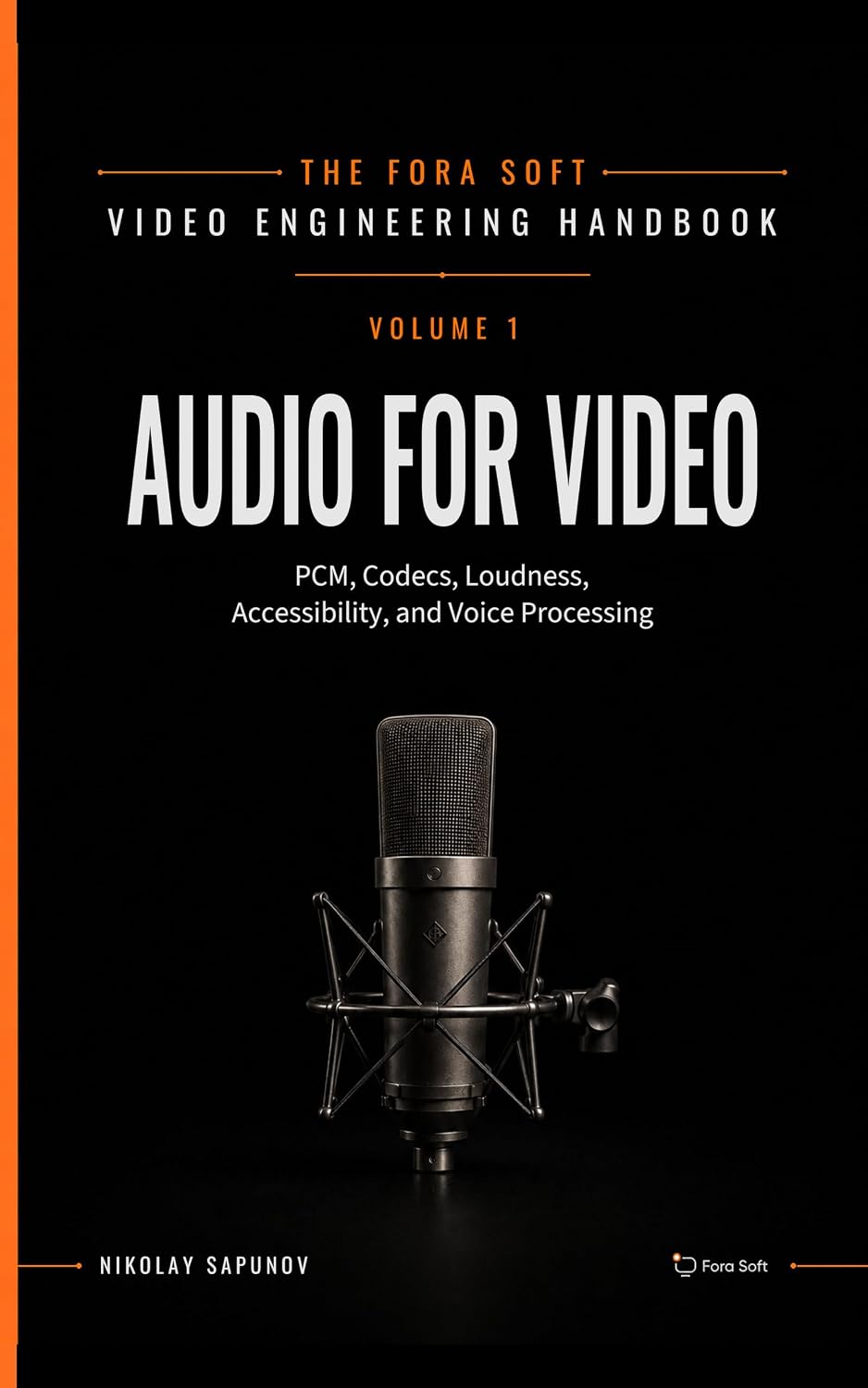
The book · Volume 4 of 7
Audio for Video: A Complete Guide to Sound in Video Products: From PCM and Codecs to Loudness, Accessibility, and Real-Time Voice Processing
AMR still appears whenever a video product meets mobile telephony, and its narrow band makes voices sound dated next to Opus. Volume 4 covers AMR in detail within speech codecs: G.711, G.722, AMR-NB, AMR-WB and EVS, transcoding to and from Opus, and sampling for voice. Written by Nikolay Sapunov, CEO at Fora Soft.
Bridging AMR phone audio into your video calling product?
Describe the telephony side and your call platform, and we will design the AMR bridge, transcoding and quality checks. 250+ video products shipped since 2005.
