

An audio object is the basic unit of object-based audio: a single sound — a voice, a passing car, a helicopter — bundled with metadata that describes its position (x, y, z), size, and level over time. Instead of being mixed into a fixed channel, the object stays separate until playback, when a renderer places it on the listener's actual speakers or headphones according to that metadata. Keeping sounds as discrete objects is what gives Dolby Atmos and MPEG-H their flexibility: objects can be positioned with height and precision, moved dynamically, individually adjusted (a dialogue object boosted for clarity), or swapped (a different language object). A typical Atmos mix combines a channel bed with up to a hundred or so such objects.
The book · Volume 5 of 7
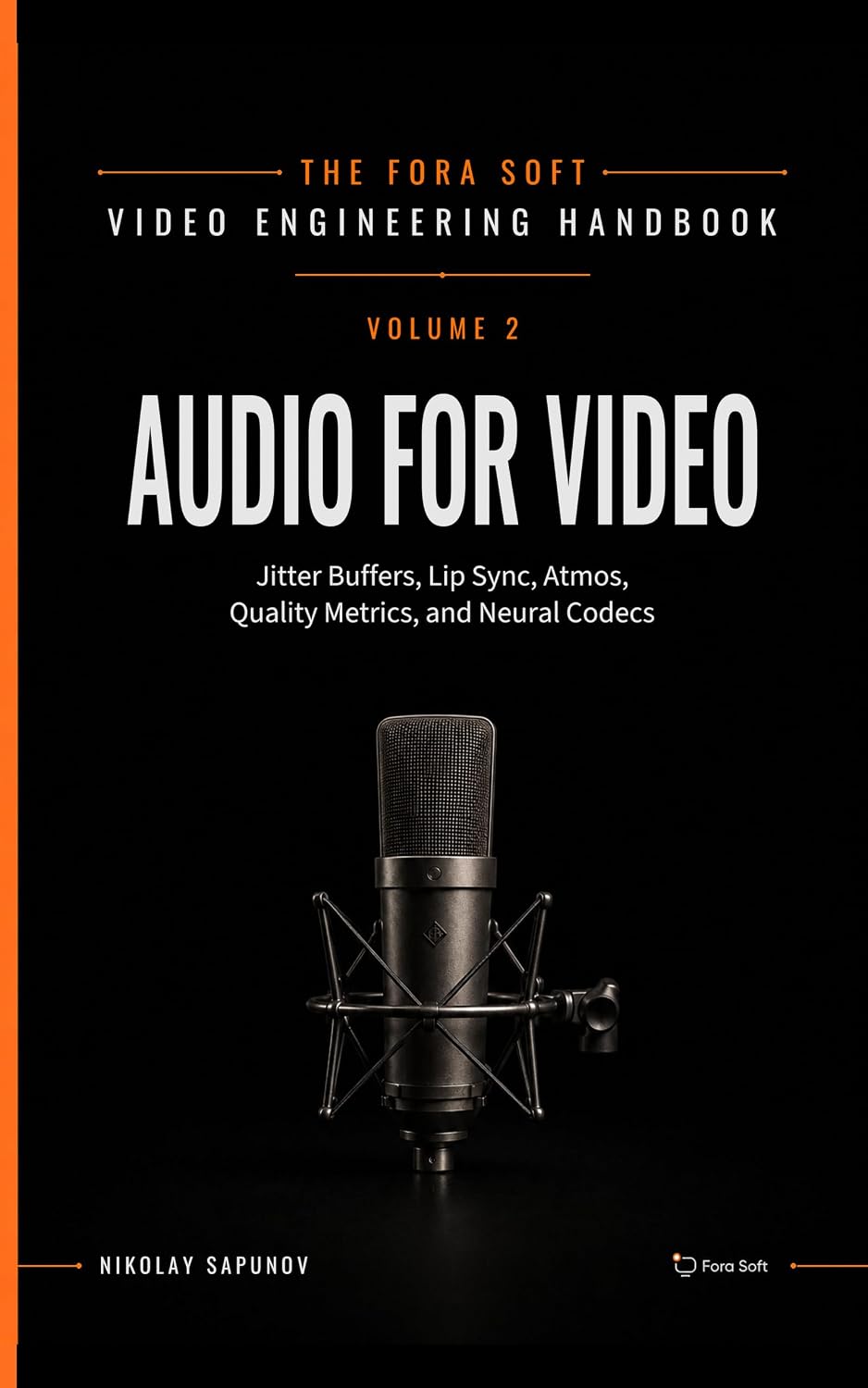
Audio for Video: A Complete Guide to Sound in Video Products: From Jitter Buffers and Lip Sync to Atmos, Quality Metrics, and Neural Codecs
An audio object keeps a sound separate from the mix until playback, which is what lets one master play correctly on headphones, soundbars and cinemas. Volume 5 covers the audio object in detail within spatial audio: object-based versus channel-based sound, Dolby Atmos, binaural rendering and keeping objects in sync with video. Written by Nikolay Sapunov, CEO at Fora Soft.
Working with audio objects and Atmos in your video product?
Describe your content and playback devices, and we will plan an object-based audio pipeline from mix to rendering on each device. 250+ video products shipped since 2005.
