

CMAF (Common Media Application Format) is the standard that lets HLS and DASH share a single set of media segments instead of storing two copies. It defines a fragmented-MP4 segment structure that both protocols can reference, so a service packages audio and video once and points both an HLS playlist and a DASH manifest at the same files — halving storage and CDN cache footprint and simplifying workflows. CMAF also underpins low-latency streaming through its chunked structure, which lets players start playing a segment before it is fully written. For audio engineers it mostly means the same encoded AAC, E-AC-3, or AC-4 tracks serve every player, regardless of which protocol that player speaks.
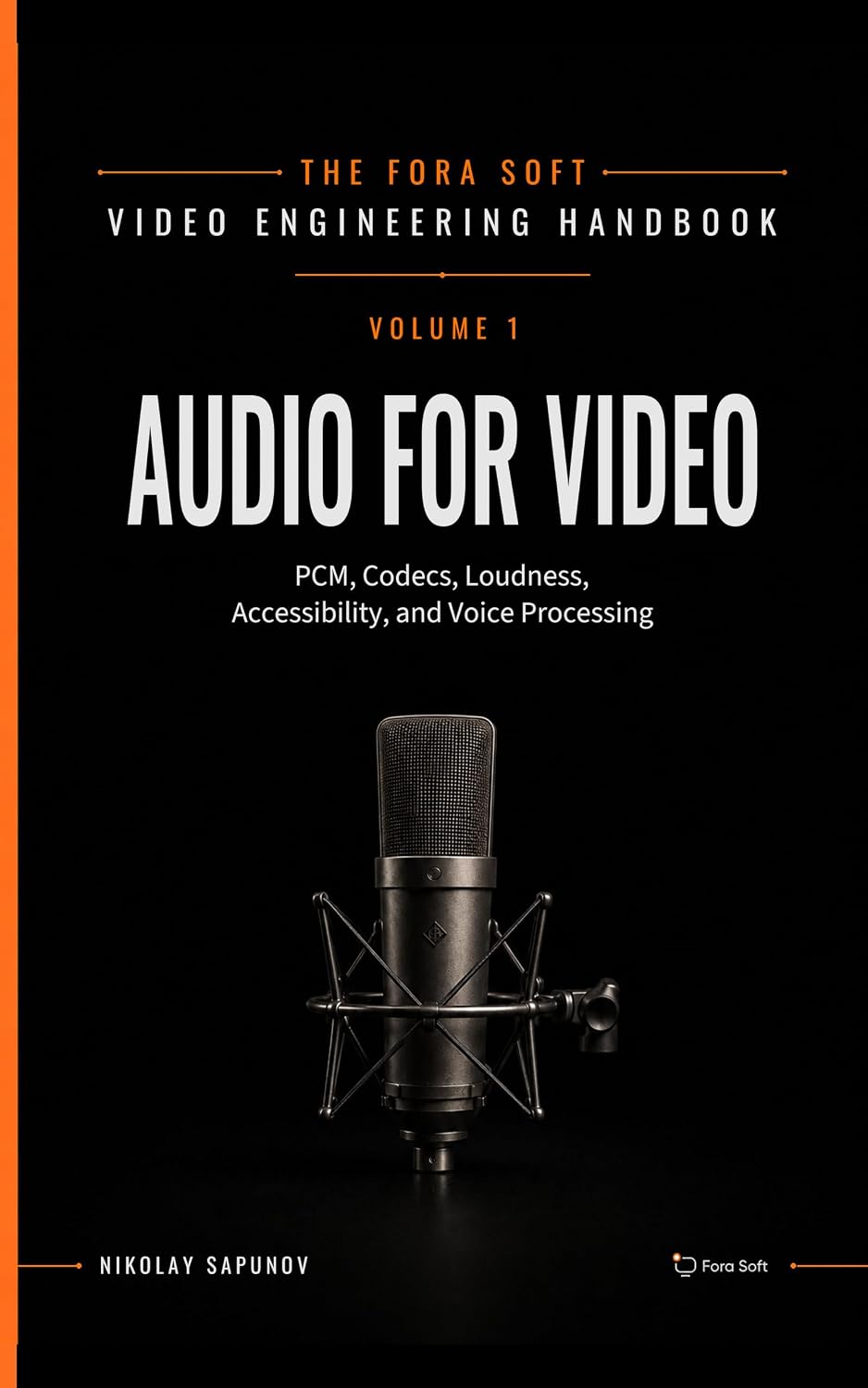
The book · Volume 4 of 7
Audio for Video: A Complete Guide to Sound in Video Products: From PCM and Codecs to Loudness, Accessibility, and Real-Time Voice Processing
CMAF lets HLS and DASH share one set of segments, but audio tracks still need care with codec signalling, languages and alternate mixes. Volume 4 covers CMAF in detail from the audio side: AAC and Opus in fragmented MP4, channels and layouts, alternate language and accessibility tracks, and loudness across renditions. Written by Nikolay Sapunov, CEO at Fora Soft.
Packaging audio in CMAF for both HLS and DASH players?
Tell us your codecs, languages and players, and we will design CMAF audio packaging and test track selection across devices. 250+ video products shipped since 2005.
