

LL-HLS (Low-Latency HLS) is Apple's extension to HLS that cuts the glass-to-glass delay of live streams from the old 20-30 seconds toward 2-5 seconds, closing much of the gap with broadcast. It does this chiefly with partial segments — publishing small parts of a media segment as they're produced rather than waiting for the whole thing — plus blocking playlist reloads that let the player request the next part and have the server hold the response until it's ready, removing polling delay. Audio rides along in the same low-latency segments. LL-HLS competes with low-latency DASH and CMAF-LL; all of them trade a little buffering safety margin for much lower latency in live sports, auctions, and interactive streams.
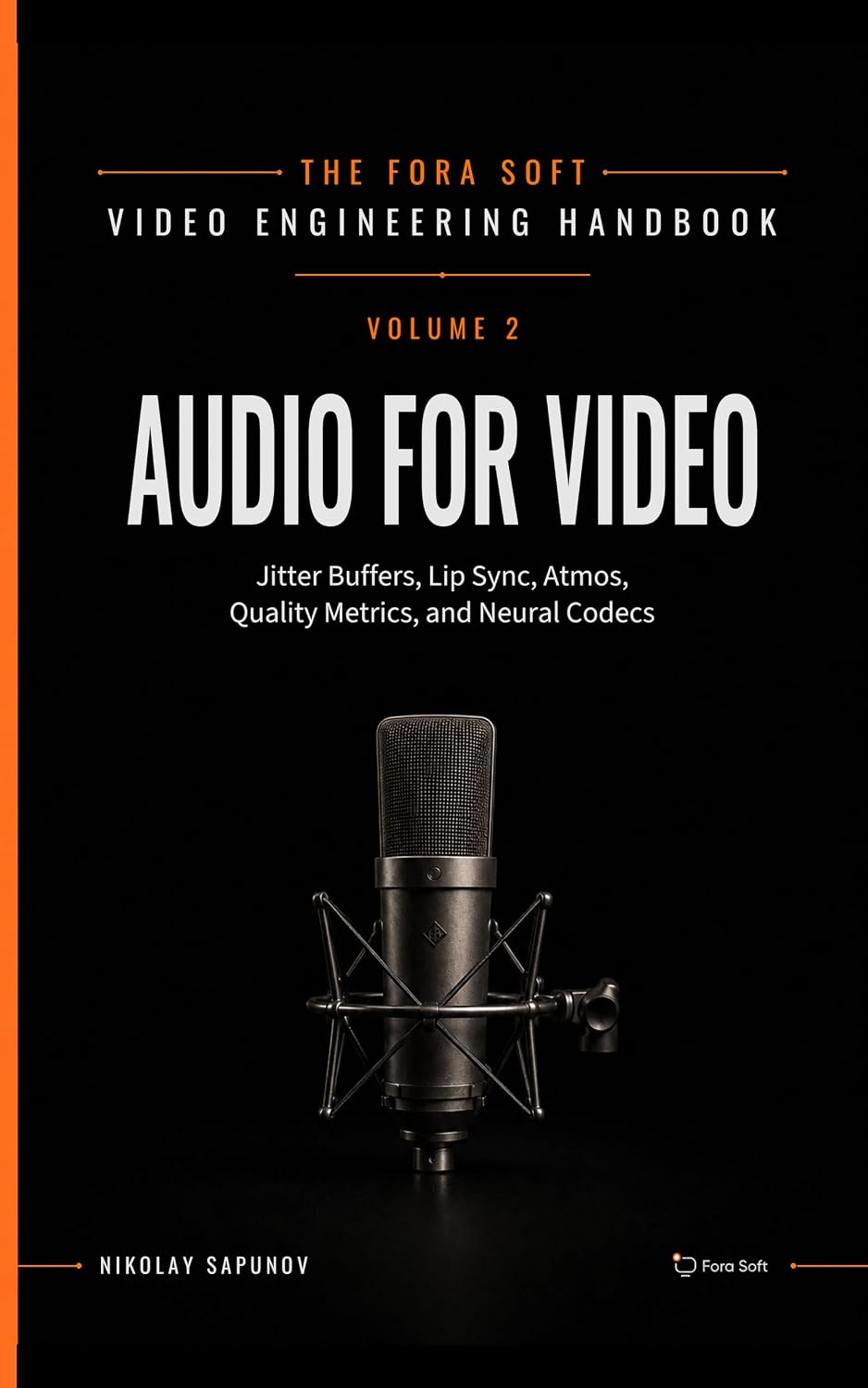
The book · Volume 5 of 7
Audio for Video: A Complete Guide to Sound in Video Products: From Jitter Buffers and Lip Sync to Atmos, Quality Metrics, and Neural Codecs
LL-HLS cuts live delay to a few seconds, but partial segments put new pressure on audio timing and sync. Volume 5 covers what happens to audio in LL-HLS: timestamps and clock domains, lip sync across short parts, buffer decisions at the player and the symptoms that point to a sync fault. Written by Nikolay Sapunov, CEO at Fora Soft.
Moving to LL-HLS and seeing audio glitches or drift at low latency?
We will review your LL-HLS packaging and player settings and tell you where audio timing breaks, with the fix and a target latency. 250+ video products shipped since 2005.
