

FLAC (Free Lossless Audio Codec) compresses audio without discarding anything: decode it and you get back the original samples bit-for-bit. Typical files land around half the size of the equivalent WAV, with no quality cost, and the format embeds per-frame checksums so corruption is detectable. Being open and unencumbered by royalties, FLAC became the standard for archival masters, broadcast contribution, and high-resolution music distribution (Bandcamp, Qobuz, the lossless tiers of streaming services). It is not meant for low-bitrate delivery — that is a job for lossy codecs — but wherever you need perfect fidelity at a smaller size than PCM, FLAC is the default choice.
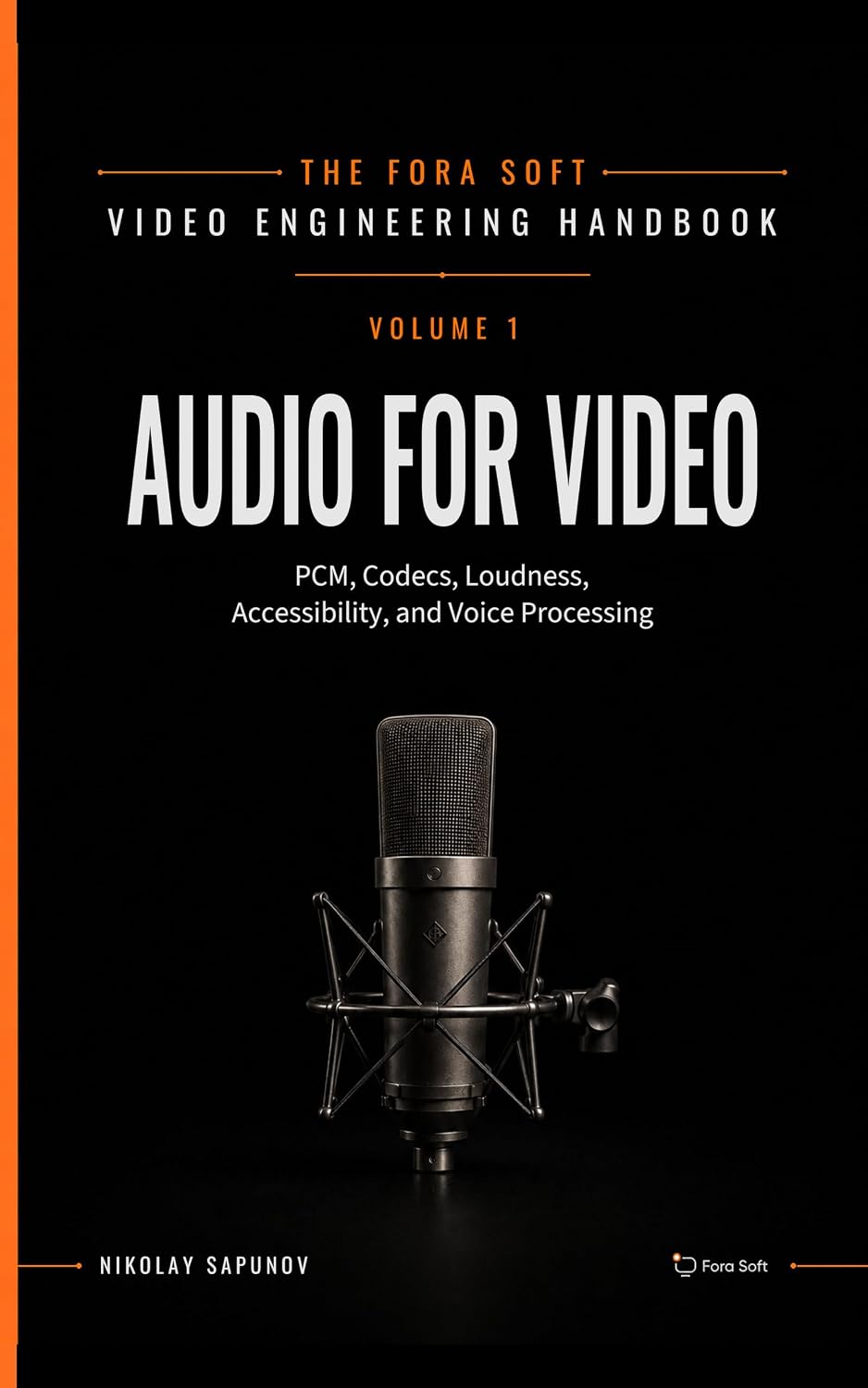
The book · Volume 4 of 7
Audio for Video: A Complete Guide to Sound in Video Products: From PCM and Codecs to Loudness, Accessibility, and Real-Time Voice Processing
FLAC keeps every sample intact at roughly half the size of WAV, which makes it a natural fit for archives and contribution feeds. This volume covers FLAC with PCM, bit depth, sample rates and the lossy codecs it sits beside, such as AAC and Opus, so you can choose when lossless storage pays off. Written by Nikolay Sapunov, CEO at Fora Soft.
Deciding where FLAC lossless audio belongs in your archive and delivery pipeline?
Tell us your storage and delivery needs, and we will recommend where to keep FLAC, where to transcode and what it will cost to store. 250+ video products shipped since 2005.
