

LUFS (Loudness Units relative to Full Scale) is the unit that finally measures how loud audio actually sounds, not just how high its peaks are. It comes from ITU-R BS.1770, which applies a K-weighting filter to mimic the ear and then gates out silence before averaging. One LUFS equals one decibel, and the scale is negative because it is referenced to full scale. Every platform publishes a target: roughly -14 LUFS for streaming music (Spotify, Apple Music, YouTube), -23 LUFS for European broadcast (EBU R128), and -24 LKFS for US broadcast. Hitting the target is what stops your content being turned up or down on playback.
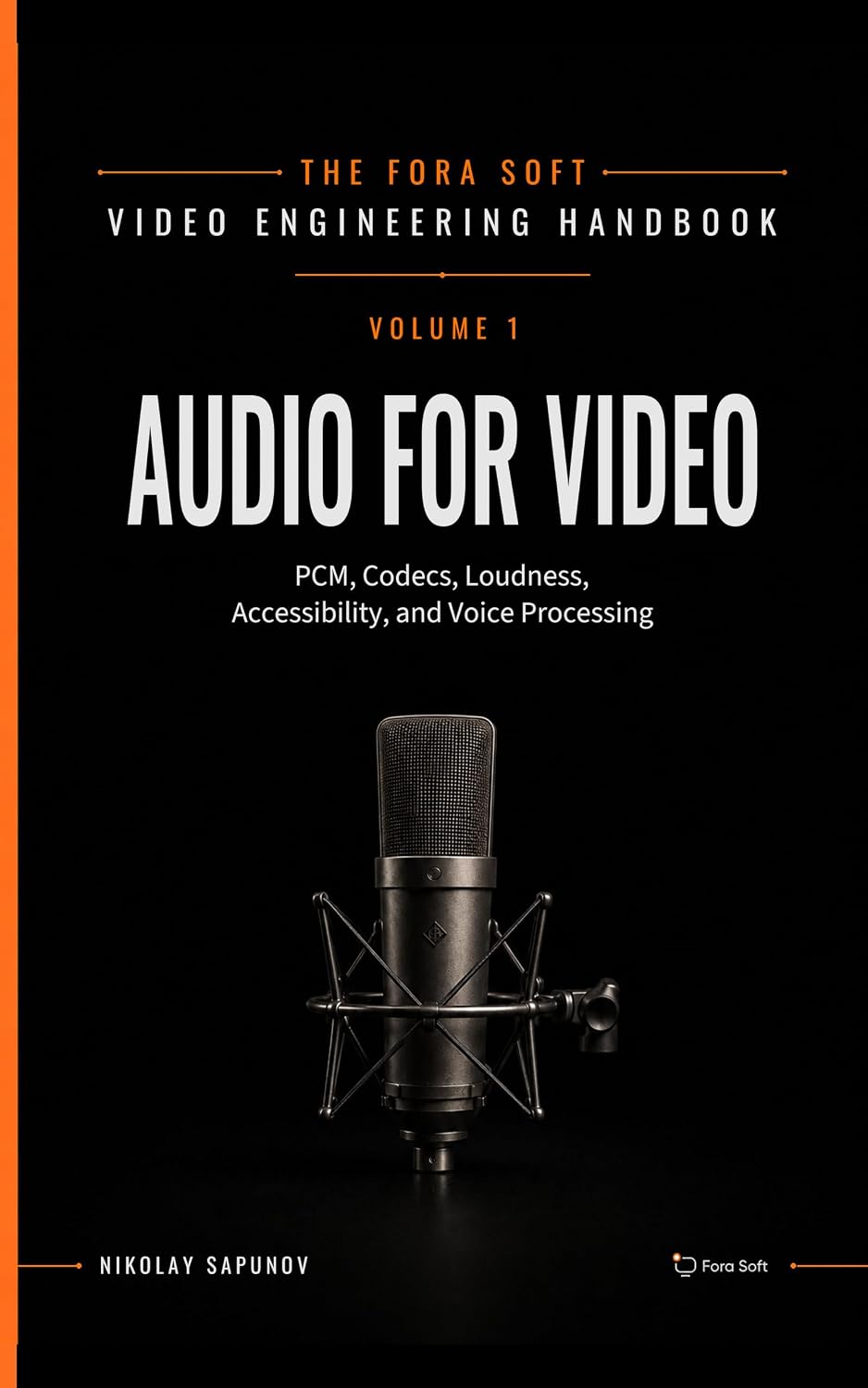
The book · Volume 4 of 7
Audio for Video: A Complete Guide to Sound in Video Products: From PCM and Codecs to Loudness, Accessibility, and Real-Time Voice Processing
LUFS is the number every platform checks, and a few units off target means rejected deliveries or auto-turned-down audio. Volume 4 explains LUFS in depth: BS.1770 K-weighting and gating, integrated and short-term loudness, loudness range, and the targets used by broadcast and streaming. Written by Nikolay Sapunov, CEO at Fora Soft.
Not sure which LUFS target your platform enforces, or why your mixes miss it?
We will measure a sample of your content and give you the LUFS target, true-peak ceiling and normalization step that fits your platform. 250+ video products shipped since 2005.
