

xHE-AAC (Extended HE-AAC), the application form of MPEG-D USAC, is the most flexible member of the AAC family. A single codec handles both speech and music seamlessly by switching coding tools per frame, and it scales smoothly across a very wide bitrate range — from roughly 12 kbps up to transparency — which makes it ideal for adaptive streaming where the same content must serve weak and strong connections. It also ships with MPEG-D DRC loudness and dynamic-range metadata, so playback can normalize loudness without re-encoding. Adoption is growing on Android and in streaming, though xHE-AAC still trails plain AAC-LC in universal hardware support.
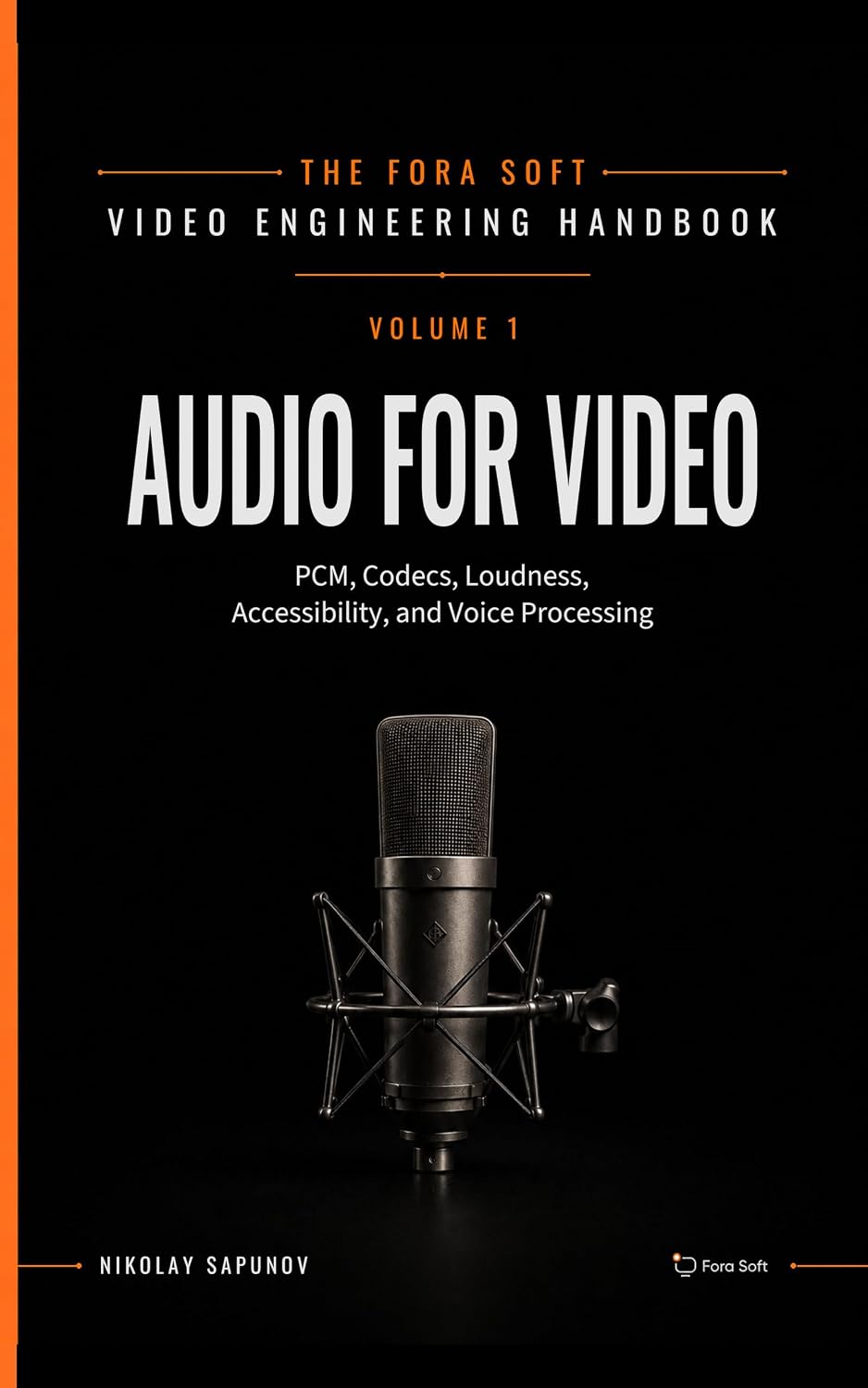
The book · Volume 4 of 7
Audio for Video: A Complete Guide to Sound in Video Products: From PCM and Codecs to Loudness, Accessibility, and Real-Time Voice Processing
xHE-AAC lets one stream cover speech and music from very low bitrates up, with loudness control built in, but device support still decides whether you can use it. Volume 4 covers xHE-AAC in detail with the AAC family, MPEG-D DRC, LUFS loudness targets and comparisons with Opus. Written by Nikolay Sapunov, CEO at Fora Soft.
Considering xHE-AAC to cut audio bitrate for radio-style or mobile streams?
We will check xHE-AAC support across your target devices and give you a codec and loudness plan with fallbacks for players that cannot decode it. 250+ video products shipped since 2005.
