

A segment is a small file (or byte-range) that contains a self-sufficient slice of encoded video plus matching audio. "Self-sufficient" means the segment starts with a keyframe and can be decoded without reaching back to previous segments. That property is what makes ABR possible: the player can switch from a 1080p segment to a 720p segment at any segment boundary without resyncing.
Segment duration is one of the most consequential knobs in streaming. Short segments (1–2 s) cut live latency and give the ABR algorithm more chances to switch quality, but inflate manifest size, fragment cache entries, and reduce compression efficiency (each keyframe is expensive). Long segments (6–10 s) compress better and cache better but increase latency and slow ABR reaction. The HLS Authoring Specification recommends 6-second segments for VOD; LL-HLS uses 1-second partial segments inside 4-second full segments.
In CMAF and fMP4 the term "segment" specifically means an MP4 movie fragment with a moof + mdat pair that can be appended to MSE. In older HLS the segment was a .ts MPEG-TS file. The 2025 industry has converged on CMAF segments because the same file can serve both HLS and DASH players, halving packaging and storage cost.
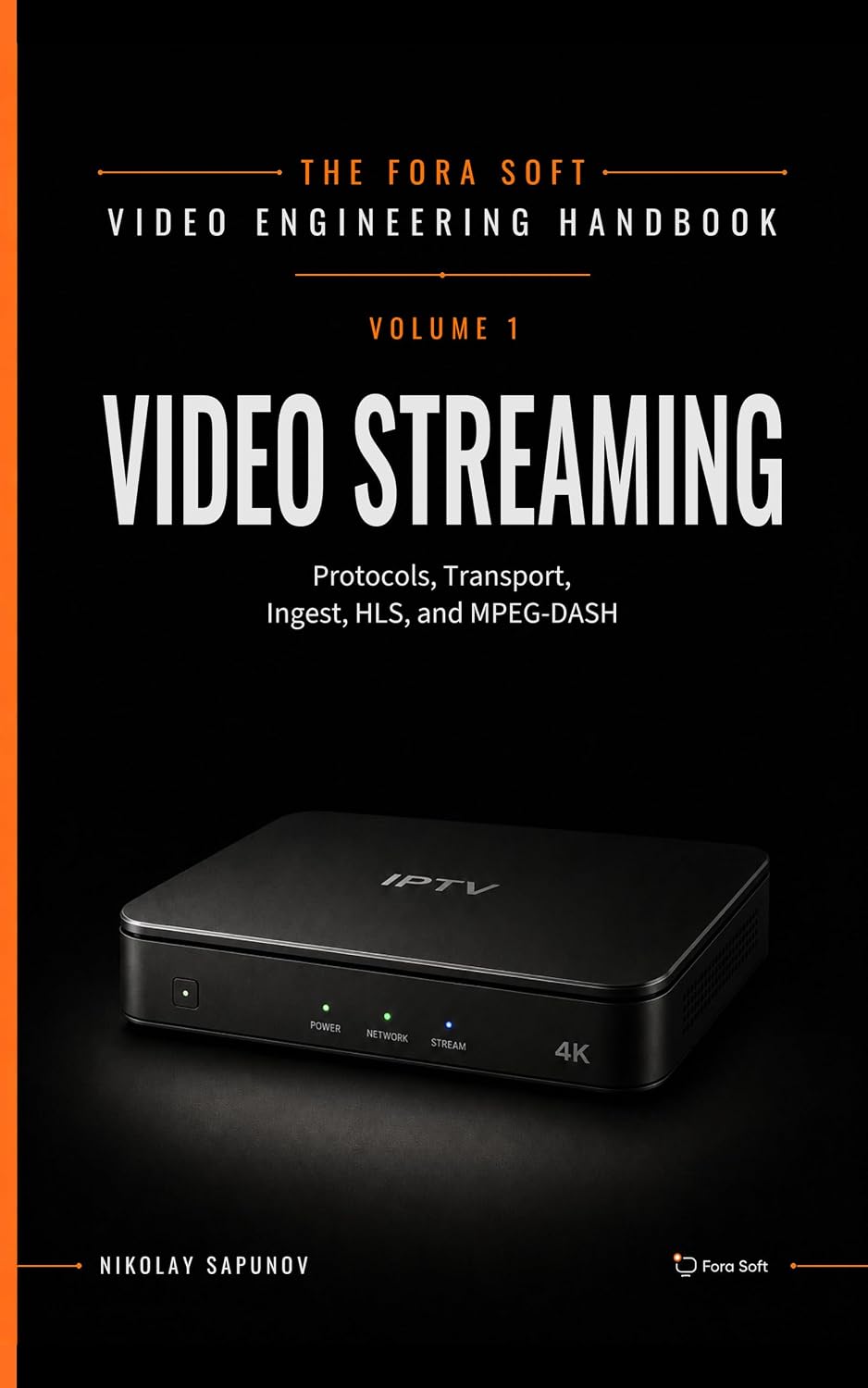
The book · Volume 2 of 7
Video Streaming: A Complete Guide to Video Delivery: From Network Protocols and Transport to Ingest, HLS, and MPEG-DASH
Segment length sets the floor for live latency and the step size for ABR switching, so it is one of the first numbers to choose in any HTTP streaming setup. This volume covers the segment in detail, with keyframe alignment, HLS and DASH packaging, CMAF chunks and the latency budget of segmented delivery. Written by Nikolay Sapunov, CEO at Fora Soft.
Choosing segment duration for your live and VOD streams?
We will review your encoder and packager settings and give you a segment duration plan with GOP alignment, latency impact and CDN request load for each option. 250+ video products shipped since 2005.
