
Key takeaways
• The video call is the easy 10%. Remote deposition software puts a witness, counsel, and a court reporter on a live video session and captures sworn testimony. Standing up a WebRTC call is a week of work; the product is the record around it: a certified transcript synced to video, a valid oath, clean exhibit handling, and proof it all happened.
• The record has to survive a challenge, not just look good. Under FRCP 30(b)(5)(A) the officer opens on the record with the oath and the identity of everyone present, and 30(b)(3) fixes the recording method. If your platform can’t produce a tamper-evident, certifiable record, you’ve built a meeting tool, not a deposition tool.
• The remote oath is a jurisdiction trap. The officer generally has to be authorized to administer the oath in the state where the witness sits, and many states want the witness and notary in the same state. Parties routinely stipulate around it — your software has to capture that stipulation and the on-camera ID, not assume it.
• Deepfakes just became a courtroom problem. A proposed Federal Rule of Evidence 707 went out for public comment in 2025, and a California judge reportedly tossed a case in September 2025 over an apparent AI-generated witness. Authenticity of a remote witness is now a feature buyers ask about by name.
• Buy the service for a caseload; build when it’s your product. A firm that just needs depositions taken should book a provider like Veritext or US Legal Support. Build when you run a court-reporting operation, sell deposition access, or need the workflow, provenance, and data inside your own product.
A witness in one state, three lawyers in three others, a court reporter at her kitchen table, and an exhibit that has to be marked, shown, and entered into the record without anyone touching paper. That’s a modern deposition, and the software that runs it is doing far more than a video call. It is producing a legal record that a judge, months later, has to be able to trust.
We’ve built video, real-time, and evidentiary recording software since 2005, including systems that capture testimony under a chain of custody. So this isn’t a vendor listicle. It’s a builder’s guide to remote deposition software: what the platform actually has to do, where the legal record is won or lost, how the vendors stack up, what it costs to build versus buy, and the cases where you shouldn’t build at all.
Scoping a remote deposition platform?
Tell us your volume, your jurisdictions, and whether you run your own reporters. We’ll tell you straight whether to book a service, license a platform, or build — with the record, oath, and cost math behind the call.
Why Fora Soft wrote this guide
We’re a video and AI software company: 250+ projects since 2005, a team of 50+ in-house specialists. Much of that work is the exact plumbing a remote deposition platform needs — low-latency WebRTC, media servers you control, recording, transcription, and the audit and access layers that decide whether a legal buyer will trust the output. Our WebRTC developers have shipped that media layer on mediasoup, LiveKit and Janus at 500M+ minutes a month.
We’ve also built the harder half: evidentiary video. We are the sole development team behind VALT, a recording and observation platform used by 770+ US organizations and 50,000+ users for things like recorded law-enforcement interviews, where the recording has to hold up as evidence with a defensible chain of custody. That’s the same discipline a deposition platform lives or dies by.
So we’ve lived the parts that don’t show up in a demo: the exhibit that has to be marked mid-testimony, the audit log an opposing counsel will try to poke holes in, the network that drops during a two-hour examination. We build custom platforms for a living, and we’ll still tell you when booking a service is the smarter move. This guide keeps that balance.
What remote deposition software actually does
Remote deposition software lets lawyers take sworn, out-of-court testimony over live video and turn it into a certified legal record, without anyone traveling. FRCP 30(b)(4) allows a deposition to be taken “by telephone or other remote means” when the parties stipulate or the court orders it, and it treats the deposition as happening wherever the witness answers the questions. The software’s job is to make that remote setting produce the same record a conference room would.
Notice the distinction that trips up buyers: this is not “book a court reporter,” and it is not a generic meeting app. A deposition platform is three systems in a trench coat. There’s a real-time video layer that connects the witness, counsel, and the officer. There’s a record layer that captures audio, video, and a stenographic transcript and binds them together. And there’s a proceedings layer — oath capture, identity, exhibits, privilege, and audit — that turns a call into admissible testimony.
Get that framing wrong and you build the wrong thing. A team that ships a slick video call and bolts on a “record” button has built the easy tenth. The value, and the risk, live in the record and the proceedings layers. Everything below is about those two.
Why remote is the default now, not the exception
Remote depositions stopped being a pandemic workaround and became standard practice. In US Legal Support’s 2024 litigation-support survey, more than 70% of law firms reported conducting at least some depositions remotely, and 44% expected their remote use to rise in 2026, up from 34% the year before. At the COVID peak roughly 90% of depositions ran remotely, and most litigators said they wanted to keep them.
Two forces keep the trend going. One is money: a remote deposition deletes travel, hotels, and facility fees for attorneys, witnesses, and the reporter. The other is supply. The number of qualified US court reporters fell about 7% between 2019 and 2023, and remote work lets the reporters who remain cover more proceedings by cutting travel time. Demand for the record is rising while the people who make it are getting scarcer, and software is the lever that closes the gap.
For a builder, that’s the market thesis. Remote isn’t a feature you add for convenience; it’s how a growing share of the roughly $2.7 billion global court-reporting market now works. The open question isn’t whether to support it. It’s whether to buy that capability or own it.
Anatomy of a court-admissible remote deposition platform
A deposition platform is a request that travels from a notice on a calendar to a sealed, certified package a court will accept, with an audit trail running under every step. The figure below is the working shape we start from when we scope one.
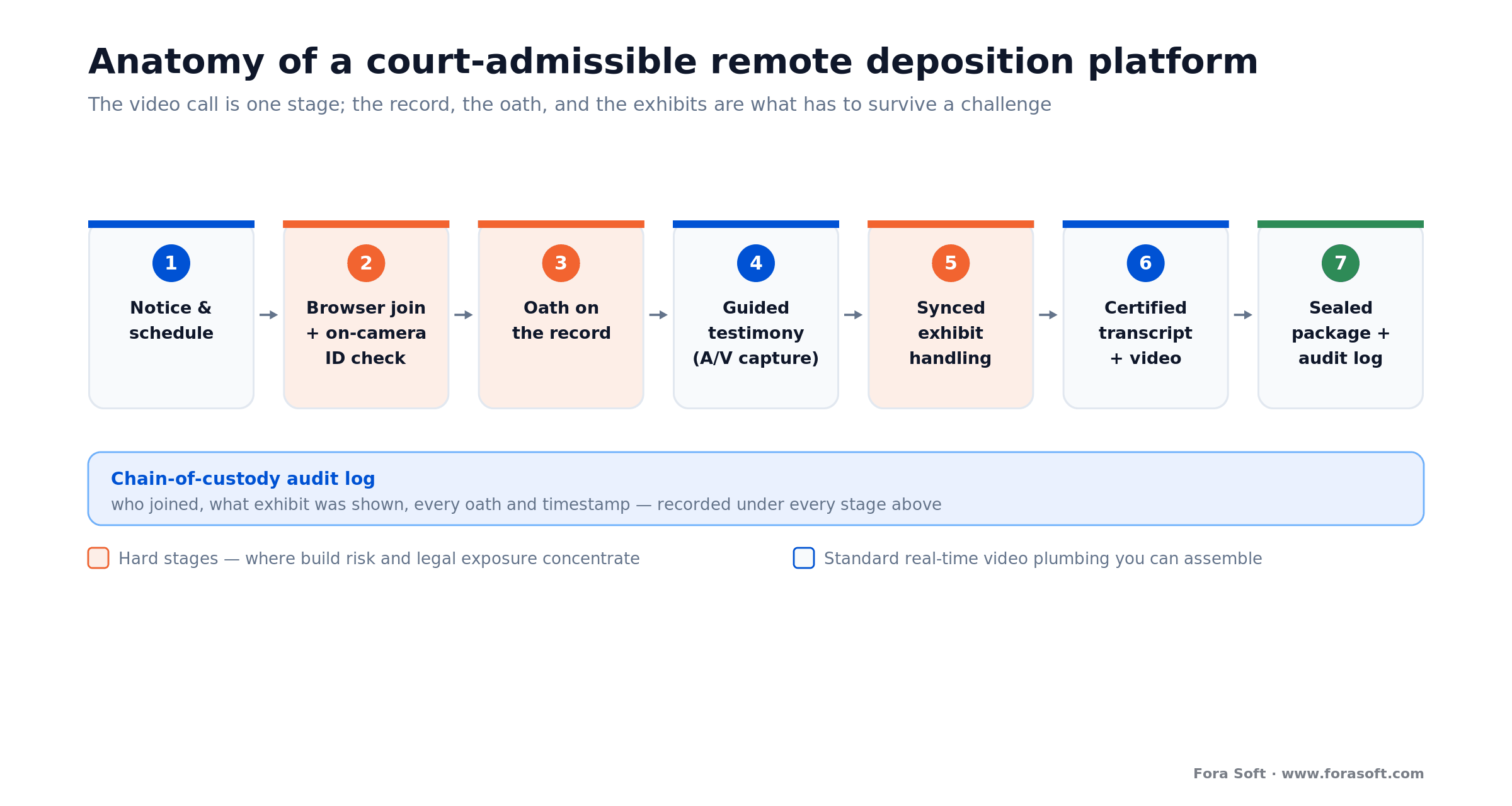
Figure 1. The path of a remote deposition. The orange stages — oath and identity, and synced exhibit handling — are where the engineering and the legal exposure concentrate.
Notice and scheduling. A proceeding is booked with a date, participants, a language of record, and a reporter and videographer assigned. This is ordinary calendaring, but it feeds everything downstream: who is authorized to join, which exhibits are pre-loaded, and which jurisdiction’s oath rules apply.
Join, identity, and oath. Participants join from a browser, the witness proves identity on camera, and the officer administers the oath on the record. This is a hard stage: it’s where a valid deposition legally begins, and where a remote setup can quietly break the rules if the software doesn’t handle jurisdiction and consent.
Testimony and exhibits. The examination is captured as synchronized audio and video while the reporter takes the stenographic record, and exhibits are shown, marked, and entered without paper. Exhibit handling is the second hard stage, and the one buyers underestimate most.
Certify, seal, and log. When testimony ends, the platform produces a certified transcript synced to the video, seals the exhibit set, and files a tamper-evident audit log of who joined, what was shown, and when. Skip this layer and you have a recording; build it well and you have a record that survives a motion to strike.
The record: video, transcript, and how they sync
The deliverable of a deposition isn’t the video call; it’s the record. FRCP 30(b)(3) lets the noticing party choose how testimony is recorded — audio, audiovisual, or stenographic — and lets another party add a method. In practice a modern deposition captures all three at once: a certified stenographic transcript is the primary legal record, the video is the backup and the source of trial clips, and the two are time-synced so any line of text jumps to that moment on video.
That synchronization is a real engineering requirement, not a nice-to-have. The reporter’s stenography software produces timestamps; your platform has to align them to the recorded media so the finished, certified transcript and the video share one clock. Do it well and a litigator can pull a 20-second clip of an admission for trial in a couple of clicks. Do it poorly and you hand lawyers two files that don’t line up, which is worse than useless in front of a jury.
There’s also a live layer. Most platforms stream a realtime “rough draft” feed of the transcript during the deposition so attorneys can read along and search back, then deliver the certified version after the reporter proofs it. The rough draft is explicitly not the record, and your UI has to make that distinction obvious, because a lawyer who quotes an uncorrected rough draft in a filing is going to have a bad week.
Swearing in a witness you can’t see in person
The oath is where remote depositions get legally interesting, because the rules were written for a room. FRCP 28(a) requires the deposition to be taken before an officer authorized to administer oaths, and 30(b)(5)(A) requires that officer to open on the record with the oath and the identity of everyone present. When the officer and witness are in different states, “authorized” stops being obvious.
The common rule is that the officer — usually the court reporter acting as a notary — must be authorized to administer the oath in the state where the witness physically sits. Many states also want the witness and the notary in the same state, and want on-camera proof of the witness’s identity. States are not uniform here: New York, for example, lets a New York reporter swear in a witness located anywhere, and lets parties agree not to challenge the oath. Perkins Coie maintains a state-by-state tracker precisely because these rules keep shifting.
Reach for a stipulation-first flow when: you’re building oath handling. The practical pattern the whole industry uses is a stipulation — the parties agree on the record that the reporter may swear the witness in remotely and won’t object later. Your software should capture that stipulation, the on-camera ID, and the officer’s statement as part of the record, not leave it to a reporter to improvise. Encoding the jurisdiction question, rather than assuming it, is what keeps the testimony from being thrown out.
Exhibit handling, the feature that quietly makes or breaks a platform
Ask any litigator who has taken a remote deposition what separates a good platform from a painful one, and the answer is exhibits. In a conference room you hand the witness a stack of paper. Remotely, every one of those documents has to be introduced, shown, marked, and entered into the record through software, live, while the examination is running. It’s the feature buyers underrate and the one that wastes the most time when it’s bad.
A serious exhibit system does several things at once. Counsel pre-loads exhibits privately, so the other side doesn’t see them early. During testimony an exhibit is introduced with controlled screen presentation, stamped and auto-numbered (often Bates-numbered), and entered into the official record. There’s a private, attorney-only view for documents that aren’t marked yet, and the reporter gets a clean, ordered exhibit set at the end. This is exactly what platforms like Veritext’s Exhibit Share and Steno’s exhibit tools sell as a headline feature, because it’s the daily pain point.
Reach for a dedicated exhibit engine when: you’re building rather than buying. Do not treat exhibits as “screen sharing plus a file upload.” Budget real engineering for a document workspace with private and public states, live stamping and numbering, a locked record of what was shown and when, and export into the certified package. Teams that skimp here ship a platform lawyers quietly refuse to use.
Chain of custody and a record that survives a challenge
A deposition record is only worth what it can withstand when the other side attacks it. That means the platform has to prove, after the fact, that the testimony is complete, unaltered, and attributable to the right people. This is the same chain-of-custody discipline that governs any digital evidence: capture cleanly, log everything, and make tampering detectable.
Concretely, the platform should record an append-only audit log — who joined and when, when the oath was administered, which exhibit was shown at which timestamp, when recording started and stopped — and protect the media and transcript with integrity checks so a later edit is provable. If you’re producing evidence to an agency or opposing counsel, that overlaps with how a full digital evidence management system stores and releases material; a deposition platform is the capture end of that same problem, focused on producing testimony rather than managing an evidence library.
One more piece people forget: the record often contains personal data — a witness’s face, medical details, third parties named on screen. When a transcript or video is produced or filed, redacting that material is its own task, and getting it wrong leaks PII into a public filing. Our guide to video redaction software covers the mechanics; for a deposition build, plan for redaction as part of the export path, not an afterthought.
The new problem: deepfakes and the authenticity of remote testimony
Here’s the question no one budgeted for five years ago: how do you know the face on screen is the real witness? When testimony happens over video, generative AI turns authenticity from an assumption into a risk. This is the newest reason a serious platform earns its keep, and it’s moving fast.
The courts are reacting. In 2025 the federal Advisory Committee on Evidence Rules put a proposed Federal Rule of Evidence 707 out for public comment, aimed at holding machine-generated evidence to a reliability standard. And in September 2025 a California judge reportedly dismissed a case after a party submitted what appeared to be an AI-generated deepfake of a real witness — among the first documented instances in a US courtroom. There’s also the “liar’s dividend”: as deepfakes spread, litigants increasingly claim that genuine video is fake, which corrodes trust in real recordings too.
We can’t promise a detector that catches every deepfake. Nobody can, and detection is an arms race. What a platform can do is raise the cost of faking: strong on-camera identity verification at join, capture of the raw feed rather than only a re-encoded copy, provenance metadata and integrity hashing on the recording, and a complete audit trail. Provenance isn’t proof of truth, but it’s what lets you show a record wasn’t altered after capture — and that’s increasingly what a court will ask.
Worried about authenticity and chain of custody?
We build evidentiary video systems where the record has to hold up. We’ll review how you’d handle identity, provenance, integrity, and audit — and flag the gaps opposing counsel would find first.
Build native, or layer on Zoom?
Before comparing vendors, settle one architectural fork, because it shapes the whole build: do you run your own video, or ride on top of a platform lawyers already have, usually Zoom? Steno’s flagship product, for instance, is “Steno Connect for Zoom” — it adds exhibit handling, private file viewing, and annotation on top of Zoom’s call. Others, like vTestify, run their own integrated video.
Layering on Zoom buys you instant familiarity, mature video quality, and features like breakout rooms for free, and your engineering collapses to the deposition-specific layer: exhibits, transcript sync, and record management. The cost is control. You don’t own the media path, so recording fidelity, retention, and provenance run partly on someone else’s terms, and your product surface is capped by what their SDK exposes. For an authenticity-sensitive record, that dependency matters.
Building native, on your own video conferencing stack with an SFU you control, is more work up front but gives you the raw feed, full control of recording and retention, and room to embed identity and provenance the way a court will want. Our rule of thumb: layer on Zoom to get to market fast or when you’re a reporting firm adding a feature; build native when the record’s integrity is your differentiator or you’re selling the platform itself.
The platforms compared: services, software, and custom
“Remote deposition companies” hides three different things: providers who sell you the whole proceeding, software you run yourself, and building your own. Knowing which one you need is most of the decision, so here they are side by side. Prices in this market are overwhelmingly quote-based (per transcript page, per appearance, per seat), so we compare on capability and control rather than sticker price.
| Option | What you get | Pricing shape | Where it wins | Where it breaks |
|---|---|---|---|---|
| Full service (Veritext, US Legal Support, Lexitas) | Reporter, videographer, platform, exhibits, certified record | Per page + appearance (quote) | You just need depositions taken, compliantly | No software, data, or margin of your own |
| Software on Zoom (Steno Connect) | Exhibits, annotation, transcript tools atop Zoom | Subscription / per-proceeding | Fast to adopt; lawyers know Zoom | You don’t own the media path or retention |
| API / embeddable platform (vTestify) | Integrated video, capture, exhibits via API | Usage / license | Embed depositions inside your own product | Still bound by their model and roadmap |
| Generic video SDK + your glue | Video calls; you build record, oath, exhibits | Per-minute media + your dev cost | Fast start on the video layer only | You still build the 90% that’s hard |
| Custom platform | The whole system, owned by you | One-time build + hosting | Depositions are your product; you own data, provenance, margin | Upfront cost and time; you carry maintenance |
A few notes from the market. Veritext is the scale player, pairing a national reporter and videographer network with its Veritext Virtual platform and Advanced Case Exhibits, and it states HIPAA, PII, and SSAE 16 compliance — strong if you want the proceeding handled end to end. Steno leans on the Zoom-native approach with AI rough drafts and quick certified delivery. vTestify is the one built API-first, which matters if you want to embed depositions in your own software rather than send lawyers to a separate app.
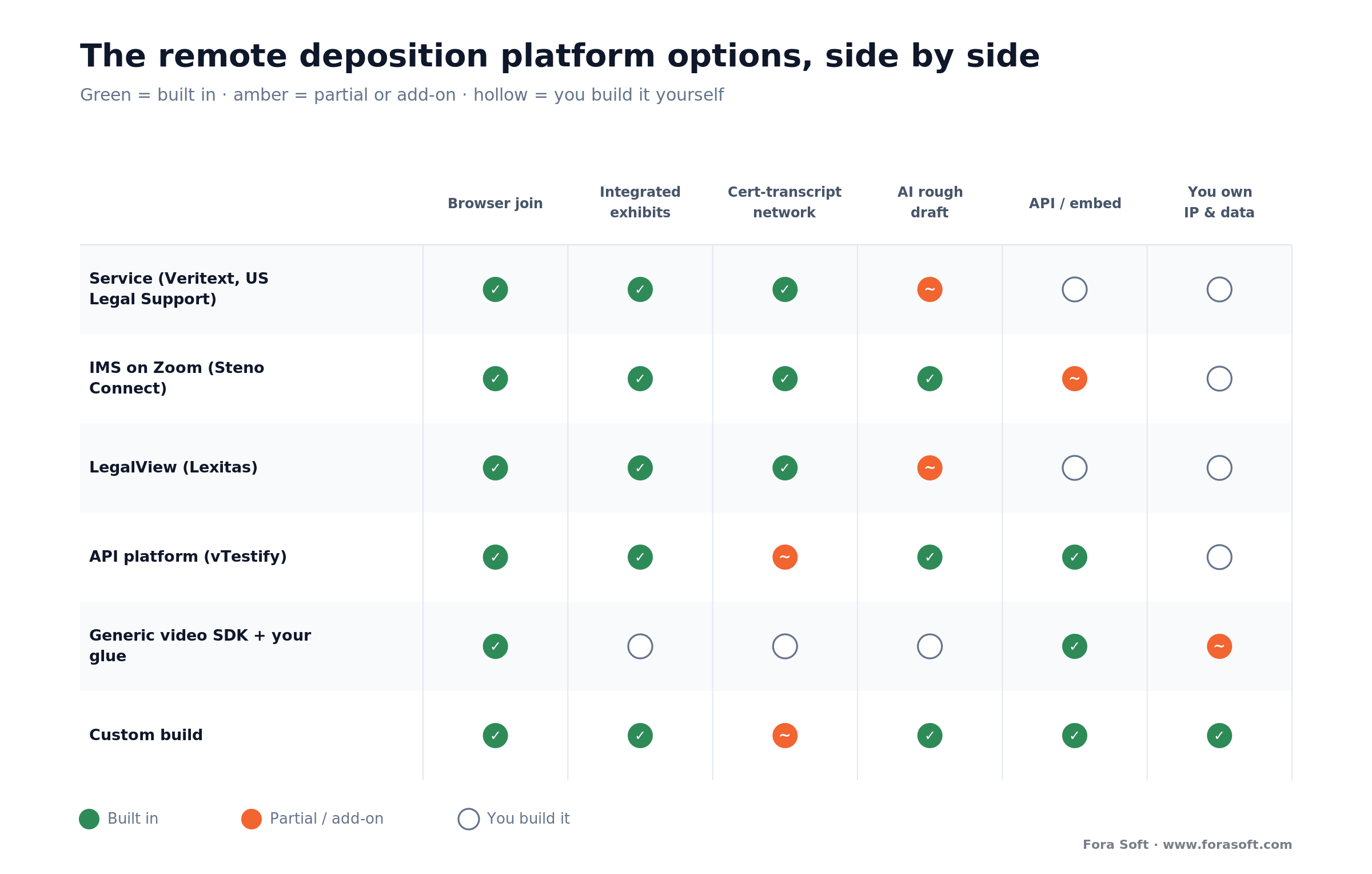
Figure 2. The same options against the capabilities that matter. Only the custom path fills the last column: owning the IP, data, and provenance end to end.
Build vs buy: where the line sits
Most organizations should not build. If you consume depositions, book a service; if you’re a standard reporting firm, license software. Building earns its cost in a narrower set of cases, and being honest about which one you’re in saves a lot of money. Three decision rules:
Reach for booking a service when: you’re a law firm or agency that just needs the record. Pay per proceeding, stay compliant immediately, and put zero engineers on it. For a firm that consumes depositions, this is the right trade almost every time.
Reach for a hybrid build when: you run a court-reporting operation or legaltech product and want your own workflow, branding, and data, but not the cost of inventing video from scratch. Layer the deposition-specific logic — exhibits, transcript sync, record management — on a proven media core, and build only the parts that differentiate you. For transcript sync, our speech-to-text development work delivers real-time captions on Whisper or Deepgram, on-prem or in the cloud.
Reach for a full custom build when: depositions are the product you sell, you run a marketplace of reporters, you need testimony embedded inside your own application, or provenance and data ownership are non-negotiable. This is where owning the media path and the record end to end beats renting them.
The build case is strongest for platforms, not consumers. If you’re selling deposition access, running a reporter marketplace, or embedding testimony into a litigation product, owning the record and the provenance is worth the upfront cost. If you just need depositions taken this quarter, it isn’t — and we’d tell you so on the first call.
Want the build-vs-buy math for your case?
Send us your proceeding volume, your jurisdictions, and whether you run your own reporters. We’ll model book, license, and build side by side — with a realistic budget and no sales theater.
Cost math: in-person vs remote, and what a build costs
Two cost questions matter here, and people mix them up. The first is what a remote deposition saves versus an in-person one. The second is what it costs to build a platform. They’re separate decisions, so here’s the arithmetic for each, with conservative, illustrative numbers.
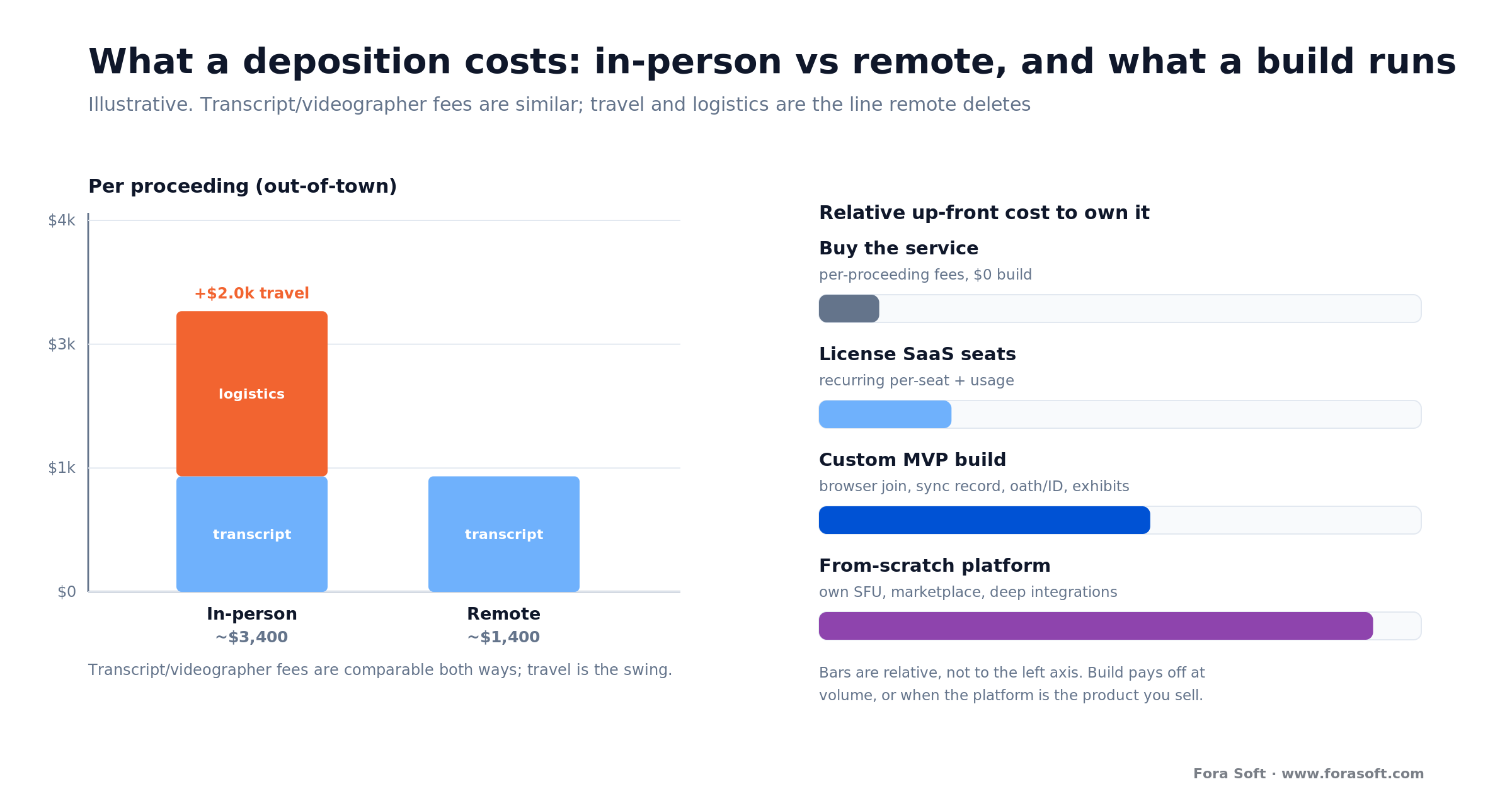
Figure 3. Transcript and videographer fees are similar either way. Travel is the line remote deletes, and the build tiers on the right run from buying the service to owning a platform outright.
Remote vs in-person, per proceeding. The transcript and videographer fees are roughly the same whether the deposition is in a room or on a screen. The difference is travel. For an out-of-town deposition, add flights, a hotel, and the reporter’s and videographer’s travel and appearance time — conservatively $1,000 to $3,000 on top of the transcript, per proceeding. Remote deletes that line entirely. A firm running dozens of out-of-town depositions a year is looking at tens of thousands of dollars in avoided travel, which is why the shift stuck.
What a build costs. A focused, court-admissible platform — browser join, synchronized audio/video/transcript recording, remote ID and oath capture, a real exhibit engine, certified export, and a chain-of-custody audit log, with one case-management integration — is, in our experience and using Agent Engineering, a low-six-figure build over roughly ten to fourteen weeks, because the hard components (media servers, recording, transcription) are proven pieces we assemble rather than invent. A full from-scratch platform with its own reporter marketplace and deep integrations is a larger, multi-quarter effort. We give ranges on purpose: quoting a precise figure sight-unseen would be dishonest, and scope genuinely drives the number.
The run side. Ongoing cost is dominated by real-time media (SFU compute and egress, which scale with concurrent hours) plus storage for recordings, which for legal records is often long-term. Once the pipeline exists, the marginal cost of the thousandth deposition is close to the first, which is exactly why owning the platform pays off at volume and doesn’t below it.
Security, privacy, and consent you can’t skip
Depositions carry some of the most sensitive material a company handles: trade secrets, medical histories, financial records, named third parties. A remote platform has to protect that both in transit and at rest, and it has to keep privilege intact. These aren’t v2 features; a security review by a law firm’s IT team will ask about them on day one.
The baseline is standard but non-negotiable: end-to-end encryption of the session, encryption of stored recordings and transcripts, strict access controls tied to the case, waiting rooms so only authorized participants join, and the audit log from the chain-of-custody section. Attorney-client privilege adds a specific requirement — private breakout rooms where counsel can confer with a witness off the record, with a hard guarantee that nothing said there reaches opposing counsel or the reporter’s feed. Our overview of secure video communication apps and the plain-language take on WebRTC security go deeper on the media-layer specifics.
Consent and recording law matter too. Everyone on the record is on notice that they’re being recorded, which the officer states at the start, but if your platform captures anything beyond the formal record — say, a pre-deposition tech check — be deliberate about what’s stored and disclosed. And because these records often move to a court or an evidence system, plan the export, retention, and eventual redaction path up front. It’s far cheaper than retrofitting compliance after a buyer’s security questionnaire arrives.
Mini-case: what VALT taught us about evidentiary video
The situation. We are the sole development team behind VALT, a video recording and observation platform now used by 770+ US organizations and more than 50,000 users. A core use is recorded interviews and interrogations for law enforcement and other regulated settings — recordings that have to function as evidence, which means the software carries the same burden a deposition platform does: capture cleanly, prove integrity, and produce a defensible record on demand.
What we built. Over more than a decade on this system, the engineering that mattered was rarely the video itself. It was reliable multi-room capture, HIPAA-grade access controls, retention policies that satisfy different agencies, and an audit trail detailed enough to answer “who saw this recording, and could it have been altered?” The recording was the easy part; making it trustworthy after the fact was the product.
The lesson for depositions. A remote deposition platform is the same problem pointed at sworn testimony instead of interviews — a live video call is interchangeable plumbing, and the record, the chain of custody, and the ability to survive a challenge are what a buyer actually pays for. We won’t pretend a deposition build is trivial, but it’s squarely the kind of evidentiary system we’ve shipped and maintained for years. If that’s the rigor you need, that’s a good 30-minute call.
A decision framework in five questions
1. Do you consume depositions, or sell them? If you need the record for your own cases, book a service. If deposition access is what you sell, or you run the reporter pool, you’re a platform, and building or licensing is on the table.
2. Do you need to own the media and the provenance? If authenticity, retention, and a court-ready chain of custody have to be under your control — not a third party’s — that pushes you toward a native or hybrid build over a Zoom-layered tool.
3. How many jurisdictions do you cross? Remote oath and notary rules vary by state and keep changing. The more states your witnesses sit in, the more your software has to encode jurisdiction logic rather than lean on a reporter to know it.
4. What’s your volume? Run the travel-savings math per proceeding and the build cost over two or three years. High, steady volume — or reselling access — is what tips a one-time build past recurring fees.
5. Does testimony need to live inside your own product? If depositions have to be embedded in your litigation software, your data, and your brand rather than a separate app, that argues hard for a custom or hybrid build. The decision tree below walks the same logic top to bottom.
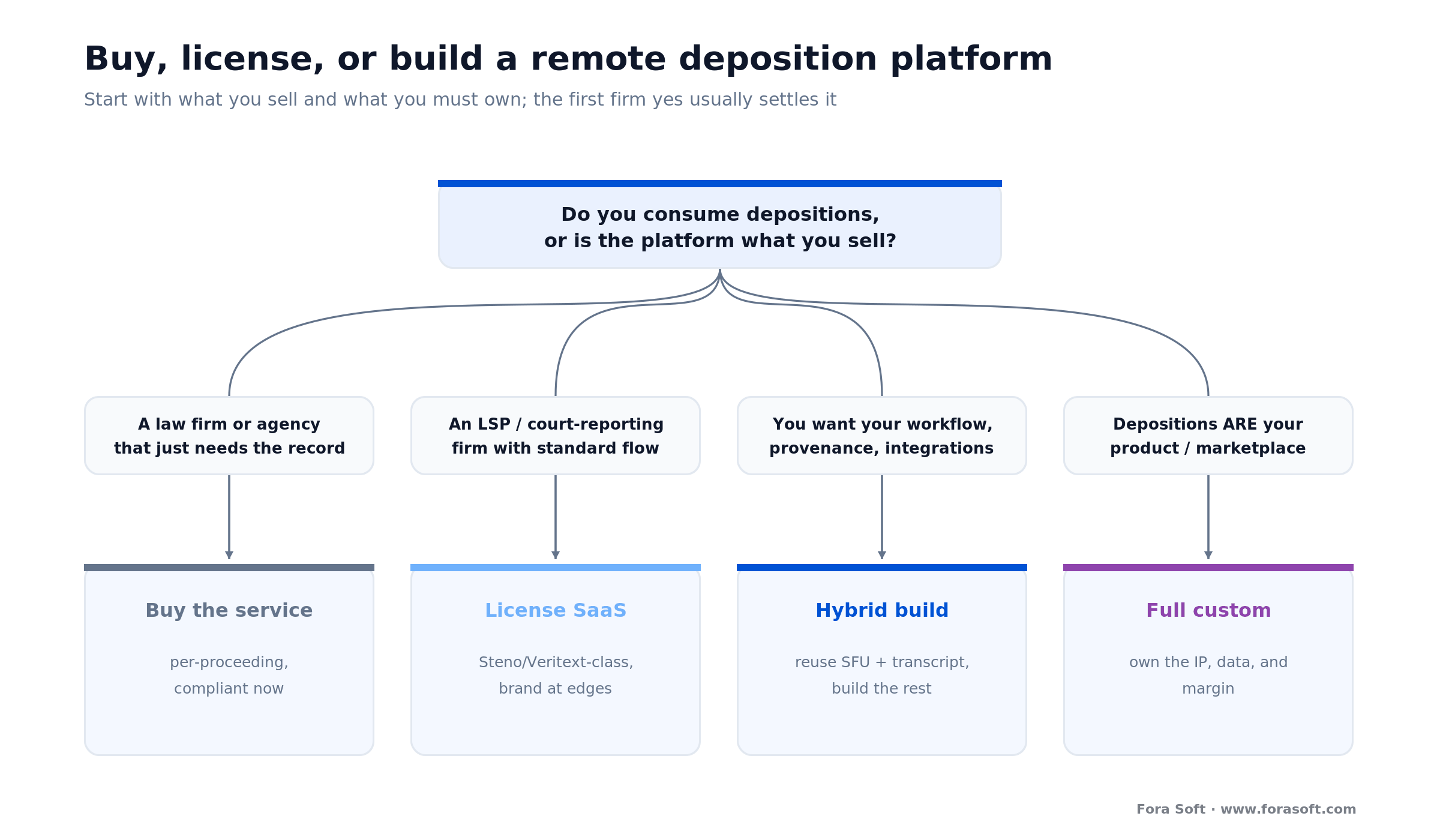
Figure 4. The build-vs-buy decision in one path. The first firm “yes” usually settles it — and authenticity or data ownership pushes you toward owning more of the stack.
When NOT to run a deposition remotely — or build for it
Remote isn’t always right, and neither is building. Some testimony still belongs in a room: a case that turns on a witness’s credibility and demeanor, a witness who needs many physical exhibits handled at once, or a deponent who genuinely can’t manage the technology. A good platform should make it easy to fall back to in-person or hybrid, not force everything through video. Pushing a high-stakes credibility deposition onto a laggy call to save a flight is a false economy.
Don’t build if you consume depositions rather than sell them. A firm that just needs the record should book Veritext, US Legal Support, or a similar provider and be done this week. Paying a software team to rebuild what a mature provider already does well is a poor trade, and we’d say so on the first call.
Do revisit the decision as you grow. The line moves when depositions become something you sell, when per-proceeding fees compound past a build’s cost, or when a product you ship needs testimony as a native feature. If you’re weighing where you sit, our video conferencing development work and the fundamentals in our video streaming learn track are good next stops.
FAQ
What is a remote deposition?
A remote deposition is sworn, out-of-court testimony taken over live video instead of in a conference room. FRCP 30(b)(4) permits it when the parties stipulate or the court orders it, and treats the deposition as taking place wherever the witness answers. A court reporter still administers the oath, records the testimony, and produces a certified transcript. The whole point of remote deposition software is to make that record just as valid as an in-person one.
How do remote deposition platforms work?
Participants join a scheduled video session from a browser. The witness proves identity on camera, the officer administers the oath on the record, and the examination is captured as synchronized audio, video, and a stenographic transcript. Exhibits are shown, stamped, and entered through the software rather than on paper. When it ends, the platform produces a certified transcript synced to the video, seals the exhibits, and files an audit log of who joined and what happened.
Are remote depositions legally valid and court-admissible?
Yes, when the rules are followed. Federal Rule of Civil Procedure 30(b)(4) allows remote depositions by stipulation or court order, and most states have matching rules — California’s Rule of Court 3.1010, for example, expressly allows depositions by videoconference. The key requirements are a valid oath administered by an authorized officer, a proper recording method under 30(b)(3), and a defensible record. A platform that mishandles the oath or can’t prove the record’s integrity is where admissibility problems start.
How is a witness sworn in for a remote deposition?
The court reporter, acting as an authorized officer, administers the oath over video on the record after the witness confirms identity on camera. The wrinkle is jurisdiction: the officer generally must be authorized to administer oaths in the state where the witness is located, and many states want the officer and witness in the same state. To avoid disputes, parties routinely stipulate on the record that the reporter may swear the witness in remotely and won’t challenge it later. Rules vary by state and change often.
How much does remote deposition software cost?
Most vendors price the proceeding, not the software: reporting and videography are billed per transcript page and per appearance, with the platform bundled in, so you get a quote rather than a public seat price. Adopting remote instead of in-person mainly saves travel, conservatively $1,000 to $3,000 per out-of-town proceeding. Building your own court-admissible platform is a separate cost: a focused build is typically a low-six-figure, roughly ten-to-fourteen-week project, which pays off at high volume or when depositions are the product you sell.
What’s the best remote deposition software?
There’s no single best; it depends on whether you consume depositions or sell them. For a firm that just needs proceedings taken, a full-service provider like Veritext, US Legal Support, or Lexitas handles reporter, video, exhibits, and the certified record. A reporting firm that wants its own workflow often uses Zoom-based software like Steno Connect. If you need to embed depositions in your own product, an API-first platform like vTestify or a custom build fits better. Match the tool to your role: buyer or builder.
How do you handle exhibits in a remote deposition?
Through the platform’s exhibit tools. Counsel pre-loads documents privately, then during testimony introduces an exhibit with controlled screen presentation, stamps and auto-numbers it (often Bates-numbered), and enters it into the record. Good systems keep an attorney-only view for unmarked documents and hand the reporter a clean, ordered exhibit set at the end. Exhibit handling is the feature litigators judge a platform on, so if you’re building, treat it as a real document workspace, not screen sharing.
Can a deepfake witness compromise a remote deposition?
It’s a real and growing concern. In 2025 a proposed Federal Rule of Evidence 707 went out for public comment to address machine-generated evidence, and a California court reportedly dismissed a case over an apparent AI-generated deepfake of a witness. No detector catches everything, so a platform’s defense is to raise the cost of faking: strong on-camera identity verification, capture of the raw feed, provenance metadata and integrity hashing, and a complete audit trail that shows the record wasn’t altered after capture.
What to read next
Evidence
Digital Evidence Management Software
Where deposition records go to be stored, secured, and produced — the library end of the same chain-of-custody problem.
Privacy
Video Redaction Software
How to blur faces and strip PII from a transcript or recording before it’s produced or filed.
Security
Secure Video Communication Apps
The encryption, access control, and privacy foundations a legal video platform has to clear.
Case
VALT: Evidentiary Video at Scale
The recording and chain-of-custody platform we build for 770+ organizations — the discipline behind this guide.
Ready to scope a remote deposition build?
Remote deposition software looks like a video call and is really a record-production system with a video call attached. The platform’s job is to put a witness under a valid oath on a legally clean feed, capture a certified transcript synced to video, handle exhibits without paper, and prove — against a challenge, and now against a deepfake claim — that the record is complete and unaltered. Get the record, the oath, and the exhibits right, and the rest follows.
Book a service if you consume depositions; license software if you’re a standard reporting firm; build when depositions are your product or provenance has to be yours. If you’re not sure which side of that line you’re on, we’ve built evidentiary video long enough to tell you straight. See how we approach it in our video conferencing development work.
The book · Volume 5 of 7
Audio for Video: A Complete Guide to Sound in Video Products: From Jitter Buffers and Lip Sync to Atmos, Quality Metrics, and Neural Codecs
A deposition record has to keep video, audio and transcript aligned well enough to survive a challenge from opposing counsel. Volume 5 of our Fora Soft Video Engineering Handbook covers that layer: jitter buffers and packet-loss concealment, lip sync and timestamps across clock domains, call recording and transcription, and diagnosing audio incidents by symptom. Legal-tech teams use it to specify a record that holds up. Written by Nikolay Sapunov, CEO at Fora Soft.
Read it on Amazon →Kindle & paperback · Fora Soft Video Engineering Handbook
Let’s make your deposition platform real
Whether you’re choosing a provider or building a court-admissible platform of your own, we’ll give you an honest read in 30 minutes — book, license, or build, with the record, oath, and cost math to back it.