

LRA (Loudness Range) is a single number, in Loudness Units (LU), describing how much the loudness of a programme varies from its quiet passages to its loud ones — statistically, ignoring the extreme top and bottom. A talk show sits at a low LRA; a film with whispered dialogue and explosive action has a high one. It is the macro-dynamics companion to the integrated LUFS figure: two programmes can share a target loudness yet feel completely different because their LRA differs. Broadcast specs cap it — EBU R128 recommends 20 LU or less — so content stays comfortable across the wide range of devices and noisy environments people actually listen in.
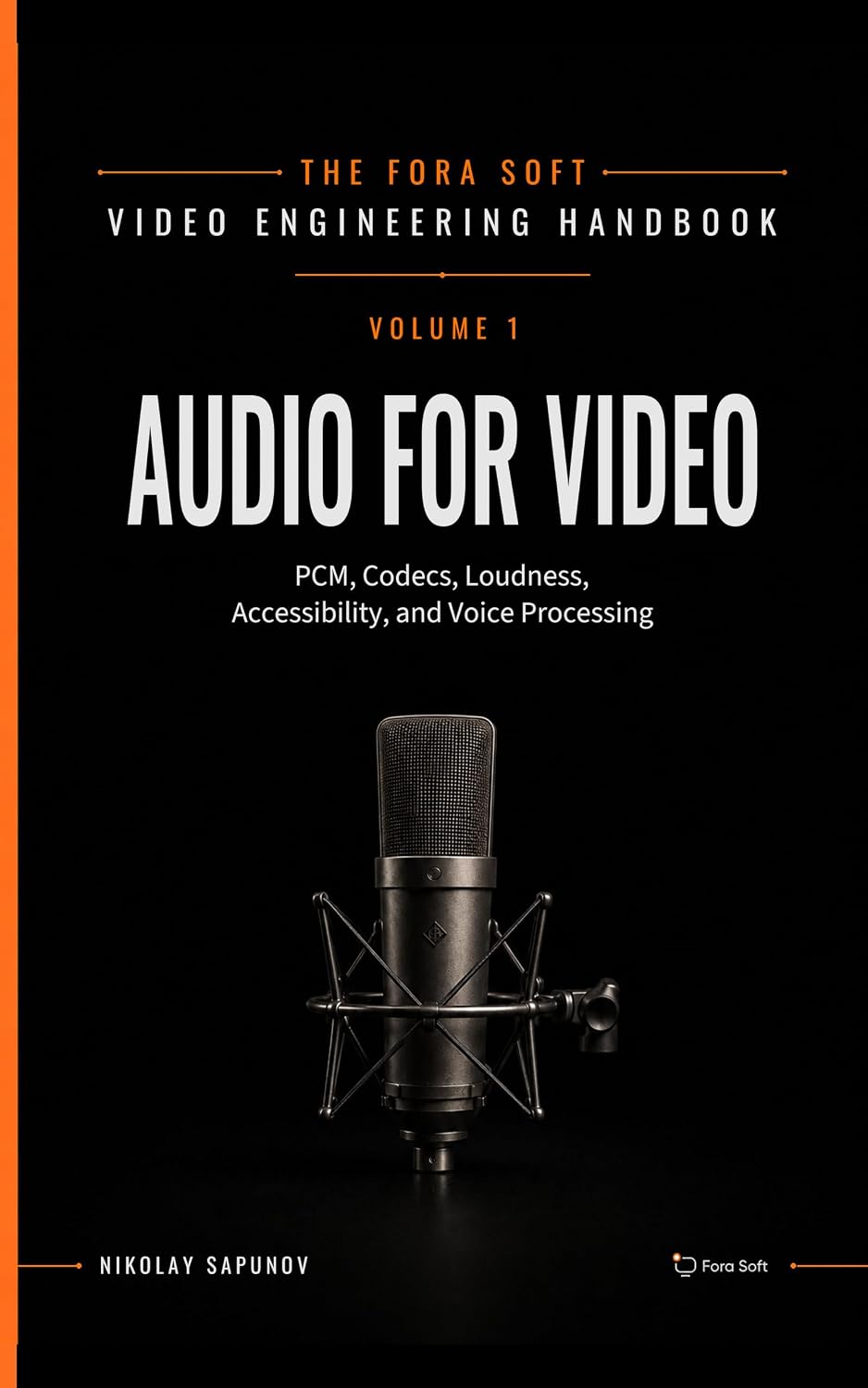
The book · Volume 4 of 7
Audio for Video: A Complete Guide to Sound in Video Products: From PCM and Codecs to Loudness, Accessibility, and Real-Time Voice Processing
LRA is the number that tells you whether quiet dialogue and loud action will both survive a living-room TV or a phone speaker. Volume 4 covers loudness in detail, from LUFS and true peak to loudness range, along with dynamic range and bit depth, so you can set LRA targets per platform and check them in your pipeline. Written by Nikolay Sapunov, CEO at Fora Soft.
Getting LRA rejections from broadcasters, or complaints about whispers and explosions?
Send us sample programmes and we will measure LRA and integrated loudness and return a normalization plan for each delivery target. 250+ video products shipped since 2005.
