

NetEQ is the adaptive jitter buffer and concealment engine at the heart of WebRTC audio, inherited from GIPS (later Google). It does far more than queue packets: it continuously time-scales the audio — accelerating playback to drain a building buffer, expanding it to ride out a gap — using techniques that change duration without shifting pitch, so the listener doesn't hear the adjustment. When a packet is genuinely lost it invokes packet loss concealment, and when silence arrives via DTX it inserts comfort noise. NetEQ's constant tug-of-war between latency and loss is a big part of why WebRTC voice sounds smooth on messy networks, and it is the reference other stacks are measured against.
The book · Volume 5 of 7
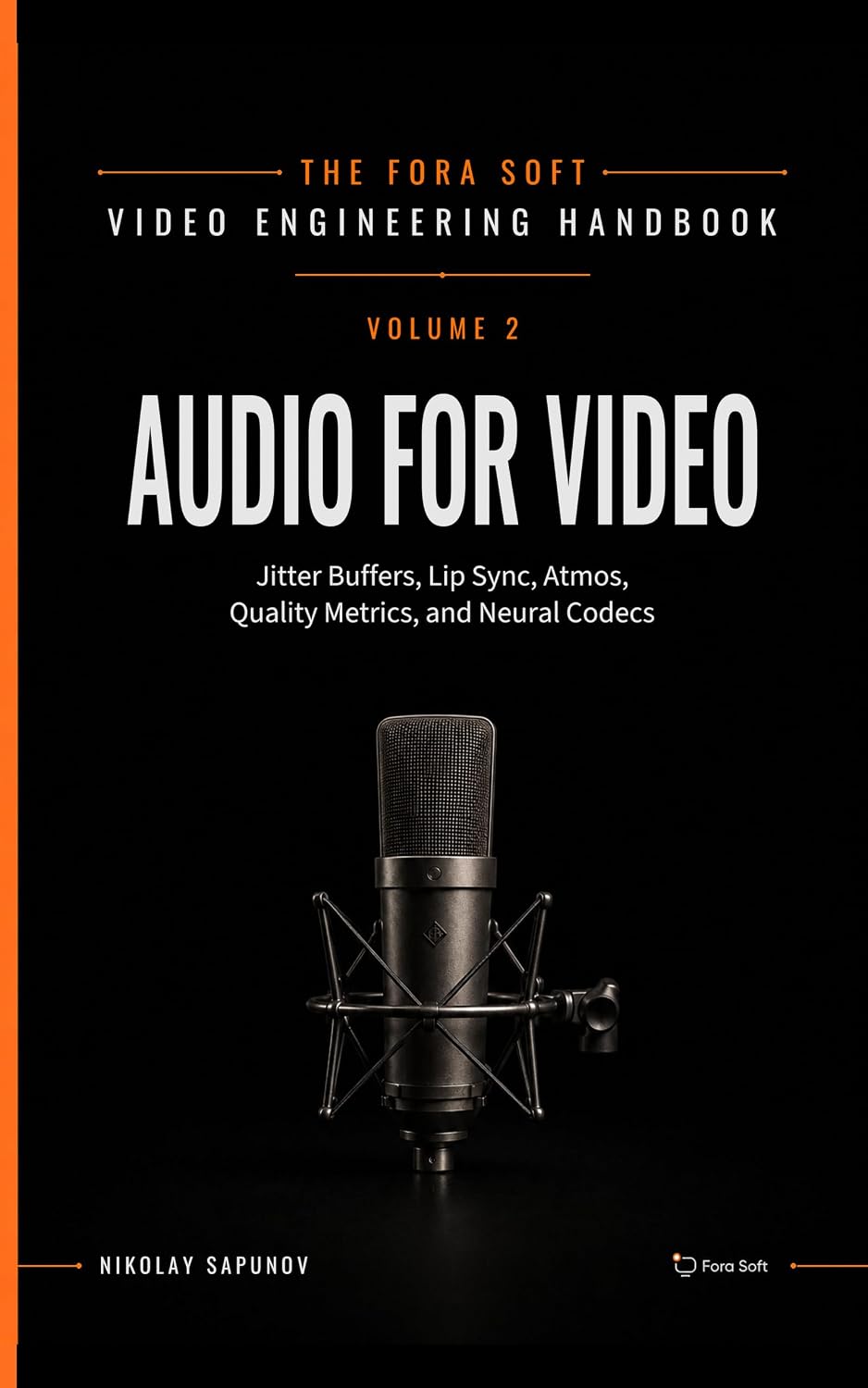
Audio for Video: A Complete Guide to Sound in Video Products: From Jitter Buffers and Lip Sync to Atmos, Quality Metrics, and Neural Codecs
NetEQ decides how a WebRTC call sounds under jitter and loss, stretching and concealing audio so speech keeps flowing. Volume 5 covers it in detail: jitter buffers and NetEq, packet loss concealment, FEC and RED, and diagnosing audio incidents by symptom, so you can read NetEQ stats and know which setting to change. Written by Nikolay Sapunov, CEO at Fora Soft.
Choppy or robotic audio on WebRTC calls, and NetEQ stats you can't interpret?
Send us WebRTC stats from bad calls and we will diagnose NetEQ behaviour and return a tuning plan for jitter, loss and latency. 250+ video products shipped since 2005.
