

PESQ (Perceptual Evaluation of Speech Quality, ITU-T P.862) is a full-reference algorithm that predicts how listeners would rate the quality of degraded speech by comparing the processed signal against the original clean reference. It models aspects of human hearing to output a score on a MOS-like scale, automating what would otherwise require a panel of listeners. For years PESQ was the industry standard for objectively testing narrowband and wideband VoIP, codecs, and network impairments. Its limitation is scope — it was designed for telephony-grade speech and doesn't cover modern super-wideband or general audio well — which is why the newer POLQA (P.863) superseded it for current systems. PESQ still appears widely in legacy test suites and literature.
The book · Volume 5 of 7
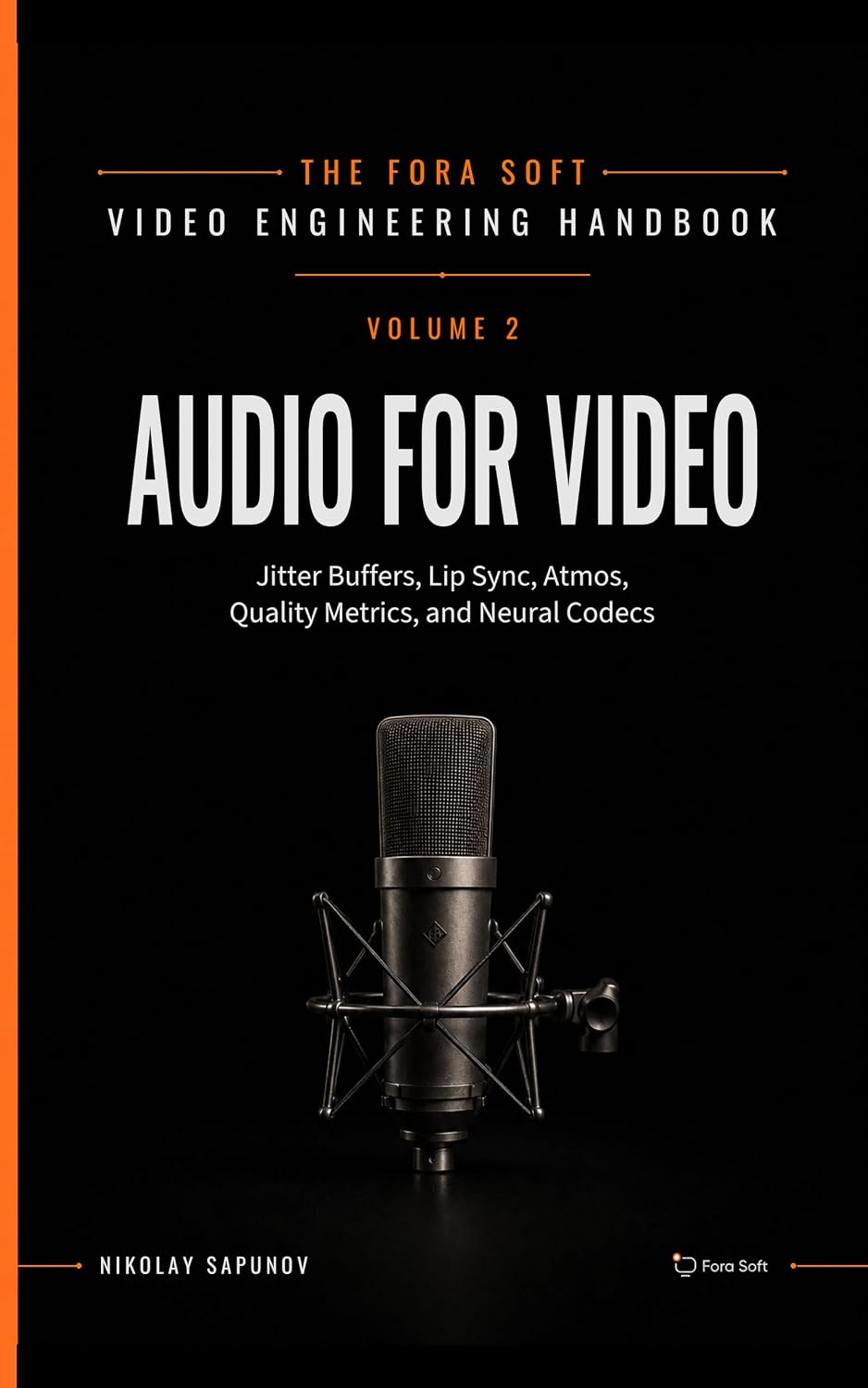
Audio for Video: A Complete Guide to Sound in Video Products: From Jitter Buffers and Lip Sync to Atmos, Quality Metrics, and Neural Codecs
PESQ gives a quick, repeatable speech quality score, but it was built for narrowband telephony and can mislead on wideband codecs. This volume covers PESQ in depth with POLQA, ViSQOL, MOS and subjective tests, so you can pick the right metric for your codec tests and read its scores correctly. Written by Nikolay Sapunov, CEO at Fora Soft.
Using PESQ to score voice quality and unsure the numbers fit your wideband codecs?
Tell us what you are testing and we will set up PESQ, POLQA or ViSQOL scoring with a test corpus and a report on your codec chain. 250+ video products shipped since 2005.
