

ReplayGain is a tag-based loudness-normalization scheme: analyse a track's loudness once at encode time, store the recommended gain adjustment (and a peak value) as metadata in the file, and let any compatible player apply it on playback so songs sit at a consistent level. It predates today's LUFS-based platform normalization but solves the same problem — the jarring jump in volume between tracks from different sources — without touching the audio itself, which keeps it reversible and lossless. It offers both track gain and album gain, so you can preserve a deliberately quiet interlude within an album. Conceptually it is the ancestor of the loudness normalization every streaming service now does server-side.
The book · Volume 4 of 7
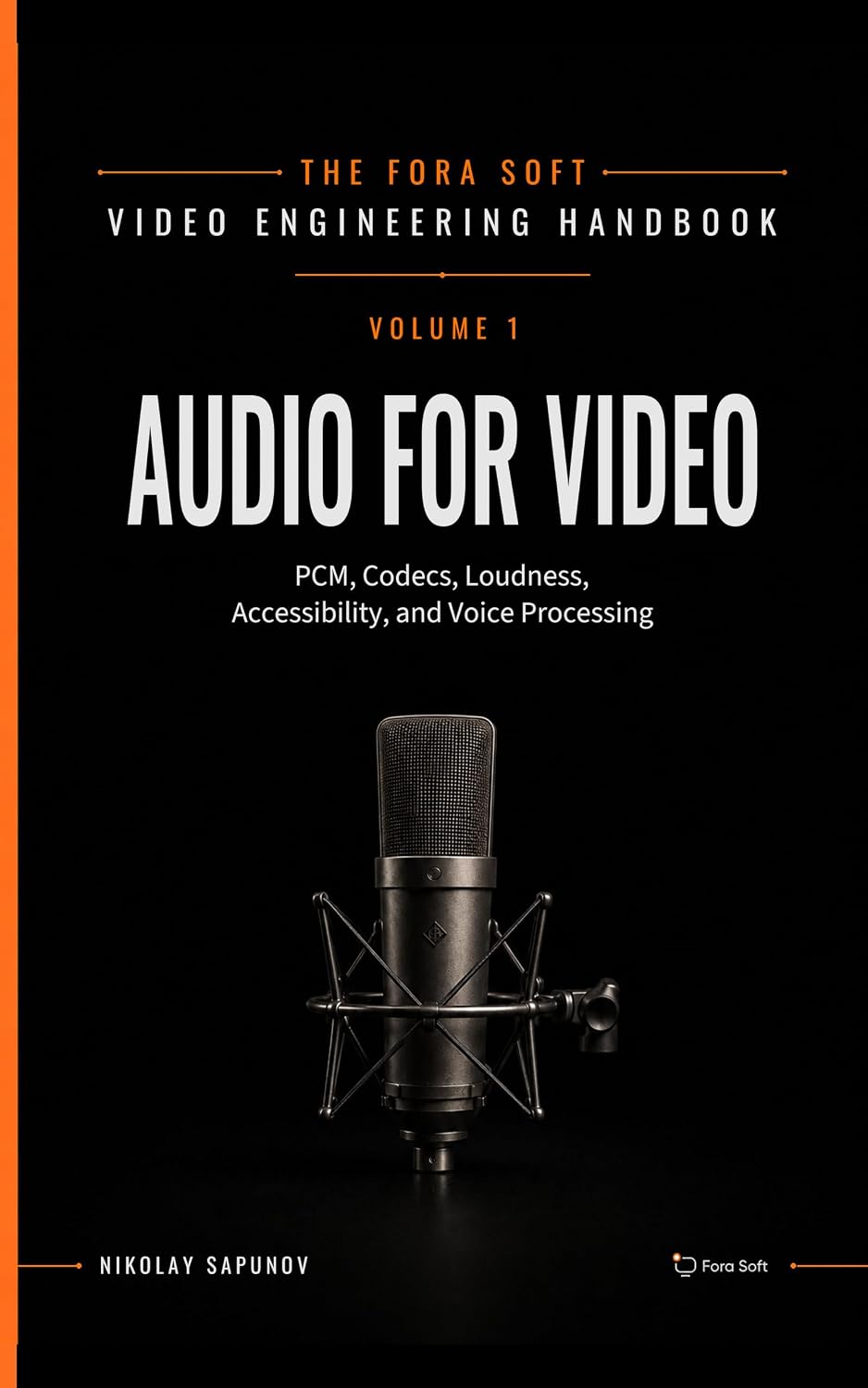
Audio for Video: A Complete Guide to Sound in Video Products: From PCM and Codecs to Loudness, Accessibility, and Real-Time Voice Processing
ReplayGain still sits in many music libraries, and mixing it with LUFS-based normalization can leave tracks jumping in level. Volume 4 covers loudness in detail, from LUFS and loudness standards to true peak, dynamic range and codecs, so you can decide whether to keep ReplayGain tags, convert them, or normalize at playback instead. Written by Nikolay Sapunov, CEO at Fora Soft.
Tracks jumping in level because ReplayGain tags and LUFS normalization disagree?
We will review your library and player and send a normalization plan with target loudness, peak limits and how to handle existing ReplayGain tags. 250+ video products shipped since 2005.
