

Key takeaways
• Virtual reality in healthcare has crossed from research demo to FDA-cleared medical device. RelieVRx, Luminopia, MindMotion GO, Rejoyn, and DaylightRx now ship as prescription therapeutics with RCT-grade evidence behind each one.
• Reimbursement is finally real. CMS-recognized HCPCS E1905 (VR CBT device, March 2023), Category III CPT codes 0770T–0774T, and Medicare approval for XRHealth’s remote therapy monitoring all hit inside the last 36 months.
• The clinical data holds up to scrutiny. RelieVRx: 46% of chronic-lower-back-pain patients achieved ≥50% pain reduction vs. 26% sham, durable at 24 months. AugMedics xvision: 97–100% pedicle screw accuracy across 13,000+ patients, 71,500+ screws placed.
• The market is big enough to justify a platform decision now, not later. Global AR/VR healthcare: $5.0–6.4B in 2025, projected $58.2B by 2035 (27.78% CAGR). Surgical training alone: $3.85B today, $15.3B by 2035.
• Buy first, build second. Osso VR, FundamentalVR, PrecisionOS, Surgical Theater, Proximie, AppliedVR, Luminopia, XRHealth, oVRcome cover most demand. Custom builds earn their keep on proprietary devices, integrated EHR/PACS workflows, or specialty use cases vendors don’t serve.
Why Fora Soft wrote this playbook
Fora Soft is a software development company that has built real-time video, AI, and immersive software for healthcare and education since 2005 — 250+ projects across 20 years. We shipped telehealth and LMS-grade video platforms before the category had a name, delivered HIPAA-scoped video + AI products into clinic and hospital workflows, and built custom AR/VR experiences for training scenarios that no off-the-shelf vendor covered. Companion reading: our AR/VR in Education 2026 buyer’s guide, the longer-form AR and VR in Education playbook, and the Telehealth software buyer’s guide. This article is the decision-oriented companion for healthcare: what the evidence really says, who the vendors are, what a realistic rollout looks like, and when a custom build wins.
Evaluating AR/VR for your hospital, clinic, or medical device program?
Share the use case (surgical training, pain therapy, rehab, diagnostics, telementoring), patient volume, and compliance scope. We’ll return a concrete platform recommendation — or a custom-build estimate — and tell you honestly when off-the-shelf is the right answer.
Why AR/VR is finally landing in hospitals
Virtual reality in healthcare stopped being a conference curiosity somewhere between 2021 and 2026. Three things changed that turned it into a procurement line:
- FDA clearances stacked up. 90+ AR/VR medical devices cleared between 2015 and 2025. Four De Novo pathways opened new categories (RelieVRx, Luminopia, Rejoyn, DaylightRx).
- Reimbursement caught up. HCPCS E1905 (March 2023), Category III CPT 0770T–0774T, Medicare RTM approval for XRHealth. Payers are no longer the blocker they were in 2020.
- Hardware got clinic-ready. Meta Quest 3 for Business at ~$499, Apple Vision Pro in shoulder-arthroscopy pilots, HoloLens 2 driving 3D imaging review, much of it powered by the same AI and computer-vision engineering behind modern medical video. Medical-grade systems now plug into existing PACS.
What this means for budget-holders: AR/VR is no longer a question of “does it work?” It’s a question of “which clinical application, which vendor, at what volume.” A much more answerable question.
The one-line case: If your program trains 40+ surgeons a year on the same procedure, runs 500+ chronic-pain patients annually, or handles any regulated rehab population at scale, AR/VR now has a defensible ROI story backed by RCTs.
The 2026 AR/VR healthcare market in one snapshot
The numbers that frame the buying decision:
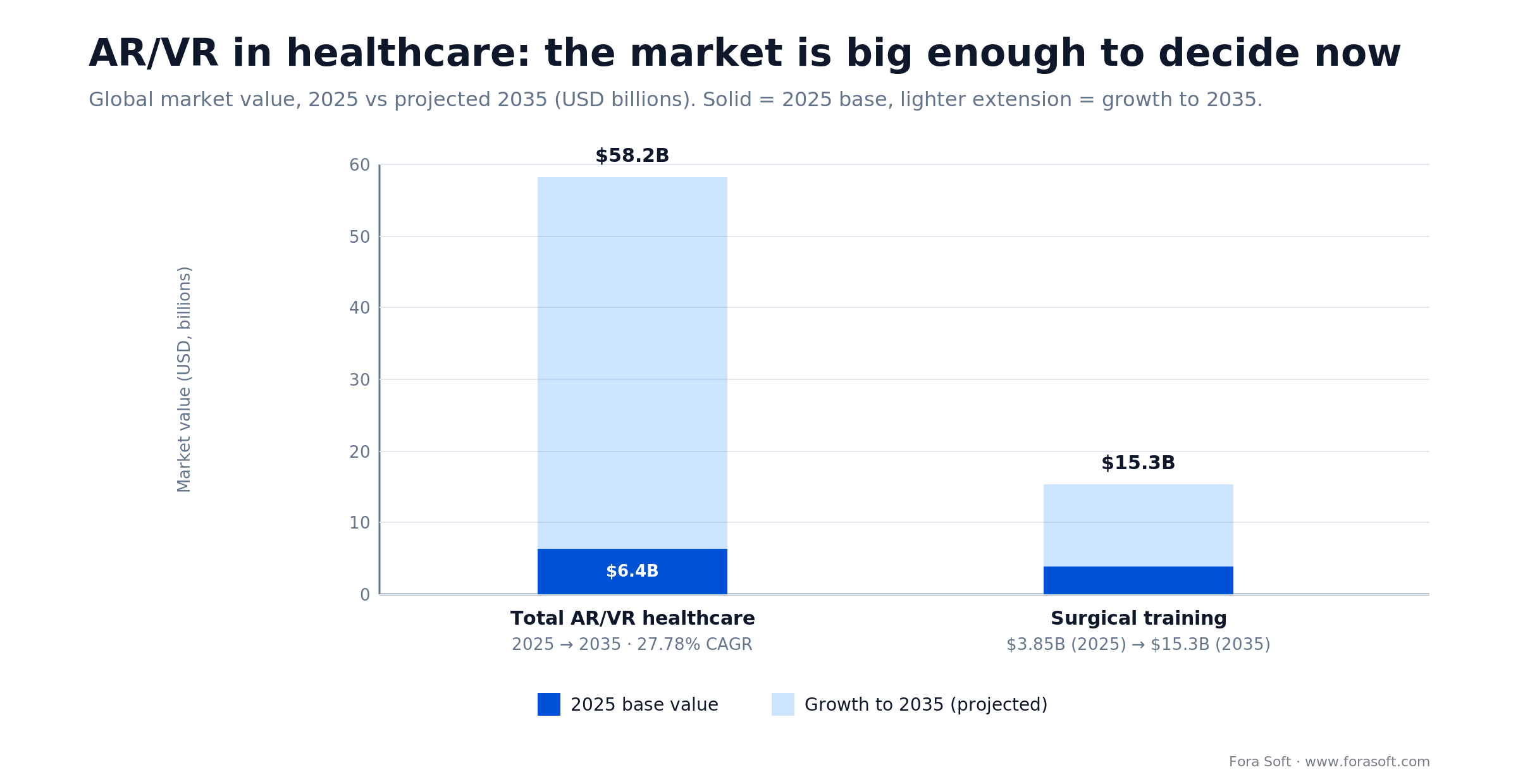
Figure 1. The AR/VR healthcare market is large and growing fast enough to justify a platform decision now.
- Global AR/VR healthcare market: $5.01–6.41B (2025) → $58.17B (2035), 27.78% CAGR. (Global Growth Insights.)
- Surgical simulation segment: $3.85B (2025) → $15.31B (2035), 14.8% CAGR. Market leader today.
- Mental health therapy: fastest-growing segment — driven by FDA approvals for digital therapeutics (Rejoyn for MDD, DaylightRx for GAD).
- North America: largest regional share, built on early FDA adoption and the reimbursement runway.
- 40% of surgical training projected digital by end of 2026 (industry forecasts) — up from roughly 10% in 2021.
- FDA-cleared AR/VR medical devices: 90+ between 2015 and 2025. Pace accelerating post-2022.
- HCPCS E1905: first CMS national rate for a VR CBT device, effective March 2023 — the inflection point for payer coverage.
What the clinical evidence actually says
The RCT-grade data that matters, 2021–2026:
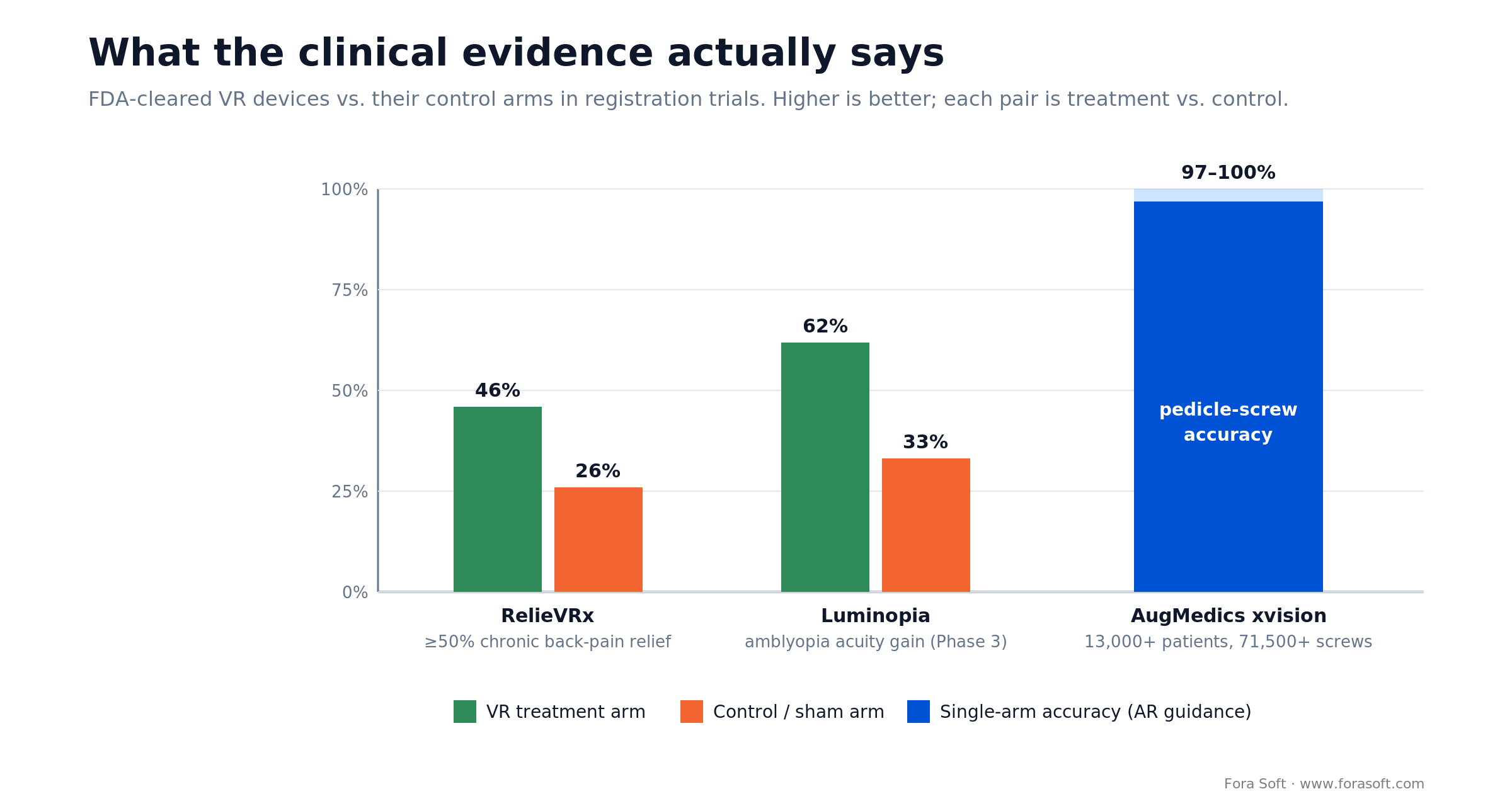
Figure 2. Registration-trial results for FDA-cleared VR/AR devices against their control arms.
Chronic lower back pain — RelieVRx (AppliedVR)
- 46% of VR patients achieved ≥50% pain reduction vs. 26% sham control in the double-blind registration RCT (n=179).
- Durable at 24 months post-treatment — clinically meaningful reductions in pain intensity, pain interference, sleep disruption, and stress.
- Largest effect sizes in the high-impact chronic pain (HICP) cohort.
- Zero serious adverse events across trials. Format: 6-minute daily home sessions, prescription device.
- FDA De Novo (2021), reaffirmed 2024. Medicare + commercial payer coverage expanding; workers’ compensation partnerships launched 2024.
Amblyopia in children — Luminopia
- 62% best-corrected visual acuity improvement in the amblyopic eye vs. 33% control (Phase 3).
- 88% adherence rate vs. ~50% for traditional eye patching — the decisive factor for pediatric compliance.
- 1 hour/day, 6 days/week binocular VR therapy via TV-streamed content.
- FDA De Novo (October 2021). Commercial payer coverage in major plans.
Surgical training — Osso VR, FundamentalVR, PrecisionOS
- Osso VR trainees: 300% higher procedural competence scores vs. traditional-only training in peer-reviewed trials. Fewer instructor prompts required.
- AR surgical training: 90% correct pedicle screw placement vs. 37.5% in control — with a 42% improvement in spatial awareness.
- VR-trained surgeons: 38% faster procedure execution with 45% fewer errors.
- FundamentalVR haptics: sub-millimeter precision, statistically significant error reduction, independently accredited learning platform.
Intraoperative AR navigation — AugMedics xvision
- 97–100% pedicle screw accuracy across multi-study validation.
- 13,000+ patients treated, 71,500+ screws placed across 26 US states — real-world scale, not demo.
- FDA-cleared for spine procedures (C3 to pelvis). Surgeon keeps eye contact with patient while navigation data projects on the retina.
PTSD — VR exposure therapy (VRET)
- 66–90% success rate across VRET protocols in meta-analyses — statistically equivalent to prolonged exposure therapy.
- 3% patient refusal rate for VRET vs. 27% for in-vivo exposure — VR dramatically lowers the engagement barrier.
- Lower re-traumatization risk than imaginal exposure; therapist retains full control of intensity and pacing.
- Demonstrated in veteran populations and first-responder cohorts (ambulance crews, firefighters).
Labor pain, burn pain, stroke rehab — the breadth
- Labor pain: 77% of patients report VR reduced pain, 95% would use again, 82% very high satisfaction. No adverse maternal or fetal effects.
- Pediatric burn dressing changes: moderate-to-large effect sizes for pain reduction, exceeding traditional distraction and comparable to opioid analgesia — without respiratory risk.
- Stroke rehab: measurable improvement in upper-limb function, balance, and gait; benefit plateaus after >20 hours of VR therapy; <8% mild cybersickness.
- Anatomy education: 42% improvement in 3D spatial reasoning; 95–98% student satisfaction with VR vs. traditional and cadaveric methods.
Why this matters for procurement: Every one of these outcomes comes from peer-reviewed RCTs or large multicenter registries — not vendor marketing. That’s what makes the 2026 buying conversation different from the 2019 one. The question moved from “is this real?” to “which vendor, which device, which workflow.”
Where AR/VR actually works — 10 clinical applications with evidence
1. Surgical training and competence
Risk-free procedural repetition with instrumented performance metrics. Osso VR (300% competence gains), FundamentalVR (haptic precision), PrecisionOS (orthopedic), Surgical Theater (neurosurgery), Virtual Incision + NVIDIA Isaac (robotic-assisted). Specialties covered: orthopedic, neurosurgery, general, cardiac, robotic. Typical payback: 12–24 months on a 40-surgeon annual cohort.
2. Preoperative planning and patient-specific simulation
3D reconstruction from CT/MRI lets surgeons rehearse approach, trajectory, and implant sizing before entering the OR. ImmersiveTouch (ImmersiveView Surgical Plan) and Surgical Theater (Precision VR) are the leaders — Surgical Theater has served 1,100+ Stanford neurosurgery patients through the care continuum. Secondary benefit: informed consent conversations that patients actually understand.
3. Intraoperative AR guidance
Real-time overlay of patient anatomy, navigation data, and the surgical plan on the OR field. AugMedics xvision leads in spine (97–100% accuracy, 13K+ patients). Broader telementoring via Proximie. The 2026 direction: AR as an “intelligent OR co-pilot” augmenting, not replacing, the surgeon.
4. Chronic pain management (behavioral)
FDA-approved digital therapeutics replacing opioid-first protocols for eligible patients. RelieVRx for CLBP is the anchor product (46% vs. 26% sham). Other target conditions studied: CRPS, fibromyalgia, cancer pain, post-op pain, phantom limb pain. Mechanism: immersive distraction + CBT + body awareness + relaxation training, 6 minutes daily at home.
5. Mental health exposure and CBT
VRET for PTSD, phobias, OCD, anxiety. oVRcome (phobias, social anxiety), PsyTech VR (multi-condition), BehaVR (addiction + mental health). Advantage over in-vivo exposure: 3% refusal vs. 27%, therapist-controlled dose, safer scenarios (combat triggers, contamination OCD). FDA-approved emerging products: Rejoyn (MDD), DaylightRx (GAD).
6. Neurorehabilitation
Post-stroke, TBI, Parkinson’s, spinal-cord injury. MindMotion GO (MindMaze): FDA 510(k)-cleared home-based motor rehab, plugs into TV. XRHealth (XR CareCart): plug-and-play station for PT/OT/mental-health remote therapy with Medicare RTM reimbursement. Evidence: upper-limb function, balance, gait all measurably improve; >20 hours dose-response threshold.
7. Pain management in acute settings
Labor pain (77% patient-reported reduction), pediatric burn dressing changes (moderate-to-large effect), procedural pain (wound care, IV starts). CPT 0770T–0774T (Category III) cover virtual reality procedural dissociation. Smartphone-based VR viable for budget-constrained settings.
8. Amblyopia and pediatric vision therapy
Luminopia (FDA De Novo) turns the adherence problem into the solution — 88% compliance vs. ~50% for traditional patching. Binocular VR therapy via TV-streamed content; 1 hour/day, 6 days/week.
9. Medical student and resident anatomy education
Interactive 3D structures, manipulable and annotated, replacing or augmenting cadaveric dissection. Outcomes: 42% improvement in 3D spatial reasoning; 95–98% student satisfaction. HoloLens 2 drives point-of-care 3D MRI visualization in teaching hospitals.
10. Telepresence and remote specialty guidance
Remote expert telementoring, virtual consult rooms, remote therapy monitoring. Proximie (OR telepresence + training library), XRHealth (clinician–patient VR telehealth), MyndVR / Rendever (senior-living engagement and memory care). 5G + XR is the 2026–2027 combined bet.
The 2026 AR/VR vendors — who to evaluate
The short list of vendors serious enough to be on a shortlist. Vet the ones that match your clinical problem — not all of them.
| Vendor | Category | Regulatory | Best fit |
|---|---|---|---|
| Osso VR | Surgical training (multi-specialty) | Educational | Residency programs, orthopedic + gyn + general |
| FundamentalVR | Haptic surgical simulation + AI | Accredited | High-fidelity skill development, attendings |
| PrecisionOS | Orthopedic VR training | Educational | Joint replacement, spine, shoulder |
| Surgical Theater | Neurosurgical rehearsal + planning | FDA-cleared workflow | Tumor, vascular, epilepsy neurosurgery |
| ImmersiveTouch | Patient-specific haptic planning | FDA-cleared platform | Pre-op planning, consent, education |
| AugMedics xvision | Intraoperative AR (spine) | FDA-cleared (C3–pelvis) | Spine fixation, pedicle screw placement |
| Proximie | Surgical telepresence + training | HIPAA-scoped | Telementoring, OR workflow analytics |
| AppliedVR (RelieVRx) | Chronic pain digital therapeutic | FDA De Novo (2021, reaffirmed 2024) | CLBP, workers’ comp partnerships |
| Luminopia | Pediatric amblyopia therapy | FDA De Novo (2021) | Ages 4–7 amblyopia, 88% adherence |
| XRHealth | VR telehealth platform | Medicare RTM-approved | PT, OT, behavioral remote therapy |
| MindMotion GO (MindMaze) | Home neurorehabilitation | FDA 510(k) | Post-stroke motor recovery, TBI |
| oVRcome | VR exposure therapy | Wellness / clinical pilot | Phobias, social anxiety, agoraphobia |
| BehaVR / MyndVR / Rendever | Behavioral + senior care | Wellness / pilot | Addiction, memory care, engagement |
| Virtual Incision + NVIDIA Isaac | Robotic-surgery digital twins | FDA-cleared RAS (MIRA) | Robotic training, simulation at scale |
The 2026 medical headsets — what to buy
The hardware question is largely solved for most clinical scenarios. What to buy, and what each trade-off earns you:
Meta Quest 3 for Business — the default clinical / training headset
Mature ecosystem, strong pass-through video, MDM-supported, plays with Osso VR, FundamentalVR, Virti, XRHealth, AppliedVR’s home-use devices. Pick this for training programs and home-based therapy at scale.
Apple Vision Pro — the premium surgical-planning pick
Superior display, camera resolution (handles bright OR lighting better than most competitors), hand-eye tracking. Active pilots in shoulder arthroscopy, neuronavigation prototypes. $3,499, with increased cognitive load in time-sensitive procedures a live concern. Pick this for non-time-critical planning, premium education, patient consent visualizations.
Microsoft HoloLens 2 — the established AR clinical workhorse
Point-of-care 3D MRI visualization, pre-surgical anatomy review, mature integrations with healthcare imaging. Pick this where AR (not VR) is the answer, and where HoloLens already has a clinical integration.
Magic Leap 2 — emerging clinical AR
Growing partnerships in surgical guidance and medical visualization. Pick this when a specific medical-imaging or surgical-guidance partnership has been validated on the platform.
Varjo XR-4 — professional high-fidelity XR
Best-in-class resolution for precision imaging and surgical planning. Enterprise price point. Pick this for research settings, advanced surgical planning, or diagnostics where fidelity drives the decision.
The hardware direction: Lighter headsets (<200g), better bright-light pass-through, 5G-enabled remote telementoring, and AI-embedded local inference for real-time AR overlays (no cloud latency) are the 2026 hardware theme. Most vendors now ship on Quest 3 by default and support Vision Pro where optics matter.
What a real clinical deployment costs, Year 1
Three representative scenarios, conservative 2026 budgets:
Scenario A — surgical training program (20 surgeons, 1 specialty)
| Line item | Year 1 | Year 2+ |
|---|---|---|
| 10 × Meta Quest 3 for Business | $5,000–$7,000 | $0 (refresh 3–4 yr) |
| Osso VR / PrecisionOS license (20 seats) | $40,000–$80,000 | Same (annual) |
| Haptic hardware (FundamentalVR add-on, optional) | $15,000–$40,000 | Service contract |
| Facilitator training + curriculum integration | $5,000–$10,000 | $1,500/yr |
| MDM, insurance, contingency | $3,000–$5,000 | $2,000 |
| Total | $68,000–$142,000 | $43,500–$83,500 |
Context: a single surgical OR hour in the US runs $1,500–$4,000 all-in. If VR training reduces OR revisions, revision surgeries, or instructor dependency by even a small margin across 20 surgeons, the program pays for itself inside 18 months.
Scenario B — chronic pain digital therapeutic (500 patients/year)
RelieVRx prescription devices at per-patient licensing (commercial payer, workers’ comp, or DME pathway). Typical program economics: $800–$1,500 per patient all-in, with reimbursement coverage expanding. Cost baseline: injection-based chronic pain management and opioid management run $3,000–$10,000/patient/year. Digital therapeutic is economically compelling below $2,000/patient when clinical outcomes hold.
Scenario C — VR rehabilitation clinic (PT/OT + neurorehab)
XR CareCart deployment (1 station) + XRHealth platform subscription + Medicare RTM billing. Typical Year 1: $15,000–$30,000 hardware/software; reimbursement via RTM codes (99453, 99457, 99470) plus standard PT/OT codes. Margin depends on patient volume; break-even typically 100–150 patient-visits/year per station.
Want the TCO model for your specific use case?
Send us the clinical application (surgical, pain, rehab, behavioral, diagnostic), expected patient or trainee volume, and reimbursement profile. We’ll return a concrete spreadsheet with vendor options, hardware, training, and payer assumptions.
Buy off the shelf, or build custom? The honest rule
Off-the-shelf platforms cover most high-volume clinical applications. Custom wins when what you need doesn’t exist — or when vendor economics don’t pencil out for your volume. That is where our AR/VR development team comes in.
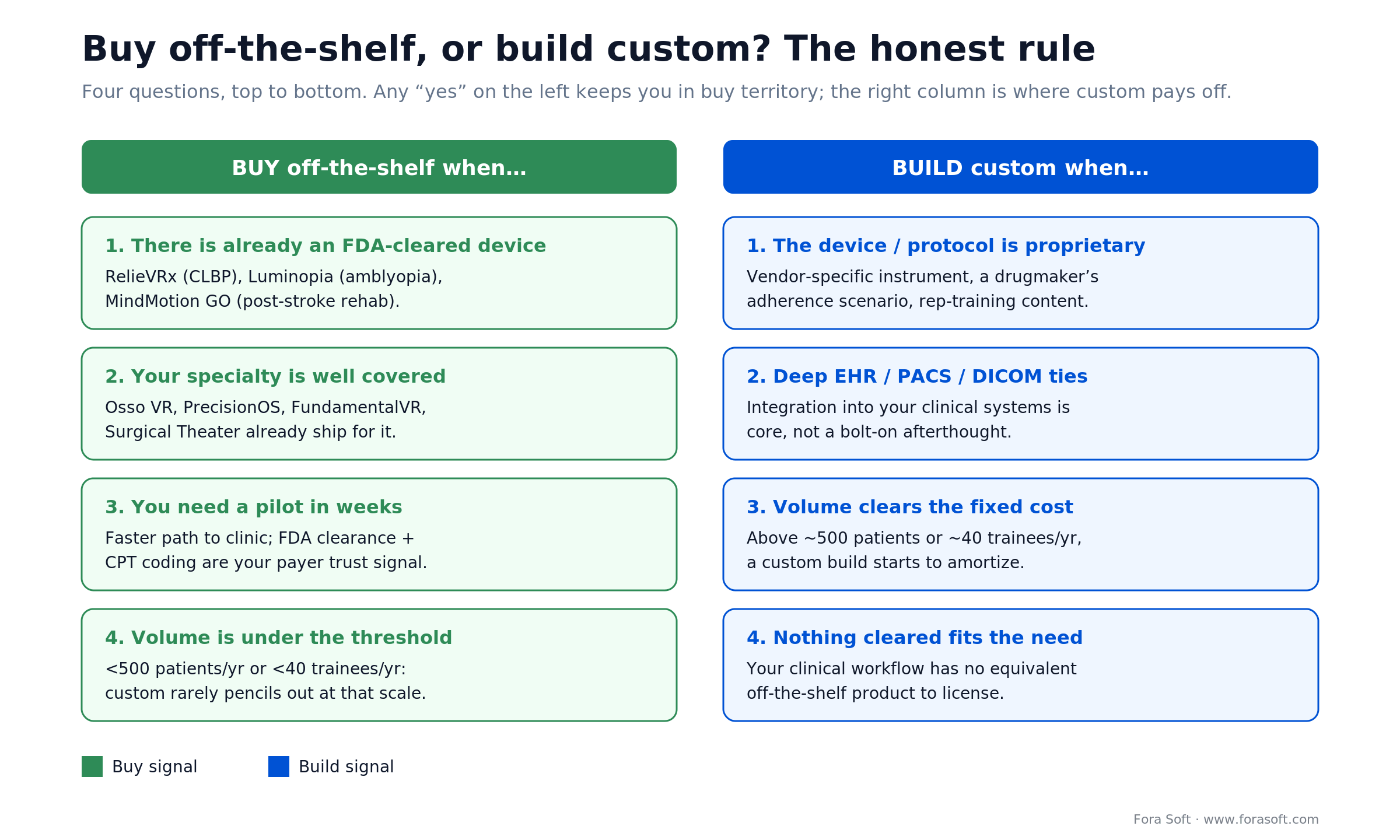
Figure 3. A four-question rule for choosing between an off-the-shelf platform and a custom build.
Buy off-the-shelf when
- Your clinical application maps to an existing FDA-cleared device (CLBP → RelieVRx, amblyopia → Luminopia, post-stroke → MindMotion GO).
- Your training specialty is well-covered by existing platforms (Osso VR, PrecisionOS, FundamentalVR, Surgical Theater).
- You need a faster path to clinical pilot (weeks, not months).
- Reimbursement visibility matters — FDA clearance + established CPT coding path is the trust signal for payers.
- Your volume is under 500 patients/year or 40 trainees/year — the fixed cost of custom build rarely amortizes below that.
Build custom when
- The device, medication, or protocol is proprietary (vendor-specific surgical instrument, a pharmaceutical company’s adherence-training scenario, a device manufacturer’s rep training).
- EHR / PACS / DICOM integration matters and off-the-shelf doesn’t deliver it natively.
- HIPAA + on-prem deployment is required and vendor SaaS won’t fly with your compliance team.
- You have 500+ patients or trainees annually to amortize development across.
- You need custom analytics, outcome instrumentation, or direct integration with outcome registries.
- You’re pursuing FDA clearance (510(k), De Novo, or SaMD) and need design-control ownership over the software.
What a custom clinical AR/VR build actually costs
Clean scope, clinician + SME engagement, HIPAA-aware architecture, Unity or Unreal on Quest 3 + Vision Pro + WebXR:
- MVP (single scenario, no FDA track): $60K–$150K, 10–16 weeks.
- Production-grade (multi-scenario, LMS/EHR integration, analytics): $180K–$400K, 4–8 months.
- FDA-track SaMD (510(k) or De Novo submission, design controls, clinical validation support): $500K–$1.5M+, 12–24 months, plus regulatory consulting.
- Agent Engineering (our AI-assisted delivery) compresses routine 3D, interaction logic, and integration work by 25–40% — the savings usually fund the design-control + clinical work that actually moves the FDA needle.
Need a custom AR/VR clinical build scoped?
Share the clinical application, regulatory intent (FDA track or non-device), and target hardware. We’ll return a concrete build estimate, timeline, a realistic FDA path assessment, and an honest call on whether buy-off-the-shelf serves you better.
FDA pathways, SaMD, and what regulators actually ask for
Most AR/VR medical products hit one of four pathways. Pick the wrong one and you lose 6–12 months.
510(k) — the predicate route
Used for surgical simulators and navigation devices with an existing substantially-equivalent predicate. 3–6 month timeline when done well. Most AR surgical guidance devices (beyond the pioneers) use this. Lower clinical evidence bar, but still requires design controls and validation.
De Novo — for first-of-kind digital therapeutics
Required when no predicate exists. RelieVRx, Luminopia, Rejoyn, DaylightRx all came through here. 6–12 month timeline. Creates a new device classification and special controls (benefit for later entrants). Clinical evidence bar is high: RCT vs. sham control is typical for therapeutic claims.
Software as a Medical Device (SaMD)
The FDA framework covering software-based interventions. Risk-based classification drives 510(k) vs. De Novo route. Critical considerations: level of risk to patient on software failure, validation in intended use environment, cybersecurity, software lifecycle management. IEC 62304 is the governing development standard.
Breakthrough Device Designation
Expedited review for devices addressing unmet clinical need. Several VR pain and PTSD devices have used this route. Benefits: priority review, interactive FDA feedback, faster commercial access.
What trips up first-time submitters: Underestimating design controls on software-intensive devices. Insufficient RCT statistical power for efficacy claims. Cybersecurity and post-market surveillance plans that weren’t built in from day one. 510(k) teams forgetting predicate equivalence documentation. Fix: involve regulatory + clinical early — not after the prototype.
Reimbursement in 2026 — coding, coverage, and where it’s actually working
Reimbursement is finally a real story, not a pitch deck:
The codes that matter
- HCPCS E1905 (effective March 2023): VR CBT device with pre-programmed therapy software. CMS-set national rate. First national reimbursement code for a VR digital therapeutic.
- CPT 0770T: VR-augmented behavioral health service (Category III add-on). Requires base behavioral health code; variable commercial coverage.
- CPT 0771T–0774T: Virtual reality procedural dissociation (VRPD) for acute pain. Category III; variable coverage.
- Remote therapy monitoring (99453, 99457, 99470): used by XRHealth after earning Medicare approval for VR-delivered PT/OT monitoring.
- Behavioral health codes (90834, 90837): base codes under which VR-augmented sessions get billed.
Where payers are actually paying
- Medicare: E1905 reimbursed; XRHealth RTM approved.
- Commercial payers: expanding coverage for RelieVRx under DME pathway; Luminopia covered in major commercial plans; variable by state and plan.
- Workers’ compensation: AppliedVR partnership launches in 2024 delivered the first systematic workers’-comp pathway for VR CLBP therapy.
- Value-based / outcomes-based contracting: emerging for behavioral health digital therapeutics. Pay-for-response models.
Barriers to watch
Prior authorization burden is high for novel therapies. Many Category III codes lack CMS national rates. Commercial plan-to-plan variance is real. Anything below FDA clearance is a tough reimbursement sell — wellness/pilot categories rarely get covered. The good news: HCPCS E1905 set the precedent, and CMS is signaling openness to more digital therapeutic codes in 2026–2027.
HIPAA, cybersecurity, and the compliance scope you cannot skip
Three realities every clinical AR/VR deployment runs into:
HIPAA in multiplayer VR
Shared immersive environments with multiple patients are inherently risky — voice, visual, and biometric data are all PHI. Solutions: per-patient isolated virtual spaces, encrypted audio channels, documented access controls, Business Associate Agreements (BAAs) with every vendor touching PHI.
Biometric + motion data as PHI
Motion tracking, eye gaze, heart rate, and performance analytics collected during clinical VR sessions are all PHI if tied to an identified patient. That means encryption at rest and in transit, authenticated access, audit logs, and incident response protocols under the HIPAA Security Rule.
Cybersecurity baseline
FDA Premarket Cybersecurity Guidance (2022) + NIST Cybersecurity Framework + IEC 62304 medical device software standards. Required controls: end-to-end encryption, MFA for clinicians, network segmentation, intrusion detection, penetration testing, documented patch management, SBOM (software bill of materials) disclosure.
What vendors get wrong: Many VR medical startups underinvest in compliance until their first enterprise deal stalls. Fix it early: BAA-ready, SOC 2 Type II inside 12 months, documented IEC 62304 lifecycle, cybersecurity plan referenced in your 510(k) or De Novo submission. Compliance is a moat, not a cost center.
The real implementation challenges — and how to beat them
Cybersickness
5–10% of patients experience nausea or dizziness, elevated in vestibular-impaired populations (stroke, Parkinson’s). Mitigations: start non-immersive, cap early sessions at 10 minutes, use teleport locomotion, avoid high-acceleration scenes, gradual acclimation ramp, confirm opt-out paths for medical populations.
Clinician training burden
The single biggest predictor of adoption failure. Clinicians unfamiliar with VR interfaces will not use the hardware. Fix: mandatory 1-day onboarding, peer champions per specialty, 30/60/90-day check-ins. Without it, adoption drops below 15% by month 3.
Skill-transfer and fidelity gaps
VR-learned skills don’t always transfer cleanly to OR or clinical setting. Mitigation: competency-based progression, in-simulation + in-context hybrid training, longitudinal follow-up assessments. Design for deliberate practice, not one-shot exposure.
Reimbursement uncertainty
Category III CPT codes have limited CMS rates. Commercial plan coverage varies. Prior authorization slows deployment. Fix: prioritize applications where reimbursement path is established (E1905 for CBT, RTM for XRHealth-style platforms) and pilot with payer-partners for novel categories.
Patient selection
VR is not universal. Cognitive impairment, severe psychiatric instability, baseline motion sensitivity, and some vestibular conditions are contraindications or require modified protocols. Build eligibility into the clinical workflow — don’t leave it to the VR rep.
Workflow integration
VR training added to an already-busy clinical schedule fails. Solution: embed into grand rounds, residency curricula, mandatory continuing education, or pre-op planning workflows. Proximie’s 2025–2026 direction on measuring OR workflow time is instructive: quantify the gain.
Hardware management
Expect 10–15% annual breakage or loss in clinical environments. Budget for it. Tethered straps, protective cases, printed protocols, and central MDM cut loss rates roughly in half.
Seven pitfalls we see on almost every AR/VR healthcare rollout
1. Jumping to full deployment without a pilot. Programs that deploy 40 headsets division-wide in month 1 almost always see <20% adoption by month 6. Pilot with 2–3 clinicians, measure, then scale.
2. Underbudgeting clinician training. Expensive hardware with $0 training = expensive paperweights. Budget minimum 10% of total program cost for training and ongoing support.
3. Assuming FDA clearance is optional. For therapeutic claims, it isn’t. Even for non-device education products, payer and enterprise conversations demand regulatory clarity. Map your pathway before prototyping.
4. Ignoring EHR / PACS / DICOM integration. If clinical data can’t flow between VR platform and patient record, clinicians stop using it. Budget integration work up front.
5. Picking the premium headset when the mid-range works. Apple Vision Pro is the right call for shoulder arthroscopy planning. It’s the wrong call for 40-resident surgical training. Match optics to use case.
6. Treating VR as a standalone intervention, not a care pathway component. The strongest deployments embed VR inside existing workflows — preoperative planning sessions, post-op rehabilitation programs, chronic pain management cycles. VR alone underperforms VR-plus-standard-care.
7. Underestimating compliance scope. HIPAA, IEC 62304, SBOM disclosure, BAAs, SOC 2. Compliance is a gate, not a feature. Start early, not when the first enterprise deal stalls.
A 6-question decision framework for AR/VR in healthcare
Q1. What’s the clinical problem, and is there RCT-grade evidence? Strong RCT evidence + FDA clearance: proceed. Pilot-only evidence: budget for your own validation study. No evidence: not yet.
Q2. Does an FDA-cleared device serve the application? Yes: evaluate vendor + reimbursement path. No: understand whether you’re building a device (FDA track) or a non-device education tool.
Q3. What’s the patient or trainee volume? <100/yr: probably skip or pilot with low-cost WebXR. 100–500/yr: off-the-shelf platform. 500+/yr: custom build starts to amortize.
Q4. What’s the reimbursement or outcomes pathway? E1905, RTM codes, workers’ comp, DME: clearer path. Self-pay or institutional absorption only: harder case.
Q5. What’s your clinician training + workflow integration readiness? Enthusiastic champion + EHR integration capacity: deploy. Un-trained + manual integration: fix workflow first.
Q6. What’s your compliance scope? HIPAA-only: most SaaS platforms work. FDA-cleared device required: regulatory strategy from day one. On-prem / private-cloud mandated: custom build likely.
A realistic 90-day AR/VR clinical rollout
What good looks like in each 30-day window:
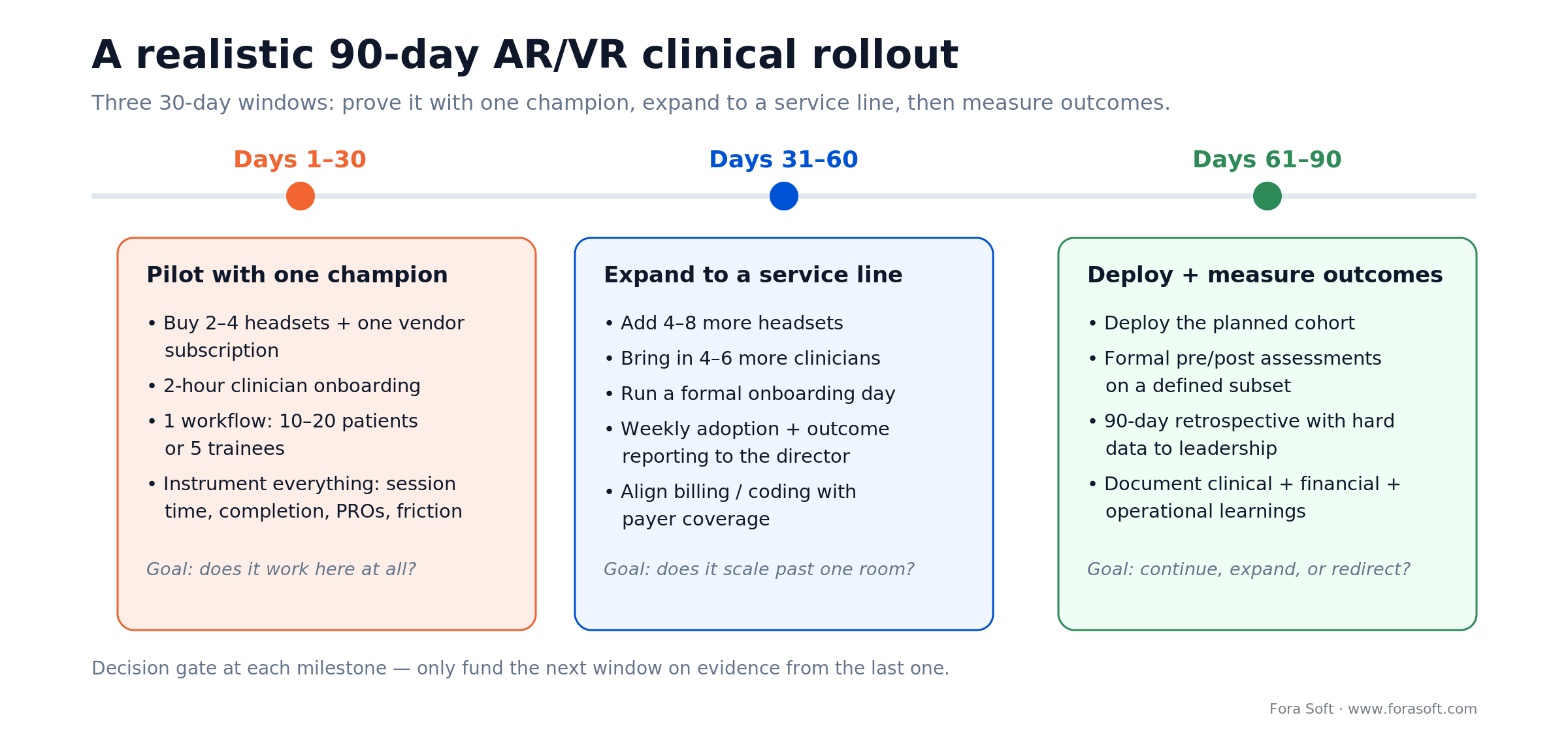
Figure 4. What a disciplined 90-day AR/VR clinical rollout looks like, one 30-day window at a time.
Days 1–30: clinical pilot with one champion + one vendor
Buy 2–4 headsets + one vendor subscription. Run a 2-hour clinician onboarding. Pilot 1 clinical workflow with 10–20 patients or 5 trainees. Instrument everything: session duration, completion, patient-reported outcomes, clinician friction notes.
Days 31–60: expand to a specialty or service line
Add 4–8 more headsets. Bring in 4–6 more clinicians. Run a formal onboarding day. Start weekly adoption and outcome reporting to the service-line director. Align billing / coding workflows with payer coverage for reimbursable applications.
Days 61–90: full deployment + outcome measurement
Deploy the planned cohort. Run formal pre/post assessments on a defined patient or trainee subset. Present a 90-day retrospective with hard data to clinical leadership: continue, expand, or redirect. Document the clinical, financial, and operational learnings for a formal program plan.
Planning an AR/VR clinical pilot this quarter?
We’ll send a pilot-planning checklist (device shortlist, onboarding outline, pre/post assessment template, payer alignment map) and walk through it on a 20-minute call if useful.
EHR, PACS, and DICOM integration — where most deployments stall
The most common failure mode in clinical AR/VR: the pilot works, clinicians love it, but the data never reaches Epic, Cerner, or Allscripts. Administration stops championing, and adoption dies.
FHIR + HL7 + SMART on FHIR
The modern standard. FDA-cleared digital therapeutics and enterprise platforms increasingly ship FHIR-compatible APIs. Verify before procurement.
PACS + DICOM for imaging-based workflows
Preoperative planning (ImmersiveTouch, Surgical Theater) and intraoperative AR (AugMedics) require clean DICOM pipelines. Your enterprise imaging team owns this. Budget their time explicitly.
Outcome analytics and clinical registries
For therapy programs, outcome reporting into clinical registries (NSQIP, MIPS, ICHOM) matters for value-based care contracting. Most vendors export CSV; a few offer direct registry integration. Budget custom data pipeline work if registry integration is critical.
What’s actually changing in AR/VR healthcare in 2026
AI-generated patient anatomy is the biggest shift. Automated CT/MRI segmentation producing 3D models in under an hour. Surgical planning that took 4–8 hours of radiology tech work now takes minutes. Cost compression of 40–70% on planning workflows.
Apple Vision Pro is entering the OR via pilots. Shoulder arthroscopy case reports in 2025, neuronavigation prototyping in 2026. Not mainstream yet — cognitive load concerns in time-sensitive procedures — but the optics are compelling for non-time-critical applications.
Digital therapeutic CPT codes multiplying. E1905 set the precedent. Rejoyn (MDD) and DaylightRx (GAD) FDA approvals create momentum for additional codes. Expect 2–3 new CPT codes for behavioral health VR between 2026 and 2028.
5G-enabled surgical telepresence scaling. Proximie’s 2026 vision: intelligent OR co-pilot augmenting surgeons. 5G low-latency (<20ms) makes remote expert guidance viable at scale. Pilots active; broader deployment 2027+.
Robotic surgery + digital twins. Virtual Incision + NVIDIA Isaac for Healthcare (2025 announcement). Physiologically-realistic robotic-surgery simulation with AI-augmented scenarios. Training and pre-op rehearsal at scale.
Outcomes-based reimbursement contracting. Payers paying for efficacy, not VR hours. Emerging in mental health digital therapeutics. Will spread to pain management and rehab.
Premium-tier optics normalization. Vision Pro + Varjo XR-4 + Magic Leap 2 all driving enterprise adoption. Our Vision Pro business case playbook goes deep on when $3,499/unit is defensible.
When you should NOT deploy AR/VR (at least not yet)
Three honest cases:
Your clinical volume is under 100 patients or 10 trainees per year. Fixed costs don’t amortize. Pilot with low-cost WebXR or wait for vendor economics to improve.
Your clinicians are skeptical, untrained, and unsupported. Invest in onboarding, peer champions, and workflow integration first. Clinician-driven adoption is 10× more successful than administration-led.
Your compliance stack isn’t ready. HIPAA BAAs, SOC 2, IEC 62304, SBOM disclosure. If your clinical IT security team can’t approve a new SaaS vendor in under 90 days, fix that process first.
FAQ
Is VR therapy FDA-approved?
Yes, for specific indications. RelieVRx (chronic lower back pain), Luminopia (amblyopia), MindMotion GO (neurorehab), Rejoyn (MDD), and DaylightRx (GAD) are FDA-cleared as of 2024–2025. Other conditions (PTSD, phobias, acute pain) have wellness or pilot-category VR products — clinically effective but not FDA-cleared as devices.
Does insurance cover VR therapy?
Partially, and growing. Medicare covers HCPCS E1905 (VR CBT device). Some commercial plans cover RelieVRx for CLBP under DME pathway. Luminopia has commercial payer coverage in major plans. Workers’ compensation partnerships launched in 2024. Category III CPT codes (0770T–0774T) have variable commercial coverage but no CMS national rate.
What’s the difference between VR and AR in healthcare?
VR fully immerses the user in a simulated environment (surgical training, chronic pain therapy, PTSD exposure). AR overlays digital content on the real-world view (intraoperative navigation on patient anatomy, 3D MRI visualization at point of care). Mixed reality (MR) blends both. Different use cases, different hardware, different regulatory profiles.
How much does VR surgical training cost?
Typical enterprise licensing: $2K–$8K per seat per year for Osso VR-tier platforms. $40K–$80K for a 10–20 seat training program. Haptic add-ons (FundamentalVR) add $15K–$40K. Total Year 1 for a 20-surgeon specialty program: $68K–$142K conservatively.
What is cybersickness and how common is it?
VR motion sickness from sensory conflict (eyes perceive movement, vestibular system detects stillness). Affects 5–10% of users; higher in vestibular-impaired populations. Mitigated by teleport locomotion, higher frame rates (>90Hz), gradual exposure ramps, and limiting early sessions to 10 minutes.
Can VR therapy replace traditional treatment?
Rarely. VR is most effective as an adjunct to conventional care. RelieVRx complements (doesn’t replace) chronic pain management. MindMotion GO augments (doesn’t replace) in-clinic neurorehab. VR-only programs generally underperform VR + standard care programs.
How is HIPAA compliance ensured in VR platforms?
Encryption of patient data in transit and at rest, authenticated access with audit logs, per-patient isolated virtual spaces (critical for multiplayer VR), BAAs with every vendor, FDA Premarket Cybersecurity Guidance + NIST framework + IEC 62304 alignment. For FDA-cleared devices, cybersecurity plans are part of the submission.
What FDA pathway should a new AR/VR medical device use?
510(k) if a substantially equivalent predicate exists (many surgical simulators, some AR navigation devices). De Novo for first-of-kind digital therapeutics (RelieVRx, Luminopia, Rejoyn, DaylightRx path). SaMD framework for risk-classifying the software. Breakthrough Device Designation for unmet clinical needs. Decide pathway before prototyping; it drives design controls and clinical evidence requirements.
Which headset should a hospital buy?
Default clinical training + therapy: Meta Quest 3 for Business (~$499, strong ecosystem). Premium surgical planning + consent: Apple Vision Pro ($3,499). AR at point of care: HoloLens 2 or Magic Leap 2. High-fidelity precision applications: Varjo XR-4. Match the headset to the clinical use case, not to brand preference.
Is VR safe for children, elderly, or vulnerable patients?
With caveats, yes. Pediatric: Luminopia is FDA-cleared for ages 4–7. Cap session length for under-13s. Elderly: supervised use, seated mode, fall-risk assessment. Vestibular-impaired (stroke, Parkinson’s): start non-immersive, gradual progression. Cognitive impairment or severe psychiatric instability: case-by-case with clinical judgment. VR is not universal — patient selection matters.
How long does VR surgical training take?
Depends on complexity. Basic procedures: 10–20 hours to reach proficiency benchmarks. Complex multi-step surgeries: 50+ hours. Competency-based progression (not hours-based) is the evidence-supported approach. Osso VR’s 300% competence improvement comes from repeated deliberate practice with instrumented metrics.
What is the evidence for VR in chronic pain?
RelieVRx registration RCT (n=179): 46% of VR patients achieved ≥50% pain reduction vs. 26% sham control. Durable at 24 months. Zero serious adverse events. Effects strongest in high-impact chronic pain (HICP) cohort. FDA De Novo (2021, reaffirmed 2024). Secondary analyses confirm pain intensity, pain interference, sleep, and stress improvements.
How does VR integrate with EHR systems?
Modern VR medical platforms increasingly support FHIR + HL7 + SMART on FHIR for EHR data exchange. PACS + DICOM for imaging-based planning workflows. Clinical registry integration is still custom work for most vendors. Verify EHR integration approach during vendor evaluation — it’s where adoption stalls.
Can VR be used for PTSD and anxiety disorders?
Yes. VR exposure therapy (VRET) shows 66–90% success rates in meta-analyses — statistically equivalent to prolonged exposure therapy with 3% refusal vs. 27% for in-vivo exposure. Effective for combat PTSD, first-responder PTSD, civilian trauma. Lower re-traumatization risk. FDA-approved adjacent products: Rejoyn (MDD), DaylightRx (GAD).
What does AR/VR healthcare look like in 2027?
Vision Pro in non-time-critical OR applications (planning, consent, rehearsal). AI-generated patient anatomy as standard for surgical planning. 3–5 more FDA-approved digital therapeutics covered by CMS codes. 5G-enabled remote telementoring at scale. Outcomes-based reimbursement for behavioral health VR. Robotic surgery digital twins in residency curricula. Home-based VR therapy mainstream for pain and mental health.
What to Read Next
Education vertical
AR and VR in Education: The 2026 Buyer’s Guide
Platform comparison (ClassVR, Labster, Nearpod, zSpace), hardware selection, and a 90-day rollout plan for classroom AR/VR.
Deep-dive playbook
AR and VR in Education: The 2026 Playbook
The longer-form companion — proof data, device selection, cost models, deployment case studies in full depth.
Remote care
Telehealth Software: The 2026 Buyer’s Guide
Video + AI telehealth platforms that integrate with VR-delivered remote therapy monitoring and the reimbursement pathways they unlock.
Hardware case
How Apple Vision Pro Can Give Your Business an Unfair Advantage
When $3,499 per headset is justified in clinical and enterprise settings — and when it isn’t. The premium-tier business case.
Imaging foundations
Medical Imaging Software Development
DICOM, PACS, FHIR, and the integration spine that most AR surgical guidance and VR planning platforms plug into.
Ready to put AR/VR to work in your clinical program?
AR/VR in healthcare has crossed the line from interesting technology to measurable line item on a clinical budget. FDA clearances are stacking. Reimbursement codes are real. RCT evidence is solid across pain, rehab, behavioral, surgical, and diagnostic applications. The questions now are which clinical application, which vendor, which hardware, and when to build custom.
We’ve shipped real-time video, AI, and immersive healthcare software since 2005. If you’re scoping a pilot, evaluating vendors, navigating FDA strategy, or looking at a custom build — we’ll help you think through the decision honestly.
Scoping an AR/VR healthcare rollout or custom build?
Tell us clinical application, patient volume, regulatory intent, and budget range. 30 minutes with us gets you a concrete platform recommendation, a rollout timeline, and a defensible build-vs-buy call — without a sales cycle.

