

Frame drop, and its twin frame insert or duplicate, is the blunt instrument for correcting timing errors: when audio and video have drifted apart or a buffer is running away, the system simply discards or repeats a frame to claw the alignment back. It is cheap and immediate — no signal processing required — which is why fallback paths and simple players use it. The cost is that a careless drop in audio is audible as a click or a tiny gap, and dropping or repeating video frames shows as a stutter. Smarter pipelines prefer resampling, which corrects drift continuously and inaudibly, reserving drops for when they fall too far behind to recover gently.
The book · Volume 5 of 7
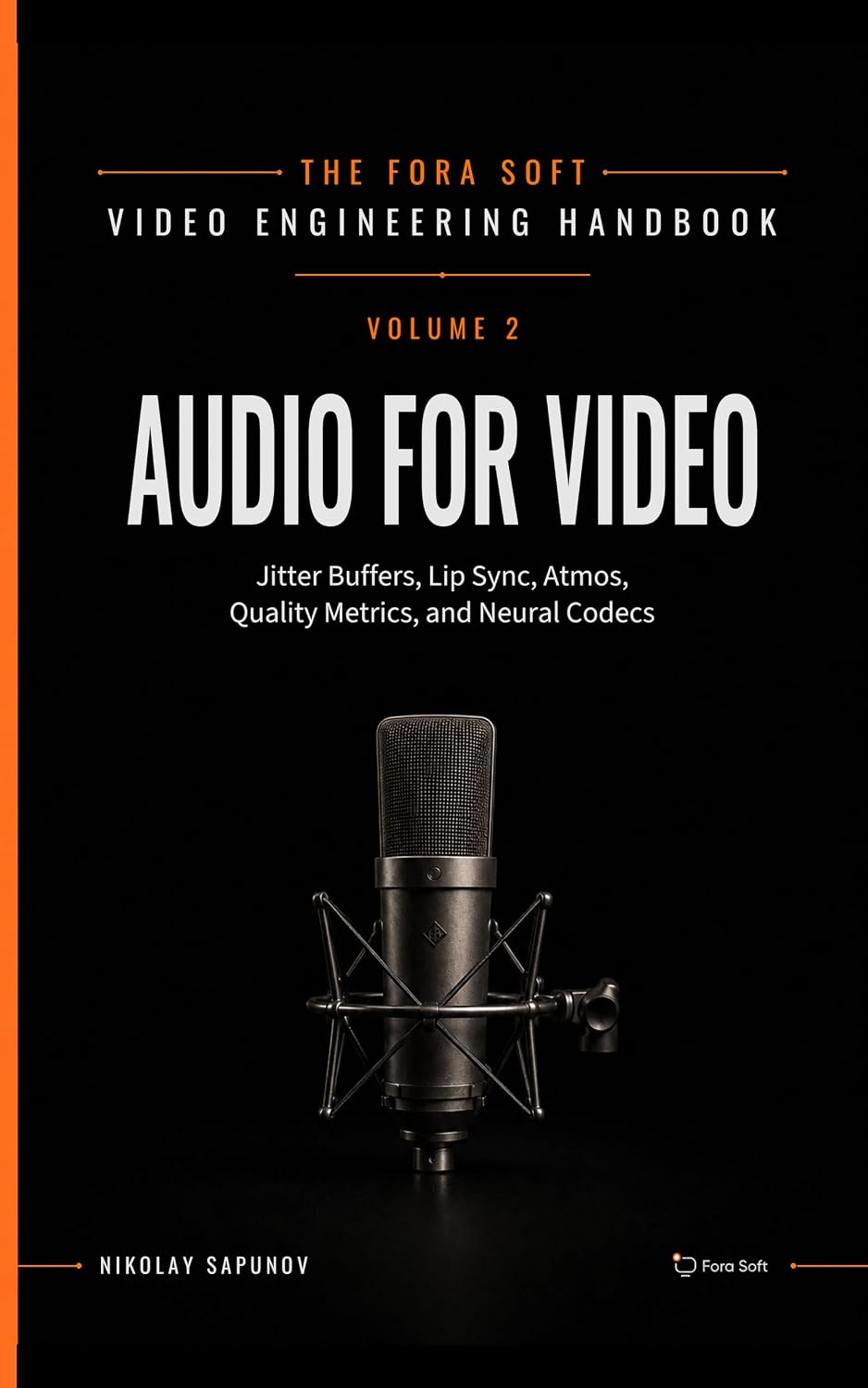
Audio for Video: A Complete Guide to Sound in Video Products: From Jitter Buffers and Lip Sync to Atmos, Quality Metrics, and Neural Codecs
Frame drop and insert is the cheapest way to pull drifting audio and video back into line, and the easiest way to add audible clicks. This volume explains frame drop in detail with drift correction, resampling, clock domains and lip sync, so you can choose when a drop is acceptable and when to resample instead. Written by Nikolay Sapunov, CEO at Fora Soft.
Fixing audio drift with frame drop and insert but hearing clicks in long sessions?
Send us a long recording with drift and we will identify the clock mismatch and recommend frame drop, resampling or both, with tuned thresholds. 250+ video products shipped since 2005.
