

Lossy audio compression achieves large size reductions by permanently discarding parts of the signal a psychoacoustic model predicts the listener won't hear — masked detail and sounds below the threshold of hearing — rather than restoring the original exactly. AAC, Opus, MP3, and the Dolby and MPEG codecs are all lossy, and at sensible bitrates the result is transparent, indistinguishable from the source to most ears. The tradeoff is that the discarded information is gone for good, so repeated lossy re-encoding (transcoding) accumulates artefacts, and lossy files make a poor archival format. Lossy is what makes streaming and real-time audio practical; lossless is what you keep the masters in.
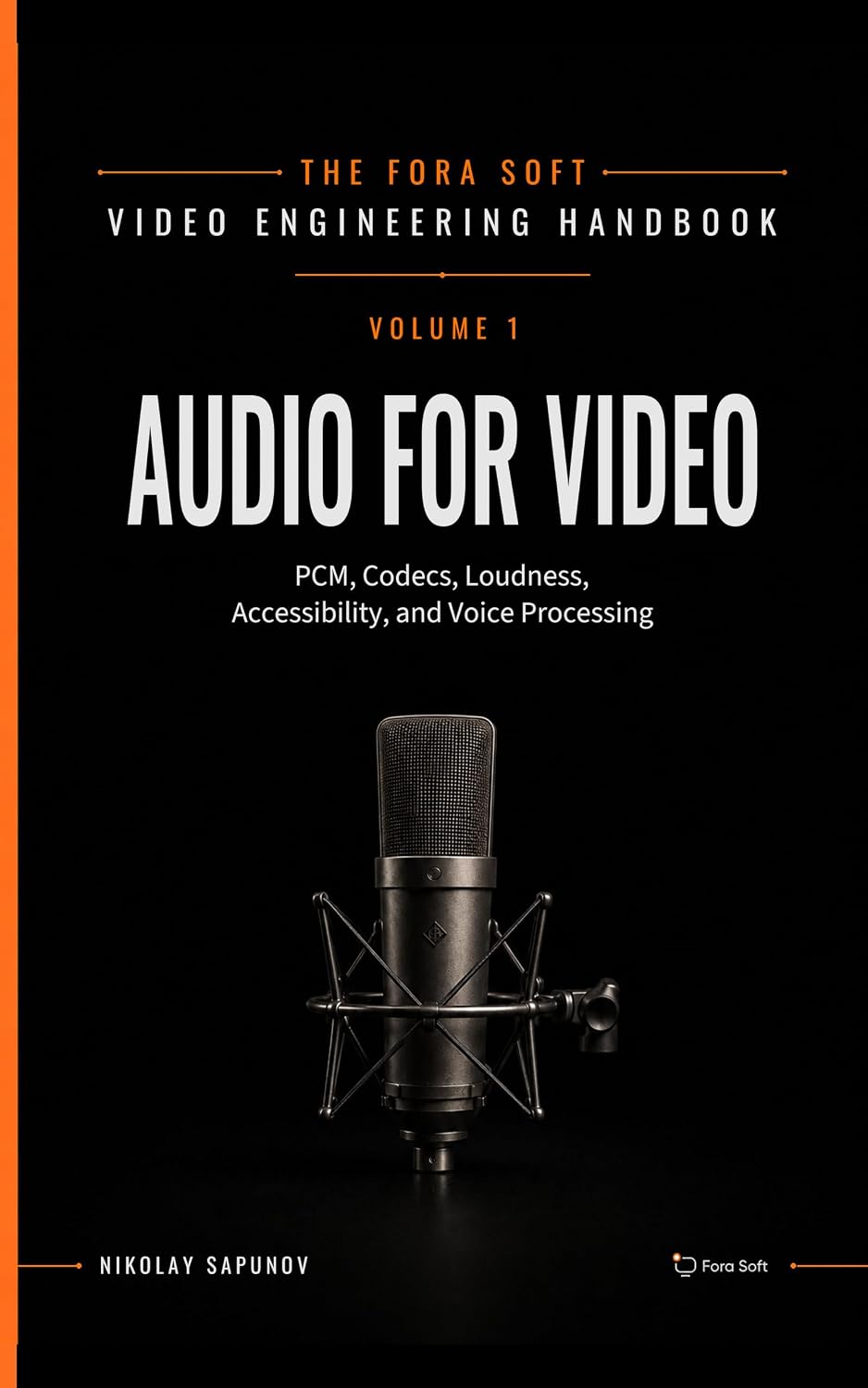
The book · Volume 4 of 7
Audio for Video: A Complete Guide to Sound in Video Products: From PCM and Codecs to Loudness, Accessibility, and Real-Time Voice Processing
Lossy audio is what nearly every viewer hears, and the codec and bitrate choice decides whether they notice the cut. Volume 4 covers lossy audio in depth: psychoacoustic models and masking, MDCT coding, AAC and Opus profiles, and how to pick bitrates per content type. Written by Nikolay Sapunov, CEO at Fora Soft.
Choosing a lossy audio codec and bitrate for your video product?
Tell us your content and devices and we will return a lossy codec choice with a bitrate ladder for speech, music and surround. 250+ video products shipped since 2005.
