.webp)
.webp)
.webp)
.webp)
.webp)
.webp)
.webp)
.webp)
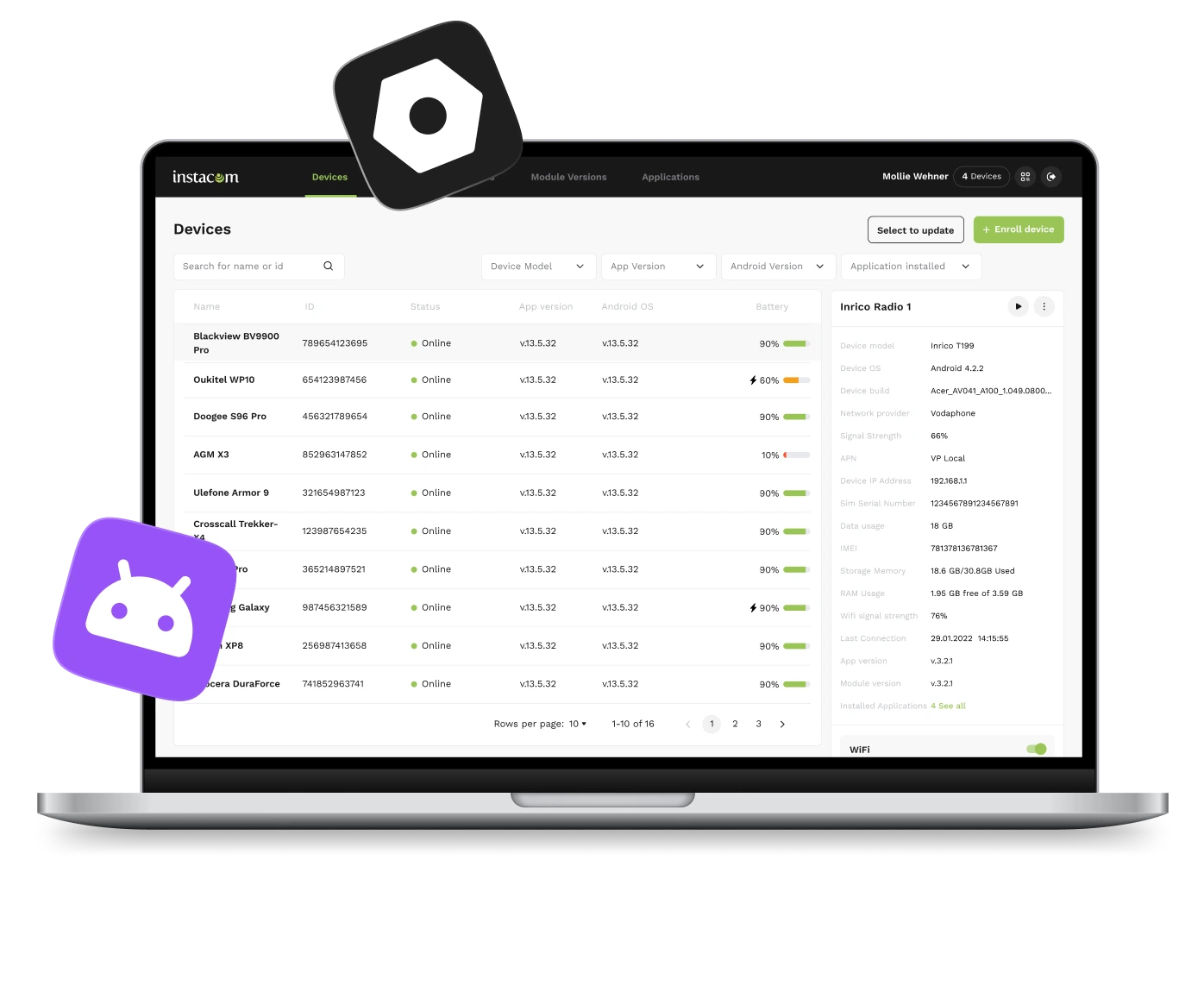
Reliable, low-latency communication between the dashboard and a large fleet is the core challenge. We used Socket.io for real-time event delivery and RabbitMQ for message queuing – together they handle command delivery reliably even under variable connectivity. The Android agent uses DevicePolicyManager for genuine OS-level policy enforcement, not just application-layer restrictions.
Yes. The command architecture supports both targeted single-device sessions, such as a remote support interaction, and fleet-wide policy changes for Wi-Fi, NFC, GPS, or app access. Role-based permissions ensure operators only act within their assigned scope.
The system degrades gracefully rather than failing. RabbitMQ queuing preserves command state through transient disconnections, and operators can fall back to viewing live device status (battery, storage, system indicators), when a full interactive session isn't feasible.
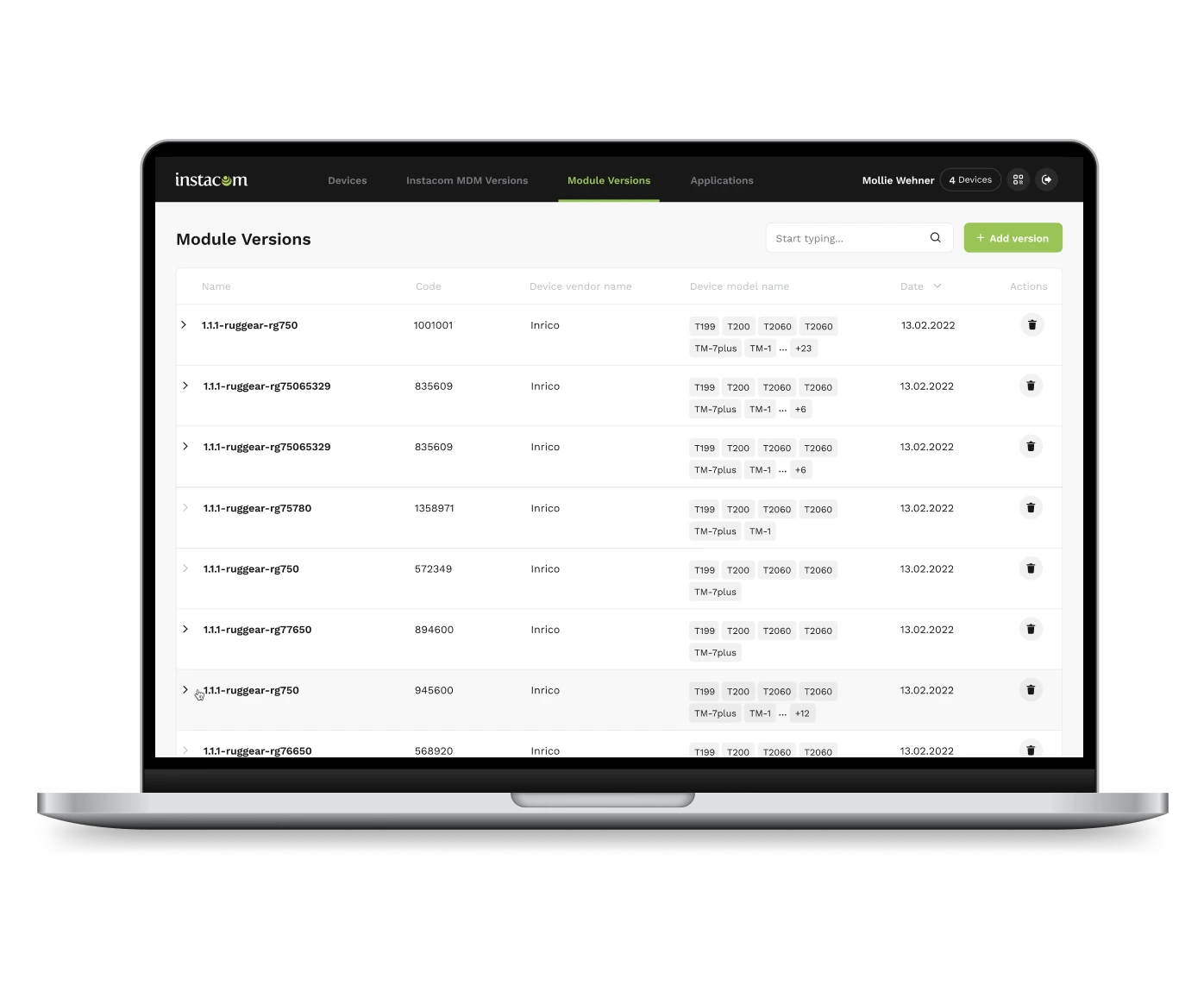
Android MDM platforms require a native Android agent using DevicePolicyManager and AIDL for system-level control. The server layer typically uses an event-driven runtime like Node.js, with Socket.io for real-time communication and RabbitMQ for command queuing. The admin interface is usually a web application aggregating device data into a single management dashboard.
Any organization deploying Android hardware at scale for a specific operational purpose – logistics, field service, retail kiosks, or enterprise IT. It's most valuable where physical device access is impractical and where consistent device behavior directly affects service quality or security.