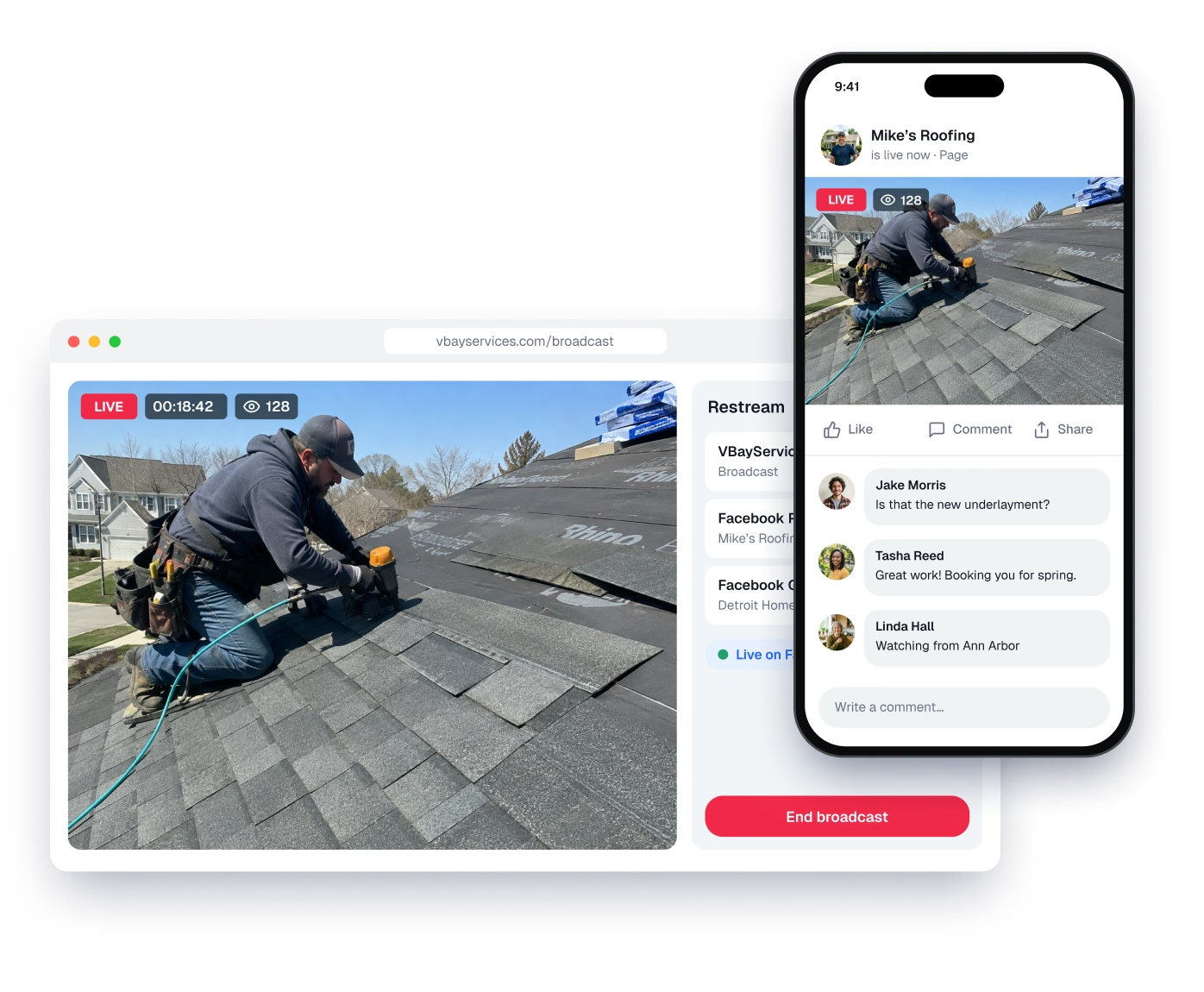
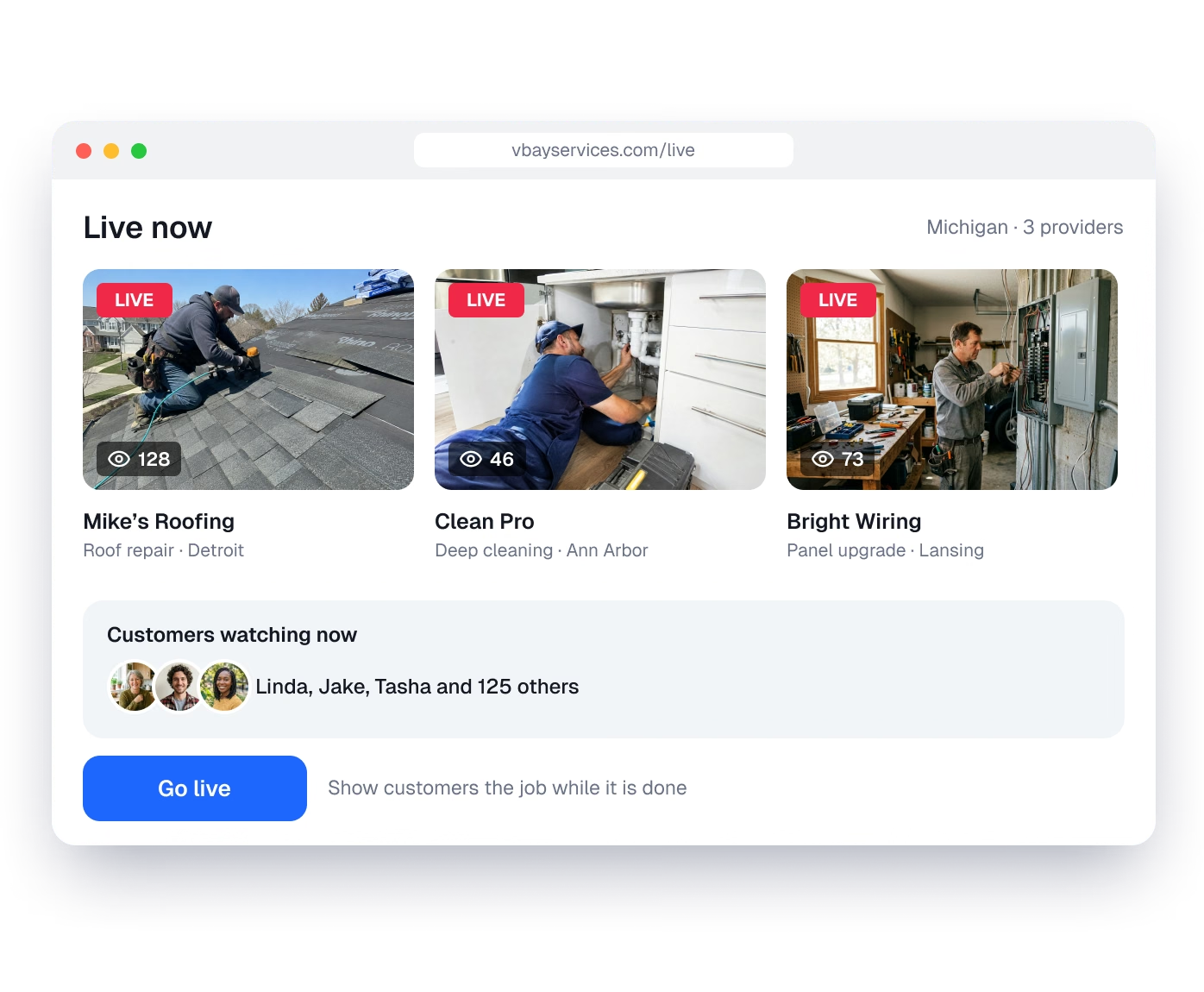
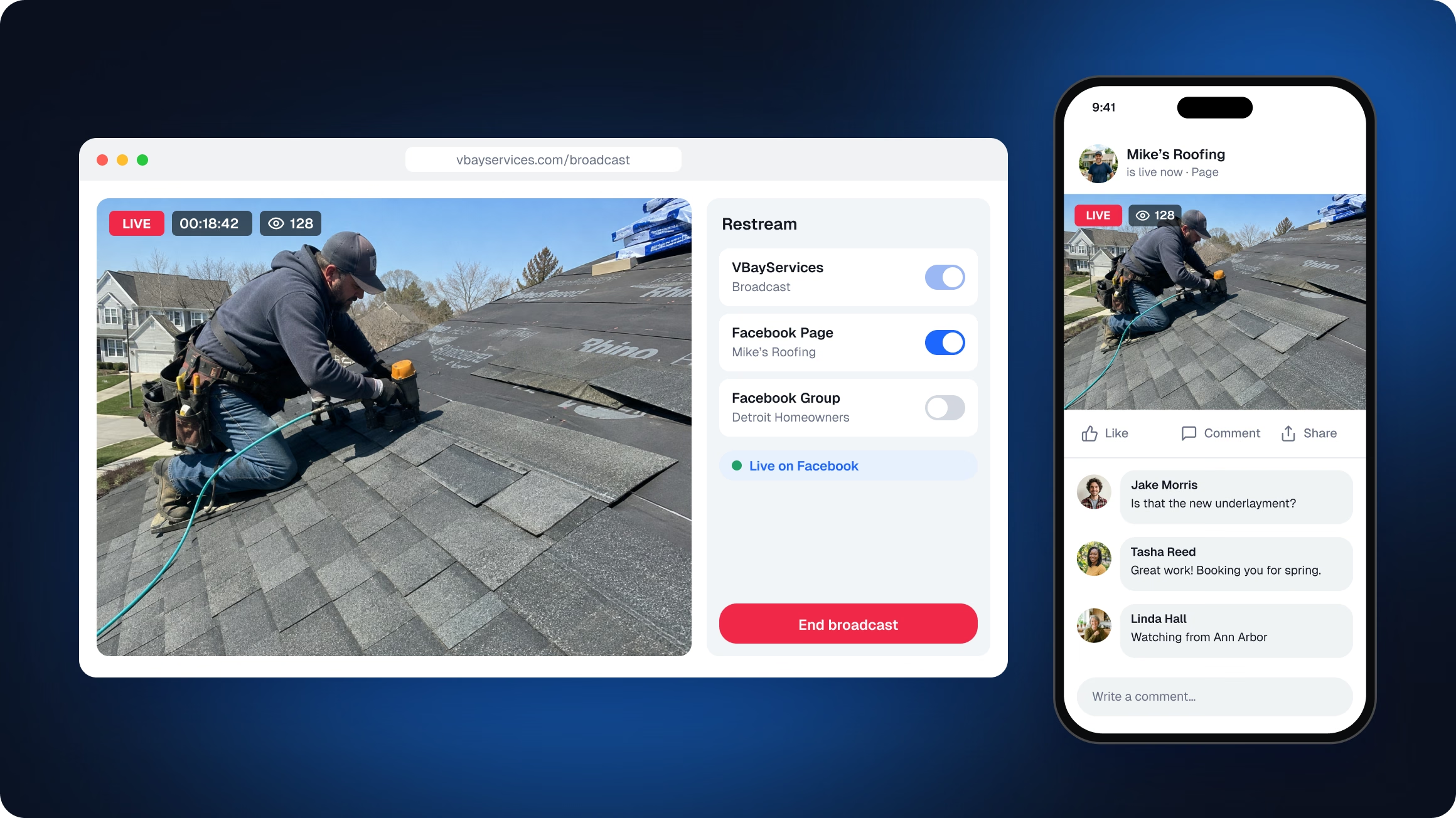
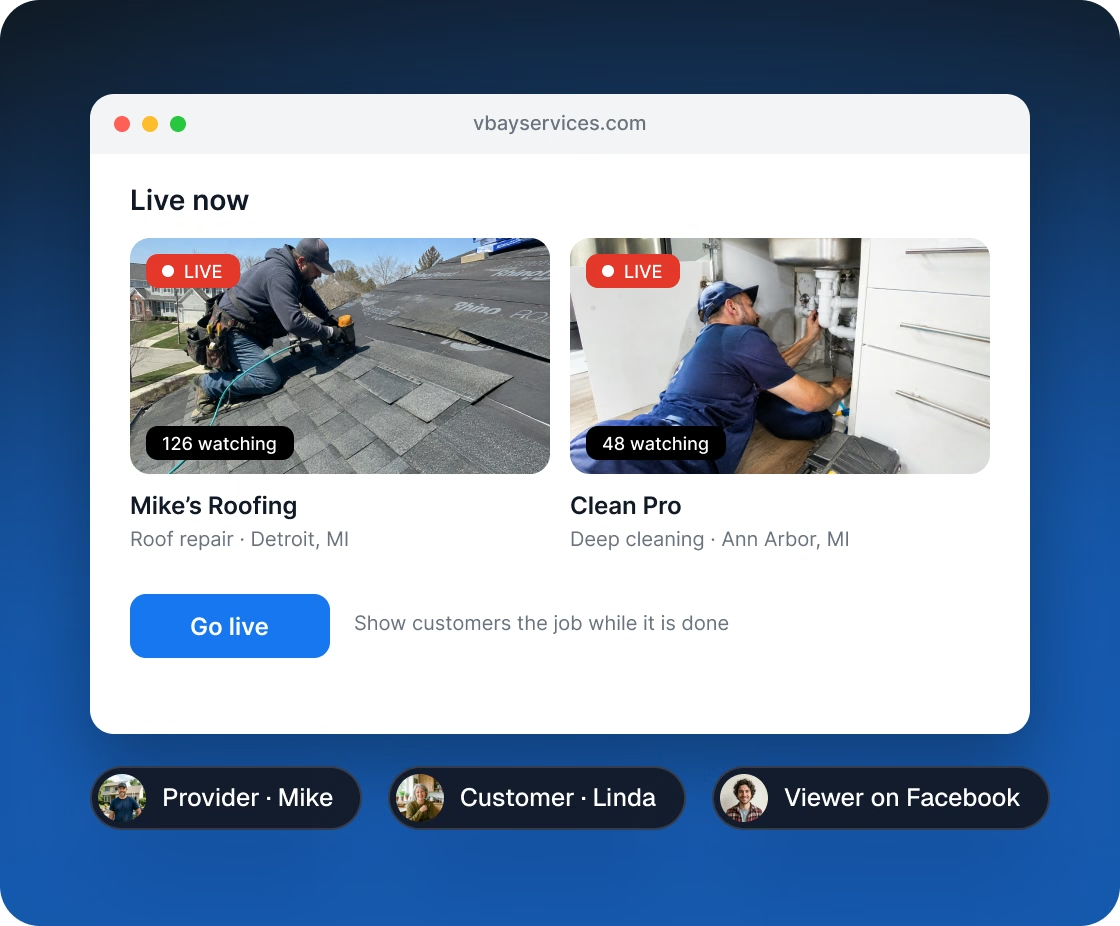
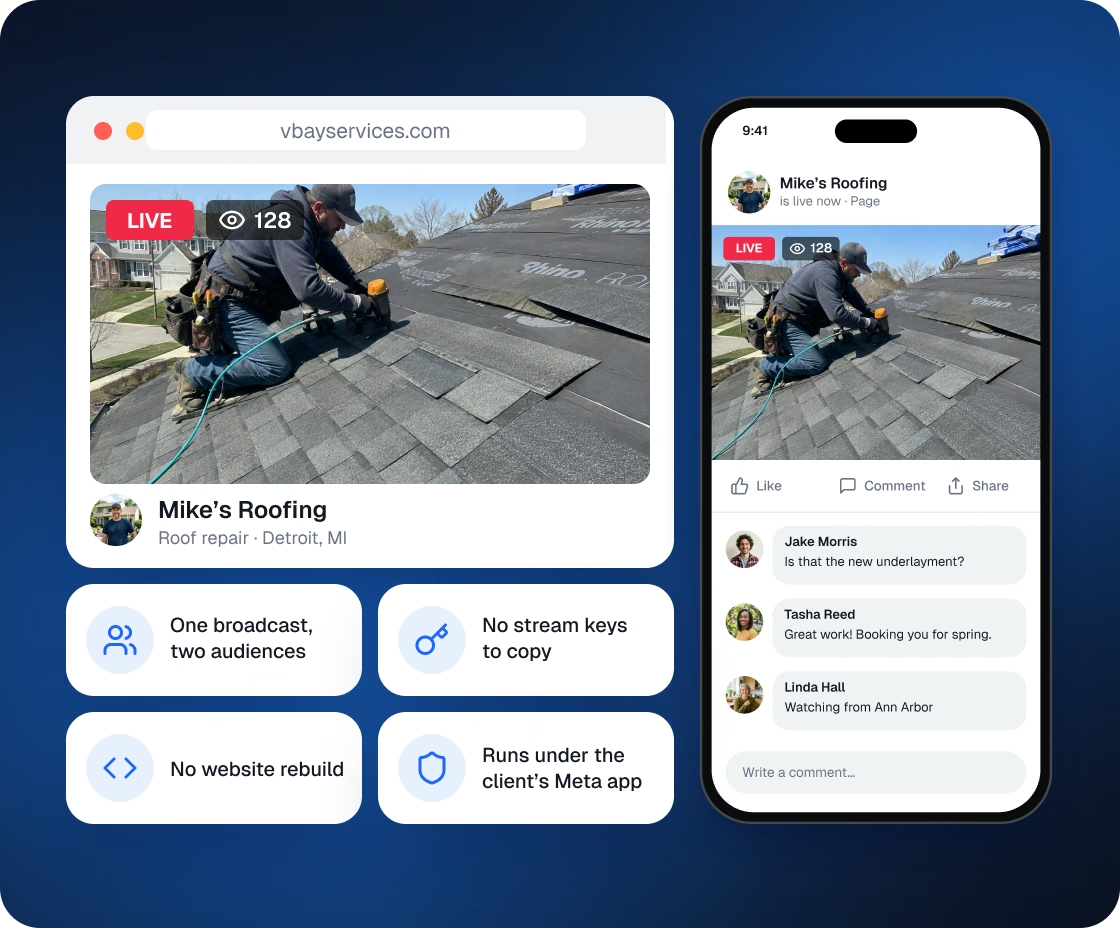
The module lets providers reach their Facebook audience from the place where they already go live, with no extra streaming software.
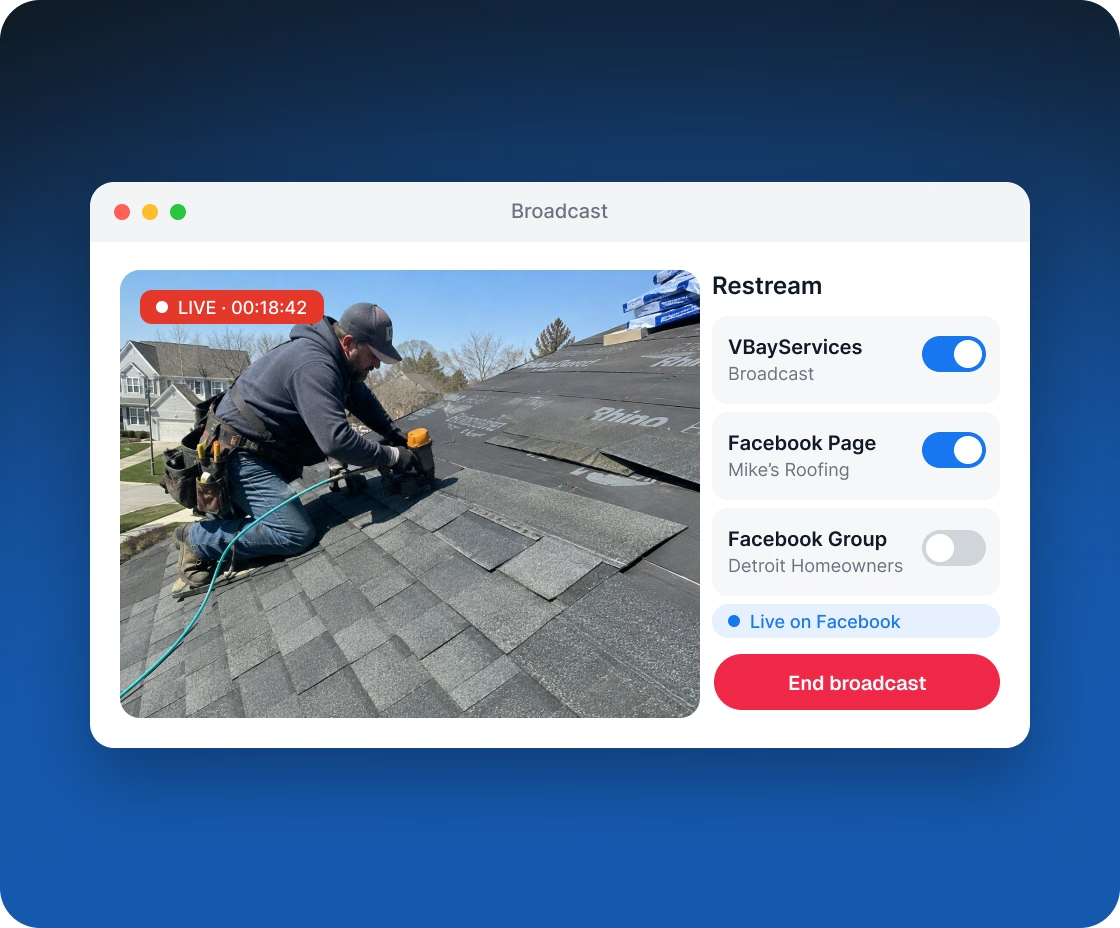
The module's backend service takes a broadcast from VBayServices and sends a copy to Facebook Live using FFmpeg, an open-source video processing tool.
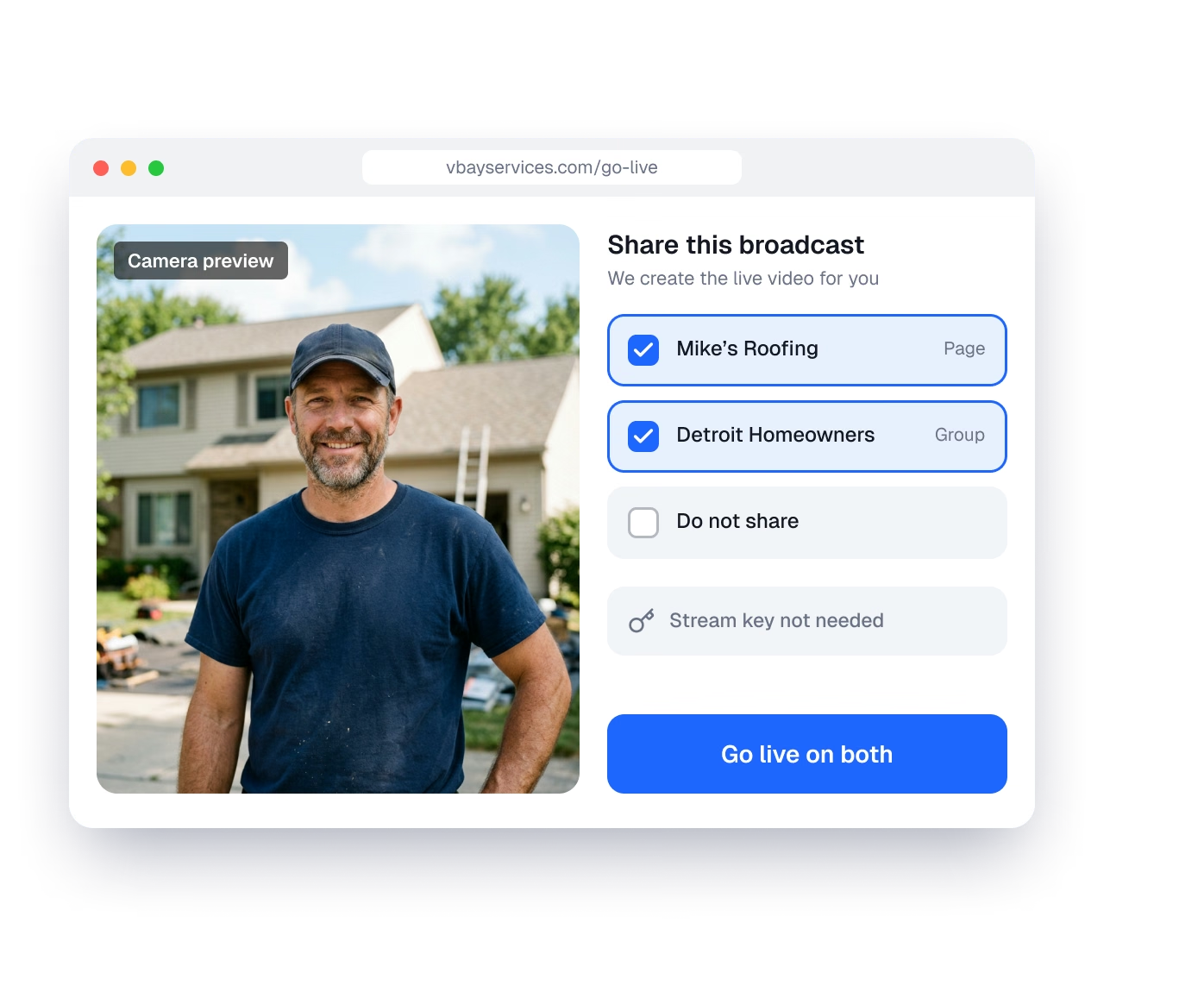
With the automatic flow, going live on Facebook takes less effort from the provider and leaves less room for a mistake.
The first working version sent the broadcast to Facebook after the provider pasted a stream key copied from Facebook. We then replaced this step with an automatic flow through the Facebook Graph API: the module creates the live video and receives the stream address from Facebook.
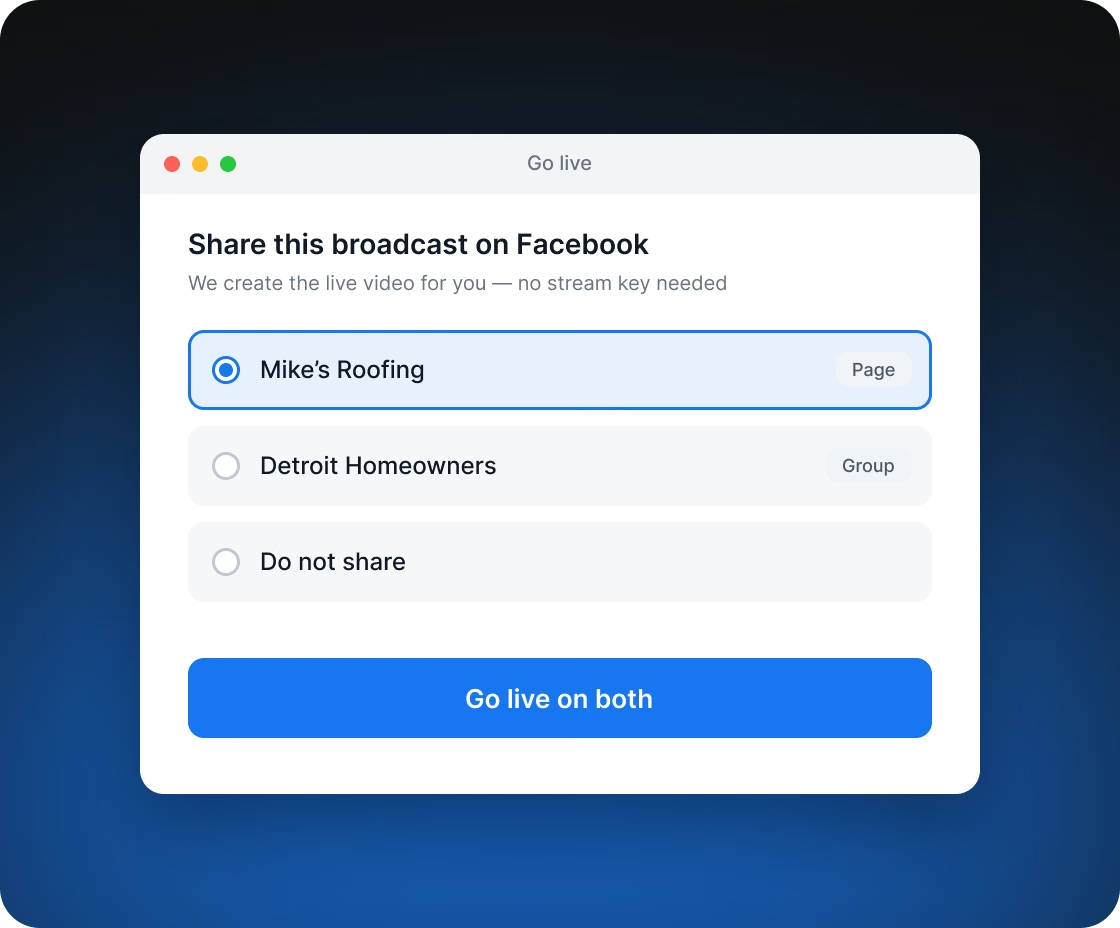

The client did not have to rebuild his website to add restreaming.
We started by studying the website's code and setting up a development environment for it. Then we connected our module to the website's live streaming.
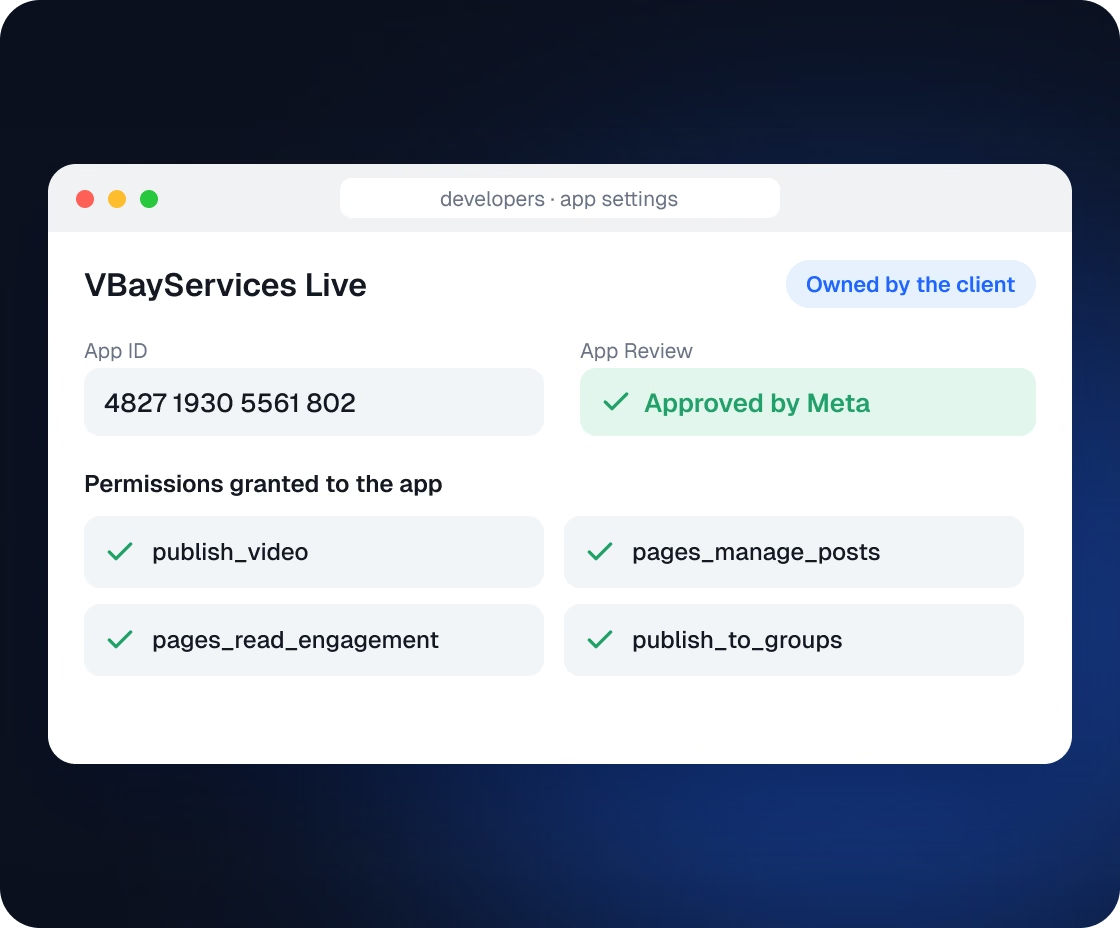
The client owns the Facebook integration: it is designed to run under his Meta app and does not depend on our accounts.
Publishing live video to Facebook on behalf of other people requires a Meta app that has passed Meta's App Review. We built the integration for the client's Meta app: the module takes its app ID, and once Meta approves the app, the module runs on the permissions granted to it.

You get a realistic estimate, technical recommendations and next steps. Free, no obligations.