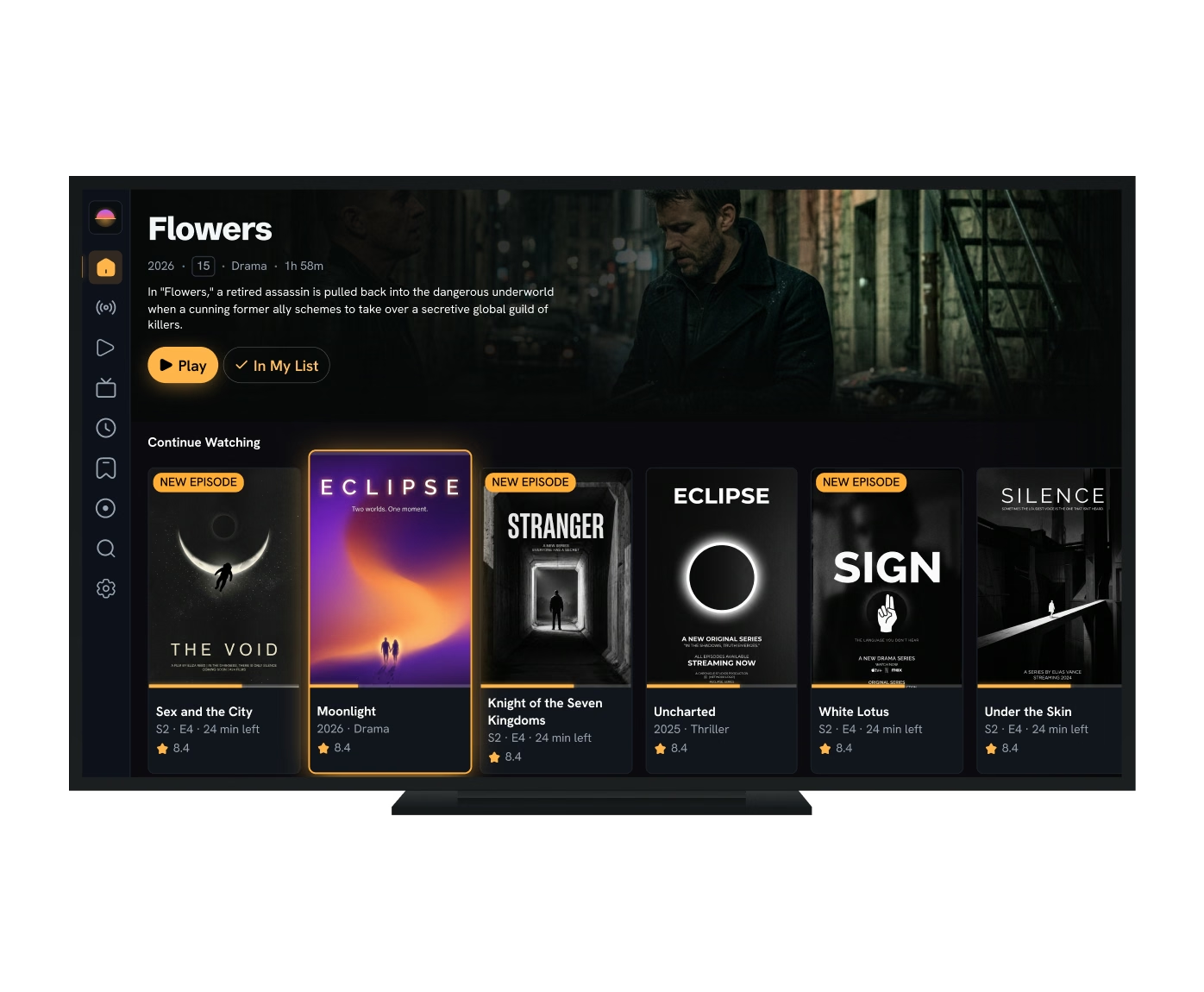
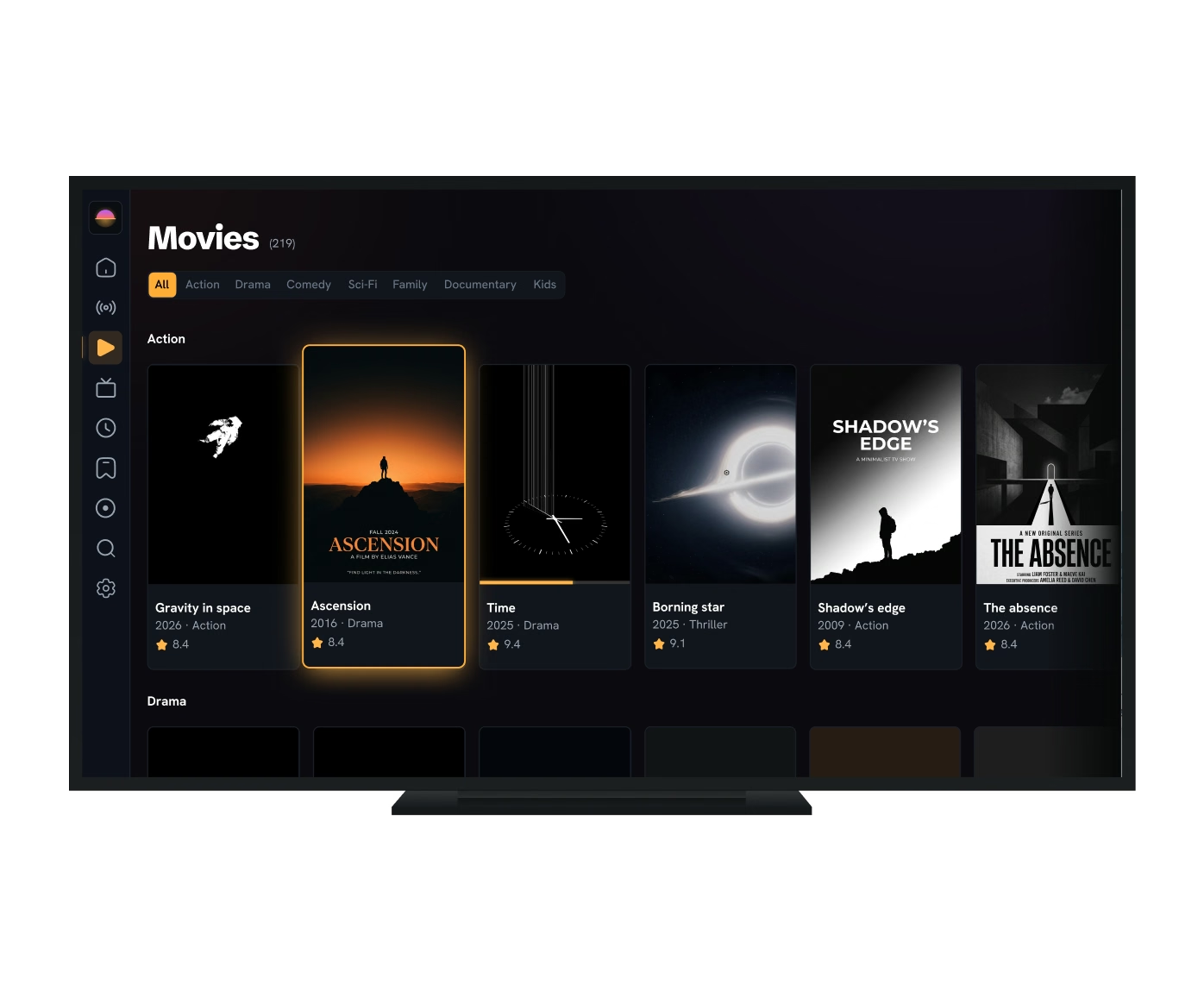
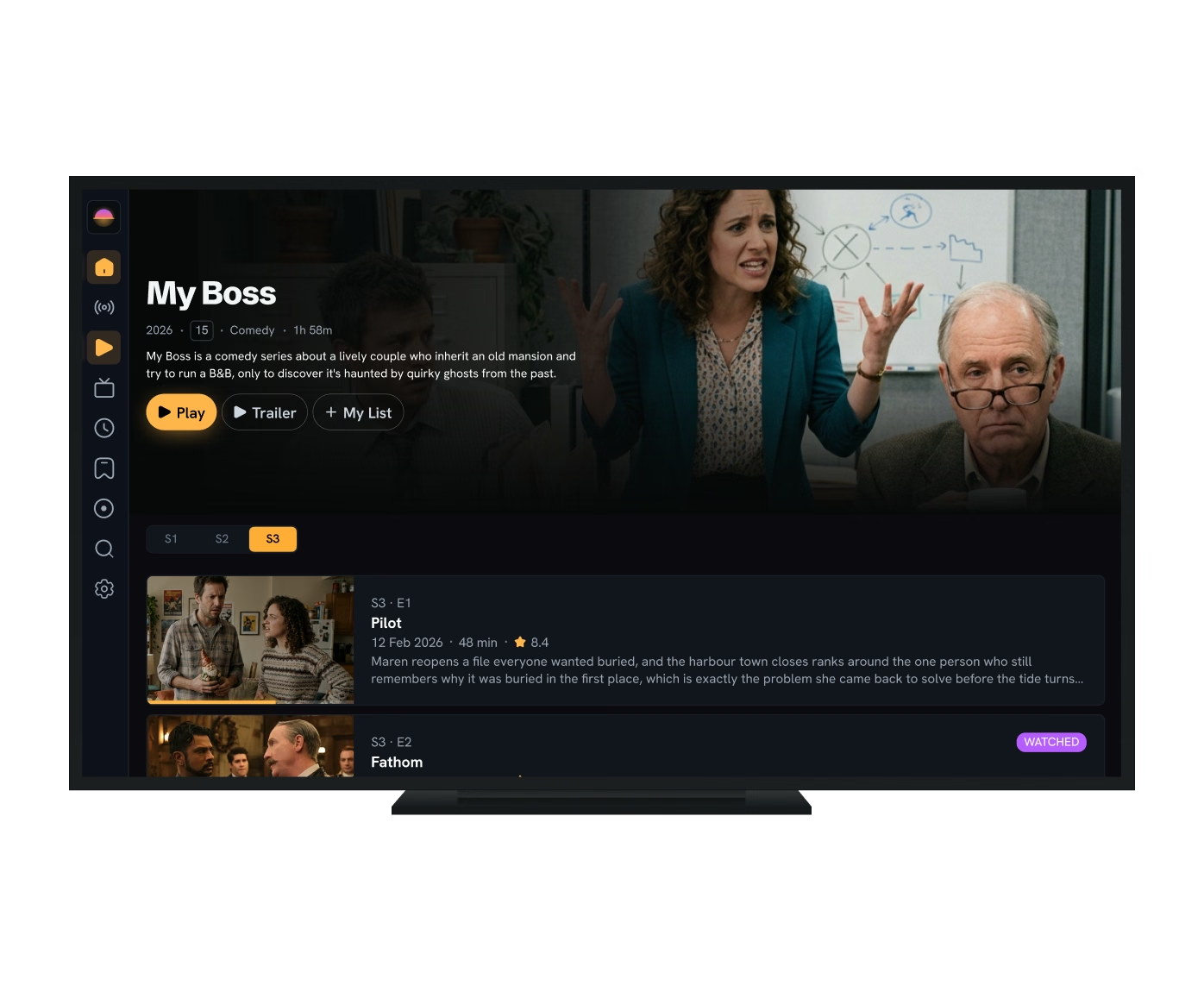

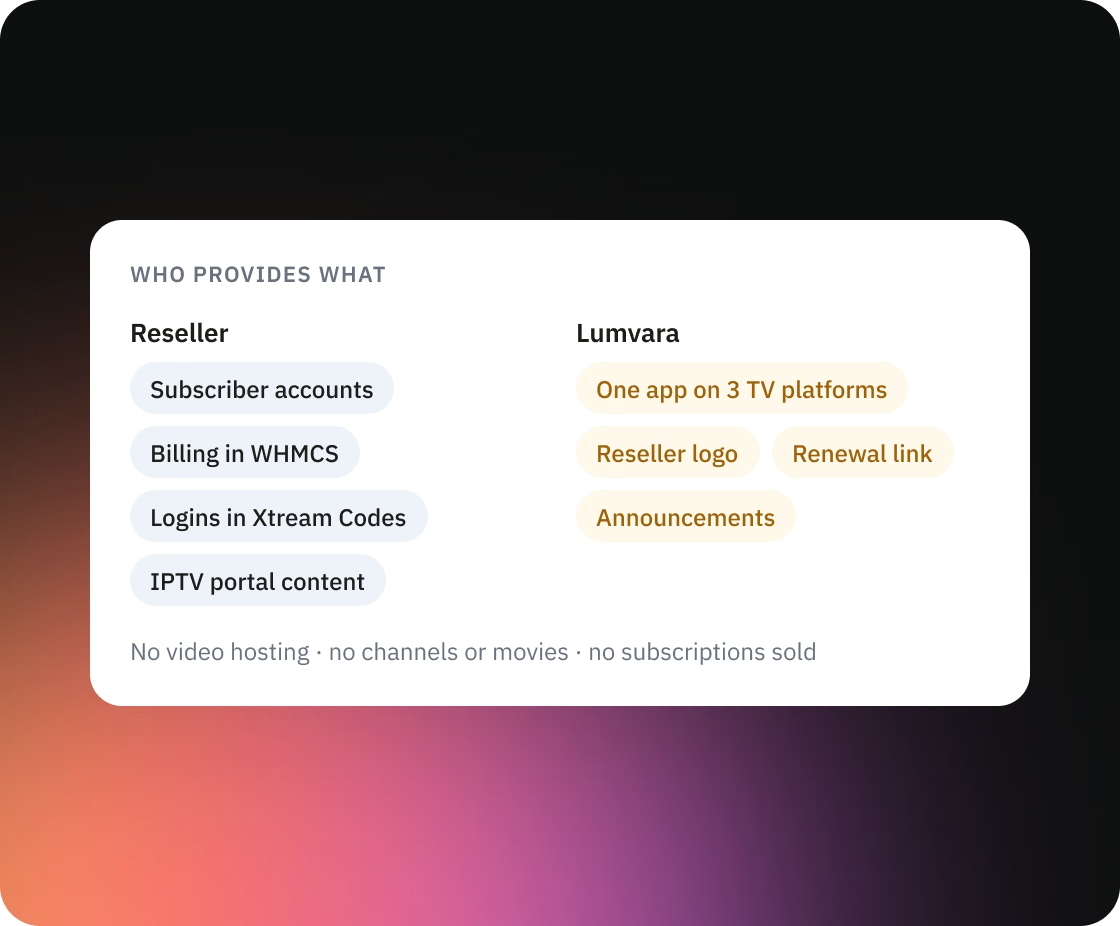
Each reseller keeps its subscriber accounts and billing. Lumvara reads authentication and subscription status from Xtream Codes and billing updates from WHMCS. The reseller's logo, renewal link and announcements appear inside the shared app.
Lumvara is a player, not a content provider. It doesn't host video, supply channels or movies, or sell subscriptions. Subscribers get content from their reseller's IPTV portal.

Apple TV, Android TV and Fire TV differ in operating system, remote control, focus navigation and store rules. We built a separate client for each and kept authentication, subscriptions, synchronization and other shared logic in one middleware.
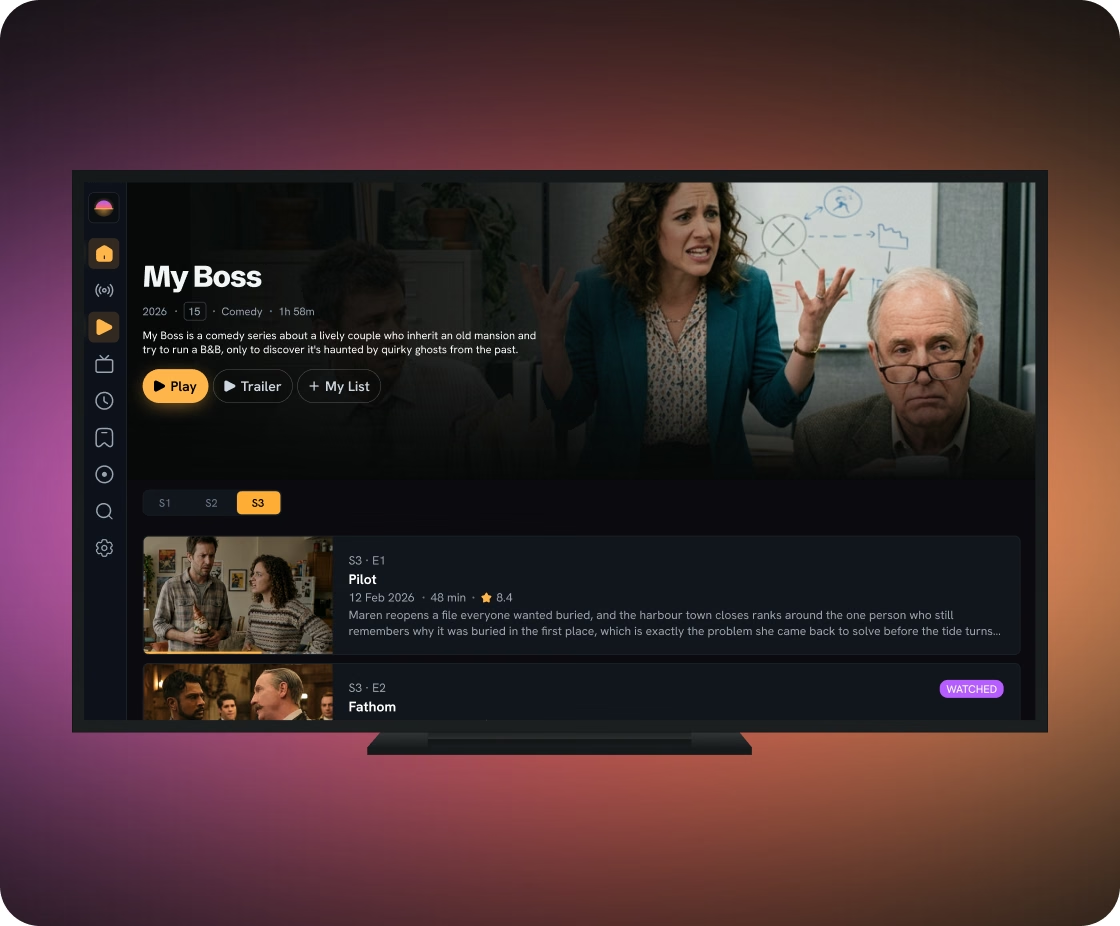
Swift and SwiftUI, with parallax artwork, Siri Remote scrubbing and a Top Shelf extension (content shown on the Apple TV home screen when the app is selected).
Kotlin and Compose for TV, with D-pad navigation and 10-second skips.
React Native for Vega OS, plus a build for older Fire OS sticks that reuses the Android TV code.
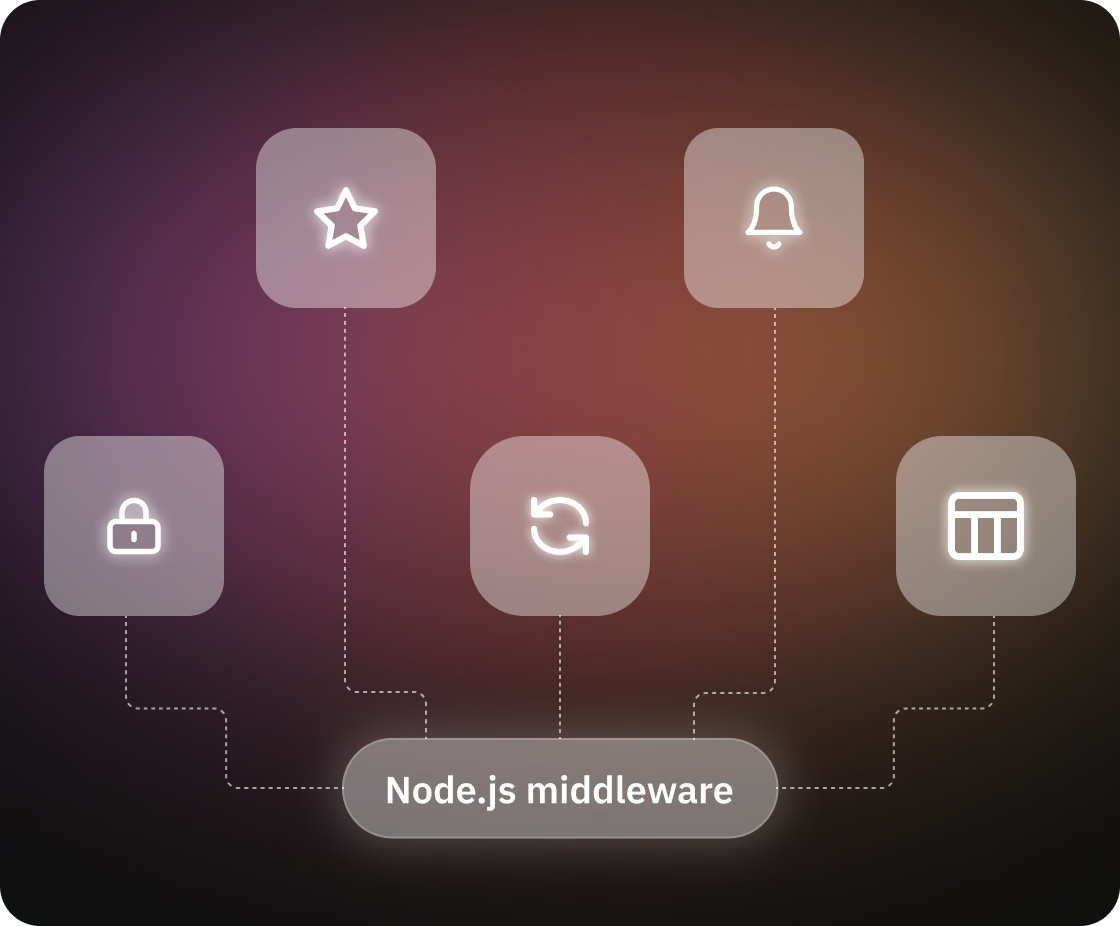
Subscriber authentication and subscription status
Playlist and EPG fetching, parsing, and caching
Cross-device synchronization and profile settings
Reseller branding and application configuration
Announcements and subscription notifications
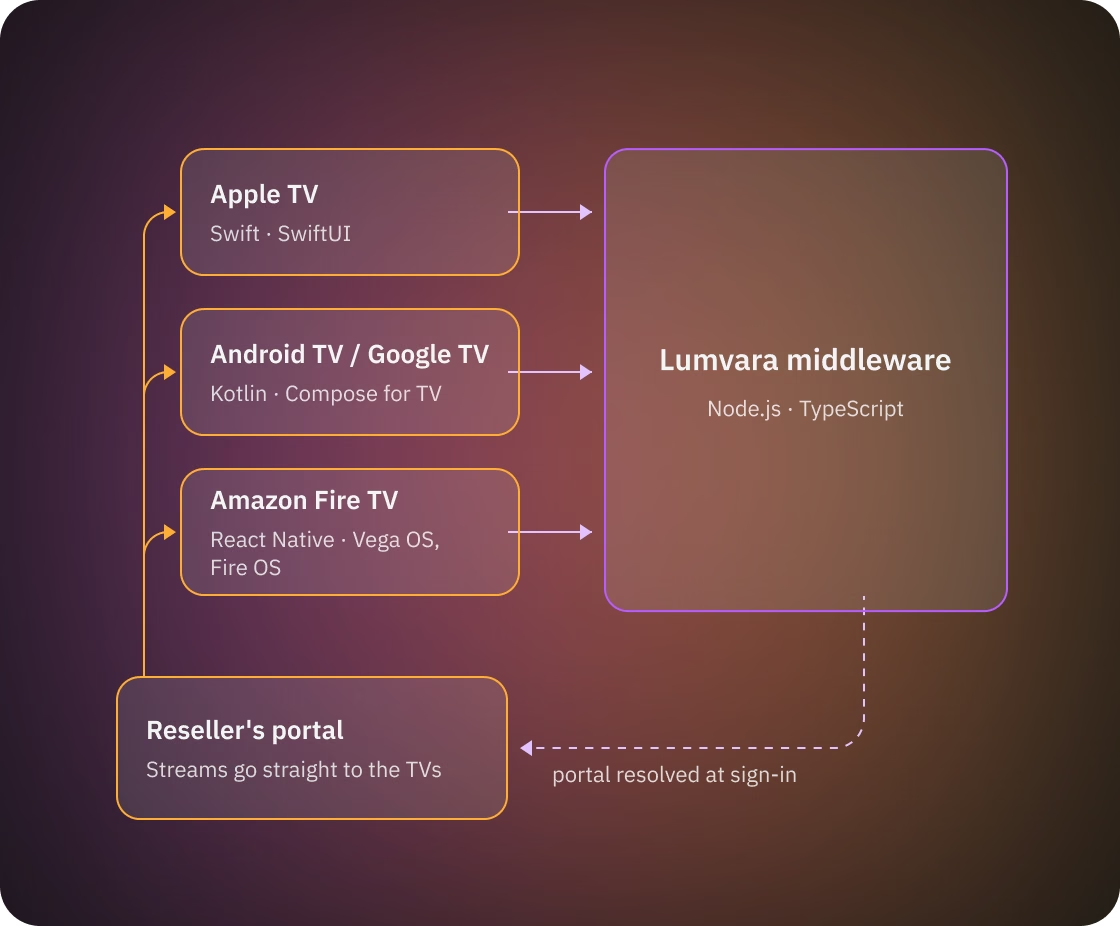
They never pass through Lumvara's middleware. This separates application services from video delivery, so Palmoc's backend doesn't need to relay or pay bandwidth costs for every stream watched.
Lumvara had to work with the systems IPTV resellers already use. Moving subscriber accounts and billing into a new platform would mean a migration for every reseller and a second copy of customer data to keep in sync.
We kept Xtream Codes responsible for subscriber authentication and subscription status. Lumvara polls Xtream Codes for status changes instead of maintaining a second independent subscriber database.
For billing, we developed a custom WHMCS provisioning module that sends subscription state changes to the middleware through webhooks. Renewals and suspensions reach the app faster than through polling alone.
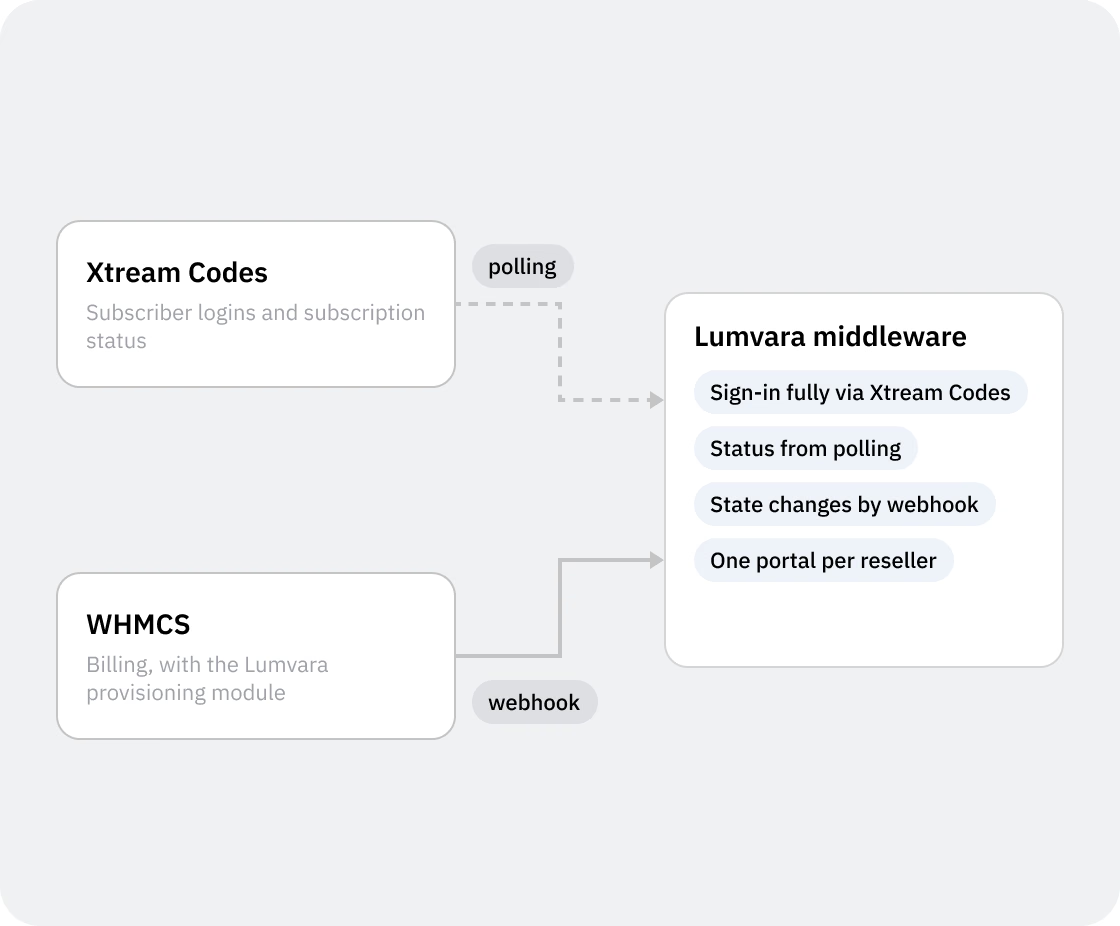
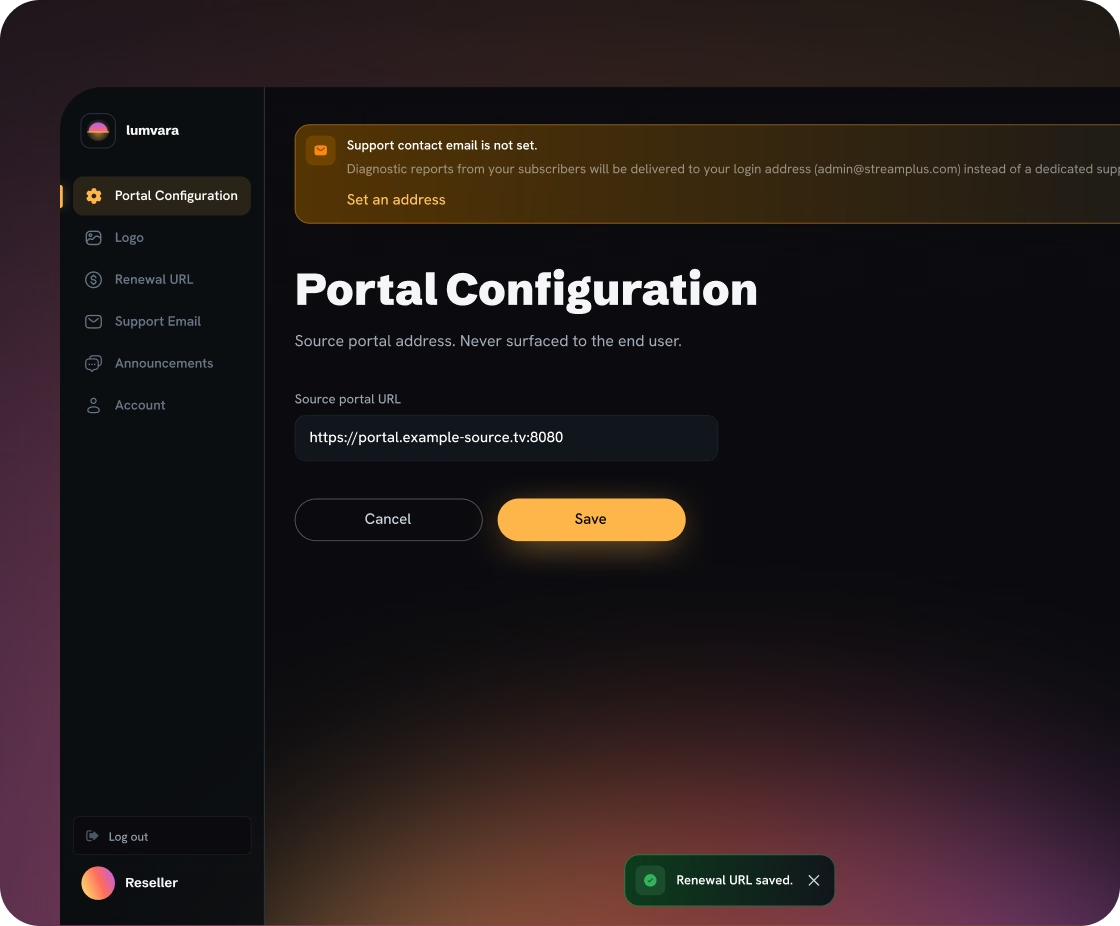
One portal per reseller.
An initial shared portal encountered upstream rate limits. We changed the architecture so each reseller has its own portal configuration, resolved when a subscriber signs in.
Hidden upstream addresses.
The subscriber-facing app never displays the reseller's IPTV portal address, including during errors or other application states.
Simpler authentication.
Working with Palmoc, we removed a second panel from the login process and moved subscriber authentication fully to Xtream Codes.
A reseller can offer Lumvara without rebuilding subscriber management or changing how it takes payments.
Palmoc runs the service, and each reseller controls its own branding and its messages to subscribers. We built two web panels with separate responsibilities.
Both web panels require two-factor authentication with one-time codes (TOTP).
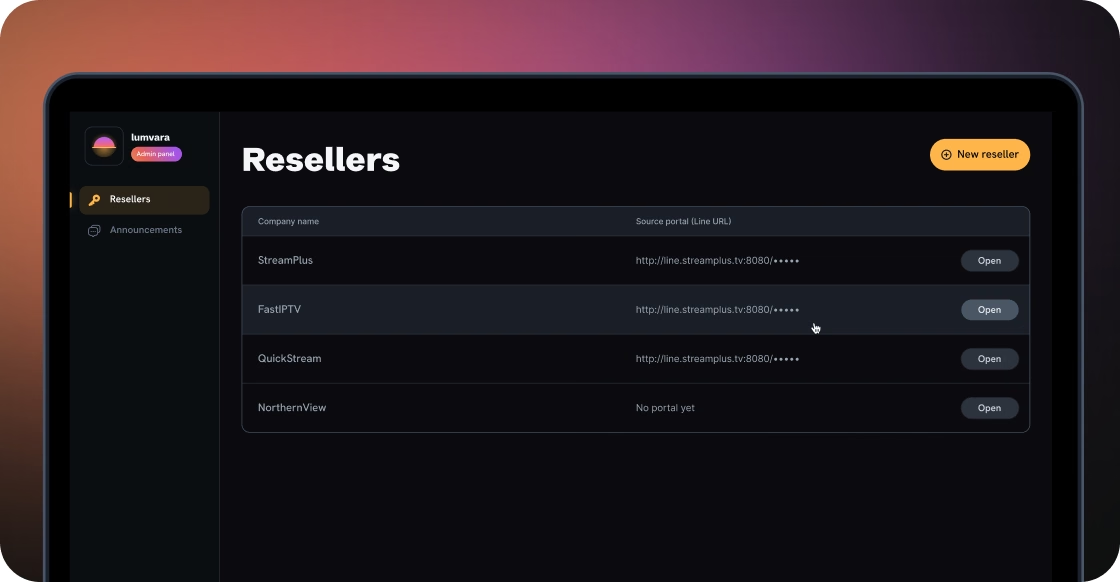
Onboard resellers and view their IPTV portal configurations
Suspend and reinstate reseller accounts
Reset passwords
Publish global announcements to subscribers across the platform
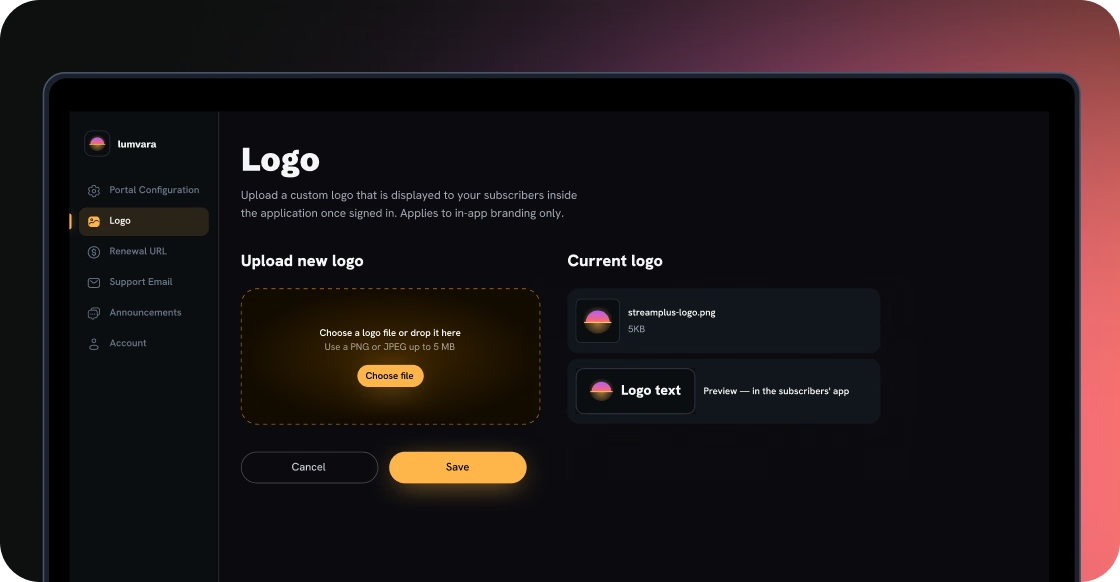
Configure the reseller's IPTV portal URL
Upload and update the reseller logo
Set the subscription renewal link
Send announcements to the reseller's own subscribers
Change the account email address with verification
IPTV program guide files can reach hundreds of megabytes. Downloading and parsing them on a TV would eat memory and processing power, especially on older sticks.
We moved EPG processing to the middleware. It fetches XMLTV or JSON guide data from IPTV portals, parses and caches it, and serves the relevant information to TV clients page by page.
The EPG pipeline was load-tested using a 500 MB guide file.
The platform also supports cloud recording of live and upcoming programs.
Processing guides on the backend cuts the data each TV has to handle, and one EPG pipeline serves all three clients.
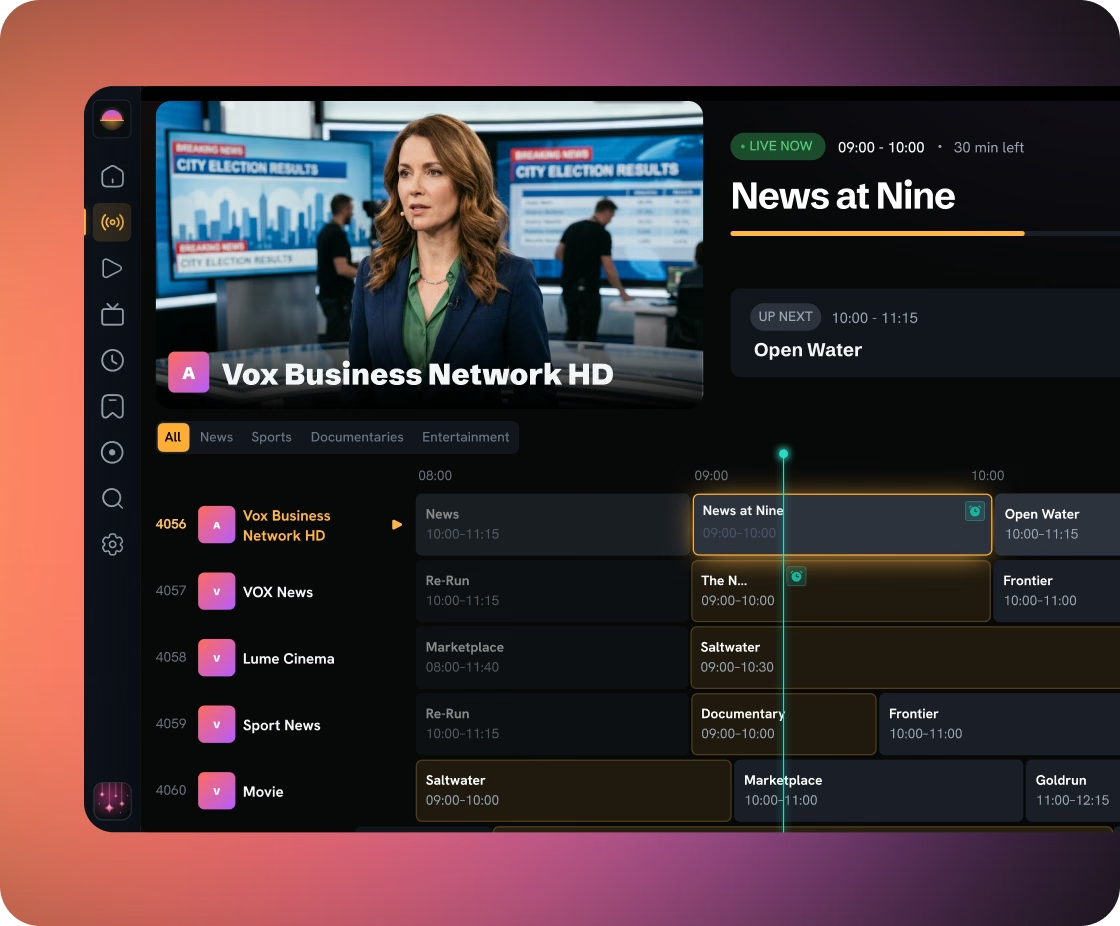
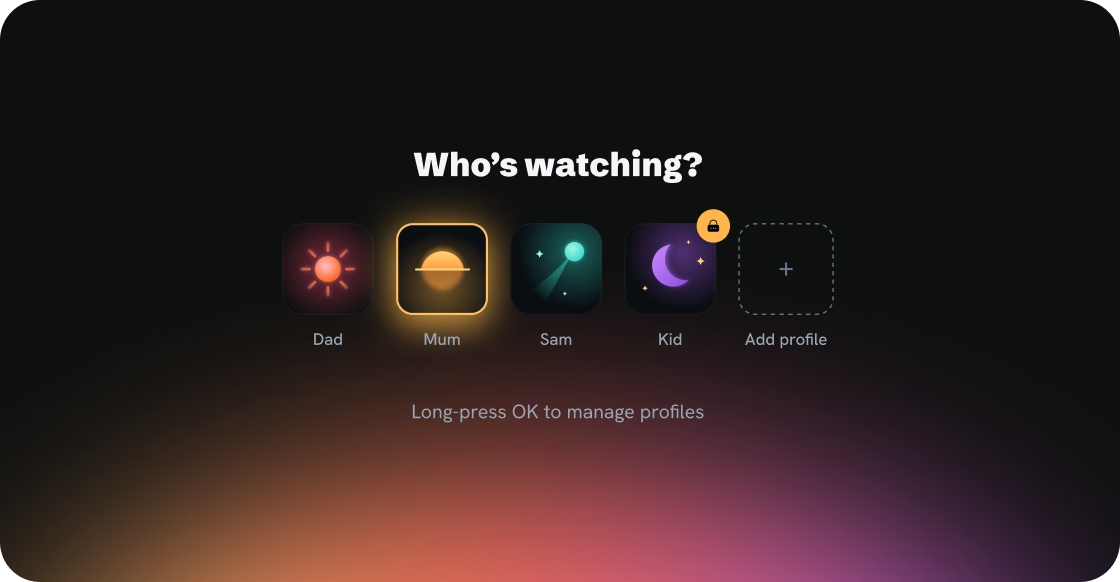
Each account has up to five profiles, each with its own watch history, recommendations and settings.
Profiles can be configured for adults or children. Kids profiles use MPAA age ratings and category restrictions, with PIN protection for sensitive actions.
A child can open a kids profile without entering a PIN, but changing protected settings, unlocking categories, or requesting adult content requires authorization. Three incorrect PIN attempts lock the request.
The home screen has Continue Watching and six recommendation rows, and title pages show trailers and cast.
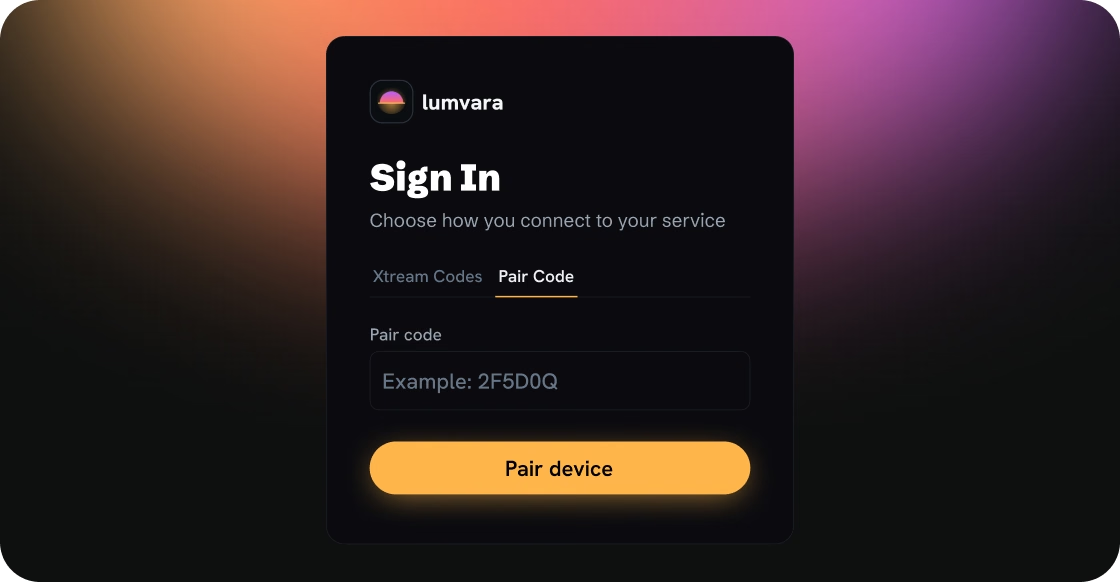
A new TV signs in with a one-time pairing code from a TV that is already signed in, not with a password typed on a remote.
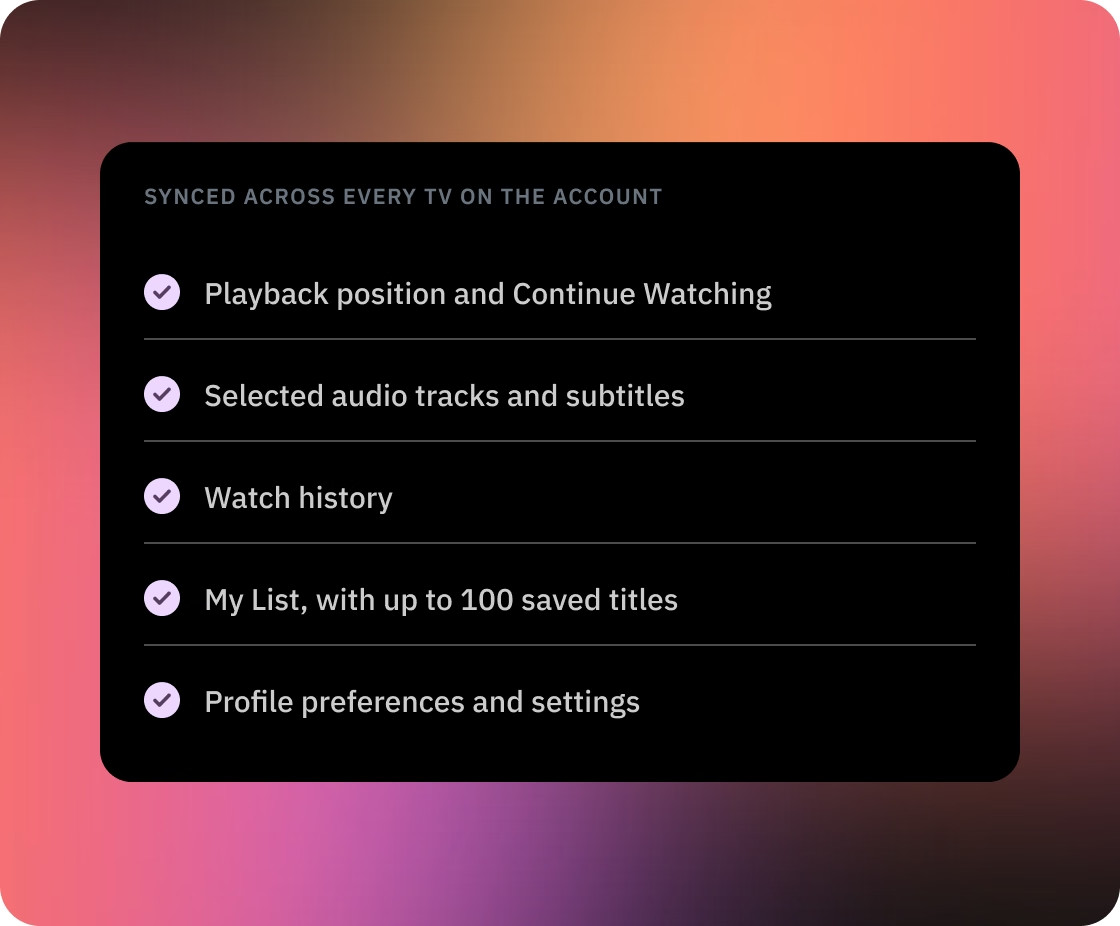
We built synchronization across TVs connected to the same account, covering:
Subscribers start watching on one TV and continue on another without searching for their position or reapplying settings.
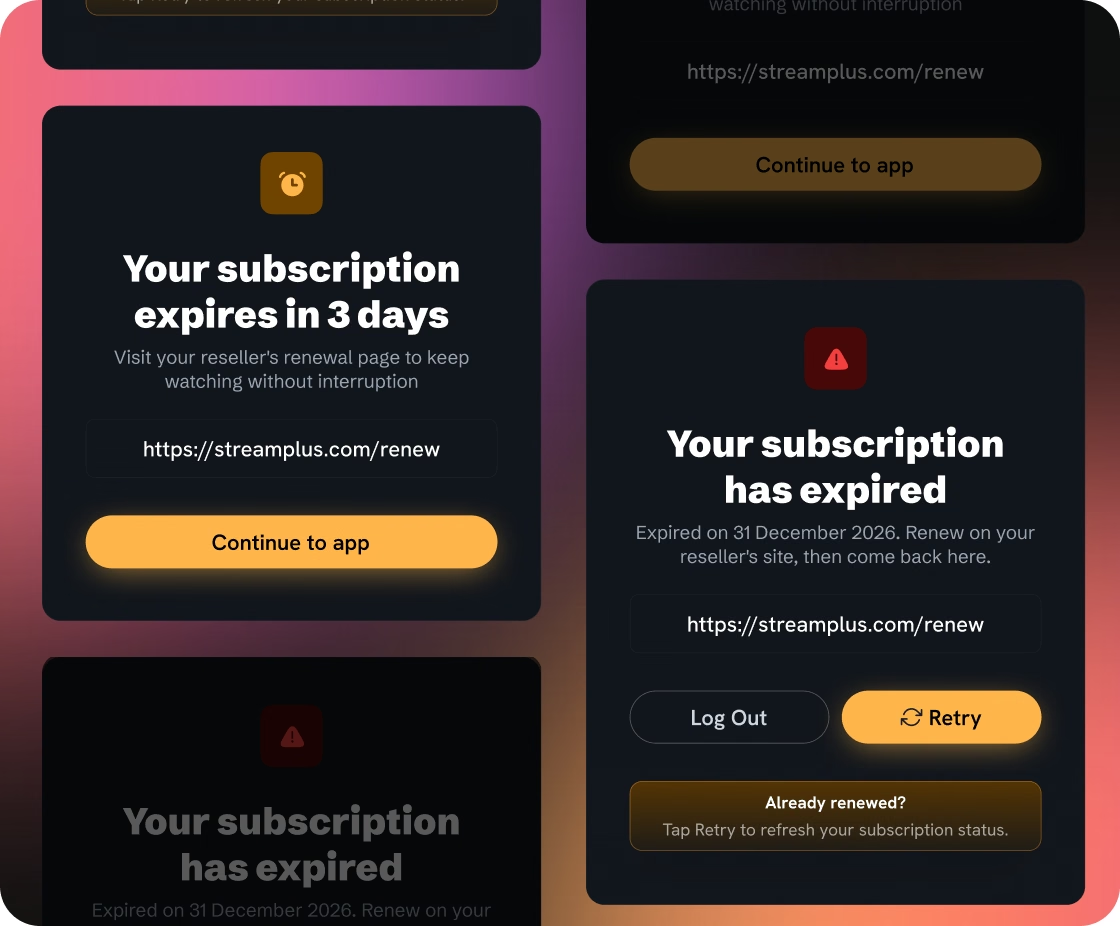
Subscriptions stay with the reseller, but subscribers see their access status inside the TV app.
The subscription screen shows the reseller's own renewal link, so payment goes through the reseller's existing billing.
In-app announcements work at two levels: Palmoc publishes messages for the whole platform, each reseller writes to its own subscribers.
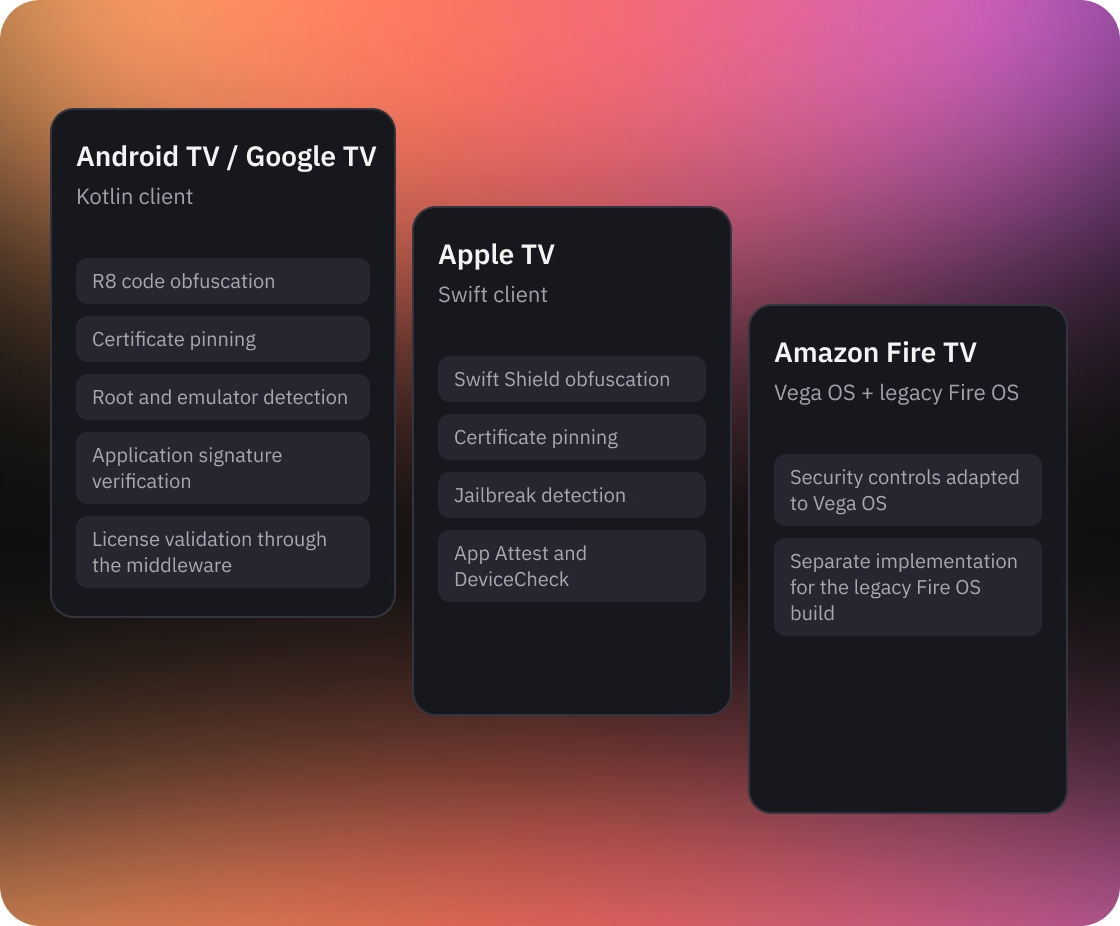
A streaming app runs on devices the operator doesn't control. Its code can be inspected, modified or run in unauthorized environments.
We implemented protections for each platform rather than one approach for all three clients.
Each TV client passed a penetration test before release.
These controls make tampering and unauthorized clients harder; license validation in the middleware adds a check the operator controls server-side.
If the shared middleware goes down, sign-in, subscription checks, the guide and synchronization stop for every subscriber at once.
We deployed the backend on DigitalOcean with Cloudflare CDN in front of the infrastructure.
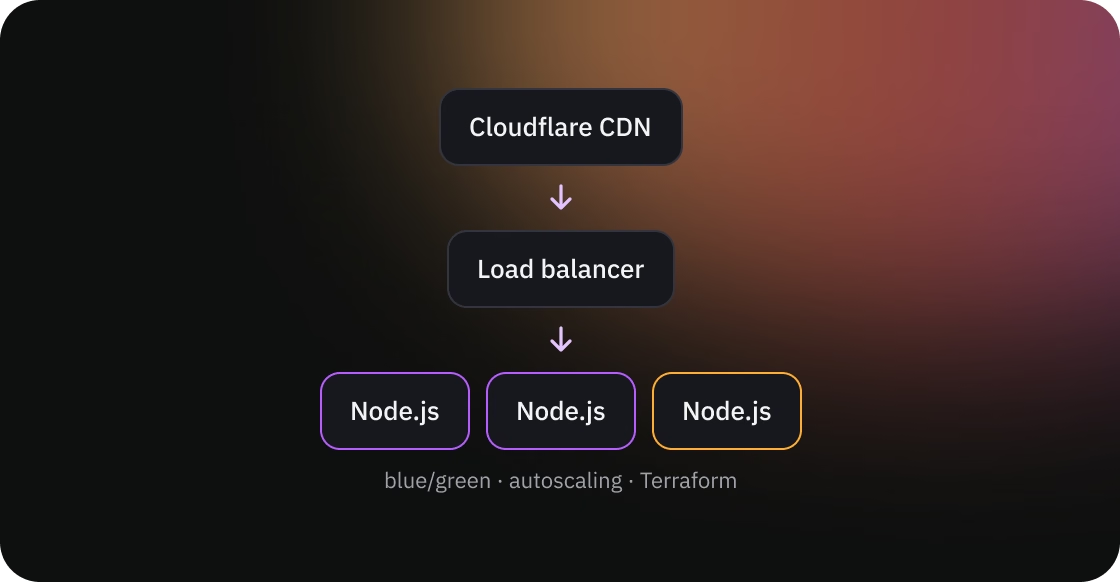
Multiple Node.js middleware instances behind a load balancer
Autoscaling to handle changes in demand
Blue/green deployments for controlled releases
Infrastructure defined and managed through Terraform
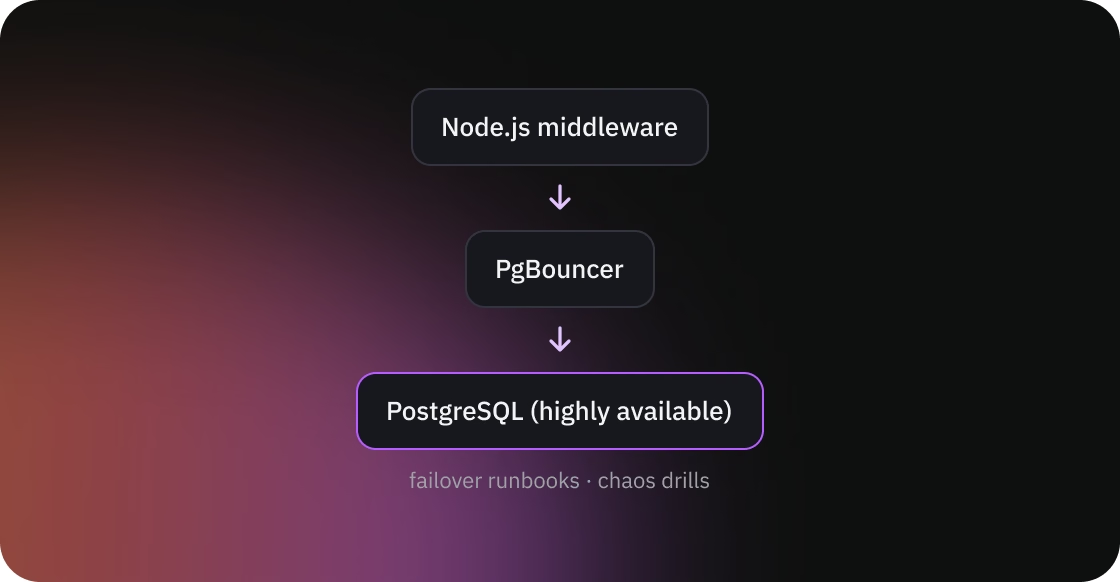
Highly available PostgreSQL
PgBouncer for database connection management
Documented failover runbooks
Chaos drills, including stopping the primary database to test recovery behavior
We ran backend load tests at three levels: 1,000, 10,000, and 100,000 users, and tuned the system after each run.
We fixed the constraints found at each level before launch.
Deployment and monitoring
GitHub Actions manages CI/CD, while Sentry and uptime checks support error monitoring and availability tracking.
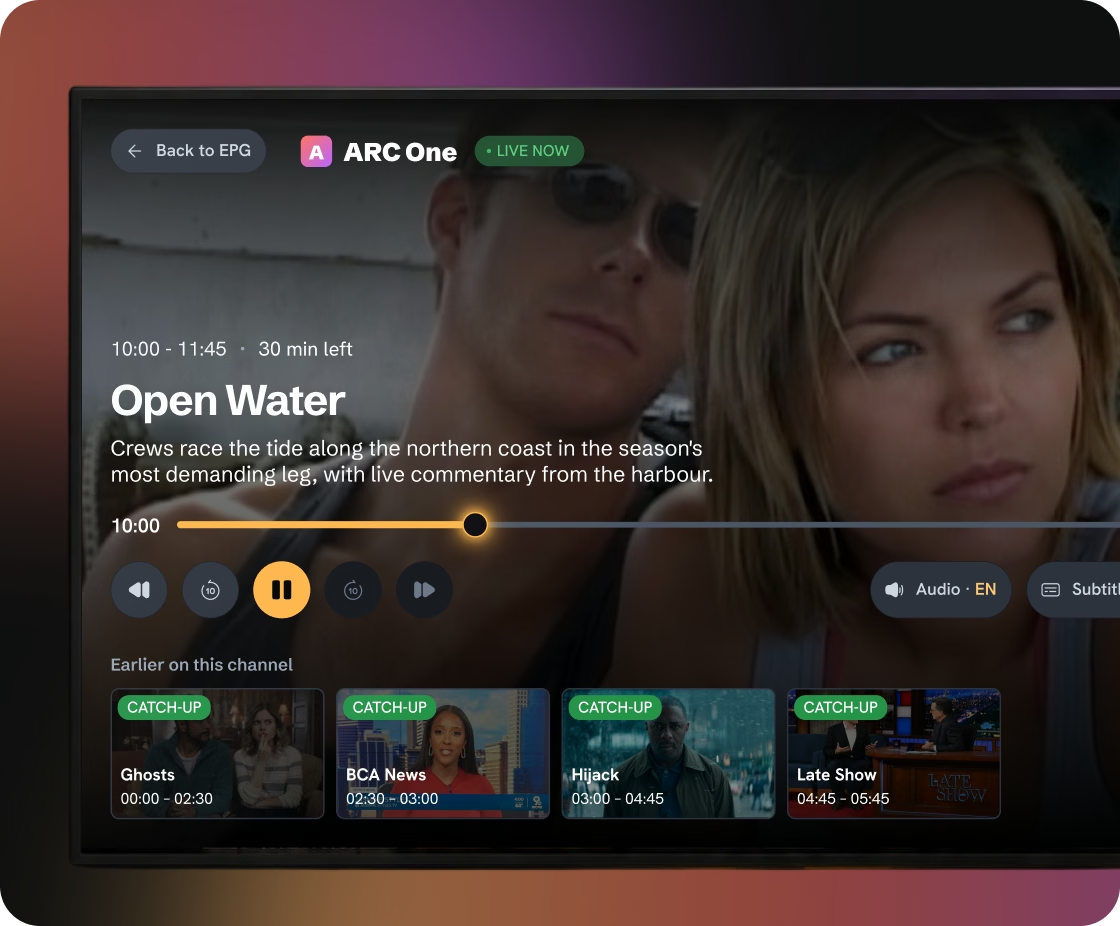
Lumvara is available in the Apple App Store, Google Play and the Amazon Appstore.


Updates continue to ship across all three platforms.
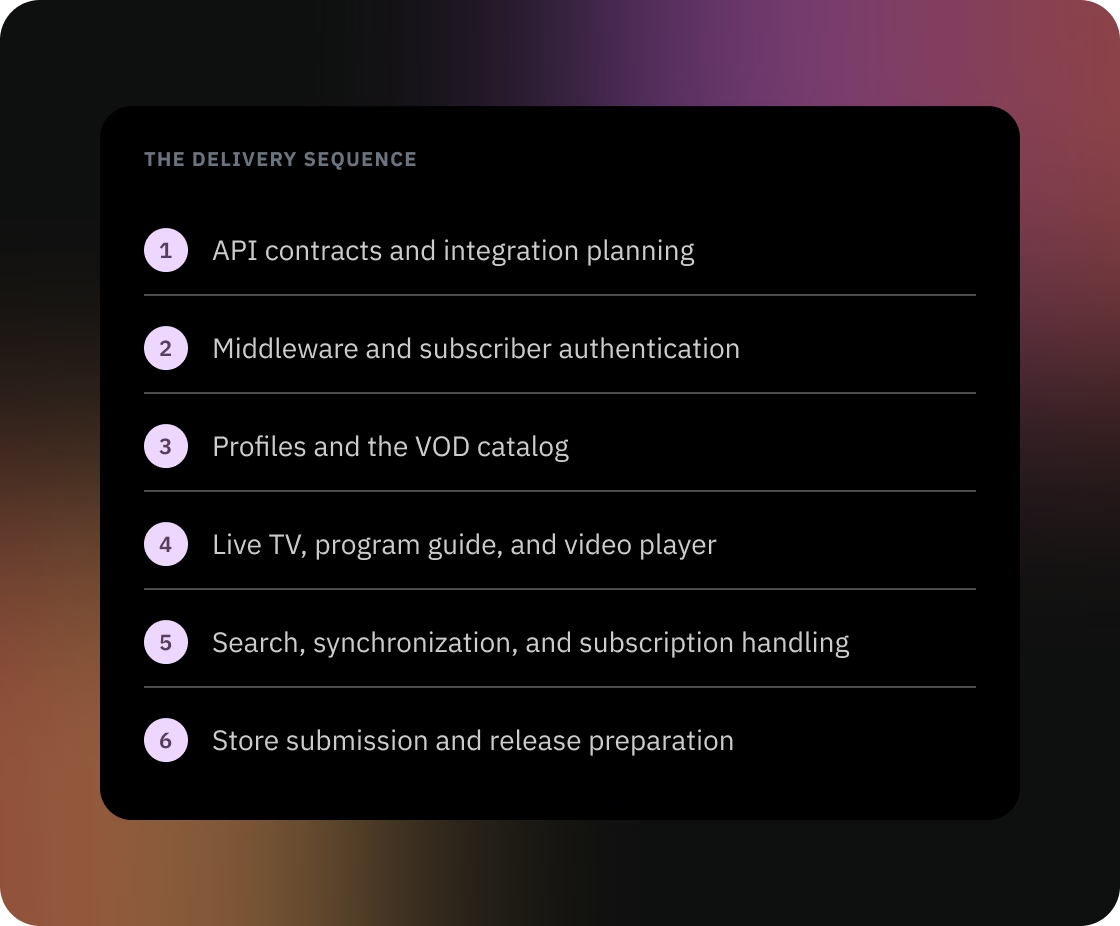
Development ran through six demos, each a working build for Palmoc and its resellers to review.
Their feedback went into the requirements in nine rounds, up to version 1.9 of the product requirements document.
QA covered more than 800 tickets, with automated tests in Playwright.
The first TV app reached an app store three months after the first line of code. Within another two weeks, Lumvara had launched across Apple TV, Android TV / Google TV, and Amazon Fire TV.
For more about this type of development, see our


You get a realistic estimate, technical recommendations and next steps. Free, no obligations.