

Key takeaways
• Live streaming piracy is a revenue problem, not just a legal one. Parks Associates projected (2023) US streaming providers will lose a cumulative $113 billion to piracy by 2027, and MUSO logged 216 billion visits to piracy sites in 2024 alone — rights-holders eat the biggest share.
• Security is a stack, not a feature. Signed tokens, DRM (Widevine, PlayReady, FairPlay), forensic watermarking, geo-fencing, concurrent-stream limits, DDoS protection, and an anti-bot layer all have specific jobs — no single control does them all.
• Transport matters. SRT with AES-256, RTMPS, WebRTC over DTLS-SRTP, and HLS/DASH over HTTPS are the floor. Plain RTMP to the ingest is free budget for attackers.
• Account sharing is a silent killer. Concurrent-stream limits, device binding, and session-based watermarking recover real money without needing the legal team.
• Custom still wins for high-value live. Off-the-shelf stacks are fine for most B2C, but sports, PPV, corporate AGM, and regulated health or finance events usually need the extra engineering to protect the content and the brand.
Secure live streaming is one of those problems where the demo always looks easier than the implementation. Encrypt the manifest, add a DRM, job done. In production, attackers move faster than feature lists — credential-stuffed accounts, replayed tokens, HDMI rips, bot-driven redistribution, and L7 DDoS against the manifest endpoint all happen on a random Tuesday during a big event. This playbook is how Fora Soft (250+ products shipped since 2005, 50+ in-house specialists) thinks about secure live streaming for OTT, sports, corporate events, education, fitness, and any product where unauthorised viewing translates directly into lost revenue.
The audience is founders, CTOs, and product leads running or planning a live-video product. We cover what “secure live streaming” actually means in 2026, the real threat model (piracy, account sharing, DDoS, tampering, token abuse), the seven protection layers that move the needle, the DRM and CDN options compared, a reference architecture, cost math, decision framework, KPIs, and pitfalls. If you are choosing a development partner, the case-study section describes what Fora Soft ships on internet-TV engagements and AI-scalable video streaming.
Why Fora Soft wrote this playbook
Fora Soft has shipped video software since 2005. A large share of that portfolio is live streaming in one form or another — OTT, IPTV, sports broadcasts, fitness classes, music live streams, corporate events, remote learning. Each engagement has a specific security constraint: rights-holder-mandated DRM, regulated audience tracking, abuse mitigation, or simply a business model that does not survive mass redistribution.
On Smart IPTV and Smart STB IPTV we run multi-channel IPTV to set-top boxes and smart TVs. On TradeCaster we stream live trading content to a paying audience. On Bellicon Smart TV we deliver a premium fitness library to iOS, Android, and Smart TV in lockstep. On Franchise Record Pool we ship a DJ-first music platform where licensed tracks must not leak into the wild. On Tyxit and Chillchat we run social live video where moderation and anti-abuse are security problems too.
We are deep in the modern live stack — WebRTC architects, scalable streaming module specialists, and MoQ/QUIC developers. Agent Engineering inside our CI/CD means we ship live-security features faster and cheaper than a traditional outsourced team — factor that in when you compare quotes.
Bleeding money to pirates during live events?
Book a 30-minute scoping call and we will map the leaks in your current live stack — ingest, DRM, CDN, watermarking — and tell you what the next 90 days of hardening look like.
What “secure live streaming” actually means
Strip the marketing away and a live stream is “secure” when it satisfies four specific conditions at once. (New to the delivery side? Our video-streaming engineering primer covers the encoding and delivery groundwork this playbook secures.)
1. Authorised-only playback. The only devices that successfully play the stream are devices tied to a current paying subscriber or entitled user. Token theft, credential sharing, and VPN-hopping all reduce unauthorised playback from trivially cheap to clearly expensive.
2. Tamper-resistant content path. The manifest, segments, and DRM keys travel over encrypted transport, the player verifies what it receives, and a hostile CDN or network is defeated by authenticated playback primitives.
3. Attributable leaks. If a stream makes it to a pirate site, you can identify which session or account it came from. Forensic watermarking and per-session manifests are the primitives for this.
4. Resilient under attack. The stream stays up during DDoS, bot surges, and credential-stuffing campaigns. DDoS mitigation, rate limits, CAPTCHAs for login, and edge caching for manifests are the primitives.
Reach for the full stack when: content has rights-holder obligations, paying viewers above 10,000 concurrent, or a business model that cannot survive 20% redistribution.
The live-streaming threat model — what actually happens
Skip the abstract risk grid. The real attacks on live streaming products cluster into six patterns, and most live products see at least three of them during a single sports or premium-event season.
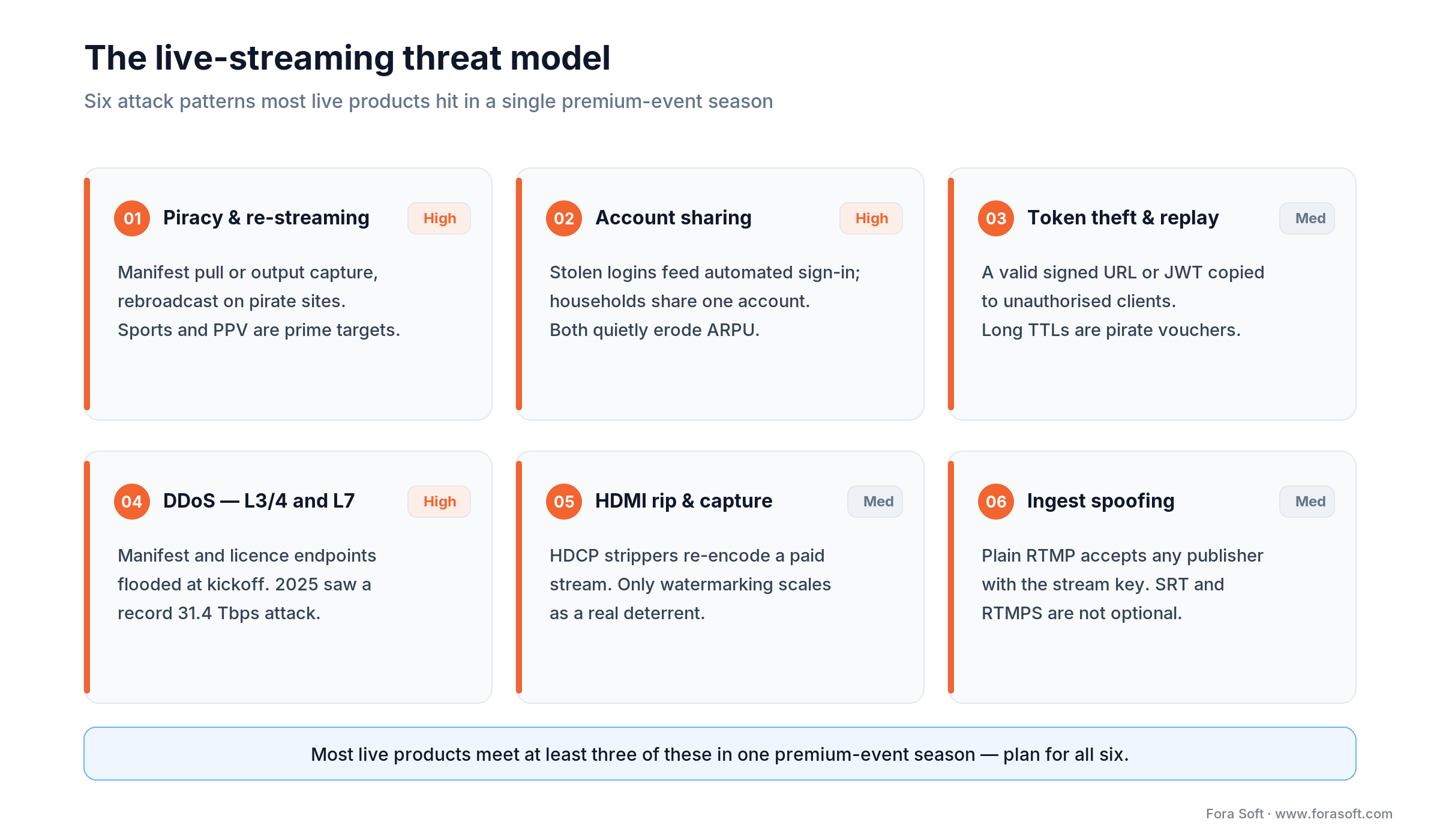
Figure 1. The six attack patterns a live product should assume during any premium-event season.
1. Piracy and re-streaming. Attackers pull the manifest or capture the output, then re-broadcast on pirate sites. Sports and PPV events are the prime targets. Parks Associates projected (2023) a cumulative $113 billion US streaming-piracy loss by 2027 (piracy rate climbing 22%→24.5%); MUSO counted 216 billion visits to piracy sites in 2024, and Synamedia estimates sports piracy alone drains roughly $28 billion a year. Around 84% of surveyed fans admit to streaming sports illegally — and about 89% of them also hold a legitimate subscription, so piracy is mostly your paying customers.
2. Account sharing and credential stuffing. Stolen credentials land in automated sign-in pipelines, and legitimate users share logins across households. Both look similar at the edge; both erode ARPU.
3. Token theft and replay. A valid signed URL or JWT is copied to unauthorised clients. Short TTLs and one-time tokens limit the damage; long-lived tokens are essentially a pirate voucher.
4. DDoS, L3/4 and L7. Cloudflare and Akamai both report sustained growth in L7 DDoS aimed at manifest endpoints and player APIs during marquee events. Cloudflare blocked a record 31.4 Tbps attack in November 2025, and the Aisuru-Kimwolf botnet, largely built from hijacked Android TVs, pushed an L7 flood past 200 million requests per second that December. Total DDoS incidents roughly doubled to about 47 million in 2025.
5. HDMI rip and screen capture. With HDCP strippers and capture cards, a paid viewer re-encodes the stream. Widevine L1 plus HDCP requirement mitigates but does not eliminate; watermarking is the only deterrent that scales.
6. Ingest spoofing and tampering. Plain RTMP ingest accepts any publisher with the stream key. Stream-key leaks, rogue RTMP pushes, and man-in-the-middle on the contribution feed still happen — SRT with AES and RTMPS are not optional.
The seven layers of a hardened live stack
Every layer below exists because one of the attack patterns above keeps biting teams that skip it. Use them as a checklist.
- Secure ingest — SRT/AES or RTMPS, rotated stream keys, allow-listed publishers.
- DRM and encryption — Widevine, PlayReady, FairPlay with CBCS or CENC packaging.
- Tokenised delivery — short-lived signed URLs or JWTs tied to device and session.
- Forensic watermarking — A/B or session-based, so leaks are attributable.
- Geo- and VPN-aware entitlement — territory enforcement plus VPN and data-centre IP detection.
- Concurrent-stream and device limits — plan-aligned, silently enforced.
- DDoS, bot, and fraud mitigation — edge filtering, rate limits, CAPTCHA, credential-stuffing detection.
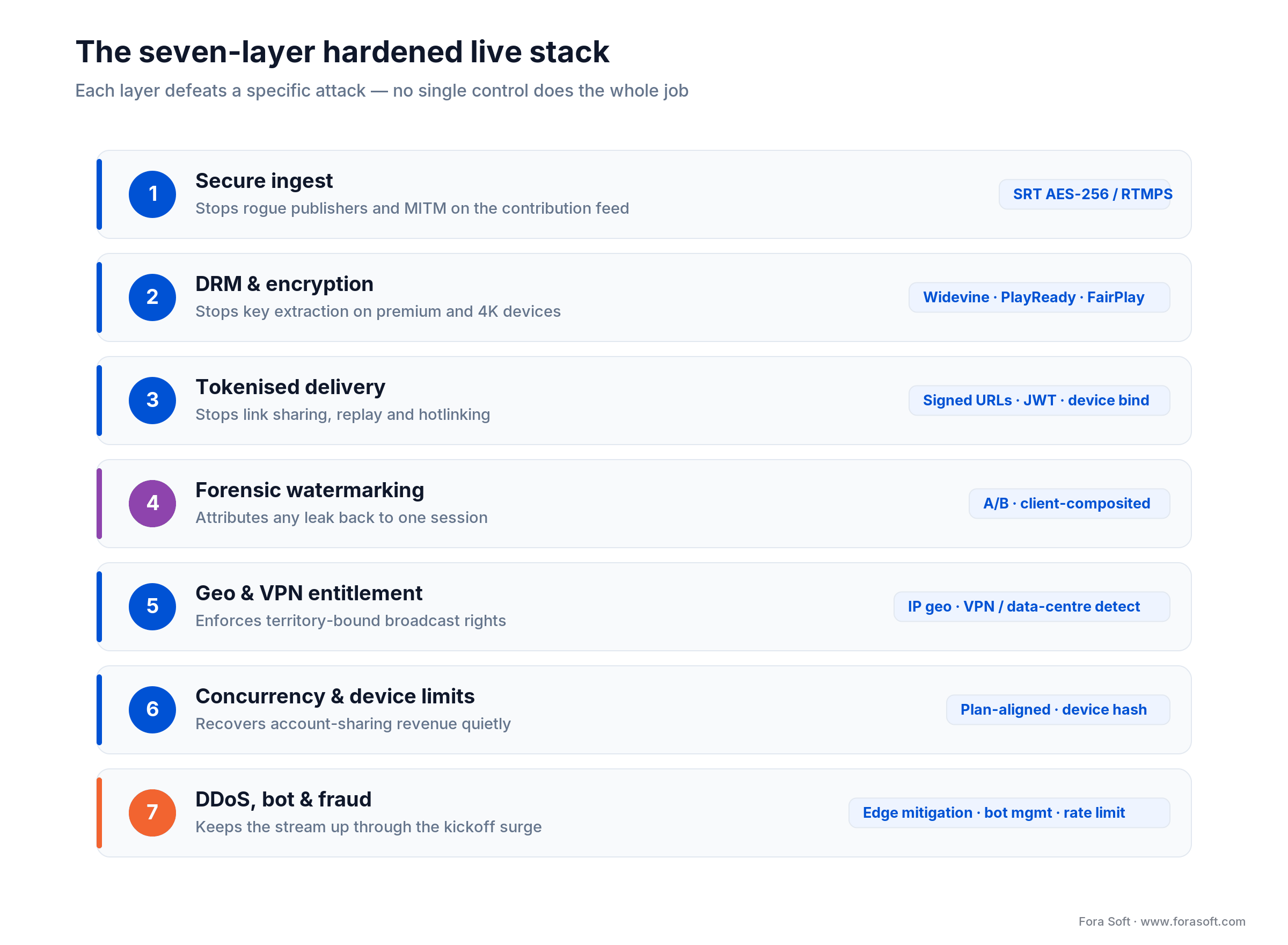
Figure 2. Seven interlocking layers — each closes off an attack the others can’t.
Layer 1 — secure ingest
The contribution feed from the venue or encoder to the cloud is an overlooked attack surface. Plain RTMP ships stream keys in the clear and accepts any publisher with the key.
SRT with AES-256
SRT (Secure Reliable Transport) is the contribution default for sports and news broadcasts. Built-in AES-128 or AES-256 encryption, packet loss recovery via ARQ, and low latency over unpredictable networks. Every major encoder (Haivision, OBS, vMix, FFmpeg) and every major cloud ingest (AWS MediaConnect, Wowza, Ant Media) supports it.
RTMPS when SRT is not available
Plain RTMP is still widespread for creator streams, but RTMPS (RTMP over TLS) should be the minimum. Every mainstream streaming platform accepts RTMPS; if yours does not, migrate the platform.
WebRTC and MoQ for sub-second
For interactive and ultra-low-latency use cases, WebRTC with DTLS-SRTP is the de-facto standard, and RFC 8827 makes that encryption mandatory, with no plaintext-RTP opt-out. Media over QUIC (MoQ) is an emerging IETF transport for low latency over lossy networks, but in 2026 it is still an Internet-Draft (draft-ietf-moq-transport, not yet an RFC); Cloudflare already runs MoQ relays in 330+ cities, so treat our MoQ/QUIC work as production-adjacent, not a finished standard.
Rotated stream keys and publisher allow-lists
Stream keys must be unique per event, rotated on a schedule, and tied to a publisher identity. Allow-list publisher IP ranges where the origin is known (venue, studio, data centre). Log every accepted and rejected ingest attempt; the pattern of rejects is a useful early-warning signal.
Reach for SRT when: the contribution feed crosses the public internet, carries revenue-critical content, or feeds more than one destination.
Layer 2 — DRM and content encryption
DRM is neither magic nor optional for rights-protected content. The combination of the three major DRMs covers the commercial device universe.
Widevine, PlayReady, FairPlay — multi-DRM is mandatory
Chrome, Android, and most Smart TVs use Google Widevine. Edge, Xbox, and many enterprise Windows deployments use Microsoft PlayReady. Safari, iOS, and tvOS use Apple FairPlay Streaming. You package once using Common Encryption — CENC (AES-CTR, the older DASH mode) or CBCS (AES-CBC with pattern encryption) — and license each DRM from the same packager. CMAF fMP4 with CBCS is the 2026 common denominator: FairPlay has always used CBCS, and PlayReady 4.0+ plus modern Widevine now decrypt it too, so one CBCS-packaged CMAF set serves all three DRMs from a single encode (AWS Elemental MediaPackage and Bitmovin default to it). Keep a CENC fallback only if your device tail includes legacy PlayReady below v4. If you are choosing between DRM services, our multi-DRM service comparison breaks down EZDRM, BuyDRM, PallyCon, and Axinom on coverage, pricing, and when a custom build wins.
Security levels — Widevine L1/L2/L3, PlayReady SL3000
Premium 4K and HDR content must require Widevine L1 (content key and decode inside a hardware TEE, HDCP-protected output) and PlayReady SL3000 (hardware, introduced 2015). The MovieLabs Enhanced Content Protection (ECP) spec studios enforce for 4K UHD mandates exactly this hardware tier: L1, Apple FairPlay with the Secure Enclave, or SL3000. L3 and SL2000 are software-only: Widevine L3 has been reverse-engineered repeatedly (public CDM key-extractors exist), so treat it as low-assurance and cap it at SD/HD. Enforce the level in licence policy, not in the player, because the player is attacker-controllable territory.
Key rotation and multi-key
For long events, rotate content keys periodically (every 4–24 hours is common) so a leaked key does not decrypt the whole archive. Use multi-key packaging to separate audio from video and different qualities — if a key is compromised, the blast radius stays small.
HLS AES-128 for low-value live
For audience-generated live, free content, and internal streams, plain HLS with AES-128 segment encryption plus signed URLs is usually enough. It buys no protection against a determined pirate but deters casual scraping, and it is cheap.
Layer 3 — tokenised delivery
Tokens bind playback to a subscriber, a device, and an expiry. They are the single most under-invested layer in most live products.
Signed URLs with short TTL
Cloudflare, AWS CloudFront, and Akamai all support signed URLs, signed with HMAC-SHA256 or RSA/ECDSA over the path, expiry and optional claims (client-IP CIDR, geo). Defaults are generous — Cloudflare Stream tokens expire after an hour, Akamai caps them at the media duration or 24 hours — so for live manifests drive the TTL down to 30–120 seconds and rotate the signing key on a schedule.
JWTs with device binding
The stronger pattern pairs a JWT carrying device fingerprint, subscription tier, entitlement window, and IP class. The edge validates signature and claims; replay from a different device is blocked; reuse outside the TTL fails. Keep the secret in an HSM or KMS, not in the app repo.
Per-session manifests
For premium events, issue a per-session manifest so each viewer’s playlist contains unique identifiers. Pair with server-side watermarking to pinpoint leak sources, even when the segments themselves are shared across subscribers.
Reach for JWT + per-session manifests when: the content is PPV, sports, live concert, or corporate event with a realistic piracy incentive.
Planning a high-stakes live event?
We audit live-event stacks before tent-pole broadcasts — DRM, tokens, CDN, watermarking, DDoS posture — and ship fixes in days, not quarters.
Layer 4 — forensic watermarking
Watermarking does not stop the leak; it attributes it. That is the whole point. Rights-holders increasingly require watermarking as a contract term for premium live rights.
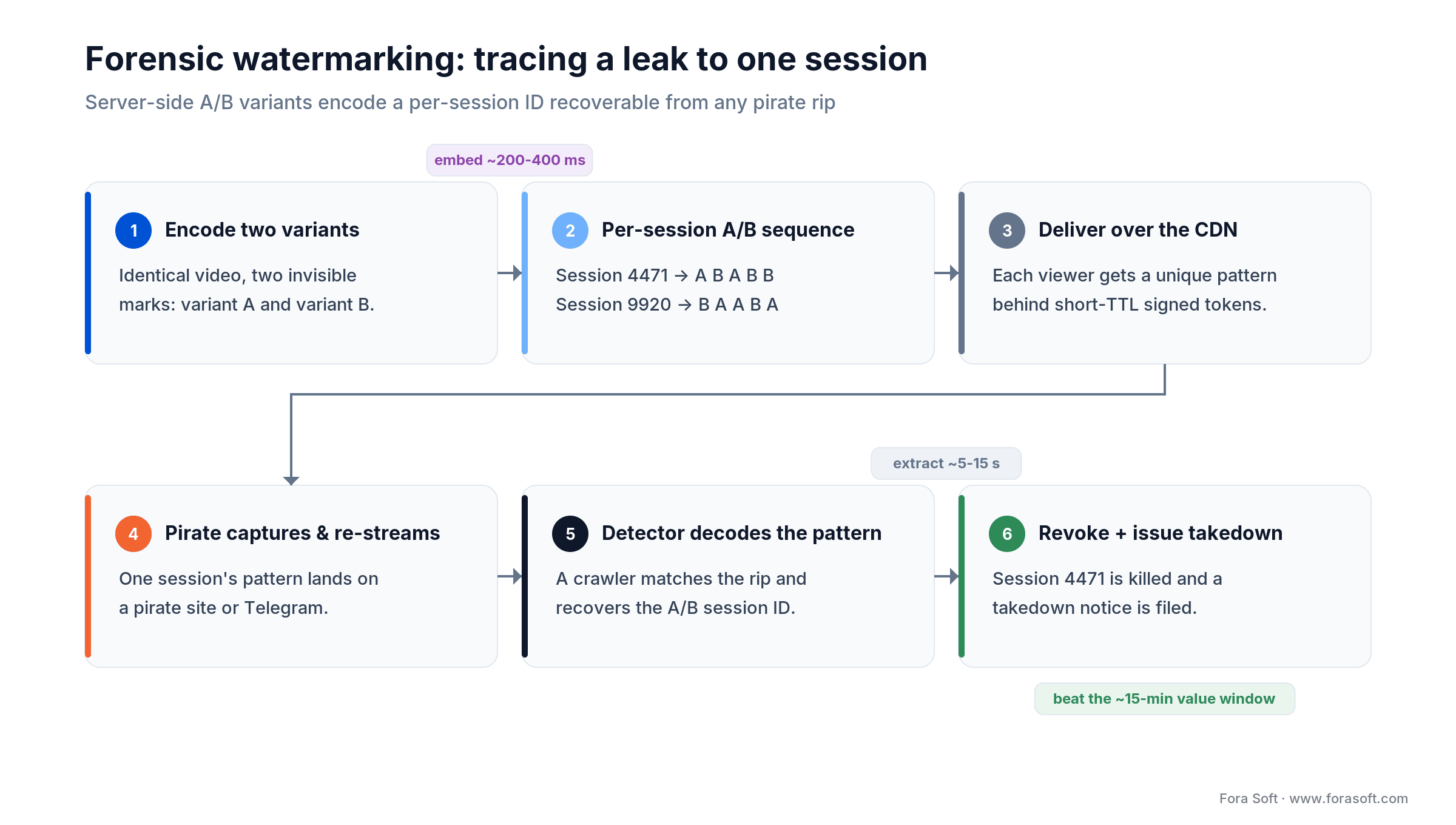
Figure 3. Server-side A/B watermarking encodes a per-session ID that survives a re-stream.
A/B (server-side) watermarking
Two differently-encoded A and B variants are delivered in a pattern unique per session. When a pirate rip is captured, the pattern decodes back to a session identifier. Server-side A/B roughly doubles storage but adds negligible playback latency, so it is live-capable, and the DASH-IF A/B watermarking spec (backed by Nagra, Akamai, AWS, Irdeto, Synamedia and Verimatrix) standardises it. For live sport the loop has to be fast: embed inside ~200–400 ms and recover the session ID in ~5–15 seconds, all to beat the ~15-minute window before a match loses its value.
Client-side watermarking
The player overlays a subtle per-session pattern (e.g. an invisible luminance ripple) on the decoded video. Cheaper on the CDN but potentially defeatable by a motivated attacker on rooted hardware. Useful for internal and corporate streams.
Detection and take-down pipelines
Watermarking needs a matching detector: a service that crawls pirate sites, matches candidate rips against the watermark database, returns a session ID, and hands it to the entitlement system for kill-switch and legal escalation. Commercial vendors (NAGRA NexGuard, Synamedia ContentArmor, Verimatrix Streamkeeper, Irdeto TraceMark) do both halves — NAGRA reports its watermarking guards around 95% of digital cinemas, and Pathé deployed Synamedia ContentArmor for home VOD in August 2025. Regulators are moving too: the European Commission’s November 2025 review conceded its live-piracy recommendation had limited impact, and 36 rights-holders (Premier League, LaLiga, DAZN, Sky and others) are pushing the EU for binding 30-minute takedowns and live dynamic blocking, following Italy’s Piracy Shield.
Layer 5 — geo-fencing and VPN detection
Rights licences are almost always territory-bound. Enforce them at the edge, not only in the licence server.
1. IP geolocation at the CDN. MaxMind, IP2Location, and the CDN’s native geo-matching handle the 90 percent case. Block or redirect at the manifest endpoint; do not let the player decide.
2. VPN and data-centre IP detection. Commercial feeds (IPQualityScore, Spur, NetProtect) flag IPs belonging to VPN providers, Tor exits, and cloud data centres. Block, throttle, or step-up authentication based on score.
3. Device-level checks. Carrier and locale heuristics on the client add signal. A UK subscription streaming a live Premier League match to a handset reporting US carrier and English language is worth a prompt, not a pass.
Layer 6 — concurrent-stream and device limits
Account sharing looks like loyal customers until you watch unique devices per account. Bain puts account borrowing at about one in four users; pre-crackdown, Disney+ sat near 33% and Netflix near 30% of subscriptions shared. Enforcement is pushing those down. Netflix fell toward 10–28% after its 2023 paid-sharing rollout, and HBO Max began US enforcement in August 2025. Still, a quarter to a third of a direct-to-consumer base is still real recoverable revenue.
1. Plan-aligned limits. Free tier one device, standard two, premium four, and so on. The limit is a product decision, not a policing decision.
2. Quiet enforcement. Do not kick the user in the middle of a live goal. Prompt at login, at start of event, or after a session ends. Silent revenue recovery beats loud user-hostile enforcement.
3. Device binding. Tie playback tokens to a device hash so concurrent-stream checks are reliable across mobile, desktop, Smart TV, and STB.
Layer 7 — DDoS, bot, and fraud mitigation
Live events are magnets for attackers and for bot-driven abuse. Expect both.
1. Always-on edge DDoS. Cloudflare, Akamai, AWS Shield Advanced, and Fastly all offer L3/L4 and L7 mitigation. Enable for the entire origin, not just the player. Treat the licence server as the highest-value origin — it is the one whose failure breaks every session.
2. Rate limits on login and licence endpoints. Credential stuffing ramps hours before kick-off. Rate-limit per IP, per ASN, and globally, with step-up CAPTCHA or proof-of-work when thresholds are crossed.
3. Bot management. Commercial vendors (Cloudflare Bot Management, Akamai Bot Manager, HUMAN, Kasada) detect automated clients via JavaScript probes, behavioural signals, and device fingerprints. Block or challenge the bots; do not rate-limit your real fans.
4. Runbook with kill switches. When an event goes sideways, your team needs a documented path: disable registration, tighten geo, flip from public to invite-only, revoke a specific tenant token. Drill it before the big game.
Reach for always-on edge DDoS and bot management when: you run marquee live events, sell logins that attract credential stuffing, or cannot absorb a flood on the manifest and licence endpoints at kickoff.
DRM and delivery options compared
A pragmatic cut by the decisions you actually make: DRM platform, packaging, and delivery CDN. Pricing is indicative and moves with volume.
| Category | Option | Device coverage | Best for | Watch out for |
|---|---|---|---|---|
| DRM | Widevine + PlayReady + FairPlay | Chrome/Android/Smart TV + Edge/Xbox + iOS/Safari/tvOS | Rights-protected premium content | Package once with CMAF CBCS to avoid duplicate ladders |
| Packaging | CMAF fMP4 with CBCS | Universal (2026) | Single ladder, multi-DRM | Older devices that still want CENC CTR |
| DRM-as-a-service | EZDRM, Axinom, BuyDRM, Irdeto, Verimatrix | All three DRMs via one API | Teams without a licensing specialist | Pricing by licence; at scale cost matters |
| Watermarking | NAGRA NexGuard, Synamedia, Verimatrix, Irdeto TraceMark | Server-side or client-side | Sports, PPV, premium event | Factor detection service pricing, not just embed |
| CDN | Cloudflare, Akamai, AWS CloudFront, Fastly | Global | Signed URLs, DDoS, bot management | Egress cost at peak event load |
| Managed streaming | AWS Elemental, Cloudflare Stream, Mux, Wowza | Global | Fast time-to-market | Less control over watermarking and pricing |
| Bot / fraud | Cloudflare Bot Management, Akamai, HUMAN, Kasada | Global | Credential stuffing, scraping | Latency budget — test before big events |
Reference architecture for a premium live-streaming product
The architecture below is the shape we build on most new OTT, PPV, sports, and premium-live projects. It is opinionated but not exotic.
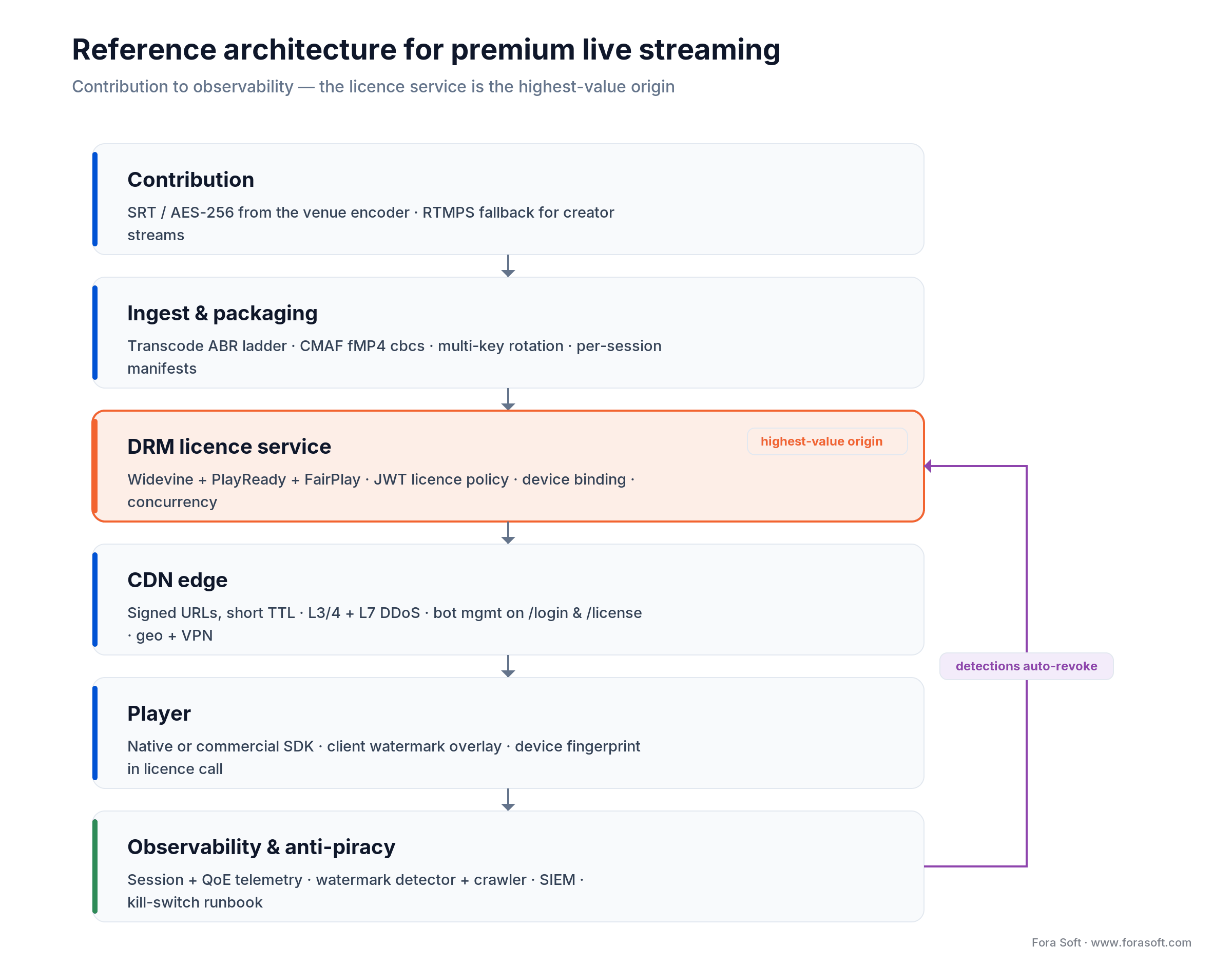
Figure 4. The build shape for premium live: the licence service is the highest-value origin, and detections feed back to revoke sessions.
Three design choices in this architecture punch above their weight. First, the licence service is treated as the most valuable origin and protected accordingly. Second, the packaging step is where most security decisions get set in stone — CMAF CBCS, multi-key, per-session manifests. Third, the observability loop closes with the anti-piracy pipeline: watermark detections feed entitlement revocation automatically, so an attacker’s session is killed before they redistribute the next segment.
Mini case — hardening live across IPTV, fitness, and music
A concrete sampling from our portfolio. On Smart IPTV we deliver multi-channel IPTV to consumer-grade devices with signed-URL playback and rotated keys; on Smart STB IPTV the same primitives cover set-top boxes with stricter device binding. On Bellicon Smart TV we deliver a 530-video premium fitness library across iOS, Android, and Smart TV in lockstep, with DRM gating the paid content and free classes open on AES-128 only.
On Franchise Record Pool we run a DJ-first music distribution platform where licensed tracks must not leak — token-scoped downloads, device binding, and per-session audio watermarking are the core primitives. On TradeCaster we ship live trading streams to paying subscribers with short-TTL signed URLs and concurrent-stream limits.
On the creator side, Tyxit and Chillchat are social live-video products where moderation, anti-bot, and rate-limited APIs do most of the security work; DRM is rarely the right answer for user-generated live. On Worldcast Live we run interactive live to 10,000 concurrent viewers at sub-second latency, where anti-bot and rate-limited APIs carry the security load. Each of these engagements reuses the same primitives: secure ingest, multi-DRM where the content justifies it, signed tokens, concurrent-stream control, and a DDoS posture aligned to event windows — the same stack we ship on video & audio streaming engagements.
Cost model — what a secure live stack actually costs
The biggest cost driver is not DRM licences; it is CDN egress at peak event load. The table below is a rough annualised bill of materials for a mid-size OTT or premium-live product serving 10,000–100,000 concurrent at peak.
| Line item | Typical monthly cost | What drives it |
|---|---|---|
| Multi-DRM licence service | $0.003–$0.02 per licence, or ~$100–$5,000+ flat | Licence volume, vendor tier |
| CDN egress | $1,000–$50,000+ | Hours watched, bitrate, region |
| DDoS + bot management | $200–$5,000 | Tier (AWS Shield Advanced from $3,000/mo; Cloudflare varies) |
| Watermarking (optional) | $500–$10,000 | Sessions watermarked + detection service |
| SIEM / observability | $300–$2,000 | Retention, log volume |
| Patching + ongoing engineering | 10–15% of build budget annualised | Velocity, fleet size, regulatory scope |
For most mid-size OTT products, the security-specific bill is $5,000–$30,000 per month outside of CDN, and CDN plus security together track the audience size. Agent-Engineering-accelerated delivery lets us compress the build phase meaningfully below traditional benchmarks; we are happy to share specifics under NDA.
A decision framework — scope your protection in five questions
Q1. Does a pirate make money from your content? If yes, budget for multi-DRM, watermarking, and an anti-piracy pipeline. If no, AES-128 with signed URLs usually suffices.
Q2. What is the premium device surface? iOS and tvOS force FairPlay; Xbox forces PlayReady; everything else favours Widevine. If any premium device matters, multi-DRM is mandatory.
Q3. How concurrent are your peaks? An event with 100,000+ concurrent viewers is a different CDN, licensing, and DDoS posture than 1,000. Size the budget accordingly.
Q4. How tolerant are you of user friction? Consumer live is friction-averse; enterprise and regulated live can sustain MFA and device binding. Calibrate.
Q5. What is the rights-holder contract? Some contracts mandate Widevine L1, PlayReady SL3000, and forensic watermarking at specific resolutions. Read it before scoping; retrofitting to contract is expensive.
Five pitfalls that quietly leak revenue
1. Long-lived tokens. 24-hour signed URLs are pirate vouchers. Short TTL (30–120 seconds for manifests) with silent client refresh is the correct design.
2. Plain RTMP ingest. The stream key travels in the clear and is often reused across events. Rotate keys per event and require RTMPS or SRT.
3. DRM without a licence policy. Widevine L3 everywhere, no output-protection checks, unlimited device count. DRM alone without a strict licence policy is security theatre.
4. Aggressive concurrent-stream enforcement. Kicking paid users during live moments is the fastest path to a churn spike. Enforce at session boundaries, not mid-goal.
5. No runbook for the big event. On event day your team must know exactly how to tighten geo, revoke a tenant, kill a leaked session, scale up licence capacity, and switch on heightened bot management. If the plan lives in somebody’s head, it does not exist.
KPIs — what to measure
Quality KPIs. Rebuffer ratio under 1% for HLS and DASH; video start failure under 0.5%; MOS (mean opinion score) above 4.0 on a 5-point scale; start-up time under 3 seconds for live.
Business KPIs. Concurrent-peak vs. licence capacity; conversion from free to paid during live windows; churn delta around incidents; known-pirate-site take-down rate and time-to-action; account-sharing reduction after device-binding rollout.
Reliability KPIs. DDoS incidents absorbed without origin impact; licence service 99.95% availability during events; time-to-mitigate credential-stuffing surge under 10 minutes; SIEM anomaly-to-response median under 30 minutes.
When NOT to build a custom secure live stack
Custom live security is not the right answer for every product. If your content is user-generated and low-value, a managed service (Cloudflare Stream, Mux, AWS Elemental) with basic signed URLs and AES-128 is usually enough. If you are pre-launch with fewer than 10,000 MAU and no rights-holder contract, put the engineering budget into product-market fit first.
Custom wins when the content is premium or rights-bound, when the audience is large enough that per-licence vendor pricing matters, when latency or compliance constraints exceed what managed services offer, or when your product is the live stack itself (e.g., vertical SaaS for sports, education, or corporate events). If any of those apply, the rest of this playbook scopes the work.
Want a live stack that holds up under a 100k-concurrent event?
Fora Soft builds OTT, IPTV, sports, fitness, and music live products end-to-end. 30 minutes and you leave with an architecture sketch and a delivery plan.
FAQ
Is AES-128 enough for a paid live stream?
For low-value live — creator streams, user-generated content, internal broadcasts — AES-128 with short-TTL signed URLs is often enough and cheap to implement. For rights-protected content, sports, or PPV, you need multi-DRM (Widevine, PlayReady, FairPlay) because AES-128 alone does not support output-protection, device-level trust, or per-session licence policy.
What is the difference between CENC and CBCS packaging?
CENC (Common Encryption) is the specification; CTR and CBCS are the two modes. CTR (AES-CTR) was historically used for DASH with Widevine and PlayReady. CBCS (AES-CBC with pattern encryption) is required by Apple FairPlay and now supported by Widevine and PlayReady too. In 2026 the pragmatic default is CMAF fMP4 with CBCS, which gives you a single ladder that works across all three DRMs.
Do I need forensic watermarking?
If the content is rights-protected sports, live concerts, or premium PPV, watermarking is increasingly a contractual requirement from rights-holders and the only way to attribute leaks to a session. For broad consumer SVOD it is usually optional; for free ad-supported live, usually unnecessary. The cost includes both embedding and a detection service; budget both.
How do I stop account sharing without alienating paying users?
Three moves in order of user-impact: start with concurrent-stream limits aligned to each plan (one, two, or four devices), add device binding so tokens are tied to specific hardware, and enforce at session boundaries rather than mid-event. Prompt the user to upgrade before you kick. Aggressive enforcement during a live moment produces a churn spike that outweighs the recovered revenue.
How much does DRM actually cost?
Entry SaaS DRM starts low — EZDRM lists single-DRM at $99.99/mo, universal multi-DRM at $199.99/mo, and Clear Key AES-128 at $49.99/mo — scaling to $500–$5,000+/mo at volume, or roughly $0.003–$0.02 per licence (dropping below $0.003 above ~500k licences/mo). Licence volume is about one per playback session per DRM. Add packager cost if self-hosting (Unified Streaming, Bitmovin); most teams buy DRM-as-a-service instead.
Can Widevine L3 protect 4K content?
Contractually and practically, no. Premium 4K and HDR content should be gated behind Widevine L1 (hardware-backed, HDCP 2.2) and PlayReady SL3000 on Windows. L3 and SL2000 are software implementations and are trivially extractable by capable attackers; rights-holders increasingly require hardware-level DRM as a contract term for premium tier playback.
What about WebRTC for secure live?
WebRTC is the right transport for sub-second interactive live (auctions, trading, live shopping, betting, iGaming). It ships with mandatory DTLS-SRTP, and modern clients negotiate AES-128-GCM or AES-256-GCM. It is not a DRM substitute; if the content requires rights enforcement on iOS and Android, you still pair WebRTC with licence-policy primitives in the server and, where appropriate, client-side watermarking. For scale, a WebRTC SFU can fan out to hundreds of thousands of viewers when designed correctly — see our WebRTC architecture service.
How long does it take to build a secure live platform?
A focused MVP-to-mid-tier build — multi-DRM, signed URLs, concurrent-stream control and DDoS posture — takes most teams 4–8 months; a full enterprise-grade platform across every device with forensic watermarking is closer to 8–18 months. Integrating hardened security into an existing product (new DRM, watermarking, bot protection, runbook) typically takes 6–12 weeks. With Agent-Engineering-accelerated delivery we regularly compress these timelines; specific benchmarks are available on request.
What to read next
Security
Secure Video Communication for Facilities
The facility-side companion on regulated video, with HIPAA, FedRAMP, CJIS, FERPA.
Security
Secure Intercom Systems: The 2026 Hardening Playbook
Our hardening playbook for intercoms, video door phones, and building access.
Services
Internet TV and OTT Development
Our streaming-platform service line — IPTV, OTT, VOD, live.
AI + Streaming
AI Scalable Video Streaming
Scaling live with AI-driven encoding, moderation, and observability.
Ready to protect your live content?
Secure live streaming comes down to seven interlocking layers — ingest, DRM, tokens, watermarking, geo, concurrent-stream control, and DDoS/bot protection — wrapped around a clear threat model and tuned to the commercial value of the content. None of the individual pieces is exotic; what separates a resilient live product from a breach headline is operating all of them together, drilling the runbook, and matching the protection to the rights-holder and business model.
Apply this playbook and three outcomes follow. Piracy-driven revenue leakage drops because leaks are attributable and sessions are revocable. Concurrent-sharing abuse drops because plan-aligned device binding quietly reclaims revenue. And the live product stays up during the windows that matter most — the big games, the keynote, the season premiere — which is where brand and ARPU actually live or die.
The book · Volume 3 of 7
Video Streaming: A Complete Guide to Video Delivery: From ABR and CDNs to Players, WebRTC, DRM, and the Economics of Streaming
Once you have scoped which of the seven layers your live product needs, the next job is making DRM and tokenised delivery hold on every device. Volume 3 covers multi-DRM, CDN caching, player behaviour, QoE monitoring and the economics of delivery, the parts of the stack where content protection meets playback. Written by Nikolay Sapunov, CEO at Fora Soft.
Read it on Amazon →Kindle & paperback · Fora Soft Video Engineering Handbook
Need senior live-streaming engineers on call?
Fora Soft builds OTT, IPTV, sports, fitness, and corporate-live products with the security stack tuned to your rights-holder and audience. 30 minutes and you leave with a plan.

