

Key takeaways
• Smart TV is where the audience is. US connected-TV ad spend is on track for ~$38 B in 2026 (eMarketer), and streaming hit a record 47.5 % of US TV time in December 2025 (Nielsen). If your product has a video story, the living-room screen is no longer optional.
• A Smart TV app development company ships for at least four platforms. Samsung Tizen, LG webOS, Android TV / Google TV and Apple tvOS together cover the bulk of premium living-room reach (~90 % in our project mix). Roku and Fire TV lead US reach — Roku is the largest US TV OS — and HbbTV carries European broadcast; skipping any Tier 1 platform still leaves a large share of households unreachable.
• Smart TV is not mobile. 1.5–2 GB of RAM, D-pad-only navigation, 10-foot UX and certification cycles measured in weeks make it a separate engineering discipline. Most web/mobile shops fail at it on the first attempt.
• The EU EAA bites in 2025. Closed captions, audio descriptions and accessible navigation became mandatory for streaming services sold into the EU on 28 June 2025. Plan accessibility budget at 15–20 % of total dev, not as a final QA pass.
• Pick a proven Smart TV app development company. We built the Bellicon Smart TV apps for Apple tvOS and Android TV (530+ workout videos, EN/DE, custom plans), and we’ve shipped IPTV/STB clients across the same platforms. Book a 30-min call →
Why Fora Soft wrote this playbook
Most Smart TV articles read like vendor brochures: “reach 500 M households”, “launch in months”, no engineering substance. We took a different approach. Fora Soft has been shipping multimedia products since 2005 and has worked across the full Smart TV matrix — SVOD on Apple tvOS, Android TV grids, IPTV/STB clients on Tizen and webOS, broadcast catch-up on HbbTV, fitness platforms across multiple OEMs. Fora Soft is a software development company; since 2005 we’ve shipped 250+ multimedia and video products, with 50+ in-house specialists and a 99% Upwork success rate.
A few representative production builds: the Bellicon Smart TV apps (Apple tvOS + Android TV, 530+ trampoline workout videos, custom plans, EN/DE, accessibility-friendly UX); the Smart STB IPTV client serving thousands of live channels through a 10-foot UI; and Smart IPTV, one of the most widely installed third-party IPTV clients across Samsung and LG TVs. That work sits inside our Internet TV and OTT development practice, and we hold a 99% Upwork project success rating with engineers selected 1 in 400.
This playbook is what we tell prospective clients in a discovery call: which Smart TV platforms actually matter, what an honest pipeline looks like, what to look for when hiring a Smart TV app development company, what numbers to commit to, and how to stay on the right side of the EU EAA, COPPA and FCC rules.
Need to ship a Smart TV app across Tizen, webOS, Android TV and tvOS?
Tell us your verticals, monetisation, latency budget and EU/US split. Within one working day we will come back with a target architecture, a platform priority list and an honest estimate.
Why a specialised Smart TV partner became essential
For most of the 2010s, “TV app” meant a side-project from a web team. In 2026 that approach reliably fails. Three things have changed.
The audience moved. In the US, streaming passed broadcast and cable combined for the first time in May 2025 and set a record 47.5 % of TV time in December 2025 (Nielsen’s The Gauge). CTV ad spend is heading for ~$38 B in 2026 and the IAB projects it growing another 13.8 % year-on-year in 2026; SVOD churn keeps pushing every major studio toward ad-supported tiers that demand a polished living-room experience.
The platforms multiplied. A modern OTT product realistically ships on Samsung Tizen, LG webOS, Android TV / Google TV and Apple tvOS at minimum, with Roku, Fire TV and HbbTV depending on the geography. Each has its own SDK, certification flow, memory profile and UX conventions.
The bar for quality rose. Users compare your app to Netflix, Apple TV+ and Disney+. Sub-second start time, smooth D-pad navigation, Atmos audio, 4K HDR playback, accessibility captions, ad insertion that does not break — all are the bare minimum.
Reach for a Smart TV specialist when: at least 10 % of your audience consumes long-form video, your monetisation depends on session length, you sell into Europe (EAA captioning is mandatory) or you compete against Netflix-grade apps for shelf space.
The 2026 Smart TV platform map
Every Smart TV product we have shipped or audited targets a subset of the platforms below. The map shows their relative weight, primary stack and the certification quirks that catch first-time teams.
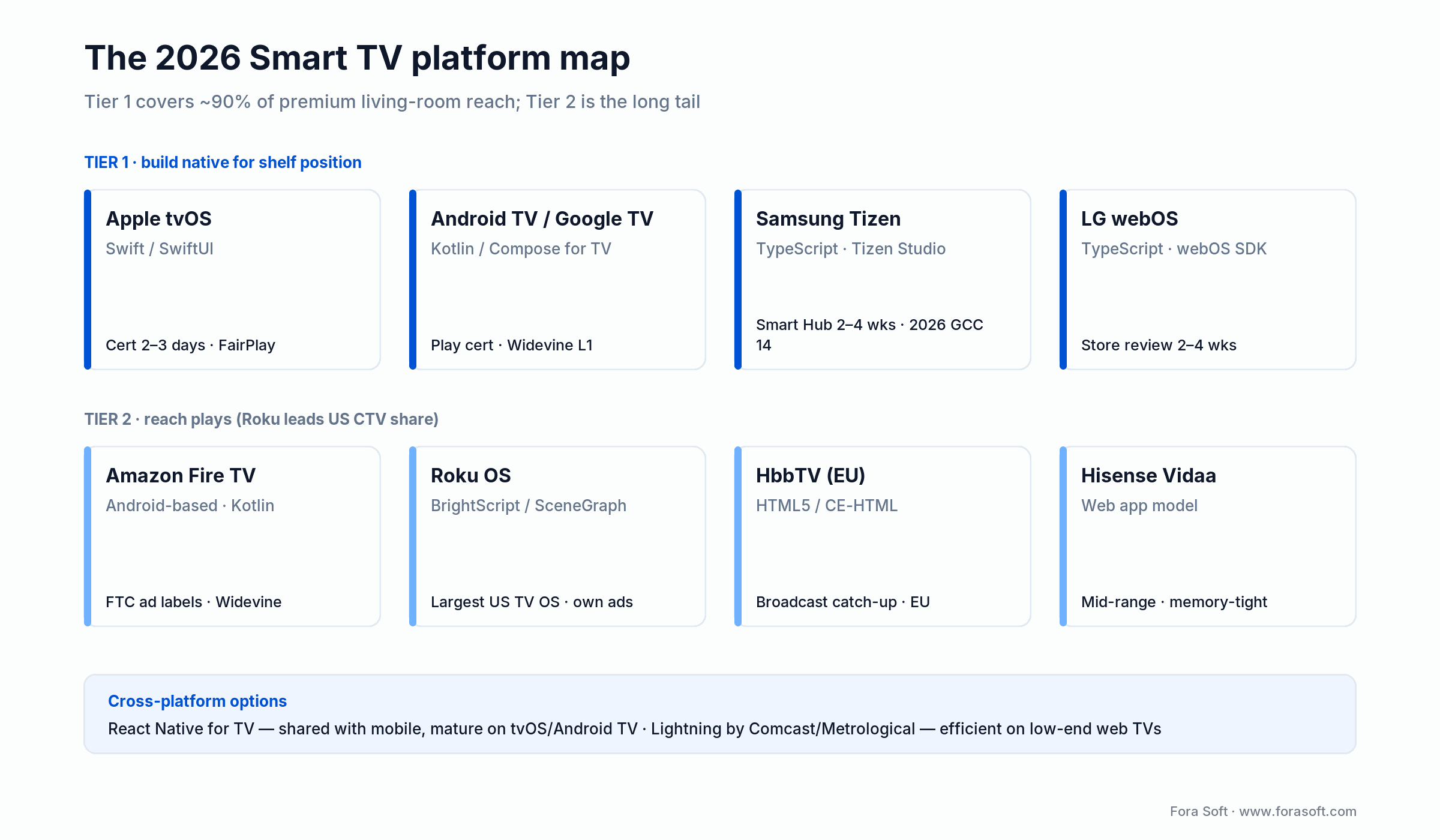
Figure 1. The 2026 Smart TV platform map — Tier 1 platforms carry the bulk of premium reach; Tier 2 adds US and EU coverage.
Benchmarks — what “good” looks like in 2026
| Metric | Good | Acceptable | Walk away |
|---|---|---|---|
| Cold-start to home screen | <2.5 s | 2.5–4 s | >6 s |
| Time-to-first-frame on Play | <1.5 s (VOD), <3 s (live) | 2–3 s VOD | >5 s |
| Sustained framerate (UI) | 60 fps | 30–45 fps | <24 fps |
| Heap headroom after 60 min | >25 % | 15–25 % | <10 % (will OOM) |
| Live latency (LL-HLS / LL-DASH) | <4 s | 4–8 s | >15 s |
| Closed caption coverage | 100 % of catalogue | 90 %+ | <80 % (EAA failure) |
A reference architecture for a multi-platform Smart TV product
A modern multi-platform Smart TV stack has three layers: a shared backend (catalogue, identity, entitlements, ads, analytics), a shared video player and DRM layer, and platform-specific UI projects. Get the shared layers right and the per-platform cost falls 30–40 %; get them wrong and every platform feels like a fresh project.
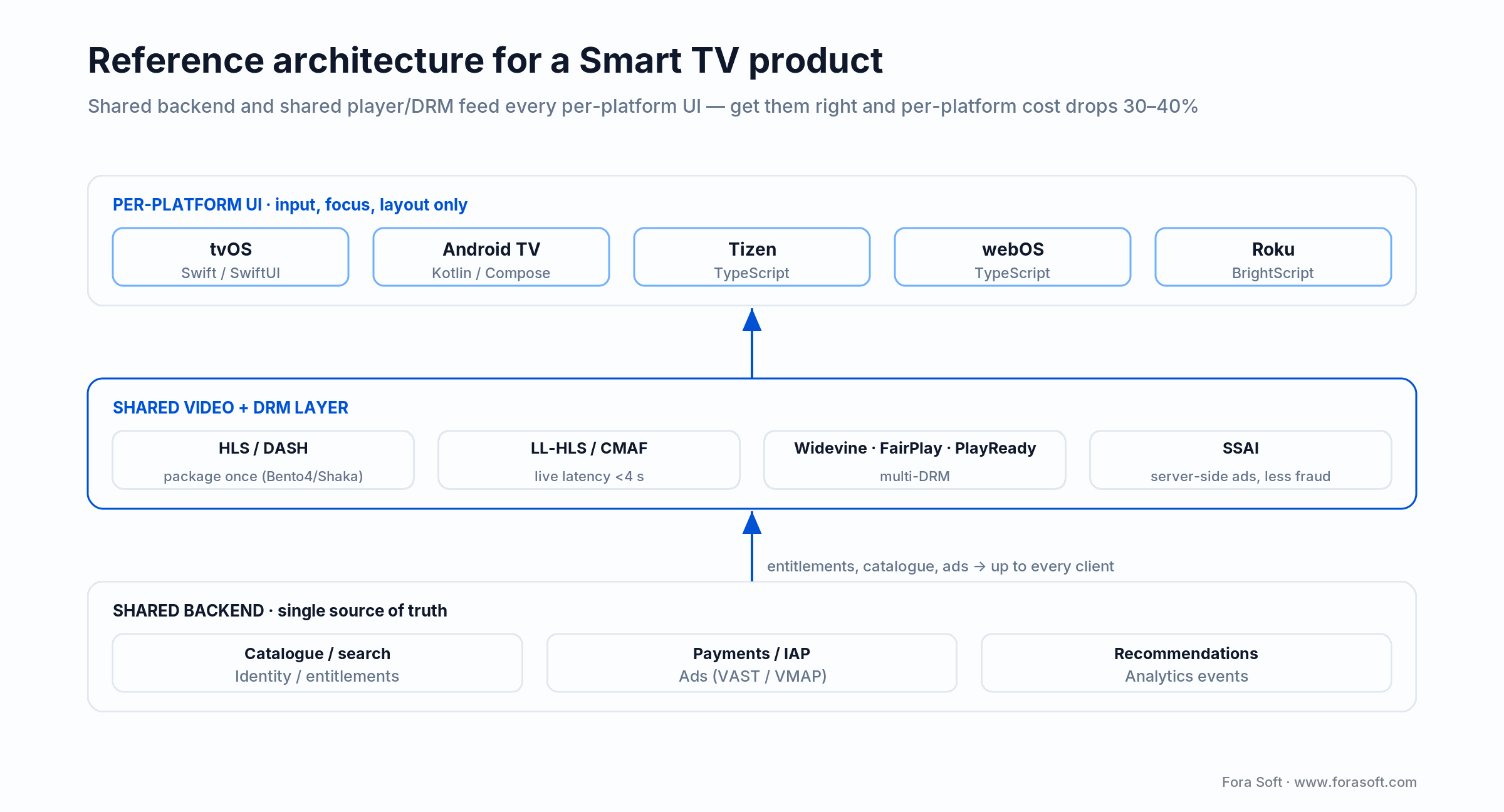
Figure 2. Reference architecture — shared backend and player/DRM layers keep each per-platform UI thin.
1. Shared backend
REST or GraphQL gateway exposing catalogue, search, recommendations, entitlements, payments, ads (VAST/VMAP) and analytics events. Single source of truth for every UI client. Side-cars: image transcoding for 16:9 thumbnails, language packs, geofencing.
2. Shared video and DRM layer
HLS for Apple ecosystem, DASH for the rest, low-latency CMAF chunks for LL-HLS and LL-DASH on live, Widevine L1 for Android/Tizen/webOS, FairPlay for tvOS, and PlayReady, a first-class DRM on Samsung Tizen and LG webOS. Use Bento4 or Shaka Packager for content prep; AWS Elemental, Bitmovin or your own encoder farm. Server-side ad insertion (SSAI) drastically cuts ad-fraud and removes a class of client-side bugs. One 2026 caveat worth budgeting for: Samsung’s 2026 TVs moved to the GCC 14.2 toolchain, so native binaries built against the older 9.2 series must be rebuilt, and PlayReady 4.8 (2026) added a device-certificate revocation list — miss the new endpoint and 4K playback can fail to a black screen.
3. Platform-specific UI
tvOS in Swift / SwiftUI, Android TV in Kotlin / Compose for TV with Leanback patterns, Tizen and webOS in TypeScript with their respective SDKs, Roku in BrightScript / SceneGraph, HbbTV in HTML5 / CE-HTML where applicable. The shared layers above let each UI focus on input handling, layout and rendering — not business logic. We go deep on the web-app model in our Tizen and webOS engineering guide, and Apple’s tvOS Human Interface Guidelines set the baseline for the 10-foot layer.
Reach for a cross-platform framework when: Tier 2 (Fire TV, Roku, Vidaa) is “coverage” rather than premium UX, your engineering bench is small, and you can accept marginally lower polish in exchange for ~30 % less effort. Stay native on Tier 1 (Apple tvOS, Tizen, webOS, Android TV) for any product where shelf-position matters.
Cross-platform frameworks — the honest trade-offs
React Native for TV. Mature on tvOS and Android TV, decent on Fire TV. Pros: shared code with mobile, large ecosystem. Cons: TV-specific APIs lag, focus management is finicky, animation budget tight on mid-range Tizen.
Lightning by Comcast/Metrological. JavaScript framework purpose-built for 10-foot UI on web-based TVs (Tizen, webOS, set-top boxes). Pros: efficient on low-end devices, strong adoption among broadcasters and operators. Cons: smaller talent pool, opinionated rendering model.
Single-codebase web wrappers. Toolkits that target Tizen, webOS and Android TV from one web codebase — useful for simple UIs and IPTV clients. Pros: very fast for small grids. Cons: limited animation, weak accessibility tooling.
Flutter for TV. Improving on Android TV, still early on tvOS. Worth piloting only if your team already lives in Flutter and the product is non-premium.
What to look for in a Smart TV app development company
1. A multi-platform portfolio with shipped certifications. Tizen Smart Hub badge, LG webOS approval, Apple tvOS App Store releases, Roku channel approvals. Ask to see at least three live products across at least three OEMs.
2. Real-device QA, not emulators. A respectable Smart TV lab covers the last three years of Samsung and LG hardware, at least one mid-range Hisense Vidaa and Fire TV stick, plus an Apple TV 4K and an Android TV reference device. Emulators do not catch codec quirks, memory leaks or remote-control corner cases.
3. Streaming domain knowledge. Comfortable with HLS, DASH, low-latency CMAF (LL-HLS/LL-DASH), Widevine L1/L3, FairPlay, PlayReady, VAST/VMAP, SSAI. If the vendor cannot draw the Widevine licence flow on a whiteboard, hire someone else.
4. 10-foot UX as a discipline. Designers who have audited an app on an actual sofa, not just a desk monitor. Typography starts at 24 pt, focus rings are unmistakable, content rows scroll with momentum, the remote’s OK button is the only required input.
5. Accessibility and EAA literacy. The agency should already have a captioning workflow, an audio-description workflow, and a documented EAA compliance checklist. If you have to teach them, you are paying for the wrong team.
Reach for a Smart TV specialist agency when: the team has not shipped a Smart TV product before, the project covers more than two platforms, OEM certification is on the critical path, or accessibility under EU EAA is a hard requirement.
A realistic cost model — what Smart TV apps cost in 2026
The numbers below are starting points from real Fora Soft engagements; they assume our agent-engineering workflow, which has trimmed our typical timelines by roughly 25–35 % versus 2024 baselines. Treat them as a sanity check, not a quote.
| Scope | Platforms | Engineering | Time to ship |
|---|---|---|---|
| SVOD MVP | tvOS + Android TV | ~$80–130 K | 3–4 months |
| SVOD full | tvOS, Android TV, Tizen, webOS | ~$180–350 K | 5–9 months |
| Live sports / events | tvOS, Android TV, Roku | ~$160–300 K | 4–7 months |
| FAST channel grid | tvOS + Android TV (or Roku) | ~$70–130 K | 2–4 months |
| HbbTV broadcast catch-up | EU operator | ~$100–180 K | 3–5 months |
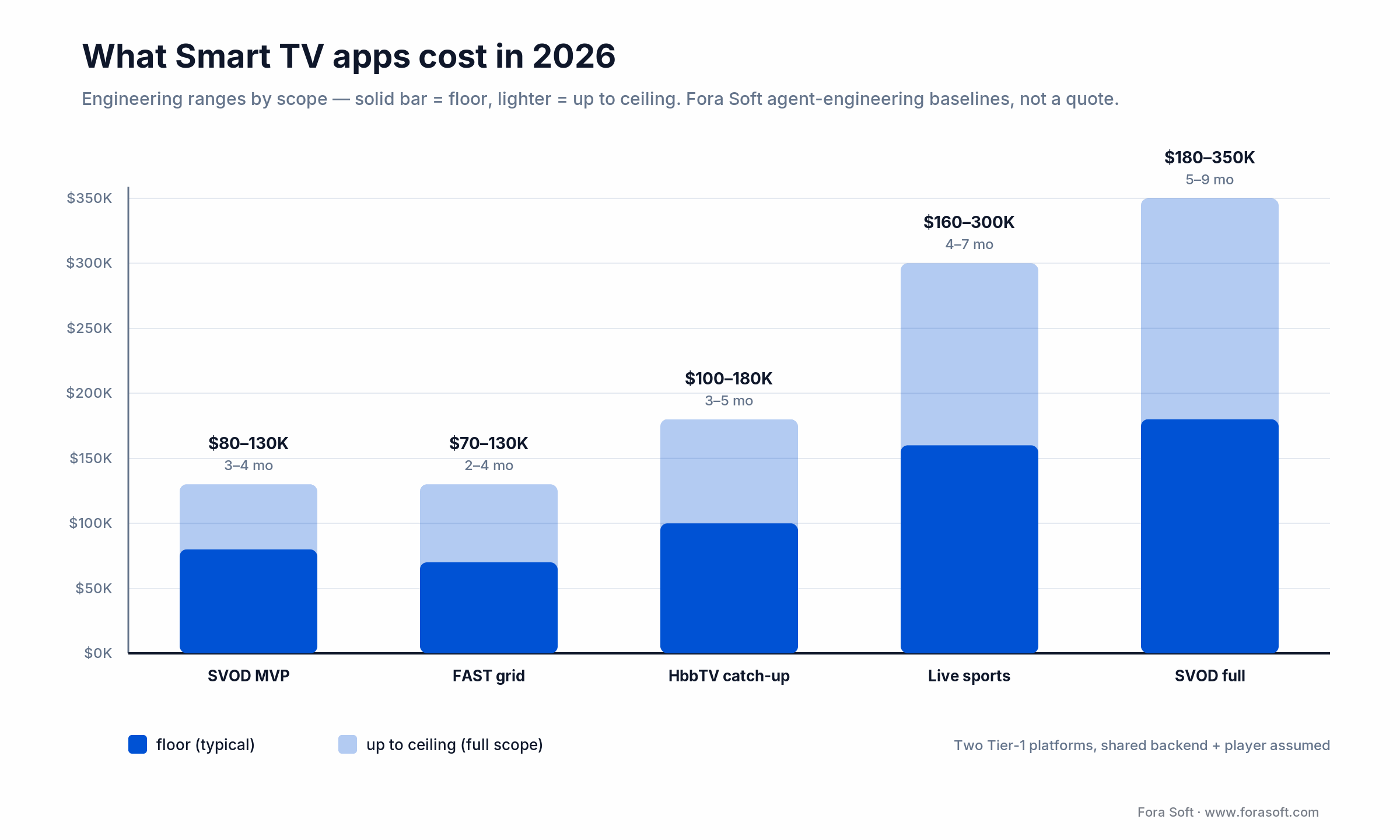
Figure 3. Indicative 2026 build cost by scope. Solid bar = typical floor, lighter = up to full scope.
Need an honest scope on a multi-platform Smart TV build?
We have shipped on Apple tvOS, Android TV, Tizen, webOS and Roku. Tell us your verticals; we will come back with the platform priority, cost band and timeline that actually matches your audience.
Mini case: Bellicon Smart TV apps on tvOS and Android TV
Bellicon, a German fitness company best known for its premium mini-trampolines, wanted a Smart TV experience that felt as fluid as Apple Fitness+ but worked on the two most relevant platforms for their audience: Apple TV (premium, Western Europe, US) and Android TV (broader European retail TVs).
Fora Soft built the Bellicon Smart TV apps on a shared architecture: a single content backend, a shared HLS player with DRM, language packs in English and German, and per-platform UI in Swift / SwiftUI on tvOS and Kotlin / Compose for TV on Android TV. The catalogue exposes 530+ professional workout videos with custom plans tuned to weight, height, age and goals (including specialised plans for pregnant users and people with asthma), filterable by muscle group, training length and special needs.
Two engineering choices that mattered. First, we kept the workout player identical across platforms — a user pausing on Apple TV could pick up on Android TV mid-session, because session state lived in the backend, not the client. Second, we treated the remote as the sole input from day one: every interaction was reachable from the D-pad and OK button, with no hover or pointer assumptions; every focus state was unmistakable from a sofa. The result is a fitness app that performs at the polish bar of premium SVOD competitors. Want a similar partner for your Smart TV product? Book a 30-min discovery call →
Six commercial verticals where Smart TV pays back
1. SVOD and AVOD streaming. Netflix-pattern subscription products and ad-supported equivalents. The expected baseline for any new entrant; without a TV app you lose 50 %+ of session length versus mobile-only competitors.
2. FAST channels and free linear streaming. Pluto TV, Tubi, Freevee. Lower CPM than premium SVOD but much higher reach; the right play if you own a content library that does not justify a paywall.
3. Live sports and events. DAZN, ESPN+, league-owned apps, conference broadcasts. Low-latency CMAF (LL-HLS/LL-DASH), multi-camera, betting overlays where regulated.
4. EdTech, fitness and wellness. The Bellicon, Peloton, Apple Fitness+ pattern. The TV is where instructor-led video really lands; mobile is the controller.
5. Smart-home control surfaces. The TV becomes the dashboard for cameras, doorbells, lighting and voice agents in living-room contexts.
6. Broadcaster catch-up + interactive. Public-service broadcasters and commercial networks deliver catch-up TV through HbbTV in Europe; ATSC 3.0 (NextGen TV) brings the same hybrid pattern to North America — live in US markets since 2020 and now across most major metros.
A decision framework — pick the right path in five questions
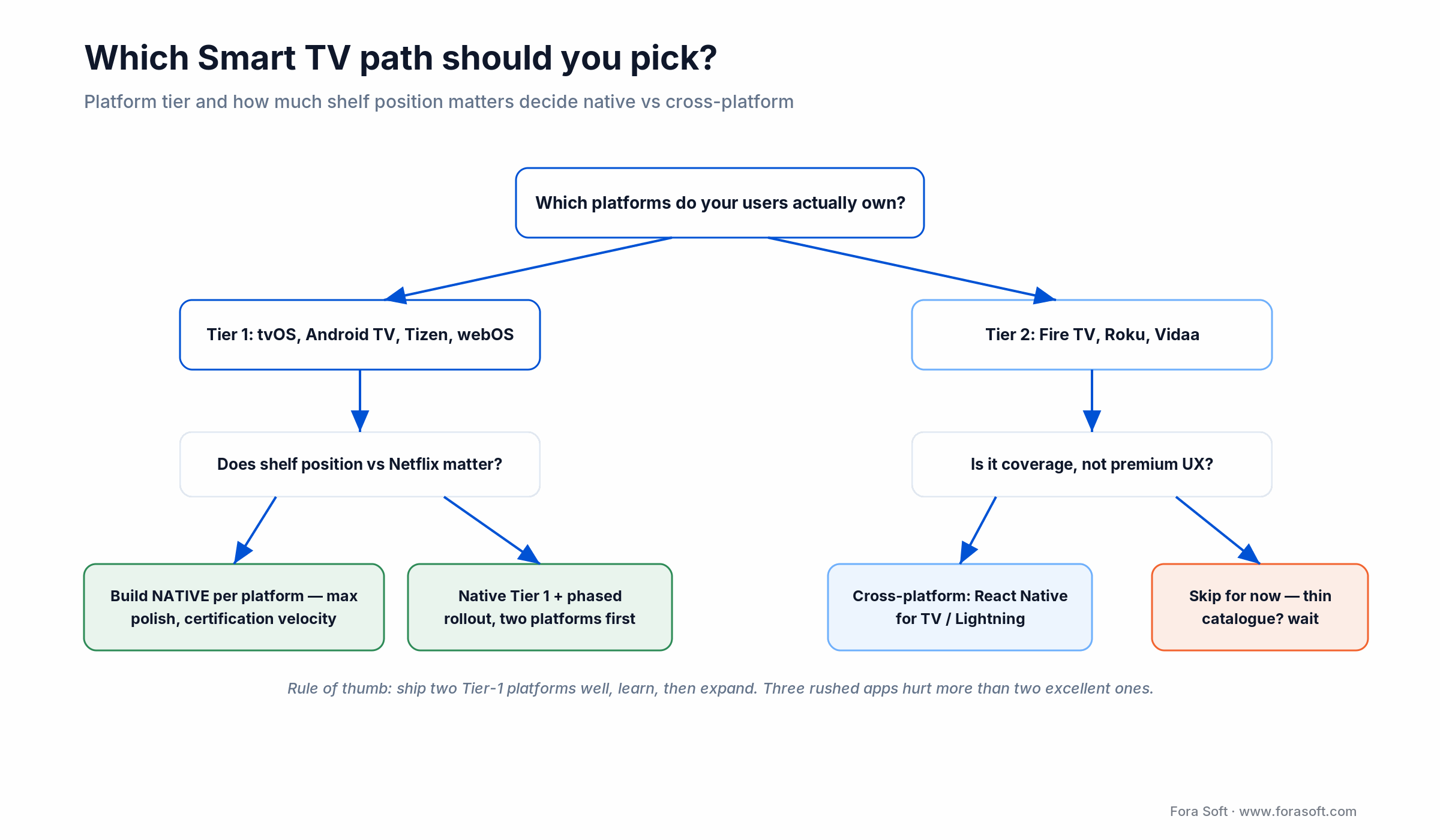
Figure 4. Pick native vs cross-platform by platform tier and how much shelf position matters.
Q1. Which platforms do your users actually own? Pull the analytics: device-class share of your existing audience plus market share in your target geographies. Most products land on tvOS + Android TV + Tizen as the start; webOS becomes critical in Europe; Roku and Fire TV become critical in the US.
Q2. Native or cross-platform? Tier 1 (tvOS, Tizen, webOS, Android TV) usually rewards native polish. Tier 2 (Roku, Fire TV, Vidaa) is fair game for a cross-platform framework if effort matters more than polish.
Q3. SVOD, AVOD, FAST or hybrid? Drives the ad stack (VAST/VMAP, SSAI), payment integration (in-app purchases on tvOS, browser-based on Tizen/webOS) and the home-screen UX (FAST grids vs Netflix rails).
Q4. Live, VOD or both? Live demands low-latency CMAF (LL-HLS/LL-DASH), multi-bitrate failover, redundant origin. VOD demands recommendations and watch-history sync. Both demand a serious testing budget.
Q5. EU, US or both? EU adds EAA captioning, GDPR consent and (often) HbbTV. US adds FCC closed-caption rules, COPPA for kids content, FTC ad transparency on Fire TV.
Five pitfalls we see every quarter
1. Treating the TV like a tablet. Touch-sized hit targets, 16 pt body text, hover states. Re-design for the 10-foot distance, the D-pad and the colour gamut of a TV LED panel.
2. Memory leaks that kill the second hour. The app launches fine and crashes 60 minutes later. Profile heap on the cheapest Tizen and webOS units in production, not just on the latest flagship.
3. Skipping accessibility until QA. Captions, audio descriptions and screen-reader-equivalent hints have to be part of every component from sprint one. Otherwise your EU launch slips and your US accessibility lawsuit risk goes up.
4. Client-side ad insertion. Fragile, fraud-prone and a frequent source of crashes. Move to SSAI; the ad stack becomes invisible to the client and IVT drops.
5. No real-device test lab. Emulators miss codec quirks, focus traps, memory caps and remote-control edge cases. A small lab of last-three-years OEMs is non-negotiable.
Reach for SSAI when: ads are part of the monetisation, you cannot afford ad-fraud noise in your reporting, or your audience uses adblockers on Android TV. Client-side VAST is acceptable only for very small AVOD pilots.
KPIs — what to actually measure
Quality KPIs. Cold-start time per platform (target <2.5 s), time-to-first-frame on Play (target <1.5 s VOD, <3 s live), sustained 60 fps on UI navigation, heap headroom after 60 min (target >25 %), caption coverage (target 100 %).
Business KPIs. Daily active TVs per platform, weekly retention (target +20 % vs mobile cohorts on long-form), session length (target +50 % vs mobile), trial-to-paid for SVOD (target +5 % lift from launching on TV), CPM for AVOD/FAST (target $4–8 for premium inventory).
Reliability KPIs. Crash-free sessions per platform (target >99.5 %), playback failure rate (target <1 %), DRM licence acquisition success (target >99.9 %), app-store review rating (target 4.5+ across stores).
When you should not ship a Smart TV app yet
Three situations where we have advised pausing. Your catalogue is too thin. If you have less than ~20 hours of content or only short-form, a Smart TV app feels empty; ship a YouTube/Twitch presence first and build to a TV launch as the catalogue justifies it. Your monetisation is mobile-only. Subscription products that lean on web checkout and free trials need a hard look at IAP fees on tvOS (30 %, or 15 % under Apple’s Small Business Program) and how to handle them on Tizen/webOS where mobile checkout is the only route. You cannot fund accessibility. Without captions, audio descriptions and EAA-compliant navigation, do not launch in the EU; the legal risk and reputational damage outweigh the upside.
There is a softer failure mode too: shipping on every platform from day one because “coverage” sounds good. Pick two Tier 1 platforms, ship them well, learn, then expand. Three rushed apps will damage you more than two excellent ones.
Compliance — the rules that bite in the living room
EU EAA (since 28 June 2025). Audiovisual services and any content published for EU audiences from that date must ship accessible features — closed captions, audio descriptions, contrast-friendly UI, screen-reader-equivalent hints — with no grace period for AV media services (transition provisions give pre-2025 service contracts and legacy products in use until 2030). Penalties under member-state implementations can reach tens of thousands of euros per violation.
WCAG 2.2 AA. The de facto specification underpinning most accessibility legislation. Non-negotiable for public-sector buyers and increasingly required by enterprise procurement.
FCC closed-caption rules (US). Broadcast-affiliated content must carry EIA-608 / EIA-708 captions; IP-delivered OTT services (Netflix, YouTube) fall under the CVAA and ship timed-text captions (IMSC / TTML, WebVTT) rather than the broadcast 608/708 line. Fines for non-compliance start in the tens of thousands.
COPPA (US kids). Anything aimed at under-13s must avoid persistent identifiers, use parental consent flows and limit ad behaviour. Most TV platforms now expose “kids mode” signals that you must respect.
GDPR + Apple privacy nutrition labels. Tizen Smart Hub viewing history is personal data; tvOS apps must declare data practices in App Store Connect. Maintain a Data Processing Agreement with every analytics, ads and CDN sub-processor.
Streaming tech, demystified
A serviceable Smart TV streaming stack in 2026 looks like this. Encode in H.264 for legacy devices and H.265 for everything modern; package once with Bento4 or Shaka into HLS (Apple) and DASH (everyone else), with CMAF chunked transfer driving LL-HLS and LL-DASH for live. Apply Widevine L1 DRM for Android, Tizen and webOS; FairPlay for tvOS; PlayReady, historically the primary DRM on Tizen and webOS. Serve via a multi-CDN (CloudFront, Cloudflare Stream, Akamai, Fastly) with origin failover. Insert ads server-side via VAST / VMAP for AVOD/FAST. Our video and audio streaming software development team builds and runs this backend, so the TV apps and the delivery stack come from one team.
The same family of streaming concerns surfaces in our coverage of top AI speech recognition software — the ASR engines you use to auto-generate captions sit upstream of your accessibility pipeline. For the end-to-end stack behind all of this, see our OTT platform development guide.
2026–2027 trends to watch
FAST keeps growing. Free ad-supported tiers will continue to siphon viewing time from cable; expect every major SVOD to ship a FAST adjunct by end of 2026.
AI-driven personalisation moves to the client. On-device recommendation, generative thumbnails (per-user artwork) and content summaries become competitive table stakes. Apple Intelligence on tvOS is the first commercial milestone.
Voice and conversational UI. Alexa, Google Assistant and Siri become primary navigation surfaces, especially for older audiences. Build voice-equivalent flows for every key D-pad action.
ATSC 3.0 NextGen TV. US broadcast has been shifting to a hybrid IP / over-the-air model since NextGen TV launched in 2020, with a mandated transition on the horizon; expect a wave of broadcaster-app updates and new HbbTV-equivalent integrations across 2026 and 2027.
FAQ
Which Smart TV platforms should I ship to first?
Almost every premium product starts with Apple tvOS plus Android TV / Google TV. From there, Samsung Tizen and LG webOS bring the bulk of installed-base coverage worldwide; Roku and Fire TV are the next priority for US-heavy products; HbbTV becomes important for European broadcasters. Decide based on your existing audience analytics plus market share in your target geographies, not on aspirational reach.
Native per platform, or cross-platform framework?
Tier 1 (tvOS, Tizen, webOS, Android TV) usually deserves native polish, especially for SVOD and fitness. Tier 2 (Fire TV, Roku, Vidaa) is fair game for a cross-platform framework when effort matters more than polish. React Native for TV and Lightning by Comcast/Metrological are the two most credible cross-platform options in 2026; expect roughly 30–40 % effort saving with caveats on animation and accessibility.
How long does a Smart TV build take?
An MVP on tvOS plus Android TV runs 3–4 months. A full SVOD app on Apple, Google, Samsung and LG runs 5–9 months. Live sports adds 1–2 months for low-latency and redundancy. HbbTV broadcast catch-up in a single market runs 3–5 months. Our agent-engineering workflow has shaved roughly 25–35 % off these timelines versus 2024 baselines.
Why do most web/mobile shops fail at Smart TV?
Three reasons. The 10-foot UI is a different design discipline; the D-pad input model breaks anything built for touch or mouse; and the memory profile on a $400 Tizen TV is unforgiving. Add codec quirks, certification cycles measured in weeks, and accessibility obligations under EAA, and a team without dedicated TV experience burns months learning the same lessons everyone else already learned.
What does Smart TV certification actually involve?
Each OEM has its own checklist: Samsung Smart Hub badge and metadata, LG Magic Remote optimisation, Apple privacy nutrition labels and IDFA declarations, Roku performance tests, Fire TV FTC ad-transparency labels. Approval cycles run 2–4 weeks (Samsung, LG), 2–3 days (Apple), and require a polished build with full feature parity. First submissions almost always require resubmissions; budget two cycles.
How do I monetise a Smart TV app in 2026?
Three patterns dominate: SVOD with native IAP on tvOS (15–30 % Apple cut) and browser-based checkout on Tizen/webOS; AVOD with VAST/VMAP and server-side ad insertion (typical CPM $4–8 for premium inventory); FAST channel grids monetised similarly to AVOD but with a linear UX. Many products combine all three.
What does it cost to launch a Smart TV app?
A two-platform MVP (tvOS + Android TV) lands around $80–130 K, 3–4 months. A four-platform full SVOD lands at $180–350 K, 5–9 months. Live sports adds redundancy and low-latency cost; a serious live build runs $160–300 K. FAST channel grids are cheaper at $70–130 K. These ranges assume a competent specialist team; anything materially lower usually skips real-device QA or accessibility.
How do I stay compliant with the EU Accessibility Act?
Closed captions on 100 % of catalogue, audio descriptions on premium content, screen-reader-equivalent hints on every focusable element, contrast-friendly typography (24 pt minimum), navigable from D-pad alone. Document the compliance evidence in your accessibility statement; appoint an accessibility owner; budget 15–20 % of dev for accessibility from sprint one rather than as a final QA pass.
What to read next
Case study
Bellicon Smart TV apps
A 530-video fitness SVOD on Apple tvOS and Android TV with custom plans and bilingual UX.
Case study
Smart STB IPTV
A 10-foot IPTV client serving thousands of channels across Smart TV OEMs and STB devices.
Captioning
Top AI speech recognition software
The ASR engines you use to auto-generate the EAA-mandated captions for your TV catalogue.
Multilingual
Real-time translation for educational webinars
The companion playbook for translating catalogues across languages on the same screen.
OTT stack
OTT platform development guide
The backend, DRM and CDN layers your Smart TV apps plug into, end to end.
Ready to ship a Smart TV app that earns its shelf?
Smart TV is where most of your audience will eventually consume the content you spent the last decade building for the phone. The platforms are mature, the playbook is settled and the bar for quality is high enough that a serious specialist outperforms a generalist team across every dimension that matters — cold-start time, accessibility, certification velocity, total cost of ownership.
Pick the two Tier 1 platforms that match your audience first; build the shared backend and player layers that let every additional platform amortise the work; treat accessibility, captioning and SSAI as foundational, not optional; and hire a Smart TV app development company that has shipped on every OEM you need. Fora Soft has done that work on Bellicon, Smart STB IPTV, Smart IPTV and the rest of our portfolio — and we’ll tell you honestly which path matches your situation.

The handbook · 7 volumes
Fora Soft Video Engineering Handbook
Every Smart TV platform has its own player, DRM and accessibility rules, and the backend has to serve them all. Our seven-volume handbook explains that stack: start with the volume on ABR, players and DRM, then the encoding volume on H.264 and HEVC ladders, and the audio volume on loudness and accessibility for the living room. Written by Nikolay Sapunov, CEO at Fora Soft.
Browse the handbook on Amazon →7 volumes · 9,000+ pages · Kindle & paperback
Let’s scope your Smart TV product
A 30-minute call covers your verticals, monetisation, audience split and compliance scope. You leave with a platform priority list, a target architecture and an honest estimate.

