


Why this matters
If you are a founder, product manager, or first-time streaming CTO, egress is where your margin lives or dies, and it is almost never explained in terms you can act on. The vendor pricing pages quote a per-gigabyte number that is not the rate you will actually pay; the analyst reports quote market totals you cannot map to your own traffic; and the engineering blogs explain caching without ever connecting it to the invoice. The result is that most teams sign a CDN contract without being able to answer three questions that decide their delivery cost: what is our effective rate after tiers and regions, are we billed on bytes or on peak bandwidth, and should we commit to a volume to lower the unit price. This article gives you the model to answer all three. By the end you will be able to read any CDN quote, spot which pricing shape it is, estimate your monthly bill before you sign, and know which lever — offload, peak-flattening, region mix, or a commit — to pull when the number is too high.
Egress is the bill that grows with your audience
Start with the word, because it runs the whole conversation. Egress is data leaving a network — specifically, the bytes a CDN or a cloud sends out to your viewers. (The opposite direction, data coming in, is ingress, and it is almost always free; providers are happy to receive your content because they make their money sending it back out.) When a viewer watches an hour of video, every megabyte of that hour is egress, and you are charged for it. Multiply by a growing audience watching more hours, and egress becomes the largest single number on a streaming platform's monthly infrastructure bill — typically larger than storage, transcoding compute, and the origin combined.
Two distinctions keep this article from overlapping with its neighbours, and they are worth drawing up front. First, this is not the whole-platform cost model. The full picture — catalog hours times the encoding ladder times concurrency times egress times the DRM and monetization stack — lives in the OTT platform cost model, and egress is one line item in it. Here we open that one line and take it apart. Second, this is not the same number as origin offload. In how a CDN delivers video we measured the bytes your origin sends to keep the edges fed, which the offload ratio controls. The egress bill is the bigger, outer number: the bytes the edge sends to viewers. Offload decides what your origin costs; egress decides what your CDN costs. This article is about the CDN bill, and it returns to offload only as one of the levers that bends it.
Why does video make this so expensive? Because video moves more bytes than anything else on the internet, and it moves them per viewer. A web page is kilobytes; an hour of streamed video at a moderate quality is gigabytes. The arithmetic is unforgiving, so let us do it once to anchor the scale. One viewer, one hour, at an average delivered bitrate of 5 megabits per second:
bytes per viewer-hour = 5 Mbit/s × 3,600 s/h ÷ 8 bits/byte
                      = 18,000 Mbit ÷ 8
                      = 2,250 MB
                      ≈ 2.25 GB per viewer-hour
So every hour of watching is about 2.25 gigabytes of egress. A hundred thousand viewers watching ten hours a month is 2.25 million gigabytes — roughly 2.25 petabytes — of egress every month, and that volume is what the pricing models below turn into a dollar figure. Hold that 2.25 GB-per-viewer-hour number; it is the conversion factor between "how much do people watch" and "what does delivery cost."
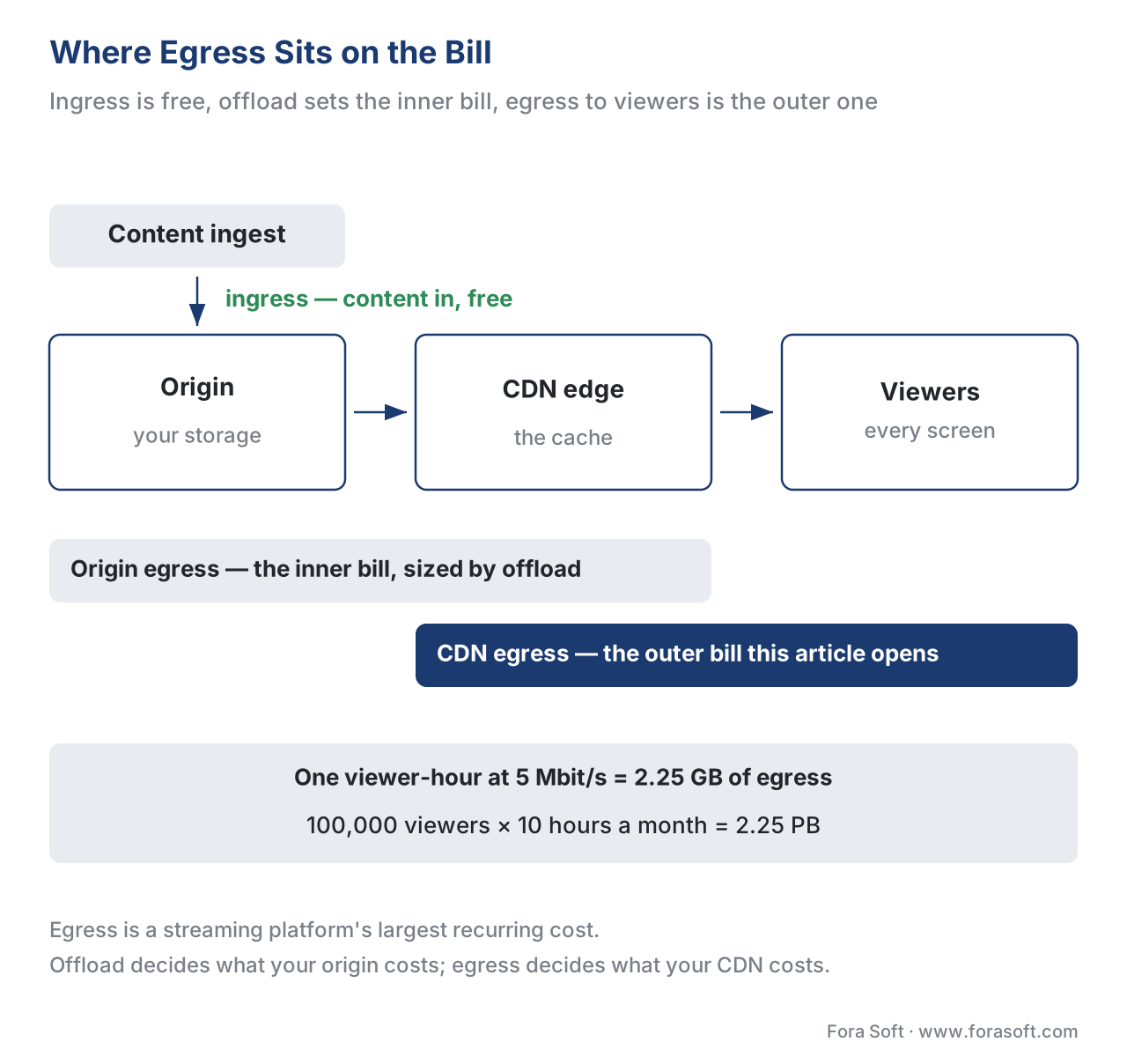 Figure 1. Where egress sits. Ingress (content in) is free; origin offload governs the inner origin bill; egress — the bytes the edge sends to viewers — is the large outer number this article takes apart.
What you are actually billed on: five pricing models
A CDN quote is one of a small number of shapes wearing different vendor names. Learn the shapes and every quote becomes readable. There are five in common use, and the most important thing about them is the unit each one bills on — because the unit decides which lever lowers the bill.
1. Per-gigabyte tiered egress — the default. You pay a rate for each gigabyte delivered, and the rate steps down as your monthly volume crosses thresholds. Amazon CloudFront, for example, publishes a US and Europe pay-as-you-go schedule that (as of Q2 2026) starts at about $0.085 per gigabyte for the first 10 terabytes each month, falls to $0.080 for the next 40 terabytes, $0.060 for the next 100, and keeps declining toward roughly $0.020 per gigabyte at petabyte scale, with the first terabyte each month free. The unit is the gigabyte; the lever is fewer or cheaper gigabytes (raise offload, shrink the bitrate, shift regions). The trap, which we work below, is that the headline first-tier rate is never your real rate.
2. Flat-rate monthly bundles — the newer shape. Instead of metering each gigabyte, you buy a plan with a fixed monthly price and a usage allowance, and you are not charged for overage. CloudFront's flat-rate plans (introduced and current in 2026) run from a $0/month free tier through Pro at $15, Business at $200, and Premium at $1,000 per month per distribution, the top plan configurable up to 600 terabytes of monthly transfer with no overage charge. The unit is the plan, not the gigabyte; the lever is picking the right plan tier. Bundles trade the risk of a surprise spike bill for the risk of paying for headroom you do not use.
3. The 95th-percentile (burstable) model — billed on bandwidth, not bytes. Here you are billed not on total bytes but on your sustained rate in megabits per second, measured by sampling your throughput every five minutes across the month, discarding the busiest 5% of samples, and billing on the highest sample that remains. This is the dominant model in raw network transit and peering, and it appears in large and legacy enterprise CDN contracts. The unit is peak megabits per second; the lever is flattening the peak. It has a famous trap, covered in its own section below, and it is the reason this article has "95th percentile" in its title.
4. Commit deals — a volume promise for a lower unit rate. On enterprise contracts you commit to a minimum monthly or annual volume, and in exchange the per-gigabyte rate drops well below the public card — industry reporting puts negotiated streaming rates in the range of roughly $0.03–$0.05 per gigabyte (about $30–$50 per terabyte) at meaningful commit levels, versus the $0.085 public first tier. The unit is committed volume; the lever is committing at the right level — high enough to earn the discount, not so high you pay for traffic you never send.
5. Zero-egress storage — changing the origin side of the equation. A newer option attacks egress at the origin rather than the edge. Cloudflare's R2 object storage charges $0.00 per gigabyte for egress to the internet (you pay for storage at about $0.015 per gigabyte-month plus per-operation fees), which means content leaving your storage to feed the CDN — or in some architectures, viewers directly — carries no egress fee. The unit is storage plus operations, with egress waived; the lever is where your origin lives. It does not eliminate the CDN's own egress to viewers, but it removes the origin-to-edge egress that, on cross-cloud setups, can be a real second bill.
These five are not mutually exclusive. A real platform might serve most traffic on a per-gigabyte commit deal, keep a flat-rate plan for a low-traffic region, and store its catalog in a zero-egress bucket. The skill is recognizing which model each part of your bill is on, because mixing them up is how teams pull the wrong lever.
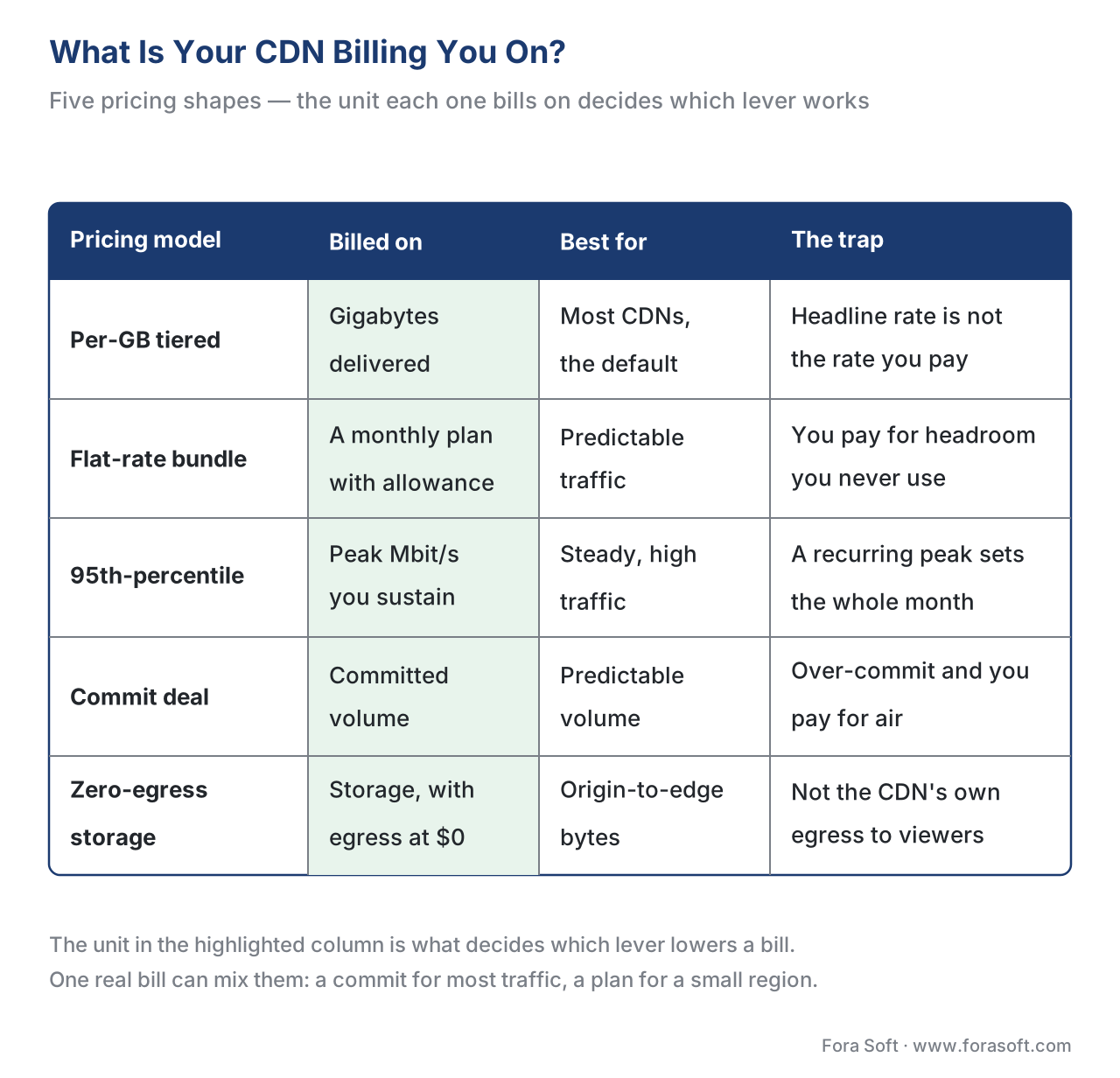 Figure 2. The five pricing shapes. What changes between them is the unit you are billed on — gigabytes, a plan, peak megabits, committed volume, or storage — and the unit decides which lever lowers the bill.
The per-gigabyte bill, worked out loud
The most common and most misread model is tiered per-gigabyte egress, so let us turn a traffic profile into an invoice and find the trap.
Take a mid-size service delivering 300 terabytes a month, all in the US and Europe, on the CloudFront pay-as-you-go schedule above. The instinct is to multiply 300 terabytes by the headline $0.085 and get about $25,500. That is wrong, because the rate steps down as you climb the tiers. The bill is built tier by tier:
first 10 TB        10,000 GB × $0.085 = $   850
next 40 TB         40,000 GB × $0.080 = $ 3,200
next 100 TB       100,000 GB × $0.060 = $ 6,000
next 150 TB       150,000 GB × $0.040 = $ 6,000   (the 150 TB–500 TB tier)
                  ─────────────────────────────
total             300,000 GB           = $16,050
So 300 terabytes costs about $16,050, not $25,500. The effective rate is what you actually paid divided by what you delivered:
effective rate = $16,050 ÷ 300,000 GB ≈ $0.0535 per GB
The headline $0.085 overstated your real cost by roughly 60%. This is the first discipline of CDN cost engineering: always compute the effective (blended) rate, never reason from the marginal first-tier rate. Quotes are written to look expensive at the top and reward volume at the bottom; your budget cares only about the blend. The same logic runs in reverse when you compare vendors — a provider with a higher first tier but a deeper volume discount can be cheaper at your actual scale, and only the blended rate at your monthly volume tells you which wins.
Now the second twist: region mix moves the blended rate more than its share suggests. CDN egress is priced by where the viewer is, and the spread is large — CloudFront's first-tier rate runs about $0.085 in the US and Europe, roughly $0.114 in much of Asia-Pacific, and about $0.170 in South America (Q2 2026). Suppose the same 300 terabytes is delivered 70% to the US and Europe, 20% to Asia-Pacific, and 10% to South America. Pricing each slice at its first-tier rate to see the regional effect:
210 TB US/EU     210,000 GB × $0.085 = $17,850
 60 TB APAC       60,000 GB × $0.114 = $ 6,840
 30 TB S. America 30,000 GB × $0.170 = $ 5,100
                 ─────────────────────────────
total            300,000 GB           = $29,790  → effective $0.0993/GB
The 10% of traffic going to South America — 30 of 300 terabytes — costs $5,100, nearly a third of what the 210 terabytes of US and Europe traffic costs, because its per-gigabyte rate is double. A small slice of expensive-region delivery drags the blended rate up out of proportion to its volume. (Tiers and regions compound in a real bill; this example prices at first-tier rates to isolate the regional effect — the calculator below handles both together.) The practical lesson: when you model an egress bill, model it by region, and treat a shift in audience geography as a cost event, not just a growth event.
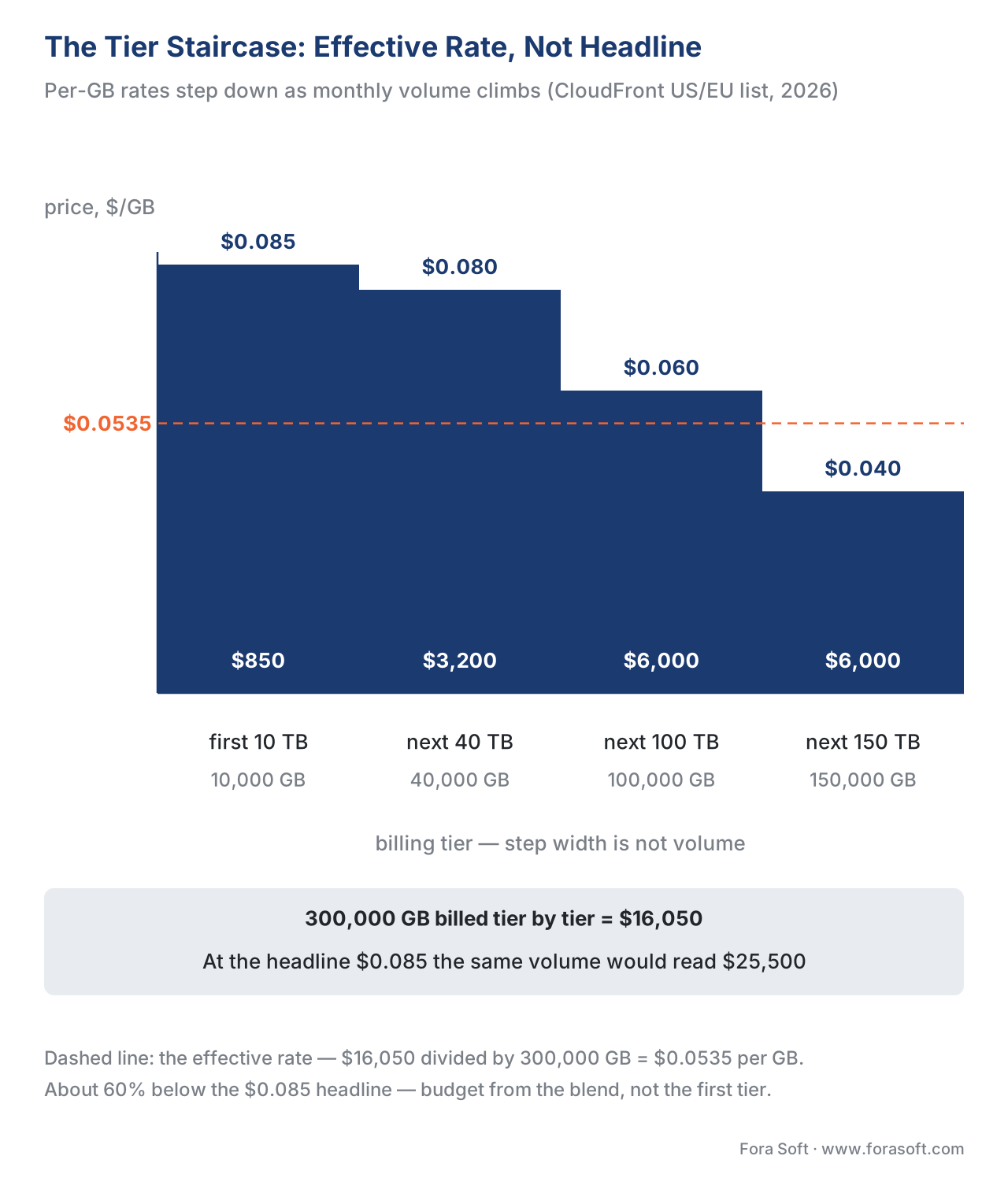 Figure 3. The tier staircase. Each volume tier bills at a lower rate, so the effective rate for the worked 300 TB example lands near $0.0535/GB — about 60% below the $0.085 headline.
Here is a snapshot of how the public per-gigabyte models compare for a streaming buyer. Rates are list prices, first meaningful tier, and they change — treat the column as a model of the shape, not a quote, and re-verify live before you commit.
| Provider (model) | First-tier list rate, US/EU | Billed on | Cheapest region vs dearest | Notes for streaming |
|---|---|---|---|---|
| AWS CloudFront (tiered per-GB) | ~$0.085/GB | Gigabytes delivered, tiered | US/EU ~$0.085 vs South America ~$0.170 | First 1 TB/mo free; origin→CloudFront transfer from AWS origins waived; flat-rate plans also offered |
| Fastly (tiered per-GB + requests) | ~$0.12/GB first 10 TB | Gigabytes + per-10k requests | NA/EU lower vs APAC higher | ~$50/mo minimum; 12-month commits commonly cut 20–40% (2026) |
| Bunny.net Standard (region per-GB) | ~$0.01/GB | Gigabytes delivered, by region | NA/EU ~$0.01 vs MEA/APAC ~$0.06 | Volume network bills one global rate from ~$0.005/GB; $1/mo minimum |
| Cloudflare (bundled CDN) | Bundled / unmetered CDN | Plan, not per-GB | Flat, region-agnostic | R2 origin storage egresses at $0.00/GB; CDN included on plans |
| Enterprise commit (negotiated) | ~$0.03–$0.05/GB effective | Committed volume | Negotiated per region | Multi-CDN posture is the negotiating lever; ask for regional rates as line items |
Table 1. The public per-gigabyte landscape, mid-2026. The "billed on" column is the one that matters: it tells you which lever moves the bill. List rates are dated and vendor-specific — re-verify on the live pricing page before signing.
The 95th-percentile trap
Now the model that surprises people, because it does not bill on bytes at all. Under 95th-percentile billing — also called burstable billing — the provider samples how fast you are pushing data, in megabits per second, every five minutes for the whole month. At the end of the month it sorts those samples from highest to lowest, throws away the busiest 5%, and bills you on the highest sample that is left. A 30-day month has about 8,640 five-minute samples; the discarded 5% is about 432 samples, which works out to roughly 36 hours. So the rule, in plain terms, is: you may run flat-out for about 36 hours a month for free, but the sustained rate you exceed only during those 36 hours is what sets your bill — for the entire month.
This produces a result that catches teams off guard, and it is the opposite of what most people expect. Consider two kinds of peak. The first is a one-off live premiere: a new episode drops, traffic spikes to 40 gigabits per second for two hours, then subsides. Two hours is 24 five-minute samples — far inside the 432-sample discard window — so that dramatic spike is billed at nothing. The premiere you were terrified of is, under 95th-percentile, effectively free. The second is the recurring nightly peak: every evening, prime-time viewing pushes you to 20 gigabits per second for an hour and a half. Across 30 nights that is about 45 hours above the line — more than the 36-hour discard — so the discard cannot absorb it, and your 95th-percentile lands near 20 gigabits per second. You are billed on 20 gigabits per second for the whole month even though your average across the month might be only 8.
Put a representative committed rate on it to see the size of the effect. Suppose the contract bills at $0.60 per megabit per second per month (rates vary widely; this is illustrative):
billed on the 95th-percentile peak:  20,000 Mbit/s × $0.60 = $12,000 / month
what an average-based bill would be:   8,000 Mbit/s × $0.60 = $ 4,800 / month
the peak premium you pay:                              ≈ 2.5×
You pay two and a half times what your average traffic "deserves," because the model charges for the sustained capacity you occupy at peak, not the bytes you move on average. And notice the counter-intuitive lever: the thing to attack is not the scary one-off premiere (the discard already forgives it) but the recurring peak that pokes above the line on a regular schedule. Anything that flattens that recurring peak — spreading load across more than one CDN so no single contract sees the full crest, pre-warming and smoothing a live event, staggering scheduled drops, nudging the adaptive bitrate ladder down during congestion — lowers the 95th-percentile sample and therefore the whole month's bill. This is why 95th-percentile and per-gigabyte pricing reward different behaviour: per-gigabyte rewards moving fewer bytes; 95th-percentile rewards moving the same bytes more smoothly.
The decision of which model to prefer follows directly from the shape of your traffic. If your viewing is spiky — big peaks, low average, like a sports service with a few enormous live events — per-gigabyte (or a commit on bytes) is usually kinder, because you pay for the bytes you actually send and the peaks do not set a sustained rate. If your viewing is steady and high — a large always-on catalog with a flat diurnal curve — a 95th-percentile or committed-rate deal can be cheaper, because your peak and your average are close together and there is little premium to pay. Knowing your peak-to-average ratio is the prerequisite for picking the right contract.
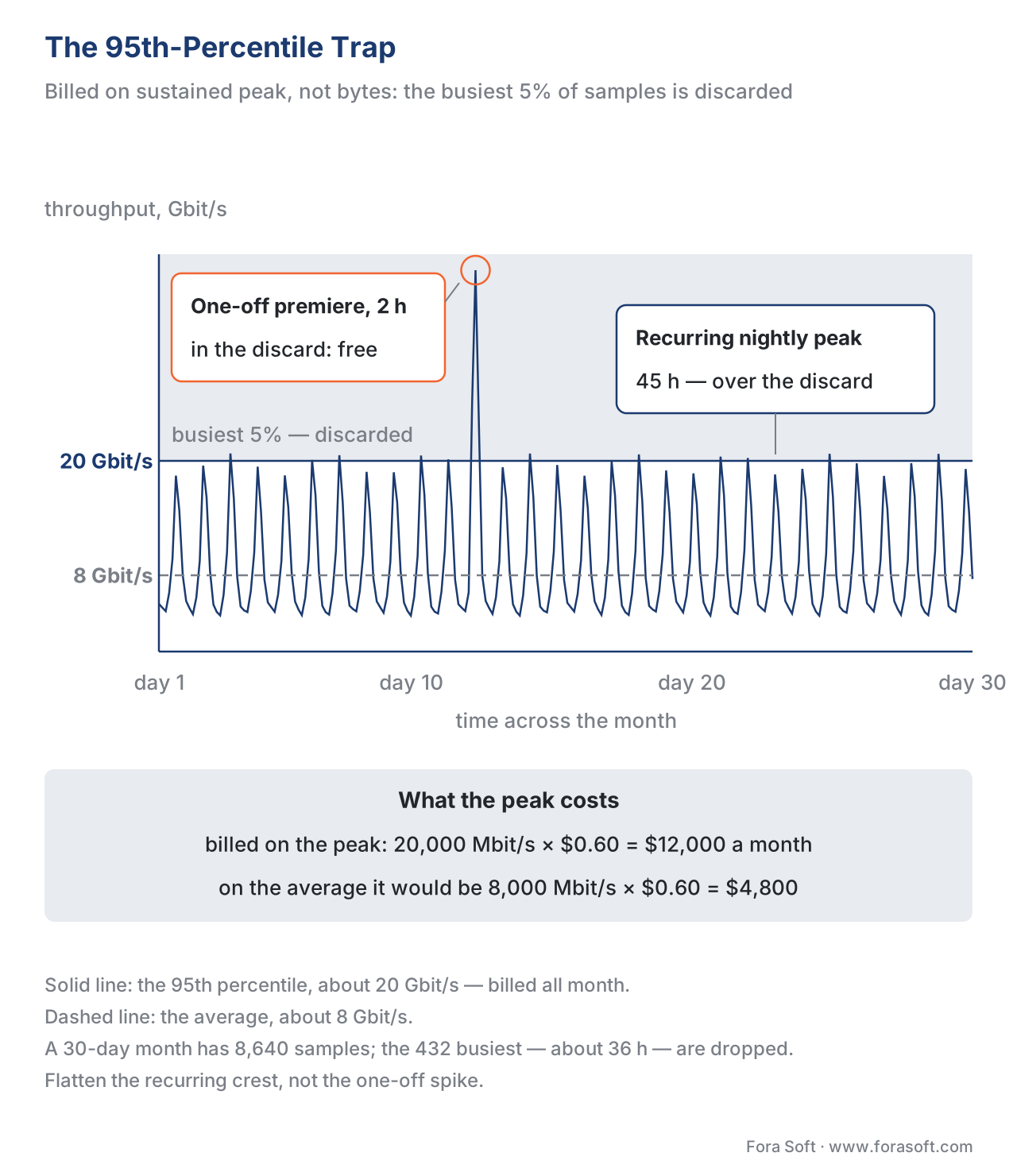 Figure 4. The 95th-percentile trap. The busiest 5% of samples (~36 hours) is discarded, so a one-off premiere is free — but a recurring nightly peak exceeds the discard and sets the billable rate for the whole month.
Commit deals: when a promise saves and when it traps
Between pay-as-you-go and a fully custom contract sits the commit deal: you promise the provider a minimum volume — say 500 terabytes a month, or a petabyte a year — and in return your per-gigabyte rate drops, often steeply. The trade is simple to state and easy to get wrong. You are buying a lower unit price with a volume guarantee, and the guarantee is real: if you commit to 500 terabytes and deliver 300, you usually still pay for 500. So a commit saves money only when your committed floor sits at or below your reliable monthly volume.
The arithmetic is worth doing before any negotiation. Suppose you reliably deliver 400 terabytes a month at a blended pay-as-you-go rate of about $0.053 per gigabyte — roughly $21,200 a month. A vendor offers $0.038 per gigabyte if you commit to 500 terabytes a month:
pay-as-you-go at 400 TB:  400,000 GB × $0.053 = $21,200 / month
commit at 500 TB floor:   500,000 GB × $0.038 = $19,000 / month  (you pay the floor)
                          ─────────────────────────────────────
saving if you hit 400 TB:                       ≈ $2,200 / month
break-even volume:        $19,000 ÷ $0.053 ≈ 358 TB
As long as you actually deliver more than about 358 terabytes — the point where the committed bill equals what pay-as-you-go would have cost — the commit wins, even though you are nominally paying for 500. Below 358 terabytes you are paying for air. The risk, then, is over-committing on optimistic growth projections: a platform that commits to a petabyte expecting a hit show, and delivers 600 terabytes when the show underperforms, has locked in a bill for capacity it never used. The discipline is to commit to your floor, the volume you are confident you will exceed, and let the overage ride at the (still-discounted) marginal rate — never to commit to your hoped-for ceiling.
Two practical notes make commit negotiations go better. First, a multi-CDN posture is the single biggest source of negotiating leverage — when you can move traffic between two or more providers, each one knows it must compete for your bytes, and your unit price falls as your options rise. The architecture that makes this possible is covered in multi-CDN architecture and orchestration, and the network-layer switching internals live in our Video Streaming section's multi-CDN deep dive. Second, ask for the regional rates, request fees, logging charges, and origin-shield add-ons as separate line items, not folded into one blended number — a quote that hides the regional breakdown is a quote you cannot model or hold the vendor to.
The four levers that cut the egress bill
Everything above reduces to four levers. When an egress bill is too high, it is too high for one or more of these reasons, and each has its own article-length treatment elsewhere in the section.
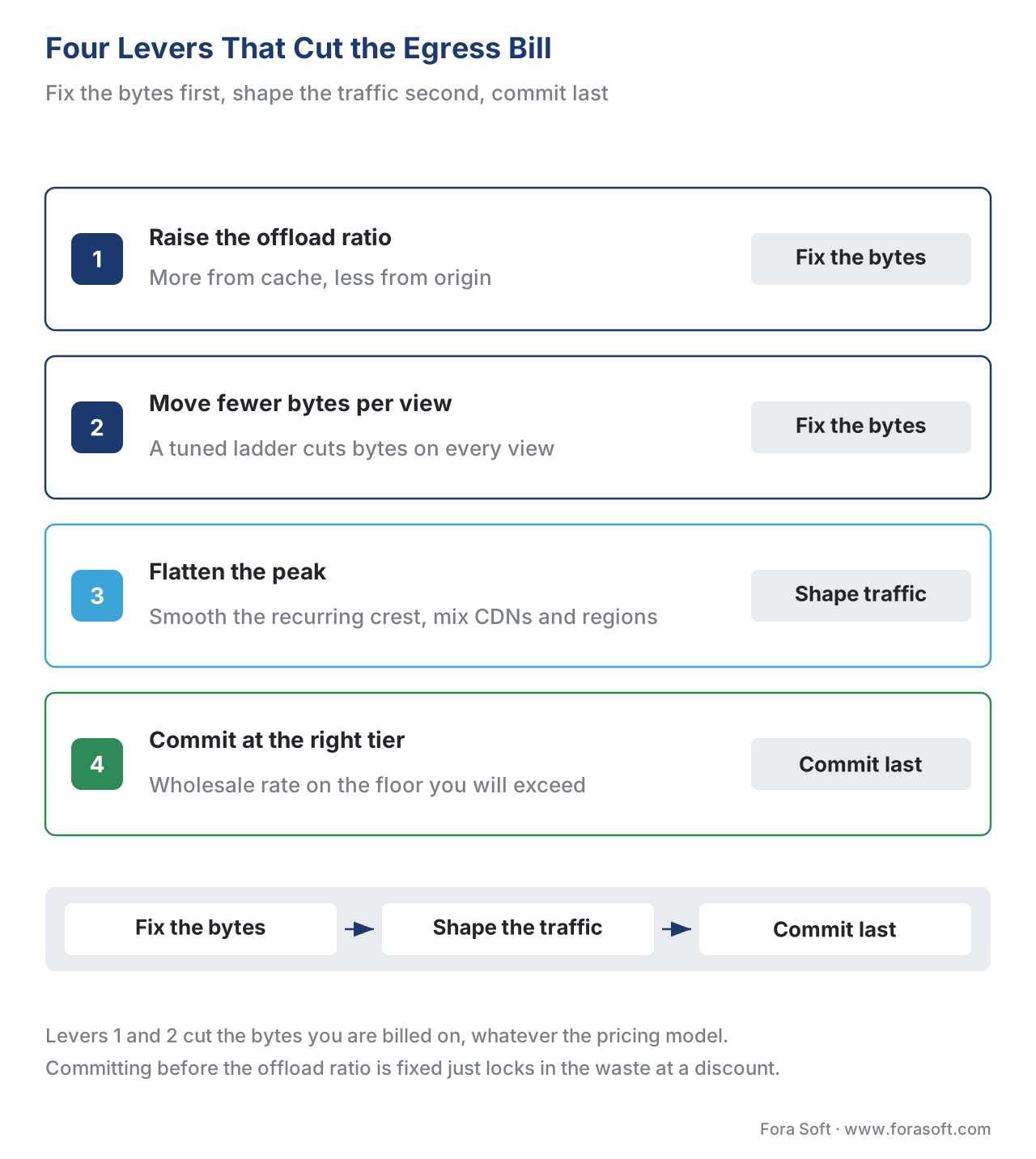 Figure 5. The four levers, in order. Fix the bytes you are billed on first (offload, bitrate), then shape the traffic (peak, region, multi-CDN), and commit last — once volume is predictable enough to promise.
Lever one: raise the offload ratio. Every byte the CDN serves from its own cache instead of fetching again from your origin is a byte you do not pay your origin to send, and a higher cache-hit rate also lets the CDN bill you on its cheaper cached-delivery terms. Offload is the first thing to fix because it is usually the cheapest to fix — often a cache-key or time-to-live misconfiguration rather than new spend. The mechanics are in how a CDN delivers video, and the origin-protection layer that lifts offload during spikes is in origin and origin shielding.
Lever two: move fewer bytes per view. The egress bill is delivered bitrate times hours watched times viewers; shrink the first term and the whole bill shrinks proportionally. A tuned encoding ladder that delivers the same perceived quality at a lower bitrate is a direct, permanent cut to egress on every view forever. The economics are worked in per-title and context-aware encoding, whose savings calculator pairs naturally with this article's.
Lever three: flatten the peak (and mix CDNs and regions). Under 95th-percentile billing, a smoother traffic curve is a smaller bill; under per-gigabyte billing, a multi-CDN split is a negotiating lever and a resilience win. Spreading load also lets you route each region to its cheapest competent CDN, attacking the region-mix premium from Table 1. The live-event side of peak management — pre-warming, surge capacity, graceful degradation — is in live event delivery and the premiere spike.
Lever four: commit at the right tier. Once your volume is predictable, a commit at or below your reliable floor converts a retail per-gigabyte rate into a wholesale one, and a multi-CDN posture sharpens the discount. Commit to the floor you will exceed, never the ceiling you hope to reach.
The order matters. Fix offload and bitrate first, because they cut the bytes you are billed on regardless of pricing model; then shape the peak and the region mix; then commit, once the underlying volume is clean and predictable enough to promise. Committing before you have fixed a leaking offload ratio just locks in the waste at a discount.
A common mistake: optimizing the wrong number
The most expensive egress mistakes come from pulling a lever that does not match the pricing model you are actually on. Three versions show up again and again.
The first is budgeting from the headline rate. A team multiplies projected petabytes by the $0.085 first-tier number, gets a frightening figure, and either over-provisions a commit or picks a vendor on a top-tier rate that is irrelevant at their volume. The fix is the effective-rate discipline: model the blended rate at your real monthly volume and region mix, which on the worked example was $0.0535, not $0.085 — a 60% difference that can flip which vendor is cheapest.
The second is chasing the wrong peak under 95th-percentile billing. A team pours engineering effort into surviving a quarterly live premiere — which the 36-hour discard already forgives — while the recurring nightly prime-time peak quietly sets the bill every single month. The fix is to instrument your traffic shape, find the recurring crest that pokes above the discard line, and flatten that, not the dramatic one-off.
The third is ignoring region mix until the invoice arrives. A platform launches in an expensive-egress region, prices its subscription on its home-region cost model, and discovers that 10% of its viewers in a dear region are consuming a quarter of its egress budget. The fix is to model egress by region from the start, route each region to its cheapest competent CDN, and treat a geographic expansion as a cost decision with a number attached. None of these three throws an error; all of them show up only on the bill — which is exactly why an egress model you can run before you sign is worth building.
Free download: CDN Egress Cost CalculatorA live-formula spreadsheet: enter viewers, hours, average bitrate, offload ratio and a region mix, and it returns your delivered volume, your blended rate per gigabyte, and the monthly egress bill.Where Fora Soft fits in
Delivery economics are where a streaming platform's margin is decided, and the gap between a well-engineered egress posture and a naive one is the difference between a CDN bill that scales linearly with your audience and one that scales faster — long before any viewer notices a thing. Fora Soft has built video streaming, OTT and Internet-TV, e-learning, telemedicine, and video-surveillance software since 2005, across 625+ shipped projects for 400+ clients, and that work centers on exactly this kind of scale-and-cost engineering: modeling an egress bill by region and tier before a contract is signed, designing the offload and origin-shield architecture that keeps the billable bytes down, and structuring a multi-CDN posture that turns vendor competition into a lower unit rate. When a media company needs delivery whose economics survive a real, growing, global audience, that egress engineering is the capability we bring.


The handbook
Fora Soft Video Engineering Handbook
We wrote a seven-volume handbook, 9,000+ pages, that works through the whole video stack from the pixel to production — encoding, delivery, audio and AI — so the delivery economics in this article rest on ground you can follow all the way down. Volume 3 carries this chapter further into ABR ladders, caching and offload, players and the economics of streaming; volume 2 covers the transport and packaging that decide what each segment weighs; volume 1 works through the encoding choices behind every byte you pay to deliver. Written by Nikolay Sapunov, CEO at Fora Soft.
Want to know what your CDN bill looks like before you sign the contract?
Send us your traffic profile and we will model the egress by region and tier, then show you what offload, a tuned ladder, a flatter peak and a commit each take off the number — 250+ video products shipped since 2005.
See our case studies
Case study
Worldcast Live
HD concert streaming at 1.5 Gb/s to 10,000 concurrent viewers at 0.4-0.5 s latency — exactly the recurring live crest that sets a 95th-percentile bill.
Case study
Smart STB IPTV
A white-label Internet TV app for set-top boxes with live channels, EPG and video on demand — the always-on catalogue traffic that makes egress the largest line on the bill.
Case study
Speed Space
Remote production recording at 1080p and 8 Mbit/s, with per-stream control of resolution, frame rate, codec and bitrate — the lever that cuts bytes on every view.
What to read next
Delivery
How a CDN delivers video: origin, edge, and cache
The offload ratio that sizes your inner bill, worked through from the cache up.
Delivery
Multi-CDN architecture and orchestration
The posture that turns vendor competition into a lower per-gigabyte rate.
Encoding
Per-title encoding economics
Shrink the bytes on every view and the egress bill falls in the same proportion.
Platform
The OTT platform cost model
Where egress sits next to storage, transcoding, DRM and the rest of the bill.
References
- RFC 9111 — HTTP Caching — IETF. The shared-cache model and the
s-maxage/max-agedirectives (§5.2.2) that govern how long an edge keeps a file — the mechanism behind the offload lever that cuts billable origin egress. Tier 1 (official standard). https://www.rfc-editor.org/rfc/rfc9111.html (accessed 2026-06-16) - RFC 8216 — HTTP Live Streaming (HLS) — IETF. The manifest-and-segment structure that turns a title into the many small HTTP objects whose bytes constitute egress; the segmentation that makes delivery both cacheable and meterable. Tier 1. https://www.rfc-editor.org/rfc/rfc8216 (accessed 2026-06-16)
- ISO/IEC 23009-1 — Dynamic Adaptive Streaming over HTTP (MPEG-DASH) — ISO/IEC. The MPD that indexes the same HTTP-delivered segments; the second adaptive format whose delivered bytes are billed identically as egress. Tier 1. https://www.iso.org/standard/83314.html (accessed 2026-06-16)
- Amazon CloudFront Pricing — Amazon Web Services. The tiered US/EU pay-as-you-go schedule (≈$0.085/GB first 10 TB declining toward ~$0.020/GB at PB scale; first 1 TB/mo free; APAC and South America regional multipliers; origin→CloudFront transfer from AWS origins waived) and the 2026 flat-rate plans (Free/$0, Pro/$15, Business/$200, Premium/$1,000, configurable to 600 TB, no overage). Tier 4 (vendor pricing — dated, re-verify). https://aws.amazon.com/cloudfront/pricing/ (accessed 2026-06-16)
- Burstable billing — Wikipedia. The 95th-percentile mechanism: five-minute sampling, discard of the busiest ~5% (~36 hours of a 30-day month), the next-highest sample as the billable rate in Mbit/s; the critique that per-byte billing is the fairer alternative. Tier 6 (educational/neutral). https://en.wikipedia.org/wiki/Burstable_billing (accessed 2026-06-16)
- 95th Percentile Bandwidth Metering Explained — Auvik. Operator-level explanation of burstable billing, the 5-minute sample, and why a sustained recurring peak rather than a one-off spike sets the rate. Tier 5 (institutional). https://www.auvik.com/franklyit/blog/95th-percentile-bandwidth-metering/ (accessed 2026-06-16)
- Cloudflare R2 — Pricing — Cloudflare. The zero-egress object-storage model ($0.00/GB egress to the internet; storage ~$0.015/GB-month plus per-operation Class A/B fees) that removes origin-to-edge egress from the bill. Tier 4 (vendor pricing — dated). https://developers.cloudflare.com/r2/pricing/ (accessed 2026-06-16)
- Bunny.net — CDN Pricing — Bunny.net. The region-based per-GB model (Standard network ~$0.01/GB US/EU up to ~$0.06/GB MEA/APAC; Volume network from ~$0.005/GB globally; $1/mo minimum) — the low-cost volumetric end of the market for the comparison. Tier 4 (vendor pricing — dated). https://bunny.net/pricing/ (accessed 2026-06-16)
- Fastly — Pricing — Fastly. The tiered per-GB plus per-request model (≈$0.12/GB first 10 TB NA/EU declining; ~$0.0075 per 10k requests; ~$50/mo minimum) and the 20–40% commit discounts typical on 12-month contracts (2026). Tier 4 (vendor pricing — dated). https://www.fastly.com/pricing/ (accessed 2026-06-16)
- How Multi-CDN Strategies Cut Cloud Egress Cost for Streaming — ioRiver. Vendor-neutral treatment of commit-tier negotiation, regional egress line items, and multi-CDN as the leverage that lowers the unit rate. Tier 5 (institutional). https://www.ioriver.io/blog/multi-cdn-strategies-reduce-cloud-egress-cost (accessed 2026-06-16)
Source note (per §4.3.2): the caching and segmentation mechanisms that underlie the offload lever and define the deliverable bytes trace to the tier-1 standards RFC 9111, RFC 8216, and ISO/IEC 23009-1 (refs 1–3). All pricing figures, the 95th-percentile mechanics, the commit-discount ranges, and the zero-egress model are first-party vendor pricing and institutional sources (refs 4–10), labelled in-text and dated; every monetary figure is a 2026 list or representative rate that changes and must be re-verified before a contract. No lower-tier source overrode a standard; where popular pricing posts quote a single per-GB number as if universal, the article follows the tiered-and-regional reality the vendor pricing pages establish.
