

Key takeaways
• An apartment intercom system is now a software purchase, not a hardware one. The Business Research Company puts the video intercom device market at $43.84B in 2026, growing 14.1% a year to $74.39B by 2030. The analog-to-IP move, not the door hardware, is where the money and the risk sit.
• The copper sunset is the forcing function. FCC Order 19-72 (effective August 2022) ended incumbent carriers’ duty to lease analog copper loops to competitors, and on March 26, 2026 the FCC eased copper-network retirement further. Buildings still running a 1990s analog intercom over POTS should plan the move before their carrier sends a discontinuance notice, not after.
• Buy off-the-shelf for 90% of multi-dwelling-unit (MDU) operators. ButterflyMX, DoorBird, 2N, Akuvox, Aiphone IXG, and Comelit cover the standard apartment / condo / mid-luxury rental playbook. Custom build wins for PropTech operators white-labeling for their own brand, hospitality groups needing brand-consistent guest tablets, senior-living portfolios integrating telehealth, or NDAA-restricted facilities.
• 5-year TCO, three scenarios (2026): a 100-unit Class A building on ButterflyMX runs $59K–$70K ($118–$140 per unit per year); a 50-unit value retrofit on Akuvox $20K–$25K ($80–$100 per unit per year); a 500-unit luxury portfolio on DoorBird plus a custom integration layer $430K–$540K ($172–$216 per unit per year). Cost tracks the capability tier more than building size, but fixed installation overhead weighs hardest on small buildings.
• Custom MVP economics: $80K–$250K for a focused 8–16 week PropTech build (single PMS integration, one app, one door-station SKU). $300K–$900K for production-grade multi-tenant SaaS with concierge dashboard, white-labeling, and 4+ PMS integrations. Agent Engineering compresses routine integration and SDK work by 25–40% — faster and lower-cost than typical PropTech vendor estimates.
Updated October 2026: Aliro 1.0 wallet-key standard (February 2026), the FCC’s March 2026 copper-retirement order, EU CRA reporting duties from September 2026, 2N first-generation end of sale, and a new ButterflyMX alternatives shortlist.
Why Fora Soft wrote this guide
Fora Soft has shipped real-time video, audio, and IoT software since 2005. We’ve built TradeCaster (financial-grade live video infrastructure) and Speakk (multi-party real-time conferencing with AI-driven moderation), and we’ve built intercom software for property managers: a browser-based video intercom for Doma.ai, a residential property-management platform used by 4,305+ management companies, where residents see the Bas-IP door camera and open the door from the phone browser with no app install; and Doorbell App, which connects any SIP intercom to a mobile app through a LiveKit SIP-to-WebRTC bridge. Companion reading: our Custom Intercom Software Development guide, Cloud-Based Intercom Software: Benefits and Applications, and Customizing Residential and Commercial Intercom Software. This article is the procurement-oriented companion: what should a PropTech, MDU operator, or building developer actually buy in 2026 — and when does building custom beat off-the-shelf? Across 250+ projects since 2005 we’ve shipped the two-way video-calling and video-surveillance plumbing an apartment intercom system runs on — including VALT, a video platform used by 770+ US organizations and 50,000+ users.
Evaluating intercom software for a building portfolio?
Tell us the property type (luxury MDU, mid-market rental, condo, mixed-use, senior living, student housing), unit count, PMS in use (Yardi, RealPage, AppFolio, Buildium, Entrata), and current intercom state (analog POTS, no system, or replacing existing IP). We’ll come back with a concrete recommendation: which off-the-shelf vendor, where custom is worth the cost, and a TCO estimate.
Why 2026 is the inflection year for multi-unit intercom
Three regulatory and technology forces are converging in 2026 and forcing every multi-unit owner to make a decision they could previously defer:
- The copper sunset is now on a carrier schedule. FCC Order 19-72 (effective August 2, 2022) ended incumbent carriers’ duty to lease analog voice-grade loops to competitors, and the FCC’s March 26, 2026 order removed filing requirements and gave carriers blanket authority to grandfather legacy voice service while they decommission copper. An analog intercom on a POTS trunk is running on a service that carriers are actively winding down, and repair calls get slower and costlier as the copper plant shrinks.
- 3G is dead, 4G LTE is on the deprecation roadmap. 3G shutdowns finished in the US in 2022. Carriers (Verizon, AT&T, T-Mobile) are signaling LTE sunsets in the early 2030s. Cellular-backup intercoms purchased in 2019–2020 are bricking. New deployments must be 5G or LTE-Cat-M1 and must have a clear forward path.
- Touchless and smartphone-credentialed access is now the resident expectation. Post-pandemic, residents in luxury and mid-market MDU expect their phone to be the key. ButterflyMX says it now serves 20,000+ properties (October 2026), and its quote-based pricing, which we see land around $30–$42 per unit per year, has set the market expectation for what smartphone entry should cost.
What this means for budget-holders: the question is no longer “should we modernize the intercom?” The question is “which platform best matches our portfolio, our PMS, and our compliance footprint — and where (if anywhere) do we need to commission a custom build?” This article gives you that answer.
The one-line decision rule: If you’re a property manager running standard residential MDU, buy an off-the-shelf platform. If you’re a PropTech company building a branded resident experience, a hospitality group with a multi-property guest experience, or a senior-living operator integrating telehealth at the door — you have a custom-build case.
The 2026 apartment intercom market in one snapshot
Short answer: an apartment intercom system is a door station, a cloud or on-prem call server and a resident app that together let visitors call a unit and let residents, staff and couriers open the door from a phone, a wallet key, a PIN or a fob. In 2026 the buying decision is about software — property-management dashboard, PMS sync, wallet keys and security updates — more than about the panel on the wall.
The verified numbers and dates that frame the procurement decision this year:
- Market: video intercom devices are worth $43.84B in 2026 and are forecast to reach $74.39B by 2030 at 14.1% CAGR (The Business Research Company, 2026).
- Wallet keys became a standard: the Connectivity Standards Alliance released Aliro 1.0 on February 26, 2026 — one protocol for phone-as-key over NFC, Bluetooth LE and UWB, backed by Apple, Google and Samsung wallets. Certification of the first locks and readers started in 2026.
- Copper retirement sped up: the FCC eased copper-network decommissioning on March 26, 2026. Analog POTS intercoms are on borrowed time.
- EU security law is live: Cyber Resilience Act reporting duties (24-hour early warning, 72-hour notification of actively exploited vulnerabilities) apply from September 11, 2026; full obligations follow on December 11, 2027.
- Hardware generations turned over: 2N stopped selling the first-generation IP Verso and IP Force on June 30, 2026 (2N newsroom, February 17, 2026); the 2.0 models replace them, with software support to December 2032.
- Market leader scale: ButterflyMX reports 20,000+ multifamily, commercial, student-housing and gated-community properties (October 2026).
The 2026 vendor field — who to evaluate
Twelve vendors will make 95% of MDU shortlists in 2026. Here’s the honest matrix.
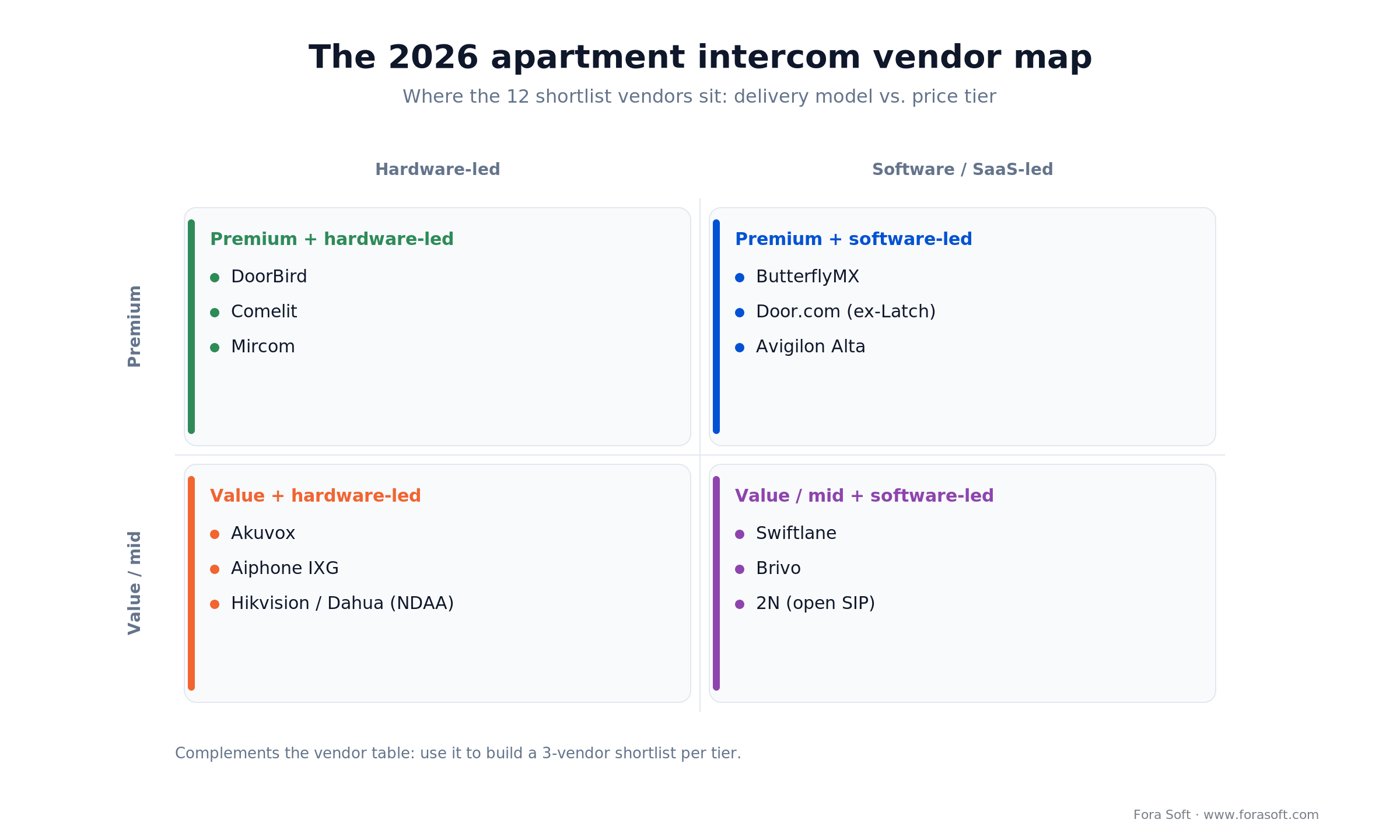
Figure 1. The 12-vendor shortlist mapped by delivery model and price tier.
| Vendor | HQ / segment | Pricing (typical) | Key strength | Watch-out |
|---|---|---|---|---|
| ButterflyMX | US / luxury & mid MDU | $30–$42/unit/yr SaaS | 20,000+ properties, Apple/Google Wallet keys, Yardi/AppFolio | Cloud-dependent; quote-based pricing |
| DoorBird | Germany / premium residential | $795–$5,000+ hardware | ONVIF, German-built, IP66 | Hardware-heavy; pricey at scale |
| 2N (Axis) | Czech / enterprise & MDU | $700–$3,500 hardware | Open SIP, integrates with any PBX | First-gen IP Verso / IP Force end of sale June 30, 2026 — buy 2.0 |
| Akuvox | China / value tier | Quote-based; lowest in this list | Lowest CapEx; broad SKU range | CVE-2023-0354 (CVSS 9.1) and 12 others — verify firmware |
| Aiphone IXG | Japan / commercial & MDU | $2,400+ base system | 70-yr brand; rock-solid SIP/ONVIF | Conservative UX; mobile app secondary |
| Comelit | Italy / EU residential heritage | EUR 600–EUR 2,800 hardware | EU regulatory comfort, design-led | Smaller US footprint |
| Swiftlane | US / mobile-first MDU | $5–$15/unit/month | Face recognition, mobile app polish | BIPA / CCPA exposure on biometrics |
| Door.com (ex-Latch) | US / luxury MDU | $8–$12/unit/month | Polished OneApp UX | Latch (now DOOR) was delisted from Nasdaq in 2023 — vendor risk |
| Brivo | US / commercial & MDU access | $10–$20/door/month | Cloud-native access, intercom add-ons | Intercom is a partner integration, not native |
| Avigilon Alta (Motorola) | US / enterprise + premium MDU | Quote-based | Mobile credentials + VMS + intercom unified | Enterprise pricing, NDAA stack |
| Mircom | Canada / fire+intercom MDU | Quote-based | Life-safety + intercom integrated | Heavyweight install model |
| Hikvision / Dahua | China / value commercial | $300–$1,200 hardware | Cheapest hardware, deep SKU range | NDAA Section 889 — federal grant or loan money cannot buy it |
NDAA caveat: If federal grant or loan money (HUD, USDA Rural Housing, other federal grants) pays for the system, Section 889 of the FY2019 NDAA, applied to grants through 2 CFR 200.216, bars spending it on Hikvision, Dahua, Hytera, Huawei or ZTE video and telecom equipment — including their intercom OEM-rebrands. Federal contractors face a broader ban on using that equipment at all. Confirm the BOM with your compliance team before signing anything.
ButterflyMX alternatives in 2026 — which one fits which building
Short answer: the strongest ButterflyMX alternatives in 2026 are Swiftlane (mobile-first with face entry), 2N and Aiphone IXG (open SIP and on-prem resilience), Akuvox (lowest hardware cost, if you patch firmware), Avigilon Alta and Brivo (access control first, intercom second) and DOOR, formerly Latch (luxury app experience, with vendor risk). Pick by what you need ButterflyMX does not give you, not by brand.
| If you need… | Look at | Why |
|---|---|---|
| Fob, PIN and in-unit options next to the app | 2N, Aiphone IXG, Comelit | SIP intercoms work with in-unit stations and SIP phones, so residents without smartphones are covered |
| Local operation when the internet drops | 2N, Aiphone IXG | The call and door logic can run on a local PBX instead of a cloud round-trip |
| Lowest hardware spend per entrance | Akuvox | Lowest CapEx in the field; budget a firmware-patching SLA because of the CVE-2023-0354 history |
| Face entry and a polished mobile app | Swiftlane | Mobile-first with face recognition; plan BIPA consent in Illinois |
| One platform for access control, cameras and intercom | Avigilon Alta, Brivo | Access-control-first platforms with intercom as part of the suite or a partner add-on |
| Your own brand on the resident app | Custom build on SIP + WebRTC | No off-the-shelf vendor white-labels the full resident experience; see the build-or-buy rule below |
Before you switch, check three things in the contract: whether resident and access data can be exported, whether the door stations speak open SIP so they survive a platform change, and whether the vendor’s wallet keys will move to Aliro as certified readers ship.
The MDU intercom tech stack — protocols and components in 2026
Whether you buy or build, you should understand the layers. The vendor that explains them clearly is usually the one to trust.
Signaling and call control
- SIP (RFC 3261). The dominant signaling protocol for intercom call setup. Every credible vendor (2N, Akuvox, Aiphone, DoorBird, Comelit) speaks SIP natively, which means they integrate with any IP-PBX (Asterisk, FreeSWITCH, 3CX, Cisco Call Manager). Avoid proprietary signaling unless there is a very specific reason.
- WebRTC. Useful when you need browser-based concierge or virtual-doorman dashboards (no plugin install). Pairs well with SIP via SIP-over-WebSocket gateways. Fora Soft has shipped multiple production WebRTC stacks.
- Push-to-mobile (APNs / FCM). The intercom hardware doesn’t actually call the resident’s phone — it pushes a notification. The resident’s app then opens a SIP/WebRTC session. Push reliability is the most-broken part of any MDU intercom; benchmark before you sign.
Media and codecs
- Audio: G.711 (64 kbps companded PCM, the universal narrowband baseline), G.722 (wideband, much better quality on the same bandwidth), Opus (the modern default for WebRTC, 6–510 kbps adaptive).
- Video: H.264 (universal compatibility, every MDU intercom supports it), H.265/HEVC (50% bandwidth reduction at the same quality, increasingly standard at 1080p+), AV1 (emerging, mostly for streaming, intercom adoption ~2027). New to codecs? Our digital-video primer in Learn covers the basics.
- Encryption: DTLS-SRTP for WebRTC media, TLS 1.3 for signaling. SRTP-only is also acceptable for SIP-only stacks. Encrypt every hop, and remember that a SIP server or SBC decrypts media in the middle unless you design for true end-to-end encryption.
Hardware and power
- PoE (IEEE 802.3af / 802.3at). Door stations are powered over the same Ethernet cable that carries the network. 802.3af supplies 15.4W at the switch port (12.95W at the device, enough for most door stations); 802.3at (PoE+) supplies 30W (25.5W at the device) (needed for door stations with heaters in cold climates).
- ONVIF Profile S/T/G/M. The interop standard for IP cameras and recording. If you want your intercom to integrate with an existing VMS (Milestone, Genetec, Avigilon Control Center), ONVIF Profile S is the minimum.
- Cellular fallback (4G LTE, 5G). For sites where the building network is unreliable, or for cellular-only door stations on a perimeter gate. LTE-Cat-M1 (low-bandwidth IoT cellular) is the cost-effective choice if you only need low-frame-rate video and audio.
For deeper background on the streaming and edge architecture that connects all of this, see our Edge Computing in Live Streaming guide and Custom VMS Development guide.
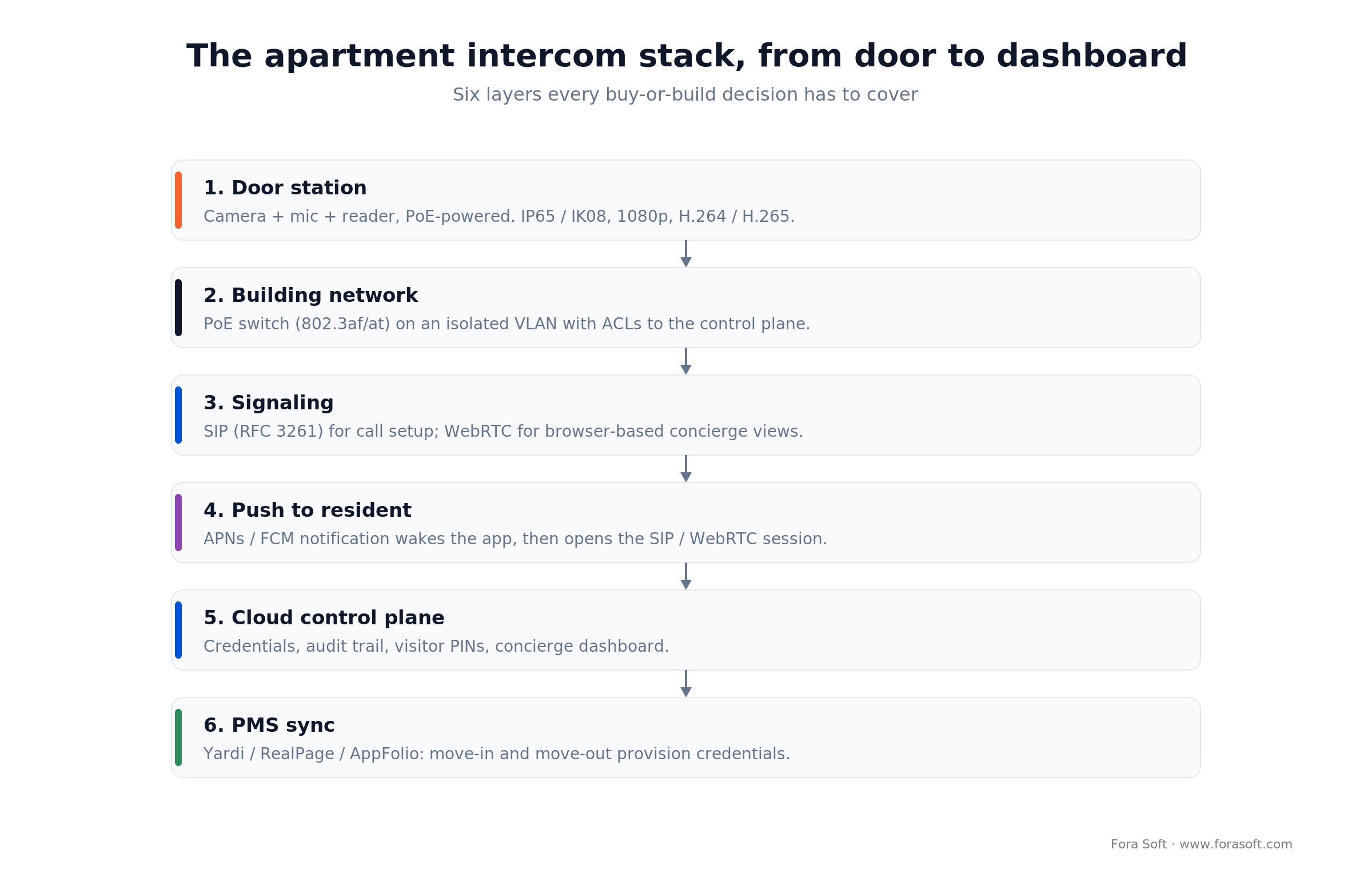
Figure 2. The six layers of an apartment intercom stack, from door station to PMS.
Twelve features that win MDU intercom bids in 2026
When evaluating vendors, score them on these twelve. The bottom three are the secret tiebreakers nobody talks about until after the contract is signed.
- Smartphone-as-credential. Resident’s phone is the key. No fob, no card, no PIN. Apple Wallet and Google Wallet resident keys (ButterflyMX has offered Resident Key in Apple Wallet since February 2025) let residents tap their phone at the door. Since February 2026 there is a cross-vendor standard for this, Aliro 1.0; ask every vendor for its Aliro certification date.
- Visitor management with pre-authorized PINs / QR codes. Resident creates a one-time guest pass from the app. Cleaners get a recurring 10am–noon pass on Tuesdays. Contractors get a 4-hour pass.
- Package delivery management. Amazon Key for Business integration, FedEx delivery codes, USPS-cleared lockbox triggers.
- Multi-device simultaneous ringing. Door call rings on the resident’s phone, partner’s phone, and in-unit tablet at the same time. First to answer wins.
- Concierge / virtual-doorman dashboard. Browser-based, real-time, with audit trail. Lets one operator cover 5–15 buildings.
- Time-restricted access. Service workers, dog walkers, contractors get pass with start/end time. Audit trail captures every entry.
- PMS resident-directory sync. Yardi Voyager, RealPage OneSite, AppFolio, Buildium, Entrata, MRI. Move-in / move-out automatically provisions / deprovisions credentials. Without this, ops staff burns 4–8 hours per turnover per door.
- Audit trail and recording. Every door event, every visitor entry, every call. 30–90 day retention as default. Tenant-billable downloads for incident response.
- Multi-language voice prompts. US: Spanish minimum. EU: 6+ languages. APAC: localized for each market.
- ADA / accessibility. Audio loops for hearing-impaired residents, large-button mode, screen-reader compatible mobile app. Mounting heights compliant with ADA Title III.
- Fire-department override. Knox-Box equivalent integration. Fire response unit must be able to bypass the system in seconds. Local fire-marshal approval required before commissioning.
- Tenant-turnover automation. Move-out triggers credential revocation, audit-trail freeze, and concierge handoff. Move-in triggers welcome flow, app onboarding, optional package-delivery permission.
Want a procurement-ready feature checklist?
We’ll send you a 28-criterion vendor-scoring spreadsheet calibrated for the four major MDU segments (luxury, mid-market, value, mixed-use commercial). It pre-fills competitive scoring for ButterflyMX, DoorBird, 2N, Akuvox, Aiphone, Comelit, Swiftlane, and Door.com so you can run a real bake-off in days, not weeks.
Property management system integrations — the make-or-break layer
The intercom platform that doesn’t talk to your PMS will become a maintenance burden. Here is what the 2026 integration reality actually looks like.
The five PMS that matter
- Yardi Voyager. Dominant in luxury MDU. RESTful API. ButterflyMX, DoorBird, 2N, Brivo all have certified Yardi integrations. Setup typically 1–2 weeks of integration work per property.
- RealPage OneSite. Second-largest. Middleware-based integration model is older and slower than Yardi’s but works. Most major intercoms support it.
- AppFolio Property Manager. Mid-market dominant. Modern REST APIs (AppFolio Stack, launched 2023). ButterflyMX and Swiftlane have native integrations.
- Buildium. Small landlord, condo. Integration depth is shallower; expect more manual roster syncs. Good for portfolios under 200 units total.
- Entrata. Luxury MDU. Smaller market share but premium positioning. ButterflyMX, Door.com integrate.
The integration patterns that actually matter
- Resident sync (one-way, PMS → intercom). Move-in / move-out automatically provisions / deprovisions credentials.
- Billable add-on (one-way, intercom → PMS). Resident opts into premium concierge service; charge appears on their next rent statement.
- Work-order trigger (one-way, intercom → PMS). Tenant reports door not opening; ticket is auto-created in PMS work-order system with timestamp, video clip, and audit trail.
- Visitor log export (one-way, intercom → PMS / risk-management system). For incident response.
How much does an intercom with a property management dashboard cost?
Short answer: budget roughly $30–$180 per unit per year for the cloud software that includes the property-management dashboard (per-unit SaaS such as ButterflyMX at the low end, $5–$15 per unit per month platforms such as Swiftlane at the high end), plus $1,500–$6,000 per entrance for the door station and $1,000–$10,000 per entrance for installation and cabling, depending on whether new Ethernet has to be pulled. The dashboard itself is rarely priced separately; it comes with the per-unit or per-door SaaS fee. These are our 2026 project ranges, not list prices — most vendors quote per building.
What the dashboard should do for that money: add and remove residents (ideally synced from Yardi, RealPage, AppFolio, Buildium or Entrata), issue time-limited guest and contractor passes, show the door-event and call log with video clips, open doors remotely, and cover several buildings in one view. If any of these needs an extra module, add it to the per-unit price before you compare vendors. The three full 5-year scenarios follow.
What multi-unit intercom actually costs in 2026 — three scenarios
Three real TCO scenarios, calibrated to actual 2026 vendor pricing. Numbers are mid-range; your quote will land within +/-25% of these.
Scenario 1: 100-unit Class A apartment, ButterflyMX (off-the-shelf, smartphone-first)
- Door stations (2 main entries + 2 amenity doors): $14K hardware + $9K install
- Software: $30–$42/unit/yr SaaS = $3K–$4.2K/yr
- Network upgrade (PoE switches, fiber to door stations): $12K one-time
- PMS integration (Yardi setup): $4K one-time
- Concierge dashboard tablet: $1K hardware
- Year 1 total: $43K–$45K
- Years 2–5 SaaS + maintenance: $4K–$6K/yr
- 5-year TCO: $59K–$70K. Per-unit per year: $118–$140.
Scenario 2: 500-unit luxury portfolio, DoorBird hardware + custom integration layer
- Door stations (8 buildings × 4 entries each = 32 stations): $32K–$80K hardware + $36K install
- Concierge consoles (4): $4K hardware
- Network and PoE infrastructure: $40K one-time
- Custom integration layer (Yardi sync, branded mobile app, white-labeled concierge UI): $180K one-time
- Year 1 total: $290K–$340K
- Years 2–5: SaaS, support, app maintenance: $35K–$50K/yr
- 5-year TCO: $430K–$540K. Per-unit per year: $172–$216.
Scenario 3: 50-unit value retrofit, Akuvox hardware (cellular fallback, basic SIP)
- Door stations (2 entries): $3K hardware + $4K install
- PoE switch and basic networking: $4K one-time
- Cellular fallback module: $1K hardware + $50/mo cellular service
- Basic SIP server (Asterisk, hosted): $50/mo
- Year 1 total: $13K–$15K
- Years 2–5: $1.5K–$2.5K/yr
- 5-year TCO: $20K–$25K. Per-unit per year: $80–$100.
What the numbers really say: Per-unit cost follows the capability tier, not the unit count. The 50-unit value retrofit is the cheapest per unit ($80–$100) because it buys basic SIP and no app layer; the 500-unit luxury portfolio is the most expensive ($172–$216) because it pays for a branded app and a custom integration layer. What does scale badly is fixed overhead: door stations, cabling and PMS setup are spread over fewer units in a small building. If you have a portfolio under 200 units across many small buildings, consider a multi-building cellular-first strategy with one shared concierge dashboard.
Need a TCO estimate for your specific portfolio?
Tell us property type, unit count, current intercom state, PMS, and target tier (value, mid-market, luxury). We’ll come back with a 5-year TCO model that compares 3 vendor paths and one custom-build path side-by-side — with assumptions called out so your CFO can stress-test them.
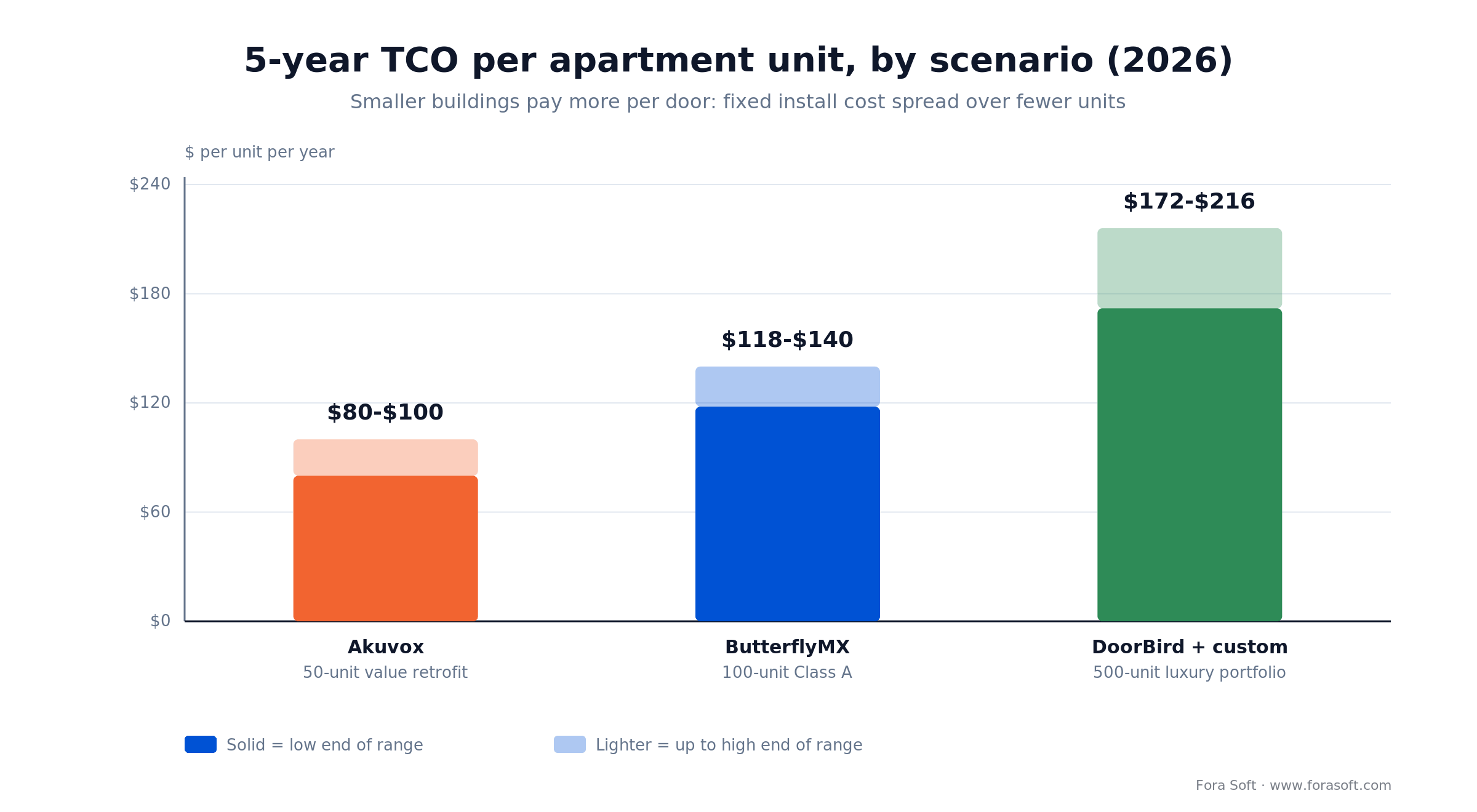
Figure 3. Five-year TCO per unit by scenario — per-unit cost follows the capability tier.
Buy off-the-shelf or build custom — the honest decision rule
We sell custom intercom development. We are still going to tell you that 90% of MDU operators should buy off-the-shelf. The remaining 10% genuinely need custom — and for them, the math is dramatic.
Buy off-the-shelf if…
- You operate standard residential MDU (apartments, condos, mixed-use) at any scale. ButterflyMX, DoorBird, 2N, Aiphone IXG cover this with a feature set you cannot economically replicate.
- You have 1–15 buildings and a single PMS. Off-the-shelf integrations exist; certified support saves you headcount.
- Your unique features can be solved with workflow + a third-party integration (Zapier, n8n, custom webhooks) on top of the off-the-shelf platform.
- Your portfolio is below ~3,000 units. Below this scale, custom-build amortization rarely beats SaaS.
Build custom if…
- You’re a PropTech company. You want a branded, white-labeled resident experience that ButterflyMX cannot deliver. You want the margins and control of owning the software.
- You’re a hospitality group. Marriott, Hyatt, Hilton-grade brand consistency requires brand-controlled UX at every guest touchpoint. The off-the-shelf intercom apps don’t deliver this.
- You operate senior living. The intercom doubles as a telehealth endpoint, medical-alert relay, and visitor log integrated with the EHR. No off-the-shelf platform does this credibly in 2026.
- You operate a campus or multi-property enterprise. Corporate HQ where intercom integrates with badge-access, room booking, and visitor pre-screening. Avigilon Alta and Brivo come close; full integration usually requires custom.
- You have an NDAA-restricted hardware mandate. Federal-funded properties, government tenants. Custom build with NDAA-compliant hardware (2N, Aiphone, ButterflyMX, Brivo) is sometimes the cleanest path.
- Your portfolio is 5,000+ units. Custom amortizes; SaaS economics flip in your favor on per-unit-per-year basis.
For background on what custom intercom development actually involves, see our Custom Intercom Software Development guide and Customizing Residential and Commercial Intercom Software.
What custom actually costs: MVP for a focused PropTech intercom platform (single PMS integration, single mobile app, single door-station SKU): $80K–$250K, 8–16 weeks. Production-grade multi-tenant SaaS with concierge dashboard, white-labeling, and 4+ PMS integrations: $300K–$900K. Agent Engineering compresses 25–40% of the routine integration and SDK work, which translates directly to lower cost and faster time-to-market. The browser concierge console and the in-app door call are WebRTC work, which our WebRTC development team builds on top of the SIP door stations you already own.
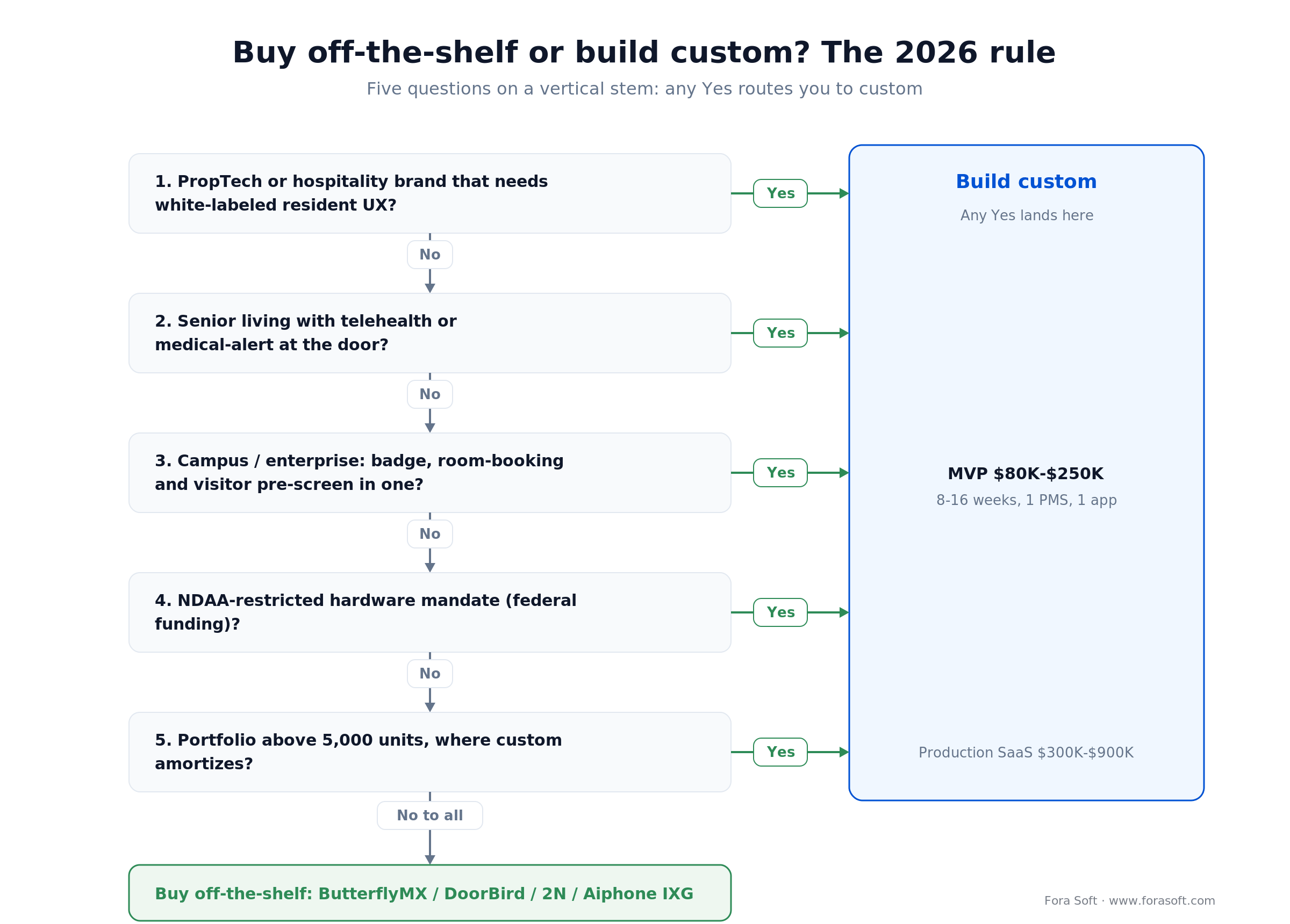
Figure 4. Buy off-the-shelf or build custom — any Yes routes you to a custom build.
Regulatory, privacy, and accessibility compliance you cannot skip
Intercom touches access control, video recording, audio recording, biometrics, and federally-mandated accessibility. Every one of these is a regulatory minefield. Build the compliance map before the architecture.
US-specific
- FCC Order 19-72 (POTS sunset). Incumbent carriers no longer have to lease analog loops to competitors, and since March 26, 2026 they can grandfather legacy voice service while retiring copper. Plan migration off any analog intercom before your carrier’s discontinuance notice arrives.
- FCC Part 68. Telecom interconnection rules; certified equipment only.
- ADA Title III. Accessible mounting heights (button height 15–48" from floor), audio/visual alert duality, screen-reader-compatible mobile app. Audit annually.
- Fair Housing Act. Non-discriminatory access — the intercom system must serve residents with disabilities, language barriers, or no smartphone equally.
- NDAA Section 889. Bars federal grant and loan funds (2 CFR 200.216) from buying Hikvision, Dahua, Hytera, Huawei or ZTE equipment, and bars federal contractors from using it.
- BIPA (Illinois). Biometric-information privacy. If you use facial recognition, written consent + data-handling disclosure required. Class-action exposure is real, though the August 2, 2024 amendment (SB 2979) now counts repeated scans of the same person as one violation and allows consent by electronic signature.
- CCPA / CPRA (California). Resident video and access data is personal information; access-request and deletion-request workflows required.
EU-specific
- GDPR (Articles 5 + 35). Video and access data is personal data. Default 30–90 day retention with documented justification. DPIA required before deployment.
- Cyber Resilience Act (Regulation (EU) 2024/2847). Since September 11, 2026 manufacturers must report actively exploited vulnerabilities and severe incidents within 24 hours (early warning) and 72 hours (notification). From December 11, 2027 the full rules apply: security by design, an SBOM and security updates for the declared support period. Ask door-station vendors how they comply today.
- EU AI Act. Face entry that only confirms a resident is who they claim to be (1:1 biometric verification) is excluded from the Annex III high-risk list; identifying visitors against a watchlist (remote biometric identification) is high-risk. The Digital Omnibus deal of May 7, 2026 moves Annex III high-risk obligations to December 2, 2027. GDPR Article 9 still requires explicit consent for any face template.
Cellular sunset reminder: 3G shut down in the US in 2022. AT&T LTE deprecation roadmap suggests early-to-mid 2030s. Any cellular intercom purchased today must be 5G-ready or LTE-Cat-M1 with a clear forward path. Verify with the vendor before signing.
Cybersecurity — intercoms as IoT attack vectors
Door stations are internet-facing IoT devices. They get scanned, fingerprinted, and exploited. The 2023 Akuvox E11 disclosure — CVE-2023-0354 (CVSS 9.1): missing authentication on the door-station web server, chainable with CVE-2023-0351 for remote code execution, one of 13 flaws Claroty found — is what every CIO now worries about. Treat intercom security as production infrastructure, not as a "nice to have."
The five things that actually matter
- Network segmentation (VLAN isolation). Intercom traffic on its own VLAN, with explicit ACLs to the SIP server and the cloud control plane. Zero direct access from the resident network.
- Default-credential elimination. Single most-exploited weakness across all intercom brands. Force password change on commissioning. Audit quarterly.
- Firmware patching cadence. Industry baseline is quarterly; aggressive operators patch monthly. Establish an SLA with the vendor before signing.
- End-to-end encryption. DTLS-SRTP for media, TLS 1.3 for signaling. Verify with packet capture, don’t take the vendor’s word for it.
- Penetration test before commissioning. $5K–$15K for a focused intercom pentest. Cheaper than a class-action lawsuit triggered by a CVE you didn’t know about.
Twelve pitfalls that wreck MDU intercom deployments
Every one of these is a real failure mode we have seen in production. Read them before you sign.
1. Picking a smartphone-only platform in a low-smartphone-adoption building.
Senior living, low-income housing, student housing with international students — smartphone penetration is below 80%. Smartphone-only is a Fair Housing Act risk.
2. WiFi-only door stations in concrete buildings.
Pre-1980s construction has 8–14 inch concrete walls. WiFi at the door station is unreliable. Use PoE Ethernet to every door station; cellular only for outdoor perimeter or remote sites.
3. Cellular-only door stations in basement or garage locations.
Cellular signal at a B2-level garage door is 0–1 bars. Plan a small-cell or DAS extension if you have an underground entry that needs cellular fallback.
4. Skipping the PMS integration in year 1.
Manual roster syncs eat 4–8 hours of ops staff time per turnover per door. Build the PMS integration into the year-1 deployment, not the year-2 wishlist.
5. Underestimating concierge dashboard scope.
Most operators discover after deployment that they need a concierge view that covers all buildings, not just one. Plan multi-property single-pane-of-glass from day 1.
6. Trusting vendor security claims without testing.
See Akuvox CVE-2023-0354. Run your own pentest. Spend the $10K. Sleep better.
7. Deploying facial recognition without legal review.
Illinois BIPA. California CCPA. EU AI Act. Some of these have multi-million-dollar exposure. Get written consent + a DPIA + a retention policy before you turn it on.
8. Not budgeting for fire-department override testing.
Local fire marshal must approve the override mechanism. If they don’t, you’re back to wall-mounted Knox-Box keys defeating the entire smartphone-credential value prop.
9. Ignoring tenant turnover automation.
Move-out without credential revocation = unauthorized access risk. Move-in without app onboarding = friction that drives leasing complaints. Automate both flows on day 1.
10. Vendor concentration risk (the Latch lesson).
Latch went public through a SPAC in 2021, was delisted from Nasdaq in 2023 after missing its financial filings, and has since rebranded as DOOR. Customers spent months unsure about the roadmap of the system that opens their doors. Always have an exit plan. Always negotiate data-portability into the contract.
11. Underestimating bandwidth.
A 200-unit building usually has 4–10 door stations; at 2–6 Mbps per 1080p H.264 stream that is 10–60 Mbps of sustained upstream when cameras stream to the cloud. Verify your building’s actual ISP capacity before promising features.
12. Skipping the concierge / overnight on-call workflow.
Door call at 3am, resident not answering — what happens? If the answer is "the visitor stands there," you’ve failed the security premise. Build an on-call concierge or after-hours auto-response from day 1.
A 6-question decision framework for MDU intercom procurement
Run these six questions before any vendor demo. If you cannot answer all six, the demo will go in the wrong direction.
- 1. What is the property tier? (Luxury Class A · mid-market · value · senior living · student · mixed-use commercial.) The answer determines the vendor shortlist.
- 2. What PMS do you run? (Yardi · RealPage · AppFolio · Buildium · Entrata · MRI · none.) Vendor shortlist must support your PMS natively.
- 3. What is the smartphone-adoption rate of your residents? (95%+ luxury · 80–95% mid-market · below 80% senior/value/student.) Below 90%, pair any smartphone-first platform with fobs, PINs or in-unit stations.
- 4. Do you accept any federal funding? (Yes · no · unsure.) If federal money pays for the system, NDAA Section 889 applies: no Hikvision, Dahua, Hytera, Huawei or ZTE equipment.
- 5. Do you need facial recognition? (Yes · no.) If yes, BIPA / CCPA / EU AI Act compliance work is mandatory before deployment.
- 6. What is the unit-count of the portfolio? (Below 200 · 200–3,000 · 3,000+.) Below 200, off-the-shelf almost always wins; above 3,000, custom is worth modeling; above 5,000 it usually pays back.
A realistic 90-day MDU intercom pilot plan
Target: pilot one building (or one entry of one building) in 90 days. Validate the platform, measure the metrics, decide whether to scale.
Days 1–14: Vendor selection and contract
- Run the 6-question decision framework above
- Shortlist 3 vendors
- Run reference checks — talk to 2 customers in your tier per vendor
- Run a 90-minute hands-on demo with each
- Negotiate contract with data-portability and SLA terms
Days 15–45: Hardware install and PMS integration
- PoE switch upgrades, fiber to door stations
- Door station mounting (ADA-compliant heights)
- PMS integration setup (Yardi, RealPage, etc.)
- Mobile app provisioning workflow tested with 3–5 staff residents
- Cybersecurity hardening (default-credential change, VLAN, firmware patch)
- Penetration test (small-scope: door station + cloud control plane)
Days 46–75: Soft launch with 25–50 residents
- Onboard 25–50 residents (volunteer pilot cohort)
- Test smartphone-credential onboarding, visitor PIN flow, package delivery
- Test concierge dashboard with after-hours response
- Test fire-department override with local fire marshal
- Capture metrics: missed calls, app crash rate, false-trigger rate, package theft delta
Days 76–90: Full building rollout + decision
- All-resident rollout
- Full PMS sync activation
- 30-day metrics review
- Decision: scale to next building, or pivot vendor
Choosing the door station — specs that actually matter
The door station is the part of the intercom that is most expensive to swap later. Pick it once, deliberately.
- IP rating. IP65 minimum for outdoor mounting; IP66 for harsh climates (driving rain, salt spray). DoorBird’s default is IP66.
- Operating temperature range. -40°C to +50°C for North American climates; check spec sheet, not marketing copy.
- Vandal rating (IK). IK08 minimum for entry-level MDU; IK10 for ground-floor street-facing.
- Camera resolution and night-vision. 1080p minimum at the door station; 4K is overkill except for premium luxury. Built-in IR for low-light.
- Wide-angle lens. 130°+ horizontal field of view to capture both small visitors (children) and side-approach.
- Audio quality. Noise-cancellation is non-negotiable for street-facing door stations.
- PoE class. PoE+ (802.3at) if the door station has heaters or power-hungry features; standard PoE (802.3af) for indoor or temperate climates.
- Mounting flexibility. Surface-mount vs. flush-mount; gang-box compatibility with US 1-gang or 2-gang standard boxes.
- Tamper detection. Vibration / accelerometer-based tamper alarms feeding the VMS.
VMS, NVR, and video-management integration
In commercial and luxury MDU, the intercom is rarely standalone. It feeds (and pulls from) the building’s video management system. The integration approach drives a big portion of the cost.
The three VMS integration patterns
- ONVIF Profile S (event + stream). The simplest. Door station registers as a camera; events show up in the VMS timeline. Works with Milestone, Genetec Security Center, Avigilon Control Center, Exacq, Wisenet WAVE.
- Native vendor integration. 2N + Genetec Synergis Cloud Link. Avigilon Alta + Avigilon Control Center. Tighter coupling, more features, but vendor lock-in.
- API / webhook integration. Custom-built bridge. Required when you mix non-standard vendors (e.g., Akuvox door station + Milestone VMS). $20K–$50K of integration work.
For background on the VMS layer, see our Custom VMS Development guide. For object-recognition extensions (package detection, vehicle plate logging) on top of intercom video, see our Custom Object Recognition Camera Solutions guide.
What is actually changing in MDU intercom in 2026
Five trends that matter to procurement this year. Two are over-hyped, three are real.
- Real: Apple Wallet / Google Wallet keys. Residents add a building key to Wallet and tap to enter, which cuts app friction. ButterflyMX has shipped Resident Key in Apple Wallet since 2025, and on February 26, 2026 the CSA released Aliro 1.0, the first cross-vendor standard for phone-as-key over NFC, Bluetooth LE and UWB. Expect certified readers from HID, Allegion and others first; intercom door stations follow.
- Real: AI-driven concierge / voice agents. Visitor pre-screening through a voice agent (“Who are you here to see? I’ll let them know”). Reduces concierge headcount per building. Early commercial deployments in late 2026.
- Real: Computer-vision package detection. Door-station camera detects a delivered package, triggers tenant notification + lobby-camera capture for theft incident response. Pilots in 2025; commercial in 2026.
- Hyped: Decentralized / blockchain access credentials. A few startups, no production deployments. Skip for at least 24 months.
- Hyped: AR concierge. Visitor sees AR-projected directions to their unit. Cool demo, no measurable adoption.
When you should NOT modernize the intercom yet
Three real cases where waiting is the right answer:
- You are selling the building in <18 months. A new owner will rip out whatever you install. Stick with maintenance until close, then negotiate the upgrade as part of the deal.
- You are mid-construction on a major capex project. Wait until the GC signs off on building systems. Retrofitting intercom into a half-built building is 3x the cost.
- Your existing analog system is functioning and POTS lines are still serviced. If the analog still works and the carrier hasn’t served you a sunset notice, you may have 12–24 months. But start the procurement now.
FAQ — the 19 questions buyers actually ask
Can intercoms replace existing analog wiring or do we need to rewire?
New IP intercoms run over Cat5e/Cat6 with PoE, not over the legacy analog 4-wire. In most retrofit projects, you must pull new Ethernet to the door station. If rewiring is impossible, 2-wire IP kits (for example 2N 2Wire, or Comelit hybrid systems) carry Ethernet and power over the existing pair, which suits 20–50 unit retrofits. Budget $500–$1,500 per door for new Ethernet runs.
What is the typical TCO per door per year?
For a 100-unit Class A building running ButterflyMX: $118–$140 per unit per year over 5 years. For a 50-unit value retrofit running Akuvox: $80–$100. For a 500-unit luxury portfolio with custom integration on DoorBird hardware: $172–$216. Per-unit cost follows the capability tier you buy.
Which intercom platforms integrate with Yardi vs. RealPage vs. AppFolio?
ButterflyMX integrates with all three (Yardi most mature). DoorBird, 2N, and Brivo certified Yardi integrations. Swiftlane native AppFolio Stack integration. RealPage middleware-based, supported by most major vendors but slower than Yardi setup.
Do residents have to install an app?
For smartphone-credentialed platforms (ButterflyMX, Door.com, Swiftlane), yes. For SIP/IP intercom platforms (2N, Aiphone, Akuvox, Comelit), residents can use the in-unit tablet, a SIP phone, or optionally a mobile app. Apple Wallet and Google Wallet resident keys (ButterflyMX and others) reduce the need for a dedicated app, and the Aliro 1.0 standard (February 2026) will make wallet keys work across certified readers from different vendors.
What happens during internet outages?
For cloud-managed platforms, door entry credentials cached locally typically work for 24–72 hours. Concierge dashboard goes offline. New visitor flows fail until connectivity returns. For SIP-on-prem platforms (2N, Aiphone), local PBX continues operating. Always specify offline-mode behavior in the contract.
Can we customize branding for our property?
For PropTech operators, yes — but typically only with custom-build (white-labeled UX) or with the highest tier of off-the-shelf SaaS (ButterflyMX Enterprise, Door.com Enterprise). Standard SaaS gives you logo + color customization only.
What about residents without smartphones (elderly, low-income)?
Critical Fair Housing Act consideration. Provide a key fob or PIN-pad alternative for any smartphone-only platform. Senior living almost always needs both options. Below 90% smartphone adoption, do not pick a smartphone-only platform.
How do we handle service workers vs. visitors?
Best-in-class platforms support time-restricted recurring passes (e.g., cleaner gets a Tuesday 10am–noon pass), one-time guest PINs, and contractor passes with a fixed end-time. ButterflyMX and Swiftlane lead this category in 2026.
Is facial recognition legal in our jurisdiction?
Illinois requires written BIPA consent. California requires CCPA disclosure + opt-out. Texas, New York, and several others have biometric statutes. Under the EU AI Act, 1:1 face verification for entry is not on the high-risk list, but identifying visitors against a watchlist is; GDPR explicit consent applies either way. Get legal sign-off before turning it on.
How long does deployment take for a 200-unit building?
4–16 weeks total. 4 weeks for a clean off-the-shelf install with existing PoE infrastructure. 12–16 weeks for a retrofit with rewiring, PMS integration, and custom concierge dashboard.
What is the response if our vendor goes out of business (the Latch lesson)?
Always negotiate data-portability and source-code escrow into the contract. Latch’s 2023 Nasdaq delisting and its rebrand to DOOR left customers unsure about their access systems for months. Multi-vendor compatibility (SIP, ONVIF) is your ultimate insurance.
How does NDAA Section 889 affect us?
If federal grant or loan money (HUD, USDA Rural, other federal grants) pays for the intercom, it cannot buy Hikvision, Dahua, Hytera, Huawei, or ZTE equipment. This includes intercoms OEM-rebranded by these manufacturers. Confirm BOM with your compliance team before signing.
Can intercom integrate with elevator destination dispatch?
Yes, with major elevator brands (Otis, KONE, Schindler, Mitsubishi, ThyssenKrupp). Visitor presents at door station → intercom calls elevator with destination floor pre-selected. Typically a custom integration project ($30K–$80K), not off-the-shelf.
What about commercial mixed-use floors?
Treat commercial floors as a separate intercom domain. Commercial tenants typically want their own SIP/IP intercom that integrates with their corporate phone system. The MDU-side platform handles residential floors, with a clean handoff at the lobby.
Can we get reimbursement / tax credits for accessibility upgrades?
In the US, Disabled Access Credit (IRS Form 8826) gives eligible small businesses a credit of 50% of expenses between $250 and $10,250 a year, up to $5,000. Architectural Barrier Removal Deduction allows up to $15,000 per year. Some states (CA, NY, MA) have additional accessibility tax credits. Consult your tax advisor.
How does this compare to healthcare-facility intercom requirements?
Healthcare adds HIPAA, EHR integration, telehealth-call routing, and clinical-context visitor management. Our Healthcare Intercom Software guide covers the healthcare-specific stack. The MDU and healthcare stacks share SIP/WebRTC plumbing but have very different feature priorities.
What are the best ButterflyMX alternatives in 2026?
Swiftlane for mobile-first entry with face recognition, 2N and Aiphone IXG for open-SIP systems that keep working on a local network, Akuvox for the lowest hardware cost, Avigilon Alta and Brivo when access control comes first, and DOOR (formerly Latch) for luxury app UX. Choose by the gap you need closed: fobs and in-unit stations, offline operation, price or branding.
How much does an intercom with a property management dashboard cost?
Plan on about $30–$180 per unit per year for the cloud software, which normally includes the dashboard, plus $1,500–$6,000 hardware and $1,000–$10,000 installation per entrance (our 2026 project ranges). Over five years a 100-unit building typically lands at $118–$140 per unit per year all-in.
What is Aliro and does it matter for apartment intercoms?
Aliro 1.0 is the Connectivity Standards Alliance standard for phone-as-key access, released February 26, 2026, and supported by Apple, Google and Samsung wallets. It matters because a certified reader will accept wallet keys without a vendor-specific integration, so ask intercom vendors when their readers will be Aliro-certified.
What to read next
Companion guide
Custom Intercom Software Development
When and how to build a custom intercom platform — scope, timeline, cost.
Feature deep-dive
12 Must-Have Video Intercom Features in 2026
The complete security-feature checklist to score vendors against.
Deployment model
Cloud-Based Intercom Software
When cloud-hosted intercom wins, and what it costs to run.
Vertical guide
Healthcare Intercom Software
Senior-living and clinical intercom — HIPAA, EHR, telehealth at the door.
Portfolio
VALT — video surveillance platform
How we built surveillance used by 770+ US organizations and 50,000+ users.
Ready to put MDU intercom software to work?
By 2026 the apartment intercom system market has matured into a real platform business. The vendor field is cleaner than 2022, the regulatory pressure (POTS sunset, NDAA, BIPA, EU AI Act) is forcing every operator to make a decision, and the off-the-shelf platforms now genuinely solve 90% of MDU procurement scenarios. Custom build wins for the remaining 10% — PropTech operators, hospitality groups, senior living, NDAA-restricted facilities, and the largest portfolios (5,000+ units).
If you’re evaluating intercom platforms, the framework is: run the 6-question decision framework before any demo. Run a 90-day pilot. Negotiate data-portability into every contract. And get an independent TCO model that compares 3 vendor paths and one custom-build path side-by-side.
Fora Soft has been shipping real-time video, audio, and IoT software since 2005. We help PropTech, hospitality, and MDU operators evaluate, integrate, and (when justified) build custom intercom platforms. Talk to us about your specific portfolio.


The handbook · 7 volumes
Fora Soft Video Engineering Handbook
An apartment intercom is a video call to the door and a camera feed on one platform, and this guide shows how that plays out at the procurement table. We wrote a seven-volume handbook on the full video stack: start with Volume 3 for WebRTC and real-time calling, then Volume 1 for encoding and Volume 6 for computer vision on camera feeds. Written by Nikolay Sapunov, CEO at Fora Soft.
Browse the handbook on Amazon →7 volumes · 9,000+ pages · Kindle & paperback
Talk to a senior intercom architect
Tell us your portfolio, your PMS, your current intercom state, and your target tier. We’ll come back within 48 hours with a concrete recommendation: which 2–3 off-the-shelf vendors to shortlist, where (if anywhere) custom is justified, a 5-year TCO model with assumptions called out, and a 90-day pilot plan.

